
Note: This article contains affiliate links. If you click on these links and make a purchase, we may earn a small commission at no extra cost to you. This helps support our research and content. Read our full affiliate disclosure here.
Picking the right electric heater for a 120v garage matters because garages are drafty, hard-surface spaces that need consistent, safe heat to be usable for projects or storage. You want a unit that provides enough output for the room size, installs cleanly on typical 120v circuits, and includes safety features for a workspace environment. This guide lists seven shortlisted electric heaters chosen for garage use, each evaluated on heating performance, installation, and safety. Below you will find practical buying factors and clear criteria to help you decide which heater fits your garage layout and daily usage. Read on to compare features and narrow your options.
Top Picks at a Glance
| Best Overall The best all-around choice for most situations | Dura Heat EUH1500 Heater |  |
| Best Quality Built to a higher standard if you want something more solid | InoKraft 7,500W Garage Heater |  |
| Best Value The sweet spot between price and what you get | Dura Heat EUH1465 1500W Heater |  |
| Best Budget The cheapest option that still gets the job done reliably | Elevoke NFJ-9 Tower Heater |  |
| Top Rated A top-rated pick with lots of positive feedback | Heat Storm Phoenix HS-1500-PHX-WIFI |  |
| Most Popular A crowd favorite that many people choose with confidence | DR. Infrared Heater DR-968 |  |
| Best Seller A high-volume bestseller chosen again and again | Dreo Smart Wall Heater WH719S |  |
Dura Heat EUH1500 Heater
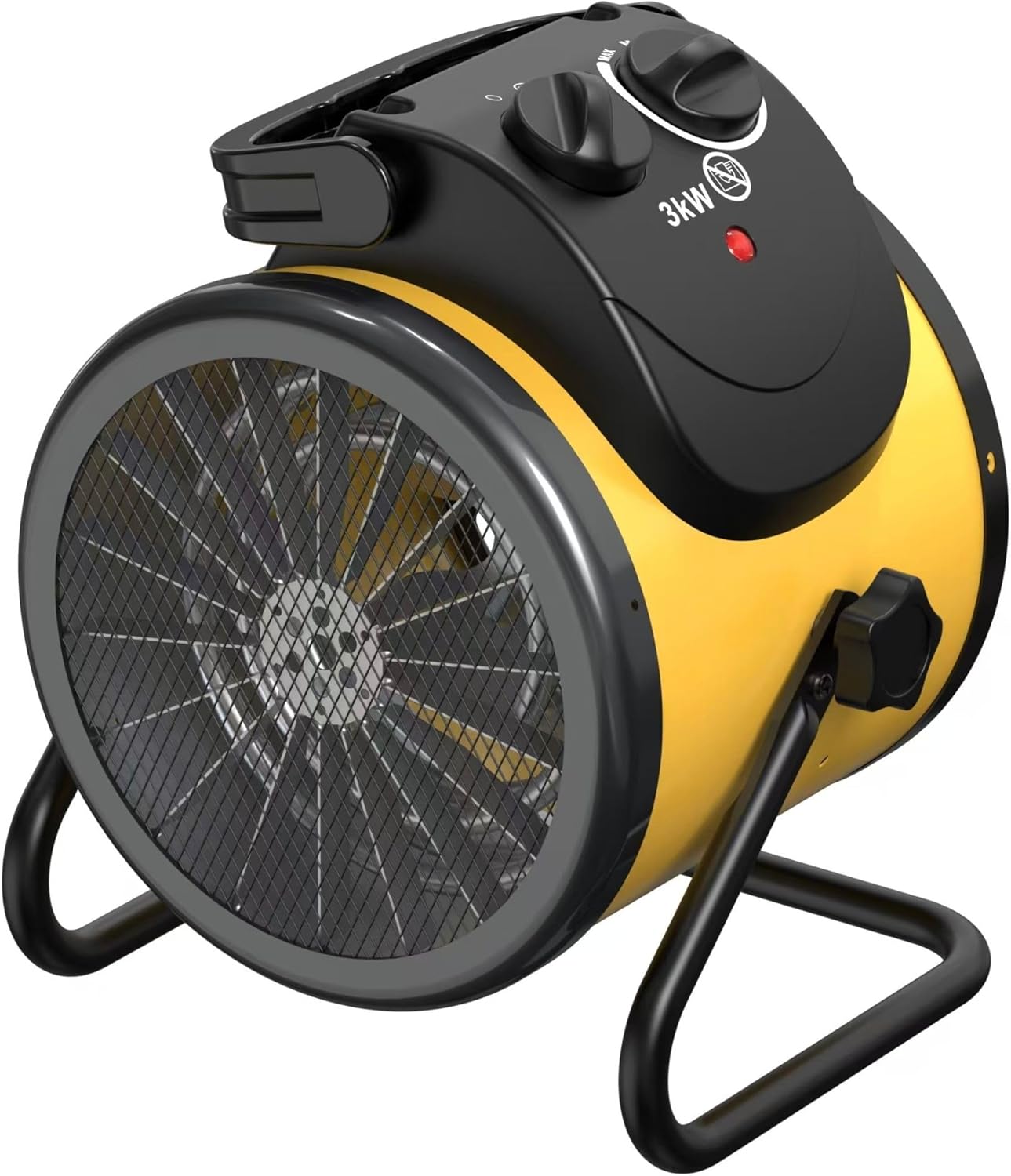
| Heat Output | 5,120 BTU |
|---|---|
| Power | 1500 Watts |
| Voltage | 120 volts |
| Heating Coverage | 250 sq ft |
| Cord Length | 6 Ft. |
The Dura Heat EUH1500 is a compact 120V forced‑air heater aimed at workshops, garages, and small rooms. It delivers roughly 5,120 BTU (1500W) through a stainless steel heating element and a turbo fan, and it can run in fan‑only mode for circulation. The unit has a built‑in thermostat, overheat shutoff, a carry handle, and an adjustable stand that lets you aim warm air where you need it. Installation is simple since it is plug‑in ready with a 6 ft polarized cord, and the steel cabinet feels rugged enough for a work environment. On the downside it is sized for small areas and may struggle to heat larger garages or open bays, and the maximum listed temperature is modest. Expect straightforward, reliable heat for individual workstations rather than whole‑garage heating, and use proper ventilation and safe placement away from flammable materials.
Best for: Buyers who need a simple, rugged plug‑in heater to warm a single garage bay, workshop bench, or small studio and prioritize dependable heat and portability.
Less Ideal for: People wanting to heat large garages, entire basements, or multiple connected rooms should look at higher‑capacity or hardwired heating solutions instead.
- 1500W / 5,120 BTU output suitable for small workspaces
- Stainless steel heating element for durable, efficient heating
- Built-in thermostat and overheat shutoff for basic safety control
- Adjustable stand and carry handle let you aim and move the unit easily
- Designed for spaces up to about 250 sq ft so not effective for large or open garages
- No advanced controls or smart features beyond basic thermostat and fan setting
Verdict: A compact, no‑frills 120V workspace heater that reliably warms a single garage bay or small shop area.
InoKraft 7,500W Garage Heater
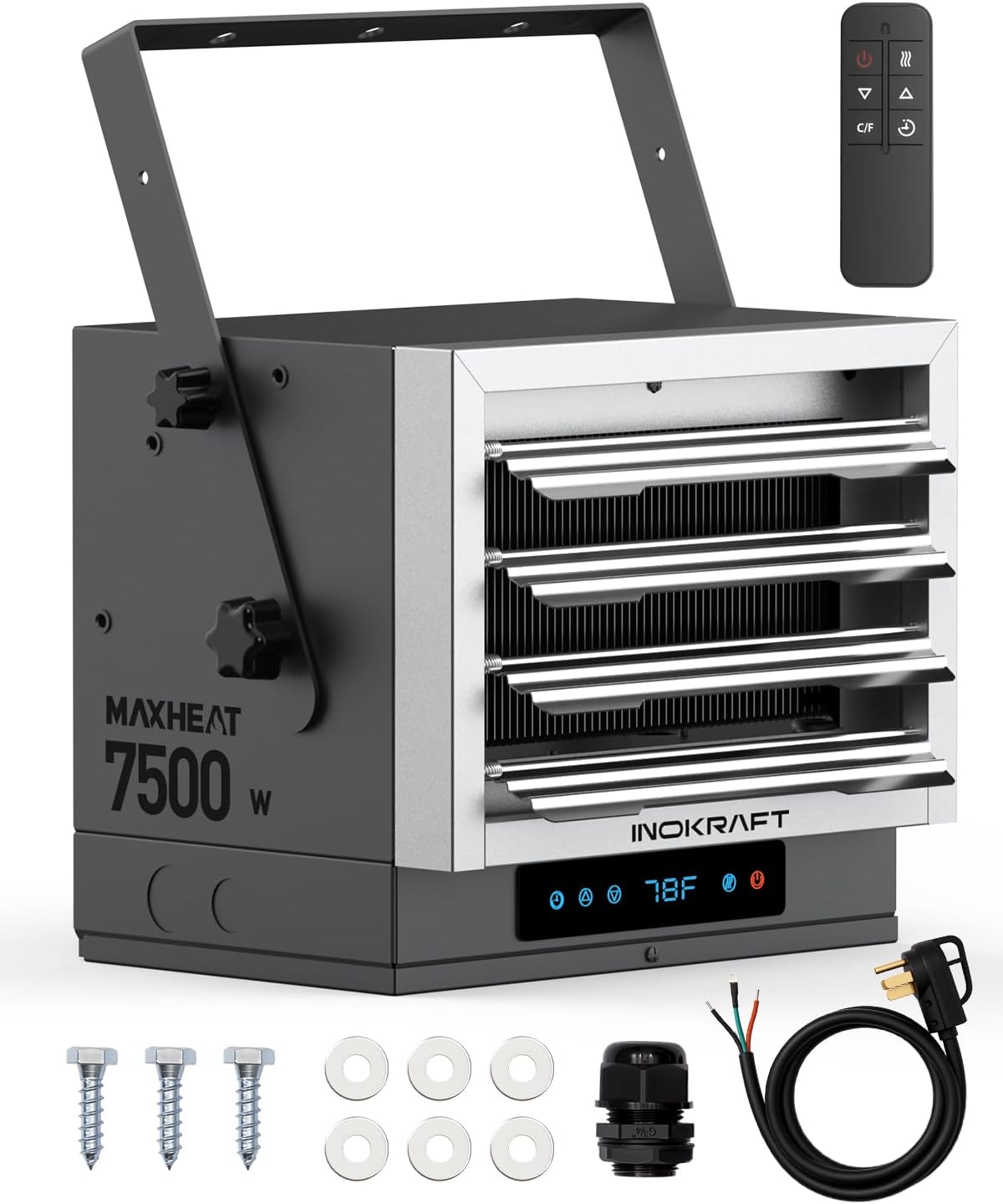
| Heat Output | 7500 watts |
|---|---|
| Heating Coverage | 750 sq ft |
| Power Source | Corded Electric (240V) |
| Number of Speeds | 2 |
| Temperature Range | 40 °F–99 °F |
The InoKraft 7,500W garage heater is a hardwired 240V forced‑air unit aimed at quickly warming medium to large garages or workshops. It offers selectable high/low heat plus an ECO mode that modulates output based on ambient temperature to save energy, and a digital thermostat with a 1–24 hour timer for set‑and‑forget use. The unit mounts to a wall or ceiling with five angle positions and adjustable louvers to direct airflow where you need it, and it includes overheat protection and a 90‑second fan runout for safer shutdown. Installation requires a 240V double‑pole breaker and professional wiring, and the heater runs at about 65 dB on high which is noticeable but typical for fan‑forced units. Practical benefits include rapid heat output for garages up to the suggested coverage and convenient controls via remote and onboard thermostat, while limitations are the need for 240V wiring and a dedicated circuit plus mandatory professional installation, which make it unsuitable for plug‑and‑play situations.
Best for: Buyers who prioritize fast, high‑output heating and energy management for a workshop or larger garage and who are prepared to install a hardwired 240V unit professionally.
Less Ideal for: Those who need a plug‑in or 120V heater, renters without access to electrical upgrades, or anyone seeking a completely silent heating option.
- High 7,500W output suitable for heating garages up to ~750 sq ft
- ECO mode and digital thermostat help reduce energy use and keep temperature steady
- Ceiling or wall mount with adjustable angle and louvers for directed airflow
- Built‑in safety features including overheat protection and 90s fan runout
- Requires 240V hardwiring and a double‑pole breaker; not a plug‑in solution
- Fan‑forced operation produces audible noise around 65 dB on high
Verdict: Choose this heater if you want a high‑power, thermostat‑controlled 240V garage heater that delivers fast, directed heat and energy‑aware ECO operation.
Dura Heat EUH1465 1500W Heater

| Power | 1500 Watts |
|---|---|
| Voltage | 120 volts |
| Heating coverage | 250 sq ft |
| Heat output | 5,120 BTU |
The Dura Heat EUH1465 is a portable 120V forced-air heater that uses a PTC ceramic element and high-velocity fan to quickly warm garages, workshops, and basements. It is typically used as a spot or zone heater: plug it into a standard outlet, set the built-in thermostat, and point the adjustable base toward the work area to move warm air where you need it. Notable features include a rugged steel cabinet, carry handle and stable base, a fan-only mode for year-round circulation, a 6 ft polarized cord, and automatic overheat shut-off for safety. In practice the unit delivers steady warmth for rooms up to about 250 sq ft and is easy to reposition when priorities change. Its compact footprint and 1500W output make it a practical choice for hobbyists and tradespeople who want fast, directed heat without hard wiring, though it is limited to single-speed airflow and does not replace whole-house heating.
Best for: Buyers who want a practical, movable garage heater to quickly warm a single workspace and value durability and simple thermostat control.
Less Ideal for: Those looking to heat large, open garages or replace central heating should consider higher-capacity or hardwired options instead.
- 1500W PTC ceramic element provides quick, efficient heat for small spaces
- Rugged steel body and sturdy base stand up to workshop use
- Built-in thermostat and high-velocity fan distribute heat evenly
- Portable design with carry handle and 6 ft polarized power cord
- Fan-only mode adds year-round air circulation utility
- Single fan speed limits fine control over airflow and noise
- Designed for zone heating only and not a substitute for whole-house systems
Verdict: A rugged, easy-to-move 120V 1500W heater that reliably heats and circulates air in single garage work zones.
Elevoke NFJ-9 Tower Heater

| Heat Output | 1500 watts |
|---|---|
| Number of Speeds | 3 |
| Voltage | 120 volts |
| Power Source | Corded Electric |
The Elevoke NFJ-9 is a compact 1500W PTC ceramic tower heater designed to deliver fast, focused warmth for small indoor spaces such as a garage workspace or home office. It offers three modes—fan (20W), low heat (750W), and high heat (1500W)—so you can run it as a quiet fan in mild weather or at full power on chilly days. The PTC element and high-speed fan claim rapid warm-up in about three seconds and the 90° tilt/oscillation helps spread air across a workbench or seating area. Built-in overheat protection and a sturdy carry handle make it straightforward to move and use safely, though the unit should be plugged into a dedicated 15A-capable circuit. Practical downsides are its small footprint and tower form factor, which limit coverage to localized zones rather than heating an entire two-car garage, and the base requires simple assembly. For a budget-focused buyer wanting quick, portable heat at 120V, this heater is an efficient, no-frills option.
Best for: Buyers who want an inexpensive, portable 120V heater to add focused warmth to a small garage workspace or hobby area without installing hardwired equipment.
Less Ideal for: People who need to heat large garages, multiple connected zones, or want a permanent hardwired solution should consider larger or dedicated garage heaters instead.
- Rapid warm-up with PTC ceramic element and high-speed fan
- Three operating modes (fan, 750W, 1500W) for flexible use
- Built-in overheat protection for safer unattended operation
- Portable design with carry handle and lightweight tower form
- Designed for spot heating and not large-area or whole-garage heating
- Requires a dedicated 15A-capable outlet at high settings
Verdict: A budget-friendly 120V portable heater that delivers quick, localized heat for a small garage workspace or bench area.
Heat Storm Phoenix HS-1500-PHX-WIFI
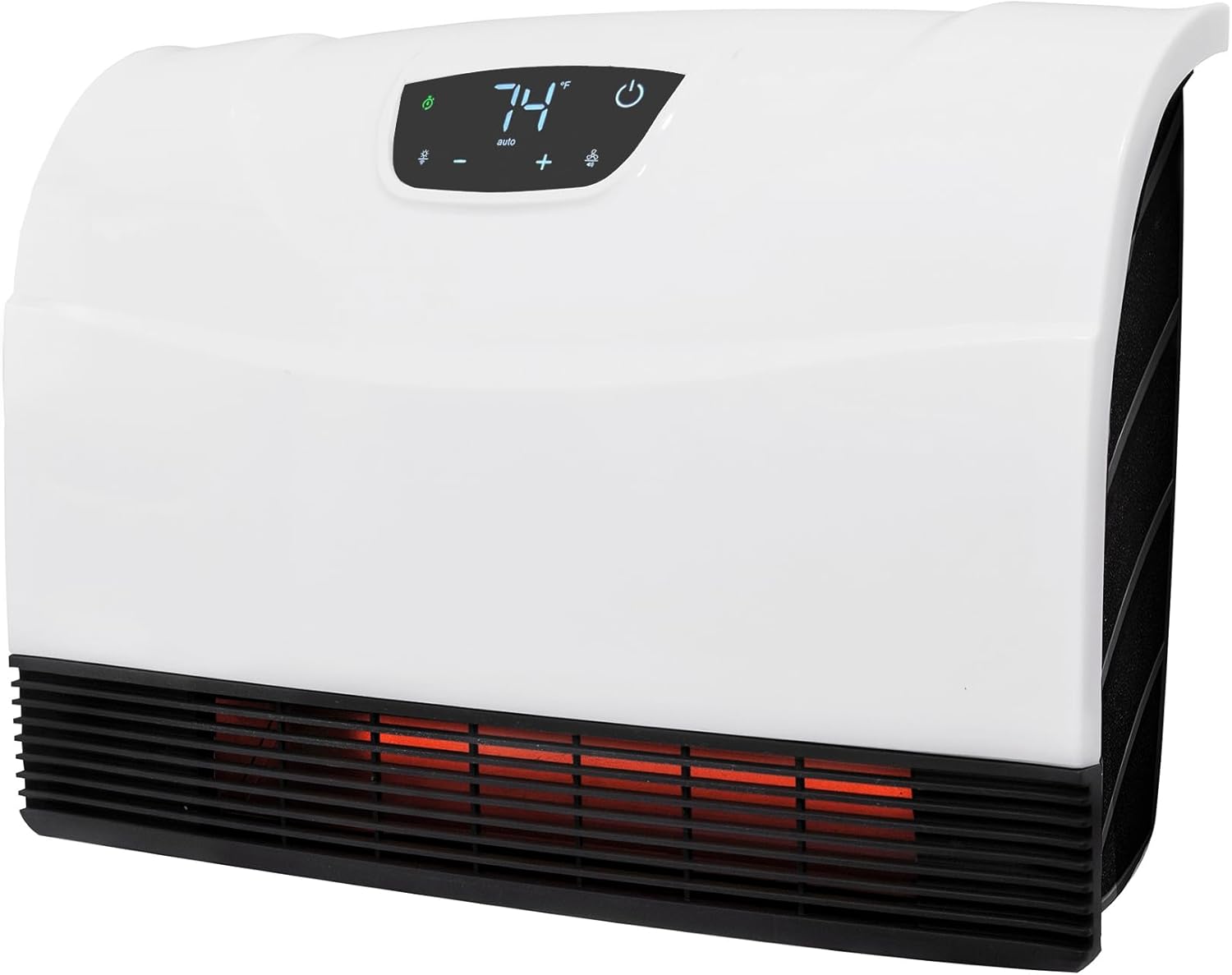
| Power | 1500 W |
|---|---|
| Voltage | 110 volts |
| Heating Coverage | 150 ft² primary, 750 ft² secondary |
| Heating Method | Infrared |
| Max Temperature Setting | 99 °F |
The Heat Storm Phoenix HS-1500-PHX-WIFI is a 1500 W infrared wall heater intended to provide zone heating for bedrooms, bathrooms, garages, or offices where floor space is limited. It mounts to the wall and plugs into a standard 110 V outlet so installation is plug-and-play for most 120 V circuits, and the built-in Wi‑Fi plus remote and touchscreen let you set schedules and adjust temperature from a phone. The heater uses radiant infrared elements to deliver direct heat to people and objects rather than relying solely on air circulation, which speeds perceived warmth in small spaces. Practical benefits include a slim profile that preserves floor area, a washable filter, and tip-over and cool-to-touch design choices that improve safety for garages or workspaces. Limits to expect are modest coverage — the unit is sized for primary heating of about 150 sq ft and supplemental warming up to larger spaces — and as a wall-mounted infrared unit it will heat occupants and nearby surfaces more effectively than open air in very large or poorly insulated garages. For buyers prioritizing a reliable 120 V garage solution, it combines straightforward installation, Wi‑Fi scheduling, and focused infrared warmth in a compact package.
Best for: Buyers who want a dependable, hard-mounted 120 V heater that delivers targeted infrared warmth and remote scheduling for a small garage or workshop where floor space is limited.
Less Ideal for: Not a good fit for heating large, uninsulated garages as the sole heat source or for users who need a portable, multi-room heater.
- 1500 W power that runs on standard 110 V outlets for easy garage installation
- Wall-mount design saves floor space and places heat where needed
- Built-in Wi‑Fi plus remote and touchscreen for scheduling and remote control
- Infrared radiant heating warms people and objects quickly without needing to heat all the air
- Washable filter and safety features like cool-to-touch grill enhance durability and safe operation
- Rated for primary heating only in relatively small rooms (around 150 sq ft) so not ideal as the main heat source for large garages
- Wall-mount placement is fixed and less flexible than portable heaters
Verdict: A reliable, wall-mounted 120 V infrared heater with Wi‑Fi control that is ideal for focused heating of small garages and workshops.
DR. Infrared Heater DR-968

| Wattage | 1500 Watts |
|---|---|
| Heating Coverage | 576 square feet |
| Voltage | 120 |
| Number of Speeds | 3 |
| Temperature Range | 50 °F to 85 °F |
The DR. Infrared Heater DR-968 combines a quartz infrared tube and a PTC element to deliver a mix of radiant and convected heat from a portable cabinet design. It is typically placed on the floor in living spaces, bedrooms, or a garage workspace to warm people and objects quickly rather than just heating air. Notable features include a high-velocity low-noise blower, electronic thermostat with a 50 to 85 F range, three power modes including an energy-saving Auto mode that cycles between high and low, a 12-hour timer, caster wheels for repositioning, and a full-function remote. Built-in safety features include tip-over protection and overheat auto-shutoff, and the unit is UL certified. Practical benefits are fast, even warmth across a room and quieter operation than many fan heaters, plus a remote and timer for convenience. Limitations are that it runs on standard 120V at 1500W so it cannot deliver the higher continuous output of hardwired 240V shop heaters, and it is a freestanding indoor unit so it lacks weatherproofing for outdoor use.
Best for: A buyer who values proven performance and safety for heating a single indoor workspace or garage area on a standard 120V circuit, and who prefers quieter radiant-plus-convection heat with remote convenience.
Less Ideal for: Those who need a permanently mounted, high‑output 240V garage heater or a weatherproof unit for unheated outdoor spaces should choose a different, purpose-built heater.
- Dual heating system (PTC plus quartz infrared) for faster perceived warmth
- Energy-saving Auto mode that cycles between power levels to hold set temperature
- Quiet, high-pressure blower for wider heat distribution without loud fan noise
- Remote control, timer, and caster wheels for convenient, flexible placement
- UL certification plus tip-over and overheat auto-shutoff for safer use around people and pets
- Limited to 120V/1500W output so not as powerful as hardwired 240V garage heaters
- Designed for indoor use only and not weatherproof for outdoor or unprotected exterior spaces
Verdict: Choose the DR-968 when you want a UL-certified, quiet 120V infrared heater that delivers fast, evenly distributed warmth with convenient remote and safety features for an indoor garage workspace.
Dreo Smart Wall Heater WH719S

| Heat Output | 1500 watts |
|---|---|
| Heating Method | Forced Air, PTC |
| Heating Coverage | 200-750 sq.ft. |
| Voltage | 120 volts |
| Min-Max Temp | 41-95 °F |
The Dreo WH719S is a wall-mounted 1500W electric space heater built to deliver steady, room-focused warmth while staying easy to manage. It uses a PTC ceramic heating element and forced-air delivery with a 120-degree vertical oscillation to spread heat through taller rooms or garages mounted near the wall, and it offers three fan speeds plus precise temperature control from 41 to 95°F in 1°F increments. Smart features include app control, Alexa/Google compatibility, a 24-hour timer and a remote for hands-off operation, and the LED display dims for low-light situations. Installation is intended to be straightforward with included mounting accessories and a drilling guide, and the unit has a reusable filter and detachable face for simpler upkeep. Practical limits: it is a hardwired wall-mounted solution sized as a primary heater for smaller 200 sq ft spaces or supplemental heating up to 750 sq ft, so it will not replace a full garage HVAC system for very large or poorly insulated garages and requires a fixed mount location. For buyers seeking a controllable, low-noise wall heater with smart controls, this balances performance and convenience well.
Best for: Buyers who want a reliable, easy-to-control wall-mounted heater with smart features and accurate thermostat control for a small garage or workshop used as a supplemental or primary heat source.
Less Ideal for: Those who need a portable heater to move between spaces or who require primary heating for very large, uninsulated garages should consider more powerful or different-format heating solutions.
- 1500W PTC ceramic heating with forced-air and 120° vertical oscillation spreads heat through the room
- Precise thermostat control from 41 to 95°F in 1°F increments for stable temperature management
- Smart control via app plus Alexa and Google Home compatibility and included remote
- 24-hour timer and dimmable LED display support scheduled and low-light use
- Reusable filter and detachable front make cleaning and maintenance easier
- Wall-mounted design limits portability and requires installation
- Marketed coverage (200–750 sq ft) may underperform in very large or poorly insulated garages
Verdict: A smart, wall-mounted 1500W heater that gives precise thermostat control and wide vertical heat distribution for small garages or workshops where a fixed, controllable heat source is preferred.
Choosing the Right Electric Heater for Garage 120V: Key Factors to Consider
Heating Output Relative to Garage Size
Heating output determines how quickly a garage warms and how well the unit maintains temperature. For 120v heaters, available wattage is limited compared with higher-voltage systems, so you need to match the heater's rated output to the garage's square footage and insulation level.
A small, well-insulated one-car garage needs much less continuous power than an uninsulated two-car bay. Consider how you will use the space: occasional weekend projects need faster recovery and higher peak output, while storage-only spaces benefit from low-output units that prevent freezing. Always estimate required British Thermal Units or wattage for your space before choosing, and expect lower 120v output to mean more reliance on insulation and weatherproofing to keep heat from escaping.
Installation and Electrical Compatibility
Most 120v garage heaters are designed for straightforward installation on a standard household circuit, but the reality depends on circuit load and existing wiring. Check whether the heater plugs into a grounded receptacle, requires hardwiring, or offers both options.
If your garage shares a circuit with lighting or heavy tools, you may need to relocate loads or dedicate a circuit to avoid tripping breakers. Mounting options matter too: wall- or ceiling-mount brackets affect airflow and placement relative to workbenches and stored items. Evaluate cord length, recommended clearances, and whether you will need an electrician for a safe, code-compliant setup.
Safety Protections and Certifications
Safety is critical in garages because combustible materials, tools, and dust are common. Effective safety features include tip-over shutoff for portable units, overheat protection, guarded heating elements, and sealed housings that resist dust intrusion.
Confirm a heater carries recognized safety listings and that its installation clearances match typical garage layouts. Look for models with automatic reset or manual reset thermal cutouts, and consider whether surface temperatures remain safe near work areas. Properly rated heaters reduce fire risk and allow you to run the unit for longer periods with confidence.
Control Options and Energy Use
Controls determine both comfort and running cost. Basic on/off heaters are simple, but thermostatic control, multi-stage heat settings, and programmable timers let you maintain target temperatures without wasting energy.
Thermostats that sense room temperature are more accurate than surface sensors and help avoid cycling that can stress a 120v circuit. If energy use is a concern, look for efficient heat delivery methods and the ability to set lower standby temperatures to prevent excessive runtime. Remote or hardwired controls can also improve convenience in a garage environment.
Mounting Style and Air Distribution
How a heater is mounted affects where heat is delivered and how well it circulates. Ceiling-mounted units distribute warm air broadly and stay out of the way of tools and vehicles, while wall-mounted or portable units can be aimed at work areas for spot heating.
Consider the garage layout, the location of doors, and where you spend the most time. Units that allow adjustable louvers or oscillation provide more flexibility. Also factor in installation height: higher mounting reduces obstruction risk but can increase heat stratification, so choose a model and placement that balance circulation with practical clearances.
Durability and Maintenance Needs
Garage environments can be dusty, damp, and subject to bumps from stored items. Durable housings, washable filters, and easy access for cleaning extend a heater's service life and keep performance consistent.
Check whether the heater's controls and fan are rated for continuous or frequent use, and whether replacement parts like filters or fuses are commonly available. Simpler designs with fewer moving parts often require less maintenance, but fans and thermostats add control and comfort at the cost of occasional upkeep.
Choosing the Right Capacity for 120V Limits
Because a 120v circuit delivers limited continuous wattage, realistic expectations on capacity are key. Focus on matching the heater to the garage size and insulating the space rather than relying solely on higher output. Smaller garages can be comfortable with modest heaters if you reduce drafts and seal gaps.
If you need more heat than a single 120v unit can provide, consider combining multiple strategically placed low-wattage heaters rather than trying to run one oversized unit that trips a breaker. This approach also spreads warmth and speeds recovery in occupied zones.
- Estimate wattage needed by garage size and insulation
- Place heaters near work zones for faster perceived warmth
- Use door seals and insulation to reduce required capacity
Mounting Options: Wall, Ceiling, or Portable
Select a mounting style that fits your space and usage pattern. Ceiling mounts keep floors clear and distribute heat evenly, while wall-mounted or portable units let you aim heat at a bench or vehicle. Portable units are flexible but may present tripping or clearance issues in a busy garage.
Consider airflow: avoid mounting too close to shelving or stored materials, and ensure manufacturer-recommended clearances are followed. Proper placement improves effective heat delivery and reduces the risk of overheating nearby objects.
- Ceiling mounts for broad coverage
- Wall mounts for targeted heating
- Portables for flexibility and temporary use
Controls, Thermostats, and Convenience Features
Thermostatic control significantly improves comfort and energy use by reducing on/off cycling. Look for models with an accurate ambient sensor and a reasonable temperature differential to avoid short cycling on 120v circuits. Timers and remote controls add convenience for pre-warming the space before you arrive.
Also check whether controls are reachable from a workbench or can be wired to a wall thermostat for easier operation. Durable, clearly marked controls are better for workshops where gloves and tools are in use.
- Prefer ambient-sensing thermostats
- Programmable timers reduce runtime
- Remote or wall-mount control options improve usability
Safety Practices for Garage Heating
Beyond built-in safety features, follow safe installation and operation practices. Keep flammable materials away from the heater, maintain recommended clearances, and avoid placing the unit where it could be struck by vehicles or heavy tools. Routine inspections for dust buildup or damaged cords help prevent hazards.
If you plan long runtime or unattended heating, choose units with automatic shutoff for overheat and tip-over. Consider installing a dedicated circuit if the heater will operate alongside other heavy-duty equipment to reduce the risk of nuisance tripping and electrical stress.
- Maintain clearances and avoid obstructing airflow
- Inspect cords and vents regularly
- Use dedicated circuits for continuous operation when possible
Making the Most of Limited 120V Output
When working within 120v constraints, supplemental measures increase comfort more than chasing raw output. Improve insulation, weatherstrip doors, and add simple reflective panels behind wall-mounted heaters to direct heat into the space. Task-specific heating, such as a focused unit aimed at a bench, often feels warmer than whole-room heating at the same wattage.
Combine these steps with a heater that offers reasonable controls and safety protections to get maximum utility from a 120v setup without overloading the electrical system.
- Weatherproof doors and seal gaps
- Use reflective back panels for wall heaters
- Employ task heating for work areas
How We Chose the Best Electric Heater for Garage 120V
We selected the finalists by applying practical filters that reflect real garage heating needs. First, we limited consideration to heaters designed to operate safely on a single 120v circuit and that explicitly support continuous or duty-cycle garage use. Second, we prioritized reliable heating output relative to unit size, looking for models that can raise temperature in small-to-medium garage bays without requiring circuit upgrades. Third, safety and protection features were key: automatic shutoff for tip-over or overheat, cool-touch housing or guarded elements, and compliance with standard electrical safety listings. We also weighed installation simplicity, including available wall- and ceiling-mount options, plug-and-play corded designs, and compatibility with common garage wiring. Ease of maintenance and available control options such as thermostats or multi-stage heat settings were included in the evaluation. Units with limited-duty ratings, unclear safety features, or that required 240v wiring were excluded from this list. Overall, we focused on heaters that balance usable heat output, installation flexibility for 120v garages, and robust safety protections.
Our full evaluation process is outlined in our review methodology.
FAQ
Can a 120v electric heater heat a one-car garage?
Often, yes. A properly sized 120v unit can keep a small, insulated one-car garage comfortable for occasional use. Results depend on insulation, outside temperature, and how airtight the space is.
Do I need a dedicated circuit for a 120v garage heater?
It depends. If the heater shares a circuit with lights or heavy tools and you experience tripping, a dedicated circuit is advisable. For lighter-duty, plug-in units in garages with low additional loads, shared circuits may work if capacity allows.
Are wall-mounted heaters better than portable units for a garage?
Wall-mounted heaters deliver targeted, stable heat and stay out of the way, which is useful in workshops. Portable units offer flexibility but require careful placement to maintain safety clearances and avoid obstruction.
How important is an onboard thermostat for garage heaters?
An onboard thermostat improves comfort and energy efficiency by preventing continuous operation and reducing temperature swings. Ambient-sensing thermostats are typically more effective than surface sensors.
What safety features should I prioritize for garage heating?
Prioritize overheat protection, tip-over shutoff for portable units, guarded elements or sealed housings to reduce dust ignition risk, and recognized electrical safety listings. Regular maintenance and correct clearances are also important.
Final Verdict
For most garage users, the best choice balances realistic heating output with safe, straightforward installation on a 120v circuit. Prioritize units that match your garage size, provide effective thermostatic control, and include robust safety protections. Remember that improving insulation and sealing gaps often yields larger comfort gains than increasing heater capacity alone. Ultimately, pick a heater that fits your mounting preference and electrical setup, then plan installation and placement to maximize circulation and minimize risk. With the right combination of capacity, controls, and safety features, a 120v electric heater can make a garage usable for projects and storage without costly electrical upgrades.