
Note: This article contains affiliate links. If you click on these links and make a purchase, we may earn a small commission at no extra cost to you. This helps support our research and content. Read our full affiliate disclosure here.
If you bake frequently, the oven you install matters more than you might think. An electric wall oven for baking delivers stable temperatures, consistent heat distribution, and flexible rack layouts that affect browning, rise, and overall consistency. This guide shortlists the top choices for home bakers who want predictable results for cookies, breads, and layered cakes. Below we cover oven features that make the biggest difference for baking, including temperature accuracy, cooking modes, and interior layout, then present the best options tailored to those needs.
Top Picks at a Glance
| Best Overall The best all-around choice for most situations | Midea 24" Built-in Wall Oven |  |
| Best Quality Built to a higher standard if you want something more solid | EliteEdge 30 Inch Single Wall Oven | 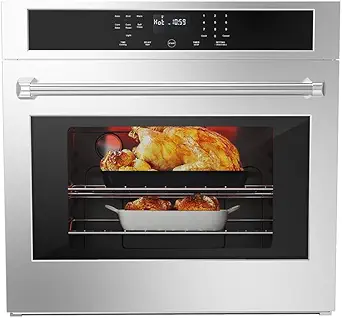 |
| Best Value The sweet spot between price and what you get | Garvee 24 Inch Single Wall Oven |  |
| Best Budget The cheapest option that still gets the job done reliably | PioneerWorks 24" Electric Wall Oven |  |
| Top Rated A top-rated pick with lots of positive feedback | thermomate 24-Inch Wall Oven ESTS611 |  |
| Most Popular A crowd favorite that many people choose with confidence | Empava 24" Electric Wall Oven |  |
| Best Seller A high-volume bestseller chosen again and again | thermomate 24" Wall Oven ESMB605 |  |
Midea 24" Built-in Wall Oven

| Capacity | 2.5 cubic feet |
|---|---|
| Wattage | 3.26 KW |
| Voltage | 240 volts |
| Heating Method | Convection |
| Cooking Program | Bake, Broil, Convection, Defrost, Roast |
The Midea 24" built-in wall oven is a compact electric oven aimed at everyday home baking and roasting. It uses a convection fan to circulate hot air for more even browning and faster cook times, and offers eight cooking modes including bake, broil, roast, and defrost to cover most recipes. The 2.5 cubic foot enamel interior and included wire shelf, telescopic runner, and universal pan make it straightforward to bake batches of cookies, a couple of sheet pans, or a family-size roast. Practical touches include a removable triple-layer glass door for safer heat retention and easier cleaning, an interior light for monitoring progress, and a simple dial-and-button control layout. Installation is for built-in standard-depth cabinets and the unit runs on 240V power. Expect good value for a midrange built-in oven, but note this is a basic single oven without advanced connectivity or dual-zone control, so power users who want smart features or a second cavity will need a different model.
Best for: Home bakers and families who want a straightforward built-in oven that improves bake consistency with convection heat and fits standard-depth cabinetry.
Less Ideal for: Users wanting Wi-Fi/connected features, professional dual-oven setups, or larger commercial-capacity baking should consider other models.
- Convection fan for faster, more even baking and roasting.
- 2.5 cu ft interior fits family-size dishes while remaining compact for standard cabinets.
- Removable triple-layer door and enamel interior simplify cleanup and maintenance.
- Includes useful hardware like telescopic runner and wire shelf for flexible cooking positions.
- No smart connectivity or app controls for remote monitoring or presets.
- Single-cavity design limits simultaneous multi-rack cooking compared with double ovens.
Verdict: A compact, convection-equipped built-in oven that reliably improves everyday baking results for home cooks.
EliteEdge 30 Inch Single Wall Oven

| Heating Method | Convection |
|---|---|
| Fuel Type | Electric |
| Wattage | 3800 |
| Voltage | 240 |
| Size | 4.8 cubic feet |
This EliteEdge 30-inch wall oven is built for performance baking and large meals. Its 3800W true convection system circulates heat to reduce hot spots, making it easier to bake evenly across multiple racks, and the oven supports temperatures from 150°F to 550°F for a wide range of techniques from slow bakes to high-heat broiling. The 4.8 cu ft interior and six rack positions, including a gliding rack, let you roast a turkey or bake large batches of cookies without crowding. Controls are handled through an LED touch panel with timer, delay start and a temperature probe for precision roasting. Pyrolytic self-cleaning turns residues to ash, which simplifies maintenance, and safety features such as a lock and double-layer Low-E glass keep the exterior cooler during use. Trade-offs include a heavier built-in unit that requires proper 240V installation and a short one-month manufacturer warranty, so buyers should plan for professional install and consider extended support for long-term reliability.
Best for: Bakers and home cooks who prioritize even, repeatable results and need a large-capacity oven for batch baking, holiday roasts, or multi-rack recipes.
Less Ideal for: Casual cooks who want a plug-and-play countertop solution or buyers who need long factory-backed warranty coverage without purchasing additional protection plans.
- True convection with 3800W power for more even multi-rack baking
- Large 4.8 cu ft cavity with six rack positions and a gliding rack for big or multi-level meals
- Pyrolytic self-cleaning reduces time spent scrubbing oven interiors
- Digital LED touch controls with timer, delay start and included temperature probe for precise cooking
- Safety lock and double-layer Low-E glass for safer operation and better heat retention
- Requires 240V hardwired installation, so professional setup is necessary
- Manufacturer warranty period listed is only one month
Verdict: A high-power true-convection 30-inch wall oven built to deliver consistent, large-capacity baking results for performance-minded home bakers.
Garvee 24 Inch Single Wall Oven

| Wattage | 3000 |
|---|---|
| Capacity | 2.5 cubic feet |
| Heating Method | Convection |
| Voltage | 240 |
The Garvee 24 Inch Single Wall Oven is a compact built-in electric oven aimed at replacing freestanding countertop appliances with a true wall oven for baking and roasting. It uses a 3000W element and a precision fan to deliver 3D convection heating, which promotes even browning across racks and reduces the need to rotate pans. The control set combines a smart touch interface with mechanical knobs and offers eight cooking modes plus 108 one-touch presets for common dishes, helping bakers get consistent results without guessing temperatures or times. The enamel interior resists grease and wipes clean, while the triple-glass cool-touch door improves safety during use. At 2.5 cubic feet it fits smaller kitchens but still handles sheet cakes, multiple racks of cookies, and mid-size roasts. Limitations include the modest interior volume compared with full-size wall ovens and a requirement for 240V hardwiring and professional installation in many kitchens, which may add cost and effort during setup.
Best for: Home bakers and cooks who want a reliable built-in convection oven that delivers even results in a smaller kitchen footprint and values preset convenience and easy cleaning.
Less Ideal for: Large households or those who frequently bake very large sheet trays or turkeys should consider a larger capacity oven or a full-size model instead.
- High-power 3000W element with 3D convection for even baking across racks
- 108 one-touch presets and 8 cooking modes simplify common baking tasks
- Enamel interior that is easy to wipe clean and resists stains
- Triple-glass cool-touch door improves safety during operation
- 2.5 cu ft capacity is smaller than full-size wall ovens
- Requires 240V built-in installation which may need professional work
Verdict: Choose this compact 24-inch convection wall oven if you want powerful, even baking and convenient presets in a space-saving built-in unit.
PioneerWorks 24" Electric Wall Oven

| Heating Method | Convection |
|---|---|
| Wattage | 3000 |
| Additional Features | Air Frying Mode |
| Voltage | 240 |
| Capacity | 2.5 cubic feet |
This 24" PioneerWorks electric wall oven is a budget-friendly built-in unit aimed at everyday home baking and roasting. It offers 2.5 cubic feet of usable space and a 3000W convection system that circulates heat for more even baking, and it includes eight cooking modes plus an air-frying option for flexible meal prep. The control panel is simple and touch-based, and the enamel cavity with a removable door and baking tray makes cleaning straightforward. Installation requires a 240V connection and the oven is sized for standard built-in cutouts, so it fits neatly under a cooktop or in a column. Practical benefits include fast preheat from the high wattage and the ability to cook multiple dishes at once thanks to the mid-sized capacity. Limitations to weigh are modest interior capacity compared with full-size ovens and the product is a no-frills unit that lacks advanced connectivity or premium finishes, so buyers should expect solid function rather than luxury features.
Best for: Home bakers on a budget who need a reliable built-in oven for everyday baking, roasting, and occasional air-frying without premium bells and whistles.
Less Ideal for: Serious bakers who require very large capacity, precision smart controls, or professional-grade finishes should consider higher-end models.
- 3000W convection heating for faster preheat and more even baking
- Includes an air-fry mode for crisping without a separate appliance
- 2.5 cu ft capacity lets you bake multiple dishes at once
- Enamel cavity and removable door simplify cleaning and maintenance
- Basic feature set with no smart controls or advanced presets
- Smaller than full-size wall ovens, which limits very large roasts or multi-rack baking
Verdict: A practical, cost-conscious built-in convection oven that delivers even baking and an added air-fry mode for cooks who want reliable performance without luxury features.
thermomate 24-Inch Wall Oven ESTS611

| Capacity | 2.6 cubic feet |
|---|---|
| Wattage | 3100 watts |
| Voltage | 240 volts |
| Heating Method | Convection |
This 24-inch thermomate electric wall oven is a convection-capable built-in unit aimed at home bakers who want even heating and flexible cooking modes. It uses a 3100W convection system that circulates air for faster preheating and more uniform browning, and includes 12 modes such as convection bake, roast, broil, and a rotisserie option, plus a sensor probe for internal temperature control. The interior offers 2.6 cu ft of usable space with two racks and five shelf positions so you can bake multiple trays or a large roast; a three-layer tempered glass door helps retain heat and the detachable design eases cleaning. Touch sensor controls, a 24/12 hour timer mode, and an ETL safety certification add to daily convenience and peace of mind. Expect a bit more installation complexity since it requires 240V built-in wiring and the oven sits heavier than countertop units, and like many value-brand wall ovens the finish and fit-and-finish details are utilitarian rather than premium. For steady, even baking performance in a compact built-in footprint, this oven delivers dependable results.
Best for: Home bakers who prioritize consistent, even baking and safety certification in a compact built-in oven and want practical controls over premium styling.
Less Ideal for: Buyers seeking a premium luxury finish or plug-and-play countertop units should look elsewhere.
- Convection system with 3100W power for faster preheating and more even baking
- 12 cooking modes including convection bake and a sensor probe for accurate internal temperatures
- Spacious 2.6 cu ft interior with five shelf positions for multi-rack baking
- Three-layer tempered glass door that retains heat and offers a clear view of food
- ETL certified for compliance with US and Canadian safety standards
- Requires 240V hardwired installation which may need an electrician
- Build and finish are functional but not as refined as higher-end models
Verdict: A reliable, convection-focused 24-inch built-in oven that delivers even baking and practical features for home cooks who value consistent results.
Empava 24" Electric Wall Oven

| Heating Method | Convection |
|---|---|
| Wattage | 3200 watts |
| Voltage | 240 volts |
| Capacity | 2.3 cubic feet |
| Additional Features | Rotisserie,Led,Touch |
The Empava 24" electric wall oven is a compact built-in convection oven aimed at everyday home baking and roasting tasks. It offers 10 cooking functions including convection bake, roast, broil and a 360-degree rotisserie, and uses touch/LED controls for setting temperature and timers. The 2.3 cu. ft. interior and five rack positions make it practical for batch baking small sheet pans, casseroles, and roasting a medium bird, while the forced cooling exhaust and halogen interior light help with monitoring and shorter cool-down times. The oven's stainless steel and black tempered glass finish looks modern and the enamel interior is designed for easier cleanup. Limitations to consider are its 240V hard-wired requirement and the 30-amp recommended circuit, which may need an electrician in some kitchens, and the smaller capacity compared with full-size wall ovens which restricts very large bakes. Controls and feature breadth are good for the price, but buyers who need commercial-level capacity or plug-and-play installation should look elsewhere.
Best for: Bakers who want a built-in convection oven with multiple cooking modes and modern controls for regular home baking and roasting but who can accommodate a hard-wired 240V installation.
Less Ideal for: Households that need full-size commercial capacity or renters who cannot modify electrical wiring should consider different options.
- Convection cooking and 10 modes including rotisserie for versatile baking and roasting
- 2.3 cu. ft. interior with five rack positions fits multiple pans and dishes
- LED touch controls and interior halogen light make monitoring and adjustments straightforward
- Enamel inner tank and tempered glass door for easier cleaning and durability
- Requires 240V hard-wired connection and a 30A circuit, so installation may need an electrician
- Smaller capacity than full-size wall ovens, limiting very large or multiple-sheet baking
Verdict: A compact built-in convection wall oven that packs versatile baking modes and a rotisserie into a modern, easy-to-clean package for home bakers who can support a 240V installation.
thermomate 24" Wall Oven ESMB605

| Fuel Type | Electric |
|---|---|
| Wattage | 2200 watts |
| Installation Type | Built-In |
| Capacity | 2.8 cubic feet |
| Voltage | 240 volts |
The thermomate 24" ESMB605 is a straightforward built-in electric wall oven aimed at everyday baking and broiling tasks. It offers a 2.8 cu ft enamel cavity with five cooking modes including bake, broil, grill, keep warm, and a light function, and it reaches temperatures up to 480°F for typical baking needs. Controls are mechanical knobs with an anti-mistouch feature and a white light ring for night visibility, while a sensor probe monitors internal temperature for more consistent results. The oven door is a removable three-layer tempered glass design that helps retain heat and makes cleaning easier, and the unit includes two oven racks and five rack positions for flexible baking layouts. Installation requires 240V and a qualified technician since the oven is built-in. Practical limits are the lack of convection for faster, more even browning and the purely mechanical interface which lacks digital timers or advanced presets, so users who want precision baking controls or convection performance may prefer a different model.
Best for: Bakers who want a simple, dependable built-in oven that handles everyday roasting and baking with straightforward controls and easy-to-clean components.
Less Ideal for: Users seeking convection cooking, precise digital programming, or smart features for advanced baking techniques should consider other models.
- Generous 2.8 cu ft interior with five rack positions for flexible baking layouts.
- Removable three-layer tempered glass door improves heat retention and eases cleaning.
- Anti-mistouch knob with light ring prevents accidental changes and aids night use.
- Sensor probe monitors internal temperature for more consistent cooking results.
- No convection heating option for faster or more even baking.
- Mechanical knob controls lack digital precision and advanced presets.
Verdict: A reliable, no-frills built-in electric oven that delivers roomy capacity and user-friendly mechanical controls for everyday baking needs.
Choosing the Right Electric Wall Oven for Baking: Key Factors to Consider
Temperature Accuracy and Stability
Accurate, stable temperature control is the single most important factor for baking. Ovens that run hot or cold by even 10 to 25 degrees can change bake times, affect rise, and alter browning. Look for ovens with reliable thermostats and, where available, calibration features so you can adjust setpoints to match an independent thermometer.
Stability matters for long bakes like loaves or custards. An oven that cycles wildly between heating and coasting will produce uneven textures. If you plan to bake artisan breads or delicate pastries, prioritize models with tight temperature control and a reputation for steady output.
Heat Distribution and Convection Design
How heat moves inside the cavity affects how evenly multiple pans bake. Convection systems that use a fan to circulate air can reduce hot spots and speed baking, but not all convection modes are the same. True convection typically uses an additional heating element around the fan to maintain consistent airflow and temperature, which is preferable for multi-rack baking.
Consider whether the oven offers variable convection or multiple fan settings. Some environments benefit from fan-assisted modes for even browning, while delicate baked goods sometimes do better with conventional modes. The ability to disable or modify convection gives you more control over final results.
Usable Interior Capacity and Rack Flexibility
Total cubic volume is only part of the story. Usable capacity depends on interior shape, number of rack positions, and how easily racks slide. If you bake multiple trays at once or use tall pans and Dutch ovens, check the spacing between rack levels and whether telescoping racks are available for safe, simple access.
A deeper cavity with more rack positions lets you cook large batches or stagger multiple recipes without crowding. For bakers who rotate trays or use multiple pans, rack stability and the ability to rearrange configurations quickly are practical time-savers.
Control Precision and Baking Modes
Controls determine how easily you select and repeat settings. Precise electronic controls with clear temperature readouts and the option to program multiple steps help execute complex recipes. Look for modes tailored to baking, such as proofing, low-temperature finishing, rapid preheat, and specific convection bake settings.
Intuitive presets can speed routine tasks, but the best systems allow manual adjustments and save custom programs. Reliable timers, delayed start, and audible cues reduce the chance of overbaking when you are managing multiple tasks.
Cleaning and Interior Durability
An oven that is easy to clean stays sanitary and performs well over time. Smooth enamel interiors with generous corner radii reduce trapped crumbs, while self-cleaning cycles or steam-clean options cut down on manual scrubbing. Removable racks and a floor that resists staining make maintenance simpler.
Durable finishes that resist chipping and corrosion preserve the cavity's reflective properties and help maintain consistent heat. Consider the practicality of cleaning methods against your schedule and whether professional maintenance will be practical down the line.
Installation and Venting Considerations
Because wall ovens are built-in, proper installation is essential. Venting location, clearance requirements, and electrical specifications affect how the oven performs and how long it lasts. Ensure your kitchen's dedicated circuit and space dimensions match the oven's requirements before choosing a unit.
Correct installation impacts airflow and cooling, which in turn affects temperature stability and component longevity. If you plan to replace an existing built-in oven, match cavity dimensions and mounting interfaces to minimize remodeling.
Why Electric Wall Ovens Excel for Baking
Electric wall ovens offer consistent radiant heat and precise electronic controls that many bakers prefer over other options. The separation from a cooktop lets you place the unit at an ergonomic height for loading, checking progress, and removing sheets without bending.
Built-in electric units also tend to have better insulation and more even heat distribution than smaller countertop ovens, which makes them suitable for long bakes and multi-rack use.
- Ergonomic installation height speeds workflow
- Stable electric heating promotes even browning
- Larger cavities support batch baking
Convection Vs Conventional Baking Modes
Convection modes circulate air to reduce hot spots and can shorten bake time slightly. For multi-rack baking of cookies or sheet pans, convection often yields more even results. However, delicate items like soufflés and some cakes may benefit from conventional radiant heat to preserve rise and avoid over-browning.
A flexible oven that lets you choose or fine-tune fan speed and temperature offset gives the best of both approaches. Learn to adapt your recipes when switching modes, as temperature and timing adjustments are often necessary.
- Use convection for even, multi-rack baking
- Use conventional for delicate rise-dependent bakes
- Adjust temperature when switching modes
Practical Tips for Getting Even Bakes
Use an oven thermometer to verify the true cavity temperature before adjusting recipes. Rotate pans between racks midway through long bakes if your oven shows consistent hot spots. Avoid overcrowding the cavity, which impedes airflow and results in uneven cooking.
Preheat thoroughly, especially for breads and laminated pastries. Allow the oven to reach temperature with the racks in place so the air and metal reach equilibrium together.
- Verify actual temperature with an independent thermometer
- Rotate and swap rack positions for large batches
- Preheat with racks installed for consistent results
Maintenance and Long-Term Performance
Regular cleaning of spills and debris preserves heating elements and prevents smoke during bakes. If your oven includes a self-clean cycle, follow manufacturer guidance and remove any loose residue before starting a high-temperature clean. Inspect door seals periodically to ensure a tight closure that maintains stable internal temperatures.
Scheduling occasional professional checks of electrical connections and control modules can prevent sudden failures, especially in ovens used heavily for daily baking.
- Wipe spills promptly to avoid burn-on
- Check door gasket integrity annually
- Follow recommended service intervals for heavy use
Accessories That Improve Baking Results
Consider investing in a few baking-specific accessories that work inside most wall ovens. Solid half-sheet pans, insulated baking stones, and perforated trays each influence airflow and crust development. Telescoping racks make frequent checks safer and more convenient during long bakes.
Silicone mats, cooling racks, and a quality oven thermometer are small, low-cost additions that yield big returns in consistent results and easier cleanup.
- Use a baking stone for bottom heat when needed
- Telescoping racks improve access and safety
- An oven thermometer is essential for calibration
How We Chose the Best Electric Wall Oven for Baking
We focused on attributes that directly affect baking results and daily usability for home bakers. Primary evaluation criteria included temperature accuracy and stability, which determine how closely the oven holds set temperatures over long bakes. We also prioritized interior capacity and usable cubic space, since rack arrangement and oven volume influence how many pans you can bake at once and how heat circulates around goods. Heat distribution and convection system design were examined to assess evenness across racks and to reduce hot or cold spots. Control precision and mode versatility were considered for their impact on specialty tasks like proofing, pizza, and slow bakes. Finally, ease of cleaning and durable interior finishes were included because maintenance affects long-term performance. We excluded units that prioritize stovetop integration or non-electric power sources, focusing strictly on built-in electric wall ovens suitable for baking. Models lacking clear temperature calibration or with nonstandard cavity shapes that severely limit rack placement were not considered. Our selections reflect machines that balance measured temperature performance, practical capacity, usable features, and serviceable design.
Our full evaluation process is outlined in our review methodology.
FAQ
Is convection always better for baking?
Convection helps with even heat distribution and multi-rack baking, but it is not always better. Delicate items that depend on gentle radiant heat may perform better in conventional mode. It often depends on the recipe and whether you adjust temperature and timing.
How can I check if my oven's temperature is accurate?
Place an independent oven thermometer in the center of the cavity and let the oven preheat fully. Compare the thermometer reading to the set temperature and, if the oven allows calibration, adjust the setpoint accordingly. Repeat checks at several temperatures for best results.
Do larger wall ovens bake more evenly than smaller ones?
Not necessarily. Larger cavities offer more usable space and flexibility, but evenness depends on the oven's heating design and convection system. A well-designed smaller oven can outperform a larger unit with poor heat circulation.
How important are rack positions for baking multiple trays?
Very important. Multiple stable rack positions let you stagger trays to maximize airflow and avoid crowding. Telescoping racks and removable shelving make swapping pans safer and easier during long bakes.
Should I use the self-clean feature often?
Use self-clean cycles sparingly and according to guidelines. Frequent high-temperature cleans can stress some oven components and seals. Wipe up spills promptly and use steam or low-heat cleaning for light maintenance between heavy cleans.
Final Verdict
When choosing an electric wall oven for baking, prioritize temperature accuracy and the oven's heat distribution system. Decide how much usable capacity you need based on batch sizes and look for flexible convection controls that let you switch between fan-assisted and conventional modes. Consider practical aspects such as rack configuration, interior finishes, and serviceability to ensure consistent results over time. Balancing these tradeoffs will help you pick an oven that suits your baking style. Focus on steady temperatures and usable volume first, then select features that match the kinds of baked goods you make most often.