
Note: This article contains affiliate links. If you click on these links and make a purchase, we may earn a small commission at no extra cost to you. This helps support our research and content. Read our full affiliate disclosure here.
Picking an energy-efficient electric range can materially reduce your monthly energy bill and make everyday cooking more predictable. The right range balances efficient heating, accurate temperature control, and practical features that matter in a typical kitchen. This guide shortlists the top energy-efficient electric ranges across common residential needs and highlights the criteria that separate genuinely efficient designs from merely labeled models. Read on to see focused evaluations of the best options and the key performance and usability factors we used to assess them.
Top Picks at a Glance
| Best Overall The best all-around choice for most situations | Samsung Smart Freestanding Electric Range NE63A6511SS |  |
| Best Quality Built to a higher standard if you want something more solid | ZLINE Paramount Induction Range SINR36 |  |
| Best Value The sweet spot between price and what you get | Frigidaire Gallery 30" Electric Range GCRE3060BF |  |
| Best Budget The cheapest option that still gets the job done reliably | Midea MER30S2AST 30" Electric Range |  |
| Top Rated A top-rated pick with lots of positive feedback | GE Slide-In Electric Convection Range |  |
Samsung Smart Freestanding Electric Range NE63A6511SS

| Capacity | 6.3 cubic feet |
|---|---|
| Controls Type | Touch |
| Fuel Type | Electric |
| Number Of Racks | 2 |
| Voltage | 240 volts |
This Samsung freestanding electric range combines a large 6.3 cu. ft. convection oven with built-in air fry and a smooth sealed cooktop to handle most home cooking tasks. It is typically used for everyday baking, roasting and multi-dish meal prep where the convection fan speeds cooking and helps deliver more even results, and the air-fry mode lets you crisp foods with little to no oil without preheating. Touch controls and ergonomic knobs give straightforward control of temperatures and functions, while Wi‑Fi and voice compatibility let you monitor and adjust oven settings remotely. Practical benefits include the spacious interior that fits large pans, two oven racks for flexible cooking, and the stainless steel exterior that cleans up easily. Limitations are typical for full-size electric ranges: you need a 240V hookup and sealed elements mean repair or replacement is more involved than simple coil models, and advanced smart features are useful only if you plan to use mobile or voice controls. Energy-efficient convection cooking can reduce run time compared with conventional bake cycles, which helps if you prioritize efficiency.
Best for: Buyers who want a roomy, feature-rich electric range that balances efficient convection cooking, modern smart controls, and a clean stainless look for everyday family meal prep.
Less Ideal for: People without a 240V circuit or those who prefer simple, non-connected appliances and minimal electronics in the kitchen.
- Large 6.3 cu. ft. oven fits multiple dishes and large roasters
- Built-in convection speeds cooking and promotes even browning
- Air fry mode crisps foods with little to no oil and no preheat required
- Wi‑Fi and voice control let you monitor and adjust the oven remotely
- Stainless steel exterior with sealed cooktop offers a modern look and easy cleaning
- Requires a 240V electrical connection and appropriate installation
- Smart features depend on using the mobile app or voice assistants
Verdict: Choose this Samsung range if you want a spacious, energy-conscious electric oven with convection and air-fry options plus smart remote control features.
ZLINE Paramount Induction Range SINR36

| Capacity | 5.2 cubic feet |
|---|---|
| Voltage | 240 volts |
| Number of Heating Elements | 5 |
| Number Of Racks | 2 |
| Controls Type | Knob |
The ZLINE Paramount SINR36 pairs a five-zone induction cooktop with an electric convection oven to deliver fast, precise cooking suited to serious home cooks. The induction surface uses nanotechnology-reinforced, anti-scratch glass with an anti-glare matte finish, which makes it easier to clean and reduces reflections while offering a bridge zone for oversized cookware. Cooktop features include nine power levels and a Power Boost mode for rapid boiling or searing, and the largest element accommodates pots up to about 11 inches. The oven's digital thermostat and convection circulation speed up preheating and promote even baking across two racks, while the large Horizon window helps you monitor dishes without opening the door. Controls are conventional knobs for straightforward operation. Trade-offs are typical of high-power induction ranges: it requires 240V installation and induction-compatible cookware, and its stainless steel suite needs regular wiping to stay pristine. For energy-conscious cooks, the induction surface and efficient convection oven reduce cook times and energy use compared with traditional electric coil ranges.
Best for: Buyers who prioritize fast, accurate cooking and lower energy use will appreciate this induction range for everyday family meals and performance cooking.
Less Ideal for: Those who cannot install a 240V circuit or who rely on non-induction cookware without wanting to replace pots should consider alternatives.
- Responsive induction heating with Power Boost for rapid heat-up
- Anti-scratch, anti-glare glass cooktop that is easier to clean
- Five flexible cooking zones including a bridge function for large cookware
- Efficient convection oven with digital thermostat for faster preheating and even baking
- Large oven window for monitoring without heat loss
- Requires 240V hookup and compatible induction cookware
- Stainless steel surfaces need frequent cleaning to avoid fingerprints
Verdict: Choose the ZLINE SINR36 if you want a high-performance, energy-efficient induction range with responsive cooktop power and a fast, convection oven for precise results.
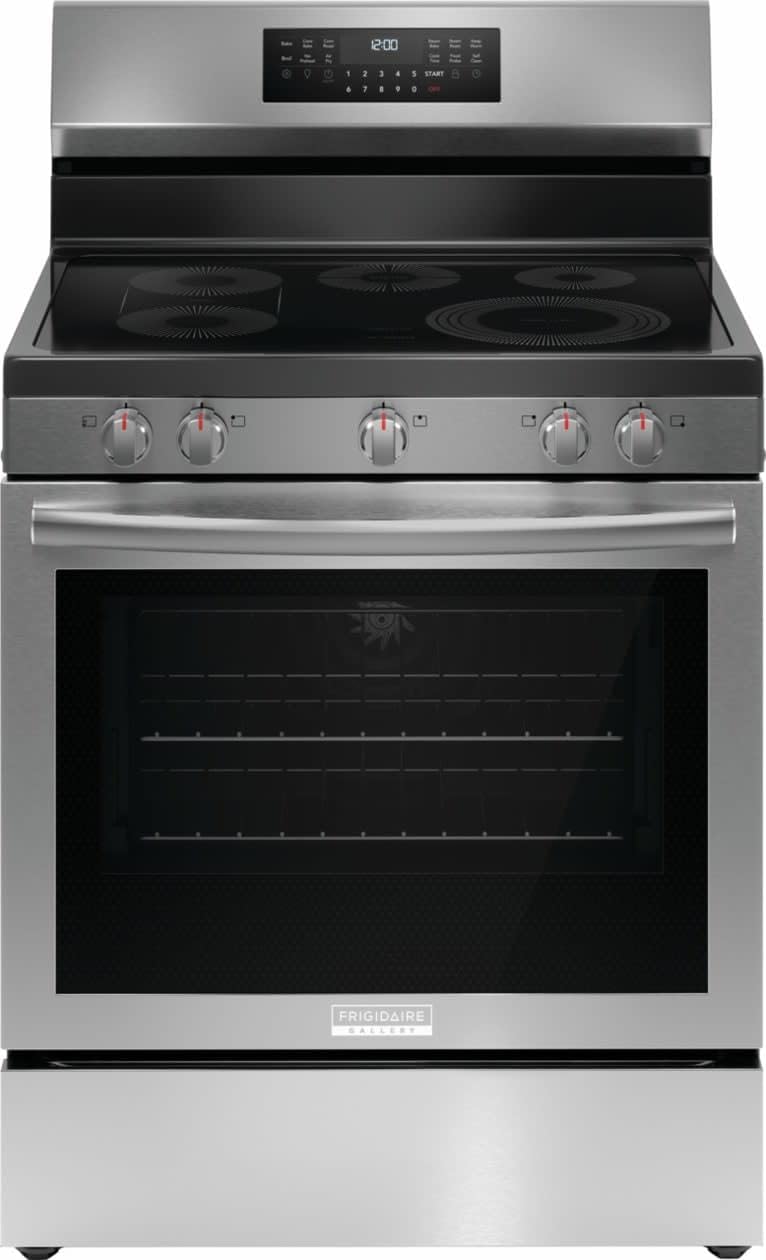
Frigidaire Gallery 30" Electric Range GCRE3060BF
| Form Factor | Freestanding |
|---|---|
| Controls Type | Knob |
| Voltage | 240 volts |
| Capacity | 5.3 cubic feet |
| Number of Heating Elements | 5 |
The Frigidaire Gallery 30" freestanding electric range pairs a five-element cooktop with a 5.3 cubic foot convection oven that adds useful modes like Air Fry, No Preheat, Steam Bake, and Convection Roast. Typical use covers everyday stovetop cooking plus multi-rack baking and roasting; the flexible bridge element and a 3,200 W EvenTemp element handle large pans and rapid boil tasks. The Total Convection system and multiple cooking modes make it easier to cook evenly and crisp foods without a separate air fryer, and the spacious interior fits casseroles and sheet trays for batch cooking. Controls combine knobs for the cooktop with digital oven functions for quick adjustments, and the stainless finish is described as fingerprint resistant. Expect the benefits of faster, more even baking and the convenience of built-in air fry, balanced against the usual demands of a full-size electric range such as installation to a 240 V circuit and the space required for a 30" unit.
Best for: Buyers who prioritize cooking versatility and even oven performance and want a single range that replaces separate appliances like an air fryer while supporting frequent multi-rack baking.
Less Ideal for: Small kitchens that cannot accommodate a 30-inch freestanding range or cooks who need a portable or lower-voltage countertop solution.
- Total Convection system for more even baking and multi-rack use
- Built-in Air Fry mode removes need for a countertop air fryer
- Five-element cooktop with bridge element handles large cookware
- Spacious 5.3 cu ft oven fits large dishes and batch cooking
- Fingerprint-resistant stainless finish for easier maintenance
- Requires 240 V installation and adequate kitchen space
- Heavy unit may complicate delivery and installation
Verdict: Choose this range if you want a versatile, convection-driven electric range with built-in air fry that streamlines baking and crisping without adding countertop appliances.
Midea MER30S2AST 30" Electric Range

| Form Factor | Freestanding |
|---|---|
| Controls Type | Touch |
| Number of Heating Elements | 4 |
| Number Of Racks | 2 |
| Finish Types | Stainless Steel |
The Midea MER30S2AST is a straightforward freestanding electric range aimed at buyers who want efficient basics without premium frills. It delivers four flexible cooktop elements controlled by a touch panel, and the oven includes a steam clean cycle to simplify maintenance. The oven provides two racks and a seamless stainless steel exterior that keeps the face easy to wipe down, while a lower storage drawer gives a convenient place for pans. As an energy-minded choice, its listed high efficiency and simple electric operation reduce complexity versus dual-fuel or convection models, and the touch controls make setting temperatures and timers quick. Trade-offs are minimal features compared with high-end ranges: there is no convection setting or advanced smart connectivity, and the styling and control set are utilitarian rather than designer-forward. For a budget-focused kitchen that prioritizes reliable cooking and easier cleaning, this range covers the essentials well.
Best for: Buyers looking for an energy-conscious, no-frills electric range that covers essential cooking and is easy to maintain on a budget.
Less Ideal for: Home cooks who need convection baking, specialized cooking modes, or smart-connected features should look at higher-end models.
- Four-element cooktop offers flexible stovetop layout for everyday cooking
- Steam clean oven cycle reduces the need for harsh chemicals and scrubbing
- Touch controls provide simple, modern operation and easy wiping
- Storage drawer keeps cookware accessible and frees up cabinet space
- No convection baking or advanced cooking modes for faster, more even roasting
- Lacks smart connectivity or app control for remote monitoring or updates
Verdict: A practical, energy-efficient 30-inch electric range that delivers essential cooking performance and easy cleaning for budget-minded buyers.
GE Slide-In Electric Convection Range

| Form Factor | Slide-in |
|---|---|
| Controls Type | Touch |
| Heating Element | Radiant |
| Capacity | 5.3 cubic feet |
| Efficiency | Energy Star Certified |
The GE GRS600AVFS is a 30-inch slide-in electric convection range designed for cooks who want flexible, efficient performance with modern controls. Its smooth radiant cooktop has five elements including Power Boil and a warming zone to handle everything from rapid boiling to gentle simmering, while the 5.3 cu. ft. oven offers six rack positions, a large window, and a hidden bake element for even heat. Notable conveniences include No Preheat Air Fry for faster crisping, an EasyWash removable oven tray for simpler cleanup, steam cleaning, and built-in WiFi for remote monitoring and control. The touch controls give a clean look and straightforward operation. As an Energy Star certified appliance it targets lower energy use compared with standard models, but buyers should expect the usual limitations of electric ranges such as slower surface heat response versus gas and the need for 240V installation. For kitchens that need a seamless slide-in fit and practical cleaning features, this range balances performance and efficiency well.
Best for: Buyers who prioritize dependable, energy-efficient electric cooking with modern conveniences and an easy-to-clean oven surface for everyday family use.
Less Ideal for: Those who need rapid flame control for specialty cooking or who cannot accommodate a 240V slide-in installation should consider other options.
- Energy Star certified for better energy efficiency
- No Preheat Air Fry delivers faster crisping without preheating
- Large 5.3 cu. ft. oven with six rack positions for flexible cooking
- EasyWash removable oven tray simplifies cleanup
- Built-in WiFi enables remote monitoring and control
- Electric radiant cooktop has slower instant heat response compared with gas
- Requires 240V hardwired installation and slide-in cutout for proper fit
Verdict: Choose this range if you want a factory-quality, energy-efficient electric slide-in with practical cleaning features and modern smart controls.
Choosing the Right Energy-Efficient Electric Range: Key Factors to Consider
Energy Draw & Efficiency
How much electricity the range uses during active cooking and standby directly affects utility bills. Look for ranges that reach set temperatures quickly and maintain them without frequent cycling, since less cycling and shorter run times translate to lower energy consumption. Consider features like rapid preheat, efficient element designs, and lower standby power for clocks and displays.
Energy ratings, published power draw figures, and documented preheat times are useful indicators. Keep in mind that advertised wattage shows maximum element capacity but not how efficiently that power becomes usable heat for your food.
Temperature Accuracy
Accurate, stable oven temperatures reduce cooking time and prevent repeated adjustments or extra bake cycles. A range that holds within a narrow temperature band lets you cook reliably at recommended times and temperatures, minimizing wasted energy from re-cooking or extended bakes. Look for ranges with calibrated thermostats, good sensor placement, and stable control systems.
Even small deviations can add up over many uses, especially for longer roasts or baking sessions. Precision is particularly important if you cook frequently at low or slow settings that magnify the effect of temperature drift.
Cooktop Heat Transfer
Efficient cooktops transfer heat quickly and evenly into pots and pans so you can use lower settings and still achieve the same results. Coil, smooth-top, and induction-style elements differ in how they deliver heat; within electric ranges, element design and surface contact matter most. Efficient transfer reduces boil times and shortens frying durations, lowering energy use.
Also consider element responsiveness: elements that ramp up and down predictably let you reduce overshoot and avoid long cooldowns. Good contact between cookware and the element or cooktop surface improves efficiency.
Oven Insulation & Interior Design
Well-insulated ovens retain heat, cutting the need for the heating system to run as often. Thicker cavity walls, tight door seals, and effective gasketing all limit heat loss during use. Interior design that promotes even airflow reduces hot spots and prevents longer cooking times caused by uneven heating.
An oven with efficient insulation also reduces heat bleed into the kitchen, which can affect ambient temperature and the load on home cooling systems during warm months.
Controls & Programmability
Smart, intuitive controls give you the ability to minimize energy use through features such as accurate timers, delayed start, and multi-stage cooking programs. Clear, repeatable control settings prevent accidental overcooking and let you take advantage of efficient modes like convection baking. A straightforward display that shows remaining time and temperature helps avoid opening the door, which wastes heat.
Good controls can also enable energy-saving behaviors, such as using residual heat for finishing dishes or setting precise timers to avoid unnecessary reheating.
How Electric Range Efficiency Impacts Your Bills
Electric ranges account for a noticeable share of household electricity when cooking frequently. Improving efficiency at the appliance level reduces active runtime and the cumulative energy used over months and years. The most direct savings come from faster preheat and shorter actual cook times.
Beyond direct energy draw, efficient ranges reduce secondary load on HVAC systems by limiting heat released into the kitchen. That can be significant in summer when excess oven heat increases cooling demand.
- Shorter preheat times cut immediate energy use.
- Stable ovens avoid repeat cycles and re-cooking.
- Better insulation reduces ambient heat transfer to the home.
Understanding Cooktop Options on Electric Ranges
Within electric ranges, cooktop designs vary in responsiveness and transfer efficiency. Smooth-top radiant elements provide a flat surface that is easy to clean but can be slower to change temperatures. Coil-style elements often heat quickly but may have less uniform contact. How well your cookware couples to the element affects overall efficiency.
When evaluating a range, consider how you cook. If you boil frequently or use high heat for searing, pick a model with elements that reach and hold high temperatures efficiently. For simmering and low-heat work, look for fine control at low settings.
- Match cookware base to cooktop for best heat transfer.
- Look for elements with quick ramp-up and stable holding power.
- Consider glazed or smooth surfaces for easy maintenance and consistent contact.
Convection Modes and When They Save Energy
Convection circulation uses a fan to move hot air, which can reduce cooking times and allow lower temperatures for many recipes. Using convection baking for roasts and multi-rack baking typically yields more even results and can shorten bake times, which lowers energy use.
Not every dish benefits from convection. For delicate baked goods that require still air, convection may not be appropriate. Still, having a convection option increases flexibility and can deliver efficiency gains for the right applications.
- Use convection for roasts and multi-rack baking to shorten cook times.
- Turn convection off for delicate cookies and souffles that need gentle heat.
- Follow recipe adjustments for temperature and timing when switching to convection.
Installation and Kitchen Layout Considerations
How a range is installed affects its real-world efficiency. Proper clearance, correct electrical hookup, and adequate ventilation preserve the appliance's designed performance. An improperly wired or poorly ventilated unit can run longer or less efficiently than intended.
Placement in the kitchen also matters. A range next to drafts, open windows, or poorly insulated exterior walls may lose more heat during use. Ensure door seals and surrounding cabinetry do not negatively affect oven temperature stability.
- Verify correct electrical outlet and circuit capacity for rated load.
- Avoid drafty locations that increase heat loss from the oven.
- Allow space for airflow around the range per installation guidance.
Maintenance That Keeps Efficiency High
Regular cleaning and basic maintenance help maintain a range's efficiency. Grease and food residue can reduce heat transfer on cooktops and form insulating layers in the oven cavity. Replace worn door gaskets and keep the oven vent clear to prevent heat loss and uneven cooking.
Periodic checks of element condition and control responsiveness ensure the appliance is operating within intended parameters. Well-maintained ranges reach set temperatures faster and hold them with fewer cycles.
- Wipe spills promptly from cooktop surfaces and oven interiors.
- Inspect and replace damaged door seals to avoid heat leaks.
- Schedule service if temperature drift or erratic control behavior appears.
How We Chose the Best Energy-Efficient Electric Range
We started by filtering ranges with clear energy-saving features and measurable efficiency advantages. Priority went to models with proven low standby draw, fast but controlled bake and broil cycles, and precise temperature stability that reduces wasted cycles and preheat time. We also looked at control accuracy, insulation quality, and cooktop element performance since uneven heating forces longer cook times and higher energy use. Practical considerations included interior capacity versus usable cooking area, the presence of efficient convection modes, and user controls that let you avoid excessive preheating or repeated reheating. Excluded from consideration were models that lack documented efficiency attributes, ranges designed for commercial use, and units missing basic safety or thermal insulation specs. Our editorial filters emphasized real-world energy effects rather than marketing claims: we prioritized ranges that offer consistent oven temperature, efficient element transfer, and insulating design that hold heat well. Durability and serviceability were secondary but included because long-lived appliances lower lifetime energy and replacement impacts.
Our full evaluation process is outlined in our review methodology.
FAQ
How much energy can I save by choosing an energy-efficient electric range?
Savings vary based on cooking habits and the specific efficiency improvements. Often, faster preheat times and better temperature control reduce active cook time enough to lower electricity use noticeably over months, especially for frequent bakers or large households.
Does convection always use less energy than conventional baking?
Convection often shortens cooking times and can allow lower temperatures, which reduces energy use for many dishes. However, for some delicate recipes convection is unnecessary and may not save energy. The net benefit depends on the dish and how you adjust time and temperature.
Will better oven insulation make a tangible difference?
Yes. Improved insulation reduces how often heating elements cycle on to maintain temperature, which lowers electricity draw. It also reduces heat transferred into the kitchen, which can indirectly save on cooling costs in warm seasons.
Are there cooktop habits that improve efficiency?
Use lids when boiling, match pan size to the element, and use residual heat when possible by turning elements off a few minutes early. Also, clean contact surfaces so cookware sits flat against elements for best heat transfer.
Do control features like delay start affect energy use?
Delay start and precise timers do not reduce cooking energy directly but can enable you to run the oven for shorter effective periods and avoid unnecessary reheating. Programmable settings that avoid long preheat cycles help reduce overall usage.
Final Verdict
When choosing an energy-efficient electric range, prioritize models that combine quick heat-up, stable temperature control, and strong insulation. Balance cooktop transfer efficiency with the types of cooking you do most often, and favor units with useful control features like convection and accurate timers. Accept tradeoffs such as whether you need very high-power elements versus fine low-heat control. Focus on the dimensions that reduce actual run time and prevent repeated cooking cycles. With those priorities, you can choose a range that lowers energy use while still delivering dependable cooking performance.