
Note: This article contains affiliate links. If you click on these links and make a purchase, we may earn a small commission at no extra cost to you. This helps support our research and content. Read our full affiliate disclosure here.
Putting the right freezer in an unconditioned garage changes how you store food and manage household energy use. A freezer built for garage conditions keeps contents safely frozen through temperature swings while using less electricity, which matters if the unit runs year-round. This guide spotlights six shortlisted, energy-efficient freezers for garages chosen for reliable insulation, temperature stability, and low operating costs. Below you will find the key features we looked at, plus practical buying guidance to help you pick the best option for your space and storage habits.
Top Picks at a Glance
| Best Overall The best all-around choice for most situations | Frigidaire Chest Freezer EFRF5003 |  |
| Best Quality Built to a higher standard if you want something more solid | BLACK+DECKER 14 Cu. Ft. Convertible Freezer |  |
| Best Value The sweet spot between price and what you get | Igloo 3.5 Cu Ft Upright Deep Freezer |  |
| Best Budget The cheapest option that still gets the job done reliably | BODACIOUS 3.5 Cu Ft Chest Freezer |  |
| Top Rated A top-rated pick with lots of positive feedback | Whynter CUF-301SS 3.0 cu ft Upright Freezer |  |
| Most Popular A crowd favorite that many people choose with confidence | Northair 3.5 Cu Ft Chest Freezer |  |
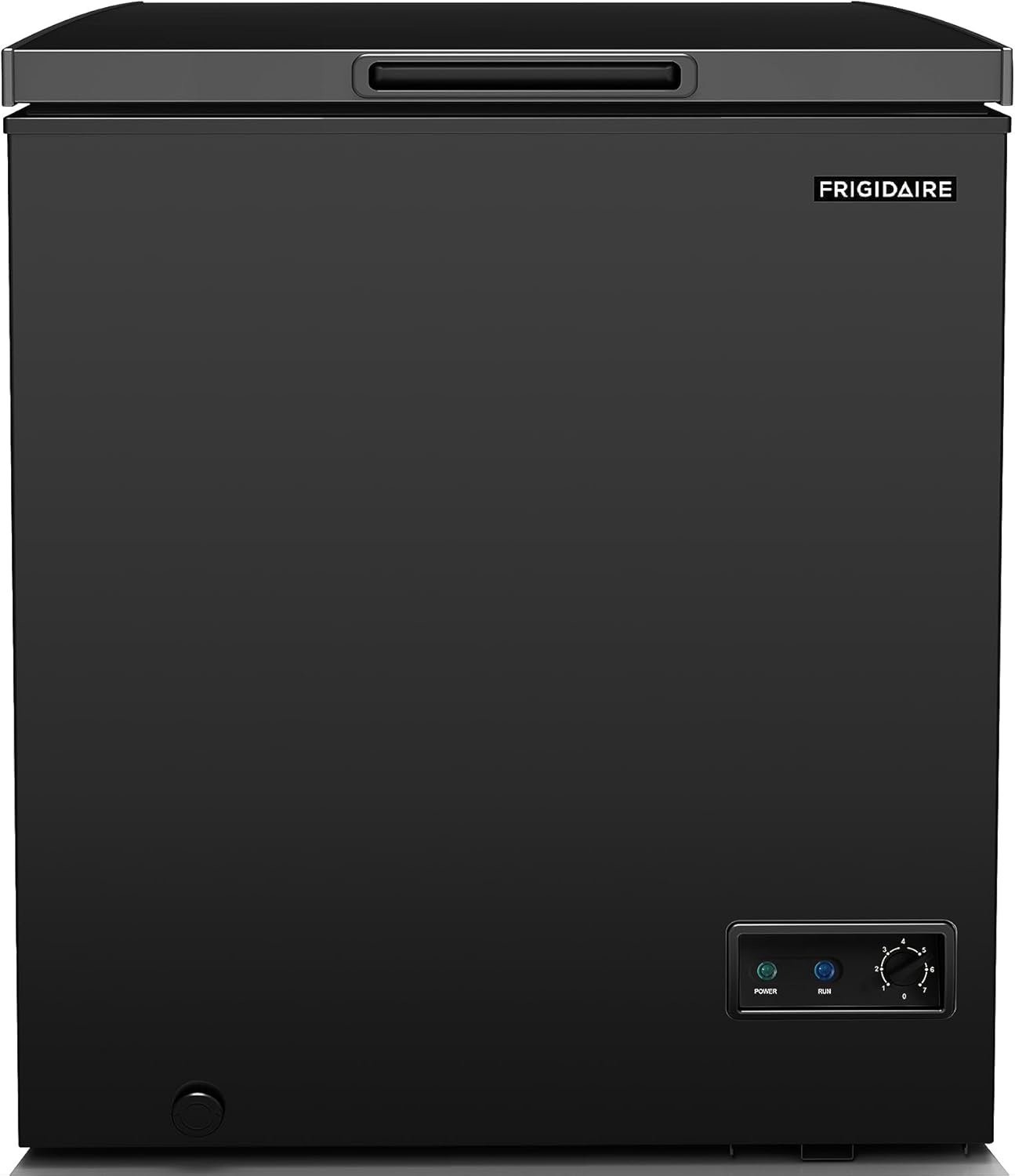
Frigidaire Chest Freezer EFRF5003
| Capacity | 5 cubic feet |
|---|---|
| Voltage | 120 volts |
| Number Of Shelves | 1 |
| Installation Type | Freestanding |
This Frigidaire chest freezer provides a compact, energy-conscious option for extra frozen storage in garages or utility rooms. It offers 5.0 cubic feet of usable space with a top-opening lid and a removable vinyl-coated wire basket to keep small items accessible while larger packages sit below. The external adjustable thermostat with multiple settings lets you tune internal temperature without opening the lid, and a power-on indicator makes it easy to confirm operation at a glance. Practical touches include adjustable leveling legs for uneven floors and a manual defrost drain that simplifies seasonal defrosting. The aluminum interior liner and straightforward controls mean low maintenance, but the model is a basic manual-defrost unit so it lacks frost-free convenience and advanced temperature displays. Its compact footprint fits tight spots, though capacity is modest compared with larger garage freezers. For buyers prioritizing simple, reliable cold storage and easy upkeep, this freezer fills the role well; those who want automatic defrost or larger capacity should look elsewhere.
Best for: Buyers who want a straightforward, space-efficient garage freezer that is easy to operate and maintain and who value reliable cold storage over advanced features.
Less Ideal for: Those who need frost-free operation, large bulk storage, or precise digital temperature control should consider larger or automatic-defrost models instead.
- Compact 5.0 cu. ft. capacity suitable for garages or small utility spaces
- Adjustable external thermostat for simple temperature control without opening the lid
- Removable vinyl-coated wire basket keeps small or frequently used items organized
- Manual defrost drain speeds and simplifies defrosting and cleanup
- Adjustable legs improve stability on uneven garage floors
- Manual defrost design requires periodic defrosting and maintenance
- No digital temperature display or advanced temperature monitoring
Verdict: A simple, compact chest freezer built for dependable garage storage and easy maintenance when you prioritize straightforward performance over advanced features.
BLACK+DECKER 14 Cu. Ft. Convertible Freezer

| Capacity | 14 cubic feet |
|---|---|
| Voltage | 120 volts |
| Number Of Shelves | 4 |
| Specification Met | CSA, Energy Star |
| Installation Type | Freestanding |
This BLACK+DECKER 14 cu. ft. convertible unit is designed to serve as a full-size freezer or a refrigerator depending on your needs, with electronic temperature controls and a frost-free compressor for low-maintenance use. It is typically used in garages, basements, or kitchens where extra cold storage is needed and can run reliably in freeze mode across a wide ambient temperature range, making it garage-ready for frozen storage. The interior layout includes four full-width removable glass shelves, a bottom wire-basket compartment and four door bins that help organize long and bulky items like turkeys or stacked pizza boxes. Energy Star qualification and an LED display mean it aims for efficient operation and straightforward temperature adjustments, while features like an interior LED light and recessed handle improve day-to-day usability. Limitations to note are that garage compatibility applies only in freezer mode and the unit is large and heavy, so you will need adequate space and help to move it into place.
Best for: Buyers who prioritize dependable, energy-efficient cold storage for large volumes of frozen goods and need a unit that can also convert to extra refrigeration when required.
Less Ideal for: Those who need refrigerator performance in unconditioned garages or who want a smaller, more portable solution for occasional extra cooling.
- Convertible freezer-to-refrigerator design offers flexible cold storage options
- ENERGY STAR rated for more efficient long-term operation
- Frost-free technology reduces the need for manual defrosting
- Four removable glass shelves plus door bins and a bottom basket for organized storage
- Garage-ready performance is guaranteed only in freezer mode, not refrigerator mode
- Large footprint and heavy weight make installation and placement more difficult
Verdict: Choose this unit if you want a large, Energy Star convertible upright that reliably stores big volumes of frozen food and can be switched to fridge mode when needed.
Igloo 3.5 Cu Ft Upright Deep Freezer

| Capacity | 3.5 cubic feet |
|---|---|
| Wattage | 100 watts |
| Door Orientation | Top |
| Installation Type | Freestanding |
This Igloo 3.5 cu ft upright deep freezer delivers usable frozen storage in a small footprint that fits garages, basements, or apartments. It uses a D-type refrigeration tube and foam insulation to reach low temperatures quickly, while an adjustable thermostat lets you set the range you need for long-term storage or ice cream. The upright layout and removable hanging wire basket make organizing and accessing smaller items easier than with a chest freezer, and the balanced hinge holds the lid open for one-person loading. Practical touches include bright LED interior lighting, front rollers and a drain for easier defrosting, and whisper-quiet operation that keeps it suitable for indoor or garage placement. Expect modest capacity — it is best as supplemental storage rather than primary bulk freezing — and the simple dial thermostat lacks advanced digital controls or smartphone monitoring. For buyers wanting straightforward, efficient extra freezer space that is easy to move and maintain, this model covers the essentials without unnecessary complexity.
Best for: Buyers who need an energy-conscious supplemental freezer for a garage, apartment, or small household and value straightforward, easy-to-maintain storage over high capacity.
Less Ideal for: People who require large-capacity freezing for bulk food storage or who want advanced digital controls and smart monitoring features.
- Compact upright design maximizes vertical storage while saving floor space
- Adjustable thermostat (-15°F to 0°F) and quick-freezing D-type tube for faster cooling
- Removable hanging wire basket and balanced hinge for easier organization and loading
- Quiet operation with LED interior light suitable for garages or living spaces
- Front rollers and drain plug simplify moving and defrosting
- Only 3.5 cu ft capacity, so not ideal for large-volume bulk freezing
- Basic dial thermostat without digital precision or remote monitoring
Verdict: A compact, energy-efficient upright freezer that provides easy, quiet supplemental frozen storage for garages and small homes.
BODACIOUS 3.5 Cu Ft Chest Freezer

| Capacity | 3.5 cubic feet |
|---|---|
| Voltage | 110 volts |
| Number Of Shelves | 1 |
| Specification Met | ETL |
| Installation Type | Freestanding |
This 3.5 cu ft chest freezer is a compact, energy-minded option for garages, apartments, and RVs where floor space is limited. It uses thick foam insulation and an energy-efficient compressor to keep running costs low, with the listing estimating about $15.33 per year in electricity. The lid-top design includes a recessed handle, removable storage basket, built-in drain, and a manual defrost control that are useful for organizing and occasional maintenance. The brand claims a quiet operation under 40 dB and a turbo-freeze mode that brings room-temperature items down to 0°F quickly, which helps when batching and storing meat or bulk purchases. Practical limitations include the small 3.5 cu ft capacity, which restricts long-term bulk storage, and manual defrost means you must periodically clear ice buildup. Expect basic, no-frills controls and a compact footprint that prioritizes efficiency and placement flexibility over high capacity or automated defrost convenience.
Best for: Buyers who need an inexpensive, low-power freezer for a garage, apartment, or RV and prioritize low operating cost and compact placement over large capacity.
Less Ideal for: Not a good choice for households that need to freeze large volumes or want a frost-free model with automated defrosting.
- Very low estimated annual energy use for garage or small-space operation
- Compact footprint fits through narrow doors and under counters
- Removable basket and built-in drain simplify organization and defrosting
- Quiet operation suitable for indoor or attached garage placement
- Small capacity limits how much frozen food you can store long term
- Manual defrost requires occasional maintenance
Verdict: A compact, energy-efficient chest freezer built to keep operating costs minimal for garages and small spaces.
Whynter CUF-301SS 3.0 cu ft Upright Freezer

| Capacity | 3 cubic feet |
|---|---|
| Temperature range | -14° to 50° F |
| Wattage | 100 |
| Door orientation | Reversible |
| Number of shelves | 3 |
The Whynter CUF-301SS is a small upright freezer designed for tight spaces such as garages, offices, dorms, or kitchens and can be switched to refrigerator mode when you need chilled storage. It uses a compressor-based cooling system with a mechanical dial that sets refrigerator temperatures from 32 to 50°F or freezer temperatures from -14 to -11°F, and includes two wire shelves plus a removable slide-out basket for basic organization. The reversible-swing stainless steel door and recessed handle make placement flexible while the included cylinder lock and keys let you secure contents in shared spaces. Rated to use relatively little energy, this unit is quiet enough for nearby rooms and runs on standard 115V household power. Limitations for garage use include modest capacity—only 3 cubic feet—and basic mechanical controls rather than precise digital settings, so it is best for regular food and beverage storage rather than long-term bulk freezing or temperature-critical items.
Best for: Practical buyers who need a compact, energy-conscious cold storage unit for a garage, office, or small household space and value flexibility between fridge and freezer modes.
Less Ideal for: Users who need large capacity or precise temperature control for long-term freezing, or those who store large frozen loads regularly.
- Convertible freezer/refrigerator mode for flexible cold storage needs
- Reversible stainless steel door and recessed handle for flexible placement
- Integrated lock with two keys for secure shared-space storage
- Quiet compressor operation suitable for near-room placement
- Includes removable shelf and slide-out basket for basic organization
- Only 3.0 cu ft capacity, limiting bulk storage
- Mechanical thermostat lacks precise digital control
- Not designed for heavy-duty or large-volume freezing tasks
Verdict: A compact, energy-conscious convertible freezer that fits garages and small spaces when you need a reliable, secure solution for everyday frozen or chilled storage.
Northair 3.5 Cu Ft Chest Freezer

| Capacity | 3.5 cubic feet |
|---|---|
| Door Orientation | Top |
| Number Of Shelves | 1 |
| Installation Type | Freestanding |
This Northair chest freezer is built for deep-freeze needs that standard home freezers cannot meet, with a compressor-driven system that adjusts from 14°F down to -40°F in 1°F increments via a digital panel. It is typically used for specialty items like beaded ice cream, seafood, wild game, long-term meat storage, and bait, and includes two removable baskets to keep frequently used items accessible while larger packages sit below. The self-supporting lid and drain port make loading, cleaning, and manual defrosting straightforward, and the unit is engineered for quiet, energy-efficient operation suitable for garages, basements, or small commercial settings. Expect fast cooldown and stable temperatures, but remember the 3.5 cu ft footprint limits how much bulk you can store at once compared with full-size freezers, and ultra-low operation will require reliable electrical supply and proper placement away from extreme heat sources. For buyers focused on reliable ultra-low performance in a compact package, this freezer delivers practical features without unnecessary complexity.
Best for: Buyers who need dependable ultra-low freezing in a small footprint for garage or utility use and who prioritize verified performance and practical features over maximum capacity.
Less Ideal for: If you need large-scale or family-size frozen storage or plan to store high volumes regularly, a larger chest or upright freezer is a better fit.
- Adjustable digital temperature down to -40°F for true ultra-low freezing
- Compressor-based cooling for faster cooldown and stable temperature control
- Compact 3.5 cu ft capacity with two removable baskets for organized storage
- Energy-efficient design with relatively quiet operation suitable for garages and utility spaces
- Convenient features such as a self-supporting lid and drain port for easier cleaning
- Limited internal volume compared with full-size freezers, restricting large-batch storage
- Requires stable power and appropriate placement to maintain extreme low temperatures
Verdict: Choose this compact Northair freezer when you need verified, energy-conscious ultra-low (-40°F) performance in a small, garage-ready unit.
Choosing the Right Energy-Efficient Freezer for Garages: Key Factors to Consider
Ambient Temperature Range
Garages can experience wide swings from freezing cold to very warm conditions. Choose a freezer rated to operate across your local garage temperature extremes. If a unit is only designed for indoor use, it may struggle to keep contents frozen when temperatures drop or overwork the compressor in heat, increasing energy use and wear.
Check manufacturer ambient-range specifications and prioritize models with proven performance for low and high temperature operating windows. This reduces the risk of spoilage and limits repeated heavy compressor cycles that drive up electricity consumption.
Insulation Thickness and Seal Quality
Thicker, high-density insulation and tight door gaskets reduce heat gain during warm periods and heat loss in cold conditions. Better insulation means the compressor runs less frequently to maintain set temperature, which directly cuts operating costs.
Inspect door seal design and whether the unit has inner liners or auxiliary seals that block air leakage. A freezer with poor seals or thin cabinet walls will require more energy to maintain cold temperatures, especially in a garage where ambient heat can be significant.
Temperature Control and Recovery
Accurate thermostats and a fast temperature recovery after door openings are critical for preserving frozen goods. In garages where ambient temperature can be high, a freezer that recovers quickly prevents prolonged exposure of contents to warmer air, reducing food safety risks and energy spikes.
Look for thermostats with fine adjustment increments, electronic controls where possible, and compressors or cooling systems designed for efficient recovery. Units with adaptive control logic perform better at maintaining steady internal temperatures with minimal cycling.
Defrost System and Maintenance Needs
Manual defrost freezers often use less energy overall because they lack heated elements, but they require periodic manual effort to remove ice buildup. Automatic defrost systems add convenience but can introduce extra heat load and slightly higher energy use. For garage use, consider how often frost accumulates given humidity and how easy the unit is to defrost or service.
Also evaluate accessibility of drain pans, removable baskets, and interior liners that simplify cleaning. A design that makes routine maintenance simple reduces the chance of inefficiencies caused by clogged drains, frozen coils, or compromised seals.
Compressor and Component Durability
Components rated for variable ambient conditions last longer when exposed to garage environments. Compressors that are robust and designed for heavier duty cycles are less likely to fail under seasonal temperature swings. Materials resistant to moisture, dust, and minor impacts are also beneficial in garage settings.
Check for corrosion-resistant finishes, protected electronics, and serviceable parts. A tougher build reduces the total cost of ownership and the risk of premature failures that would negate energy savings.
Placement and Ventilation Requirements
Where you place the freezer in the garage affects its efficiency. Units need adequate clearance for airflow around the condenser and compressor. Crowding a freezer against a wall or enclosing it in a tight closet will raise operating temperatures and force the compressor to run more often.
Allow the recommended clearance on all sides and keep the area free of dust and flammable materials. If you expect heavy dust or debris, plan for periodic exterior cleaning to maintain heat rejection performance and preserve efficiency.
Why Garage-Specific Freezers Differ From Indoor Models
Freezers intended for garages use thicker insulation, wider thermostat ranges, and components rated for larger ambient swings. Indoor models assume a stable room temperature and may not have the system capacity to recover from heat load or to operate reliably in subfreezing conditions.
Garage-rated units often include reinforced seals, more tolerant compressors, and design choices that prioritize steady long-term operation over compact aesthetics. Choosing a model designed for the garage reduces the risk of temperature-related failures and helps control long-term energy use.
- Wider operating temperature ranges for ambient conditions
- Heavier-duty compressors built for frequent cycling
- Stronger door gaskets and added insulation
Sizing Up Capacity Versus Efficiency
Larger freezers generally use more energy per hour but can be more efficient on a per-pound basis because they store more food with fewer door openings. Match capacity to your typical bulk storage needs rather than future wish lists to avoid running an oversized unit unnecessarily.
Consider how you plan to load the freezer. Dense, well-organized loads stabilize internal temperature and reduce the number of warm-air intrusions when the door opens. Smaller units with frequent openings may use more energy in practice than a slightly larger, better-sealed freezer that is used sensibly.
- Estimate weekly usage and peak loads before choosing capacity
- Organize contents into baskets to limit door-open time
- Keep a small inventory list to avoid long searches during openings
Installation Tips for Garage Efficiency
Install the freezer on a level, raised surface if possible to avoid direct contact with cold concrete in winter and to reduce moisture exposure. Use a drip tray or platform that allows airflow beneath the unit and prevents pooling water from causing rust.
Maintain recommended clearances and place the unit away from direct sun or heat sources like furnaces, water heaters, or vehicle exhaust. If your garage gets very dusty, schedule routine exterior coil cleaning to keep the condenser operating efficiently.
- Leave manufacturer-recommended clearance on all sides
- Use a raised, stable platform to reduce moisture contact
- Avoid placing near heat sources or direct sunlight
Energy-Saving Habits That Complement a Good Freezer
Simple habits reduce energy use regardless of model. Minimize door openings by planning what you need in advance and grouping similar items together. Defrost and clean the interior regularly to prevent ice buildup that reduces usable space and forces longer compressor runs.
Set the thermostat to the recommended storage temperature rather than the coldest setting. Slightly warmer setpoints within the safe frozen range reduce compressor workload and energy consumption without harming stored food quality.
- Plan access to reduce door-open frequency
- Monitor interior temperature with a standalone thermometer
- Defrost or service before ice buildup becomes significant
Monitoring Performance Over Time
Track energy use and interior temperatures after installation. A simple plug-in energy monitor reveals daily consumption patterns while a small digital thermometer placed in the freezer shows how steady the temperature is during hot or cold spells.
If you notice more frequent cycling, higher-than-expected energy use, or temperature drift, investigate seals, condenser cleanliness, and ventilation before assuming component failure. Early maintenance often restores efficiency and prevents more costly repairs.
- Use an energy meter for baseline readings
- Keep a log of temperature readings during different seasons
- Check seals and clean coils if efficiency degrades
How We Chose the Best Energy-Efficient Freezer for Garages
We evaluated models specifically for garage use by focusing on features that affect real-world performance in unheated or variable-temperature spaces. Key evaluation criteria included insulated cabinet performance to limit heat transfer, compressor and thermostat design for temperature recovery and accuracy, rated energy consumption and efficiency across expected ambient ranges, and build quality that resists moisture and dust. We also considered usable storage layout and defrost system because those factors influence how often the freezer is opened and how much energy it takes to recover temperature afterward. Noise level and control responsiveness were reviewed for homeowners with attached garages or nearby living spaces. We excluded units designed only for indoor climate-controlled basements or short-term transport coolers because their components and insulation are not engineered for wide ambient swings. Models with inadequate cold-start performance or lacking a temperature monitoring range suitable for hot and cold garage seasons were also removed. The final list emphasizes practical, spec-backed attributes that predict low running costs and steady food preservation in garage environments.
Our full evaluation process is outlined in our review methodology.
FAQ
Can I put a standard indoor freezer in an unheated garage?
Often indoor-only models are not rated for wide ambient swings and may struggle in very hot or cold garages. They can experience longer run times, increased wear, or difficulty maintaining safe temperatures. Look for units with an ambient operating range that matches your garage conditions.
How cold should I set a garage freezer for long-term storage?
A typical safe storage temperature for long-term frozen food is around 0 degrees Fahrenheit. Slightly warmer settings within the safe frozen range can save energy. Use a thermometer to confirm the actual interior temperature, since dial settings and actual temps can differ.
Do automatic defrost freezers use more energy in a garage?
Automatic defrost systems add intermittent heat to remove frost and can raise energy use slightly compared with manual-defrost units. In humid garage environments, however, automatic defrost reduces manual maintenance and the energy cost of thick frost buildup, so the tradeoff depends on local humidity and usage habits.
How do I prevent ice buildup in a garage freezer?
Limit door-open time, ensure good door seals, and keep humidity out of the garage when possible. Periodic defrosting or selecting a unit with an effective automatic defrost cycle helps. Also store items in sealed containers to reduce moisture contribution from the contents.
Will colder garage winters harm my freezer?
Extremely cold ambient temperatures can affect some freezer thermostats and compressors if the unit is not rated for low-temperature operation. Choose a model rated for the minimum temperatures expected in your garage to avoid control and compressor issues in winter.
Final Verdict
When choosing an energy-efficient freezer for garage use, prioritize models rated for your ambient temperature range, strong insulation and gasket performance, and reliable temperature control. Balance capacity against typical usage patterns to avoid oversizing, and follow installation and maintenance practices that preserve heat rejection and seal integrity. By focusing on these priorities you reduce energy consumption, lower the risk of temperature excursions, and get consistent long-term cold storage performance.