
Note: This article contains affiliate links. If you click on these links and make a purchase, we may earn a small commission at no extra cost to you. This helps support our research and content. Read our full affiliate disclosure here.
If you want faster heat-up, more precise temperature control, and lower electricity use in your kitchen, an energy-efficient induction cooktop can make a noticeable difference. These cooktops concentrate energy in the pan where it belongs, which typically speeds cooking and cuts wasted heat compared with traditional electric elements. This guide covers seven shortlisted, top-rated induction cooktops chosen for efficiency and cooking performance. We explain the technical tradeoffs, what to watch for when matching a cooktop to your kitchen, and how we evaluated each model so you can pick the best fit for your needs. Read on for the evaluation criteria and practical tips to decide which cooktop will save energy without sacrificing control.
Top Picks at a Glance
| Best Overall The best all-around choice for most situations | Empava 12" Induction Cooktop |  |
| Best Quality Built to a higher standard if you want something more solid | Nuwave Pro Chef Induction Cooktop | 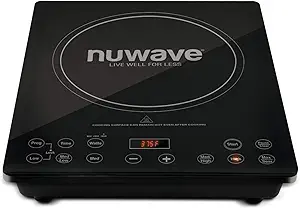 |
| Best Value The sweet spot between price and what you get | AMZCHEF Portable Induction Cooktop HL-B5 |  |
| Best Budget The cheapest option that still gets the job done reliably | Mueller RapidTherm Induction IC-711 |  |
| Top Rated A top-rated pick with lots of positive feedback | Nuwave Precision Induction Cooktop Gold |  |
| Most Popular A crowd favorite that many people choose with confidence | Duxtop 1800W Induction Cooktop BT-180G3 |  |
| Best Seller A high-volume bestseller chosen again and again | Duxtop BT-200DZ Induction Cooktop |  |
Empava 12" Induction Cooktop

| Number of Heating Elements | 2 |
|---|---|
| Power Source | Induction |
| Control Type | Touch |
| Voltage | 120 volts |
| Wattage | 1800 watts |
This Empava 12" induction cooktop is a compact built-in unit aimed at small kitchens, RVs, or secondary cooking stations. It uses a smooth vitro ceramic glass surface that is easy to wipe clean and only heats cookware with a magnetic bottom via induction, which makes it energy-efficient during use. Controls are touch-based with a red LED display, nine power settings ranging from low simmer to a combined 1800W, and a 1–99 minute timer for hands-off cooking. Safety features include a hot-surface indicator, pan sensor that shuts the unit off when no pan is detected, automatic shut-off, and a child safety lock. Because it runs on 120V and ships with a 20A plug, installation is straightforward where that circuit is available. The small footprint is a practical trade-off: it is great for everyday boiling, frying, and simmering for 1–2 people but lacks the output and burner size for large pots or heavy-duty multi-burner cooking. Overall, it delivers efficient, precise heat control and convenient safety features in a space-saving package.
Best for: Buyers wanting an energy-efficient, space-saving built-in cooktop for everyday cooking in small kitchens, RVs, or as a secondary stove who value safety and easy cleanup.
Less Ideal for: Those who regularly cook for large families, need simultaneous high-power burners for large pots, or require professional-level output and burner size.
- Induction heating with 9 power levels provides responsive and efficient cooking
- Smooth vitro ceramic glass surface wipes clean easily and resists heat discoloration
- Safety features include pan sensor, hot-surface indicator, automatic shut-off, and safety lock
- Compact built-in design with 120V plug works well for small kitchens and RV installs
- Total 1800W shared between two burners limits high-output cooking with large pots
Verdict: A compact, energy-efficient two-burner induction unit that delivers precise heat control and strong safety features for small-space cooking.
Nuwave Pro Chef Induction Cooktop

| Wattage | 1800 watts |
|---|---|
| Controls Type | Touch |
| Heating Element | Induction |
| Voltage | 120 volts |
The Nuwave Pro Chef is a high-power portable induction cooktop built for precise temperature control and fast, efficient cooking. It delivers up to 1800 watts with three power steps and a large 8-inch heating coil that heats cookware directly for quicker boil times and even searing. The touch controls let you select one of 94 temperature settings from 100°F to 575°F in 5°F increments and the unit supports programmable stage cooking, delay and automatic shutoff for hands-off use. The commercial-style ceramic glass surface is NSF-certified and designed to resist shattering under normal kitchen stresses, and the slim profile makes it easy to store or move between small kitchens, RVs, and dorms. Because induction transfers most of its energy into the pot, this model runs efficiently compared with traditional electric ranges, but it requires induction-compatible cookware and a 120V outlet. The unit's higher max temperature is excellent for searing, though users who need multiple burners or built-in installation will want a different solution.
Best for: Buyers who prioritize fast, energy-efficient cooking and precise temperature control for tasks like searing steaks or simmering sauces, and who need a portable countertop solution.
Less Ideal for: People who need multiple simultaneous burners, built-in cooktop installation, or who lack induction-capable cookware.
- High 1800W power for fast heating and strong searing performance
- Very precise temperature control with 94 settings in 5°F increments
- NSF-certified shatter-proof ceramic glass surface for durability and safety
- Programmable stage cooking, delay and automatic shutoff for hands-off operation
- Only a single burner, so it cannot replace a multi-burner range
- Requires induction-compatible cookware to work
Verdict: Choose the Nuwave Pro Chef when you want a high-powered, energy-efficient induction cooktop that delivers precise temperatures and strong searing performance in a portable package.
AMZCHEF Portable Induction Cooktop HL-B5

| Wattage | 1800 watts |
|---|---|
| Controls Type | Touch |
| Heating Element | Induction |
| Voltage | 120 volts |
The AMZCHEF HL-B5 is a compact, energy-conscious single-burner induction cooktop designed for fast, precise cooking on the countertop. It heats cookware with magnetic bottoms using induction, delivering up to 1800W for rapid boiling and searing while offering 20 power levels (90W–1800W) and 20 temperature settings (120°F–465°F) for fine control. The touch panel and four preset menus (boil, hot pot, stew, keep warm) simplify everyday use, and safety features such as a child lock and waste-heat reminder reduce accident risk. Its slim ceramic glass top wipes clean easily and the 4-hour timer helps manage longer cooks. Because it accepts pans from about 4 to 10 inches, it is well suited to small pots and skillets but not large griddles. Users should note it requires induction-capable cookware and is intended for standard 110–120V outlets, so it is best for kitchens, offices, or temporary setups rather than heavy professional duty.
Best for: Buyers who prioritize efficient, accurate countertop cooking and want an easy-to-clean, portable induction option for home kitchens, offices, or small living spaces.
Less Ideal for: Anyone who needs multi-burner capacity, large griddle cooking, or who does not own induction-capable cookware.
- Precise control with 20 power and 20 temperature levels for tailored cooking.
- High 1800W output for fast heating and quicker boil times compared with electric coils.
- Touch controls and four useful preset menus simplify common tasks like boiling and stewing.
- Safety features including child lock and waste-heat reminder reduce burn and misuse risk.
- Smooth ceramic glass surface is durable and easy to clean.
- Only supports induction-compatible pans between about 4 and 10 inches.
- Single burner limits simultaneous cooking and is not intended for heavy commercial use.
Verdict: A compact, energy-efficient single-burner induction cooktop that delivers fast, precise heating for buyers seeking a portable, easy-to-use countertop cooker.
Mueller RapidTherm Induction IC-711

| Wattage | 1800 watts |
|---|---|
| Heating Element | Induction |
| Controls Type | Touch |
| Special Features | LCD Display, Automatic Shut-Off, Child Safety Lock, Overheat Protection |
The Mueller RapidTherm IC-711 is a single-burner induction cooktop designed for portable use in dorms, RVs, and small kitchens. It delivers up to 1800 watts and offers fine-grained control with eight power levels and eight temperature settings (140°F–460°F), plus four one-touch presets for common tasks like boiling, slow cooking, and keeping warm. The glass-ceramic surface stays relatively cool and wipes clean easily, while automatic pan detection, child lock, overheat protection, and an internal cooling fan add practical safety. A programmable timer up to 4 hours and a pause function make unattended simmering or long cooks straightforward. Limitations include the need for magnetic, flat-bottom cookware and the ETL-mandated duty cycle that limits continuous run time to safe intervals; also sustained high-power use is best on a dedicated 15-amp circuit. For buyers prioritizing quick, efficient heating and low cleanup in a compact package, this unit offers strong energy efficiency and useful safety features, but it is not a replacement for a full-range cooktop in heavy daily use scenarios.
Best for: Buyers who need a low-cost, energy-efficient portable burner for small spaces or occasional cooking and value precise temperature control and safety features.
Less Ideal for: Those who cook for large groups frequently or need an always-on full-range stove for heavy daily use should choose a built-in or full-size range instead.
- Precise control with 8 power levels and 8 temperature settings for accurate cooking.
- Four one-touch presets plus a 1–240 minute timer for convenient unattended cooking.
- Safety features include automatic pan detection, child lock, overheat protection, and ETL certification.
- Smooth glass-ceramic surface is easy to clean and stays cooler than traditional burners.
- Compact, lightweight design suitable for RVs, dorms, and small kitchens.
- Requires magnetic, flat-bottom cookware so aluminum, copper, and glass pans will not work.
- ETL duty-cycle limits continuous operation time which can interrupt long high-power cooks.
Verdict: A compact, budget-friendly induction burner that delivers efficient, precise heating and strong safety features for small-space cooking.
Nuwave Precision Induction Cooktop Gold

| Wattage | 1500 watts |
|---|---|
| Voltage | 120 volts |
| Control Type | Digital Touch |
| Heater Surface Material | Glass Ceramic |
| Number of Heating Elements | 1 |
The Nuwave Precision Induction Cooktop Gold is a compact, freestanding single-burner designed for energy-efficient countertop cooking. It delivers up to 1500 watts and offers 96 temperature settings from 100°F to 575°F in 5°F increments, which makes it useful for delicate tasks like simmering sauces and for high-heat searing. The large 8” heating coil sits beneath a 12” shatter-resistant ceramic glass surface that keeps heat localized to compatible cookware and is straightforward to wipe clean. Controls are digital touch and responsive, and you can adjust time or temperature mid-cycle without restarting. Built-in safety features include automatic shutoff when cookware is absent or the timer ends, reducing risk and energy waste. The unit is portable and works on standard 120V circuits, so it is easy to move between kitchens or use in small spaces. Limitations include a single cooking zone and dependence on induction-compatible pots, and the 1500W ceiling means it is less useful for simultaneous high-output tasks compared with larger professional units.
Best for: Buyers who prioritize dependable, energy-efficient countertop heating and precise temperature control for everyday cooking in small kitchens or portable setups.
Less Ideal for: People who need multi-burner cooking or professional-level continuous high wattage for large-batch cooking should consider larger stovetops or multi-zone units.
- Very fine temperature control with 96 preset and adjustable temps for precise cooking.
- Shatter-resistant ceramic glass surface that is easy to clean and keeps heat contained.
- Responsive digital touch controls with on-the-fly adjustments and timer.
- Automatic shutoff and cookware-sensing safety features that reduce energy waste and hazards.
- Single-burner design limits multitasking and meal throughput.
- Requires induction-compatible cookware to operate.
Verdict: Choose this cooktop if you want a reliable, energy-efficient single-burner with precise temperature control for small-space or portable cooking.
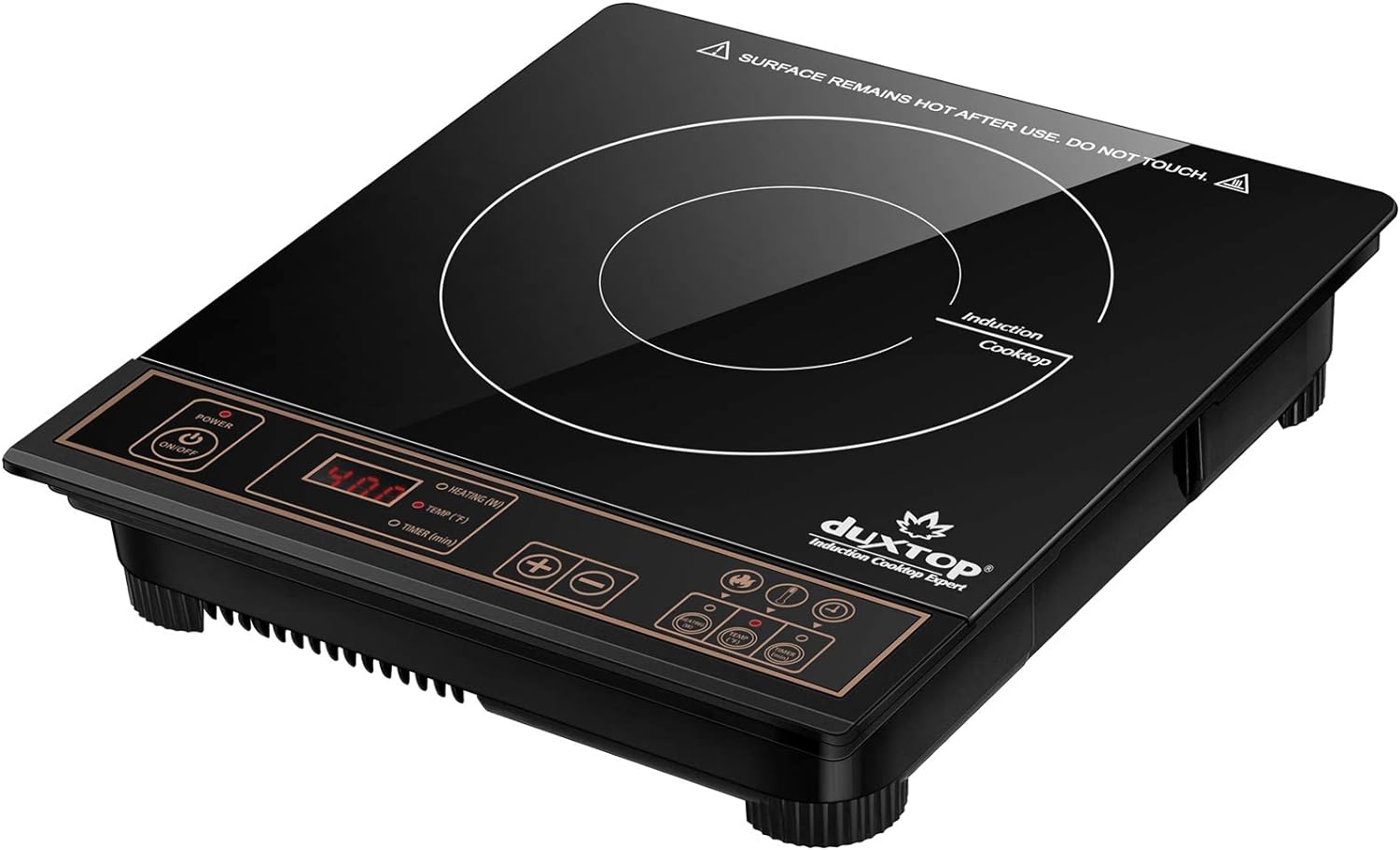
Duxtop 1800W Induction Cooktop BT-180G3
| Wattage | 1800 watts |
|---|---|
| Voltage | 120 volts |
| Number of Heating Elements | 1 |
| Power Levels | 15 |
| Temperature Range | 140°F–460°F |
The Duxtop 1800W portable induction cooktop is a compact countertop burner that delivers fast, responsive heating using induction technology. It is used like a single-burner stovetop: place induction-compatible cookware on the glass surface, select one of 15 power levels or one of 15 temperature settings between 140 and 460°F, and use the countdown timer up to 170 minutes for hands-off cooking. The digital push-button controls and lightweight design make it easy to move, store, and dial in precise temperatures for tasks such as boiling, simmering, frying, or keeping food warm. Built-in safety features include auto-pan detection, overheat protection with diagnostic messages, and low/high voltage warnings. Because it runs on standard 120V household current and peaks at 1800W, it heats quickly and is more energy-efficient than many electric coil or ceramic burners, though it requires magnetic cookware and some clad pans can emit a faint high-pitched noise. ETL approval and a two-year manufacturer warranty add reassurance for buyers focused on dependable performance.
Best for: Buyers who want a reliable, energy-efficient single-burner solution for small kitchens, dorms, or supplemental cooking and who value tested performance and documented safety features.
Less Ideal for: Those who do not own magnetic induction cookware or need multiple burners and full-range stovetop functionality.
- Fast, efficient induction heating that reduces cook time compared with traditional electric burners
- Precise digital controls with 15 power levels and 15 temperature settings for consistent results
- Built-in countdown timer up to 170 minutes for unattended cooking tasks
- Safety features including auto-pan detection, overheat protection, and voltage warnings
- Compact, lightweight design for easy storage and portability
- Requires induction-compatible magnetic cookware
- Can produce a high-pitched sound with some multi‑layer clad pans
Verdict: A compact, energy-efficient single-burner induction cooktop that delivers fast, precise heating and reliable safety features for buyers prioritizing proven performance.
Duxtop BT-200DZ Induction Cooktop

| Wattage | 1800 watts |
|---|---|
| Controls Type | Touch |
| Voltage | 120 volts |
| Heating Element | Induction |
| Number of Heating Elements | 1 |
The Duxtop BT-200DZ is a compact portable induction cooktop designed for everyday stovetop tasks where a full range is unavailable or unnecessary. It offers 20 power levels (100 to 1800 W) and 20 temperature presets (100°F to 460°F), plus a fast-boil button, keep-warm function, and an up-to-10-hour programmable timer. The sensor touch panel with LCD readout and child-lock makes it straightforward to set and monitor cooking, while auto-pan detection and multiple overheat and voltage protections reduce the chance of misuse. Its glass top wipes clean easily and the unit is light enough to stow when not in use. Because induction transfers energy directly to magnetic cookware, the BT-200DZ reaches boil and simmer temperatures quickly and runs more efficiently than conventional electric elements, helping lower energy use for routine tasks. Limitations include the need for magnetic-bottom cookware and occasional high-pitched noise from some pans, and the single-burner layout restricts capacity when cooking for multiple dishes at once.
Best for: Buyers who prioritize reliable, energy-efficient countertop cooking and want a safe, easy-to-use burner for apartments, dorms, or supplemental kitchen use.
Less Ideal for: People who need multi-burner cooking or who do not own compatible magnetic cookware should consider alternatives.
- Wide power and temperature range for precise control
- Energy-efficient induction heating for faster boil times
- Touch LCD controls with child lock and long timer for convenience
- Safety protections including auto-pan detection and overheat/voltage warnings
- Compact, lightweight glass-top design that is easy to clean and store
- Requires magnetic-bottom cookware to function
- Single burner limits simultaneous cooking capacity
- Some cookware may produce high-pitched noise on induction
Verdict: A compact, energy-efficient single-burner induction cooktop that delivers fast, precise heating with strong safety features for cautious mainstream buyers.
Choosing the Right Energy-Efficient Induction Cooktop: Key Factors to Consider
Power Efficiency and Output
Power efficiency matters because it determines how much of the electrical energy drawn actually becomes useful cooking heat. Higher efficiency means faster boil times and less wasted electricity. Look for cooktops that state power modulation, inverter drive, or high coil coupling efficiency. Those technical approaches reduce cycling losses and deliver more consistent energy transfer to the cookware.
Also consider maximum output per burner. A highly efficient cooktop with low maximum output may save energy during gentle cooking but could lengthen high-heat tasks if it cannot deliver sufficient power. Balancing efficiency with adequate output for your typical cooking styles helps avoid longer cook times that can erase the energy savings.
Heat Control and Temperature Accuracy
Precise temperature control affects energy use because maintaining a target temperature with minimal overshoot wastes less power. Look for fine-grain power steps, accurate digital temperature settings, or simmer modes that avoid aggressive cycling. Consistent temperature hold is especially important for delicate tasks like simmering sauces or melting chocolate where frequent adjustments otherwise increase runtime.
Control latency and responsiveness also matter. Faster response to setting changes reduces the time the cooktop operates at higher-than-needed power. If you frequently alternate between high and low heat, a cooktop with rapid modulation will be more efficient in real use.
Burner Size, Layout, and Cookware Compatibility
Burner size and layout affect how efficiently heat is transferred. Matching pan diameter to the induction zone minimizes wasted energy and improves performance. Multiple zone sizes provide versatility so you can use small pans without activating a larger ring that wastes energy.
Additionally, plan for cookware compatibility. Induction efficiency relies on good magnetic coupling between the pan and the induction coil. Thicker, flat-bottomed ferrous cookware performs better. If you have a range of pan sizes, choosing a cooktop with flexible or bridging zones helps keep energy use optimized across tasks.
Electrical Requirements and Installation
A cooktop must be matched to your kitchen's electrical capacity to perform efficiently. Undersized wiring or breakers can force a unit to operate at restricted power or trip protective devices, which can increase cook time and lower efficiency. Confirm voltage and amperage requirements before buying, and plan professional installation if your circuit needs upgrading.
Placement and ventilation also affect long-term efficiency. Proper clearance and air circulation prevent overheating and reduce the need for internal cooling cycles that draw extra standby energy. Installation flexibility such as single- or dual-circuit options can make a big difference in how usable and efficient the cooktop is in your home.
Safety Features and Energy-Saving Modes
Safety interlocks, automatic shutoff, residual-heat indicators, and child locks reduce accidental energy waste and mitigate risks that could lead to continuous heating. Energy-saving display modes and low-standby electronics lower background consumption when the cooktop is idle.
Automatic pan-detection and adaptive power limiting are useful for preventing wasted energy when no cookware is present or when a pan is poorly seated. Those features both improve kitchen safety and help keep idle energy draw to a minimum.
Durability and Long-Term Efficiency
Durability matters because a more robust cooktop maintains performance and efficiency over a longer period. Components that degrade quickly can increase losses or require replacement parts that temporarily reduce efficiency. Choose units built with reliable controls and accessible service support.
Long-term efficiency also depends on how easy the cooktop is to maintain. A surface that resists staining and a design with accessible ventilation pathways will need less cleaning and service, preserving the unit's original thermal performance and reducing the chance of energy-wasting faults.
How Induction Efficiency Actually Works
Induction cooktops use electromagnetic fields to induce current directly in ferrous cookware, which generates heat inside the pan rather than through a separate element. That direct transfer is why induction can be more efficient than conventional electric or gas cooking in many real-world scenarios.
Efficiency gains depend on good coupling between the coil and the pan and on the cooktop's ability to modulate power smoothly. Design choices such as coil size, inverter electronics, and control algorithms determine how much of the drawn power ends up as useful heat.
- Direct energy transfer reduces wasted ambient heat
- Coil and pan match affect efficiency
- Control electronics determine modulation smoothness
Matching a Cooktop to Your Cooking Style
Think about typical meal preparation. If you frequently sear or bring large pots to a boil, prioritize higher maximum burner output combined with efficient power delivery. For mostly low-heat tasks, smaller zones and precision simmer modes are more important.
Consider how often you use multiple burners simultaneously. If you regularly run three or four pans, look for models that maintain output across zones without heavy throttling or significant efficiency losses when multiple zones are active.
- High-heat cooking benefits from strong per-burner output
- Simmer-heavy cooking benefits from precise low-power control
- Multi-burner use needs stable total power management
Cookware Tips to Maximize Efficiency
Use flat-bottomed pans with good magnetic responsiveness to improve coupling with the induction coil. Heavy-gauge stainless steel with a magnetic core or cast iron are common efficient choices. Avoid warped or thin-bottomed pans that increase losses and worsen heat distribution.
Match pan diameter to the cooking zone. Using a pan much smaller than the active zone wastes energy and can trigger warnings or reduced power modes on some units. If you cook with a variety of pan sizes, choose a cooktop with multiple zone sizes or bridging options.
- Prefer flat, ferrous cookware for best coupling
- Match pan size to zone size
- Avoid thin, warped pans for consistent performance
Installation Checklist for Reliable Efficiency
Before installation, verify circuit capacity, breaker rating, and cable gauge to ensure the cooktop can deliver its rated power. If your kitchen wiring is marginal, a professional electrician can advise on upgrades to prevent power limitations that lengthen cook times.
Allow recommended clearance and airflow around the unit to prevent thermal throttling. Proper ventilation reduces the need for internal cooling fans to run at high speed, which lowers standby and operational energy draw.
- Confirm voltage and amp requirements
- Use recommended cable and breaker sizes
- Ensure proper clearance and ventilation
Maintenance Habits That Preserve Efficiency
Regularly clean the glass surface and vents to maintain thermal performance. Spills and grime can cause hotspots and may reduce the effectiveness of cooling pathways, which can prompt more frequent internal fan use and higher standby consumption.
Periodically inspect the cooktop and its electrical connections for signs of wear. Early attention to minor issues avoids efficiency losses from loose connections or failing control electronics.
- Keep surface and vents clean
- Address electrical wear early
- Follow manufacturer maintenance recommendations
How We Chose the Best Energy-Efficient Induction Cooktop
We prioritized measurable efficiency and real-world cooking performance when assembling this list. Key evaluation criteria included power-to-output efficiency, how quickly and accurately the cooktop reaches and holds set temperatures, and how well the unit manages residual heat and standby energy draw. Usability factors such as burner configuration and size, control precision, and safety features were weighed because they affect how efficiently you can cook day to day. We also considered installation flexibility and electrical requirements since underpowered circuits or poor placement can negate efficiency gains. Products were excluded if they lacked published technical specs on power and temperature control or if they had consistently poor user reports about stability, overheating, or excessive standby consumption. We favored units with verified efficiency-focused design elements such as inverter-driven coils or advanced power modulation that reduce cycling losses. Durability and serviceability were secondary filters to avoid items with unreliable components that shorten product life and undermine long-term energy savings. The result is a set of cooktops selected for efficient energy use, accurate heat control, and practical kitchen integration.
Our full evaluation process is outlined in our review methodology.
FAQ
Do energy-efficient induction cooktops really save electricity?
Often they do in normal home use because induction transfers heat directly to the pan and reduces wasted ambient heat. Actual savings depend on cooking habits, cookware, and whether the cooktop is matched to your kitchen electrical capacity.
Will I need new cookware to use an induction cooktop efficiently?
Usually you need ferrous, flat-bottomed pans for optimal coupling. Many existing stainless steel or cast-iron pans will work, but thin or warped bottoms reduce efficiency. Testing pans with a magnet is a quick way to check compatibility.
Can an induction cooktop run multiple burners without losing efficiency?
It depends on the model and your electrical supply. Some units manage total load well and maintain near-rated output across zones, while others may throttle power when several burners run. Confirm the cooktop's multi-zone power management if you often cook on multiple burners.
How important are ventilation and placement for efficiency?
Very important. Proper clearance and ventilation prevent overheating and reduce internal cooling cycles that draw extra energy. Poor placement can force the cooktop to run fans more often or throttle output, which lowers real-world efficiency.
Do energy-saving modes affect cooking performance?
Energy-saving modes typically reduce standby draw or dim displays and usually do not affect active cooking performance. However, aggressive power-limiting features that cap maximum output can lengthen high-heat tasks, so choose a model whose power limits suit your cooking needs.
Final Verdict
Prioritize accurate heat control, sufficient per-burner output, and proper electrical installation when choosing an energy-efficient induction cooktop. These factors determine whether the cooktop will actually shorten cook times and lower electricity use in your kitchen. Balance efficiency features with the cooking styles you use most. If you value fast boil times and searing, choose a cooktop rated for higher output that still provides fine modulation. If low-heat precision matters more, favor precise temperature control and smaller zones. With the right match, an induction cooktop can deliver both energy savings and better cooking control.