
Note: This article contains affiliate links. If you click on these links and make a purchase, we may earn a small commission at no extra cost to you. This helps support our research and content. Read our full affiliate disclosure here.
If you need compact cold storage that barely moves your utility bill, an energy-efficient mini fridge with freezer is the right appliance to consider. These units matter when space is tight and you still want separate frozen storage for ice packs, small meals, or frozen snacks. Choosing the wrong model can mean higher energy costs, poor temperature stability, or cramped freezer space that defeats the purpose. This guide shortlists the six best energy-saving mini fridges with freezers and explains the criteria we used to assess them, including measured power draw, usable capacity, and noise. Read on to see which features matter most and which should guide your purchase decision.
Top Picks at a Glance
| Best Overall The best all-around choice for most situations | Frigidaire Retro Mini Fridge EFR840 |  |
| Best Quality Built to a higher standard if you want something more solid | GE Double-Door Mini Fridge | 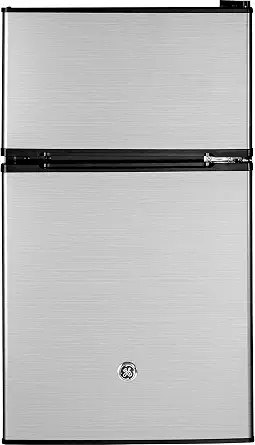 |
| Best Budget The cheapest option that still gets the job done reliably | Frestec 1.7 Cu Ft Mini Fridge |  |
| Top Rated A top-rated pick with lots of positive feedback | Midea WHD-113FB1 3.1 Cu Ft Mini Fridge |  |
| Most Popular A crowd favorite that many people choose with confidence | Upstreman BR321 3.2 Cu.Ft Mini Fridge |  |
| Best Seller A high-volume bestseller chosen again and again | Frostorm 3.2 Cu Ft Mini Fridge | 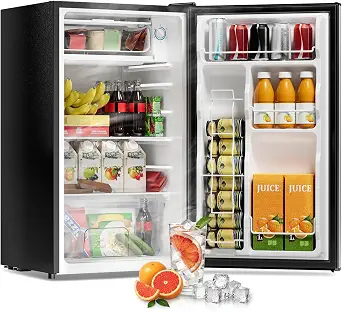 |
Frigidaire Retro Mini Fridge EFR840

| Capacity | 3.2 cubic feet |
|---|---|
| Freezer Capacity | 0.2 cubic feet |
| Cooling Method | Compressor |
| Defrost System Type | Manual |
| Annual Energy Consumption | 5 kwh |
The Frigidaire EFR840 is a 3.2 cubic foot compact refrigerator with a 0.2 cu ft top freezer and a vintage-inspired look suited for dorms, offices, or bars. It uses a compressor cooling system and manual defrost, and includes three glass shelves, a crisper drawer, a small freezer bin with ice tray, and a built-in external bottle opener. The flush-back form factor and reversible door let you place it close to a wall and adapt the swing to your space. Temperature controls are simple and accessible, and removable spill-proof glass shelves make cleanup straightforward. On the downside this is a small-capacity unit so it is best for single-person use or limited storage needs, and manual defrost means occasional maintenance to manage frost. Energy consumption is listed at 5 kwh annually which makes it reasonably efficient for a self-contained mini fridge. If you need compact refrigeration with a stylish retro appearance and practical small-scale storage, this model covers those bases well.
Best for: Buyers who want a stylish, space-saving refrigerator that balances reasonable energy use with basic refrigerated and frozen storage for one person or small shared spaces.
Less Ideal for: People who need large-capacity refrigeration, heavy frozen food storage, or a no-maintenance frost-free freezer should look at larger or different models.
- Compact 3.2 cu ft capacity with a top freezer for basic frozen storage
- Flush-back design and reversible door for flexible placement in small spaces
- Removable spill-proof glass shelves and crisper drawer simplify cleaning and organization
- Built-in external bottle opener adds convenience for entertaining
- Low listed annual energy consumption (5 kwh) for a mini fridge
- Manual defrost freezer requires periodic thawing and maintenance
- Freezer space is very small and only suitable for light frozen storage or ice trays
Verdict: A compact, energy-light retro mini fridge that delivers practical refrigerated and minimal freezer storage for single users or tight spaces.
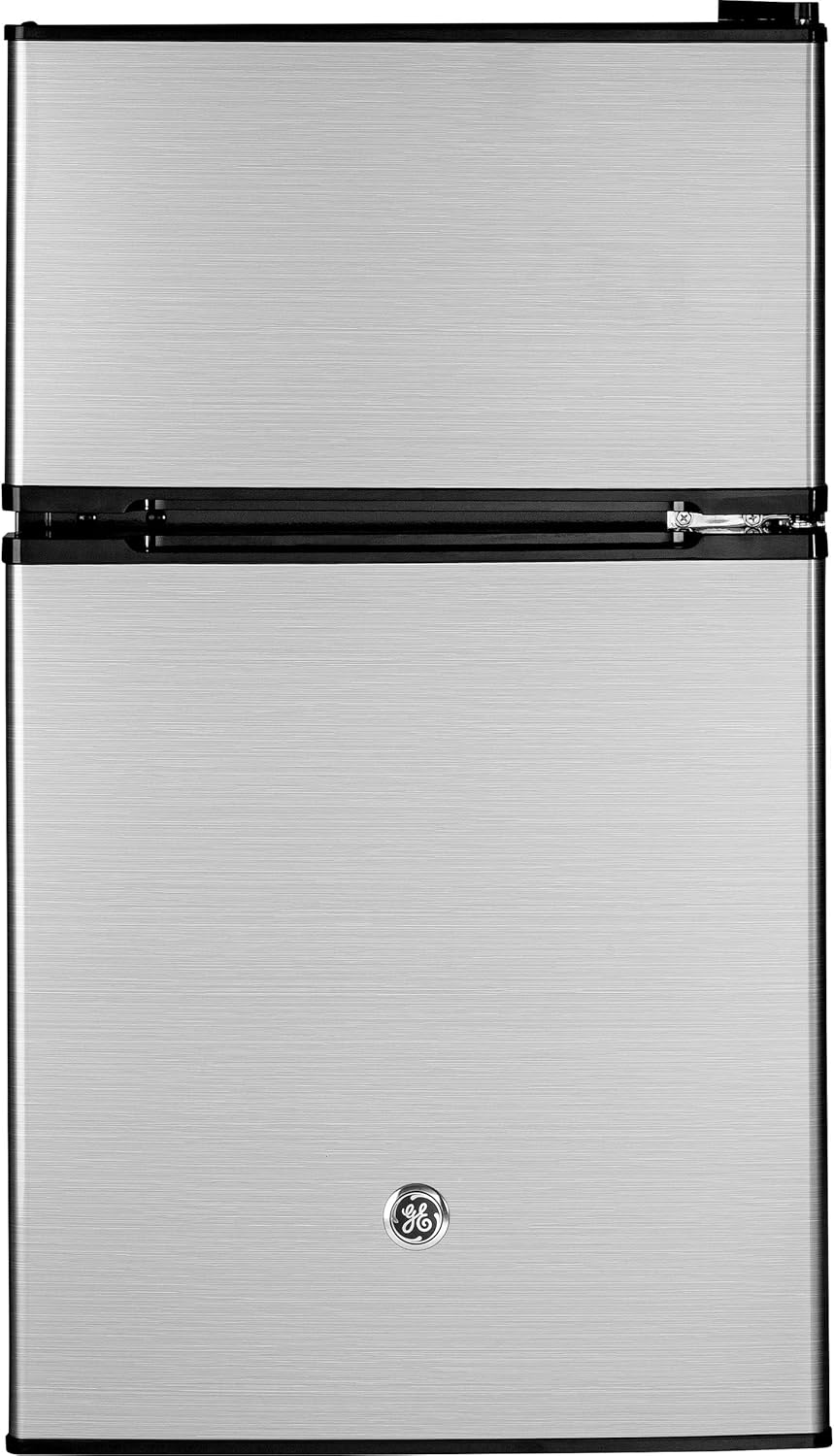
GE Double-Door Mini Fridge
| Capacity | 3.1 cubic feet |
|---|---|
| Freezer Capacity | 0.93 cubic feet |
| Configuration | Compact Freezer-on-Top |
| Defrost System Type | Partial Automatic Defrost |
| Cooling Method | Compressor |
The GE Double-Door Mini Fridge is a compact freestanding refrigerator that pairs a small freezer-on-top with usable fresh-food shelving for dorms, offices, or garages. It offers two sturdy glass shelves, a clear crisper drawer, door storage with tall-bottle and can-rack accommodations, and bright interior lighting that makes organization straightforward. The unit uses a compressor-based cooling system with an inverter and a durability-tested rotary scroll compressor designed to hold steady under varying conditions, and it meets ENERGY STAR specs for better efficiency versus nonqualified minis. The freezer is a true compartment (0.93 cu. ft.) suitable for an ice tray, frozen meals, and small packages, though it requires manual defrost while the fresh-food side is partial automatic defrost. Recessed handles keep the profile compact and prevent accidental snags. Expect reliable daily cooling and sensible storage in a small footprint, while users who want fully frost-free freezers or larger capacity will need a bigger model.
Best for: Buyers who prioritize steady, proven cooling performance and energy-efficient operation in a compact, double-door refrigerator for small spaces.
Less Ideal for: Those who need a fully frost-free freezer, larger overall capacity, or a unit purpose-built for heavy freezer use should look at larger or different models.
- Separate freezer compartment for real frozen storage
- ENERGY STAR qualified for lower energy use compared with nonqualified mini fridges
- Sturdy, easy-clean glass shelves and a clear crisper for organized storage
- Recessed handles save external space and produce a cleaner profile
- Durability-tested compressor with inverter for consistent cooling performance
- Freezer requires manual defrost instead of full frost-free operation
- Annual energy consumption is listed and may be higher than some ultra-efficient compact models
Verdict: A reliable, ENERGY STAR double-door compact fridge that delivers stable compressor cooling and usable freezer space for buyers focused on performance and efficiency in a small footprint.
Frestec 1.7 Cu Ft Mini Fridge

| Capacity | 1.7 cubic feet |
|---|---|
| Freezer Capacity | 0.2 cubic feet |
| Defrost System Type | Manual |
| Cooling Method | Compressor |
| Voltage | 115 volts |
This Frestec 1.7 cu ft mini fridge is a straightforward small refrigerator for dorms, bedrooms, or offices that need a bit of cold storage and a tiny freezer. It uses a compressor cooling method with a freezer-on-top layout, a removable glass shelf and three door shelves to organize drinks and snacks. Temperature is adjusted with a simple 0–6 thermostat knob and a one-touch defrost button for the tiny freezer compartment, while a reversible door and adjustable feet help fit the unit into tight spots. The manufacturer advertises low noise around 37 dB and modest daily energy use, which makes it suitable where quiet and energy use matter. Limitations are inherent to the size: the 0.2 cu ft freezer only holds a few ice trays and the single shelf limits tall items unless removed, and manual defrost means occasional maintenance. For buyers wanting the smallest practical refrigerator with a freezer and simple controls, this model delivers useful features without extras.
Best for: Buyers prioritizing a low-cost, space-saving fridge with a small freezer for dorms, offices, or bedrooms who want quiet operation and easy mechanical controls.
Less Ideal for: Anyone who needs substantial freezer space, frequent large-item refrigeration, or advanced features like auto-defrost or precise digital temperature control.
- Very compact footprint fits under desks or in small rooms
- Top freezer provides basic frozen storage despite small overall capacity
- Simple mechanical thermostat and one-touch defrost are easy to use and maintain
- Removable glass shelf and reversible door improve flexibility for different items and placements
- Advertised low noise makes it suitable for bedrooms or quiet spaces
- Freezer capacity is very small and only suitable for ice or minimal frozen food
- Manual defrost requires periodic clearing of frost buildup
Verdict: A compact, energy-conscious mini fridge with a tiny top freezer that fits cramped spaces and keeps noise and running costs low.
Midea WHD-113FB1 3.1 Cu Ft Mini Fridge

| Capacity | 3.1 cubic feet |
|---|---|
| Freezer Capacity | 0.92 cubic feet |
| Energy Consumption | 270 kilowatt hours per year |
| Defrost Type | Manual Defrost |
| Voltage | 120 volts |
The Midea WHD-113FB1 is a compact two-door refrigerator designed for dorms, apartments, or office use where space and energy use matter. It pairs a 0.92 cu ft top freezer with a 2.18 cu ft fridge section and uses an R600a compressor and inverter technology to keep annual energy use around 270 kWh. The interior offers removable glass shelves, a crisper drawer, a 2L bottle rack and an LED light for visibility. Temperature is set with a manual thermostat providing a wide range for both fridge and freezer sections, and the reversible door and electronic lock add practical flexibility. Because it is ENERGY STAR certified and quiet at about 45 dB, it suits long-term, low-cost operation and small living spaces. Limitations include manual defrosting and a modest freezer volume that may not suit heavy frozen-food storage, and it is a freestanding unit so built-in installation is not supported.
Best for: Buyers who prioritize dependable, energy-efficient cooling for a small household, dorm room, or office and want a quiet, low-running-cost refrigerator.
Less Ideal for: People who need large freezer capacity, frequent heavy frozen-food storage, or a built-in cabinet installation should consider larger or built-in models instead.
- ENERGY STAR certified with R600a compressor for lower annual energy use.
- Quiet operation (~45 dB) suitable for bedrooms or offices.
- Removable glass shelves and crisper drawer for flexible interior organization.
- Reversible door and internal LED light improve placement and usability.
- Inverter-equipped compressor for stable cooling performance.
- Freezer is small and better for occasional frozen items rather than bulk storage.
- Manual defrost requires occasional maintenance to avoid frost buildup.
Verdict: A reliable, ENERGY STAR certified compact fridge that delivers quiet, energy-efficient cooling for small spaces and low operating cost.
Upstreman BR321 3.2 Cu.Ft Mini Fridge

| Capacity | 3.2 cubic feet |
|---|---|
| Freezer Capacity | 0.3 cubic feet |
| Defrost System Type | Manual Defrost |
| Cooling Method | Compressor |
| Annual Energy Consumption | 206 kwh |
The Upstreman BR321 is a small, compressor-cooled mini refrigerator aimed at dorms, bedrooms, and offices that need reliable, efficient cooling in a compact footprint. It offers a 3.2 cu.ft capacity with a 0.3 cu.ft top freezer, two adjustable glass shelves, a crisper drawer, and three door bins for bottles and condiments. A five-step adjustable thermostat (32°F to 50°F) lets you tune coldness for drinks or perishables while the rotary scroll compressor and R-600A refrigerant deliver steady cooling with modest noise reported around 38 dB. The reversible door and adjustable leveling feet make placement flexible, and ETL listing plus an Energy Star rated annual consumption of 206 kWh help justify it for buyers focused on operating cost. Expect manual defrosting for the freezer and limited freezer performance not suitable for long-term ice storage. The build is practical rather than premium, but for buyers prioritizing energy efficiency and quiet operation in small spaces, this model balances capacity and running cost well.
Best for: Buyers who prioritize energy-efficient, quiet refrigeration for a small living or work space and want a widely reviewed, practical mini fridge with adjustable cooling.
Less Ideal for: People who need a powerful freezer for long-term frozen storage or those seeking a premium finish and heavy-duty build quality.
- Energy Star rated with reported annual consumption of 206 kWh for lower operating costs
- Adjustable thermostat with five temperature levels for flexible cooling needs
- Quiet operation around 38 dB suitable for bedrooms and offices
- Reversible door and adjustable feet allow flexible placement
- Compact 3.2 cu.ft interior with adjustable glass shelves and door bins for organized storage
- Freezer is small and uses manual defrost, so it cannot maintain large amounts of ice or long-term frozen storage
- Construction and finish are utilitarian rather than high-end
Verdict: Choose this mini fridge if you want a compact, Energy Star rated unit that runs quietly and keeps everyday drinks and perishables chilled with low operating costs.
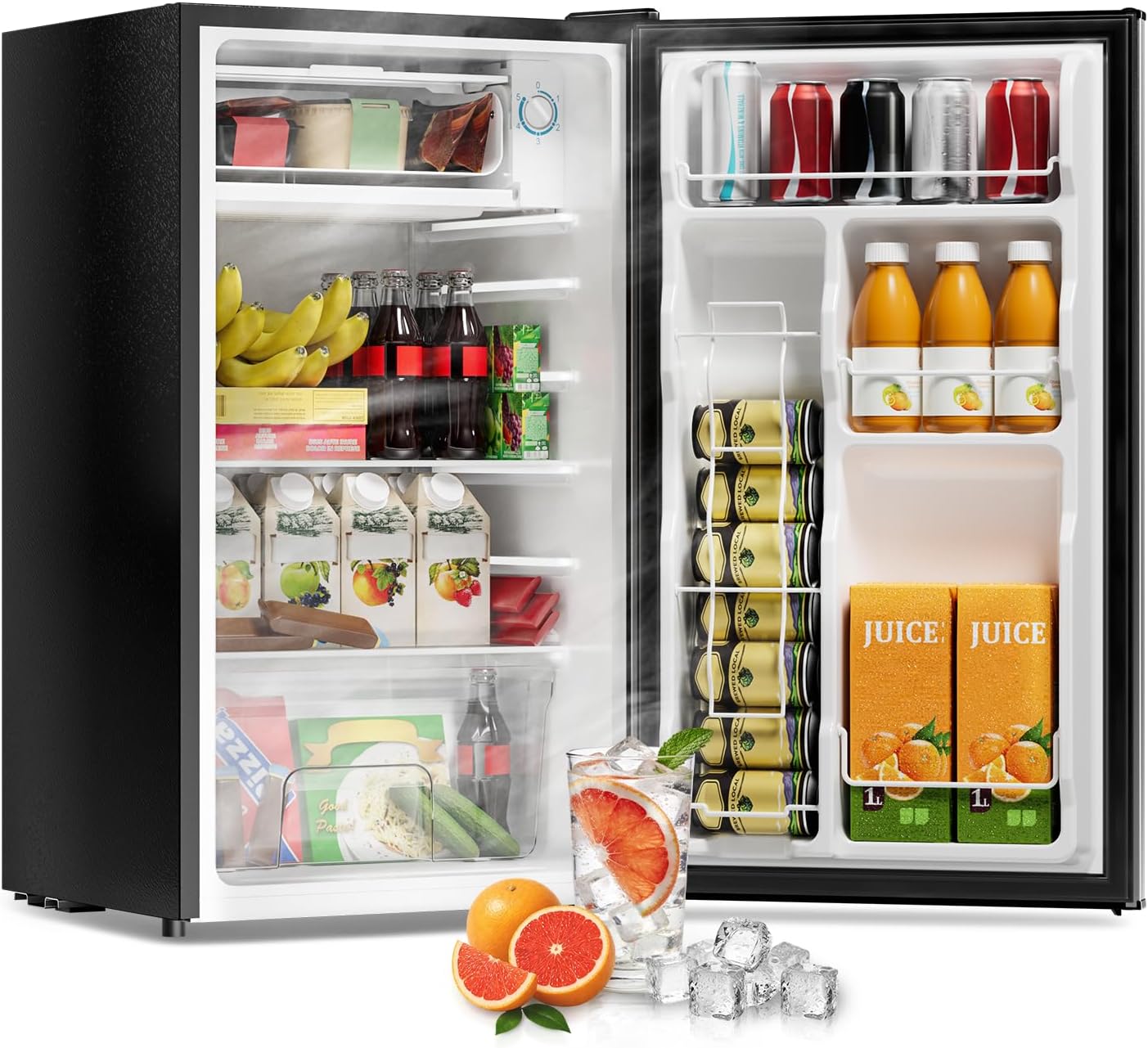
Frostorm 3.2 Cu Ft Mini Fridge
| Capacity | 3.2 cubic feet |
|---|---|
| Freezer Capacity | 0.3 cubic feet |
| Defrost System Type | Manual |
| Cooling Method | Compressor |
| Voltage | 115 volts |
The Frostorm 3.2 Cu Ft Mini Fridge packs a full-top freezer and usable refrigerator space into a compact freestanding cabinet meant for small rooms and offices. It uses a compressor cooling system with a mechanical 1–5 thermostat so you can dial in temperature easily; the separate 0.35 cu ft upright freezer reaches typical ice-making temperatures while the main compartment stores drinks, groceries, and meal prep. Adjustable shelves, door bins, and included accessories like a beverage rack and ice mold help organize contents, and the reversible door lets you fit the unit into tight layouts. Energy use is modest at about 0.6 kWh per day and the unit is ETL certified, which should reassure buyers prioritizing safe, economical operation. Expect manual defrosting and the usual noise and temperature swings associated with compact compressors, and the freezer is best for short-term frozen storage rather than long-term preservation.
Best for: Buyers who want a reliable, energy-conscious compact fridge for a bedroom, dorm, or office and prefer a straightforward, safety-certified appliance with easy temperature control.
Less Ideal for: Those needing large frozen storage, precise long-term freezing, or an ultra-quiet, silent cooler should consider larger freezers or different cooling technologies.
- Compact 3.2 cu ft capacity with a dedicated top freezer for ice and quick-freeze items
- Compressor cooling for reliable cold performance in varying room temperatures
- Reversible door improves placement flexibility in small spaces
- Adjustable shelves, door bins, and included accessories help organize food and beverages
- Relatively low energy use (~0.6 kWh/day) and ETL safety certification
- Freezer is small and suited to short-term storage and ice only
- Manual defrost requires occasional maintenance
- Compressor models can be louder than thermoelectric mini fridges
Verdict: A compact, ETL-certified mini fridge that balances usable fridge space with low daily energy use, making it a sensible pick for safety- and cost-conscious small-space buyers.
Choosing the Right Energy-Efficient Mini Fridge with Freezer: Key Factors to Consider
Annual Energy Use and Efficiency Ratings
Annual energy consumption directly affects operating cost and is the primary reason to choose an energy-efficient mini fridge with freezer. Look for clear wattage, amps, or annual kWh estimates so you can compare expected running cost across models. A lower rated annual kWh means less electricity used over time, which matters especially if the fridge runs 24/7 in a small living space.
Energy labels and efficiency certifications provide a standardized baseline for comparison. Keep in mind that real-world energy use varies with ambient temperature and how often the door is opened. Expect slightly higher consumption in warmer rooms or high-use scenarios, so choose a model with some headroom in efficiency if it will sit in a sunny or warm location.
Usable Interior Layout
Nominal capacity in liters or cubic feet does not always translate to usable storage. The interior layout, shelf adjustability, and door bins determine how much you can actually store. If you plan to keep beverages upright, frozen meals, or meal-prep containers, check that shelves remove easily and that shelf spacing accommodates common items.
A well-designed interior makes an otherwise small fridge function more effectively. Removable shelves, clear storage bins, and a flat bottom freezer floor improve usability. Door storage is useful for condiments and small items, but deep door shelves can make temperature control less consistent if they crowd the main compartment.
Freezer Size and Access
A freezer in a mini fridge is often small and shallow, so assess whether its capacity suits your needs. Freezer usability is about both volume and access: a top freezer with a door is easier to use than a tiny internal icebox that requires unpacking the refrigerator section.
Consider what you will store in the freezer: a few ice packs, one or two small meal pouches, or regular frozen groceries. Frequent freezer access can increase overall energy use because the compressor works harder to recover temperature; models with better insulation and tighter freezer seals recover faster and waste less energy.
Noise Level for Shared Spaces
Noise matters if the mini fridge will live in a bedroom, office, or dorm room. Compressors and fans create a low-tone hum that can be disruptive in quiet environments. Look for manufacturer noise ratings in decibels when available and seek user reports about actual in-room noise.
Thermoelectric units can be quieter but are generally less efficient for freezer-equipped models. Even efficient compressor units can vary in noise depending on build quality and mounting. A quieter fridge will improve comfort in small spaces and is especially important for night-time use.
Temperature Control and Stability
Consistent temperature control keeps food safe and prevents freezer burn. Check that the fridge offers an adjustable thermostat with clear settings and that the control has fine enough increments to maintain both refrigerator and freezer zones. Rapid temperature spikes or long recovery times after door openings indicate weaker performance.
Stable temperature also reduces energy waste because the compressor cycles predictably rather than running continuously. Good seals, proper insulation, and a responsive thermostat all contribute to a stable internal environment for both chilled and frozen items.
Size, Venting, and Installation Placement
Compact does not always mean the same footprint. Measure the intended location and ensure the appliance has adequate ventilation space around it. Poor vent clearance forces the compressor to work harder and increases energy use. Top-vented units are more flexible for built-in counters while rear-vented models require more clearance behind the unit.
Consider door swing and whether the fridge needs to fit under a desk or counter. Also check leveling and floor protection so the unit sits stable and operates quietly. Proper installation extends lifespan and preserves the energy efficiency rating in everyday use.
Quiet Operation Strategies
Minimizing noise starts with selecting a unit rated for low decibels and ensuring it is placed on a stable, level surface. Soft rubber feet or a small anti-vibration pad can reduce rattles and resonance that make an otherwise quiet compressor sound louder in a room.
Regular maintenance such as cleaning the condenser coils and keeping the back clear of dust helps the compressor run cooler and quieter. If noise is a primary concern, prioritize models with user feedback confirming low hums rather than relying solely on manufacturer noise claims.
- Leave recommended vent clearance to prevent overheating
- Use a stable, vibration-absorbing surface
- Clean coils periodically to maintain quiet operation
Placement Tips for Best Efficiency
Where you place the mini fridge affects its energy use more than most buyers expect. Avoid direct sunlight, proximity to heat sources like radiators or ovens, and closed cabinets that trap heat. Cooler ambient temperatures reduce compressor run time and lower energy consumption.
Allow the recommended clearance around vents and avoid tight enclosures unless the unit is specifically designed for built-in installation. Proper airflow around the compressor and condenser equals better efficiency and longer life.
- Keep the fridge out of direct sunlight
- Maintain manufacturer-recommended vent clearances
- Avoid heat sources and enclosed cabinetry unless specified
How Freezer Design Affects Performance
Freezer placement, door type, and insulation density all influence both frozen storage usability and overall energy use. A small separate freezer compartment with its own door reduces cold-air loss when accessing the refrigerated section, improving efficiency and temperature stability.
Conversely, combined single-compartment designs that use a freezer tray within the fridge can be convenient but typically allow more cold-air exchange when opened, which forces longer recovery cycles and higher energy use over time.
- Top-mounted freezer with door preserves cold better
- Internal icebox-style freezers are compact but less efficient
- Good freezer seals reduce temperature loss during access
Maintenance Practices That Preserve Efficiency
Simple maintenance preserves both cooling performance and efficiency. Keep door gaskets clean and free of debris so seals remain airtight. Worn or damaged gaskets let cold air escape, causing the compressor to run longer.
Defrost manual-freeze sections as recommended to prevent ice buildup, which reduces usable space and forces longer run cycles. Regularly remove dust from condenser coils and ensure the unit is level to avoid unnecessary vibration and wear.
- Clean condenser coils every six months
- Inspect and clean door gaskets regularly
- Defrost manual freezer compartments when ice buildup appears
Energy-Saving Habits for Everyday Use
Small behavioral changes enhance the efficiency of an otherwise efficient appliance. Minimize door opening frequency and duration, group items so you can retrieve things quickly, and avoid putting hot items directly into the fridge. These practices reduce compressor cycles and temperature recovery time.
Set the thermostat to a sensible level rather than the coldest setting by default. The refrigerator compartment is usually safe at about 37 to 40 degrees Fahrenheit and the freezer at 0 degrees Fahrenheit for most preserved foods. Slightly higher settings can save energy without compromising food safety.
- Avoid frequent, long door openings
- Cool hot food to near-room temperature before storing
- Organize contents to speed retrieval and reduce temperature loss
How We Chose the Best Energy-Efficient Mini Fridge with Freezer
We applied practical, buyer-focused filters to identify compact refrigerators that deliver low energy consumption without sacrificing usable cold and frozen space. Our selection prioritized certified low-consumption designs and units with documented power draw or efficient compressor/thermoelectric technology. We also favored fridges with straightforward temperature control and a functional freezer compartment suitable for small frozen items. Key evaluation criteria included measured or rated annual energy use, usable interior layout (shelves and door storage), freezer capacity and accessibility, noise level for shared spaces, and long-term reliability features such as compressor type and build quality. Units with poor temperature control, undersized freezers, or excessive noise were excluded. Models lacking clear energy specifications or with inconsistent user reports about cooling performance were also filtered out. The result is a list focused on real-world efficiency, daily usability, and quiet operation for dorms, offices, and small apartments.
Our full evaluation process is outlined in our review methodology.
FAQ
Will an energy-efficient mini fridge with freezer run well in a dorm room?
Often yes. Many energy-efficient models are designed for small living spaces and balance low power draw with sufficient freezer space for ice packs and small meals. Choose a quieter unit and confirm it fits available space and ventilation.
How much does freezer use affect overall electricity consumption?
Freezer use can noticeably increase consumption because maintaining below-freezing temperatures requires more compressor time. Models with well-insulated, separate freezer compartments usually recover temperature faster and limit extra energy use.
Are thermoelectric mini fridges better for energy savings than compressor models?
It depends. Thermoelectric units are quieter and simpler but typically struggle to maintain true frozen temperatures; compressor models are usually more efficient and effective for freezers. For reliable frozen storage, a compressor-based energy-efficient model is often preferable.
How can I check whether a model is truly energy-efficient?
Look for clear annual kWh or wattage specifications and efficiency certifications where available. Also review user reports about real-world power draw and temperature stability. Models that publish measured energy use provide the most trustworthy comparisons.
Does placing the fridge in a warm room void efficiency claims?
Warm ambient temperatures make any fridge work harder, so expected energy use will be higher than rated if the unit sits in a hot room. To preserve efficiency, locate the fridge in a cool, ventilated spot away from direct heat sources.
Final Verdict
When choosing an energy-efficient mini fridge with freezer, prioritize verified low energy consumption, a practical interior layout, and a freezer design that meets your frozen-storage needs. Balance noise and placement constraints against insulation and temperature-control features to match your use case. Ultimately, pick a model whose rated energy use and usable freezer space align with how you will use it. Favor units with clear specifications and straightforward maintenance to ensure long-term efficiency and reliable cold storage.