
Note: This article contains affiliate links. If you click on these links and make a purchase, we may earn a small commission at no extra cost to you. This helps support our research and content. Read our full affiliate disclosure here.
Picking the right compact refrigerator matters when you want a reliable cooling solution that uses minimal electricity and fits a limited footprint. The right energy-efficient mini fridge can reduce monthly power draw, free up kitchen or dorm space, and protect perishables with steady temperatures. This guide gathers six shortlisted mini fridges that stood out for low energy consumption, practical storage, and everyday reliability. We explain the performance and usability tradeoffs that matter for small-space refrigeration so you can choose confidently. Read on for a clear look at the features we evaluated and which factors to prioritize for your room, office, or secondary kitchen.
Top Picks at a Glance
| Best Overall The best all-around choice for most situations | Midea 3.1 Cu Ft Mini Fridge |  |
| Best Value The sweet spot between price and what you get | Frestec Mini Fridge FTC31RE |  |
| Best Budget The cheapest option that still gets the job done reliably | Frestec 1.7 Cu Ft Mini Fridge |  |
| Top Rated A top-rated pick with lots of positive feedback | Midea Compact Refrigerator WHS-65LB1 |  |
| Most Popular A crowd favorite that many people choose with confidence | Upstreman BR321 3.2 Cu.Ft Mini Fridge |  |
| Best Seller A high-volume bestseller chosen again and again | EUHOMY WC-6B Mini Fridge | 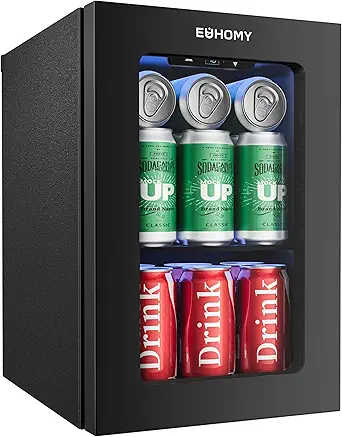 |
Midea 3.1 Cu Ft Mini Fridge

| Capacity | 3.1 cubic feet |
|---|---|
| Configuration | Compact Freezer-on-Top |
| Defrost System Type | Manual |
| Voltage | 120 volts |
| Specification Met | Energy Star |
The Midea 3.1 Cu. Ft. mini fridge is a compact two-door refrigerator with a small freezer compartment and a mechanical thermostat for simple temperature control. It is designed as a freestanding unit with reversible doors and adjustable legs so you can fit it into tight spaces like dorms, small apartments, or offices. Notable features include Energy Star certification with an efficient R600a compressor, LED interior lighting, removable shelves and a crisper drawer for organization, and a manual defrost system for the freezer. In everyday use it keeps drinks, produce, and frozen items separated and accessible while using relatively low power compared with larger fridges. Trade-offs are the manual defrosting and limited freezer space, which mean you will need occasional maintenance and cannot store large frozen items. The simple mechanical control is reliable but lacks precise digital settings. For buyers who want an energy-conscious, space-saving fridge that is easy to place and organize, this model delivers practical cooling without extras.
Best for: Buyers who prioritize low energy use and a compact, organized refrigerator for a dorm, small apartment, or office and prefer simple, reliable controls.
Less Ideal for: People who need large freezer capacity, precise temperature control for sensitive items, or a frost-free freezer should consider a larger or feature-rich model instead.
- Energy Star certified with an efficient R600a compressor for lower annual energy use
- Double-door layout with a dedicated freezer and removable shelves for flexible organization
- Reversible door and adjustable legs make it easy to fit into different room layouts
- LED interior light improves visibility without adding much power draw
- Freezer space is small and requires manual defrosting
- Temperature control is mechanical rather than precise digital control
Verdict: A compact, Energy Star certified mini fridge that saves on power while offering a practical two-door layout for small spaces.
Frestec Mini Fridge FTC31RE

| Capacity | 3.2 cubic feet |
|---|---|
| Freezer Capacity | 0.2 cubic feet |
| Cooling Method | Compressor |
| Defrost System Type | Frost Free |
| Annual Energy Consumption | 215 kilowatt hours per year |
This Frestec 3.2 cu ft mini fridge is a straightforward compact refrigerator built for dorms, bedrooms, and small offices. It uses a compressor cooling system with a 0.2 cu ft top freezer and two glass shelves plus a crisper drawer to keep basics organized, and the reversible door and leveling legs help fit it into tight layouts. The unit emphasizes energy savings, reporting about 0.55 kWh per day and annual consumption of 215 kWh, and the manufacturer rates the compressor noise below 37 dB so it stays quietly in the background. Temperature is adjusted with a dial offering multiple thermostat settings and a one-touch defrost function simplifies occasional maintenance. Trade-offs are typical of this class: storage is best for beverages, meal prep items, and small frozen packs rather than large platters, and the compact compressor can be less cold than full-size fridges under heavy loading. For buyers who prioritize low energy use and a small footprint, this model delivers useful features without unnecessary complexity.
Best for: Buyers who want a no-frills, energy-conscious compact fridge for a dorm, bedroom, or office and value quiet operation and flexible installation.
Less Ideal for: People who need large-capacity refrigeration or a big freezer for bulk meal storage should choose a larger model instead.
- Energy-efficient operation with about 215 kWh annual consumption
- Quiet compressor reportedly below 37 dB suitable for bedrooms and dorms
- Reversible door and leveling legs allow flexible placement
- Two glass shelves and a crisper drawer organize food effectively
- Small overall capacity limits storage to basics and small frozen items
- No listed ENERGY STAR certification despite low reported consumption
Verdict: Choose this compact Frestec mini fridge if you want a quiet, energy-conscious small refrigerator that fits tight spaces and keeps essentials chilled efficiently.
Frestec 1.7 Cu Ft Mini Fridge

| Capacity | 1.7 cubic feet |
|---|---|
| Freezer Capacity | 0.2 cubic feet |
| Cooling Method | Compressor |
| Defrost System Type | Manual |
| Noise Level | 37 dB |
This Frestec 1.7 cu ft mini fridge delivers a straightforward, space-saving cooling solution ideal for a dorm, bedroom, or small office. It uses a compressor cooling method with an internal 0.2 cu ft freezer and a manual defrost control you operate with a single knob that also provides six temperature settings. The unit includes one removable glass shelf, a reversible door, adjustable feet, and a soft detachable door seal that simplifies cleaning. Noise levels are low at about 37 dB, so it will not be intrusive in quiet spaces, and the claimed energy use is modest at roughly 0.55 kWh per day. Expect basic performance: it chills and keeps a handful of drinks or snacks cold and makes a few ice cubes in the tiny freezer, but storage is limited and manual defrosting is required occasionally. Overall it is a practical, low-noise compact refrigerator for buyers prioritizing small footprint and energy efficiency over large capacity or advanced features.
Best for: Buyers on a tight budget who need a quiet, energy-conscious compact refrigerator for a dorm, bedroom, or small office and value a small footprint over interior capacity.
Less Ideal for: Anyone seeking a high-capacity, frost-free refrigerator or advanced features like digital controls, large freezer space, or precise temperature zones should look elsewhere.
- Very compact footprint fits under desks or in tight spaces
- Low operating noise around 37 dB suitable for bedrooms and offices
- Compressor cooling with a small internal freezer for ice and frozen snacks
- Reversible door and adjustable feet for flexible placement
- Single-knob temperature control with six settings and removable shelf for versatility
- Manual defrost design requires occasional user intervention
- Limited interior capacity restricts storage to a few drinks and small items
- Annual energy consumption listed is 200 kWh which is moderate rather than ultra-low
Verdict: A compact, low-noise mini fridge that delivers efficient, budget-friendly cooling for small spaces where footprint and quiet operation matter most.
Midea Compact Refrigerator WHS-65LB1

| Capacity | 1.6 cubic feet |
|---|---|
| Annual Energy Consumption | 207 kilowatt hours per year |
| Defrost System Type | Automatic |
| Cooling Method | Compressor |
| Voltage | 115 volts |
The Midea 1.6 cu ft compact refrigerator is a small, energy-efficient fridge built for dorms, offices, or bedrooms where space and running costs matter. It uses an R600a compressor rated at about 207 kWh/year, and the automatic defrost and adjustable thermostat with multiple settings make it simple to dial in cooling for drinks and short-term food storage. The interior includes a removable glass shelf, a door rack sized for 2L bottles, and a small chiller compartment intended for quick cooling rather than deep freezing. Installation is freestanding and the reversible door adds placement flexibility. Noise is low, under 42 dB, so it is unlikely to disturb quiet rooms. Limitations include very small capacity that limits bulk storage and a chiller that cannot fully freeze or long-term preserve meats or ice cream. For buyers prioritizing low energy use and dependable basic refrigeration in a compact footprint, this model offers a solid, no-frills option.
Best for: Buyers who need a reliable, energy-conscious secondary refrigerator for a small living space and prioritize low running costs and quiet operation.
Less Ideal for: People who need significant cold storage, frequent long-term freezing, or a fridge for full-kitchen use should choose a larger-capacity model instead.
- ENERGY STAR certified with R600a compressor for lower annual energy use
- Compact footprint with reversible door for flexible placement
- Removable shelf and door rack accommodate taller bottles and odd-shaped items
- Automatic defrost and simple mechanical thermostat for easy day-to-day use
- Quiet operation rated under 42 dB suitable for bedrooms or offices
- Very small 1.6 cu ft capacity limits food storage and bulk items
- Chiller compartment is only for short-term cooling and will not freeze or preserve frozen foods
Verdict: A dependable, ENERGY STAR mini fridge that keeps running costs and noise low for small-space daily refrigeration.
Upstreman BR321 3.2 Cu.Ft Mini Fridge

| Capacity | 3.2 cubic feet |
|---|---|
| Freezer Capacity | 0.3 cubic feet |
| Cooling Method | Compressor |
| Voltage | 115 volts |
| Defrost System Type | Manual Defrost |
The Upstreman BR321 is a compact freestanding mini fridge designed for small spaces like dorms, bedrooms, or offices. It uses a rotary scroll compressor and a manual-defrost freezer to deliver reliable cooling across a 3.2 cu.ft interior, with a 0.3 cu.ft freezer compartment and two adjustable glass shelves for flexible storage. The five-step adjustable thermostat (32°F to 50°F) makes it easy to tune temperatures for drinks, fruit, and dairy, while the reversible door and adjustable leveling feet help it fit into tighter layouts. Energy efficiency is a clear focus here: the unit is ETL listed and rated with low annual consumption, and a reported operating noise around 38 dB keeps it unobtrusive in sleeping or working environments. Practical touches include a crisper drawer, three door shelves, tight door seal, and a defrost tool for maintenance. Limitations are the manual defrost requirement and the freezer's small size that is unsuitable for long-term ice storage or large frozen items, and the unit lacks a lock or advanced temperature controls.
Best for: Buyers who prioritize proven, efficient cooling in a compact footprint and want a quiet, energy-conscious mini fridge backed by solid customer feedback.
Less Ideal for: Those needing sizable freezer capacity, automated defrost convenience, or precise digital temperature management should look at larger or feature-rich models instead.
- Energy-efficient compressor with low annual consumption and quiet operation around 38 dB
- Reversible door and adjustable leveling feet for flexible placement in tight spaces
- Adjustable thermostat with five settings for basic temperature control
- Two adjustable glass shelves plus door storage and a crisper drawer for organized cooling
- Compact 3.2 cu.ft capacity with a separate 0.3 cu.ft freezer for small frozen items
- Freezer is very small and not suitable for storing ice cubes or large frozen items
- Requires manual defrosting rather than an automatic system
- No lock or advanced digital temperature controls
Verdict: Choose the Upstreman BR321 if you want a quiet, energy-efficient compact fridge with straightforward controls and flexible placement for small spaces.
EUHOMY WC-6B Mini Fridge

| Capacity | 18 liters |
|---|---|
| Temperature Range | 40°F to 61°F |
| Cooling Method | Compressor |
| Installation Type | Freestanding |
| Annual Energy Consumption | 200 kilowatt hours per year |
The EUHOMY WC-6B is a small compressor-driven beverage refrigerator intended for dorms, offices, and home bars where space is tight. It holds up to 24 standard 330 ml cans in its 18 L capacity and uses a compressor cooling system with digital temperature control from 40°F to 61°F, so it maintains a stable internal temperature even when room conditions change. The unit is freestanding, has one removable shelf for flexible storage, an LED interior light, and a UV-protected door to help shield drinks from sunlight. Noise levels are advertised under 40 dB, which keeps it unobtrusive on a countertop. Important limitations are its very small capacity and single-door, right-hinge layout, so it is best as a personal or single-purpose fridge rather than a household backup; annual energy consumption is listed, so expect measurable running costs compared with larger efficient models. Assembly and operation are straightforward, and the one-year warranty and ETL certification add reassurance for cautious buyers.
Best for: Buyers who prioritize a small, quiet, and stable countertop cooler for personal beverage or wine storage and want a factory-certified, easy-to-use appliance with basic protection and support.
Less Ideal for: People seeking larger-capacity or multi-use refrigeration for a household, or those who need reversible-door placement or built-in undercounter installation.
- Compressor cooling provides stable, reliable temperatures compared with thermoelectric units
- Compact footprint fits easily on counters, desks, or small bars
- Digital temperature control lets you set a specific range between 40°F and 61°F
- Removable shelf and LED interior improve flexibility and visibility
- UV-protected door helps reduce light exposure to beverages
- Very limited internal capacity suitable for a few drinks only
- Right-hinged single door may limit placement flexibility
Verdict: A compact, compressor-cooled mini fridge that delivers stable, quiet beverage storage for buyers who want a reliable, low-risk countertop cooler.
Choosing the Right Energy-Efficient Mini Fridge: Key Factors to Consider
Energy Use and Annual Consumption
Annual energy consumption determines long-term operating cost. Look for published kWh-per-year figures or tested wattage under normal conditions and compare them relative to interior volume. Even small differences in consumption add up over months when a fridge runs continuously.
Also consider the cooling system type. Compressor-based mini fridges usually reach lower temperatures with better efficiency for a given size, while thermoelectric units can be quieter but often use more power to achieve the same cooling. Evaluate how the stated energy use aligns with your typical daily cycles and ambient room temperature.
Usable Interior Capacity and Layout
The listed volume in liters or cubic feet is only part of the story. Shelving arrangement, removable racks, and door-bin design determine how much you can actually store and how easily you organize items. Adjustable shelves and a convertible freezer compartment increase versatility for drinks, produce, and frozen goods.
Measure the items you plan to store—tall bottles, meal-prep containers, and frozen trays—and compare to shelf spacing and door clearance. A fridge with slightly less rated volume but smarter layout often outperforms a sparsely shelved larger unit.
Noise Level for Living Spaces
Mini fridges are used in bedrooms, offices, and study areas where noise matters. Check measured decibel ratings or user-reported noise to gauge suitability for quiet rooms. Compressor cycles produce periodic noise and occasional vibration; look for models with low vibration mounting and soft-cycle compressors if quiet operation is essential.
If you are sensitive to sound, place the fridge on a stable surface and avoid tight enclosures that amplify noise. Remember that fan-assisted designs may create a constant hum, while thermoelectric versions can have different noise profiles tied to ambient temperature.
Temperature Control and Food Safety
Consistent temperature control keeps perishable items safe and prevents freezer burn. Look for units with a reliable thermostat, clear temperature readout, or multiple cooling presets. Rapid recovery after door openings is important if the fridge will see frequent use.
Consider how ambient room temperature affects performance. Many mini fridges are tested at specific room temperatures; performance can degrade in very warm or very cold rooms. If you need freezing capability, verify the temperature range and the presence of a true freezer compartment versus a small ice tray space.
Defrosting, Maintenance, and Longevity
Maintenance needs affect total cost of ownership. Manual-defrost models require periodic thawing to maintain efficiency, while frost-free designs reduce upkeep but sometimes use more energy. Check how easy it is to remove shelves and clean interior surfaces, and whether drip trays or condensate reservoirs are accessible.
Also consider warranty terms and the availability of user-replaceable parts like door seals, shelves, and temperature controls. A unit that is simple to service typically lasts longer and retains efficiency.
Dimensions, Placement, and Ventilation
Physical dimensions and recommended clearances determine where a mini fridge will fit and how efficiently it will run. Allow the specified space for airflow around the condenser or vents; cramped placement can raise operating temperature and energy use. Front-vent designs are helpful when the fridge will be installed under counters or in tight alcoves.
Also think about door swing direction and reversible hinges if placement near walls or cabinetry is a constraint. Leveling feet and stable footing reduce vibration and noise.
Which Cooling System Is Best for Efficiency?
Mini fridges generally use either compressor-based systems or thermoelectric modules. Compressor systems compress refrigerant to move heat and are typically more energy efficient at producing low temperatures, especially in warmer ambient rooms. Thermoelectric units have no refrigerant or compressor and can be quieter, but they are less effective at maintaining low freezer temperatures and can consume similar or more power in hot environments.
For most buyers seeking energy efficiency and reliable food safety, a modern compressor-based mini fridge is the safer choice. If noise is the top priority and you mostly store beverages at mildly cool temperatures, a thermoelectric unit may be acceptable.
- Compressor: better cold performance and efficiency in varied room temps
- Thermoelectric: quieter, fewer moving parts, limited low-temperature capability
Sizing for Your Use Case: Dorm, Office, or Secondary Kitchen
Match interior capacity to your regular load rather than choosing the largest size possible. Dorm and office users often favor compact shelves optimized for cans and small containers. If you plan to store prepared meals or frozen items, look for models with dedicated freezer space or flexible shelving that folds to accommodate trays.
Also evaluate footprint and door clearance. A taller, narrower fridge may fit better in a tight vertical space, while a wider unit with more shelf area could be preferable when storing plates or food boxes.
- Dorm: prioritize quiet operation and beverage storage
- Office: focus on low energy draw and minimal maintenance
- Secondary kitchen: prefer true freezer capability and larger usable capacity
Installation Tips to Maintain Efficiency
Place the fridge in a location with stable room temperature and good ventilation. Keep it out of direct sunlight and away from heat sources like ovens or radiators. Maintain the recommended clearance around vents and the condenser to avoid increased energy consumption.
Level the unit and avoid placing it on soft surfaces that could block airflow. Clean condenser coils or rear vents periodically according to the manufacturer guidance to preserve cooling efficiency.
- Allow manufacturer-recommended clearance for airflow
- Avoid heat sources and direct sun
- Clean vents and coils on a regular schedule
Managing Interior Organization for Maximum Utility
Use stackable containers and removable bins to make the most of limited shelf height. Convert a small freezer space into extra fridge shelving if the unit allows and if freezing is not essential. Door bins are useful for bottles and condiments but check their depth to ensure they hold your items securely.
Label shelves and rotate contents to reduce door-open time. Minimizing how long the door stays open helps the compressor run less and keeps overall energy use down.
- Use uniform containers to reduce wasted airspace
- Optimize shelf positions for typical items
- Limit door-open time to speed temperature recovery
When Quiet Operation Matters
If the fridge will sit in a bedroom or study, prioritize models with low-rated decibel levels and minimal vibration. Look for features like rubberized mountings for compressors, insulated cabinets that dampen sound, and soft-cycle compressors that reduce abrupt noise spikes during defrost or heavy cooling demand.
Test for resonant surfaces by placing the fridge on a stable, level platform. Small adjustments to placement can sometimes reduce perceived noise more than different model selection.
- Check published noise ratings and user reports
- Place on a solid, level surface to minimize vibration
- Avoid tight enclosures that amplify operational sounds
How We Chose the Best Energy-Efficient Mini Fridge
We selected models using criteria that reflect the real-world needs of people buying compact refrigerators for bedrooms, dorms, offices, and small apartments. We prioritized measured energy consumption and efficiency ratings because lower wattage and favorable energy-use figures directly reduce operating costs over the appliance lifetime. Temperature stability was a key filter since even efficient compressors or thermoelectric systems must maintain safe cold zones for food and beverages. Storage layout and usable capacity were evaluated to ensure the fridge could hold typical grocery loads for its size, including flexible shelving and door bin usefulness. Noise level and vibration matter in living spaces, so we favored units with quiet compressors or passive cooling designs. Build quality and ease of maintenance were also considered, including access to removable shelves, defrosting requirements, and accessible condensate management. Finally, we excluded models lacking basic safety features or clear energy specifications. Models were removed from consideration if they had no published energy-use data, inconsistent temperature control, or inadequate storage flexibility.
Our full evaluation process is outlined in our review methodology.
FAQ
How much electricity does a typical energy-efficient mini fridge use?
It depends on capacity and cooling system, but efficient compressor-based mini fridges often list annual consumption in the low hundreds of kWh per year. Look for published kWh-per-year figures to estimate monthly cost for your local electricity rate.
Can a thermoelectric mini fridge be considered energy efficient?
Thermoelectric units can be efficient for mild cooling tasks and are mechanically simple, but they often struggle to maintain low freezer temperatures and can be less efficient than compressor models in warm rooms. Efficiency depends on ambient temperature and usage patterns.
Is frost-free operation worth the extra energy?
Frost-free designs reduce maintenance by preventing ice buildup, but they may use slightly more energy due to periodic defrost cycles and fans. If you prefer low upkeep and consistent storage, frost-free can be worth it; for minimal energy draw, manual-defrost units might be slightly more efficient if maintained properly.
How important is noise level when choosing a mini fridge?
Noise level is crucial in bedrooms and quiet offices. Compressor cycles create intermittent noise and vibration, so choose models with low decibel ratings and anti-vibration mounting if the fridge will be near sleeping or working areas.
Do door seals and insulation affect efficiency?
Yes. Tight door seals and good cabinet insulation reduce cold air loss and shorten compressor run time. Inspect gasket quality and check for any gaps or poorly fitting doors when evaluating a unit.
Final Verdict
Focus on the combination of measured energy use and practical interior design when choosing an energy-efficient mini fridge. Prioritize models that publish kWh-per-year figures, maintain steady temperatures, and offer flexible shelving that matches how you store food and drinks. Balance noise and maintenance needs against efficiency expectations based on where the fridge will live. By weighing energy consumption, usable capacity, and noise together you can select a compact refrigerator that meets daily needs while keeping operating costs and interruptions to a minimum.