
Note: This article contains affiliate links. If you click on these links and make a purchase, we may earn a small commission at no extra cost to you. This helps support our research and content. Read our full affiliate disclosure here.
If you want to shrink your kitchen energy bills and speed up everyday cooking, an energy-efficient mini oven can be one of the most practical upgrades you make. These compact ovens use less electricity than full-size ranges, heat up faster, and fit into small kitchens, dorm rooms, or secondary cooking areas. Picking the right model matters because differences in insulation, thermostat accuracy, and heating technology affect both power consumption and finished results. This guide shortlists the top energy-efficient mini ovens across common use cases and evaluates each one on power draw, temperature control, and cooking performance. Use the quick summary and detailed criteria to find a compact oven that balances low energy use with the features you need. Next, we present the curated picks and why they made the cut.
Top Picks at a Glance
| Best Overall The best all-around choice for most situations | Breville Compact Smart Oven BOV650XL |  |
| Best Quality Built to a higher standard if you want something more solid | Panasonic FlashXpress NB-G110P |  |
| Best Value The sweet spot between price and what you get | BLACK+DECKER 4-Slice Toaster Oven |  |
| Best Budget The cheapest option that still gets the job done reliably | DASH Mini Toaster Oven |  |
| Top Rated A top-rated pick with lots of positive feedback | Zojirushi Micom Toaster Oven ET-ZLC30 |  |
| Most Popular A crowd favorite that many people choose with confidence | Breville Mini Smart Oven BOV450XL |  |
| Best Seller A high-volume bestseller chosen again and again | BLACK+DECKER Crisp 'N Bake TO1787SS |  |
Breville Compact Smart Oven BOV650XL

| Wattage | 1800 watts |
|---|---|
| Capacity | 0.6 cubic feet |
| Number of Shelves | 3 |
| Control Type | Knob Control |
The Breville BOV650XL is a smaller Smart Oven that brings intelligent heating to a compact footprint for everyday countertop cooking. It uses a five-element Element iQ system and 1800 watts to steer power where needed, which shortens preheat time and helps achieve even browning across the eight presets: Toast, Bagel, Bake, Roast, Broil, Pizza, Cookies, and Reheat. Controls combine push buttons, a turn knob and a backlit LCD that shows function, temperature and timing; presets can be adjusted and the oven will remember changes. The interior fits four slices of bread or a 12-inch pizza and offers three rack positions plus a removable crumb tray for easier cleanup. Practical accessories include a 10 x 10 enamel baking pan and broil rack. Trade-offs are the smaller 0.6 cu ft capacity compared with full-size ovens and the 1800-watt power draw, which is typical for fast countertop heating but may be higher than the smallest mini ovens. For daily toasting, roasting small meals, and quick reheats it delivers consistent, controlled results in a compact package.
Best for: Buyers who want an energy-efficient-feeling, smart-controlled countertop oven that delivers reliable, even results for everyday toasting, pizza and small roasts while keeping a small footprint.
Less Ideal for: Those who need to cook for large households or regularly roast large birds and casseroles should choose a full-size oven with greater interior volume and capacity.
- Element iQ system for targeted, even heating and faster preheat
- Eight preset cooking functions that cover toast, bake, roast, broil, pizza, cookies and reheat
- Compact footprint that fits a 12-inch pizza or four slices of toast while saving counter space
- Backlit LCD and simple knob/button controls with memory for adjusted settings
- Includes enamel baking pan and broil rack and a removable crumb tray for easier cleanup
- 0.6 cubic foot capacity limits cooking for larger families or full roasts
- 1800-watt power draw may be relatively high for very energy-conscious buyers seeking lower-watt mini ovens
Verdict: The BOV650XL packs Breville's Element iQ smart heating into a compact toaster oven, making it a top pick for buyers wanting precise, everyday countertop cooking without a full-size oven.
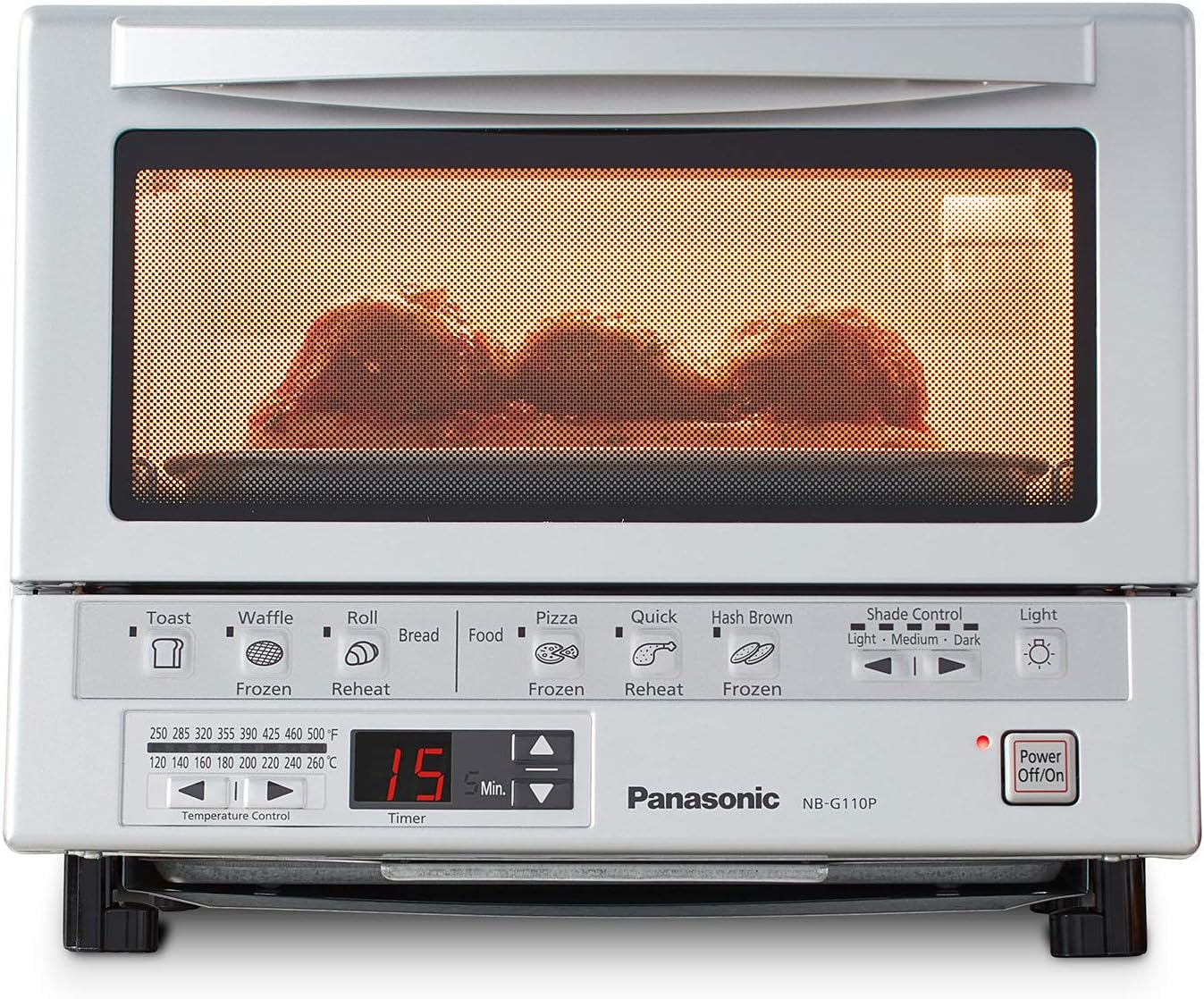
Panasonic FlashXpress NB-G110P
| Wattage | 1300 watts |
|---|---|
| Control Type | Touch Control |
| Temperature Range | 250 – 500 °F |
| Included Components | Baking Pan, Crumb Tray, Wire Rack |
| Capacity | 0.04 cubic feet |
The Panasonic FlashXpress NB-G110P is a small, performance-focused toaster oven that uses front-and-back infrared quartz elements to heat quickly and deliver even browning with no preheating. It fits a 9-inch square tray for personal pizzas or up to four slices of bread and offers six one-touch cook presets (toast, bagel, waffles, pizza, frozen food, reheat) plus manual temperature control from 250 to 500°F and a 25-minute digital timer. A connected baking rack pulls out with the door for safer access, and a smart sensor cycles heat to help avoid burning while an auto shut-off prevents overcooking. In real use it excels at fast toast, crisping frozen snacks, and small reheats where speed and consistent surface browning matter, and the included crumb tray and removable baking pan make cleanup straightforward. The oven's small interior limits batch cooking and is not suited for large dishes, and its compact capacity means you may need a full-size oven for family meals or bigger casseroles.
Best for: Buyers who prioritize fast, even cooking on a compact countertop unit and want consistent browning and quick heat-up for toast, frozen snacks, and single-serving meals.
Less Ideal for: Those who frequently cook family-size dishes, large sheet-pan meals, or need multi-rack capacity should choose a larger oven instead.
- Double infrared heating provides fast heat-up and even browning without preheating
- Six one-touch presets simplify common tasks like toast, pizza, and frozen snacks
- Connected pull-out rack improves safety when removing hot items
- Compact footprint fits small countertops and includes a removable crumb tray for easy cleaning
- Temperature range to 500°F and a 25-minute digital timer allow manual control for a variety of foods
- Very small internal capacity limits use to personal-size pizzas and small batches
- Not suitable for large casseroles or multi-rack cooking due to interior dimensions
Verdict: Choose the FlashXpress if you want a fast, energy-conscious mini oven that delivers quick, evenly browned results for single-serve and small-batch cooking.
BLACK+DECKER 4-Slice Toaster Oven

| Wattage | 1150 watts |
|---|---|
| Control Type | Knob Control |
| Temperature Range | 450 °F |
| Capacity | 10 liters |
This BLACK+DECKER 4-slice toaster oven is a compact countertop oven that bakes, broils, toasts, and keeps food warm using natural convection to circulate heat for more even results. It fits a 9-inch pizza or four slices of bread, and includes a baking/broiler pan, toasting rack, and a removable crumb tray for easy cleanup. Controls are simple knob dials for function, temperature, and a 30-minute timer with a stay-on option and auto shut-off for safety. The manufacturer highlights EvenToast Technology to reduce uneven browning, and the built-in convection can shorten cook times compared with non-convection toaster ovens. Practical downsides are its small interior—limited to single-serving dishes—and that outer surfaces become hot during use, so careful clearance and mitts are required. For everyday baking of small items, reheating, and crisping frozen foods, it delivers consistent, straightforward performance without complicated settings.
Best for: Buyers who want a reliable, no-frills countertop oven for everyday small-batch baking, reheating, and toasting where space and simplicity matter.
Less Ideal for: People who frequently bake for crowds or need to cook full-size sheet pans and large casseroles should choose a larger oven or full-size range instead.
- Convection heating for more even cooking and faster results
- Fits a 9-inch pizza or four slices of bread for compact baking tasks
- Simple knob controls and a 30-minute timer with stay-on for easy operation
- Includes baking/broiler pan, toasting rack, and removable crumb tray for convenience
- Stainless steel exterior with large viewing window to monitor food while cooking
- Small 10-liter interior limits batch size and larger bakeware
- Exterior surfaces get hot during use requiring caution and clearance
Verdict: A compact, convection-equipped toaster oven that reliably handles small baking and reheating jobs with simple controls and practical accessories.
DASH Mini Toaster Oven

| Wattage | 550 watts |
|---|---|
| Temperature Range | 400 °F |
| Control Type | Knob Control |
| Number of Shelves | 1 |
| Capacity | 101 cubic inches |
The DASH Mini Toaster Oven is a pocket-sized countertop oven built for toasting, reheating, and small-batch baking in tight spaces like dorms, RVs, or travel kitchens. It runs on 550 watts, heats up to 400°F, and uses a simple knob control with a 15-minute adjustable timer and auto shutoff so you can set it and walk away. The unit includes a removable cooking tray, oven rack, and slide-out crumb catch that make cleanup straightforward, and the clear glass door helps you watch progress without opening it. Its low power draw and compact footprint make it easy to pack or use where outlet capacity is limited, though the single shelf and small 101 cubic inch capacity mean it handles only small portions at a time. Expect basic manual controls rather than digital presets and hand-washable parts rather than dishwasher-safe components. For travelers or anyone with cramped counters who needs reliable, no-frills heating and toasting, this oven delivers practical performance in a tiny package.
Best for: Buyers who need a lightweight, space-saving oven for travel, dorms, RVs, or tiny kitchens and prioritize portability and simple, reliable heating over advanced features.
Less Ideal for: People who regularly cook for families, prepare large dishes, or need precise digital controls and larger capacity should choose a bigger toaster oven instead.
- Very compact and lightweight for tight spaces and travel
- 550-watt power with 400°F max lets you toast, heat, and bake small items
- Simple knob controls with 15-minute timer and auto shutoff for easy, safe use
- Removable tray and slide-out crumb catch simplify cleanup
- Small internal capacity limits cooking to single slices or mini dishes
- Manual controls lack digital precision or preset cooking modes
Verdict: A tiny, travel-friendly toaster oven that gives reliable toasting and small baking tasks in a compact, low-power package.
Zojirushi Micom Toaster Oven ET-ZLC30

| Wattage | 1500 watts |
|---|---|
| Control Type | Knob Control |
| Power Source | Electric |
| Included Components | Toaster Oven, Removable Crumb Tray, Baking Tray, Broil Tray, Mesh Rack |
The Zojirushi Micom Toaster Oven ET-ZLC30 is a compact countertop oven that uses microcomputerized temperature control to handle toast, bagels, pizza, baking, broiling, and a hands-off rise-then-bake bread function. It is typically used for small-batch baking and reheating, toasting up to four slices or fitting a 12" pizza, and includes a mesh rack, baking tray and broil tray for flexible cooking. Notable features include 12 preset cooking modes, an LCD countdown timer that remembers the last setting, eight heating elements for more even heat, and dual thermostats with protected heaters that reduce the chance of overheating or element damage. The controls are simple physical dials, which make adjustments quick without a learning curve. Trade-offs are the relatively small internal capacity suited to singles or small families and the lack of advanced connectivity or programmable multi-step recipes, but the unit is built with safety and durability in mind and performs reliably for everyday tasks.
Best for: Buyers who prioritize a dependable, well-built countertop oven for everyday toasting, small baking tasks, and reliable temperature control without wanting complicated smart features.
Less Ideal for: People who need large-capacity or multi-batch cooking for big families or those who want app control and advanced programmable sequences.
- Microcomputerized temperature control for consistent results across presets
- 12 cooking functions including a rise-then-bake bread mode for hands-off baking
- Eight heating elements and dual thermostats for even heating and improved safety
- Includes practical accessories: mesh rack, baking tray, broil tray, and removable crumb tray
- Small internal capacity limits larger dishes and batch cooking
- No smart features or connectivity for remote control or recipe integration
Verdict: A compact, reliability-first toaster oven that delivers consistent heating and practical presets for everyday small-batch cooking.
Breville Mini Smart Oven BOV450XL

| Wattage | 1800 watts |
|---|---|
| Control Type | Knob Control |
| Temperature Range | 50-250 °C |
| Number of Shelves | 1 |
| Capacity | 440 cubic inches |
The Breville Mini Smart Oven BOV450XL is a high-performance compact toaster oven that brings precision heating to small kitchens. It uses the Element iQ system with five quartz elements and smart algorithms to direct heat where it is needed, which shortens preheat time and helps produce even browning for toast, pizza, cookies, and small roasts. The 1800 watt heater and convection-style airflow let you bake and broil faster than a basic toaster oven, while the LCD and knob controls make selecting one of the eight preset functions straightforward. The interior fits up to an 11" pizza or four slices of toast and includes a 10×10 enamel baking pan, a removable crumb tray, and three rack positions for flexible cooking. The nonstick cavity simplifies cleanup but the compact capacity limits batch baking for larger families, and the single shelf means you cannot do multiple large trays at once. For cooks focused on fast, accurate results in a small footprint, this model packs professional-style heat control into a space-saving package.
Best for: Bakers who prioritize precise, fast heating and even results in a small countertop unit and who need a capable oven for single-tray baking, snacks, and small pizzas.
Less Ideal for: People who regularly bake large batches, full-size sheet pan meals, or need multi-rack cooking for family-sized portions should choose a larger oven instead.
- Element iQ system with five quartz elements for targeted, even heating
- 1800 watt power for fast preheat and efficient baking
- Eight preset cooking functions for toast, bagel, bake, broil, pizza, roast, cookies and reheat
- Included 10"x10" enamel baking pan and removable crumb tray for convenience
- Nonstick cavity coating makes interior cleanup easier
- Compact internal capacity limits cooking multiple or large trays at once
- Single shelf configuration reduces simultaneous batch cooking flexibility
Verdict: If you want fast, consistent baking and browning from a compact countertop oven, the Breville Mini Smart Oven delivers professional-style heat control in a space-saving package.
BLACK+DECKER Crisp 'N Bake TO1787SS

| Wattage | 1150 |
|---|---|
| Temperature Range | 250-450 °F |
| Control Type | Knob Control |
| Number of Shelves | 2 |
| Included Components | Rack, Pan and Mesh Basket |
The BLACK+DECKER Crisp 'N Bake is a straightforward countertop toaster oven that combines air frying, baking, broiling, toasting, and keep-warm functions in a compact footprint. It uses an included mesh air-fry tray so hot air circulates around food for crisp results with little to no oil, and EvenToast technology helps produce more uniform toasting. Controls are simple two knobs for time and function, and the 30-minute timer plus removable crumb tray make day-to-day use and cleanup easy. The interior holds up to a 9-inch pizza or four slices of bread, which suits small households or quick snacks but limits larger dishes. At 1150 watts the oven heats quickly but lacks digital presets or a large timer window, so it is best for cooks who prefer manual control. Included rack, pan, and mesh basket give decent starter accessories. For shoppers focused on value and basic multifunction cooking, this model delivers the essentials without complexity, though those wanting larger capacity or advanced digital controls should look elsewhere.
Best for: Buyers who prioritize an affordable, no-frills multifunction countertop oven for snacks, small meals, and healthier fried-food alternatives.
Less Ideal for: Those who need large-capacity cooking, precise digital controls, or advanced preset cooking programs for frequent full-meal preparation.
- Air fry function with mesh tray for crisp results using little to no oil
- EvenToast technology for more uniform toasting
- Simple knob controls and 30-minute timer make operation easy
- Includes rack, bake pan, and mesh basket for immediate use
- Compact interior only fits up to a 9-inch pizza, limiting larger meals
- No digital display or programmable presets for precision cooking
Verdict: A budget-friendly, compact 5-in-1 toaster oven that adds air-fry capability for buyers wanting simple, healthier frying and basic multifunction cooking.
Choosing the Right Energy-Efficient Mini Oven: Key Factors to Consider
Power Consumption and Cycle Efficiency
How much electricity the oven uses during real cooking cycles is the single biggest driver of long-term operating cost. Look beyond the maximum wattage rating to how quickly the oven reaches set temperatures and how long it runs to complete typical tasks like baking a sheet of cookies or reheating leftovers. Faster heat-up and shorter run times can make a higher-wattage unit more efficient overall if it reaches and maintains temperature more reliably.
Cycle efficiency also depends on whether the oven uses convection or conventional heating. Convection modes circulate air and typically reduce cooking times and temperatures for many foods. Consider how the oven manages power during preheat and active cooking stages because steady, efficient operation reduces wasted energy.
Thermostat Accuracy and Temperature Stability
An accurate thermostat matters because overshooting temperature or large fluctuations increase cook time and energy waste while producing inconsistent results. Check for models with calibrated thermostats or multiple sensors that maintain a stable cavity temperature. Temperature stability affects browning, rising, and cooking time estimation, so look for units that report small deviations from set points.
For energy-conscious buyers, a model that holds temperature steadily will avoid repeated element cycling and extended run times. If available, features like rapid preheat modes and precise digital controls can further reduce wasted energy.
Insulation and Door Seal Quality
Good insulation and tight door seals prevent heat loss to the surrounding space and reduce how often heating elements must run. Thicker walls, reflective linings, and multi-layer glass doors help the cavity retain heat between cycles and during short tasks like melting or reheating. Poor seals or single-pane doors result in creeping heat loss that both lengthens cook times and warms the room unnecessarily.
When evaluating insulation, also consider how warm the exterior gets. Cooler exteriors indicate effective internal insulation and safer placement on counters or near cabinets.
Interior Size Relative to Footprint
A compact external footprint is the point of a mini oven, but usable interior volume determines how efficiently you can cook multiple items at once. Look at rack positions, usable height, and whether common pan sizes fit without blocking airflow. An oven that fits two small trays or a full-size sheet may complete more tasks per cycle, reducing the number of runs and overall energy use.
Interior layout also impacts how you arrange cookware for even heating. Bent racks, deep crumb trays, or awkward clearances can force extra cycles or rotate items mid-cook, which increases energy consumption.
Heating Technology and Airflow
Heating element placement, fan design, and airflow paths determine how evenly heat reaches food and how quickly items cook. Convection fans with well-designed baffles distribute heat to reduce hotspots and shorten cook times. Infrared or quartz elements can offer fast radiant heat for broiling or crisping, which can be efficient for certain tasks.
Consider whether the oven provides multiple heating modes and how those modes change cook times and energy use. Efficient airflow that reduces dead zones lets you load the oven more fully without sacrificing results, improving energy-per-dish efficiency.
Controls, Timers, and Usability
Precision controls and easy-to-use timers help avoid overcooking and unnecessary extended cycles. Digital timers, clear temperature displays, and preprogrammed modes tuned to common foods reduce guesswork and wasted power. User-friendly interfaces also make it more likely you will use energy-saving features like rapid preheat, low-temperature bake, or timed shutoff.
Ease of cleaning ties into energy efficiency indirectly. A clean interior and functioning fan perform better and maintain even heat distribution, while sticky grease or clogged vents can force longer runs and uneven results.
Convection Vs Conventional Heating
Convection ovens use a fan to circulate hot air and usually cook faster and more evenly than conventional element-only units. For energy-conscious cooks, convection can reduce required temperatures by about 10 to 20 percent and shorten cook times, which lowers total power consumption for many dishes.
Conventional heating still has advantages for certain tasks that benefit from slower radiant heat, such as delicate custards or some baked goods that rely on gradual rise. Consider models that let you switch modes so you can use convection for general roasting and conventional modes for specialty items.
- Convection typically reduces cook time and temperature needs.
- Some recipes require conventional radiant heat for best texture.
- Selectable modes offer flexibility and improved overall efficiency.
Sizing the Right Mini Oven for Your Kitchen
Measure the available counter space and think about how you will use the oven. If you plan to cook for multiple people or batch-bake, prioritize usable interior volume and multiple rack positions. For single-person use or reheating, a smaller cavity is more energy efficient because you will rarely run unnecessary empty space.
Also consider ventilation and clearance. Some compact ovens need a few inches of space around them to vent properly. Placing an oven in a cramped spot can trap heat, reduce insulation effectiveness, and increase power draw.
- Match interior size to typical meal volumes.
- Allow recommended clearance to protect insulation performance.
- Think about where the oven will live for daily access and ventilation.
Maintenance Habits That Preserve Efficiency
Routine cleaning and simple maintenance preserve both cooking performance and energy efficiency. Remove crumbs and grease regularly so heating elements and fans can operate without obstruction. Worn gaskets or warped racks should be repaired or replaced because they degrade thermal performance.
Periodically check the door seal and hinges for gaps. Replace or reseal any compromised areas to prevent heat leakage. Keep vents clear and avoid blocking fans or intakes during operation.
- Clean interiors and vents to maintain airflow.
- Inspect door seals and replace if damaged.
- Keep racks and trays in good condition for even cooking.
Smart Features That Save Energy
Modern mini ovens sometimes include features that reduce run time or avoid wasted cycles. Rapid preheat modes, precise digital thermostats, and programmable timers prevent extended idle heating. Some units offer eco or low-power modes that run elements intermittently to maintain temperature with less energy.
Automation that reliably stops cooking at the right time can be more effective than manual oversight in preventing wasted electricity. Evaluate how intuitive these features are and whether they fit your workflow.
- Rapid preheat cuts time to reach cooking temperatures.
- Eco modes and programmable timers reduce unnecessary element cycling.
- Well-designed automation prevents overcooking and wasted energy.
Placement and Installation Tips
Where you place a mini oven affects both safety and efficiency. Keep it on a stable, heat-resistant surface and avoid enclosed cabinets that trap heat. Allow the manufacturer-recommended clearance to maintain airflow and protect surrounding materials.
Avoid placing the oven near drafts or open windows where cold air will increase run times. If you use the oven frequently, pick a location that minimizes the need to open the door repeatedly for loading or checking food.
- Provide adequate clearance for ventilation.
- Use stable, heat-resistant surfaces to support the oven.
- Avoid drafty locations that increase heat loss.
How We Chose the Best Energy-Efficient Mini Oven
We prioritized features and measurements that directly affect energy use and everyday cooking performance. Primary filters included measured power draw during typical bake and convection cycles, thermostat and sensor accuracy for maintaining set temperatures, and cavity insulation quality to minimize heat loss. We also evaluated heat distribution patterns, including whether convection or advanced element layouts reduced cycle times. Practical usability factors such as usable interior volume relative to external footprint, available cooking modes, and interior layout flexibility were included because inefficient workflows can negate energy savings. Durability and ease of cleaning were assessed because worn seals, poor insulation, or hard-to-clean interiors can increase operating time and maintenance energy. Safety features like automatic shutoff and cool-touch exteriors were required for inclusion. We excluded novelty or single-function countertop units that lack temperature control or reliable heat sources. The final list reflects models that balance low operational power with stable temperature control, even heat distribution, adequate capacity, and practical daily usability.
Our full evaluation process is outlined in our review methodology.
FAQ
How much energy can I realistically save with a mini oven?
Savings vary by use case, but mini ovens typically use less power and preheat faster than full-size ranges for small tasks. For reheating or small bakes, you can often cut energy use significantly because the smaller cavity reaches temperature faster and holds heat with less mass to warm.
Is convection always more efficient than conventional bake?
Often, but not always. Convection circulates heat and usually shortens cook times and lowers required temperatures for many dishes. Some delicate recipes still perform better with conventional radiant heat, so a model with selectable modes provides more efficient options overall.
Do mini ovens need special maintenance to stay energy-efficient?
Yes. Regular cleaning of the interior, vents, and fans helps maintain airflow and even heating. Inspect door seals and hinges periodically because gaps increase heat loss and extend cook times.
Can I use a mini oven for daily family meals?
It depends on family size and meal types. Mini ovens can handle everyday dishes for small households or supplemental tasks like roasting vegetables and baking small casseroles. For larger family meals you may need multiple cycles or a larger cavity to avoid repeated runs.
Are digital controls and timers worth it for efficiency?
Yes. Precise digital controls, accurate timers, and preprogrammed modes reduce guesswork, prevent overcooking, and minimize wasted energy. These features help the oven run only as long as necessary.
Final Verdict
Prioritize measured power draw, temperature stability, and insulation when choosing an energy-efficient mini oven. Balance usable interior capacity with the oven footprint so you can complete more food per cycle and avoid repeated runs. Consider convection and smart controls to shorten cook times, then check seals and maintenance needs to preserve long-term efficiency. The best choice depends on how you cook most often: pick a model that matches your typical batch sizes and offers reliable temperature control rather than the smallest or lowest-rated power number alone. Prioritizing these tradeoffs will let you reduce energy use without compromising cooking results.