
Note: This article contains affiliate links. If you click on these links and make a purchase, we may earn a small commission at no extra cost to you. This helps support our research and content. Read our full affiliate disclosure here.
Picking the right floor steam cleaner matters when you want floors that are truly clean without harsh chemicals. The wrong tool can leave excess moisture, damage delicate finishes, or take forever to finish a routine job. This guide shortlists the top steam cleaners built for regular home use and evaluates them on practical performance and ease of use. You will find options that work on sealed hard floors and low-pile rugs, with attention to how quickly they heat, how easy they are to maneuver, and how safe they are for everyday use. Read on to see the factors we tested and which features matter most.
Top Picks at a Glance
| Best Overall The best all-around choice for most situations | Shark Steam & Scrub S8001 |  |
| Best Quality Built to a higher standard if you want something more solid | Tineco Floor One S7 Stretch Steam |  |
| Best Value The sweet spot between price and what you get | Wotaste XR-01 Steam Mop |  |
| Best Budget The cheapest option that still gets the job done reliably | Amazon Basics Steam Mop DS-HSM10-NA |  |
| Top Rated A top-rated pick with lots of positive feedback | BISSELL PowerFresh Steam Mop 1940A |  |
| Most Popular A crowd favorite that many people choose with confidence | Shark Steam Mop S1000 |  |
| Best Seller A high-volume bestseller chosen again and again | LABIGO Steam Mop KS-7883 |  |
Shark Steam & Scrub S8001

| Wattage | 1120 watts |
|---|---|
| Power Source | ac_dc |
| Voltage | 120 |
| Tank Volume | 11.83 fluid ounces |
| Form Factor | Stick |
The Shark Steam & Scrub S8001 combines steam cleaning with motorized rotating pads to tackle stuck-on messes on sealed hard floors. It uses three steam modes—Light, Normal, and Deep—so you can dial back for quick touchups or boost steam for tougher stains, while LED headlights help spot debris. The mop's automatic scrubbing head rotates at over 150 scrubs per minute and ships with four Dirt Grip soft scrub pads and a filling flask for easy refills. With an 11.83 fl oz tank and 1120-watt power, it delivers sustained steam for typical room cleaning and aims to sanitize without chemicals when used per the owner's guide. Practical benefits include effortless pad-driven scrubbing that reduces manual elbow grease and swivel steering for better maneuverability around furniture. Limitations to note: it is intended for sealed hard floors only so it is not suitable for unsealed concrete, and the tank size means very large areas require refills more often than larger-capacity steamers.
Best for: Buyers who want a powered steam mop that scrubs as it steams and prefer a user-friendly, maneuverable stick design for routine deep cleaning of sealed hard floors.
Less Ideal for: Those needing a steam solution for unsealed concrete, large commercial spaces, or long continuous cleaning sessions without refilling should consider a heavier-duty or larger-capacity steam cleaner instead.
- Rotating automatic scrubbing head delivers over 150 scrubs per minute for deeper stain removal
- Three steam modes let you match steam output to soil level
- LED headlights reveal hidden debris for more thorough cleaning
- Includes four Dirt Grip soft scrub pads and a filling flask for immediate use
- Small 11.83 fl oz water tank requires refills during large cleanups
- Designed only for sealed hard floors, not for unsealed concrete or other porous surfaces
Verdict: If you want a maneuverable, powered steam mop that scrubs away stuck-on stains on sealed hard floors, the Shark Steam & Scrub S8001 is a practical, easy-to-use choice.
Tineco Floor One S7 Stretch Steam

| Capacity | 0.88 liters |
|---|---|
| Suction Power | 22kPa |
| Filter Type | HEPA Filter |
| Runtime (steam) | Up to 30 minutes |
| Runtime (non-steam) | Up to 75 minutes |
The Tineco Floor One S7 Stretch Steam combines cordless vacuuming and high-temperature steam in a single upright unit to tackle sticky spills, dried grime, and everyday dirt on hard floors. It pulls debris with 22 kPa suction while dispensing 320°F HyperSteam to dissolve grease and sanitize surfaces, and the 180° lay-flat head helps reach under low furniture. The included HEPA filter and dual-block anti-tangle brush help manage pet hair and long strands, and the FlashDry self-clean cycle uses hot air to dry the brush after cleaning. Battery runtime is long enough for whole-house passes in non-steam modes and about 30 minutes when using steam; the unit ships with extra brush rollers and a dock for drying and charging. Important downsides are the small clean water tank and the initial steam warm-up time, which make frequent refills or quick spot jobs less convenient, and the appliance is fairly heavy for moving up and down stairs. For buyers wanting a combined vacuum-and-steam solution, it delivers strong cleaning and useful self-maintenance features at the cost of some maneuverability and tank capacity.
Best for: Buyers who want one tool that vacuums and steams hard floors and value built-in self-cleaning, strong suction, and long dry runtime for routine whole-house cleaning.
Less Ideal for: People who need very light, highly portable spot-cleaners or who prefer long continuous steam sessions without refilling the tank.
- Combines vacuum suction and high-temperature steam for more effective removal of sticky and oily residues
- Long battery runtime that supports whole-house cleaning in non-steam modes
- FlashDry self-cleaning and drying system reduces manual brush maintenance
- DualBlock anti-tangle brush and HEPA filter help with pet hair and fine dust
- 180° lay-flat head improves access under low furniture and trim edges
- Clean water tank capacity is limited, requiring more frequent refills during steam use
- Relatively heavy for a cordless upright, which can make stairs and extended carrying tiring
- Steam mode runtime is shorter than dry runtime, limiting continuous steam cleaning time
Verdict: A versatile cordless vacuum-plus-steam mop that delivers strong cleaning and convenient self-cleaning for buyers wanting one machine to handle everyday hard-floor messes.
Wotaste XR-01 Steam Mop

| Wattage | 1000 watts |
|---|---|
| Heat Time | 15 seconds |
| Maximum Temperature | 260 °F |
| Capacity | 16.9oz (listed) |
The Wotaste XR-01 is a handheld steam mop that produces 260°F steam in about 15 seconds to tackle floor grime, pet messes, and grease without chemical cleaners. It is typically used for routine mopping on hardwood, tile, laminate, and vinyl and for spot-cleaning countertops, sinks, and small surfaces; the 16.9 oz water tank supports longer runs between refills. Practical features include a 135° rotating head and 90° tilt for getting into corners and under furniture, adjustable height, a long 20 ft cord, and two washable pads plus a few accessory nozzles that expand its cleaning reach. The 1000 W heater gives fast recovery and strong steam output that helps loosen dried stains and reduce the need for scrubbing, and the self-standing design and cord wrap simplify storage. As a compact, chemical-free cleaner it is well suited for homes with pets and kids, though its handheld form and tank size mean very large areas may require refills or more time than upright models, and delicate unfinished hardwood should be treated cautiously per manufacturer guidance.
Best for: Buyers who prioritize a reliable, chemical-free way to remove pet hair, spots, and everyday floor stains with fast heat-up and user-friendly controls for regular home cleaning.
Less Ideal for: Those who need an industrial or full-coverage solution for very large homes or commercial spaces should consider a full-size steam cleaner instead.
- Rapid 15-second heat-up to 260°F for quick start-up
- 16.9 oz tank reduces frequency of refills during typical cleaning tasks
- Accessories and two washable pads included for multi-surface use
- 135° rotating head and 90° tilt improve access to corners and under furniture
- Self-standing design and cord wrap make storage and handling easier
- Handheld form and tank capacity may require refilling for very large spaces
- Not intended as a heavy-duty replacement for a full-size upright steam cleaner
Verdict: Choose the Wotaste XR-01 if you want a fast-heating, chemical-free steam mop that reliably handles pet messes and routine floor cleaning in homes.
Amazon Basics Steam Mop DS-HSM10-NA

| Wattage | 1200 watts |
|---|---|
| Heat Time | 30 seconds |
| Maximum Temperature | 100 °C |
| Capacity | 15 ounces |
This Amazon Basics steam mop is a straightforward steam cleaner for sealed hard floors like tile and finished hardwood. It runs on a 1200W heater that reaches steam-ready temperature in about 30 seconds and offers three steam levels to match light touch-ups or tougher grime. The 15-ounce tank and 20-foot power cord let you clean a reasonable area without frequent refills or outlet changes, and the package includes three washable microfiber pads plus a small scrubber and filling flask for convenience. The mop is lightweight and self-standing for easy storage, and using tap water means chemical-free sanitation for routine maintenance. Limitations are typical of compact steam mops: the water tank is not large enough for whole-house jobs without refilling, and it lacks specialized attachments for grout detail beyond the included scrubber. For renters or budget buyers it delivers solid basic performance, but power users who need large-capacity tanks or deep-detail steam attachments may prefer a larger machine.
Best for: Buyers on a tight budget who need an easy-to-use, chemical-free steam cleaner for routine tile and finished hardwood maintenance in apartments or small homes.
Less Ideal for: Homes needing heavy-duty, commercial-grade steam cleaning, large open floorplans where long runtime is essential, or users who need a wide range of specialized steam attachments.
- Heats in about 30 seconds for quick start-up
- Three steam levels for adjustable cleaning intensity
- Includes three machine-washable microfiber pads and a scrubber tool
- Long 20-foot power cord reduces the need to switch outlets
- Lightweight, self-standing design for easy storage
- 15-ounce water tank may require refills during longer sessions
- No specialized attachments for tight grout lines or above-floor cleaning
Verdict: A no-frills, budget-friendly steam mop that quickly heats and handles routine cleaning on sealed tile and hardwood.
BISSELL PowerFresh Steam Mop 1940A

| Wattage | 1500 watts |
|---|---|
| Heat Time | 30 seconds |
| Power Source | Corded Electric |
| Maximum Temperature | 212 °F |
| Tank Volume | 16 fluid ounces |
The BISSELL PowerFresh 1940A is an upright steam mop designed for routine floor cleaning and spot-scrubbing on sealed hard surfaces like linoleum. It heats in about 30 seconds and offers three steam settings so you can dial back moisture for delicate floors or boost steam for stuck-on messes, while a flip-down Easy Scrubber tackles grout and dried spills without extra tools. An XL removable 16 oz tank reduces refills during larger sessions and the 23-foot power cord gives good reach across rooms. Microfiber pads are reusable and launderable, and optional scent discs add a fresh smell during cleaning. Because it is corded and produces continuous steam, expect steady performance but limited mobility compared with cordless units, and you must avoid oversaturating unsealed or water-sensitive flooring. The unit is best used for regular maintenance, sanitizing with steam, and periodic targeted scrubbing rather than heavy wet extraction or deep carpet cleaning.
Best for: Buyers who prioritize efficient, low-effort maintenance for sealed linoleum and want adjustable steam plus a built-in scrubber for occasional grout or stuck-on spots.
Less Ideal for: Those needing a cordless, lightweight solution for many small rooms or anyone with unsealed, warped, or highly water-sensitive floors should consider other cleaning methods.
- Three steam settings let you adjust moisture for delicate linoleum or tougher grime.
- Flip-down Easy Scrubber breaks up dried-on messes and grout without separate tools.
- XL removable 16 oz water tank cuts down on frequent refills during larger areas.
- Reusable microfiber pads are washable and work for everyday cleaning and spot deepening.
- Long 23-foot power cord provides extensive reach without changing outlets.
- Corded design limits mobility compared with cordless steamers.
- Not suitable for unsealed or water-sensitive flooring since it applies steam directly.
- Tank capacity requires occasional refills during very large cleaning jobs.
Verdict: A practical, adjustable steam mop with a built-in scrubber that makes sealed linoleum maintenance faster and more sanitary.
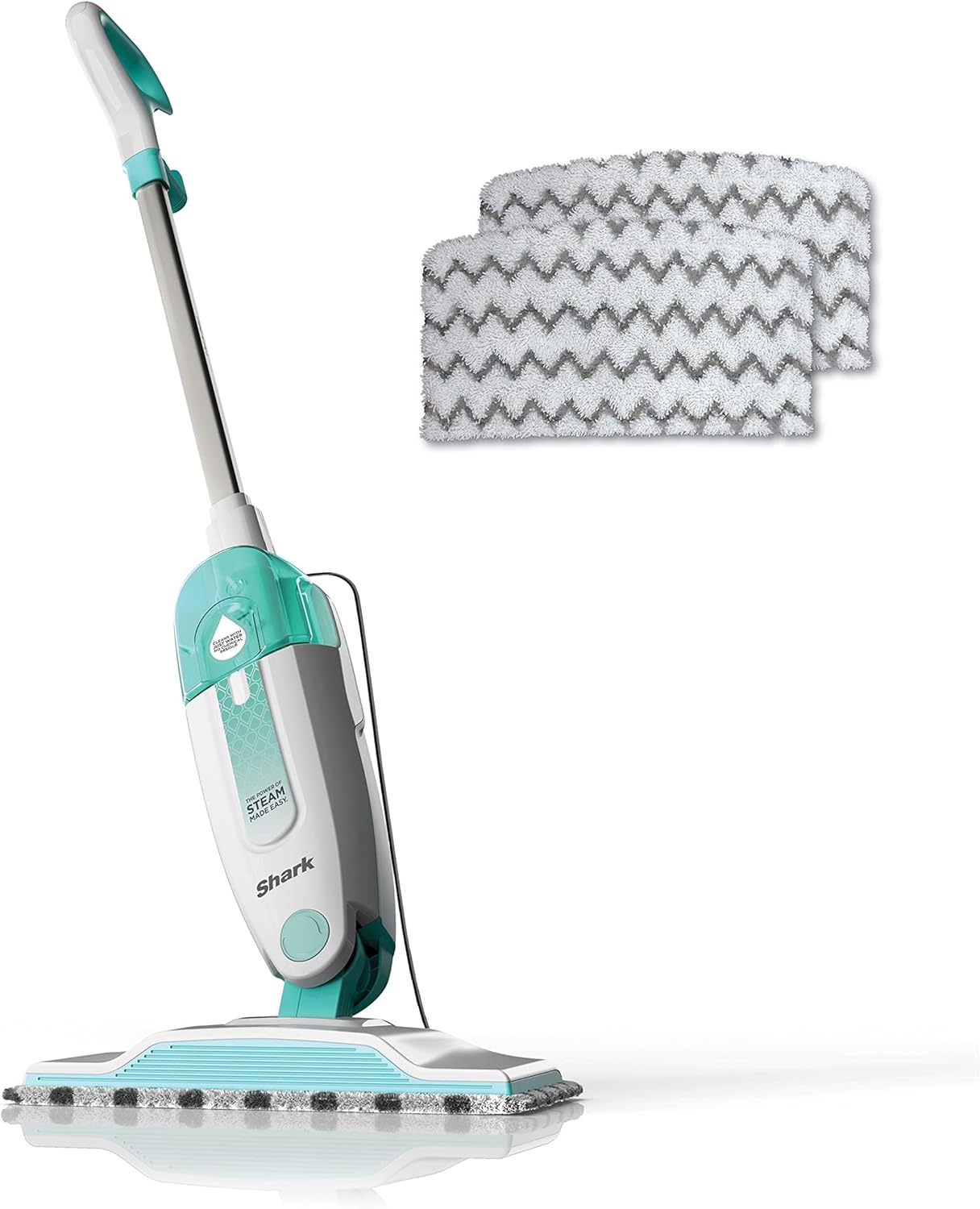
Shark Steam Mop S1000
| Wattage | 1050 watts |
|---|---|
| Heat Time | 30 seconds |
| Power Source | Electric |
| Tank Volume | 12.68 fluid ounces |
The Shark S1000 is a simple, lightweight steam mop designed for routine cleaning and sanitizing of sealed hard floors using only water. It heats to steam in about 30 seconds and is used like a standard upright mop: fill the removable tank, attach a machine-washable dirt-grip pad, and glide the unit over floors with swivel steering to reach around furniture. The textured microfiber pads add scrubbing power for stuck-on spots, and the compact, under-5-pound build makes it easy to carry between rooms and store. Because it relies on on-demand steam, it removes grime without chemicals and leaves no residue, but the small 12.68-ounce tank means more frequent refills on larger areas and continuous run time is limited by tank capacity. The corded design keeps power consistent but restricts reach compared with cordless options. For everyday cleaning and quick sanitizing of hardwood and other sealed surfaces, the S1000 is practical and easy to use, though users with very large areas may find the tank size and corded layout a constraint.
Best for: Buyers who want an easy-to-use, lightweight steam mop for regular cleaning and sanitizing of sealed hardwood and other hard floors without chemicals.
Less Ideal for: Homes with large open floor plans or commercial spaces where longer continuous runtime and extended reach are needed.
- Heats to steam in about 30 seconds for quick start-up
- Lightweight design makes it easy to carry and store
- Removable water tank allows convenient refills without fully stopping
- Machine-washable dirt-grip pads provide extra scrubbing and are reusable
- Small 12.68 fl oz tank requires frequent refills during large cleaning sessions
- Corded power limits reach and requires managing an outlet during use
Verdict: A lightweight, fast-heating steam mop ideal for quick, chemical-free cleaning and sanitizing of sealed hardwood and other hard floors.
LABIGO Steam Mop KS-7883

| Wattage | 1200 watts |
|---|---|
| Form Factor | Handheld |
| Heat Time | 10 seconds |
| Maximum Temperature | 248 °F |
| Tank Volume | 350 ml |
The LABIGO KS-7883 is a multi‑surface steam mop that converts to a handheld steamer for cleaning floors, grout, windows, upholstery and grills. It heats in about 10 seconds and produces steam up to 248°F with two adjustable steam levels so you can dial back intensity for delicate surfaces or boost it for grout and stubborn grime. The 350 ml tank supplies roughly 12 to 15 minutes of continuous steam per fill, and the kit includes a carpet glider, multiple nozzles and brushes plus washable microfiber pads to cover porcelain tile tasks like grout cleaning and surface sanitizing. Safety features include an automatic shutoff and low‑water alert. Practical limitations are the modest run time per tank for larger rooms and the need to refill more often during heavy scrubbing, and corded operation means you must manage outlet placement. For porcelain tile the focused steam temperature and accessory set make grout and tile cleaning straightforward, though users who need very long, uninterrupted sessions may prefer a larger tank or commercial unit.
Best for: Buyers who prioritize reliable, safe steam cleaning for porcelain tile and grout and want a versatile tool that doubles as a handheld steamer for occasional spot jobs.
Less Ideal for: Homes with very large tiled areas or professionals who need long continuous run time without refills should consider larger-capacity or commercial steamers instead.
- Fast 10-second heat-up for near-instant use
- High steam temperature (248°F) with two steam levels for adjustable cleaning intensity
- Detachable handheld unit and multiple accessories for grout, upholstery and tight spots
- Includes washable microfiber pads and a carpet glider for different floor types
- Auto shut-off and low-water alert improve safety during use
- 350 ml tank gives about 12–15 minutes per fill which may require frequent refills for larger areas
- Corded design limits reach compared with cordless models
Verdict: A versatile, quick‑heating steam mop that safely tackles porcelain tile and grout cleaning with a detachable handheld steamer and useful accessories.
Choosing the Right Floor Steam Cleaner: Key Factors to Consider
Steam Output and Heat Recovery
Steam volume and output pressure determine how well a steam cleaner loosens soil and sanitizes hard flooring and sealed surfaces. Higher continuous steam output shortens cleaning passes and reduces the need for repeated work on stubborn spots.
Heat recovery, or how quickly the unit rebuilds usable steam after heavy use, affects workflow. A machine that loses steam quickly forces frequent waits and refills, which extends cleaning time. Consider how the unit performs during sustained cleaning of a medium-sized room rather than relying only on peak steam numbers.
Tank Capacity and Run Time
Tank size directly influences how much area you can cover between refills. Small tanks may be lighter to carry but require more interruptions for refilling when cleaning multiple rooms.
Also consider preheat time and how long the machine maintains effective steam output at typical settings. A balance of moderate tank capacity with efficient steam consumption is preferable for most households because it limits pause time while keeping the unit manageable to move and store.
Maneuverability and Weight
How easily you can push, turn, and store the cleaner matters for everyday use. A swivel head or pivoting mop plate reduces wrist strain and makes it easier to reach around furniture and into corners.
Weight distribution is also important. A light head paired with a slightly heavier base can feel balanced, while a top-heavy design becomes tiring during longer sessions. Consider handle height and cord length to reduce bending and frequent unplugging when cleaning larger spaces.
Surface Compatibility and Controls
Not all steam settings are safe for all floor types. Sealed hardwood, luxury vinyl, and ceramic tile tolerate different heat and moisture levels. Adjustable steam controls allow you to lower output for sensitive finishes and increase it for tile grout or sealed stone.
Look for clear guidance on what floor types are supported and whether the cleaner offers low-steam modes or variable settings. A unit that provides multiple attachments designed for specific surfaces reduces the risk of overexposure to steam and potential finish damage.
Maintenance, Filtration, and Longevity
Routine upkeep like descaling and pad replacement affects long-term performance. Hard-water areas accelerate scale buildup, so a model with an accessible descaling procedure or a built-in filter simplifies maintenance.
Also take into account how easy it is to remove and wash pads, access the water tank, and replace worn parts. Machines that require special tools for basic maintenance or have hidden tanks often lead to neglected care and shorter service life.
Safety Features and Ease of Use
Steam cleaners operate at high temperatures, so safety interlocks, secure latches on tanks, and clear indicator lights help prevent accidental scalding. An automatic shutoff when the tank is empty or a temperature lock during refill are practical features.
User-facing design details like intuitive controls, labeled settings, and quick-attach pads reduce setup time and lower the chance of misuse. These attributes make daily cleaning less of a chore and more consistent in results.
Which Floors Can You Steam Safely
Many sealed hard floors are suitable for steam cleaning, but you must confirm that the finish on the surface is water-resistant and heat-stable. Sealed tile, vinyl, and properly finished hardwood floors are commonly compatible when you use low to moderate steam settings and avoid prolonged exposure in one spot.
For delicate surfaces such as unsealed wood or certain natural stone, steam can force moisture into the material and cause swelling, staining, or warping. Use a gentler steam mode if available, or opt for a damp mop and manufacturer-recommended cleaners for those surfaces.
- Sealed hardwood: Use low steam and brief passes
- Luxury vinyl plank: Moderate steam usually acceptable
- Ceramic and porcelain tile: High steam works for grout cleaning
- Area rugs: Low-profile, low-pile rugs tolerate light steaming
Pad Types and Cleaning Technique
Microfiber pads are the most common attachment and excel at picking up loosened soil without scratching. Some pads are reusable and machine-washable, while disposable pads reduce upkeep but increase consumable costs.
Use a systematic approach: move in short overlapping passes, let the steam loosen soil, then follow with a dry pad if the model supports it. For grout or stubborn spots, a targeted nozzle or brush attachment helps concentrate steam without overwetting surrounding boards or tiles.
- Microfiber pads: Reusable and lint-free
- Scrubbing brushes: For grout and caked-on residue
- Precision nozzles: Target concentrated steam to spots
Storage, Cord Management, and Portability
Consider where you will store the steamer and how often you will haul it out. Compact units with onboard cord wraps and accessory storage are simpler to keep ready for weekly cleaning. Bulky machines with separate hoses require a dedicated closet or garage space.
Cord length affects how often you must switch outlets. A longer cord and a lower-weight head reduce interruptions when cleaning open-plan areas. Also check whether the unit disassembles easily for transport between floors or into storage.
- Onboard accessory storage: Keeps nozzles and pads together
- Cord length: Aim for enough reach to cover typical rooms
- Compact footprint: Easier to store in smaller homes
Dealing with Hard Water and Scale
If your water supply is hard, scale will build up faster in boilers and steam paths. Regular descaling according to the manufacturer's instructions prevents reduced steam flow and protects heating elements.
Look for models with easy-to-access tanks and clear descaling procedures. In some cases, using filtered or distilled water will extend the period between service steps, though follow guidance to avoid warranty conflicts.
- Descale schedules: Follow manufacturer recommendations
- Accessible tanks: Simplify cleaning and inspection
- Water type: Filtered water reduces mineral buildup
When to Use Steam Vs. Traditional Mopping
Steam cleaners excel at lifting stuck-on grime and sanitizing surfaces without detergent, making them a good choice for kitchens and entryways. They are also helpful for quick touch-ups where chemical cleaners are undesirable.
Traditional mopping remains useful for heavy soil, waxed floors, or surfaces that explicitly advise against steam. Use steam as a complement to routine mopping, not necessarily a full replacement for all cleaning scenarios.
- Steam for sanitizing and spot cleaning
- Mopping for heavy soil and waxed finishes
- Alternate methods based on floor manufacturer guidance
How We Chose the Best Floor Steam Cleaner
We focused on attributes that most directly affect day-to-day cleaning performance and long-term ownership for floor steam cleaners. Key evaluation criteria included steam output and heat recovery, which determine cleaning power and how quickly the machine returns to usable steam after continuous passes. We tested tank capacity and runtime to judge how often you must refill during normal cleaning sessions. Usability factors such as weight, swivel head design, and accessory setup were checked because ergonomic design affects how fast and comfortably you finish a room. Durability and maintenance needs were assessed by looking at build quality and how easy routine descaling and pad changes are. Safety features and suitability for different floor types were considered to avoid damage to finishes or textiles. We excluded specialty steamers intended only for heavy-duty commercial use or those designed exclusively for upholstery and carpet cleaning. We also filtered out models that lack basic safety and temperature control features. The resulting shortlist emphasizes machines that balance effective steam performance, practical runtime, and low-friction handling for home floors.
Our full evaluation process is outlined in our review methodology.
FAQ
Can a floor steam cleaner damage hardwood floors?
It depends on the finish and steam settings. Sealed, properly finished hardwood usually tolerates low to moderate steam, but unsealed or older finishes can be damaged. Use low steam settings and quick passes, or avoid steaming if the floor manufacturer warns against it.
How often should I descale my steam cleaner?
Frequency depends on water hardness and usage. In hard-water areas, monthly descaling may be necessary with regular use. For soft water or occasional use, descaling every few months is often sufficient.
Are reusable pads worth it compared with disposable ones?
Reusable microfiber pads have a higher upfront cost but lower ongoing expense and less waste. They work well for routine cleaning and are machine-washable. Disposable pads can be convenient for quick jobs or for users who do not want to launder pads.
Can I use tap water in a steam cleaner?
Tap water is commonly used, but hard tap water increases scale buildup and maintenance. If you have hard water, consider filtered or distilled water where recommended, and follow descaling guidance to protect the unit.
How long does a typical cleaning session last on one tank?
Run time varies by tank size and steam setting. Small tanks may run 10 to 20 minutes on continuous high steam, while larger tanks can last 30 minutes or more. Look at tank capacity and manufacturer run-time estimates to plan cleaning sessions.
Final Verdict
When choosing a floor steam cleaner, prioritize the balance between steam performance and practical usability. Strong continuous steam and quick heat recovery make faster work of grime, while adequate tank size and easy maintenance reduce interruptions. Match the unit's steam control and attachments to the floor types in your home, and favor designs that are simple to store and service. Weigh tradeoffs such as weight versus tank capacity and high steam power versus surface safety. Focus on the features that align with how often you clean and which floors you treat to pick a model that performs reliably for years.