
Note: This article contains affiliate links. If you click on these links and make a purchase, we may earn a small commission at no extra cost to you. This helps support our research and content. Read our full affiliate disclosure here.
If you make almond butter at home, the right food processor can mean the difference between grainy paste and velvety spread. Almonds are dense and oily, and turning them into butter requires sustained torque, a roomy work bowl, and durable cutting components. You want a machine that handles long processing runs without overheating, is easy to scrape and clean, and yields an even texture without adding extra oil. This guide covers seven shortlisted food processors chosen for home nut-butter making. Each pick was evaluated for motor strength, capacity, blade design, heat management, and cleanup. Read on to see which features matter most and which options match how often and how much almond butter you plan to make.
Top Picks at a Glance
| Best Overall The best all-around choice for most situations | Cuisinart 14-Cup Food Processor DFP-14BCNY |  |
| Best Quality Built to a higher standard if you want something more solid | Breville Sous Chef 9 Cup |  |
| Best Value The sweet spot between price and what you get | Hamilton Beach Stack & Snap 12-Cup Food Processor |  |
| Best Budget The cheapest option that still gets the job done reliably | Ganiza Food Processor GC10 |  |
| Top Rated A top-rated pick with lots of positive feedback | Ninja Professional Plus BN601 |  |
| Most Popular A crowd favorite that many people choose with confidence | Ninja Mega Kitchen System BL770 |  |
| Best Seller A high-volume bestseller chosen again and again | Hamilton Beach 3-Cup Food Chopper |  |
Cuisinart 14-Cup Food Processor DFP-14BCNY

| Wattage | 720 watts |
|---|---|
| Bowl Capacity | 14 cups |
| Number of Speeds | 1 |
| Power Source | Corded Electric |
The Cuisinart 14-cup DFP-14BCNY is a full-size food processor built around a 720-watt motor and a stainless steel work bowl that tackles large prep jobs. It ships with a stainless steel chopping/mixing blade plus medium shredding and 4mm slicing discs, and is used by feeding produce and ingredients through the extra-large feed tube for quick slicing, shredding, purees and dough mixing. For making nut butters like almond butter the 720-watt motor and roomy 14-cup bowl give the capacity and sustained power to process nuts in batches, though you will need to pulse and scrape periodically for a smooth butter. Controls are simple with on and pulse settings, and removable dishwasher-safe parts speed cleanup. The unit is heavier and larger than compact processors, so it sits on the countertop as a dedicated prep appliance, and the discs are not adjustable which limits slice thickness options. Overall it is a durable, workhorse processor suited to frequent, larger-batch kitchen tasks.
Best for: Home cooks who want a reliable, heavy-duty processor for frequent, larger-batch prep and are prepared to use pulsing and scraping when making thick nut butters.
Less Ideal for: People who need a compact, lightweight unit for small daily tasks or users who want precise variable-speed control for delicate emulsions.
- Powerful 720-watt motor that sustains processing for dense tasks like nut grinding
- Large 14-cup bowl accommodates batch processing and reduces need for multiple runs
- Stainless steel blades and discs for durable, consistent slicing and shredding
- Dishwasher-safe removable parts make cleanup straightforward
- Only two control settings (on and pulse) limit fine speed control
- Discs are fixed thickness and not adjustable
- Bulky and relatively heavy, requiring substantial countertop space
Verdict: Choose this Cuisinart if you need a sturdy, high-capacity processor with the motor power to handle batch nut butter making and heavy prep tasks.
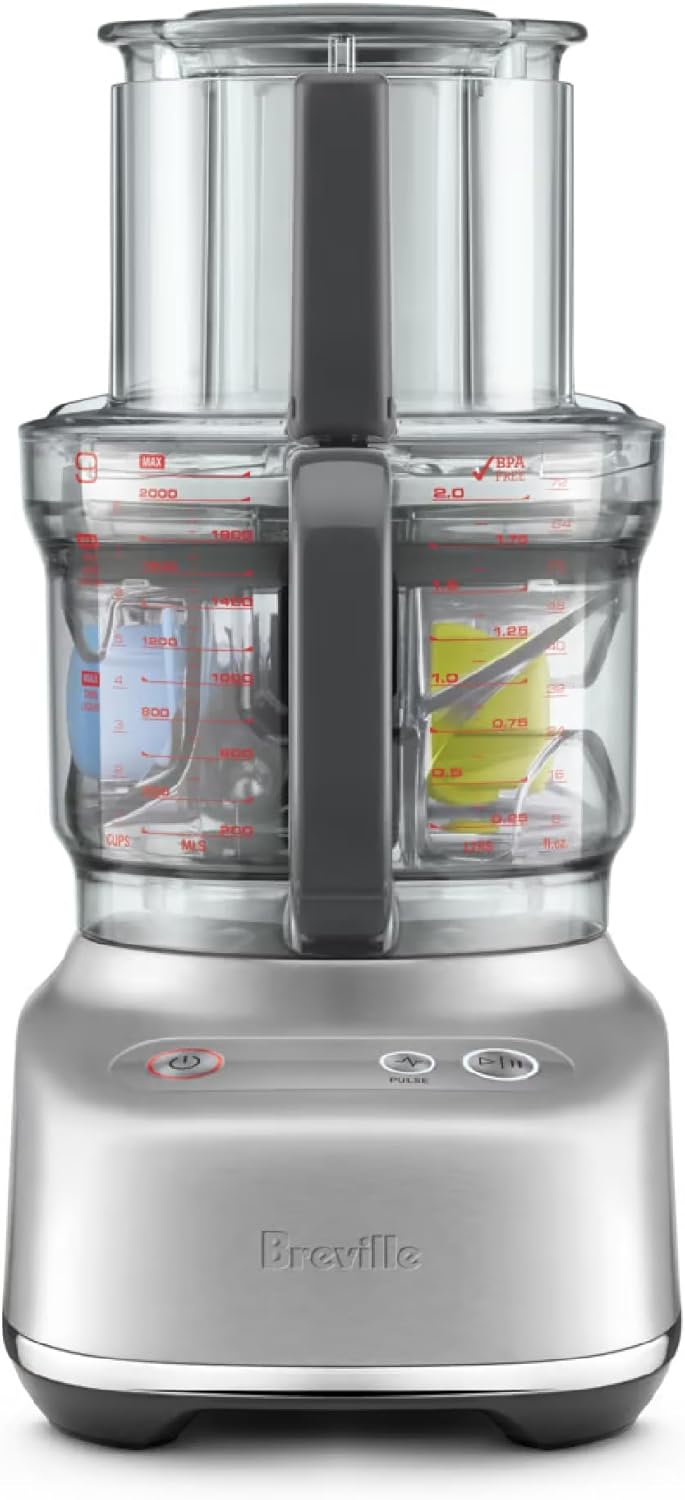
Breville Sous Chef 9 Cup
| Wattage | 625 watts |
|---|---|
| Bowl Capacity | 9 cups |
| Voltage | 120 volts |
| Blade Material | Stainless Steel |
The Breville Sous Chef 9 is a compact, performance-focused food processor built to handle a wide range of prep tasks from chopping and slicing to shredding and kneading. It pairs a heavy-duty induction motor with an assortment of premium attachments including an S-blade, dough blade, reversible shredder and an adjustable slicer with multiple settings, which together produce consistent, even cuts and make processing fibrous foods and nuts straightforward. The 4.7-inch wide feed chute and onboard storage caddy keep ingredients and accessories easy to load and store, while dishwasher-safe components simplify cleanup. For making nut butters like almond butter, the robust motor and stainless steel blades deliver steady processing, though the 9-cup bowl limits single-batch volume compared with larger machines and the unit is relatively heavy. Controls are simple and the color-coded accessories reduce setup time, so this model is well suited to users who value precise results in a smaller footprint but do not need very large batch capacity.
Best for: Buyers who prioritize thorough, consistent processing and want a compact, durable machine that delivers near-commercial results for tough jobs like nut processing and dough work.
Less Ideal for: Those who need to make very large single-batch quantities of nut butter or who want an ultra-light, countertop-portable processor should consider larger-capacity or lighter alternatives.
- Powerful induction motor designed for heavy-duty tasks and long runs
- Multiple premium attachments including S-blade, dough blade, adjustable slicer and reversible shredder
- Wide 4.7-inch feed chute speeds up loading of larger ingredients
- Onboard storage caddy keeps accessories organized inside the bowl
- Dishwasher-safe parts and stainless steel blades simplify cleaning
- 9-cup bowl limits how much almond butter you can make in a single batch
- Unit is relatively heavy which reduces portability around the kitchen
Verdict: Choose the Breville Sous Chef 9 if you want a compact, power-packed processor that reliably handles nuts and tough ingredients for small to medium almond butter batches.
Hamilton Beach Stack & Snap 12-Cup Food Processor

| Wattage | 450 watts |
|---|---|
| Bowl Capacity | 12 cups |
| Number of Speeds | 2 |
| Blade Material | Stainless Steel |
| Power Source | ac_dc |
The Hamilton Beach Stack & Snap 12-Cup Food Processor is built for straightforward food prep and large batches thanks to its sealed 12-cup bowl and Big Mouth chute. It uses a 450 watt motor with two speeds and comes with an S-blade for chopping and pureeing plus a reversible stainless steel slicing/shredding disc, so it tackles tasks from chopping onions to shredding potatoes. Stack & Snap assembly makes setup and cleanup simpler, and suction-cup feet and a pour spout help keep processing tidy. All removable parts are dishwasher safe and BPA-free, which speeds cleanup after heavier jobs. For making nut butters like almond butter, the 450W motor can grind nuts but will require longer run times and occasional scraping; it does not include a dedicated dough or nut grinding blade and may warm during extended use. The large feed chute reduces prep time and the sealed bowl minimizes leaks when processing wet mixtures. Overall it is a practical, easy-to-use machine for everyday prep and moderate nut-butter attempts if you accept that longer processing is needed for very smooth results.
Best for: Buyers who prioritize easy assembly, large-capacity batch work, and straightforward cleanup for everyday prep who also want an occasional go at homemade nut butters without buying a specialty grinder.
Less Ideal for: People seeking a heavy-duty processor specifically for regular, large batches of nut butter or commercial-scale grinding should choose a higher-torque model designed for continuous heavy loads.
- Large 12-cup sealed bowl handles big batches without frequent refills
- Big Mouth chute fits whole vegetables to reduce prep time
- Includes S-blade and reversible slicing/shredding disc for versatile tasks
- Dishwasher-safe, BPA-free removable parts simplify cleanup
- Stack & Snap design speeds assembly and reduces twist-lock frustration
- 450W motor is adequate but may need long runs to reach very smooth nut butter
- No dedicated nut-grinding or high-torque setting for heavy-duty grinding
Verdict: A roomy, easy-to-assemble food processor that handles everyday chopping and can make occasional almond butter if you are willing to run longer processing cycles.
Ganiza Food Processor GC10

| Wattage | 450 watts |
|---|---|
| Capacity | 0.95 gallons |
| Voltage | 120 volts_of_alternating_current |
| Material Type | Stainless Steel, Glass |
The Ganiza GC10 combines a 450W motor with two 8-cup bowls (one glass, one stainless steel) and two speed settings to handle chopping, grinding, and light pureeing tasks. Typical use cases include chopping vegetables, grinding meat, making nut butters and salsas, and switching bowls to avoid cross-contamination between savory and sweet batches. The unit ships with two sets of S-shaped stainless blades and safety features including a spring-loaded blade stop and an overheating protection circuit that pauses operation until the motor cools. Its full-copper motor is promoted for longer life and the removable blades and bowls make cleanup straightforward. Limitations to note are the modest 450W power and two-speed control, which can make processing very dense nuts into smooth almond butter slower and may require short pulse intervals or small batches; the unit is best for recipes that tolerate some texture rather than ultra-silky nut butters. Build appears focused on value with glass and stainless bowls rather than higher-end insulated or heavy-duty grinder components.
Best for: Buyers looking for an affordable, versatile countertop chopper that can handle small-batch nut butters, meal prep, and occasional meat grinding while keeping cleanup simple.
Less Ideal for: If you need a dedicated high-output nut butter maker for large batches or ultra-smooth texture, choose a higher-power, purpose-built grinder instead.
- Two bowls (8-cup glass and 8-cup stainless) let you separate uses and reduce flavor transfer
- 450W full-copper motor designed for longer service life than typical budget motors
- Two-speed control with S-shaped stainless blades handles a range of chopping and grinding tasks
- Safety features include spring-loaded blade stop and overheating protection for safer operation
- Removable blades and dishwasher-safe bowls simplify cleaning
- 450W motor and only two speeds can struggle to produce very smooth almond butter without stopping to scrape and reprocess
- Not designed as a dedicated heavy-duty nut butter grinder so long continuous runs may trigger overheating protection
Verdict: A budget-friendly dual-bowl processor that can make small-batch almond butter and everyday prep tasks without the cost of a heavy-duty grinder.
Ninja Professional Plus BN601

| Wattage | 1000 watts |
|---|---|
| Bowl Capacity | 4.5 pounds |
| Number of Speeds | 3 |
| Power Source | AC adapter |
The Ninja Professional Plus BN601 is a heavy-duty countertop food processor built around a 1000-peak-watt motor and a 9-cup precision bowl, designed for batch prep and demanding tasks like nut butter. It uses Auto-iQ presets to run short sequences for chopping, slicing, pureeing, and dough so you can get consistent results without babysitting the unit. Included stainless-steel blades, a dough blade, and a reversible slicing/shredding disc expand its usefulness from shredding cheese to processing dense ingredients. In practice the motor and blade design handle long runs for smooth purees and nut pastes, though you may need to stop occasionally to scrape the bowl for the creamiest almond butter. Removable parts are dishwasher safe which simplifies cleanup after oily jobs. The unit is solidly built and has safety interlocks so it only runs when assembled correctly. Drawbacks are that the processor is fairly large on the counter and the preset programs are limited to a few functions, so advanced manual control is modest compared with some pro models.
Best for: Buyers who prioritize a dependable, high-power machine that can handle frequent heavy-duty prep and deliver consistent results with minimal fuss.
Less Ideal for: People who need a very compact processor for small kitchens or who want full manual speed control for precision processing.
- Powerful 1000-peak-watt motor suitable for heavy tasks like nut butter and dough.
- Large 9-cup bowl for processing family-sized batches in one go.
- Stainless-steel precision blades and included dough blade for versatile preparations.
- Auto-iQ preset programs provide one-touch processing for common tasks.
- Dishwasher-safe, BPA-free removable parts make cleanup easier after oily mixes.
- Presets offer limited manual speed/variable control for fine-tuning long purees.
- May require stopping and scraping during extended runs to achieve ultra-smooth nut butter.
- Relatively large footprint compared with compact processors.
Verdict: A reliable, high-power processor that makes creating large batches of almond butter and other dense purees straightforward and consistent.
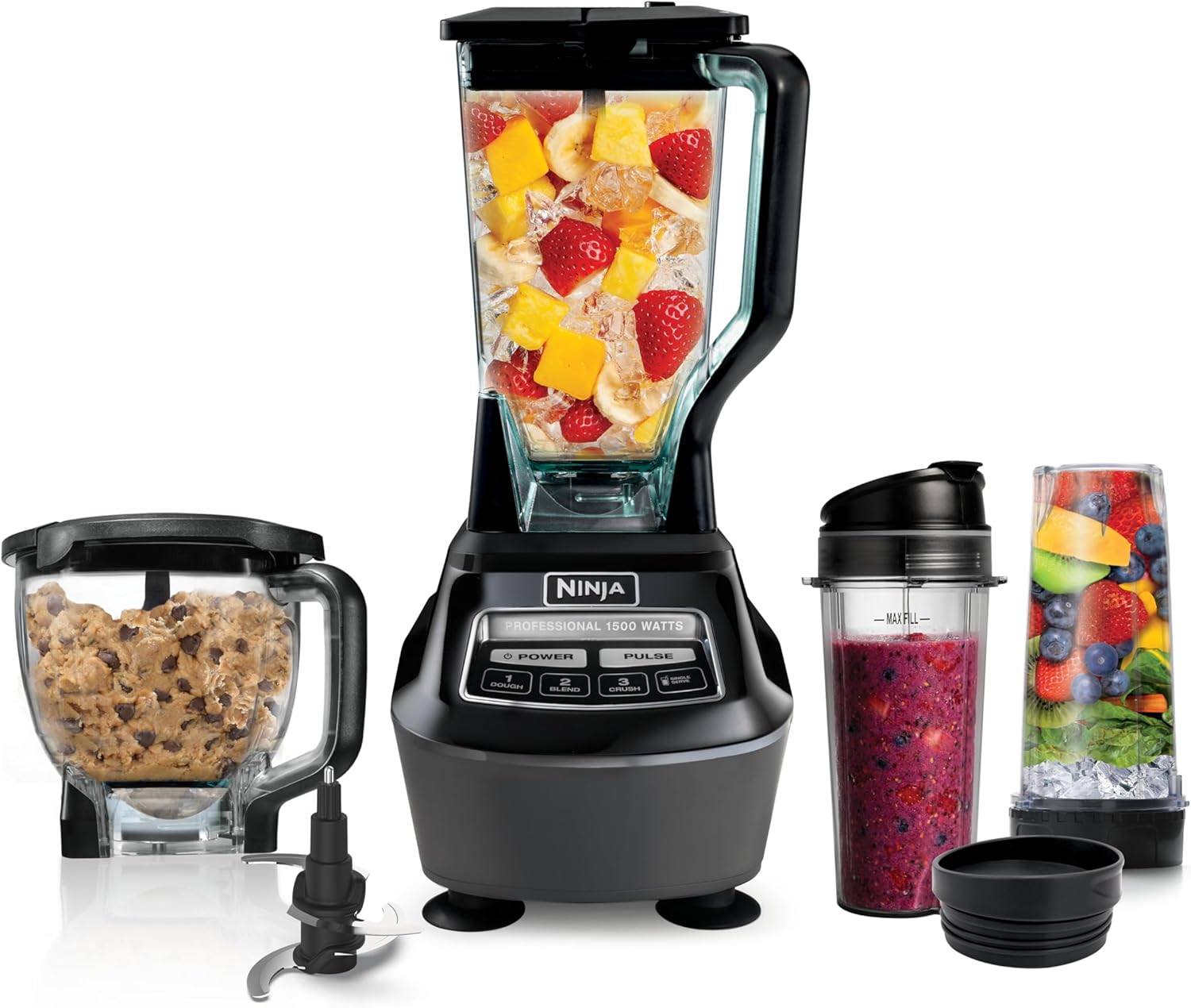
Ninja Mega Kitchen System BL770
| Wattage | 1500 watts |
|---|---|
| Number of Speeds | 5 |
| Capacity | 16 fluid ounces |
| Power Source | ac_dc |
The Ninja Mega Kitchen System BL770 combines a powerful 1500W motor with multiple containers and blade sets to handle most home kitchen tasks. You get an XL 72-oz pitcher with Total Crushing Blades for smoothies and ice crushing, an 8-cup food processor bowl with chopping and dough blades for vegetables and quick dough mixing, plus two 16-oz Nutri Ninja to-go cups for single-serve drinks. Controls are manual with five speeds and four main function modes that make it simple to switch between blending, mixing, crushing, and single-serve work. Most removable parts are dishwasher safe, and the stainless steel blades are effective on frozen fruit and ice. The unit is versatile for batch smoothies, meal prep, and small baking projects, but the motor base is fairly large and the system takes some counter space and storage room. Also, the manual controls lack presets, so you need to watch run times for delicate tasks like purees. For buyers wanting a single machine that covers blending and food processing jobs, it delivers strong performance and a useful accessory set.
Best for: Buyers who want one versatile countertop appliance that handles large-batch smoothies, food prep, and occasional dough mixing without buying separate machines.
Less Ideal for: People with very limited counter or storage space or those who prefer compact single-function appliances with automatic preset programs.
- 1500-watt motor provides strong ice crushing and blending power
- Includes XL 72-oz pitcher plus 8-cup processor and two 16-oz to-go cups for multiple uses
- Multiple specialized blades (total crushing, pro extractor, chopping, dough) cover blending and processing tasks
- Most removable parts are dishwasher-safe for easier cleanup
- Large footprint that requires significant counter or cabinet space
- Manual controls with no preset programs require more user attention for consistent results
Verdict: A powerful, multi-function blender and food processor combo that covers large-batch blending, chopping, and dough mixing for buyers seeking one versatile countertop machine.
Hamilton Beach 3-Cup Food Chopper

| Wattage | 350 watts |
|---|---|
| Bowl Capacity | 3 cups |
| Number of Speeds | 1 |
| Power Source | AC/DC |
| Blade Material | Stainless Steel |
The Hamilton Beach 3-Cup Food Chopper is a small, simple electric chopper designed for quick prep tasks like dicing onions, mincing herbs, and making small batches of purees or sauces. Its stack-and-press lid means you just drop the lid on and press to run, which keeps operation straightforward and reduces assembly mistakes. A 350-watt motor paired with stainless steel blades handles onions, garlic, nuts, and soft vegetables easily, and the 3-cup bowl is the right size for single-serve dips, dressings, or baby food. Parts are removable and dishwasher-safe, and the hideaway cord helps keep counters tidy. For making almond butter you can produce small quantities, but expect to work in short bursts and scrape down the bowl often; the unit is not optimized for long continuous blending of very hard, oily nuts. Safety lock features and a one-year warranty add reassurance for cautious buyers. This unit is best when you need a dependable, low-effort chopper for everyday small tasks rather than a heavy-duty nut butter machine.
Best for: Buyers who prioritize a simple, reliable countertop tool for everyday small-batch prep and want a low-risk, easy-to-use appliance that cleans up quickly.
Less Ideal for: If you plan to routinely make large batches of almond butter or process very hard nuts into ultra-smooth butter, consider a more powerful, larger-capacity processor or high-speed blender instead.
- Compact 3-cup bowl fits small batches and stores easily
- 350-watt motor with stainless steel blade handles common chopping and pureeing tasks
- Stack-and-press design is easy to use with no complicated assembly
- Dishwasher-safe removable parts simplify cleanup
- Safety lock and hideaway cord reduce countertop clutter and risk
- Small capacity and motor design require stopping and scraping for dense nut butters
- Single speed control limits precision for textures that need staged processing
Verdict: A straightforward, low-risk 3-cup chopper that handles small batches and everyday prep reliably, but is only marginal for making smooth almond butter.
Choosing the Right Food Processor for Almond Butter: Key Factors to Consider
Motor Torque and Continuous Power
Almonds are hard and oily, and turning them into butter requires a motor that can sustain torque for extended periods. A processor with higher continuous power handles larger batches and reduces the time you need to run the machine, which minimizes heat buildup. Look for clear manufacturer guidance about duty cycle or recommended run times to avoid motor stress.
Motors that falter under load will result in inconsistent texture and longer processing times. If you plan to make almond butter regularly or in larger batches, choose a model with better-rated continuous power rather than relying on peak wattage figures alone.
Bowl Size and Batch Capacity
Bowl capacity determines how much almond butter you can make in one run and affects processing efficiency. Small bowls force multiple small batches and more total processing time, while very large bowls may require more powerful motors to maintain torque when filled.
Consider typical batch sizes you want: jars for personal use, gifts, or frequent large-batch production. A mid-to-large capacity bowl often provides the best balance, letting you grind enough almonds for a couple of jars without overwhelming the motor.
Blade Geometry and Material
The blade shape, angle, and material affect how effectively nuts are broken down and how evenly oil is released. Sharp, robust stainless-steel blades with a design that promotes circulation will yield a smoother texture faster. Some processors use multi-level or S-shaped blades that move ingredients vertically and horizontally to reduce dead zones.
Durable metal construction resists dulling over time. Avoid processors where the blade is fixed in a way that makes scraping impossible; removable blades or bowl-friendly designs allow you to rework clusters and achieve a consistent finish.
Thermal Management and Duty Cycle
Grinding nuts can generate heat, and prolonged runs risk overheating the motor or warming the almonds enough to affect flavor and oil separation. Good thermal management includes effective ventilation, sensible duty-cycle recommendations, and sometimes thermal cutoffs to protect the motor.
Models that encourage short pulse periods with rest intervals or that list continuous-run specs give you a clearer idea of how to use the machine safely for nut butters. For frequent use, pick a processor with better cooling and clear guidance on rest times to protect long-term performance.
Ease of Cleaning and Oil Management
Almond butter is oily and tends to coat bowls, blades, and seals. A processor with removable, dishwasher-safe parts or smooth surfaces will reduce fuss during cleanup. Look for designs that let you access crevices where oil can accumulate and seals or gaskets that are sturdy but removable.
Easier cleanup encourages regular use. If a device is hard to disassemble or has awkward angles, you will spend more time scraping and washing, which can make home nut-butter production less convenient.
Stability, Noise, and Usability Features
Processing dense nuts creates vibration and noise. A stable base with good suction feet or a weighted design helps keep the processor steady during long runs. Noise levels matter if you use the machine early in the morning or in shared living spaces.
Usability features such as intuitive controls, pulse settings, variable speeds, and a clear lid or feed opening improve control over texture and make it easier to stop, scrape, and reprocess the mixture. Accessibility of parts and clear instruction on run times and maintenance also impact the long-term user experience.
How Almond Butter Changes Your Processor Needs
Making almond butter is different from chopping vegetables or pureeing fruit. Almonds require repeated high-torque cycles to break cell walls and release oil. That means you need a processor that tolerates long runs and promotes ingredient circulation so the paste does not stick in a single zone. Consider both the mechanical and thermal demands before committing to a model.
- Dense nuts need sustained torque rather than short bursts of high speed.
- Blade motion that folds ingredients helps prevent dry pockets.
- Thermal protection prevents motor damage and flavor changes.
Batch Workflow and Best Practices
Plan your workflow to protect the machine and get the best texture. Start with roasted, cooled almonds to help oil release. Use pulse-and-rest cycles: short processing bursts followed by brief rests to let the motor cool and to let the mixture settle so you can scrape the bowl. Scraping frequently encourages an even grind and reduces processing time.
- Roast and cool nuts for better oil release.
- Pulse for 20 to 30 seconds, then rest 30 to 60 seconds when making larger batches.
- Use a flexible spatula to scrape the sides and redistribute solids.
Cleaning and Maintenance Tips for Nut Butters
Because almond butter is oily, cleaning strategies make a big difference in day-to-day convenience. Rinse parts immediately after use when possible and soak to loosen sticky residue. Use warm, soapy water for stubborn oil; some components are dishwasher-safe but check manufacturer instructions to avoid damaging seals or coatings.
If parts are not dishwasher-safe, hand wash and dry thoroughly to prevent trapped moisture from degrading seals. Periodically inspect blades and gaskets for wear and replace them if you notice dulling or leaks.
- Rinse and soak bowls and blades right after processing.
- Avoid abrasive cleaners that can dull blades or damage finishes.
- Inspect seals and replace worn gaskets to maintain a sanitary machine.
Making Small Batches Versus Large Jars
Your desired jar size will influence the processor capacity you need. Small-capacity processors can produce single jars or trial batches efficiently, but they will require repeated runs for larger quantities. Larger bowls reduce the number of cycles but need stronger motors to keep torque consistent across the load.
If you plan to scale up to gift jars or frequent use, prioritize motor torque and cooling over minimal counter footprint. For occasional makers, a compact processor with a sturdy motor may be sufficient.
- Match bowl size to typical final jar volume.
- Expect longer processing times for full bowls unless motor power is strong.
- Consider ease of transferring finished butter when choosing bowl shape.
Texture Control and Speed Settings
Different textures—from slightly chunky to perfectly smooth—require control over processing duration and blade action. Variable speeds let you start with coarse pulses and move to sustained runs as the mixture emulsifies. If a unit only offers one speed, rely heavily on pulsing and manual scraping to reach the texture you want.
Transparent lids or viewing windows also help you judge progress without interrupting the run, reducing unnecessary stops and restarts.
- Start with coarse pulses to break down nuts, then use longer runs for creaminess.
- Variable speed and pulse controls give fine texture control.
- Clear lids help you monitor progress without opening the bowl.
How We Chose the Best Food Processor for Almond Butter
We focused on the attributes that most directly affect how reliably and efficiently a food processor makes almond butter. Key evaluation criteria included sustained motor torque to grind dense nuts, bowl and feed-chute capacity to match batch sizes, blade geometry and durability for even milling, thermal management to prevent overheating during long runs, and ease of cleaning and maintenance since nut oils can cling to parts. We prioritized machines with clear specifications for motor horsepower or wattage and those that provided heat-protection features like ventilation or duty-cycle guidance. We excluded compact devices designed only for light chopping or single-serve blending because they lack the torque and thermal resilience needed for multiple almond-butter batches. We also filtered out units with fragile plastic bowls or fixed blades that make scraping impossible. Finally, we assessed ergonomics and accessory quality, such as removable blades, seal durability, and dishwasher-safe components. The resulting shortlist balances robust processing performance with practical day-to-day usability for home almond-butter producers.
Our full evaluation process is outlined in our review methodology.
FAQ
Can every food processor make almond butter?
Most full-sized food processors can make almond butter, but not all are ideal. Machines with low continuous torque, small bowls, or poor thermal management may struggle or require many short batches. For consistent, creamy almond butter choose a model with stronger sustained power and clear duty-cycle guidance.
How long does it take to make almond butter in a food processor?
Timing varies by motor power and batch size. Small batches may finish in 5 to 10 minutes of total processing time, while larger batches could need 10 to 20 minutes, including pulse-and-rest cycles. Frequent rest intervals help prevent overheating and promote even texture.
Should I roast almonds before processing?
Roasting almonds first usually helps release oils and results in a creamier texture. Cool the nuts after roasting so excess heat does not transfer to the processor. Raw almonds will still make butter but often need longer processing and may yield a drier initial texture.
How can I prevent my processor from overheating?
Use pulse cycles with rest periods and avoid continuous long runs. Check the manufacturer guidance on duty cycle and allow the motor to cool as recommended. Smaller batches reduce stress, and models with better ventilation and heavier-duty motors tolerate longer runs more safely.
Is it necessary to add oil or other liquids?
Oil is not required for almond butter, as almonds release their own oils when processed long enough. Adding a small amount of neutral oil can speed up emulsification and yield a silkier texture, but it changes the product and may make cleanup slightly harder.
What maintenance keeps a processor working well for nut butters?
Clean parts immediately after use, inspect and replace worn seals and blades, and avoid soaking motor housings. Regularly check that blade assemblies are tight and that ventilation openings remain free of dust or residue to maintain airflow and cooling.
Final Verdict
Choosing a food processor for almond butter means balancing motor resilience, bowl capacity, blade design, and practical upkeep. If you make almond butter often or in large batches, prioritize sustained torque, good thermal design, and a roomy but manageable bowl. For occasional small batches, a compact unit with strong blades and easy cleanup can be perfectly adequate. Weigh the tradeoffs between capacity and cooling, and pick a model that matches how much butter you plan to produce and how often you will use it. With the right balance of power and usability, you can reliably make smooth, homemade almond butter at home.