
Note: This article contains affiliate links. If you click on these links and make a purchase, we may earn a small commission at no extra cost to you. This helps support our research and content. Read our full affiliate disclosure here.
If you regularly make salsa, bruschetta, or salsa verde, a food processor that dices tomatoes cleanly will save time and improve consistency in your dishes. The right machine reduces squashing and watery puréeing while producing uniform pieces that hold up in salads and sauces. This guide shortlists the top options designed to handle ripe, juicy tomatoes and explains the practical factors that matter, like feed-tube design, blade geometry, and cleanup. Below are our top picks for food processors for dicing tomatoes, chosen for their ability to produce even dice, control moisture, and make kitchen cleanup faster. Read on for the key features we evaluated and tips to get the best results every time.
Top Picks at a Glance
| Best Overall The best all-around choice for most situations | Cuisinart 14-Cup Food Processor DFP-14BCNY |  |
| Best Quality Built to a higher standard if you want something more solid | Breville Sous Chef 9 Cup |  |
| Best Value The sweet spot between price and what you get | Cuisinart Pro Classic 7-Cup |  |
| Best Budget The cheapest option that still gets the job done reliably | Mueller Pro Vegetable Chopper MC-710 |  |
| Top Rated A top-rated pick with lots of positive feedback | Hamilton Beach 3-Cup Food Chopper |  |
| Most Popular A crowd favorite that many people choose with confidence | fullstar Pro Vegetable Chopper |  |
| Best Seller A high-volume bestseller chosen again and again | Ganiza Food Processor GC10 |  |
Cuisinart 14-Cup Food Processor DFP-14BCNY

| Wattage | 720 watts |
|---|---|
| Bowl Capacity | 14 cups |
| Number of Speeds | 1 |
| Power Source | Corded Electric |
The Cuisinart 14-Cup Food Processor is a robust countertop workhorse for batch food prep and can handle dicing tomatoes and other vegetables quickly thanks to its large feed tube and 720-watt motor. Typical use cases include chopping, shredding, slicing, pureeing dips and sauces, and even kneading dough; the unit ships with a stainless steel chopping blade plus 4mm slicing and medium shredding discs. Dishwasher-safe parts and a detachable disc stem simplify cleanup after processing sticky or seedy produce. With only on and pulse controls it is straightforward to learn, though the single-speed design means you rely on short pulses rather than variable speeds for finer control. The stainless steel construction and included recipe book make it useful for cooks who prep for families or small gatherings, but it is a heavier, full-size machine that needs counter space. For dicing tomatoes specifically, the wide feed tube and sharp discs deliver even slices and fast throughput, though you may need to finish very small dice by pulsing manually.
Best for: Home cooks who value reliable, high-capacity prep for regular batch cooking and want a simple, durable machine to speed slicing, shredding, and dicing tasks.
Less Ideal for: Those seeking a compact, lightweight processor for occasional single-person use or users who need multiple precise speed settings for delicate tasks.
- Powerful 720-watt motor for quick, consistent processing
- Large 14-cup bowl and extra-large feed tube for whole fruits and vegetables
- Includes stainless steel slicing and shredding discs plus chopping/mixing blade
- Dishwasher-safe removable parts and detachable disc stem for easier cleaning
- Single-speed control limits fine variable-speed adjustments
- Relatively heavy and requires substantial countertop space
Verdict: Choose this Cuisinart if you want a powerful, large-capacity processor that makes fast, consistent dice and slices for tomato-heavy prep.
Breville Sous Chef 9 Cup
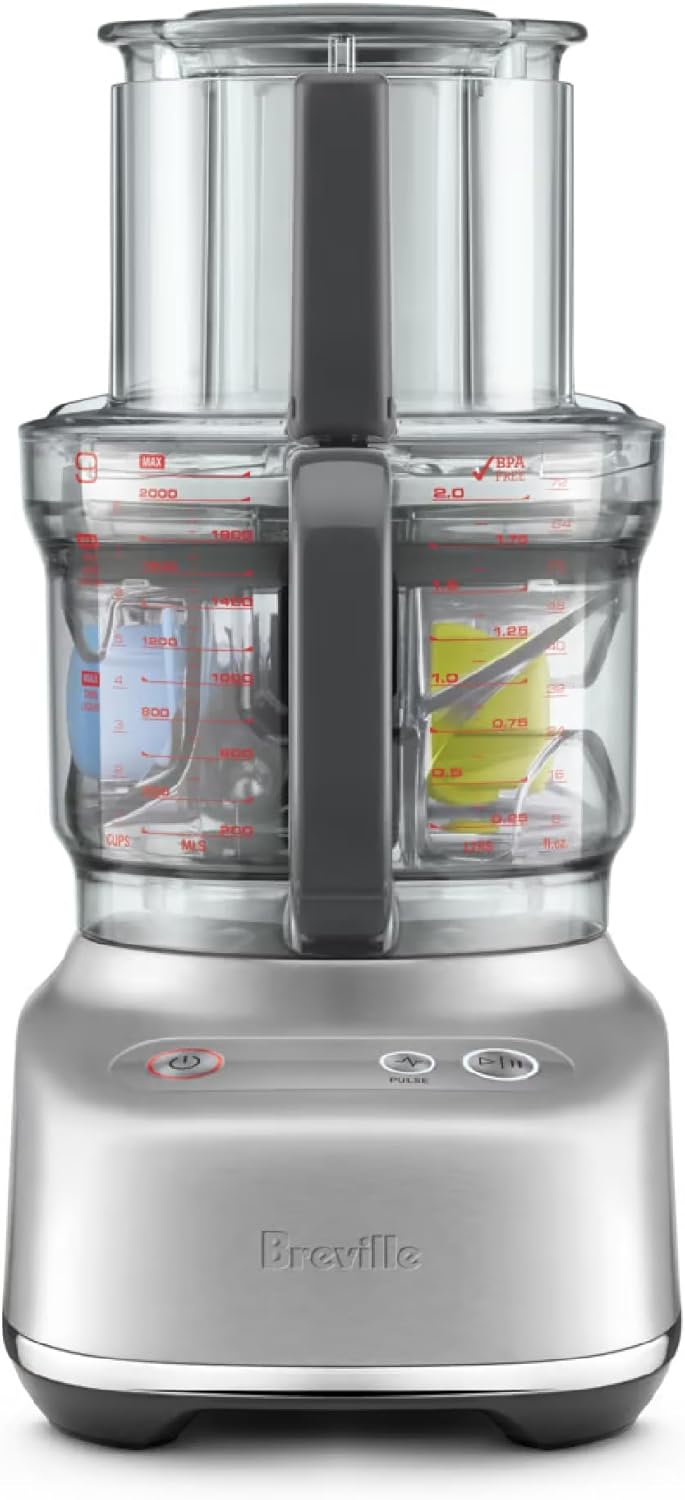
| Wattage | 625 watts |
|---|---|
| Bowl Capacity | 9 cups |
| Number of Speeds | 1 |
| Voltage | 120 volts |
The Breville Sous Chef 9 Cup is built for speedy, consistent prep in a small footprint. It uses a heavy-duty induction motor and direct drive to power an S-blade, dough blade, reversible shredder, and an adjustable slicer with up to 15 settings, making quick work of chopping, slicing, and shredding. The wide 2-in-1 feed chute accepts larger items so you can process tomatoes and other produce faster with fewer pre-cuts, and the color-coded accessories and onboard storage caddy keep discs and blades organized. Dishwasher-safe parts and durable, BPA-free bowl and lid make cleanup straightforward. On the downside, the unit lists a single speed plus pulse rather than multiple variable speeds, so very fine control depends on pulse technique and the adjustable slicer rather than a range of speed settings. The machine is slightly heavier than compact hobby models, but that mass helps stability during heavy jobs. For anyone focused on performance and consistent cuts in everyday cooking, this processor delivers practical power and useful attachments.
Best for: Buyers who prioritize consistent, high-performance prep and want a compact processor that handles frequent tomato dicing and other heavy-duty kitchen jobs with reliable results.
Less Ideal for: Casual users who want a featherweight, ultra-portable unit or need multiple variable speed settings for very delicate texture control should consider other options.
- Heavy-duty induction motor provides strong, consistent power for tough prep
- Wide 2-in-1 feed chute accepts larger produce and reduces pre-cutting work
- Adjustable slicer with many settings and reversible shredder for precise cuts
- Onboard storage caddy and color-coded accessories keep attachments organized
- Bowl and parts are dishwasher-safe and made from BPA-free materials
- Only one main speed plus pulse limits fine speed control compared with multi-speed models
- Unit is relatively heavy, which may be less convenient if you move it often
Verdict: Choose the Breville Sous Chef 9 Cup when you want a compact, powerful processor that produces consistent, restaurant-style cuts for tasks like dicing tomatoes.
Cuisinart Pro Classic 7-Cup

| Wattage | 600 watts |
|---|---|
| Bowl Capacity | 7 cups |
| Number of Speeds | 1 |
| Power Source | AC adapter |
The Cuisinart Pro Classic 7-Cup is a compact, everyday food processor powered by a 600-watt motor that handles chopping, slicing, shredding, pureeing and even kneading small batches of dough. It uses a single speed plus pulse, and the extra-large feed tube accepts whole fruits and vegetables while a small feed tube insert helps with thinner pieces, which makes quick work of tomatoes for salsas and sauces. The kit includes a stainless steel chopping/dough blade, a medium slicing disc, and a medium shredding disc so you can switch between coarse chopping and uniform slices without buying extras. Setup and cleanup are straightforward though the parts are hand-wash recommended, and the plastic bowl keeps the unit lightweight on the counter. Expect reliable, relatively quiet performance for home batches, but the single-speed control limits finesse for very fine purees compared with multi-speed models and the 7-cup capacity is modest for large prep jobs.
Best for: Buyers who want a reliable, space-conscious processor to speed up everyday prep like dicing tomatoes and making salsas without needing commercial capacity or advanced speed controls.
Less Ideal for: Users who regularly process large volumes or need multi-speed precision for delicate purees should consider larger or multi-speed models instead.
- 600-watt motor delivers consistent power for chopping and kneading small batches
- Extra-large feed tube accepts whole produce for faster prep
- Includes stainless steel chopping blade plus slicing and shredding discs
- Compact 7-cup bowl fits small to medium meal prep and stores easily
- Single speed plus pulse limits control for ultra-fine textures
- Parts are recommended for hand washing rather than dishwasher-safe
Verdict: A compact, no-nonsense 7-cup processor that quickly dices tomatoes and handles everyday chopping tasks with dependable power.
Mueller Pro Vegetable Chopper MC-710

| Material Type | Stainless Steel |
|---|---|
| Product Care Instructions | Dishwasher Safe |
| Blade Material Type | Stainless Steel |
| Operation Mode | Manual |
The Mueller Pro Vegetable Chopper MC-710 is a compact manual chopper and slicer that combines eight interchangeable stainless steel blades with a container to chop, slice, grate, and shred produce without electricity. Typical use is quick counter-top prep for salads, salsas, and side dishes—insert the chosen blade, press or slide to cut, and collect the pieces in the included bowl for easy transfer. Stainless steel blades and dishwasher-safe parts make cleanup straightforward, and the V-shaped 10-inch blade options produce consistent slices suitable for tomatoes and other soft vegetables. Because it is manual, it is quiet and portable and does not require setup beyond swapping blades, but fine control depends on choosing the right blade and stabilizing the vegetable with the food holder. It lacks powered pulsing for ultra-fast, uniform dicing the way a motorized processor does, so large-volume prep will be slower. For budget buyers who want a versatile hand tool that performs slicing and basic dicing without the cost or footprint of an electric processor, this is a practical pick.
Best for: Shoppers prioritizing a low-cost, space-saving tool for everyday countertop prep who want reliable manual slicing and chopping for small to medium batches of vegetables like tomatoes.
Less Ideal for: If you frequently process large volumes or need perfectly uniform, machine-speed dicing for canning or catering, a small electric food processor would be a better fit.
- Multiple interchangeable stainless steel blades for slicing, grating, shredding, and chopping
- Dishwasher-safe parts for easier cleanup
- Compact manual design that needs no power and stores with the included container
- V-shaped 10-inch blade options deliver consistent tomato slices and thin cuts
- Manual operation is slower than an electric food processor for large batches
- Requires careful use of the food holder to avoid uneven cuts or finger risk
Verdict: A budget-friendly, no-power mandoline/chopper that delivers reliable slices and basic dicing for home tomato prep without the cost of an electric processor.
Hamilton Beach 3-Cup Food Chopper

| Wattage | 350 watts |
|---|---|
| Bowl Capacity | 3 cups |
| Number of Speeds | 1 |
| Power Source | AC/DC |
| Blade Material | Stainless Steel |
The Hamilton Beach 3-Cup Food Chopper is a small, no-frills electric chopper designed for quick prep tasks like dicing tomatoes, chopping onions, and pureeing sauces. You assemble the removable bowl and blade, stack the lid, and press to run the 350-watt motor; release the lid to stop, so control is intuitive for short bursts needed to avoid over-mashing soft tomatoes. Stainless steel blades and a reasonably powerful motor handle herbs, garlic, and small quantities of nuts without stalling, and the bowl, lid, and blade are dishwasher safe for easy cleanup. The unit has a single speed press operation rather than variable speeds, so finesse comes from short pulses rather than a control dial. The 3-cup capacity is ideal for small batches or single recipes but means you may need to chop in batches for larger meals. Overall it is a reliable, simple chopper for everyday countertop prep where ease of use and quick cleaning matter most.
Best for: Buyers who prioritize a dependable, easy-to-use chopper for everyday small-batch prep and want a unit that performs consistently with minimal setup and cleanup.
Less Ideal for: Those who frequently prepare large batches or need fine-grained speed control and multiple attachments should consider larger multi-speed processors instead.
- Simple stack-and-press operation that is easy to use and control with short pulses
- 350-watt motor provides enough power for tomatoes, onions, herbs, and small nuts
- Stainless steel blades for consistent chopping and puree results
- Dishwasher-safe removable parts for fast, low-effort cleanup
- Single-speed press design limits precise speed control compared with multi-speed processors
- 3-cup bowl requires batching for larger quantities
Verdict: A straightforward, reliable 3-cup chopper that delivers consistent, easy control for dicing tomatoes and small-batch prep.
fullstar Pro Vegetable Chopper

| Included Components | Chopper, container, 4 blades, cleaning tools |
|---|---|
| Material Type | Stainless steel blades; BPA-Free ABS plastic body |
| Operation Mode | Manual |
| Product Care Instructions | Dishwasher Safe |
The fullstar Pro Vegetable Chopper is a hand-powered prep tool designed to dice, slice, and spiralize small produce quickly into a 5-cup container. It uses interchangeable 420 stainless steel blades and a non-skid base so you can press or twist to chop tomatoes, onions, and other vegetables in about 30 seconds without electricity. The compact container captures juices and keeps counters cleaner, and the soft-grip handle plus safety lock make repeated use comfortable and safe. Blades are rust-resistant and dishwasher-safe on the top rack, which simplifies cleanup after processing juicy tomatoes. Because it is manual, it requires some force for harder vegetables and you are limited by the blade sizes included, so very fine or highly uniform professional dicing may need extra passes or a different tool. For quick home batches, salad prep, salsa, and weeknight cooking this chopper speeds tasks and reduces knife time.
Best for: Buyers who value vetted, highly rated kitchen tools for everyday meal prep and want a compact, no-power solution to speed dicing and salsa-making.
Less Ideal for: Professional kitchens or users who need large-volume automated processing or perfectly uniform, fine dicing should consider an electric processor instead.
- Interchangeable 420 stainless steel blades for multiple cut styles
- 5-cup container that collects juices and keeps counters clean
- Dishwasher-safe top rack parts for easy cleanup
- Non-skid base and soft-grip handle improve stability and safety
- Manual operation can require effort for dense vegetables
- Limited to the included blade sizes for cut thickness and fineness
Verdict: If you want a compact, highly rated manual chopper that speeds tomato dicing and other small-batch prep without electricity, this is a dependable pick.
Ganiza Food Processor GC10

| Wattage | 450 watts |
|---|---|
| Capacity | 0.95 gallons |
| Voltage | 120 volts of alternating current |
| Material Type | Stainless Steel, Glass |
| Power Source | AC |
The Ganiza GC10 is a compact food processor that combines an 8-cup glass bowl and an 8-cup stainless steel bowl with a 450W motor and two speeds for basic prep work. It is designed to handle vegetables, meat, nuts, and frozen fruit and includes two sets of S-shaped stainless steel blades plus safety features like spring-loaded blade stop and an automatic overheating protection. Typical use is quick tasks such as dicing tomatoes, chopping onions, making salsas or grinding small batches of meat; switching bowls keeps raw meat separate from produce. The glass bowl is useful when you want to see progress and avoid staining, while the stainless bowl is sturdier for heavier grinding. Cleanup is easier because the blades are removable, but the motor cooling/system may pause operation if it overheats during long continuous runs. For everyday kitchen prep and small batches it delivers consistent, fast results, though it is not intended for heavy commercial use or continuous large-volume grinding.
Best for: Buyers who prioritize safe, reliable everyday meal prep and want a simple machine that dices, chops, and grinds small batches with clear safeguards.
Less Ideal for: Those who need a commercial-grade or high-capacity processor for continuous large batches should consider heavier-duty equipment.
- Two 8-cup bowls (glass and stainless steel) let you separate tasks and avoid cross-contamination
- 450W copper motor provides enough power for quick dicing, chopping, and light grinding
- Two-speed control adapts texture from coarse chop to finer mince
- Removable S-shaped blades for easier cleaning and versatile prep
- Built-in overheating protection and blade stop increase safety
- Not designed for continuous heavy-duty or commercial use due to thermal cut-off
- Capacity is limited to single-batch prep for medium-size families
Verdict: A safe, easy-to-use dual-bowl processor that reliably dices tomatoes and other everyday ingredients for small-batch home cooking.
Choosing the Right Food Processor for Dicing Tomatoes: Key Factors to Consider
Blade and Attachment Design
Blade geometry and the availability of a dicing attachment directly determine how cleanly a processor will cut tomatoes. Sharp, straight-edge blades slice cells with less crushing, producing defined cubes rather than a puree. Dicing attachments or grid plates that position slices for a perpendicular cut yield more uniform results than a single multipurpose blade.
Consider whether the processor includes dedicated dicing components or if you must rely on chopping pulses. Attachments that lock securely and align precisely reduce wobble that can tear soft fruit. Also check whether replacement parts are easy to install and orient correctly to maintain consistent dice size over time.
Bowl Shape and Capacity
Bowl size affects how many tomatoes you can process at once and how evenly items circulate under the blade. Wider, shallow bowls encourage more horizontal movement and can help create uniform cuts in small batches. Taller bowls suit larger volumes but may require scraping and reprocessing to achieve consistent dicing for delicate produce.
Choose a capacity that matches your typical batch size. If you mostly prepare small amounts of salsa, a compact bowl reduces excess airspace where pieces can tumble and break. For family-size batches, a larger bowl prevents repeated fills, but you may need to manage agitation to avoid overprocessing.
Moisture Management
Tomatoes release a lot of juice when cut, which can turn a dice into a mush if the processor cannot handle moisture well. Features that help include blades that cut cleanly rather than crush, feed-tube designs that let you add firmer ingredients to absorb juices, and optional strainers or separators that allow juice to be drained away after cutting.
How you prepare tomatoes also interacts with the machine: chilling tomatoes slightly, using firmer varieties when possible, or coring and removing excess seeds can reduce free liquid. Consider processors with tight seals and splash guards to minimize messy motor housing and make cleanup easier.
Ease of Cleaning and Maintenance
Because tomato juice and seeds can get into crevices, look for processors with few small parts, dishwasher-safe components, and blades that remove without special tools. Smooth surfaces and wide openings reduce the time required to rinse away pulp and seeds.
Also consider how easy it is to access and clean the feed tube, lid crevices, and the area around the blade hub. Removable blade mounts that separate from the motor shaft and clear instructions for safe handling lower the risk of accidental cuts while cleaning. Longevity depends on proper maintenance, so models built for easy disassembly will save time and frustration.
Control Options and Speed Consistency
Speed control and pulse functions determine how much torque and precision you can apply. Pulse lets you control cut length and prevents over-processing soft fruits. Processors with variable-speed settings offer more finesse for delicate tasks like dicing tomatoes, while fixed-speed models rely on short bursts.
Motor torque is also relevant because a processor that stalls or slows excessively while cutting wet produce will tend to mash tomatoes rather than slice them. Look for machines that maintain consistent RPMs under typical loads for the best combination of control and reliability.
Safety Features and Handling
Safe blade handling and secure lid locks are important when working with sharp dicing grids and small parts. Processors that prevent operation unless the lid is fully locked reduce the chance of accidental contact. Non-slip feet and stable bowl locks keep the unit steady during pulsed chopping.
Also consider how easily blades can be removed and stored safely. Some designs include blade covers or storage compartments, which reduce the risk of cuts when you are loading the dishwasher or reaching into the parts bin.
Preparing Tomatoes for Best Results
Small prep steps make a big difference. Use ripe but firm tomatoes when possible and remove cores and excess seeds to reduce free moisture that can turn dice into a mash. Chilling tomatoes briefly in the refrigerator firms their flesh and can improve cutting behavior.
Cut tomatoes into halves or quarters before feeding them into the processor so the blade meets a flat surface. If your processor has a feed tube, avoid forcing oversized pieces; make multiple smaller passes for consistent results.
- Remove large seeds and watery pulp from the center to reduce moisture.
- Chill tomatoes 10 to 20 minutes for firmer texture.
- Pre-cut to fit the feed tube and avoid overfilling the bowl.
Techniques to Prevent Watery Dice
Control moisture by pulsing instead of running the motor continuously. Short pulses allow the blade to slice without compressing the fruit. If the processor starts to expel liquid, pause and drain excess juice before continuing.
Layer firmer ingredients, like onion or bell pepper, with the tomato pieces so solids help absorb some juice during processing. Alternatively, use a strainer after dicing to separate excess liquid for recipes that need a drier texture.
- Use pulse mode in short bursts.
- Drain bowl periodically when processing larger batches.
- Add firmer vegetables to stabilize pieces during cutting.
Maintaining Blades and Attachments
Keep blades sharp and inspect attachments for bends or wear. Dull blades crush rather than slice, which increases juice release and reduces dice quality. Follow the manufacturer guidance for sharpening or safe replacement intervals.
Rinse blades immediately after use to remove sticky pulp, then wash thoroughly. Dry metal parts completely before reassembly to prevent corrosion and ensure long-term performance.
- Rinse and wash parts right after use to prevent dried-on pulp.
- Store blades with guards or in a dedicated compartment to avoid damage and accidental cuts.
Capacity Planning for Batch Cooking
Think about how much diced tomato you typically need. For single servings or small batches, a compact processor can produce more uniform cuts because items move less and are easier to manage. For larger batches, a bigger bowl reduces the need for repeated cycles but may require attention to prevent overprocessing.
When scaling up, process in consistent batch sizes rather than dumping all tomatoes at once. This preserves dice uniformity and reduces the chance of bits being crushed in a crowded bowl.
- Process consistent, not oversized, batches for even results.
- Use a larger bowl for volume but monitor for overprocessing.
Storing and Using Diced Tomatoes
Freshly diced tomatoes keep best when used within a day for peak texture and flavor. Store in a shallow, airtight container to minimize liquid pooling and refrigerate promptly. For recipes that tolerate extra juice, refrigeration for up to two days is usually acceptable.
If you need to preserve diced tomatoes for longer, drain excess juice and pack pieces in oil or a light vinaigrette before refrigerating. This can help maintain texture and flavor for a few additional days.
- Use shallow containers to reduce liquid buildup.
- Drain excess juice before storing to keep pieces firm.
How We Chose the Best Food Processor for Dicing Tomatoes
We evaluated models that excel at converting soft, high-moisture produce into uniform dice without turning tomatoes into mush. Selection began with machines that offer dedicated dicing attachments or blade-and-disk combinations known to produce consistent cube sizes. We prioritized feed-system design that minimizes pressing or jamming, and blade geometries that cut cleanly through tomato flesh with minimal cell rupture. Ease of cleaning was a distinct filter because tomato juice and seeds can make cleanup time-consuming; models with fewer crevices, dishwasher-safe parts, and quick-disconnect blades scored higher. Noise level and motor torque under light-to-moderate loads were considered to ensure the processor maintains speed when handling wet produce. Capacity and bowl shape were part of the selection so buyers can choose a size that fits typical batch sizes for sauces or family meals. We excluded machines that are primarily designed for heavy-duty tasks but lack suitable small-dice capability, and we did not include units without user-replaceable blades or clear dicing attachments. The final shortlist reflects machines that balance clean dicing performance, user-friendly features, and straightforward maintenance.
Our full evaluation process is outlined in our review methodology.
FAQ
Can any food processor dice tomatoes cleanly?
Not all processors are equally suited to dicing tomatoes. Units with dedicated dicing grids or sharp slicing and cross-cut attachments produce the cleanest cubes. Multipurpose chopping blades can work but often require careful pulsing and smaller batches to avoid mashing.
Should I remove seeds before processing?
Removing large seed pockets and excess pulp reduces free liquid and improves dice consistency. For casual uses it is optional, but for recipes requiring a firm texture, deseeding helps prevent watery results.
Is pulse mode better than continuous run?
Pulse mode is usually better for tomatoes because it gives you precise control and reduces the chance of overprocessing. Short bursts let you check progress and stop when the desired dice size is reached.
How do I stop diced tomatoes from turning mushy in the bowl?
Use firm tomatoes, process in small batches, pulse instead of running continuously, and consider draining liquid between cycles. Also ensure blades are sharp so they slice rather than crush the fruit.
Can I use frozen tomatoes in a food processor?
Frozen tomatoes tend to become watery when thawed and are not ideal for clean dicing. If you must use them, partially thaw and pat dry to remove surface ice, then process in short pulses and expect a softer texture.
Final Verdict
When choosing a food processor for dicing tomatoes, prioritize blade and attachment design, moisture management, and ease of cleaning. Match bowl capacity to the batch sizes you typically prepare and choose models with reliable pulse control and consistent motor torque. Expect tradeoffs between capacity and handling delicate fruit: larger bowls suit big batches but require more attention to prevent overprocessing. Focus on processors that offer dedicated dicing components or precise speed control if uniform tomato cubes matter to your cooking. With the right features and a few simple prep techniques, you can get clean, consistent dice and spend less time scraping and cleaning afterward.