
Note: This article contains affiliate links. If you click on these links and make a purchase, we may earn a small commission at no extra cost to you. This helps support our research and content. Read our full affiliate disclosure here.
If you make pizza at home, the right food processor can turn dough prep from a hands-on chore into a quick, repeatable step in your routine. A machine suited for pizza dough needs to mix flour and water thoroughly, develop gluten without overheating, and handle wet, sticky mixtures without stalling. This guide shortlists the top food processors for pizza dough across common home-kitchen use cases, focusing on models that balance motor strength, dough-capable attachments, and durable construction. Each pick was evaluated for dough performance, usability, and cleanup so you can spend less time kneading and more time baking. Read on for the key considerations and helping tips before the product list.
Top Picks at a Glance
| Best Overall The best all-around choice for most situations | KitchenAid 13-Cup Food Processor |  |
| Best Quality Built to a higher standard if you want something more solid | Cuisinart 14-Cup Food Processor DFP-14BCNY |  |
| Best Value The sweet spot between price and what you get | Ninja Professional Plus BN601 |  |
| Best Budget The cheapest option that still gets the job done reliably | Hamilton Beach 10-Cup Food Processor 70730 |  |
| Top Rated A top-rated pick with lots of positive feedback | Breville Sous Chef 16 Cup |  |
| Most Popular A crowd favorite that many people choose with confidence | Ninja Mega Kitchen System BL770 |  |
| Best Seller A high-volume bestseller chosen again and again | Hamilton Beach 3-Cup Electric Chopper |  |
KitchenAid 13-Cup Food Processor

| Wattage | 500 watts |
|---|---|
| Bowl Capacity | 13 cups |
| Number of Speeds | 3 |
| Voltage | 120 volts |
The KitchenAid 13-Cup Food Processor is a mid-size countertop unit built to handle everyday prep tasks and small batch doughs. It includes a 500 watt motor, multipurpose chopping blade, dough blade, reversible shredding disc and an adjustable Exact Slice disc, plus a 3-in-1 feed tube to accommodate different ingredient shapes. Accessories nest inside the included storage caddy so the set stays organized when not in use, and the bowl and many parts are dishwasher safe for quicker cleanup. The processor's 13-cup bowl gives enough capacity for family-sized meals and is useful when mixing and kneading pizza dough for two to four servings, though very large or high-hydration doughs will still require finishing by hand. Controls are simple with three speeds and the twist-free, one-click assembly makes it straightforward to swap attachments. If you want a reliable, all-purpose machine that also handles modest dough batches without complicated controls, this KitchenAid model fits that role well.
Best for: Home cooks who want a dependable, mid-size processor that handles chopping, slicing and modest dough mixing for weeknight meals and occasional pizza-making.
Less Ideal for: People who make large-volume or professional pizza dough regularly and need heavier-duty, high-capacity commercial mixers.
- 500W motor and included dough blade can mix and knead small to medium pizza dough batches
- 13-cup bowl offers family-sized capacity for sauces, chopped toppings and dough mixing
- Externally adjustable Exact Slice disc for precise slicing thickness
- Accessories store inside the in-bowl storage caddy to keep parts organized
- Twist-free, one-click bowl assembly and dishwasher-safe parts simplify cleanup
- Three-speed control lacks more nuanced speed or pulse options for delicate dough adjustments
- May struggle with very large or extremely wet doughs that need higher capacity or longer kneading
Verdict: A versatile, mid-size food processor that reliably handles everyday prep and small to medium pizza dough batches for balanced home cooks.
Cuisinart 14-Cup Food Processor DFP-14BCNY

| Wattage | 720 watts |
|---|---|
| Bowl Capacity | 14 cups |
| Number of Speeds | 1 |
| Power Source | Corded Electric |
The Cuisinart 14-cup food processor pairs a roomy work bowl with a 720-watt motor and stainless steel cutting accessories to handle heavy prep tasks including kneading pizza dough. It ships with a standard slicing disc, a medium shredding disc, and a chopping/mixing blade, and the extra-large feed tube speeds up processing whole fruits and vegetables. Controls are simple with On and Off/Pulse functions, which give short bursts of power useful for checking dough development or achieving coarse to fine chops. Dishwasher-safe parts and a detachable disc stem make cleanup easier after sticky dough or cheese shredding. Limitations include a single speed plus pulse rather than variable speed settings and non-adjustable slicing/shredding thickness, so fine-tuned control requires pulsing technique and practice. The stainless steel build feels durable for frequent use, and the motor has a long warranty, which is reassuring for frequent dough mixing and heavy batches.
Best for: Home cooks who prioritize reliable motor power and a large-capacity bowl for frequent pizza dough batches and heavy prep work.
Less Ideal for: Buyers who need precise, variable-speed control for delicate tasks or adjustable disc thickness should consider processors with multiple speed settings and adjustable blades.
- 720-watt motor provides strong power for mixing and kneading pizza dough
- Large 14-cup bowl supports batch prep for multiple pizzas or large recipes
- Includes stainless steel slicing and shredding discs plus a chopping/mixing blade
- Stainless steel construction and dishwasher-safe removable parts for durability and easier cleanup
- Only one speed plus pulse limits fine speed control compared with variable-speed models
- Slicing and shredding discs are not adjustable for thickness
Verdict: Choose this Cuisinart if you want a roomy, durable processor with a powerful motor that can handle kneading pizza dough and heavy prep reliably.
Ninja Professional Plus BN601

| Wattage | 1000 watts |
|---|---|
| Bowl Capacity | 4.5 pounds |
| Number of Speeds | 3 |
| Power Source | AC adapter |
The Ninja Professional Plus BN601 is a heavy-duty countertop food processor built around a 1000-peak-watt motor and Auto-iQ preset programs that simplify common tasks like chopping, slicing, pureeing and making dough. It ships with a 9-cup precision bowl, a dough blade, a chopping blade and a reversible slicing/shredding disc, so you can mix dough, shred cheese and prep vegetables without swapping appliances. The one-touch Auto-iQ cycles run timed pulses and continuous work that help produce consistent results for dough and batters, while stainless steel blades give even chopping and reliable performance. Removable parts are dishwasher-safe, which speeds cleanup after sticky dough sessions, and built-in safety interlocks keep the unit from running unless assembled correctly. Expect some noise from the 1000-peak-watt motor during heavy mixing and the bowl capacity is best for small to medium batches rather than large commercial loaves. If you want a straightforward, powerful machine for home pizza dough and frequent prep work, this model covers the essentials without unnecessary complexity.
Best for: Buyers who want a no-fuss, powerful food processor that reliably makes pizza dough and handles most kitchen prep with preset programs and easy cleanup.
Less Ideal for: Users who regularly make very large dough batches or need an ultra-quiet appliance should consider larger commercial-style mixers or specialty quiet machines instead.
- Powerful 1000-peak-watt motor handles tough mixing and dough tasks.
- Auto-iQ preset programs simplify one-touch chopping, pureeing, slicing and dough cycles.
- Includes dough blade plus chopping blade and reversible slicing/shredding disc for versatile prep.
- 9-cup bowl suitable for family-size batches and weekly meal prep.
- Removable parts are dishwasher-safe for easier cleanup.
- 9-cup capacity limits very large dough batches for big or frequent baking projects.
- Can be relatively loud under heavy load compared with low-power models.
Verdict: If you want a practical, powerful home machine that simplifies pizza dough and everyday prep, the Ninja BN601 delivers consistent mixing and easy cleanup.
Hamilton Beach 10-Cup Food Processor 70730

| Wattage | 450 watts |
|---|---|
| Bowl Capacity | 10 cups |
| Number of Speeds | 2 plus pulse |
| Power Source | Wall outlet |
The Hamilton Beach 10-cup food processor is a compact, budget-friendly machine for everyday prep tasks and light dough work. It uses a 450 watt motor with two speeds plus pulse, a stainless steel S-blade for chopping and pureeing, and a reversible disc for slicing and shredding. The built-in bowl scraper keeps ingredients near the blade so you do not need to stop and scrape by hand, and the large feed chute reduces pre-cutting. Removable BPA-free parts are dishwasher safe for easy cleanup. For pizza dough, the motor and blade can handle mixing and short kneading jobs for small batches, but this model lacks a dedicated dough hook and the power is modest compared with higher-wattage processors designed for extensive kneading. If you plan to make occasional small pizza doughs or mix dough as part of broader prep tasks, this processor saves space and money while covering many functions; heavy or frequent dough-making will be slower and may require an alternative appliance built for dough work.
Best for: Buyers on a tight budget who want a compact, all-purpose processor that can handle everyday chopping, shredding and occasional small-batch dough mixing for homemade pizza.
Less Ideal for: People who make large volumes of pizza dough or who need heavy-duty, long-duration kneading should choose a stand mixer or a higher-powered processor with a dough hook.
- Built-in bowl scraper keeps ingredients close to the blade for even processing
- 450W motor handles chopping, shredding, pureeing and light mixing
- Large 10-cup BPA-free bowl and wide feed chute reduce prep time
- Dishwasher-safe removable parts simplify cleanup
- Includes stainless steel S-blade and reversible slicing/shredding disc for versatile prep
- No dedicated dough hook so kneading is limited to short, small batches
- 450 watts is modest for heavy or frequent dough kneading
Verdict: If you want an inexpensive, space-saving machine that can mix small pizza dough batches and handle general prep, this Hamilton Beach 10-cup processor is a practical choice.
Breville Sous Chef 16 Cup

| Wattage | 1450 watts |
|---|---|
| Bowl Capacity | 16 cups |
| Voltage | 120 volts |
| Power Source | electric |
The Breville Sous Chef 16 is a large-capacity food processor built for serious home cooks who need consistent, repeatable results and power to match. It handles slicing, shredding, French fry cutting, mincing and dough work using a 1450W heavy-duty induction motor and a full set of blades and discs, including a dough blade and micro-serrated S-blade. The extra-large 5.5-inch multi-position feed chute reduces pre-cutting, and the 16-cup bowl gives you room for double batches or mixing pizza dough without frequent stops. Removable parts are dishwasher safe and Breville includes storage containers to keep attachments organized. The unit is robust and engineered for durability, with a stainless steel hub and BPA-free food-contact bowl. Trade-offs are its substantial footprint and weight which demand stable countertop space, and the processor is large for kitchens that need a compact appliance. For making pizza dough specifically, the powerful motor and included dough blade make mixing and kneading straightforward for both small and large batches.
Best for: Buyers who prioritize a robust, long-lasting machine for frequent heavy-duty kitchen work and need a processor that reliably mixes and kneads larger dough batches.
Less Ideal for: People with very small kitchens, limited storage, or those who need a compact, lightweight processor for occasional use should consider smaller models.
- Powerful 1450W induction motor handles heavy dough and large batches
- Large 16-cup bowl accommodates double batches of dough without overflow
- Includes dough blade and multiple blades/discs for versatile prep tasks
- Extra-large 5.5-inch multi-position feed chute reduces pre-cutting
- Removable, dishwasher-safe parts and storage containers for attachments
- Heavy and bulky footprint requires dedicated, stable counter space
- Single speed control may limit fine speed adjustments for delicate tasks
Verdict: If you need a reliable, high-power processor that can mix and knead large pizza dough batches consistently, the Breville Sous Chef 16 is built to do that job well.
Ninja Mega Kitchen System BL770
| Wattage | 1500 watts |
|---|---|
| Number of Speeds | 5 |
| Capacity | 16 fluid ounces |
| Power Source | ac_dc |
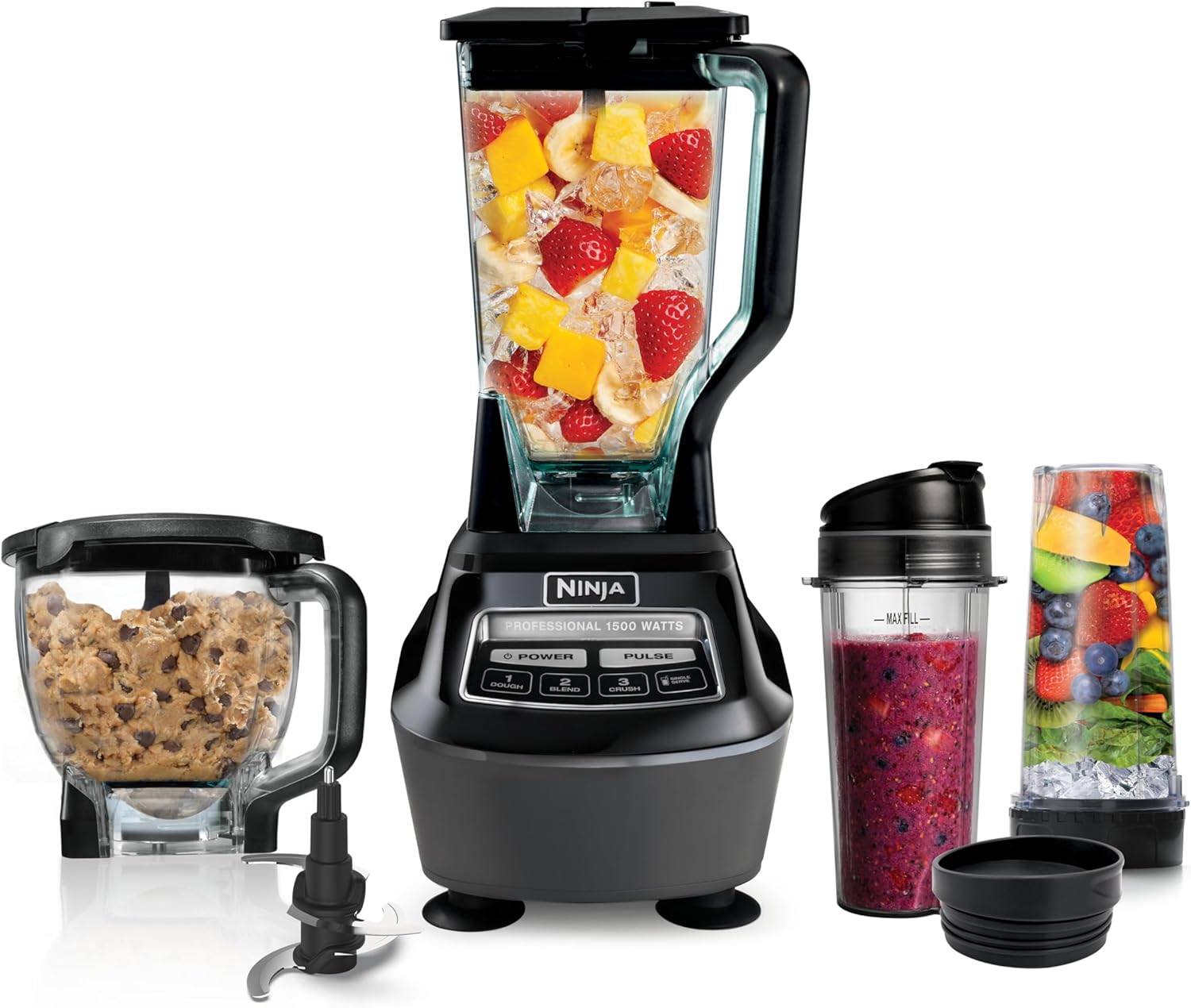
The Ninja Mega Kitchen System BL770 combines a powerful 1500W motor with multiple containers and blade sets to handle most home kitchen tasks. You get an XL 72-oz pitcher with Total Crushing Blades for smoothies and ice crushing, an 8-cup food processor bowl with chopping and dough blades for vegetables and quick dough mixing, plus two 16-oz Nutri Ninja to-go cups for single-serve drinks. Controls are manual with five speeds and four main function modes that make it simple to switch between blending, mixing, crushing, and single-serve work. Most removable parts are dishwasher safe, and the stainless steel blades are effective on frozen fruit and ice. The unit is versatile for batch smoothies, meal prep, and small baking projects, but the motor base is fairly large and the system takes some counter space and storage room. Also, the manual controls lack presets, so you need to watch run times for delicate tasks like purees. For buyers wanting a single machine that covers blending and food processing jobs, it delivers strong performance and a useful accessory set.
Best for: Buyers who want one versatile countertop appliance that handles large-batch smoothies, food prep, and occasional dough mixing without buying separate machines.
Less Ideal for: People with very limited counter or storage space or those who prefer compact single-function appliances with automatic preset programs.
- 1500-watt motor provides strong ice crushing and blending power
- Includes XL 72-oz pitcher plus 8-cup processor and two 16-oz to-go cups for multiple uses
- Multiple specialized blades (total crushing, pro extractor, chopping, dough) cover blending and processing tasks
- Most removable parts are dishwasher-safe for easier cleanup
- Large footprint that requires significant counter or cabinet space
- Manual controls with no preset programs require more user attention for consistent results
Verdict: A powerful, multi-function blender and food processor combo that covers large-batch blending, chopping, and dough mixing for buyers seeking one versatile countertop machine.
Hamilton Beach 3-Cup Electric Chopper

| Wattage | 350 watts |
|---|---|
| Bowl Capacity | 3 cups |
| Number of Speeds | 1 |
| Power Source | AC/DC |
The Hamilton Beach 3-Cup Electric Chopper is a simple, compact kitchen tool for quick prep tasks like chopping onions, herbs, nuts, and making dressings or baby food. Its stack-and-press lid makes operation intuitive — press to chop and release to stop — and the single-speed 350-watt motor supplies enough power for small batches. Stainless steel blades handle firmer ingredients and the hideaway cord helps keep counters tidy. Removable parts and dishwasher-safe components make cleanup straightforward. Because it is a 3-cup unit with one speed and no dough blade or kneading attachment, it is not designed for extended mixing or heavy dough work; it can handle small amounts of soft batter or wet dough but will struggle with larger pizza dough batches. For everyday chopping, pureeing, and quick emulsifying tasks it is reliable and easy to store, but buyers expecting a machine for regular pizza dough mixing should look to larger processors with dough hooks or stronger motors.
Best for: Buyers who want a low-risk, easy-to-use chopper for everyday small-batch chopping, pureeing, and sauce or dressing making and prefer straightforward cleanup and simple controls.
Less Ideal for: Home cooks who need a machine for mixing, kneading, or regularly preparing full-size pizza dough should choose a larger food processor with a stronger motor and dough/kneading accessories.
- Compact footprint fits small kitchens and stores easily
- Simple stack-and-press operation requires no complex assembly
- 350-watt motor and stainless steel blade handle chopping, mincing, and purees effectively
- Dishwasher-safe removable parts speed cleanup
- Small 3-cup bowl and single speed limit capacity and control for heavy or large dough tasks
- Not intended for regular or large pizza dough mixing or kneading
Verdict: Choose this compact Hamilton Beach chopper if you want a reliable, no-fuss small appliance for quick chopping and purees, but not for making full-size pizza dough.
Choosing the Right Food Processor for Pizza Dough: Key Factors to Consider
Motor Power and Torque
A food processor intended for pizza dough needs a motor that delivers sustained torque rather than short bursts of high RPM. Dough is dense and sticky, and lower-torque motors can stall or bog down, producing inconsistent gluten development. More torque helps the machine handle higher hydration doughs and larger batches without overheating.
Check how manufacturers rate continuous power and whether the design includes features to reduce current draw under load. Better motor cooling and reduced plastic gearing are beneficial because they extend working time and lower the chance of mechanical failure during repeated kneading sessions.
Dough Attachment Design
Not all blades or attachments are equally effective for dough. A purpose-built dough hook or S-shaped kneading tool mixes and stretches the dough more like hand kneading, producing better gluten structure than a standard cutting blade. Attachment shape, shaft position, and how the tool engages the bowl all affect kneading action and dough texture.
Look for attachments that reach the full bowl depth and are easy to remove for cleaning. Secure locking mechanisms and robust shafts reduce flex under load, which improves consistency in dough development and reduces wear on internal gears.
Bowl Capacity and Bowl Shape
Bowl size determines how much dough you can make in a single batch. For pizza, typical home recipes range from single 10–12 inch pizzas to multiple smaller pies, so choose a bowl that matches your usual batch size. Too-small bowls crowd the dough and prevent thorough mixing; too-large bowls can allow dough to slide without being properly engaged by the attachment.
Also consider bowl shape. Taller bowls often give better circulation for dough, while wide shallow bowls can spread ingredients thin and reduce kneading efficiency. Make sure the bowl diameter and depth work with the dough tool to ensure consistent results.
Durability and Thermal Management
Repeated dough mixing stresses motors and gear trains. Durable units use metal gears or reinforced plastic, and include ventilation or heat-sensing features to protect the motor. Overheating can reduce motor life and lead to sudden shutdowns mid-batch, so look for designs that dissipate heat well or specify duty cycles suitable for dough.
Consider the build quality of the bowl, lid, and locking mechanisms as well. High-stress parts that are poorly reinforced will wear faster when regularly making dough, so longevity matters if you plan to knead frequently.
Ease of Use and Controls
Intuitive controls let you focus on dough feel rather than fiddling with settings. Simple speed ranges, a pulse function, and clear locking indicators are practical when mixing dough. Some processors include dedicated dough speeds or presets that take the guesswork out of timing.
Ergonomics matter too: how easily you can add water or flour during mixing, remove the lid, or change attachments affects the overall experience. A stable base and non-slip feet reduce movement during heavy kneading.
Cleaning and Maintenance
Dough can be sticky and cling to blade shafts, bowl rims, and seals. Removable, dishwasher-safe parts reduce cleanup time and make regular use more feasible. Smooth interior surfaces, few crevices, and easily detachable shafts limit trapped dough and reduce the need for scrubbing.
Also consider maintenance access. Models that allow simple inspection of gears and vents, and that use common fasteners for replacement parts, make long-term upkeep easier and reduce the chance of downtime from minor issues.
How Dough Hydration Affects Processor Choice
Hydration level is the ratio of water to flour in your dough and it changes how a processor behaves. Lower hydration doughs are stiffer and place more mechanical load on a motor, while higher hydration doughs are looser and require different kneading dynamics to develop gluten without collapsing the structure.
If you bake with wetter dough recipes, prioritize a processor with sufficient bowl depth and attachment reach so the tool can fold and stretch the dough rather than merely spinning it. For stiffer, low-hydration doughs, stronger torque and robust gearing are more important to avoid stalling.
- Higher hydration needs good circulation and attachment reach
- Lower hydration requires higher torque and durable gearing
- Adjust batch size to bowl capacity to maintain mixing efficiency
Preparing Dough in Batches: Practical Tips
When using a food processor for multiple pizzas, work in batches sized to the bowl capacity to ensure the attachment can engage the dough properly. Overfilling reduces kneading efficiency and increases strain on the motor.
Measure ingredients precisely and add liquids gradually while the unit runs briefly to incorporate them without creating an overly sticky mass. Let the motor rest between heavy cycles if you are making multiple large batches to avoid overheating.
- Divide recipes to match bowl capacity
- Add liquids slowly with short pulses
- Allow motor cool-down after extended use
Cleaning Workflow for Sticky Dough
Remove excess dough with a flexible spatula before washing to prevent baking or gumming on parts. Rinse bowls and attachments under warm water immediately after use when possible because dough is easier to remove before it dries.
If dishwasher-safe parts are available, place them on the top rack and use a mild cycle. For non-dishwasher components, soak in warm water to loosen residue, then hand-wash with a brush to reach seams and the attachment hub.
- Scrape before washing
- Soak dried dough in warm water
- Use top-rack dishwasher where safe
Common Mistakes That Hurt Dough Results
One frequent error is overworking dough at high speed. Many processors can overheat or create too much friction, which warms the dough and can weaken gluten structure. Use lower speeds and short pulses for kneading.
Another mistake is trying to make too large a batch for the bowl, which prevents adequate kneading and stresses the motor. Finally, using the wrong attachment or a blunt, worn tool reduces mixing effectiveness.
- Avoid high-speed continuous mixing for dough
- Match batch size to bowl capacity
- Replace or inspect attachments for wear
When a Stand Mixer Might Be a Better Fit
For very large batches, frequent high-volume baking, or very stiff doughs, a purpose-designed stand mixer often provides higher continuous torque and larger capacities. Consider whether your pizza-making frequency and batch sizes justify a larger dedicated machine.
However, a food processor can be a space-saving and fast alternative for typical home pizza recipes, particularly when you value rapid ingredient incorporation and compact storage.
- Stand mixers excel at very large or stiff doughs
- Food processors are faster for quick mixing and smaller batches
- Think about frequency and batch size when choosing equipment
How We Chose the Best Food Processor for Pizza Dough
We selected food processors that demonstrate reliable dough-making performance under normal home-baking conditions. Our evaluation prioritized motor power and torque to handle dense, hydrated doughs without slowing, compatible dough or S-shaped mixing attachments that mimic kneading action, and bowl capacity suitable for typical pizza recipes. We also considered thermal management so motors do not overheat during extended mixing, as well as clutch and gear durability for repeated dough cycles. Usability factors were included: how easy the unit is to assemble, how intuitive the speed and pulse controls are, and how straightforward cleanup is, including whether parts are dishwasher-safe. We excluded small, lightweight processors with low-torque motors that consistently stall on heavy dough and models lacking dedicated dough tools. We also filtered out units with fragile plastic gearing or poorly ventilated motors. The final picks represent a balance of power, usable bowl size, durable dough tools, and straightforward maintenance for regular pizza-making at home.
Our full evaluation process is outlined in our review methodology.
FAQ
Can a regular food processor really knead pizza dough?
Often yes. Many midrange and higher-powered processors can knead typical home pizza dough when fitted with the right attachment and used on appropriate speeds. Success depends on motor torque, bowl capacity, and the presence of a dough-specific tool.
What bowl size is best for two medium pizzas?
A medium bowl in the 8 to 12 cup range usually handles dough for two medium pizzas comfortably. The key is ensuring the attachment fully engages the dough volume without leaving excess space where the dough can slide around.
How long should I run a processor to knead pizza dough?
Kneading time varies by recipe and hydration but typically ranges from 60 to 120 seconds in a food processor. Short bursts with pauses are better than long continuous runs to avoid overheating the motor and warming the dough.
Will dough stick to the bowl and make cleanup difficult?
Dough can be sticky, but scraping excess before rinsing and using warm water immediately reduces residue. Dishwasher-safe parts and smooth interior surfaces make cleanup easier for regular use.
Can I use the same attachment for kneading and mixing other ingredients?
Some dough attachments are multi-use, but their shape may not be ideal for delicate mixing tasks. It is often better to have dedicated tools or to switch to standard blades for chopping and mixing non-dough ingredients.
Final Verdict
Choosing the right food processor for pizza dough comes down to matching motor torque, bowl capacity, and a purpose-built dough attachment to your typical recipes and batch sizes. Prioritize sustained torque and durable construction if you plan to knead frequently, and favor adequate bowl depth and attachment reach for higher-hydration doughs. Balance ease of cleaning and usability with the motor and attachment features to find the best fit for your kitchen. With those tradeoffs in mind, you can confidently pick a processor that makes reliable pizza dough without unnecessary hassle.