
Note: This article contains affiliate links. If you click on these links and make a purchase, we may earn a small commission at no extra cost to you. This helps support our research and content. Read our full affiliate disclosure here.
Picking the right food processor for pureeing makes a big difference in how smoothly vegetables, fruits, and cooked legumes transform into sauces, baby food, or soups. The right unit saves time, reduces fussing, and produces a uniform texture without overworking ingredients. This guide covers seven shortlisted food processors that are well suited to pureeing tasks and explains the functional tradeoffs buyers should weigh. We evaluate motor capability, blade and bowl design, ease of cleaning, and noise and durability to help you decide which processor will fit your kitchen routine. Read on for practical guidance before you pick a model.
Top Picks at a Glance
| Best Overall The best all-around choice for most situations | Ninja Professional Plus BN601 |  |
| Best Quality Built to a higher standard if you want something more solid | Cuisinart 14-Cup Food Processor DFP-14BCNY |  |
| Best Value The sweet spot between price and what you get | Hamilton Beach Stack & Snap 12-Cup |  |
| Best Budget The cheapest option that still gets the job done reliably | Hamilton Beach 3-Cup Food Chopper |  |
| Top Rated A top-rated pick with lots of positive feedback | Breville Sous Chef 16 Cup |  |
| Most Popular A crowd favorite that many people choose with confidence | Ninja Mega Kitchen System BL770 |  |
| Best Seller A high-volume bestseller chosen again and again | Ganiza Food Processor GC10 |  |
Ninja Professional Plus BN601

| Wattage | 1000 watts |
|---|---|
| Bowl Capacity | 4.5 pounds |
| Number of Speeds | 3 |
| Power Source | AC adapter |
The Ninja Professional Plus BN601 is a high-power countertop food processor built for everyday kitchen prep and larger batches. It uses a 1000-peak-watt motor and Auto-iQ preset programs to handle chopping, slicing, pureeing and dough mixing with one-touch convenience. The 9-cup precision bowl and included stainless steel chopping blade, reversible slicing/shredding disc and dough blade make it straightforward to puree soups and sauces smoothly, shred cheese, slice vegetables evenly, or mix bread and pizza dough. Removable parts are dishwasher-safe and BPA-free, which keeps cleanup simple after heavy use. Controls are simple with three speeds and programmable presets, so you can get consistent results without trial and error. Limitations are minimal but include a mostly plastic construction and a relatively compact feed chute that may require pre-cutting larger items; serious professional kitchens might prefer metal-heavy commercial units. For home cooks who want reliable purees and versatile prep tools, this unit delivers strong performance at a domestic scale.
Best for: Buyers who want a powerful, versatile home food processor that simplifies pureeing and batch prep with preset programs and multiple blades.
Less Ideal for: Commercial kitchens or users who need a heavy-duty metal-bodied, industrial-capacity processor should consider pro-grade alternatives.
- Powerful 1000-peak-watt motor handles tough ingredients and yields smooth purees
- Auto-iQ presets simplify one-touch chopping, pureeing, slicing and dough cycles
- 9-cup bowl capacity suited for family-size batches and meal prep
- Includes multiple blades and a reversible slicing/shredding disc for versatile prep
- Dishwasher-safe, BPA-free removable parts make cleanup easy
- Plastic-heavy construction may feel less durable than metal-bodied alternatives
- Feed chute size may require pre-cutting large produce for slicing or pureeing
Verdict: Choose the Ninja BN601 if you want a powerful, easy-to-use home processor that consistently produces smooth purees and handles large batches.
Cuisinart 14-Cup Food Processor DFP-14BCNY

| Wattage | 720 watts |
|---|---|
| Bowl Capacity | 14 cups |
| Number of Speeds | 1 |
| Power Source | Corded Electric |
The Cuisinart 14-cup food processor is a heavy-duty countertop unit that handles large batches and demanding prep tasks. Its 720-watt motor and roomy 14-cup bowl make it easy to puree soups and sauces, shred or slice whole vegetables through the extra-large feed tube, and even knead small doughs using the stainless steel chopping blade. Included are a 4mm slicing disc and a medium shredding disc plus a chopping/mixing blade, and most parts are dishwasher-safe for faster cleanup. The controls are simple two-button operation with an on and off/pulse option, which keeps usage straightforward but limits finetuned speed control for delicate textures. It is relatively large and solidly built, so it performs well for performance-focused cooks but takes up significant counter space and is heavier than compact models. If you need consistent, powerful purees and frequent large-batch prep, this unit delivers reliable results; if you want multiple speed settings or a very compact footprint, consider other designs.
Best for: Cooks who prioritize performance and need reliable, high-volume pureeing and prep for soups, sauces, and large family meals.
Less Ideal for: Those who want a compact, lightweight machine or multiple speed settings for delicate texture control should look elsewhere.
- Powerful 720-watt motor suitable for pureeing and heavy-duty prep
- Large 14-cup bowl that handles big batches and whole vegetables
- Includes stainless steel slicing disc, shredding disc, and chopping blade
- Dishwasher-safe removable parts for easier cleanup
- Only a single speed with pulse limits fine control over texture
- Bulky and heavy compared with compact processors
Verdict: Choose this Cuisinart when you need a powerful, large-capacity processor that delivers consistent purees and heavy-duty prep.
Hamilton Beach Stack & Snap 12-Cup

| Wattage | 450 watts |
|---|---|
| Bowl Capacity | 12 cups |
| Number of Speeds | 2 |
| Blade Material | Stainless Steel |
The Hamilton Beach Stack & Snap 12-Cup is a straightforward food processor built for everyday kitchen tasks like chopping, shredding, slicing and pureeing larger batches. Its Stack & Snap design makes assembly and teardown quick, and the sealed 12-cup bowl handles big volumes without messy leaks. The included S-blade and reversible slicing/shredding disc cover most prep jobs, while the big-mouth chute accepts whole potatoes and tomatoes to reduce pre-cutting. A 450 watt motor provides enough power for softer purees, cheeses and vegetables, and suction cup feet keep the unit stable during use. Removable parts are dishwasher safe and food zones are BPA-free which simplifies cleanup. Limitations are that it only offers two speeds and lacks specialized pureeing accessories like dedicated blender blades or a tamper for ultra-smooth textures, so achieving restaurant-level silky purees may require extra liquid or longer processing. The plastic construction keeps weight and cost down but will feel less heavy-duty than pro models.
Best for: Buyers who want a practical, no-frills processor that saves prep time and handles larger batches for everyday purees, sauces and family cooking.
Less Ideal for: Those seeking professional-grade machines for ultra-smooth purees, high-volume commercial use, or extensive speed/texture control should consider higher-end models.
- Easy Stack & Snap assembly that speeds setup and cleanup
- Large sealed 12-cup bowl for processing big batches without leaks
- Big-mouth chute reduces prep by fitting whole produce
- Dishwasher-safe removable parts and BPA-free food zones for easy cleaning
- Stainless steel S-blade and reversible disc handle common slicing, shredding and chopping tasks
- Only two speed settings limit fine control for ultra-smooth purees
- Plastic-bodied construction is less robust than commercial metal models
- No dedicated puree blade or tamper for achieving very silky textures
Verdict: A practical, easy-to-use 12-cup processor that handles family-size purees and everyday prep quickly thanks to its large sealed bowl and simple Stack & Snap assembly.
Hamilton Beach 3-Cup Food Chopper

| Wattage | 350 watts |
|---|---|
| Bowl Capacity | 3 cups |
| Number of Speeds | 1 |
| Power Source | AC/DC |
| Blade Material | Stainless Steel |
The Hamilton Beach 3-Cup Food Chopper is a straightforward countertop chopper that uses a stack-and-press lid to operate a stainless steel blade for chopping, mincing and light pureeing. Its one-touch press design makes it simple to use for quick jobs like dicing onions, chopping herbs, making dressings or pureeing small batches of baby food. The 350-watt motor provides enough power to handle nuts and tougher vegetables for short runs, while the removable bowl, lid and blade are dishwasher safe for easy cleanup. Because it has a single speed and a small 3-cup bowl, it is best for everyday small-quantity prep rather than large batches or precision slicing. The unit is lightweight and stores easily, and the hideaway cord helps reduce counter clutter. If you need a no-frills, inexpensive way to speed up basic purees and chopping tasks, this chopper delivers consistent results, but users who need multiple speeds, larger capacity or slicer/shredder attachments will find it limited.
Best for: Buyers looking for a low-cost, easy-to-use appliance to speed up everyday small-batch chopping and simple purees without extra features.
Less Ideal for: People who regularly need to process large volumes, want variable speeds, or need slicing and shredding attachments should consider a larger multifunction processor.
- Simple push-to-chop design that is easy to assemble and operate
- 350-watt motor and stainless steel blade handle onions, herbs, nuts and light purees
- Dishwasher-safe removable bowl, lid and blade for quick cleanup
- Compact 3-cup bowl stores easily and is suitable for small daily tasks
- Single speed limits control over texture for fine purees
- Small 3-cup capacity requires multiple batches for larger recipes
Verdict: A budget-friendly, compact chopper that makes quick small-batch purees and chopping simple and fast.
Breville Sous Chef 16 Cup

| Wattage | 1450 watts |
|---|---|
| Bowl Capacity | 16 cups |
| Number of Speeds | 1 |
| Voltage | 120 volts |
| Power Source | electric |
The Breville Sous Chef 16 is a large, feature-rich food processor built to handle heavy home and small-batch professional tasks. It uses a 1450W induction motor and a direct-drive design to power an included S-blade, adjustable 24-size slicing disc, reversible shredding disk, French fry disk, dough blade and mini attachments, so it can puree, slice, shred, knead and mince with consistent results. The extra-large 3-in-1 feed chute reduces prep time for bulky items and the solid stainless steel construction plus dishwasher-safe removable parts make cleaning and long-term use straightforward. For pureeing, the S-blade and strong motor produce smooth, consistent textures even with dense vegetables or large batches. The unit is heavy and takes countertop space, and it has a single-speed control with pulse and timer functions rather than a wide variable-speed dial, so very fine speed-tuned applications require manual pulsing. Overall, this processor delivers durable, repeatable purees and versatile attachments that suit serious home cooks who want factory-quality performance.
Best for: Buyers who prioritize durable, consistent performance for frequent pureeing and multi-task meal prep and want a heavy-duty, long-lasting machine that handles large batches.
Less Ideal for: Casual cooks who only need occasional small-batch purees or those with very limited countertop space should consider smaller, lighter alternatives.
- Powerful 1450W induction motor handles dense ingredients and large batches
- Wide set of attachments including adjustable slicer, reversible shredder and S-blade for versatile prep
- Large 16-cup bowl and extra-large 3-in-1 feed chute lower prep time for big items
- Stainless steel construction and dishwasher-safe removable parts for durability and easier cleaning
- Single-speed control with pulse and timer rather than fine variable-speed limits precise speed tuning
- Large and heavy footprint may not suit small kitchens or frequent countertop moving
- Higher initial size and weight could be overkill for users who only make small purees occasionally
Verdict: If you want reliable, factory-quality purees and a machine that handles large, frequent batches, the Breville Sous Chef 16 is built for the job.
Ninja Mega Kitchen System BL770
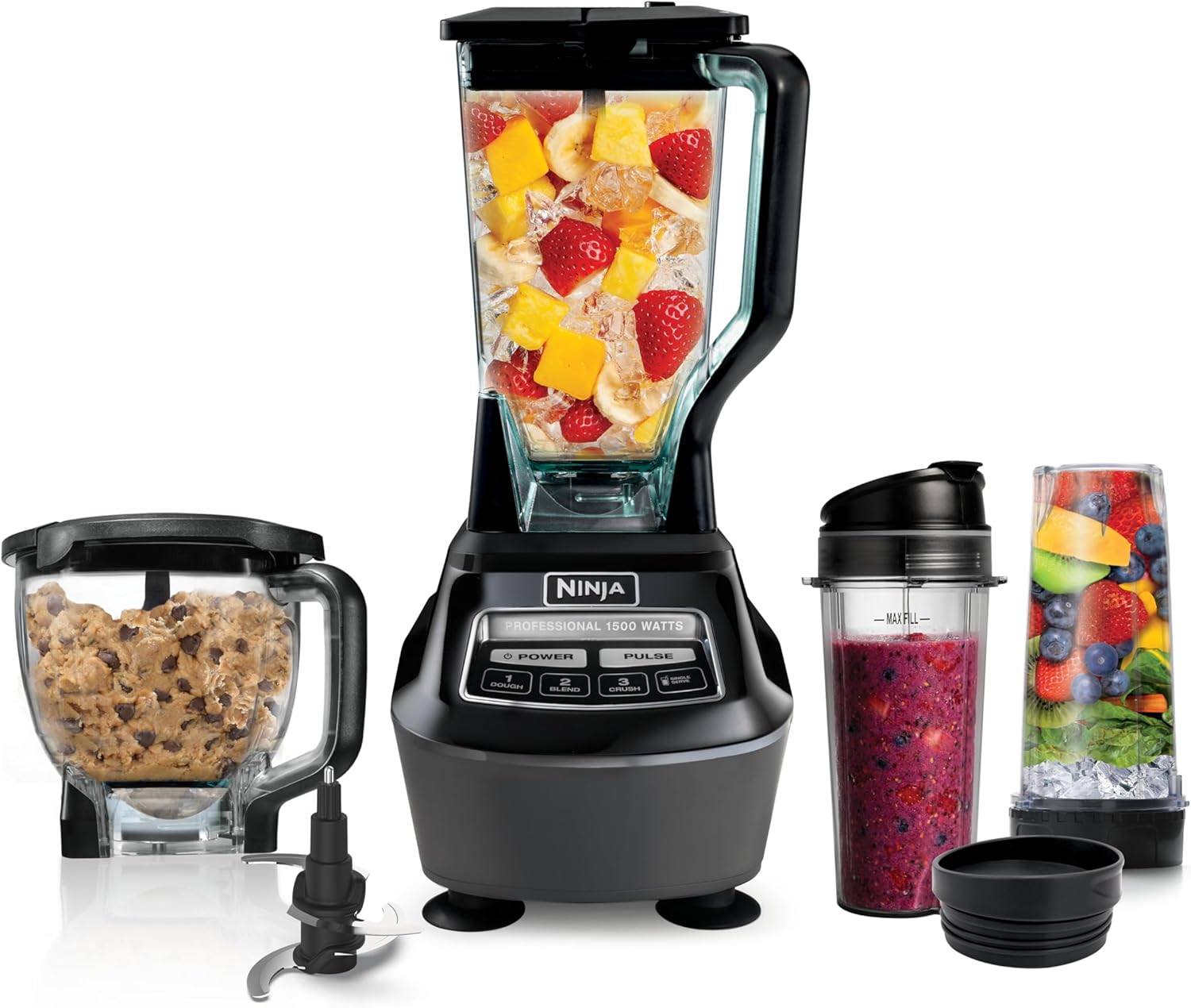
| Wattage | 1500 watts |
|---|---|
| Number of Speeds | 5 |
| Capacity | 16 fluid ounces |
| Power Source | ac_dc |
The Ninja Mega Kitchen System BL770 combines a powerful 1500W motor with multiple containers and blade sets to handle most home kitchen tasks. You get an XL 72-oz pitcher with Total Crushing Blades for smoothies and ice crushing, an 8-cup food processor bowl with chopping and dough blades for vegetables and quick dough mixing, plus two 16-oz Nutri Ninja to-go cups for single-serve drinks. Controls are manual with five speeds and four main function modes that make it simple to switch between blending, mixing, crushing, and single-serve work. Most removable parts are dishwasher safe, and the stainless steel blades are effective on frozen fruit and ice. The unit is versatile for batch smoothies, meal prep, and small baking projects, but the motor base is fairly large and the system takes some counter space and storage room. Also, the manual controls lack presets, so you need to watch run times for delicate tasks like purees. For buyers wanting a single machine that covers blending and food processing jobs, it delivers strong performance and a useful accessory set.
Best for: Buyers who want one versatile countertop appliance that handles large-batch smoothies, food prep, and occasional dough mixing without buying separate machines.
Less Ideal for: People with very limited counter or storage space or those who prefer compact single-function appliances with automatic preset programs.
- 1500-watt motor provides strong ice crushing and blending power
- Includes XL 72-oz pitcher plus 8-cup processor and two 16-oz to-go cups for multiple uses
- Multiple specialized blades (total crushing, pro extractor, chopping, dough) cover blending and processing tasks
- Most removable parts are dishwasher-safe for easier cleanup
- Large footprint that requires significant counter or cabinet space
- Manual controls with no preset programs require more user attention for consistent results
Verdict: A powerful, multi-function blender and food processor combo that covers large-batch blending, chopping, and dough mixing for buyers seeking one versatile countertop machine.
Ganiza Food Processor GC10

| Wattage | 450 watts |
|---|---|
| Capacity | 0.95 gallons |
| Voltage | 120 volts_of_alternating_current |
| Material Type | Stainless Steel, Glass |
The Ganiza GC10 is a compact food processor built for everyday chopping, grinding, and pureeing tasks. It pairs a 450W full-copper motor with two interchangeable 8-cup bowls—one glass and one stainless steel—so you can keep meat and produce separate or switch bowls for different jobs. Two speed settings and S-shaped stainless steel blades handle quick chops, finer mincing, and basic purees in short bursts, while removable blades and simple assembly make cleanup straightforward. Safety features include an automatic stop design and an overheating protection system that halts operation if the unit overheats. Practical limits are its single-purpose control layout and modest 450W power, which means heavy-duty processing or very large batches may take longer than with larger commercial units. For pureeing, it produces smooth results for soups, sauces, and baby food but may need more run time than higher-wattage processors. Overall it is a safe, no-frills option for regular home kitchen prep where simplicity and hygiene separation matter.
Best for: Buyers who prioritize safe, simple kitchen tools and want a reliable processor for everyday purees, sauces, and small-to-medium meal prep with easy cleaning and hygiene options.
Less Ideal for: Commercial cooks, heavy-duty batch processors, or users who need fine variable-speed control and very high-power pureeing should consider more powerful models.
- Two 8-cup bowls (glass and stainless steel) let you separate ingredients for hygiene and flexibility
- Full-copper motor for longer service life compared with standard motors
- Two-speed control with S-shaped stainless steel blades handles chopping, grinding, and basic pureeing
- Built-in safety features including automatic stop and overheating protection
- Removable blades and straightforward assembly make cleaning simple
- 450W motor is adequate for household tasks but not ideal for very heavy or continuous commercial use
- Limited to two basic speeds without pulse or variable-speed fine control
Verdict: A straightforward, safety-focused food processor that reliably handles household purees and meal prep while keeping ingredients separate for cleaner workflow.
Choosing the Right Food Processor for Pureeing: Key Factors to Consider
Motor Power and Duty Cycle
Pureeing demands sustained motor torque rather than short bursts of speed. A stronger motor reduces the risk of stalling when you process hot soups, cooked root vegetables, or dense legumes. Consider not only rated watts but also how the motor handles continuous runs and whether the unit has thermal protection to prevent overheating.
Higher power usually means the machine will process batches faster and leave fewer large particles, which matters if you puree often or work with large volumes. However, very powerful motors can add weight and cost, so match motor capability to the volume and frequency of tasks you plan to do.
Blade Geometry and Bowl Flow
Blade shape, cutting edge angle, and the bowl profile all influence how ingredients circulate and reduce. S-shaped or multipurpose blades that cut and draw material toward the center produce smoother results than flat blades that chop unevenly. A bowl with gently tapered walls and a wide base helps ingredients move under the blades rather than simply spinning around the rim.
Look for blades that are easy to remove for sharpening or replacement and that are made of durable stainless steel. Some processors include additional inserts or tamper tools to keep dense mixtures flowing, which can improve uniformity without over-processing.
Bowl Capacity and Batch Size
The volume you plan to puree affects both convenience and texture. Larger bowls allow you to process whole batches of soup or larger portions of baby food without repeated runs, which can save time. But overfilling a bowl reduces performance because ingredients need space to circulate; follow manufacturer fill recommendations for best results.
If you typically prepare small single servings, a compact bowl may be more efficient and easier to clean. For family-sized portions, a mid- to large-capacity bowl prevents you from having to puree in multiple stages.
Sealing, Splash Control, and Heat Handling
When pureeing hot liquids, leaks and splashes are a real concern. Good lid seals and splash guards prevent mess and protect the motor housing. Some processors include vented lids or removable inserts that let steam escape safely while you blend hot ingredients.
Materials that withstand warm contents without warping are important for longevity. Check that gaskets and seals are easy to inspect and replace if they degrade over time.
Ease of Cleaning and Maintenance
Purees can be sticky and can gum up blades and bowl surfaces. Components that disassemble quickly and fit in the dishwasher speed cleanup and reduce the temptation to leave parts soaking. Smooth interior surfaces and rounded corners help prevent trapped food and make wiping quicker.
Also consider how easy it is to access seals and blade shafts for thorough cleaning. Units with many small parts add cleaning time and increase the risk of lost pieces over the long term.
Control Options and Precision
Variable speed control and a pulse function are valuable when you want to stop short of a completely smooth puree or when you need to work in stages. A reliable pulse gives short bursts without committing to continuous high speed, which helps with chunky or semi-smooth textures.
Intuitive controls reduce the learning curve and let you repeat successful textures across batches. Look for machines with clear markings and tactile buttons or dials that remain responsive under frequent use.
How Pureeing Differs From Blending
Pureeing in a food processor focuses on reducing cooked or soft ingredients to a smooth, even texture while preserving the right mouthfeel. Unlike high-speed blenders that rely on rapid vortexing to liquefy ingredients, processors use blade geometry and slower speeds to break down solids without introducing excess air or overworking starches.
Because processors often have wider bowls and different blade angles, they can handle thicker, chunkier mixes more effectively. This makes them a better choice when you want control over texture for applications like chunky sauces, velvety soups, or baby food.
- Better for thick, dense mixtures that resist vortexing
- Less aeration preserves creaminess in purees
- Allows pulsing and staged processing for texture control
Working With Hot Ingredients Safely
If you plan to puree hot soups or stews, choose a processor with a vented lid or removable insert that allows steam to escape during processing. Work in small batches and let extreme heat settle slightly to avoid pressure buildup under the lid.
Use long-handled spatulas and hold the lid securely during pulsing. Never force the lid when pressure is present and always follow the unit's heat-handling guidance to protect seals and prevent splatters.
- Allow very hot mixtures to cool slightly before covering
- Use short pulses to gradually incorporate hot liquids
- Check lid gaskets regularly for heat-related wear
Texture Tips: From Chunky to Velvety
Achieving the texture you want comes down to blade choice, processing time, and the order of operations. Start with shorter pulses to break ingredients down, then increase continuous running time for a smoother finish. Scrape the bowl between runs to move stubborn pieces into the blade path.
For ultra-smooth results, process a warm mixture in stages and finish with a brief higher-speed pass if the processor supports it. If you need a little body, stop earlier and use the pulse function to keep some structure.
- Pulse first, then blend continuously for final smoothing
- Scrape bowl walls to keep material moving into the blades
- Adjust processing time based on ingredient moisture and starch content
Maintaining Blades and Seals
Keep blades sharp and inspect them for nicks that can tear rather than cut, which degrades texture. Many blades are removable and can be hand-washed and dried promptly to prevent corrosion. Replace worn gaskets and seals to maintain leak-free performance.
Regular maintenance extends service life and preserves puree quality. Lubricate or check the blade shaft as recommended by the manufacturer and avoid using metal utensils that could damage blade edges or bowl finishes.
- Wash blades promptly and dry thoroughly to prevent rust
- Inspect seals after processing hot liquids
- Store blades safely to avoid dulling or damage
When To Use a Food Processor Versus an Immersion Tool
Immersion blenders are handy for pureeing directly in a pot, but they often struggle with very thick or large-volume batches. A food processor provides better mechanical advantage for dense mixtures and gives more consistent chunk-to-smooth transitions.
If you need portability and immediate pot-side blending, an immersion tool can complement a processor. For repeatable texture control, batch processing, and blade precision, a food processor is the better long-term choice.
- Processor for batch consistency and dense mixtures
- Immersion blender for single-pot convenience
- Consider owning both if you frequently switch between jobs
How We Chose the Best Food Processor for Pureeing
We filtered a wide range of food processors to identify models that meet the specific demands of pureeing. Selection began with machines that have consistent, well-supported motors capable of sustaining the speeds needed for smooth texture without burning or stalling. We prioritized blade design and accessory options that promote even circulation and fine reduction, including multi-purpose blades and work bowls shaped to minimize dead zones. Durability and thermal protection were considered to ensure repeatability of results with hot or dense ingredients. Ease of cleaning and dishwasher-safe components were required because pureeing tends to produce sticky residues that affect turnaround time. Control options and pulse speed were evaluated to give users precision when finishing textures. We excluded very small choppers and single-speed mini-units that lack the power or bowl capacity for sustained pureeing. We also excluded commercial-only equipment not intended for home kitchens. The criteria that mattered most were motor power and duty cycle, blade and bowl geometry, sealing and splash control, cleaning and maintenance, and user controls.
Our full evaluation process is outlined in our review methodology.
FAQ
Can I puree hot soup in a food processor?
Often yes, but you should use a vented lid or allow steam to escape and work in small batches. Let very hot mixtures cool slightly and use short pulses to avoid pressure buildup and splattering.
How do I avoid grainy purees from starchy vegetables?
Cook starchy vegetables until fully tender and add a little warm liquid when pureeing to smooth the texture. Process in stages and finish with a brief higher-speed pass if available.
Will a food processor produce baby food with the right texture?
Usually yes. Process cooked fruits and vegetables until smooth, using small batches and scraping as needed. For very fine baby-food textures, additional straining or a short pass through a finer-mesh sieve may be helpful.
How often should I replace blades or seals?
Inspect blades and seals regularly for dulling, nicks, or cracking. Replace seals when you notice leaks or wear and blades when they no longer cut cleanly despite sharpening attempts.
Is a wider bowl better for pureeing?
A wider bowl can help process thicker mixtures by allowing ingredients to move under the blades, but it also requires a minimum fill level for efficient circulation. Match bowl size to the batch sizes you plan to run.
Final Verdict
Prioritize motor strength, blade geometry, and ease of cleaning when choosing a food processor for pureeing. Motor endurance and appropriate blade design determine how smoothly dense ingredients will reduce, while bowl shape and seals affect circulation and mess control. Balance bowl capacity with the typical batch sizes you prepare and value control features like pulse and variable speeds for repeatable textures. Focus on the few features most relevant to your routine rather than chasing every spec. With the right mix of motor capability, flow-friendly bowl design, and straightforward maintenance, you can get reliably smooth purees with minimal fuss.