
Note: This article contains affiliate links. If you click on these links and make a purchase, we may earn a small commission at no extra cost to you. This helps support our research and content. Read our full affiliate disclosure here.
If you need cold storage outside the house, choosing the right freezer for outdoor use matters more than picking the biggest unit. Outdoor freezers face rain, sun, temperature swings, and heavier cycles, so durability, insulation, and reliable temperature control determine long-term performance. This guide presents seven shortlisted freezers built for outdoor environments. We focus on weatherproofing, consistent cooling, and practical setup concerns so you can pick a unit that protects food, stands up to the elements, and fits your installation needs. Read on for the selection criteria and the factors that make some models better suited for outdoor placement than others.
Top Picks at a Glance
| Best Overall The best all-around choice for most situations | Frigidaire Chest Freezer EFRF5003 |  |
| Best Quality Built to a higher standard if you want something more solid | Summit SPFF51OS Outdoor Freezer |  |
| Best Value The sweet spot between price and what you get | Kismile 3.2 Cu Ft Chest Freezer BD-80 |  |
| Best Budget The cheapest option that still gets the job done reliably | Climate Choice 3.5 Cu.Ft Chest Freezer |  |
| Top Rated A top-rated pick with lots of positive feedback | Whynter CUF-301SS 3.0 cu ft Upright Freezer |  |
| Most Popular A crowd favorite that many people choose with confidence | BougeRV CR22 23-Quart Refrigerator |  |
| Best Seller A high-volume bestseller chosen again and again | BODACIOUS 7.0 Cu Ft Chest Freezer |  |
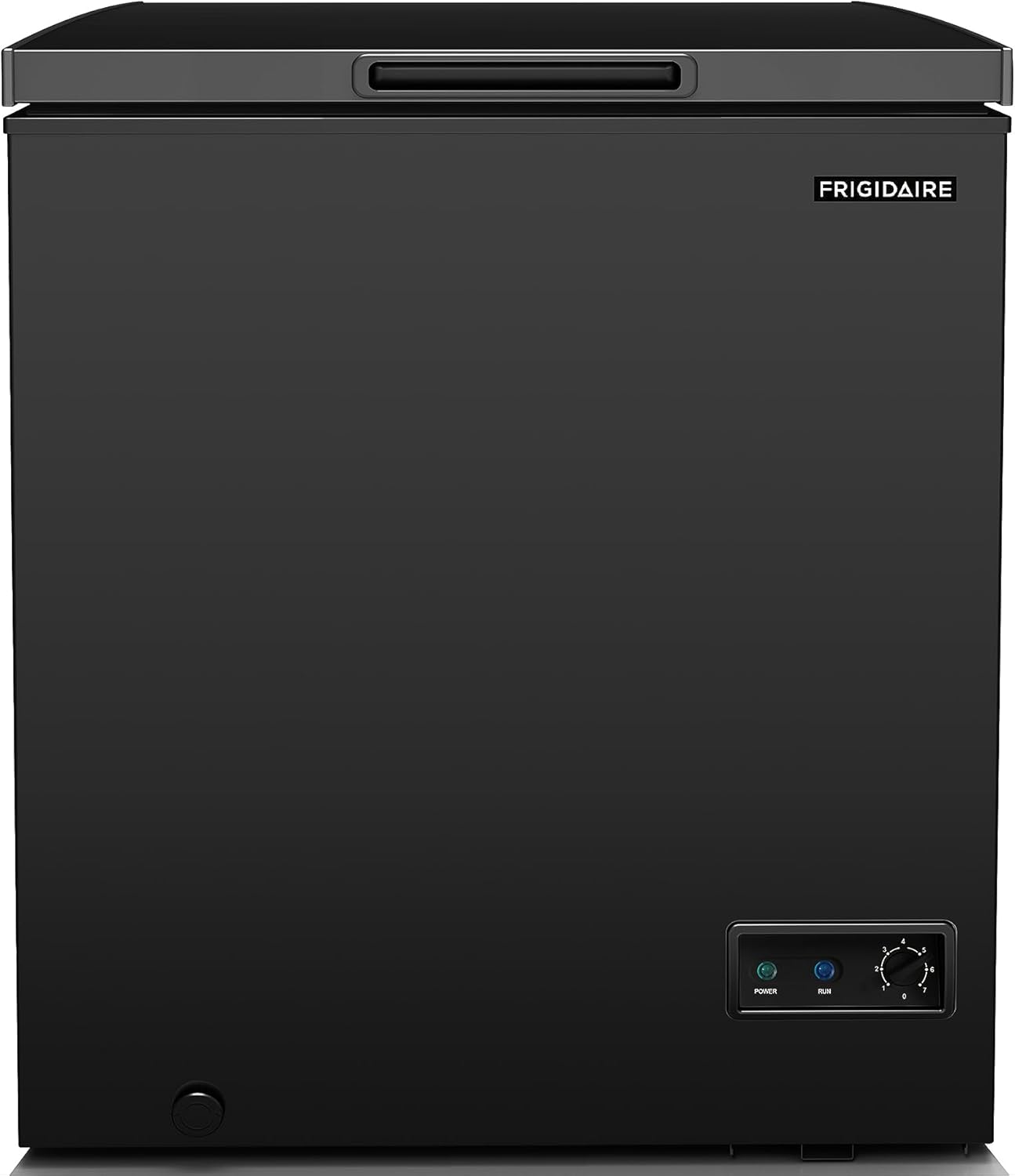
Frigidaire Chest Freezer EFRF5003
| Capacity | 5 cubic feet |
|---|---|
| Voltage | 120 volts |
| Door Orientation | Top |
| Number Of Shelves | 1 |
This Frigidaire chest freezer is a compact, no-frills unit that gives you about 5.0 cubic feet of extra frozen storage for meal prep, bulk buys, or overflow from the kitchen. It uses a top-lid design with a removable vinyl-coated wire basket to keep small items accessible and an external temperature knob with seven settings for simple manual control. The aluminum interior liner and recessed handle make the unit easy to clean and use, while adjustable leveling legs and a visible power-on indicator add practical convenience. Defrosting is manual but made easier by the exterior drain hole, and the straightforward controls mean minimal maintenance or setup. For outdoor or garage-adjacent use, the description calls this model garage-ready, but note the unit relies on basic mechanical controls and manual defrosting rather than advanced climate management features, so temperature stability in extreme outdoor conditions may be limited. This is a practical, space-conscious freezer for buyers who want reliable extra capacity without complexity.
Best for: Buyers who want a straightforward, space-saving secondary freezer for garage or outdoor-adjacent storage and value simple controls and easy organization.
Less Ideal for: Those who need frost-free operation or precise climate control for very hot or cold outdoor environments should consider a different model with active defrost and enhanced insulation.
- Compact 5.0 cu. ft. capacity for extra frozen storage
- Removable vinyl-coated wire basket keeps small items organized and accessible
- Adjustable external thermostat with seven settings for simple temperature control
- Exterior defrost drain speeds manual defrosting and cleanup
- Adjustable leveling legs and visible power-on indicator for easy placement and status checks
- Manual defrosting requires periodic draining and more maintenance than frost-free models
- No advanced temperature management for stable performance in extreme outdoor temperatures
Verdict: A practical, compact chest freezer that delivers reliable extra storage with simple controls ideal for balanced buyers needing straightforward garage-capable freezing space.
Summit SPFF51OS Outdoor Freezer

| Capacity | 4.72 cubic feet |
|---|---|
| Voltage | 120 volts |
| Wattage | 390000 watts |
| Installation Type | Freestanding |
| Specification Met | ETL |
The Summit SPFF51OS is an outdoor-capable undercounter freezer designed for built-in or freestanding use where weather resistance matters. It delivers frost-free cooling with a digital thermostat for precise temperature adjustment and a reversible stainless steel door with a factory-installed lock and professional handle. The cabinet is fully finished so the unit can sit exposed without trim, and it meets ETL/NSF-7 standards for commercial reliability; Sabbath Mode and an audible alarm add convenience and safety features. In practice this unit suits outdoor kitchens, covered patios, or commercial walk-up counters where you need steady frozen storage and low maintenance defrosting. Expect standard upright freezer organization and a mid-size 4.7 cu ft usable volume, so it is best for meats, ice, and bulk frozen goods rather than very large party trays. The practical trade-offs are its modest capacity for a 24" footprint and that outdoor placement still benefits from some shelter to avoid extreme weather exposure despite the weatherproof construction.
Best for: Buyers who need a durable, low-maintenance upright freezer for an outdoor kitchen or covered patio and prioritize reliable, commercial-grade performance over maximum capacity.
Less Ideal for: Those who need very large frozen storage or plan to store oversized party platters frequently should consider larger-capacity freezers instead.
- Weatherproof construction suitable for outdoor or built-in installation
- Frost-free operation reduces manual defrosting and maintenance
- Digital thermostat for precise temperature control
- Factory-installed lock and professional handle for security and commercial look
- ETL/NSF-7 compliance indicating reliable commercial-grade safety
- 4.72 cu ft capacity is modest for larger outdoor entertaining needs
- Requires some covered placement in very harsh climates despite weatherproofing
Verdict: Choose this model when you want a compact, weatherproof undercounter freezer that delivers dependable, low-maintenance frozen storage for outdoor kitchens and covered patios.
Kismile 3.2 Cu Ft Chest Freezer BD-80

| Capacity | 3.2 cubic feet |
|---|---|
| Door Orientation | Top |
| Number Of Shelves | 1 |
| Installation Type | Freestanding |
The Kismile 3.2 cu ft chest freezer is a small, freestanding deep freezer designed to keep extra food cold without taking much floor space. It is typically used in kitchens, dorms, or offices to store meat, breast milk, frozen meals, and beverages; two removable baskets help separate frequently used items from bulk storage. Temperature is controlled by a 7‑grade adjustable thermostat that ranges roughly from 6.8°F to -7.6°F so you can choose normal freezing or deeper cold settings, and indicator lights show power and run status. Practical features include a balanced hinge lid that can stay open at 45°–90° for loading, a bottom drain for fast defrost water removal, and a compressor that the listing says runs quietly under 40 dB while using about 0.68 kWh per day. Limitations are typical of compact chest freezers: no internal shelving beyond the baskets, top-only access that can be awkward in tight outdoor spaces, and the temperature range is modest compared with commercial freezers. For outdoor use you will also need to ensure protection from weather and stable ambient temperatures because the unit is specified as freestanding without outdoor-rating details.
Best for: Buyers who need a space-saving secondary freezer to organize extra frozen food and prioritize adjustable temperature control and quiet, efficient operation.
Less Ideal for: People who want a freezer specifically for unprotected outdoor placement or for heavy-duty commercial freezing should choose a model rated for outdoor use or with a wider temperature span.
- Compact footprint that fits small kitchens, dorms, or garages
- 7‑level adjustable thermostat for choosing milder or colder settings
- Two removable wire baskets for organizing frequently used items
- Convenient water drain speeds defrost and cleaning
- Balanced hinge lid that can stay open for easy loading
- Not specified or rated for direct outdoor exposure or extreme ambient temperatures
- Top-access design can be less convenient for frequent access compared with upright freezers
Verdict: A compact, energy-efficient chest freezer that suits buyers wanting a small, quiet secondary freezer with adjustable temperature and simple organization.
Climate Choice 3.5 Cu.Ft Chest Freezer

| Capacity | 4.2 cubic feet |
|---|---|
| Wattage | 58 watts |
| Voltage | 115 volts |
| Installation Type | Freestanding |
This compact chest freezer provides usable deep-freeze capacity in a small footprint, making it a practical extra freezer for patios, garages, or small outdoor kitchens where space is limited. It has seven temperature settings that range from about -11.4°F to 10.2°F, so you can store everything from ice cream to long-term frozen goods, and a removable wire basket helps keep frequently used items accessible. The top-open design and side handles make loading and moving easier, and a bottom drain simplifies defrosting. At under 40 dB and consuming roughly 0.37 kWh per 24 hours, it runs quietly and efficiently compared with larger units. Limitations include modest total capacity if you need to store large volumes, and the listed stainless steel door and exterior may still require weather protection if used outdoors long-term; it is intended primarily as a freestanding indoor or sheltered-space freezer. For buyers prioritizing compact size, energy use, and straightforward temperature control, this is a sensible choice.
Best for: Buyers looking for an inexpensive, space-saving secondary freezer to add sheltered outdoor or garage cold storage will appreciate its low energy draw and simple temperature control.
Less Ideal for: Not a good fit for households needing large-capacity outdoor freezing or for installations exposed to weather without overhead protection.
- Compact footprint fits tight spaces such as garages or covered patios
- Adjustable temperature control with seven settings for precise freezing
- Removable storage basket keeps small items organized and accessible
- Quiet operation below 40 dB and low energy use (~0.37 kWh/24h)
- Drain at the base makes defrosting and cleanup easier
- Only 3.5 cu ft capacity may be too small for heavy outdoor use or large-volume storage
- Not specifically rated for full outdoor exposure, so it needs a sheltered location
Verdict: A compact, energy-efficient chest freezer that gives budget buyers practical sheltered outdoor or garage freezing without taking much space.
Whynter CUF-301SS 3.0 cu ft Upright Freezer

| Capacity | 3 cubic feet |
|---|---|
| Temperature range | -14° to 50° F |
| Wattage | 100 |
| Door orientation | Reversible |
| Number of shelves | 3 |
The Whynter CUF-301SS is a small upright freezer designed for tight spaces such as garages, offices, dorms, or kitchens and can be switched to refrigerator mode when you need chilled storage. It uses a compressor-based cooling system with a mechanical dial that sets refrigerator temperatures from 32 to 50°F or freezer temperatures from -14 to -11°F, and includes two wire shelves plus a removable slide-out basket for basic organization. The reversible-swing stainless steel door and recessed handle make placement flexible while the included cylinder lock and keys let you secure contents in shared spaces. Rated to use relatively little energy, this unit is quiet enough for nearby rooms and runs on standard 115V household power. Limitations for garage use include modest capacity—only 3 cubic feet—and basic mechanical controls rather than precise digital settings, so it is best for regular food and beverage storage rather than long-term bulk freezing or temperature-critical items.
Best for: Practical buyers who need a compact, energy-conscious cold storage unit for a garage, office, or small household space and value flexibility between fridge and freezer modes.
Less Ideal for: Users who need large capacity or precise temperature control for long-term freezing, or those who store large frozen loads regularly.
- Convertible freezer/refrigerator mode for flexible cold storage needs
- Reversible stainless steel door and recessed handle for flexible placement
- Integrated lock with two keys for secure shared-space storage
- Quiet compressor operation suitable for near-room placement
- Includes removable shelf and slide-out basket for basic organization
- Only 3.0 cu ft capacity, limiting bulk storage
- Mechanical thermostat lacks precise digital control
- Not designed for heavy-duty or large-volume freezing tasks
Verdict: A compact, energy-conscious convertible freezer that fits garages and small spaces when you need a reliable, secure solution for everyday frozen or chilled storage.
BougeRV CR22 23-Quart Refrigerator

| Capacity | 23 quarts |
|---|---|
| Cooling method | Compressor |
| Temperature range | -8°F to 50°F (-22°C to 10°C) |
| Power options | 12/24V DC and 110V AC |
| Noise level | ~45 dB |
The BougeRV CR22 is a compact 23‑quart compressor fridge built for road use in trucks, RVs, and overland vehicles. It runs off 12/24V DC or 110V AC and ships with both DC and AC power cords, so it can sit in a cab or be used at a campsite. The compressor design cools quickly—advertised 15 minutes from room temperature to about 32°F—and has an ECO mode that reduces power draw to roughly 45W in normal operation. Practical features for vehicle use include a 3‑level battery protection cutoff, low noise operation near 45 dB, a top‑opening chest layout and an electronic lock. The unit is freestanding and has manual defrost, so occasional thawing and cleaning are required. It is not inverter‑equipped, so it relies on direct DC/AC connections, and the internal capacity is small compared with full cab refrigerators. For semi truck drivers the CR22 delivers fast cooling, low power use, and battery safeguards, but expect to manage limited space and perform manual defrosting over time.
Best for: Truck drivers and road travelers who want a reliable, low‑power portable fridge with battery protection and quiet operation for keeping meals and perishables fresh on multi‑day routes.
Less Ideal for: Fleet operators or drivers who need large freezer capacity or hands‑off maintenance should consider larger dual‑zone or permanently installed truck refrigerators instead.
- Runs on 12/24V DC or 110V AC with included cords for versatile vehicle and campsite use
- Compressor cooling that reaches near‑freezer temperatures quickly for keeping food frozen or chilled
- Low average power consumption with an ECO mode suitable for long trips
- 3‑level battery protection prevents draining the vehicle battery
- Relatively quiet operation around 45 dB for sleeping in the cab
- Small 23‑quart capacity limits long-term storage or bulk grocery runs
- Manual defrost requires periodic maintenance to remove frost buildup
- No built‑in inverter means direct connection required to vehicle power or external power stations
Verdict: A compact, truck‑ready compressor fridge that cools fast, uses little power, and protects your vehicle battery, making it a sensible choice for cautious drivers who value reliability.
BODACIOUS 7.0 Cu Ft Chest Freezer

| Capacity | 7 cubic feet |
|---|---|
| Voltage | 110 volts |
| Number Of Shelves | 2 |
| Door Orientation | Top |
The BODACIOUS 7.0 Cu Ft Chest Freezer is a compact, top-opening deep freezer aimed at storing bulk or overflow frozen goods. It uses a mechanical 6-position thermostat so you can dial in colder or milder settings depending on contents, and the removable storage basket helps keep frequently accessed items organized near the lid. The unit emphasizes energy efficiency and quiet operation, which makes it suitable for places where noise or high electricity use would be a concern. Practical touches include a rear defrost drain for easier maintenance and a countertop/freestanding installation option that fits tight spaces. Be aware this model is a basic chest freezer with a mechanical control rather than a digital temperature system, and the compressor can run longer at colder settings which will raise power use and surface warmth. For outdoor placements note the seller recommends typical household locations such as garages, so if you plan true outdoor exposure you should protect it from weather and extreme temperatures to avoid performance issues.
Best for: Someone who wants a simple, low-noise secondary freezer for garage or covered outdoor-adjacent use and prioritizes energy efficiency and straightforward controls.
Less Ideal for: Buyers needing precise digital temperature control, true all-weather outdoor installation, or very large freezer capacity should look at other options.
- 7.0 cu ft capacity provides solid extra frozen storage for a small household or overflow
- Energy-saving design advertised to lower running costs compared with older freezers
- Quiet operation suitable for garages, basements, or shared living spaces
- Removable basket and defrost water drain simplify organization and cleaning
- Mechanical thermostat only, no digital temperature readout or precise setpoint control
- Not designed for direct outdoor exposure in wet or extreme environments
Verdict: A compact, energy-conscious chest freezer that delivers quiet, practical overflow storage for garages or covered outdoor-adjacent spots.
Choosing the Right Freezer for Outdoor Use: Key Factors to Consider
Ambient Operating Range
Outdoor temperatures swing far more than indoor thermostats, so the freezer's ambient operating range matters. A unit rated to function across hot and cold extremes will maintain safe internal temperatures when the outside temperature climbs during summer or drops in winter.
If the freezer is used in an unheated space or exposed area, look for models with compressors and thermostats designed for wider ambient ranges. Running a unit outside its rated range increases wear and risks temperature drift that can spoil frozen goods.
Weatherproofing and Corrosion Resistance
Exposure to rain, humidity, and sun accelerates corrosion and degrades seals. A freezer built for outdoor use should have rust-resistant exterior finishes, stainless or coated hinges, and gasket materials that resist cracking from UV and cold.
Check for protective design details like raised feet to reduce direct contact with wet ground, covered control panels, and tight door seals. These features reduce moisture ingress and extend service life in damp or coastal environments.
Insulation and Temperature Stability
Thicker, high-quality insulation reduces compressor runtime and keeps internal temperatures steady when ambient conditions change. Good insulation helps the freezer recover quickly after door openings and reduces the chance of partial thaw cycles during short heat waves.
Insulation also affects energy use. Better thermal performance lowers average power draw and keeps food safely frozen with less frequent compressor cycling, which in turn reduces component stress and maintenance needs.
Energy Use and Efficiency
Outdoor units often run longer when ambient temperatures are high, so energy efficiency becomes a practical concern. Look for models with efficient compressors, adaptive defrost systems, and good insulation to minimize continuous run times.
Consider how the freezer will be powered and whether your installation will tolerate higher electrical loads during peak heat. Efficient models may cost more upfront but reduce long-term operating costs and the likelihood of overheating under sustained use.
Installation, Ventilation, and Drainage
Outdoor placement requires careful attention to ventilation and drainage. Freezers need clearance for airflow around the compressor and condenser; obstructed vents raise operating temperatures and shorten component life.
A proper outdoor installation also includes planning for water runoff and condensate drainage. Look for units with accessible drain plugs or built-in channels, and ensure the chosen site prevents pooling water around the base.
Serviceability and Component Access
Regular maintenance and occasional repairs are easier when components are accessible. For outdoor installations, it is helpful if the compressor, fans, and electrical connections are reachable without dismantling large panels.
Choose models with straightforward service points, replaceable gaskets, and user-accessible defrost systems. That reduces downtime and simplifies seasonal maintenance like gasket replacement or condensate clearing.
Where to Place an Outdoor Freezer
Choose a location that provides shade, level ground, and good airflow. Placing a freezer under an overhang or in a covered but ventilated enclosure reduces direct sun exposure and helps performance during hot weather.
- Leave recommended clearance around vents and the compressor for airflow
- Avoid spots where water pools or drips onto the unit
- Keep the freezer off bare ground using a stable platform or feet to reduce corrosion risk
Power and Electrical Considerations
Confirm the freezer's power requirements before installation. Outdoor units may draw more current during hot weather; ensure the circuit can handle the startup surge of the compressor and that wiring is protected from moisture and pests.
- Use weatherproof outlets and conduit where required
- Install a dedicated circuit if recommended by the manufacturer
- Consider surge protection if the site has unstable power
Maintaining Temperature in Extreme Weather
In very hot or cold climates, implement small measures to help the freezer maintain set temperatures. Shade, reflective covers, and adding thermal buffering inside can reduce the compressor load during heat spells and help the unit recover faster after door openings.
- Limit door openings during peak heat
- Organize contents so frequently used items are easy to reach
- Use insulated storage bins inside the freezer to reduce air exchange
Seasonal Care and Winter Use
If the freezer will remain outdoors year-round, plan for seasonal maintenance. In freezing temperatures, some compressors are less efficient or may require a heater kit to prevent oil thickening and compressor failure. In snow-prone areas, keep vents and drain lines clear to avoid ice buildup.
- Clear snow and ice from around vents regularly
- Follow manufacturer guidance on low-temperature operation
- Store the freezer under a breathable cover when idle for long periods
Choosing a Location for Ease of Service
Place the unit so technicians can access service panels and components without moving the entire appliance. This reduces service costs and simplifies routine checks like gasket inspection and condenser cleaning.
- Allow access to compressor and rear panels
- Avoid tight corners that require disconnecting the unit to service
- Keep a small clearance at the top for hinge and lid maintenance
How We Chose the Best Freezer for Outdoor Use
To assemble this list of freezers suited for outdoor placement, we applied a set of practical, appliance-focused filters to identify units likely to perform reliably outdoors. We prioritized weather resistance and enclosure design, looking for robust seals, rust-resistant finishes, and control systems rated to operate across wide ambient temperatures. Temperature stability under varying outdoor conditions was a core criterion, including compressor performance and insulation thickness. We also evaluated energy efficiency and insulation to avoid excessive run times and power draw in hot weather. Durability factors such as corrosion-resistant materials, reinforced hinges, and serviceable components were important for longevity. Ease of installation, drainage and defrost systems, and serviceability rounded out the selection filters. Excluded were indoor-only freezers with explicit ambient operating limits below typical outdoor ranges, units lacking weatherproofing or corrosion protection, and specialty laboratory or commercial appliances not intended for home outdoor use. The resulting shortlist balances real-world durability, steady cooling performance, energy considerations, and practical installation features.
Our full evaluation process is outlined in our review methodology.
FAQ
Can most freezers be used outdoors?
Not usually. Many freezers are designed for indoor ambient temperatures. Outdoor use requires models rated for wider ambient ranges and with weather-resistant materials to avoid premature failure.
Do outdoor freezers need special installation?
Yes. Outdoor installations often need weatherproof electrical connections, proper ventilation clearance, and a stable, level surface to prevent water pooling and ensure reliable operation.
How does extreme heat affect a freezer placed outside?
High ambient temperatures force the compressor to run longer to maintain setpoints, increasing energy use and wear. Adequate insulation, shade, and ventilation help reduce those effects.
Is it necessary to buy a freezer with corrosion-resistant finishes for coastal areas?
Usually. Salt air accelerates corrosion, so stainless or coated exteriors and corrosion-resistant hardware will extend service life in coastal environments.
What maintenance do outdoor freezers require?
Regular cleaning of condenser coils, gasket inspection, drain clearing, and checking for water intrusion are standard. Seasonal checks before extreme temperatures help prevent problems.
Final Verdict
Outdoor freezers solve real storage challenges but require attention to operating range, weatherproofing, and installation. Prioritize models with wide ambient ratings, good insulation, and corrosion-resistant construction for reliable, long-term performance. Balance energy efficiency against the expected outdoor conditions and plan installation to allow ventilation and service access. With those tradeoffs in mind, you can choose an outdoor-ready freezer that protects food and minimizes maintenance over time.