
Note: This article contains affiliate links. If you click on these links and make a purchase, we may earn a small commission at no extra cost to you. This helps support our research and content. Read our full affiliate disclosure here.
If you spend extended time on the road, a camper-friendly washer dryer combo can save time and reduce trips to laundromats. A front-load washer dryer combo for campers must fit tight spaces, run on limited electrical resources, and use water efficiently without sacrificing cleaning power. This guide presents six shortlisted, camper-focused options that balance size, energy draw, and real-world usability. Below you will find the top picks for compact front-load washer dryer combos, plus clear criteria we used to evaluate them and practical guidance to help you pick the right unit for your rig.
Top Picks at a Glance
| Best Overall The best all-around choice for most situations | CONTOURE 2.7 cu ft Washer/Dryer Combo |  |
| Best Quality Built to a higher standard if you want something more solid | Splendide WFL2500X & DV1725X Stackable Set | 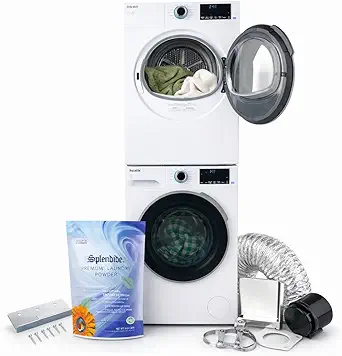 |
| Best Value The sweet spot between price and what you get | ROVSUN Washer and Dryer Set |  |
| Best Budget The cheapest option that still gets the job done reliably | Midea Washer Dryer Combo 2.7 cu ft |  |
| Top Rated A top-rated pick with lots of positive feedback | Conserv CW 2240 Washer & CD 4040 Dryer |  |
| Most Popular A crowd favorite that many people choose with confidence | COMFEE' 2.7 cu.ft Washer Dryer Combo |  |
CONTOURE 2.7 cu ft Washer/Dryer Combo

| Capacity | 2.7 cubic feet |
|---|---|
| Cycle Options | 16 wash cycles, 5 drying cycles |
| Voltage | 120 volts |
| Control Type | Electronic Touch w/LED |
| Drum Material | Stainless steel |
This CONTOURE washer/dryer combo combines a front-loading washer and condensing dryer into a single, ventless 120V unit aimed at small spaces such as RVs, tiny homes, and apartments. It handles everyday loads in its 2.7 cu ft stainless steel drum and offers steam to reduce wrinkles and provide antibacterial cleaning for small loads. The unit includes a range of preset wash and dry cycles and an LED touch display for straightforward operation, while the inverter-style motor is intended to run more quietly and consume less energy than conventional motors. Because it is ventless, drying takes longer than a standard vented dryer but it eliminates the need for external venting and expands installation options. The compact footprint and included water inlet hose make it practical for tight laundry closets, though its weight and depth with the door open require planning for installation and service access.
Best for: Buyers who need a space-saving, all-in-one laundry solution for RVs or small homes and prioritize flexible installation and steam-enhanced cleaning.
Less Ideal for: Households that frequently run large loads or need fast vented-dryer drying times should consider a separate washer and vented dryer instead.
- Ventless 120V design lets you install without external venting
- Steam function for de-wrinkling and improved cleaning of small loads
- Multiple preset wash and drying programs for varied fabrics
- Stainless steel drum and inverter-style motor for durability and quieter, energy-smart operation
- Condensing dryer cycle times are longer than vented dryers
- Unit is relatively heavy and requires space clearance for the door to open fully
Verdict: A compact ventless combo that delivers flexible 120V installation and steam-enhanced cleaning for campers and small-space owners who want a single-unit laundry solution.
Splendide WFL2500X & DV1725X Stackable Set
| Washer capacity | 2.3 cubic feet |
|---|---|
| Dryer capacity | 4.0 cu. ft. |
| Washer electrical | 120V / 60Hz / 6A |
| Dryer electrical | 120V / 60Hz / 12.5A |
| Number of wash cycles | 15 |
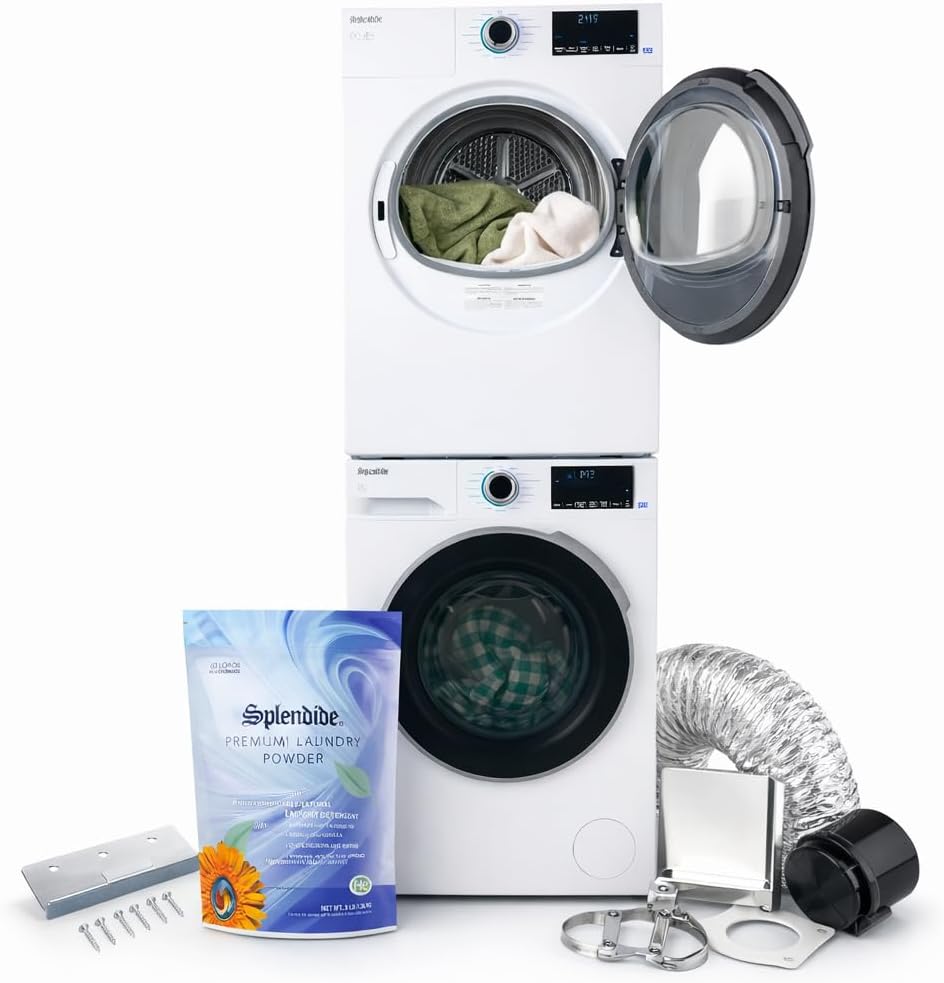
This stackable washer and dryer bundle pairs a 2.3 cu ft front-load washer with a 4.0 cu ft vented dryer to deliver laundry capacity tuned for RVs and tight utility closets. The washer offers numerous cycle choices, touch controls, a Speed+ option, Tub Fresh drum cleaning, and an automatic Winterization cycle that simplifies offseason storage. The dryer brings Opti Sensor moisture detection, 15 drying selections, two-way drum rotation to improve airflow, and a reversible door for flexible installation. Both machines include digital displays and smartphone app compatibility for remote monitoring and control. Practically, the set saves floor space and provides quiet, stabilized operation suited to mobile or small-home environments, while sensor drying helps prevent overdrying and fabric damage. Important trade-offs are the small washer drum that limits large loads and the dryer's vented design that requires an external vent path; installation and venting options should be checked before purchase. For buyers prioritizing compact, connected, and feature-rich laundry in constrained spaces, this pair makes a robust, reliable choice.
Best for: Buyers who need a dependable, feature-rich washer and dryer that fit into tight spaces and prioritize quiet, stable performance and easy winterization for infrequent or mobile use.
Less Ideal for: Households that routinely wash large bedding or heavy loads, or users who cannot accommodate a vented dryer configuration should consider larger-capacity or ventless alternatives.
- Compact stackable design saves floor space for RVs and small laundry areas
- Washer includes specialized cycles plus automatic Winterization and Tub Fresh for low-maintenance care
- Dryer uses Opti Sensor moisture detection to reduce overdrying and protect fabrics
- Digital displays and smartphone app compatibility enable remote monitoring and control
- Reversible dryer door and two-way drum rotation improve installation flexibility and drying performance
- Washer capacity is small for large or bulky loads
- Dryer is vented and requires an external vent path, limiting installation locations
- Weight and dimensions may require planning for installation in older RVs or tight closets
Verdict: A compact, feature-packed stackable washer and vented dryer designed to deliver reliable, space-saving laundry performance for RVs and small homes.
ROVSUN Washer and Dryer Set

| Capacity | 25 pounds |
|---|---|
| Number of Washing Cycles | 10 |
| Number of Drying Cycles | 10 |
| Voltage | 120 volts |
| Operation Mode | Automatic |
This ROVSUN set pairs a 25 pound fully automatic front-load washer with a 3.5 cu ft portable electric dryer to deliver same-day laundry for small households or tight spaces. The washer offers 10 washing modes, 5 water levels and a 26-minute quick wash for fast turnarounds, while the dryer provides multiple drying speeds, a 1300W heater and a stainless steel drum that reaches about 140°F for efficient moisture removal. Controls include an LCD touch panel on the dryer and an automatic operation mode on the washer, and the washer supports a spin-dry step to reduce drying time. Practical safety and maintenance features include a multi-stage lint filtration system in the dryer and an auto-stop if the door opens. Trade-offs are the need to move wet loads from washer to dryer manually and the portable dryer requiring periodic cool-down after extended runs, but for apartments, RV hook-ups, or camper setups where space and speed matter this set covers the essentials without complex installation.
Best for: Buyers who prioritize compact, practical laundry solutions for small living spaces or mobile setups and want quick wash-to-wear cycles without permanent installation.
Less Ideal for: People needing large-capacity, full-stack integrated combos for heavy household laundry or fully hands-off automatic transfer systems should look elsewhere.
- Washer has 10 wash modes and a 26-minute quick wash for fast, flexible cleaning
- Dryer reaches warm temperatures with 1300W heating and multiple drying speeds for efficient drying
- Stainless steel drum construction improves durability for both washer and dryer
- Dryer includes multi-stage lint filtration and an auto-stop door safety feature
- Washer and dryer are separate units so loads must be transferred by hand between machines
- Portable dryer may require rest periods after long or heavy drying cycles
Verdict: A straightforward, space-saving washer and portable dryer combo that delivers quick wash and dry cycles for compact living or camper use.
Midea Washer Dryer Combo 2.7 cu ft

| Capacity | 2.7 cubic feet |
|---|---|
| Maximum Rotational Speed | 1400 rpm |
| Number of Washing Cycles | 14 |
| Number of Drying Cycles | 2 |
| Voltage | 120 volts |
The Midea Washer Dryer Combo is a space-saving all-in-one front-load washer and ventless dryer aimed at apartments, RVs, or small households. It washes and dries in a single cycle so you do not need to move loads between machines, and offers 14 wash programs plus two drying cycles to handle delicate, heavy duty, steam care, quick wash, and overnight wash-and-dry needs. The unit runs on a standard 120V outlet and uses a BLDC inverter motor designed for quieter, more efficient operation; annual energy consumption is listed at 90 kWh. Controls are push-button style with a concise panel and practical options like add-garment and child lock. Because it is ventless, installation is simpler where external venting is not possible, though dryer times are longer than vented dryers and combined cycles can take several hours. The 2.7 cu ft drum suits small to medium loads but will be tight for bulky bedding. For buyers who prioritize convenience and minimal installation, this provides a capable, energy-conscious single-unit solution.
Best for: Buyers who need a simple, space-saving laundry solution for small homes or rentals and who prefer low-installation, energy-conscious appliances with versatile cycle options.
Less Ideal for: Large households that need frequent big loads, heavy bedding, or fast drying performance should consider separate washer and vented dryer setups instead.
- Washer and dryer in one unit eliminates transferring loads
- Ventless design works without external venting
- Wide range of programs including steam care and quick wash
- Runs on 120V outlet for easy installation
- BLDC inverter motor for efficient, quieter operation
- Combined wash-and-dry cycles and ventless drying take longer than separate vented machines
- 2.7 cu ft capacity may be small for bulky or large household loads
Verdict: A compact, easy-to-install all-in-one washer and ventless dryer that fits small spaces and eliminates moving loads while offering energy-conscious operation.
Conserv CW 2240 Washer & CD 4040 Dryer

| Capacity (washer) | 2.2 cubic feet |
|---|---|
| Capacity (dryer) | 4 cubic feet |
| Wash cycles | 15 |
| Dry cycles | 15 |
| Maximum spin speed | 1400 rpm |
This Conserv stacked washer and condensing dryer set pairs a 2.2 cu ft front-load washer with a 4 cu ft condensing dryer to deliver a space-saving laundry solution for compact homes or RVs that need reliable, full-featured cleaning. The washer offers 15 cycles, an Auto-Sense mode and a steam-clean option to tackle stains while the dryer provides 15 drying programs including Express 29' and Air Fluff plus a reversible door for flexible installation. Touch controls, a knob controller, LED drum lighting and a remaining-time display make everyday use straightforward, and the stainless steel drum supports durability. Being ENERGY STAR rated and UL-certified means it runs efficiently, and the included 2-year parts-and-labor coverage adds practical peace of mind. On the downside, this is explicitly a compact, not full-size, pair so load capacity is limited and the dryer is a condensing type which can be slower than vented models for heavy wet loads. For small-space setups that value dependable cleaning and sensible features, this duo is a solid choice.
Best for: Buyers who need a dependable, space-saving washer-dryer for small homes or camper-style setups and prioritize consistent cleaning performance and manufacturer support.
Less Ideal for: Households that regularly wash bulky bedding or large weekly loads should choose a full-size vented washer and dryer instead.
- Compact stacked design saves floor space and includes reversible dryer door for flexible placement
- Energy Star rated and UL-certified for efficient, code-compliant operation
- Stainless steel drums with steam-clean and Auto-Sense modes improve stain removal and fabric care
- Wide selection of cycles (15 wash, 15 dry) plus touch controls and remaining-time display for easy use
- Includes a 2-year parts-and-labor warranty for added reliability
- Smaller capacities make it unsuitable for large or frequent heavy loads
- Condensing dryer can take longer to dry very wet items compared with vented dryers
Verdict: A compact, energy-efficient stacked washer and condensing dryer built for small-space reliability and versatile cycle options.
COMFEE' 2.7 cu.ft Washer Dryer Combo

| Capacity | 26 pounds (wash), 13 pounds (dry) |
|---|---|
| Voltage | 120 volts |
| Maximum Rotational Speed | 1400 rpm |
| Annual Energy Consumption | 90 kilowatt hours per year |
| Number of Washing Cycles | 8 |
This COMFEE' combo combines a 2.7 cu.ft washer and integrated ventless dryer so you can wash and dry in one uninterrupted cycle, which is useful for small households or tight spaces. It offers 8 wash cycles plus a dedicated dry cycle, steam care to reduce allergens and wrinkles, a wool setting, quick 36-minute wash, delay start and a child lock for convenience. The inverter brushless motor is marketed for quieter, more energy-efficient operation and the machine supports adding garments mid-cycle. Practical features like overnight wash-and-dry and a timed dry option make it easy to set laundry before bed and have it ready by morning without moving loads. Limitations to consider are the moderate 26 lb wash / 13 lb dry capacity that makes it better suited to smaller or partial loads rather than a full family week of laundry, and the single drying cycle option limits flexibility for delicate or heavy items. Buyers should also note the unit is relatively heavy and requires proper installation and removal of transport bolts before use.
Best for: Practical buyers who need a space-saving, energy-conscious laundry solution that can handle frequent small to medium loads and streamline chores for a busy household.
Less Ideal for: Large families who need to dry large loads at once or users who require separate full-size washer and dryer cycles for heavy bedding or substantial weekly laundry volumes.
- All-in-one wash and ventless dry cycle eliminates moving clothes between machines
- Steam care reduces allergens and helps cut wrinkles and odors
- Brushless inverter motor for quieter, more energy-efficient operation
- Multiple programs including quick wash, wool care, delay start and add-garment function
- Drying capacity is smaller than washing capacity, limiting full-load drying
- Only one drying cycle choice reduces control over drying intensity and fabric-specific care
Verdict: Buy this if you want a compact, energy-conscious all-in-one that washes and dries small to medium loads overnight to simplify laundry for a busy household.
Choosing the Right Front-Load Washer Dryer Combo for Campers: Key Factors to Consider
Electrical Demand and Power Compatibility
Campers often operate on limited shore power, portable generators, or inverter systems with constrained amperage. Electrical demand matters because a washer dryer combo with high startup or continuous draw can trip breakers or force you to run a heavy-duty generator. Assess the unit's voltage options, whether it requires a dedicated circuit, and whether it supports reduced-power or eco modes.
Also consider how the unit behaves during motor startup and heating cycles. Some combos use electric heating elements for drying that dramatically increase power draw. If you plan to run the appliance from an onboard inverter or a standard RV hookup, choose models designed to work on lower amperage or that rely on condensation drying instead of high-wattage heating.
Physical Footprint and Installation Flexibility
Space in a camper is at a premium, so dimensions and mounting options directly affect whether a unit will fit and how it will be secured. Measure the available cabinet or closet opening, allowing clearance for door swing, ventilation, and service access. Consider stackable or shallow-depth designs if length is limited.
Installation flexibility also includes how the unit connects to water inlets and drain points, and whether it can be recessed or requires additional airflow. Look for models with multiple inlet/drain orientations, low-profile control panels, and mounting points or vibration isolators to keep the unit stable during travel.
Water Usage and Drain/Hookup Options
Water availability and waste-water management vary across camping setups. A washer dryer combo that uses large volumes of water can quickly strain onboard tanks or campground supply limits. Check published water-per-cycle figures and any economy or quick-wash modes that reduce usage.
Equally important are the drain and fill options. Some units accept standard garden-hose fills and have flexible drain hoses suitable for camper gray-water tanks. Others require permanent plumbing. Confirm whether the unit supports manual fill or timed cycles that limit water intake, and whether the drain height and hose routing fit your camper's plumbing layout.
Drying Method and Effectiveness in Small Spaces
Drying in a camper presents unique constraints: limited airflow, small enclosures, and sensitivity to humidity. Some front-load combos use condensation or heat-pump style drying that is more compatible with confined spaces and lower power but may take longer. Traditional vented drying is often faster but requires a vent path and may not be possible in many campers.
Consider whether the unit offers timed or sensor-based drying, adjustable heat levels, and moisture-sensing controls. A dryer that finishes cycles without overheating the camper interior or producing excessive humidity will generally perform better in mobile settings.
Control Simplicity and Cycle Versatility
When you are on the road, simplicity matters. Controls should be intuitive, with clear cycle labels and the ability to run quick loads without navigating complex menus. Useful cycle versatility includes quick-wash, delicates, heavy-soil, and combined wash-dry programs that reduce the need to move loads mid-cycle.
Also consider whether the unit offers delay-start, child lock, or remote diagnostics for troubleshooting. Well-designed controls reduce user error, conserve resources, and make laundry less of a chore during trips.
Durability and Vibration Resistance
A camper environment exposes appliances to continuous vibration, occasional bumps, and variable leveling. Durability matters because components like drums, shock absorbers, and door seals must tolerate movement without premature wear. Look for reinforced chassis, good suspension systems, and door latches designed for travel.
Maintenance accessibility is also part of durability. Units that allow easy access to filters, pumps, and service panels simplify roadside fixes or preventive checks, helping ensure reliable operation over many seasons.
Sizing Your Washer Dryer Combo for Camper Layouts
Start by measuring the planned installation cavity, noting width, depth, and height plus clearance for the door and hose routing. For a front-load washer dryer combo for campers, depth is often the limiting factor because cabinetry and mechanical bays restrict how far the unit can protrude.
If your camper has limited vertical space, consider shorter, wider models or shallow-depth units. Plan for service clearance so the unit can be slid out for maintenance without removing surrounding fixtures.
- Measure door swing and ensure there is room to load and unload comfortably.
- Account for hose routing to exterior drains or gray-water tanks.
- Leave space for airflow if the manufacturer recommends ventilation clearance.
Electrical Setup: Shore Power, Inverter, and Generator Considerations
Evaluate your camper's typical power sources and how they correlate with the unit's electrical requirements. A model rated for lower amperage or with an eco or low-power mode will integrate more easily with common RV shore-power levels.
If you rely on an inverter, check surge ratings and continuous draw. Some units draw high current only during heater cycles, so running short drying cycles or using lower heat settings can keep power usage manageable.
- Confirm the breaker size the unit requires and whether your camper's distribution panel can support it.
- Consider a soft-start or managed-load approach if your electrical system struggles with startup surges.
- Plan for clear labeling and accessible disconnects to meet safety and serviceability needs.
Managing Water Supply and Gray-Water Storage
Map how the unit will draw fresh water and where its gray water will go. Some campers use onboard tanks while others hook to campground supply. Choose a model that matches your refill cadence and gray-water capacity.
When gray-water tanks are small, running partial loads or using quick cycles reduces strain. Also look for machines that support siphon or pump-assisted drain options to reach elevated tanks or external disposal points.
- Plan refill intervals based on water-per-cycle estimates and your available tank capacity.
- Use low-water cycles for lightly soiled clothing; reserve heavy cycles for periodic washes.
- Ensure drain hose fittings match your camper plumbing or that adapters are available.
Ventilation and Condensation: Controlling Humidity
Drying inside a small space raises humidity, which can cause condensation and mold if not managed. Condensing dryers that collect moisture in a tank or pump it out can reduce the need for external vents and are often better suited to camper use.
If using a vented model, plan the exhaust routing with short, smooth runs and secure connections. Consider running the dryer near existing vent penetrations to minimize installation complexity.
- Install a humidity monitor near the appliance to catch elevated indoor moisture.
- Empty condensate tanks after cycles if the model does not pump out automatically.
- Keep a small fan or passive ventilation available to help with final drying steps when needed.
Maintenance Tips for Long-Term Reliability
Regular maintenance keeps a camper washer dryer combo operating reliably. Clean filters and drains, inspect door seals for wear, and check suspension components for loosened fasteners after travel.
Before long trips, secure any transport bolts or latches and verify hose clamps. Periodic inspection of electrical connections helps prevent intermittent faults from vibration.
- Run a maintenance cycle and inspect interior seals every few months.
- Keep replacement hoses and basic tools on board for quick repairs.
- Record cycle counts and any error codes to track recurring issues.
How We Chose the Best Front-Load Washer Dryer Combo for Campers
We focused on practicality and real-world constraints that matter to campers rather than desktop performance numbers. Selection began with units designed for compact installations and low-power operation. Key evaluation criteria included electrical demand and voltage options, physical footprint and mounting/venting flexibility, onboard water usage and drain options, drying efficacy in small enclosures, control simplicity for nontechnical users, and durability features suitable for mobile vibration and uneven surfaces. We prioritized units with straightforward installation paths for RV and camper electrical systems and clear manufacturer guidance for venting or condensation drying. Exclusions included full-size home units, models that require dedicated high-amperage circuits incompatible with typical camper shore power, and appliances lacking clear instructions for onboard water hookup or condensed drying mode. The final shortlist balances manageable power draw, compact dimensions, water efficiency, dependable drying methods, and user-facing controls that make life easier in a mobile setting.
Our full evaluation process is outlined in our review methodology.
FAQ
Can a front-load washer dryer combo run from typical RV shore power?
It often depends on the unit's electrical demand. Many compact combos are designed to run on lower amperage shore power, especially if you avoid high-heat drying cycles. Verify the unit's breaker and continuous draw requirements against your camper's panel before installation.
Is a condensing dryer better than a vented dryer for camper use?
Condensing dryers are usually more practical because they do not require an external vent and reduce installation complexity. They may run longer or use different power profiles, so consider both drying time and energy draw.
How much water does a typical camper washer cycle use?
Water usage varies by cycle and model. Compact front-load combos often have economy or quick cycles that significantly reduce water per load, which is beneficial when relying on onboard freshwater tanks. Check the cycle specifications and plan refill intervals accordingly.
Will vibration during travel damage the unit?
Modern combos intended for mobile use include reinforced suspension and latching doors to withstand vibration. Still, secure mounting, periodic inspections, and, when available, transport locks are important to minimize wear.
Can I install the unit myself in my camper?
Some owners can handle installation if they are comfortable with electrical and plumbing work and follow the manufacturer's installation instructions. For complex hookups or when modifying shore power circuits, a qualified technician is recommended.
Final Verdict
Choosing a front-load washer dryer combo for campers requires balancing space, power, water, and drying method. Prioritize models that match your camper's electrical capacity, fit the available footprint, and offer water-efficient cycles. Expect tradeoffs between drying speed and power consumption; condensation drying often wins for installation simplicity in tight rigs. Decide which constraints matter most for your travel style. If you frequently boondock, favor low-power, low-water machines. If you have reliable shore power and larger gray-water capacity, you can opt for faster cycles. Use the criteria above to narrow options and choose a combo that keeps laundry manageable without straining your camper systems.