
Note: This article contains affiliate links. If you click on these links and make a purchase, we may earn a small commission at no extra cost to you. This helps support our research and content. Read our full affiliate disclosure here.
Living on the road makes laundry logistics one of the most practical daily challenges. A front-load washer dryer combo for RVs saves space and reduces trips to laundromats by combining washing and drying in a single compact unit built for small freshwater and power budgets. You want a model that fits your rig, handles typical RV loads, and runs efficiently without taxing your electrical system. This guide presents five shortlisted options chosen for small-space installation, capacity appropriate to RV use, and sensible energy and water consumption. We explain the factors that matter when fitting a combo into an RV and summarize how we evaluated each unit so you can pick the best fit for your rig and travel style.
Top Picks at a Glance
| Best Overall The best all-around choice for most situations | Splendide Combo Washer Dryer DV2200XCD |  |
| Best Value The sweet spot between price and what you get | Smad All In One Washer and Dryer Combo |  |
| Top Rated A top-rated pick with lots of positive feedback | Techomey 2.7 Cu.Ft Washer Dryer Combo |  |
| Most Popular A crowd favorite that many people choose with confidence | COMFEE' 2.7 cu.ft Washer Dryer Combo |  |
| Best Seller A high-volume bestseller chosen again and again | Midea Washer Dryer Combo 2.7 cu ft |  |
Splendide Combo Washer Dryer DV2200XCD
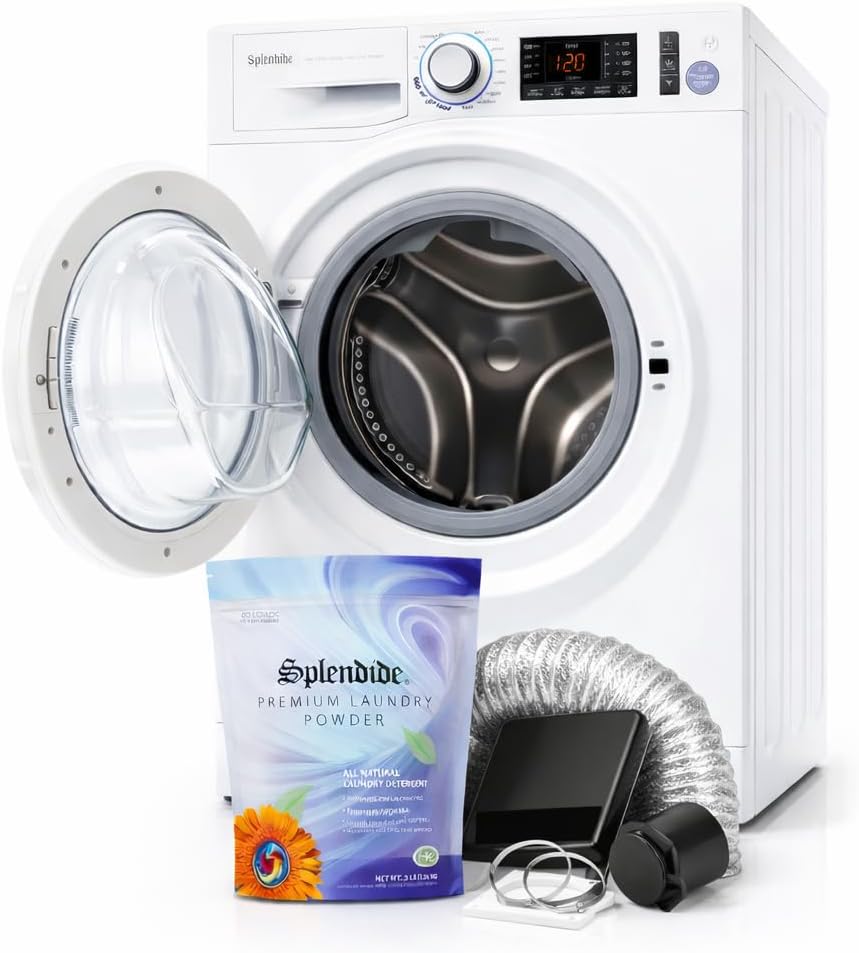
| Capacity | 15 pounds |
|---|---|
| Cycle Options | Quick Wash |
| Voltage | 120 volts |
| Access Location | Front Load |
| Number of Drying Cycles | 3 |
This Splendide combo packs a full washer and vented dryer into a compact front-load unit built for RVs, boats, apartments, and tiny homes. It accepts full wash-to-dry loads without transfers, offers nine wash cycles and three drying cycles, and uses a dual-rotating stainless steel drum plus variable spin speeds to cut creases and improve drying efficiency. Controls combine a classic cycle knob with a digital display, and the automatic dispenser times detergent, bleach, and softener release for hands-off operation. The extra-wide door and EasyGrip handle make loading bulky items simpler, and the included venting duct supports reliable vented drying installations. Important limits are its 120V electrical requirement and vented-only drying design, which need appropriate installation and space; the unit is also fairly heavy for its size, so plan for professional handling during placement. For RV owners who want full-featured laundry performance in a space-conscious package, this unit delivers practical, real-world capability.
Best for: Buyers who need a genuine full-featured washer and vented dryer in an RV or tiny-home setup and prioritize convenience and wash performance in a compact footprint.
Less Ideal for: Those without the ability to install a venting duct or who need a lighter, easily relocated machine; also not the choice for users who require non-vented drying options.
- All-in-one wash-to-dry operation removes need to transfer loads
- 15 pound capacity suitable for towels, jeans, and multiple small loads
- Vented drying with included duct for dependable drying in compact installs
- Automatic dispenser for detergent, bleach, and softener simplifies dosing
- Dual-rotating stainless steel drum and variable spin reduce wrinkles and improve efficiency
- Vented drying requires a proper vent installation and is not condenser/heat-pump based
- Relatively heavy unit which may require professional installation or reinforcement
Verdict: A practical, space-conscious vented washer/dryer combo that brings full wash-to-dry capability to RVs and tiny homes.
Smad All In One Washer and Dryer Combo

| Capacity | 2.7 cubic feet |
|---|---|
| Cycle Options | 16 cycles |
| Max Rotational Speed | 1400 rpm |
| Voltage | 120 volts |
| Operation Mode | Fully Automatic |
This Smad all-in-one washer and dryer combines washing and drying in a single 24-inch front-load unit aimed at tight spaces like RVs and small apartments. It offers 2.7 cubic feet of capacity, an LED display with 16 cycles, push-button controls, child lock and a 1400 rpm spin for faster water extraction. The built-in dryer removes the need to transfer loads, which saves time and keeps laundry work contained to one footprint, and the delay-start and time-remaining display add scheduling flexibility. Being a freestanding, ventless design makes it usable where external venting is impossible, though drying smaller loads or heavier items will take longer than a full-size vented dryer. Installation requires removing transport bolts and leaving clearance to limit noise. For a compact, self-contained laundry solution in an RV or very small space it performs the core tasks well, but buyers should expect longer dry cycles and plan load sizes accordingly.
Best for: Owners of RVs or very small living spaces who prioritize a compact, single-unit laundry solution that saves floor space and simplifies chores.
Less Ideal for: People who regularly need to dry large or bulky loads quickly or who have space for a full-size vented dryer should consider a different setup.
- Space-saving 24-inch footprint fits tight installations
- All-in-one ventless washer and dryer removes need to transfer clothes
- 16 preset cycles and LED display make common settings easy to run
- 1400 rpm max spin helps reduce drying time by extracting more water
- Push-button controls and child lock simplify operation
- Ventless drying can take significantly longer than a vented dryer
- Smaller capacity means fewer or smaller loads compared with full-size units
Verdict: A compact, ventless all-in-one laundry unit that saves space and simplifies laundry for RVs and other very small homes.
Techomey 2.7 Cu.Ft Washer Dryer Combo

| Capacity | 2.7 cubic feet |
|---|---|
| Spin Speed | 1400 RPM |
| Voltage | 120 volts |
| Controls Type | Touch |
| Operation Mode | Fully Automatic |
This Techomey all-in-one washer dryer combines a 2.7 cubic foot wash tub and ventless drying in a compact 24-inch front-load cabinet intended for apartments and small homes. It uses a three-phase asynchronous motor with up to 1400 RPM spin speed to remove moisture quickly, and a stainless steel inner drum with a WATER CUBE pattern designed to agitate gently while targeting stains. The LED touch panel gives access to 16 preset programs, child lock, detergent and softener dispensers, and features like auto-temperature control and out-of-balance detection for safer operation. Drying is ventless, so the unit can be placed without external ducting, but drying capacity is smaller than washing capacity and recommended loads are lower to avoid longer cycles or shrinkage. Practical benefits include space savings, hot-water self-clean cycles for sanitation, and relatively quiet operation under 63 dB. Expect longer dry cycles compared with vented dryers and plan loads to match the 13 lb drying limit for best results.
Best for: Buyers who prioritize a reliable, space-saving laundry solution for small homes or apartments and want a machine that handles wash and dry cycles with straightforward controls and hygienic drum care.
Less Ideal for: Households that need large simultaneous wash-and-dry loads or require fast vented-dryer performance should consider separate washer and dryer setups instead.
- Integrated wash and ventless dry saves floor space and allows flexible placement
- Stainless steel inner drum with 90°C self-cleaning improves hygiene
- High 1400 RPM spin reduces moisture and shortens drying time
- 16 preset programs plus LED touch controls and child lock make operation straightforward
- Quiet operation under 63 dB is suitable for noise-sensitive settings
- Drying capacity is roughly half the wash capacity, requiring smaller loads for effective drying
- Ventless drying typically takes longer and uses more energy than vented dryers
Verdict: A compact, reliability-minded all-in-one that delivers hygienic washing and flexible ventless drying for small households and tight spaces.
COMFEE' 2.7 cu.ft Washer Dryer Combo

| Capacity | 26 pounds (wash), 13 pounds (dry) |
|---|---|
| Voltage | 120 volts |
| Maximum Rotational Speed | 1400 rpm |
| Annual Energy Consumption | 90 kilowatt hours per year |
| Number of Washing Cycles | 8 |
This COMFEE' combo combines a 2.7 cu.ft washer and integrated ventless dryer so you can wash and dry in one uninterrupted cycle, which is useful for small households or tight spaces. It offers 8 wash cycles plus a dedicated dry cycle, steam care to reduce allergens and wrinkles, a wool setting, quick 36-minute wash, delay start and a child lock for convenience. The inverter brushless motor is marketed for quieter, more energy-efficient operation and the machine supports adding garments mid-cycle. Practical features like overnight wash-and-dry and a timed dry option make it easy to set laundry before bed and have it ready by morning without moving loads. Limitations to consider are the moderate 26 lb wash / 13 lb dry capacity that makes it better suited to smaller or partial loads rather than a full family week of laundry, and the single drying cycle option limits flexibility for delicate or heavy items. Buyers should also note the unit is relatively heavy and requires proper installation and removal of transport bolts before use.
Best for: Practical buyers who need a space-saving, energy-conscious laundry solution that can handle frequent small to medium loads and streamline chores for a busy household.
Less Ideal for: Large families who need to dry large loads at once or users who require separate full-size washer and dryer cycles for heavy bedding or substantial weekly laundry volumes.
- All-in-one wash and ventless dry cycle eliminates moving clothes between machines
- Steam care reduces allergens and helps cut wrinkles and odors
- Brushless inverter motor for quieter, more energy-efficient operation
- Multiple programs including quick wash, wool care, delay start and add-garment function
- Drying capacity is smaller than washing capacity, limiting full-load drying
- Only one drying cycle choice reduces control over drying intensity and fabric-specific care
Verdict: Buy this if you want a compact, energy-conscious all-in-one that washes and dries small to medium loads overnight to simplify laundry for a busy household.
Midea Washer Dryer Combo 2.7 cu ft

| Capacity | 2.7 cubic feet |
|---|---|
| Maximum Rotational Speed | 1400 rpm |
| Number of Washing Cycles | 14 |
| Number of Drying Cycles | 2 |
| Voltage | 120 volts |
The Midea Washer Dryer Combo is a space-saving all-in-one front-load washer and ventless dryer aimed at apartments, RVs, or small households. It washes and dries in a single cycle so you do not need to move loads between machines, and offers 14 wash programs plus two drying cycles to handle delicate, heavy duty, steam care, quick wash, and overnight wash-and-dry needs. The unit runs on a standard 120V outlet and uses a BLDC inverter motor designed for quieter, more efficient operation; annual energy consumption is listed at 90 kWh. Controls are push-button style with a concise panel and practical options like add-garment and child lock. Because it is ventless, installation is simpler where external venting is not possible, though dryer times are longer than vented dryers and combined cycles can take several hours. The 2.7 cu ft drum suits small to medium loads but will be tight for bulky bedding. For buyers who prioritize convenience and minimal installation, this provides a capable, energy-conscious single-unit solution.
Best for: Buyers who need a simple, space-saving laundry solution for small homes or rentals and who prefer low-installation, energy-conscious appliances with versatile cycle options.
Less Ideal for: Large households that need frequent big loads, heavy bedding, or fast drying performance should consider separate washer and vented dryer setups instead.
- Washer and dryer in one unit eliminates transferring loads
- Ventless design works without external venting
- Wide range of programs including steam care and quick wash
- Runs on 120V outlet for easy installation
- BLDC inverter motor for efficient, quieter operation
- Combined wash-and-dry cycles and ventless drying take longer than separate vented machines
- 2.7 cu ft capacity may be small for bulky or large household loads
Verdict: A compact, easy-to-install all-in-one washer and ventless dryer that fits small spaces and eliminates moving loads while offering energy-conscious operation.
Choosing the Right Front-Load Washer Dryer Combo for RVs: Key Factors to Consider
Exterior Dimensions and Mounting Options
A washer dryer combo for RVs must physically fit the intended space. Measure cabinet openings, adjacent clearances, and allowable depth, and compare those to the unit's installed depth with hoses and access panels. Some combos are designed for tight crawl-in installs and include flush-mount trim or reversible doors that aid placement. Consider whether the model needs a dedicated plinth or mounting brackets to secure it against travel forces.
Mounting options influence how permanent the installation can be. Removable or quick-disconnect plumbing and electrical connections are helpful if you plan to move or service the unit. Also check whether the combo needs additional ventilation clearance behind the chassis or extra space above for loading and controls.
Usable Drum Capacity and Cycle Types
Capacity on paper can be misleading in tight loads and mixed garments. Look for a drum size that accommodates typical RV laundry loads, such as a few days of clothing or small bedding items, while still allowing proper tumbling for cleaning and drying. Smaller drum sizes can lead to overloaded cycles and poor washing or drying performance.
Cycle selection matters because RV owners often need quick, low-water washes and gentle options for delicate fabrics carried on the road. Multi-stage wash cycles, quick-wash settings, and moisture-sensing dry cycles can reduce runtime and resource consumption. Confirm the machine allows partial-load settings to avoid wasting water when you have only a couple of items.
Power Draw and Electrical Compatibility
RVs commonly operate on limited electrical capacity, so choose a combo that matches your rig's available power. Check the unit's voltage and maximum current draw for both wash and dry phases, and confirm whether it can run on typical RV shore power or requires a higher-amperage connection. Some combos use resistive heating for drying and will have higher peak loads during that stage.
Consider supplemental options such as inverter capacity, generator sizing, or whether you will run the dryer function on lower-power modes if available. Lower power draw models with efficient motors and moisture-sensing dryers reduce the strain on onboard electrical systems, especially when running other appliances simultaneously.
Water Use and Wastewater Management
Water supply and wastewater capacity are limited on most RVs, so a combo's water use per cycle is critical. Machines with adjustable water levels, eco cycles, and efficient rinse stages help conserve freshwater and reduce dumping frequency. High-efficiency wash actions and properly balanced loads can lower total water consumption while still achieving acceptable cleanliness.
Also evaluate drain requirements and whether the unit's drain pump can push waste to your RV's gray-water system without modifications. Some compact combos include stronger drain pumps or flexible hose lengths to accommodate typical RV plumbing layouts. Understanding cycle water profiles helps you plan freshwater top-offs and gray-water dumps during long trips.
Drying Performance and Methods
Drying in a combo often differs from a separate dryer. Many front-load combos use condensation or heat-pump drying rather than vented resistive heat. Assess the drying method because it affects runtime, power consumption, and the potential need for extra airflow in the cabinet. Heat-pump dryers are more energy efficient and gentler on fabrics but can be slower and more sensitive to ambient temperature.
Look for moisture sensors, adjustable dryness levels, and cycles suited to mixed fabrics. Practical considerations include whether the dryer leaves garments slightly damp, requiring a finishing spin or air-dry time, and how that fits your travel schedule. If you frequently need fully dry clothes quickly, choose a combo with effective moisture management and shorter dry times at acceptable power draw.
Noise, Vibration, and Road Durability
Noise and vibration matter both during operation and while driving. A well-balanced drum and effective vibration isolation reduce noise while running and help protect mounting points when the rig is in motion. Excessive vibration can loosen fittings, stress cabinetry, and shorten component life. Models with dedicated anti-vibration features, reinforced frames, or travel-lock mechanisms are preferable.
Consider how often you will run the machine while parked in camp versus while traveling. If you plan to operate it inside the vehicle at campsites, quieter machines provide more comfort. Durable components and secure mounting options minimize maintenance needs after rough road exposure.
Installation Checklist for RV Cabinets
Before buying, create an installation checklist that includes precise cabinet opening dimensions, clearance for door swing, and the routing plan for water, drain, and electrical lines. Include space for ventilation openings and verify whether you need to remove shelving or modify cabinetry to accommodate the unit.
Confirm accessible service clearance so filters, pumps, and control panels can be reached without full disassembly. Planning these access points ahead of time reduces the chance of costly retrofits.
- Measure height, width, and depth including hose and plug access
- Plan for door swing and control visibility
- Ensure a power source matches the unit's requirements
- Map water inlet and gray-water drain routing
- Reserve clearance for future maintenance access
Managing Laundry on the Road
Adopt practical laundry habits that reduce strain on the combo and conserve resources. Use quick or eco cycles for lightly soiled garments and reserve heavy cycles for visibly soiled items. Group similar fabrics and avoid overloading the drum to maintain cleaning and drying effectiveness.
Plan laundry sessions around campsite facilities and water availability. Running the unit during cooler parts of the day can reduce dryer runtime for heat-pump systems and lower overall energy draw if you rely on solar-charged batteries.
- Sort loads into small, similar-fabric batches
- Use high-efficiency detergents to minimize rinses
- Run cycles during off-peak camp hours for comfort
- Air-dry bulky items to save power on the dryer
Maintaining Your Combo in a Mobile Environment
Routine maintenance prevents service issues on the road. Regularly inspect door seals and filters, and clear lint buildup from accessible traps. Keep hoses and fittings tightened and check for leaks after the first few runs following installation.
Stow or secure removable hoses and ensure that travel locks or transport brackets are engaged before driving. Periodic vibration checks and re-torquing of mounting hardware help maintain long-term reliability.
- Clean inlet filters monthly and check drain pump access
- Inspect door gasket for debris and wear
- Run a maintenance wash cycle on a low-water setting occasionally
- Verify strap and mounting hardware tightness before travel
Power Options and Off-Grid Use
If you plan extended off-grid use, evaluate the combo's power profile across both wash and dry phases and compare that with your inverter and battery capacity. Models with lower peak wattage or selectable dryer modes give more flexibility when running from battery or generator power. Consider whether you will rely on a generator for the dryer phase or plan to use air-dry finishing to avoid heavy loads.
Supplementary strategies include timing laundry for when solar charging peaks, spreading drying across multiple low-power cycles, or using the spin-only functions to remove excess moisture before finishing items by air or camp clothesline.
- Check peak and average power draw for each cycle
- Match dryer strategy to your inverter/generator capabilities
- Use spin/extract cycles to cut drying energy
- Schedule laundry for periods of maximum energy availability
Common Installation Pitfalls to Avoid
Do not assume a unit will fit because its nominal dimensions seem close. Always account for installation clearances, door swings, and service access. Failing to plan for drain pump discharge height or power cable routing is a frequent cause of site modifications.
Avoid placing the unit in a location without sufficient ventilation if the dryer mode produces condensation or heat. Also do not ignore the need for secure mounting and vibration isolation to prevent long-term wear and rattling while driving.
- Failing to measure for hoses and plug access
- Underestimating required clearances for door operation
- Ignoring drain pump discharge height and routing
- Skipping vibration isolation or travel-lock procedures
How We Chose the Best Front-Load Washer Dryer Combo for RVs
We focused on practical, RV-specific criteria that matter for owners who want an integrated laundry solution without sacrificing limited space or onboard resources. Core evaluation categories included compact exterior dimensions and installation flexibility, since many RVs require specific clearances and mounting options. We also prioritized usable drum capacity and cycle variety to ensure each unit can handle typical travel loads like towels, light bedding, and daily garments. Energy and water efficiency were essential because RV power and freshwater are finite, so models with low draw, sensible drying methods, and adjustable cycle settings scored higher. Durability and serviceability were judged by build features that matter in mobile environments, such as vibration control, robust door seals, and accessible service panels. Finally, noise and vibration performance mattered for comfort inside the vehicle. We excluded full-size home laundry equipment and any units that require permanent, high-amperage shore power or nonstandard venting not feasible for RV installations. Units that could not be reasonably installed in typical RV cabinetry or that lacked water-conserving cycles were not considered. The list reflects these performance, fitment, and resource-conservation filters.
Our full evaluation process is outlined in our review methodology.
FAQ
Can a front-load washer dryer combo run on typical RV shore power?
It depends on the unit's electrical rating and your rig's shore power capacity. Many combos are designed for household voltage and may require a dedicated circuit or higher amp capacity for drying phases. Check the unit's listed current draw and compare it to your RV's service. Lower-power modes and heat-pump dryers reduce peak demand and are easier to run on typical setups.
How much can a compact RV combo actually dry in one cycle?
Drying capacity is usually less than washing capacity in combined units, and full dryness may require smaller loads. Many combos will leave heavier items slightly damp and benefit from an extra spin or short air-dry finish. Expect best results with smaller, evenly distributed loads.
Do I need special plumbing changes to install a combo in an RV?
Most combos will work with standard RV freshwater inlet and gray-water drains if the drain pump can reach the gray-water sump. You may need flexible hoses or an adapter for existing fittings. Confirm pump lift specifications and hose lengths before installation to avoid unexpected plumbing work.
Are heat-pump dryers better for RV use than vented dryers?
Heat-pump dryers are generally more energy efficient and produce less heat output into the cabinet, which helps in tight RV spaces. They can be slower than vented units but reduce peak electrical demand and do not require an external vent. The tradeoff is longer run times versus lower power consumption.
How do I minimize vibration and noise from a combo in an RV?
Use proper mounting brackets and anti-vibration pads, ensure the unit is level, and secure all fasteners. Avoid overloading the drum and balance loads by distributing items evenly. Engage any transport locks when driving to protect the unit and cabinet.
Final Verdict
When choosing a front-load washer dryer combo for RVs, prioritize physical fit, realistic drum capacity, and resource efficiency. Space and power constraints are the defining tradeoffs: a compact, energy-savvy unit that fits your cabinet and matches your electrical system will typically perform better in day-to-day RV life than a larger model that strains onboard resources. Decide whether you value shorter dry times or lower power draw, and plan installation with attention to ventilation, drain routing, and vibration control. With careful measurement and a focus on usable capacity and efficiency, you can find a combo that keeps laundry manageable on the road.