
Note: This article contains affiliate links. If you click on these links and make a purchase, we may earn a small commission at no extra cost to you. This helps support our research and content. Read our full affiliate disclosure here.
If you host frequent gatherings or run a high-use home bar, choosing the right glass washing machine matters. You need equipment that clears residues, protects delicate stems, and fits your counter or underbar space without adding complicated maintenance tasks. This guide lists six shortlisted glass washing machines for home bars selected for their cleaning performance, footprint, and ease of use. Read on to see the practical features we weighed and why each pick made the list before diving into the decision factors and FAQs.
Top Picks at a Glance
| Best Quality Built to a higher standard if you want something more solid | Bar Maid GP-100 Glass Polisher |  |
| Best Value The sweet spot between price and what you get | YBB Pitcher Cup Rinser SV-168 |  |
| Best Budget The cheapest option that still gets the job done reliably | AUNMAS Glass Rinser |  |
| Top Rated A top-rated pick with lots of positive feedback | Bar Maid Glass Washer A-200 |  |
| Most Popular A crowd favorite that many people choose with confidence | YBB Pitcher Glass Rinser |  |
| Best Seller A high-volume bestseller chosen again and again | New Star Foodservice Triple Glass Washer |  |
Bar Maid GP-100 Glass Polisher

| Power Source | Corded Electric |
|---|---|
| Speed | 2500 rpm |
| Voltage | 115 volts |
| Maximum Power | 1350 watts |
| Material Type | Stainless Steel |
The Bar Maid GP-100 is a heavy-duty electric glass polisher designed for rapid polishing and drying of barware. It uses five rotating microfiber twine heads to clean the inside and outside of glasses simultaneously while a warm air blower tube helps dry and reduce spotting, making it useful in busy service environments. The unit is corded and runs at 2500 rpm with a 1350 watt motor, which supports the manufacturer claim of high throughput for continuous runs; brushes are removable and machine washable for easy maintenance. Built-in handles make it easier to move around a commercial space, and the stainless steel housing gives the machine a durable feel. On the downside the GP-100 is a commercial device with substantial size and weight and may be louder and bulkier than countertop home gadgets, and it requires a dedicated 115 V supply and floor or counter space. For a home bar that values fast, consistent, near-professional polishing and drying for frequent entertaining, this unit delivers strong performance, but casual users may find it more machine than they need.
Best for: Home bartenders who prioritize fast, restaurant-quality polishing and frequent entertaining and want a durable, high-throughput machine to keep glassware spot-free during heavy use.
Less Ideal for: Casual hosts with limited space or infrequent use who prefer a compact, quiet countertop polisher or manual polishing instead.
- Five rotating microfiber polishing heads clean inside and outside simultaneously
- Warm air blower dries glass to reduce spots and speed turnaround
- High power 1350 W motor and 2500 rpm speed designed for continuous high throughput
- Removable, machine-washable brushes simplify cleaning and maintenance
- Stainless steel construction and built-in handles for durable, service-ready use
- Commercial size and weight make it less suitable for tight home bar counters
- Likely louder and more power-hungry than consumer countertop polishers
Verdict: Choose the GP-100 if you need a rugged, restaurant-capable polisher that delivers fast, spot-free glassware for frequent home entertaining.
YBB Pitcher Cup Rinser SV-168

| Capacity | 1 gallons |
|---|---|
| Material Type | Stainless Steel |
| Control Console | Push Button |
| Noise | 1 db |
| Special Features | Low Water Usage |
This YBB pitcher and cup rinser mounts in a sink or counter and uses a star-shaped nozzle to rinse glasses and pitchers without electricity. You press the vessel onto the rinser and 1–3 seconds of cold water spray clears milk deposits, lipstick and coffee stains; the manufacturer cites a washing speed of roughly 600–1,000 pieces per hour for continuous use. Built from 304 stainless steel with a push-button control and standard G 1/2" plumbing fittings, it is compact and simple to install with the supplied hose and connector. Its main practical benefits are speed, low water consumption compared with hand rinsing, and durability from metal construction. Limitations are that it requires a compatible sink opening and plumbing, it only runs with cold water, and it is a single-function rinse tool rather than a full washer or sanitizer, so heavy soils or sanitizing steps still need separate handling.
Best for: Home bar or coffee station owners who prioritize a durable, fast rinse tool to speed turnaround of pitchers and cups and cut manual rinsing time.
Less Ideal for: Users who need heated washing, built-in sanitizing, or a standalone countertop washer should look at full glass washers or dishwashers instead.
- No electricity required so operation is simple and reliable
- 304 stainless steel body suited to wet commercial or home-bar settings
- Fast rinse action that removes milk and coffee residue in 1–3 seconds
- Low water usage compared with hand rinsing
- Only uses cold water and does not provide heating or sanitizing
- Requires a compatible sink/counter cutout and standard G 1/2" plumbing connection
Verdict: If you want a simple, durable sink-mounted rinser to speed pitcher and cup turnover at a home bar, this stainless steel unit delivers fast cold-water rinses with minimal water use.
AUNMAS Glass Rinser

| Installation Type | Countertop |
|---|---|
| Capacity | 33 cubic inches |
| Controls Type | Touch |
| Form Factor | Freestanding |
| Material Type | Stainless Steel |
The AUNMAS Glass Rinser is a compact, freestanding countertop unit that snaps into a standard G1/2in faucet connection to provide a hands-free way to rinse glasses and cups. Push a glass onto the rinser head and jets spray water up to remove beverage residue, which makes it useful at a home bar, coffee station, or small hospitality setup where speed and hygiene matter. It is built from 201 stainless steel with copper components for durability and has touch-style controls and a small footprint that fits easily near a sink. Installation is straightforward for anyone with a compatible threaded outlet and the unit's quick-cleaning action saves time versus manual rinsing. Limitations include its simple rinse-only function rather than a full wash cycle and a relatively small capacity suited to one glass at a time, so it will not replace a dishwasher or commercial multi-glass system for high-volume operations.
Best for: Buyers looking for an inexpensive, space-saving way to rinse glassware quickly at a home bar or coffee station where convenience and hygiene are priorities.
Less Ideal for: Those who need full washing cycles, high-volume glass cleaning, or a replacement for a dishwasher should consider larger or powered glass-washing appliances instead.
- Fast touch-activated rinse for one-step, hands-free cleaning
- Compact freestanding design fits small countertops and bar sinks
- Standard G1/2in connector for easy installation to most faucet setups
- Stainless steel construction for corrosion resistance in wet environments
- Rinse-only function; does not provide detergent wash or drying
- Designed for single-glass use so throughput is limited in busier settings
Verdict: A low-cost, compact glass rinser that delivers fast, hands-free rinsing for home bars and small beverage stations.
Bar Maid Glass Washer A-200

| Installation Type | Countertop |
|---|---|
| Capacity | 1 liters |
| Voltage | 115 volts_of_alternating_current |
| Power | 250W |
| Motor | 1/3HP |
The Bar Maid A-200 is a countertop electric glass washer built for continuous use in busy bar settings but sized for tight workspaces. It uses a center-mounted spinning brush plus four surrounding brushes to scrub both the inside and outside of glasses in a single pass, and brushes are removable for routine cleaning or replacement. The unit is commercial-grade stainless steel with bronze bearings and a sealed ultra-quiet 1/3 HP motor to resist splash damage and reduce noise during operation. It runs on standard 115V power, has a simple push-button control and LED display for one rinse cycle, and includes ground-fault protection and automatic overload safety for dependable daily service. Practical limitations are its single rinse cycle and modest 1-liter capacity, which means it best suits steady, frequent small batches rather than large load washing or versatile cycle needs. For a home bar that needs a reliable, durable machine to keep glassware moving during parties or nightly service, the A-200 is a compact, serviceable choice.
Best for: Home bar owners who prioritize a rugged, reliable machine that runs quietly and repeatedly during events and regular entertaining, and who prefer simple controls and easy maintenance.
Less Ideal for: People who need multi-cycle wash programs or to process very large batches of glassware at once should consider larger commercial dishwashers with more capacity and cycle options.
- 360° cleaning with five brushes cleans inside and outside of glasses in one pass
- Commercial-grade stainless steel construction and bronze bearings for durability
- Sealed ultra-quiet 1/3 HP motor reduces noise and is protected from splashes
- Removable brushes for easy maintenance and replacement
- Includes safety features such as ground-fault protection and automatic overload safety
- Only a single rinse cycle and one setting limits wash program flexibility
- Small 1 liter capacity is intended for continuous small batches rather than large loads
Verdict: Choose the Bar Maid A-200 when you want a compact, commercial-quality glass washer that reliably cleans barware with minimal noise and easy maintenance.
YBB Pitcher Glass Rinser

| Material Type | Stainless Steel |
|---|---|
| Capacity | 1 gallons |
| Included Components | Glass Rinser, Lid |
This stainless steel pitcher and cup rinser mounts in a sink or sits on a counter to rinse pitchers, glasses, and milk frothing jugs without power or complicated plumbing. You press the vessel down onto the star-shaped nozzle and a focused jet of water flushes residue from the interior in one to three seconds, making it useful between drinks or during busy service. The square stainless pool and lid make it durable for a bar or cafe environment and the unit is marketed as portable and compact, so it can be moved or stored when not in use. Because it is mechanical and uses tap water, it saves energy and avoids electrical components, but water pressure and flow control depend on your sink fitting and plumbing arrangement, so rinses may vary. It is best as a quick rinse station rather than a replacement for a full wash cycle or dishwasher cleaning for heavily soiled items.
Best for: Buyers who want a no-frills, low-maintenance rinse station for a home bar or small cafe and value quick turnaround between drinks backed by real user experiences.
Less Ideal for: Those needing a full sanitation cycle or heavy soil removal should choose a dishwasher or powered glass washer instead.
- Simple no-power operation that works directly with tap water
- Stainless steel construction resists corrosion and suits commercial use
- Compact, portable design fits small sinks or countertop bars
- Rinse effectiveness depends on water pressure and user technique
- Not intended to replace full dishwasher cleaning for greasy or heavily soiled glassware
Verdict: A simple, durable stainless steel rinse station that gives fast, no-power rinses for home bars and small-service setups.
New Star Foodservice Triple Glass Washer
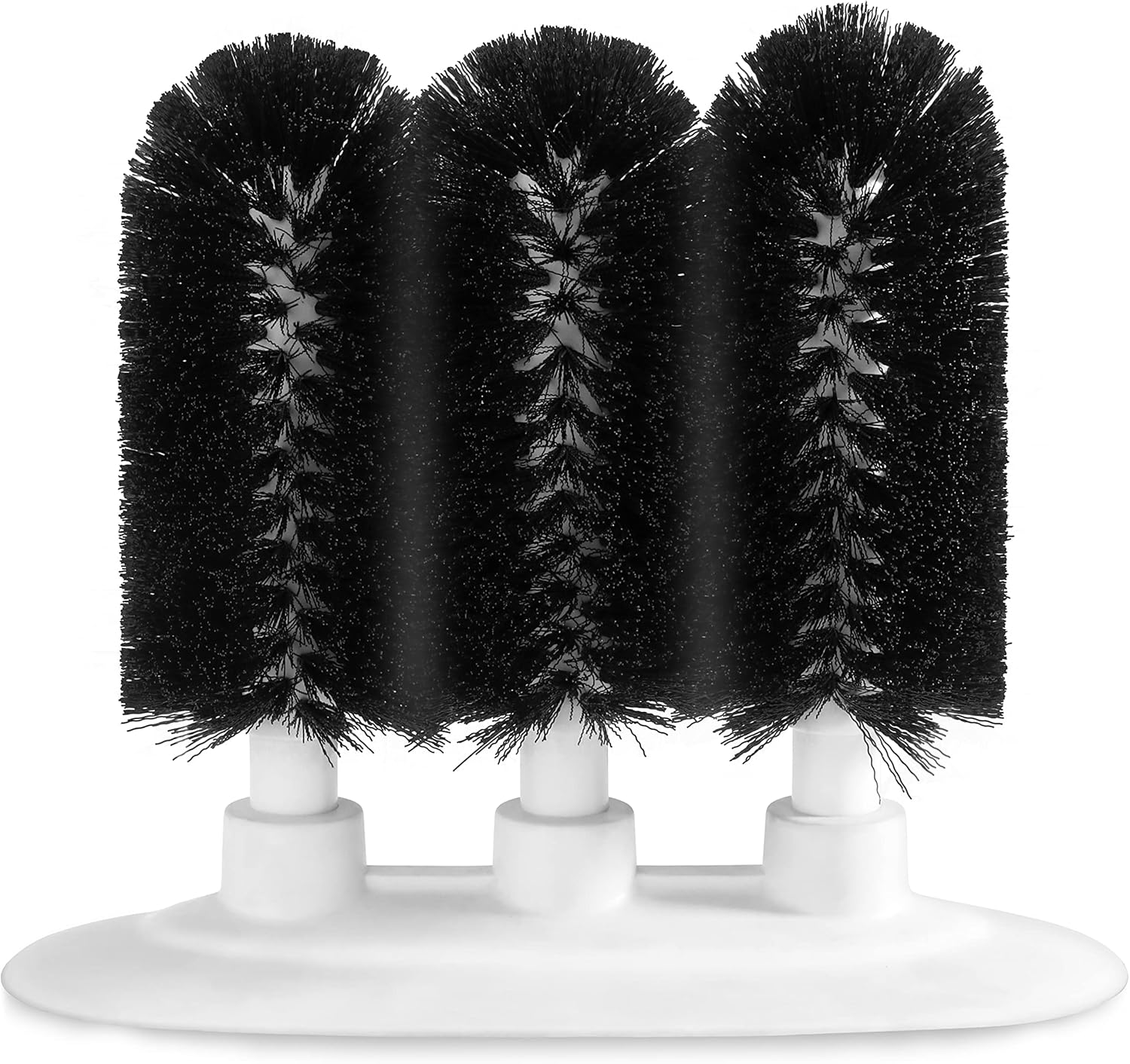
| Included Components | 3 bristle brushes, suction base |
|---|---|
| Material Type | Nylon, Plastic |
| Handle Material | Polyvinyl Chloride |
| Specific Uses For Product | cleaning glassware, bar use, restaurant use |
This New Star Foodservice triple brush glass washer is a manual sink-mounted tool that cleans inside, outside, and the bottom of glasses at once using three nylon bristle brushes and a PVC suction base. You stick the unit to a flat sink surface, press a glass onto the brushes, and rotate or move the glass to remove lipstick, fingerprints, and residue without needing a dishwasher or scrub pad. Its durable plastic construction and commercial-focused design make it suited to frequent use in a home bar or light commercial setting, and the non-electric operation keeps it simple and portable. The suction grip holds it stable during use but works best on smooth, nonporous sinks; uneven or deeply curved basins may reduce suction strength. The brush set is effective at quick surface cleaning but will not replace a high-temperature commercial washer for sanitizing; brushes will also need occasional rinsing and replacement over long use. For homeowners who want a low-effort way to keep glassware presentable between deeper cleans, this is a practical, easy-to-use option.
Best for: Home bar owners who prioritize a low-effort, manual cleaning solution to keep glassware presentable between deeper washes and value simple, durable tools.
Less Ideal for: Households that need full sanitization to commercial standards or that use uneven sink basins should consider other cleaning methods.
- Cleans inside and outside of glasses simultaneously with three brushes
- Suction base enables hands-free use on smooth sink surfaces
- Manual, non-electric operation so no power or batteries are required
- Commercial-grade build designed for frequent use in busy bars or home bars
- Suction base performance can be inconsistent on textured or irregular sink surfaces
- Brushes provide surface cleaning but do not sanitize like high-temperature washers
- Brushes will wear and eventually need replacement with heavy use
Verdict: A simple, durable sink-mounted triple-brush cleaner that speeds routine glass cleaning for home bars without electricity.
Choosing the Right Glass Washing Machine for Home Bars: Key Factors to Consider
Cycle Time and Throughput
How many glasses the machine can clean per hour affects whether it meets your entertaining needs. Short cycle times are important for back-to-back servings, but extremely fast cycles sometimes sacrifice dwell time or rinse temperature needed for proper sanitization. Consider your typical guest count and peak usage to choose a unit with a throughput that prevents bottlenecks.
Also note that throughput figures assume standard glass sizes and ideal loading. Real-world throughput will vary with rack type, glass shape, and how carefully you pre-rinse and load items. Picking a slightly higher-capacity unit provides headroom during busier events.
Gentleness for Stemware and Thin Glass
Delicate wine glasses and cocktail stemware require support and lower-impact washing patterns to avoid chipping or breakage. Look for machines offering stemware-specific racks, adjustable holders, or gentler wash cycles that reduce turbulence and mechanical stress.
A machine that cleans aggressively may be fine for pint glasses but can damage fragile pieces over time. If you own a mix of heavy and thin glassware, prioritize flexible rack systems and variable cycle intensity so you can protect prized stemware.
Footprint and Placement Requirements
Home-bar spaces are often compact, so the machine's external dimensions and required clearances matter. Measure available counter and underbar space, including door swing and ventilation needs. Consider whether the unit is countertop or undercounter and whether it needs additional clearance for plumbing access or drainage.
Also check the location of controls and detergent reservoirs so routine tasks like refilling and troubleshooting are convenient in your layout. A slightly larger unit with easier access can be preferable to a tight-fit model that complicates daily use.
Plumbing, Drainage, and Installation Needs
Some glass washing machines require dedicated water lines, drain hookups, or a high-temperature rinse connection. Confirm whether your home bar's plumbing can supply the machine without major alterations, or if you need a model that works with standard sink plumbing.
Installation complexity adds time and potential cost. For most home-bar users, models that run on standard voltage and connect to existing sink drains are more practical than those needing specialized plumbing or professional install.
Sanitization Options and Temperature Control
Effective sanitization may rely on high-temperature final rinses or chemical sanitizers. Machines that offer adjustable rinse temperatures, boost heaters, or compatible sanitizer cycles give you control over how aggressively the unit disinfects glassware. This matters if you serve drinks that leave residues or if guests demand higher hygiene standards.
Check whether the machine's controls allow you to set or verify rinse temperatures and whether it supports common sanitizing detergents recommended for glassware. Clear indicators or cycle logs can help you confirm proper sanitization during service.
Ease of Cleaning and Ongoing Maintenance
Routine maintenance affects uptime and long-term reliability. Machines with accessible filters, removable spray arms, and simple descaling procedures reduce downtime and make it easier to keep cleaning performance consistent. Consider how often parts need manual attention and whether replacements are straightforward.
Also evaluate how easy it is to inspect seals and door gaskets, and whether the control interface provides maintenance alerts. A model that simplifies routine care will save time and protect investment in a home setting.
Types of Glass Washing Machines Suited to Home Bars
There are a few machine forms that work well in residential bar environments. Countertop pass-through or single-rack units are common when undercounter space is limited. These are compact, quick to install, and suited for low-to-moderate volumes. Undercounter dishwashers adapted for glass-only cycles offer higher capacity while staying out of sight.
Each type has tradeoffs: countertop models are easy to place but may require frequent loading, while undercounter units free counter space but generally need a dedicated opening and plumbing access. Match the type to how much uninterrupted service you expect and how much installation you are willing to accommodate.
- Countertop/single-rack: compact, easy setup, lower throughput
- Undercounter/compact: higher capacity, cleaner appearance, needs cutout
- Integrated sink-adjacent systems: minimize plumbing changes, moderate capacity
Rack Systems and Loading Best Practices
Choosing the right rack system helps protect glass shapes and speeds up loading. Look for configurations that support stems at the base and cups on stable surfaces. Universal racks are convenient for mixed glass types but may require more careful placement to prevent clinking during cycles.
When loading, avoid overcrowding and keep contact points minimal to reduce chips. Pre-rinsing or scraping larger residues helps maintain wash efficiency and keeps cycles short.
- Use stemware holders or inserts for wine and cocktail glasses
- Group similar shapes together to optimize spray coverage
- Keep space between items to prevent contact and ensure thorough rinsing
Detergent and Rinse Aid Considerations
Glass-specific detergents and rinse aids control spotting and film while protecting finishes. Hard water increases spotting and scale, so in areas with higher mineral content you may need stronger rinse aid or water-softening measures. Check that the machine's dispenser fits the detergent formats you plan to use.
Some machines include softening cartridges or recommend water treatments. If you notice clouding or streaks despite following manufacturer recommendations, review your rinse aid dosage and water hardness as first troubleshooting steps.
- Select detergents labeled safe for glassware
- Adjust rinse aid dosage for local water hardness
- Follow manufacturer guidance for sanitizer compatibility
Noise, Vibration, and Guest Experience
Noise level and vibration matter in social settings. A loud or rattling machine can interrupt conversations or make a space feel less relaxed. Look for units with quieter pumps, solid mounting, and well-damped doors if the machine will run while guests are present.
Vibration can also affect delicate glassware over time. Proper rack cushioning and secure loading reduce the chances of breakage and improve the overall guest experience.
- Compare published noise ratings when available
- Use anti-vibration mats or secure mounting for undercounter models
- Run the machine during lower-activity periods if noise is a concern
Water Usage and Environmental Impact
Water-efficient machines reduce utility costs and environmental footprint. Models with optimized spray nozzles and smarter cycle programming use less water per rack. If you frequently entertain, these savings add up and reduce the need for frequent refills or drain checks.
Also consider energy consumption from booster heaters or sustained high-temperature cycles. Units that balance efficient water use with effective sanitization provide the best compromise for long-term operation in a home bar.
- Look for per-cycle water usage figures
- Consider machines with eco or low-water modes for light cleaning
- Balance water and energy needs against hygiene requirements
How We Chose the Best Glass Washing Machine for Home Bars
We focused on machines designed specifically for washing glassware in compact home-bar settings. Primary filters included cycle speed and wash performance to ensure quick turnarounds and hygienic results, and physical footprint so the units fit typical underbar or countertop locations. We also evaluated rack and holder compatibility for stemware, water temperature control and sanitization options, energy and water efficiency, and ease of routine maintenance including filter access and descaling. Products that required extensive professional installation or large commercial hookups were excluded to keep recommendations practical for residential use. We favored units with straightforward controls and robust sealing to prevent leaks in tight spaces. Final selections balanced real-world usability with measurable specs so buyers can match a machine to their pouring volume, available space, and priorities around speed, gentleness, and operating cost.
Our full evaluation process is outlined in our review methodology.
FAQ
Can a glass washing machine handle wine stems and delicate glassware?
Often yes, if the machine includes stemware holders or adjustable racks and offers gentle cycles. Proper loading technique and using the correct cycle setting are important to protect thin stems.
Do these machines require professional plumbing installation?
It depends on the model. Many countertop units connect to standard sink plumbing or use a simple drain adapter, while some undercounter machines need a dedicated drain and water line. Check installation requirements before choosing.
How do I prevent cloudy or etched glass after washing?
Clouding is commonly caused by hard water or overuse of harsh detergents. Use glass-specific detergents and adjust rinse aid dosage, and consider a water-softening option if hardness is high.
How often should I descale or service a home-bar glass washer?
Frequency depends on water hardness and usage, but a basic inspection and filter clean every few weeks with descaling every few months is typical for regular home use. Follow the manufacturer's maintenance schedule for best results.
Are there special detergents I should use for cocktail glasses?
Yes. Use detergents formulated for glassware that control spotting and residue. Avoid abrasive cleaners and check compatibility with any sanitizers you plan to use.
Final Verdict
Selecting a glass washing machine for a home bar is about matching capacity, gentleness, and footprint to how you entertain. Prioritize units that protect stemware, fit your available space, and offer the sanitation options you need for frequent service. Expect tradeoffs between speed and delicacy: faster cycles increase throughput but may require careful loading and better rinse control to avoid damage. Focus on throughput relative to your typical guest count, rack compatibility for your glass shapes, and practical installation needs. With those priorities in mind, you can choose a machine that keeps glassware sparkling while fitting seamlessly into your home-bar workflow.