
Note: This article contains affiliate links. If you click on these links and make a purchase, we may earn a small commission at no extra cost to you. This helps support our research and content. Read our full affiliate disclosure here.
Choosing the right heater for outdoor use makes patios, decks, and covered porches truly usable when temperatures drop. Outdoors you need more than raw warmth: weather resistance, stable performance in wind, and safe placement options all matter. This guide presents seven carefully shortlisted heaters for outdoor use that suit different spaces and setups. We evaluated each option for heat output, durability in wet or windy conditions, installation or portability, and safety features. Read on to find the type of outdoor heater that matches your space, mounting preference, and seasonal needs.
Top Picks at a Glance
| Best Overall The best all-around choice for most situations | Pamapic Pyramid Patio Heater 48,000 BTU |  |
| Best Quality Built to a higher standard if you want something more solid | Ninja Fireside360 OF101AMZ |  |
| Best Value The sweet spot between price and what you get | Cuisinart Tabletop Patio Heater COH-500 |  |
| Best Budget The cheapest option that still gets the job done reliably | SISUPASSIE 15000BTU Propane Heater |  |
| Top Rated A top-rated pick with lots of positive feedback | Mr. Heater Portable Buddy F232000 |  |
| Most Popular A crowd favorite that many people choose with confidence | Lasko Ceramic Tower Heater 751320 |  |
| Best Seller A high-volume bestseller chosen again and again | Amazon Basics 46,000 BTU Patio Heater |  |
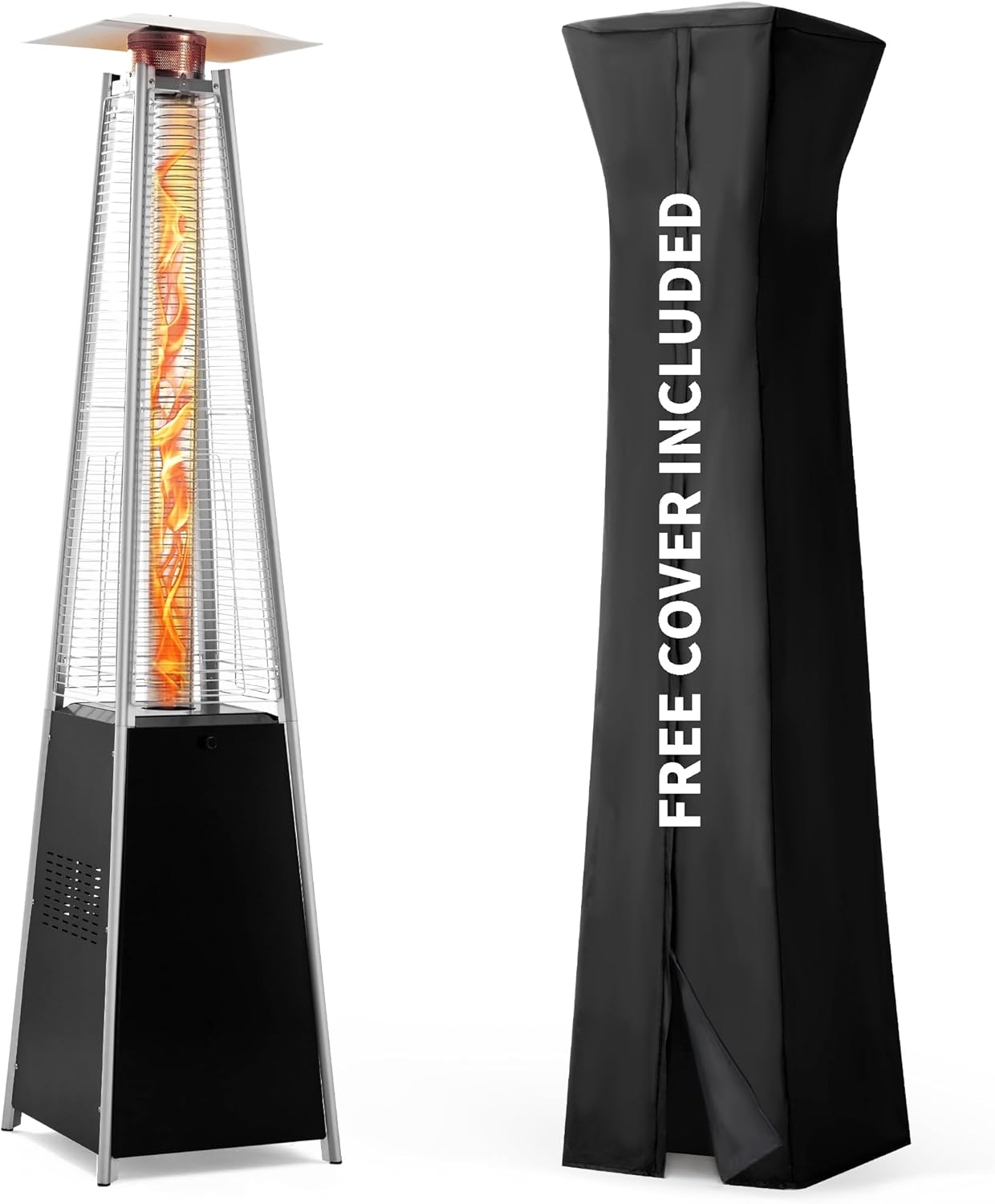
Pamapic Pyramid Patio Heater 48,000 BTU
| Heat Output | 48000 british thermal units |
|---|---|
| Power Source | Gas Powered |
| Heating Method | Radiant |
| Heating Coverage | 175 square feet |
| Special Features | Overheat Protection |
This Pamapic pyramid patio heater is a floor-mounted, gas-powered outdoor heater that produces up to 48,000 BTU of radiant heat to warm patios, decks, and similar outdoor spaces. It uses a pulse ignition for easy startup and a variable control valve to adjust heat output, while the glass flame tube provides both visible flame ambience and practical warmth. The unit is designed for outdoor use and claims coverage for roughly 175 square feet, making it suitable for small to medium seating areas. Practical touches include overheat protection and a zippered weather-resistant cover for storage. Trade-offs to expect are the usual ones for propane towers: it requires a propane tank and careful placement in wind to maintain flame stability, and at about 88 inches tall it needs enough vertical clearance and stable footing. For buyers wanting a combination of strong heat output, a visual flame feature, and simple mechanical controls, this heater is a straightforward option.
Best for: Buyers who want a visually appealing, high-output outdoor heater that is easy to start and simple to control for warming patios or decks during cool evenings.
Less Ideal for: People who need a cordless or electric solution, those without space for a tall freestanding unit, or users who prefer zero fuel maintenance and no propane handling.
- High heat output at 48,000 BTU suitable for heating small to medium outdoor seating areas
- Visible glass flame tube adds ambient flame effect while producing radiant warmth
- Pulse ignition and variable control valve for easy starting and adjustable heat
- Built-in overheat protection and a zippered weather-resistant cover for storage
- Runs on propane so you need to supply and swap tanks and store fuel safely
- Tall, heavy tower design requires stable placement and sufficient vertical clearance
Verdict: A strong-burning propane pyramid heater that pairs high radiant output with a decorative glass flame for reliably warming small to medium outdoor spaces.
Ninja Fireside360 OF101AMZ

| Power Source | Propane |
|---|---|
| Heat Output | 80,000 BTU |
| Number of Speeds | 3 |
| Special Features | Weatherproof |
The Ninja Fireside360 is a propane outdoor heater and fire pit designed to give flexible warmth and ambiance without smoke or embers. It runs in three modes—flame only for atmosphere, heat only for efficient radiant warmth, or flame and heat together for maximum output—and uses a single dial for ignition and adjustments, which makes it straightforward to operate. The unit produces up to 80,000 BTUs, creating a circular heat zone intended to warm people around the pit rather than just a single direction. Weatherproof construction and a smokeless design mean less cleanup and the option to leave it outdoors year-round. Included ceramic rocks help diffuse the flame for a natural look, and push-start ignition with a battery simplifies startup. The main trade-offs are that it requires a propane supply and dedicated outdoor space, and its high heat output can be more than needed for small patios or close seating arrangements.
Best for: Buyers who prioritize strong, controllable outdoor heat and want the look of flame without wood smoke, especially for larger patios or frequent outdoor entertaining.
Less Ideal for: People who need a compact heater for very small terraces, enclosed spaces, or those who want an electric or infrared option instead of propane.
- Three operating modes let you choose ambiance, heat, or both from one unit
- Up to 80,000 BTU output delivers strong radiant warmth for outdoor gatherings
- Smokeless design and ceramic rocks reduce ash and cleanup compared with wood fires
- Weatherproof construction intended for year-round outdoor use
- Requires a propane tank and finds best use in open outdoor areas
- High heat output may be excessive for very small or tightly spaced patios
Verdict: Choose the Fireside360 if you want a powerful, smokeless propane fire pit that doubles as a high-output outdoor heater with simple dial control.
Cuisinart Tabletop Patio Heater COH-500

| Heat Output | 11,000 BTU |
|---|---|
| Heating Coverage | Up to 30 sq. ft. |
| Fuel Type | Propane |
| Form Factor | Tabletop |
The Cuisinart COH-500 is a portable tabletop propane heater designed to give quick radiant warmth for gatherings on patios, decks, or at tailgates. It produces 11,000 BTU and is intended to heat up to about 30 square feet; a reflector top helps spread heat across a small seating area. Controls are simple—a rotary dial with low and high settings—so you can tune output for dining or casual social time. Safety features include an anti-tilt automatic shutoff and a burner screen guard, which make it sensible for use on sturdy tables and outdoor surfaces. Its lightweight, compact design makes it easy to move and store, and it can run from a 1-lb disposable cylinder or be adapted to a 20-lb tank for longer sessions. Limitations are inherent to tabletop heaters: the coverage is modest compared with full-size standing units and its open-flame radiant heat is directional, so it works best when people sit close by rather than trying to warm a large area.
Best for: Buyers who want a portable, easy-to-use heater to warm small outdoor seating areas or to take to outdoor events and value compact storage and straightforward controls.
Less Ideal for: Those who need to heat large patios, open decks, or multiple seating zones should consider larger standing heaters with wider coverage.
- Produces strong radiant heat with 11,000 BTU suitable for close-range outdoor use
- Anti-tilt automatic shutoff and burner screen guard add practical safety for tabletop placement
- Compact and lightweight for easy transport, storage, and use at tailgates or camping
- Simple rotary control lets you adjust output quickly between low and high settings
- Heats only a limited area (around 30 sq. ft.), so not suitable as the sole heater for larger patios
- Directional radiant heating requires people to sit relatively close to feel warmth
Verdict: Choose this compact propane tabletop heater when you need a portable, safety-minded solution to warm small outdoor gatherings.
SISUPASSIE 15000BTU Propane Heater

| Heat Output | 15000 BTU |
|---|---|
| Power Source | Propane/Natural Gas |
| Number of Speeds | 3 |
| Indoor Outdoor Usage | Outdoor |
This compact SISUPASSIE propane heater provides up to 15,000 BTU of forced-air heat from a tabletop form factor and three adjustable power settings for low, medium, and high output. It is designed for outdoor tasks like warming a patio, campsite, RV entry, or garage work area and includes a 30 degree rotatable head to spread heat more evenly. Construction uses steel with a safety guard and mesh to reduce burn risk, and safety features include automatic shut-off and tip-over protection that cut the gas supply if the unit is knocked over. Setup is simple: attach a propane tank, set the desired heat level, and aim the head toward the zone you want to warm. The heater's small footprint and lightweight build make it easy to move between sites, but as a tabletop forced-air unit it is best for localized spot heating rather than whole-deck coverage, and it requires a propane cylinder and outdoor ventilation. For buyers prioritizing straightforward, economical outdoor heat with basic safety features, this unit offers a practical, no-frills solution.
Best for: Buyers seeking an inexpensive, portable outdoor heat source for patios, camping, or garage tasks who value simple controls and basic safety features.
Less Ideal for: People needing to heat large outdoor rooms or covered spaces without a propane supply should consider larger or hardwired heater options instead.
- High heat output up to 15,000 BTU for strong localized warmth
- Three adjustable heat modes for simple temperature control
- Built-in automatic shut-off and tip-over protection for safety
- Compact, lightweight tabletop design that is easy to move and store
- Intended for spot heating so it will not effectively warm large open areas
- Requires a propane tank and proper outdoor ventilation
Verdict: A budget-friendly, portable propane tabletop heater that gives strong spot heat and basic safety protections for outdoor use.
Mr. Heater Portable Buddy F232000

| Heat Output | 9000 BTU |
|---|---|
| Heating Coverage | 225 |
| Fuel Type | Propane |
| Number of Speeds | 2 |
| Power Source | gas_powered |
The Mr. Heater Portable Buddy is a compact propane radiant heater intended for quick spot heating on patios, garages, campsites, or decks. It runs on a 1 lb propane cylinder (with an option to adapt to a 20 lb tank using accessories) and offers low and high settings that deliver roughly 4,000 or 9,000 BTU, enough to warm an area up to about 225 square feet. Practical touches include an easy-grip handle, piezo igniter, and safety features such as an oxygen depletion sensor, thermal shut-off, and tip-over protection that make it suitable for intermittent indoor or outdoor use. Run times are a few hours on a 1 lb canister depending on the setting, so it is best for short-to-medium sessions rather than continuous whole-space heating. The heater is lightweight and portable but relies on fuel cylinders and produces open radiant heat, so it is not a replacement for fixed central systems and requires caution in enclosed spaces despite safety systems.
Best for: Buyers who want a dependable, safety-minded portable heater for occasional outdoor gatherings, workshops, or short sessions in garages and campsites.
Less Ideal for: People seeking continuous whole-home heating or a permanently installed solution should look at fixed or larger-capacity systems instead.
- Portable design with easy-grip handle for carrying and quick setup
- Two heat settings delivering up to 9,000 BTU to warm areas up to ~225 sq ft
- Built-in safety features including oxygen depletion sensor, thermal shut-off, and tip-over switch
- Compatible with 1 lb propane cylinders and adaptable to 20 lb tanks with accessories
- Runs only a few hours on a 1 lb cylinder, requiring frequent fuel replacement for extended use
- Produces open radiant heat and is not suitable as a primary whole-house heating solution
Verdict: A reliable, safety-focused portable propane radiant heater for quickly warming outdoor spaces and short indoor sessions.
Lasko Ceramic Tower Heater 751320

| Heat Output | 1500 watts |
|---|---|
| Heating Method | Forced Air |
| Heating Element | Ceramic |
| Indoor Outdoor Usage | Indoor |
| Power Source | Corded Electric |
The Lasko Ceramic Tower Heater is a compact 1500-watt electric tower designed to warm small to medium indoor rooms. It uses a ceramic heating element and forced-air circulation with widespread oscillation to distribute heat more evenly, and an electronic programmable thermostat plus auto-off timer to maintain set comfort levels. Controls are simple on the unit and via the included multi-function remote, which stores onboard when not in use. Built-in safety features include overheat protection and cool-touch housing, and the slim shape with a carry handle makes it easy to move between bedroom, office, and living areas. Expect quiet operation on the two comfort settings and the auto thermostat mode, but note this model is intended for indoor spaces and lacks outdoor-rated protection and tip-over switch features that some buyers expect. The heater does a good job providing targeted warmth and convenience for indoor rooms but should not be used outside or in unprotected areas.
Best for: Buyers who value proven customer satisfaction and want a safe, easy-to-use indoor heater for bedrooms or home offices where quiet, controlled warmth and remote operation matter.
Less Ideal for: People needing a heater for outdoor patios, garages, or damp/unprotected spaces or those who require explicit outdoor-rated or tip-over protected models.
- 1500W ceramic element delivers fast, effective warmth for small to medium rooms
- Widespread oscillation helps distribute heat more evenly across a room
- Programmable thermostat and auto-off timer let you maintain set temperatures and run-time
- Included remote with onboard storage makes adjustments convenient from across the room
- Built-in overheat protection and cool-touch housing improve everyday safety
- Not rated or designed for outdoor use or damp conditions
- No tip-over switch reported for this specific model
Verdict: A reliable indoor ceramic tower heater that delivers fast, quiet warmth with convenient remote and safety features for buyers who prioritize proven performance and ease of use.
Amazon Basics 46,000 BTU Patio Heater

| Heat Output | 46,000 british thermal units |
|---|---|
| Heating Coverage | 9 feet |
| Power Source | Gas Powered |
| Fuel Type | Propane |
| Special Features | Wheels |
This Amazon Basics tower patio heater is a straightforward propane-powered solution for warming outdoor seating areas. It uses a top-mounted burner to radiate heat and claims a 9-foot heating radius, with an adjustable temperature knob and one-touch piezo ignition for easy starts. The unit sits on a weighted base with a water box and includes a wheel kit and tank chain to help stabilize and move the heater. Safety features include a tilt shutoff valve to cut gas if the unit tips. Practical use is simple: attach a standard 20 lb propane tank in the base, roll the heater into position, light it, and adjust output for comfort. The unit is large and provides strong, focused warmth for patios, decks, and restaurant terraces, but it requires outdoor clearance and regular propane refills. Assembly and occasional maintenance are needed to keep the ignition and tilt sensor reliable, and its height and concentrated heat pattern mean it is best for localized zones rather than wide open yards.
Best for: Buyers who want a simple, no-frills outdoor heater that delivers reliable, concentrated warmth and prioritizes easy setup and basic safety features.
Less Ideal for: Not a good choice for people needing even heating across large open lawns or who want an electric or low-maintenance alternative that does not use propane.
- High 46,000 BTU output for strong, immediate warmth
- One-touch ignition and adjustable heat control for easy operation
- Wheels and a water-weighted base with tank chain improve stability and mobility
- Tilt shutoff safety valve reduces risk if the unit is bumped or tipped
- Produces focused heat rather than warming very large open areas
- Requires a 20 lb propane tank and periodic refills for extended use
Verdict: Choose this heater if you want a powerful, easy-to-use propane tower that gives fast, localized outdoor warmth with basic safety and mobility features.
Choosing the Right Heater for Outdoor Use: Key Factors to Consider
Heat Output and Coverage Area
Outdoor spaces lose heat quickly, so heat output matters more than indoors. Look at rated BTUs or watts and the manufacturer's stated coverage area. Higher output is necessary for larger, open patios and windier locations.
Consider that heat spreads differently outdoors. Radiant heaters heat objects and people directly and perform better in breezy conditions, while convective heaters warm air and work best in semi-enclosed or sheltered areas. Match the output and style to your space to avoid underpowered units that leave cold spots.
Weather Resistance and Materials
Exposure to rain, humidity, and temperature swings demands corrosion-resistant materials and protective finishes. Stainless steel, powder-coated metals, and marine-grade hardware resist rust and extend service life.
Check for weatherproof housings, sealed electrical components, and any IP ratings when applicable. For coastal or high-humidity locations, prioritize extra corrosion protection and replaceable parts to maintain safety and function over time.
Energy Source and Running Cost
Outdoor heaters run on different sources: propane, natural gas, electricity, or infrared elements. Each has tradeoffs in fuel availability, running cost, and convenience. Propane offers portability but requires tank swaps. Natural gas provides steady long-term supply when hooked to a line. Electric heaters are simple and low-maintenance but require adequate power supply.
Estimate typical runtime and fuel consumption based on how often you plan to use the heater. Factor in local fuel or electricity prices and whether you need a portable or permanently installed solution when comparing ongoing costs.
Safety Features and Stability
Outdoor heaters must remain stable on uneven surfaces and resist tipping in wind gusts. A wide, heavy base or secure mounting options reduce tip risk. Safety cutoff switches, flame failure devices for gas units, and protective grills over hot elements prevent accidental burns or flare-ups.
Also consider placement clearances around furniture and foliage. For gas heaters, proper ventilation and regulator protections are essential. For electric heaters, look for weather-rated cords and integrated ground-fault protection where appropriate.
Installation, Portability, and Mounting Options
Decide whether a fixed, hardwired unit or a portable heater better fits your space. Mounted or ceiling models save floor space and provide consistent coverage for dining areas, while portable units let you move heat where you need it and store them in off-season.
Assess installation complexity: wired or gas-line models often need professional installation, while plug-in electrics and propane towers are usually DIY-friendly. Consider weight, wheel or handle features, and storage needs when choosing portability.
Noise, Light, and Comfort Factors
Some outdoor heaters generate noticeable sound from fans or gas burners and produce visible light from flames or glowing elements. Noise can affect conversation on a patio, and light output can change ambiance.
If you want discreet background warmth, look for quieter models or units with adjustable fan speeds. If you prefer a cozy firelike glow, radiant or flame-based designs add visual warmth but may emit light that affects evening lighting plans.
Types of Outdoor Heaters and When to Use Them
Understanding heater types helps match performance to your outdoor layout. Radiant infrared heaters are effective for open-air seating because they warm people and surfaces directly, making them good for breezy areas. Convective or forced-air heaters heat the air and suit covered patios or semi-enclosed spaces.
Propane-fueled tower heaters offer portability and strong point-source heat, while natural gas fixtures deliver uninterrupted service when a gas line is available. Electric patio heaters are low-maintenance and quiet but require sufficient electrical capacity. Choose the type that aligns with your power access and how temporary or permanent you want the installation to be.
- Radiant infrared: good for open-air, directional warmth
- Convective/forced-air: better in sheltered, enclosed patios
- Propane towers: portable and powerful for spot heating
- Natural gas: reliable for permanent setups with lines
- Electric: quiet, low-maintenance, needs power access
Sizing a Heater for Your Patio or Deck
Estimate the square footage you want to warm and account for exposure to wind. A sheltered patio will need less output than an open deck. For directional heaters, plan mounting height and aim to cover seating rather than the entire yard.
When in doubt, choose a slightly higher output and use adjustable settings to dial comfort. Multiple smaller units can provide more even coverage and redundancy compared with one oversized heater that creates a single hot zone.
- Measure usable seating area, not total yard size
- Allow extra capacity for windy, exposed locations
- Consider multiple units for evenly distributed warmth
Safe Placement and Installation Best Practices
Keep heaters away from flammable materials and observe required clearances above and around the unit. Use flat, stable surfaces for freestanding heaters and secure wall- or ceiling-mounted models to solid structural members.
For gas systems, ensure proper ventilation and follow local codes for regulators and shutoff access. For electric units, confirm outlet ratings and protect cords from moisture and foot traffic. Regularly inspect hoses, connections, and mounts for wear, and store portable fuel supplies safely when not in use.
- Maintain manufacturer clearance distances from furniture and awnings
- Secure mounted units to studs or masonry anchors
- Inspect fuel lines and cords periodically
Maintenance Tips to Extend Lifespan
Routine maintenance boosts longevity and keeps heaters functioning safely. Clean external surfaces and protective grills to remove debris and soot. For gas units, check burners and pilot assemblies for clogs, and for electric heaters, inspect heating elements for damage.
Store portable heaters under cover during heavy weather and winter months when not in use. Replace consumables such as propane tanks, regulators, or weather seals as recommended. Simple seasonal checks prevent corrosion and maintain efficient heat output.
- Wipe down and cover units when idle
- Schedule seasonal inspections of burners and connections
- Replace worn seals and weatherstripping promptly
Design and Aesthetics for Outdoor Living
Outdoor heaters also contribute to ambiance. Choose finishes and form factors that complement your outdoor furniture and architecture. Flame-based units add a focal point with visible ember or flame effects, while minimalist electric panels blend into a modern aesthetic.
Consider integrated lighting features or adjustable heat settings so the heater can serve multiple roles: a light source, a heat source, and a design element. Select durable finishes to retain appearance over seasons.
- Match finish and scale to outdoor furnishings
- Decide between visible flame elements or discreet panels
- Look for adjustable output to control ambiance
How We Chose the Best Heater for Outdoor Use
We prioritized criteria that directly affect real-world outdoor performance and long-term reliability. Key evaluation dimensions included measured heat output and coverage area, weather resistance and corrosion protection, energy source flexibility and fuel efficiency, safety features relevant to outdoor placement, and ease of installation or portability. We favored designs built with materials and finishes intended for damp or salty environments and looked for protective housings or IP ratings when available. Our selection process excluded units that are strictly for indoor use or that lack any weatherproofing and excluded heaters that require complex, professional-only installation when a simpler solution exists. We also filtered out products with inadequate safety cutoffs or unstable bases for outdoor conditions. The final picks reflect options across energy types and mounting styles so buyers can choose based on space, permanence, and local fuel access.
Our full evaluation process is outlined in our review methodology.
FAQ
Can I use a heater for outdoor use in light rain?
Some models are rated for light rain when their electrical components or burners are sealed and the housing offers weather resistance. Always check the unit's weather rating and follow manufacturer guidance. If uncertain, shelter the heater or turn it off during heavier precipitation.
How high should I mount a ceiling heater for a covered patio?
Mounting height depends on the heater type but typically ranges from 7 to 9 feet above the floor for radiant ceiling heaters. Follow clearance instructions for the specific unit to ensure both effective coverage and safe operation.
Are electric outdoor heaters powerful enough for large patios?
Electric heaters can be effective for medium-sized or sheltered patios but may require multiple units for large or very exposed areas. Evaluate wattage and coverage recommendations and consider supplemental units for evenly distributed warmth.
What maintenance does a propane tower heater need?
Propane towers need periodic inspection of hoses, regulator fittings, and burner assemblies. Clean the reflector and grill, store spare tanks safely, and check for rust or wear on the base. Replace fragile components and seals before the heating season to ensure safe operation.
Is infrared heat better than warm-air for outdoor use?
Infrared heating often performs better in open or breezy outdoor settings because it warms objects and people directly rather than heating the air. Warm-air or forced-air heaters can be more comfortable in semi-enclosed spaces where air can circulate and retain heat.
Final Verdict
Prioritize heat output, weather resistance, and safety when choosing a heater for outdoor use. Match the energy source and mounting style to how permanent or portable you need the solution to be. Expect tradeoffs between portability and continuous run time, and between visible flame ambiance and quiet, low-maintenance electric operation. Focus on coverage area, protective materials, and sensible installation to get consistent, safe warmth outdoors. With those priorities in mind, you can confidently pick a heater that keeps evenings comfortable while standing up to the elements.