
Note: This article contains affiliate links. If you click on these links and make a purchase, we may earn a small commission at no extra cost to you. This helps support our research and content. Read our full affiliate disclosure here.
If you or someone at home struggles with seasonal or perennial allergies, choosing the right HEPA vacuum cleaner for allergies can make a measurable difference in indoor air quality. These vacuums are designed to trap very small particles that ordinary filters miss, which helps reduce the airborne and surface allergens that trigger symptoms. In this guide we shortlisted the top HEPA-equipped vacuum cleaners for allergy sufferers and evaluated each on real-world criteria like filtration performance, seal integrity, and user maintenance. Below you will find concise product summaries followed by detailed buying guidance and testing-informed editorial filters so you can pick the best option for your home and allergy profile.
Top Picks at a Glance
| Best Overall The best all-around choice for most situations | Levoit Cordless Vacuum LVAC-300 |  |
| Best Quality Built to a higher standard if you want something more solid | Miele Classic C1 Pure Suction |  |
| Best Value The sweet spot between price and what you get | Kenmore DU4080 Upright Vacuum |  |
| Top Rated A top-rated pick with lots of positive feedback | Shark Rotator NV501 |  |
| Most Popular A crowd favorite that many people choose with confidence | Bissell CleanView Swivel Pet 3836 |  |
| Best Seller A high-volume bestseller chosen again and again | Shark Navigator NV352 |  |
Levoit Cordless Vacuum LVAC-300

| Filter Type | HEPA Filter |
|---|---|
| Capacity | 0.75 liters |
| Battery Charge Time | 3.5 hours |
| Battery Life | 60 minutes |
| Surface Recommendation | Hard Floor, Low-Pile Carpet |
The Levoit LVAC-300 is a lightweight cordless stick vacuum aimed at everyday home cleaning with an emphasis on filtration and pet/hair handling. It uses a HEPA filter and a high-speed motor to capture fine dust; the manufacturer cites near-complete particle pick-up on hard floors in Turbo mode. The kit includes a mini motorized brush for upholstery and a floor head for hard floors and low-pile carpet, plus a crevice tool for tight spots. Runtime varies by attachment and mode: up to 60 minutes in Eco with a crevice tool, about 40 minutes with the floor head in Eco, and roughly 12 minutes in Turbo, and the battery recharges in about 3.5 hours. Practical benefits include strong filtration for allergy-prone homes and an anti-tangle brush that reduces hair cleanup. Expect higher noise levels and much shorter runtimes when using high-suction Turbo mode, and the compact 0.75 liter dust bin will require more frequent emptying in heavy-use homes.
Best for: Buyers who want a well‑filtered cordless vacuum that balances runtime and cleaning versatility for regular home and pet hair maintenance, especially where reducing airborne allergens is a priority.
Less Ideal for: Homes that need long continuous heavy-duty vacuuming on deep carpet or very large floor areas without recharging should consider a more powerful corded or professional unit.
- HEPA filtration that captures very fine particles for cleaner exhaust air
- Up to 60 minutes runtime in Eco mode for longer cleaning sessions without recharging
- Includes mini motorized brush and crevice tool for upholstery and tight spaces
- Anti-tangle brush reduces hands-on maintenance for hair and pet fur
- Turbo/high-suction mode significantly reduces runtime compared with Eco mode
- Dust bin capacity is modest at 0.75 liters requiring frequent emptying in heavy-use households
Verdict: Choose the LVAC-300 when you need a cordless stick that pairs HEPA-level filtration and anti-tangle brush features with enough battery life for routine allergy-conscious cleaning.
Miele Classic C1 Pure Suction

| Capacity | 4.76 quarts |
|---|---|
| Noise Level | 64 db |
| Number of Speeds | 6 |
| Wattage | 1200 watts |
| Filter Type | AirClean filter |
The Miele Classic C1 Pure Suction is a compact bagged canister vacuum intended for everyday cleaning on hard floors and low-pile carpet. It offers six power settings so you can dial suction to the surface, and a 29.5 foot operating radius that reduces how often you change outlets. The AllTeQ universal floorhead handles smooth floors and low-pile carpet while the included crevice tool, dusting brush and upholstery nozzle make it useful for stairs, furniture and tight spots. Miele's AirClean system uses a genuine FilterBag plus motor protection and exhaust filters to trap fine dust for cleaner room air after vacuuming. At 1200 watts it delivers strong suction in a relatively lightweight, maneuverable canister package, but it uses disposable bags and nonwashable filters which add ongoing costs and maintenance steps. Noise is moderate at about 64 dB and the model is focused on routine household performance rather than deep-pile carpet cleaning or motorized pet tools.
Best for: Buyers prioritizing reliable suction and room-air filtration for regular cleaning of hard floors and low-pile carpets who value a well-engineered, easy-to-maneuver canister system.
Less Ideal for: Homes with lots of high-pile carpet, those who need motorized pet-hair tools, or buyers who prefer bagless machines to avoid ongoing bag purchases.
- Multi-stage AirClean filtration that traps fine dust for cleaner exhaust air
- Six suction settings for tuning performance to floor type
- Long operating radius for fewer outlet changes
- Includes a universal floorhead plus crevice, dusting and upholstery tools
- Uses disposable FilterBags and nonwashable filters which require replacement
- Not equipped with a motorized brush for deep-cleaning high-pile carpet
Verdict: Choose the Miele Classic C1 Pure Suction if you want a compact, high-suction bagged canister that prioritizes air filtration and controlled performance on hard floors and low-pile carpet.
Kenmore DU4080 Upright Vacuum
| Filter Type | HEPA |
|---|---|
| Wattage | 850 watts |
| Power Source | Corded Electric |
| Hose Length | 9 feet |
| Noise Level | 72 db |
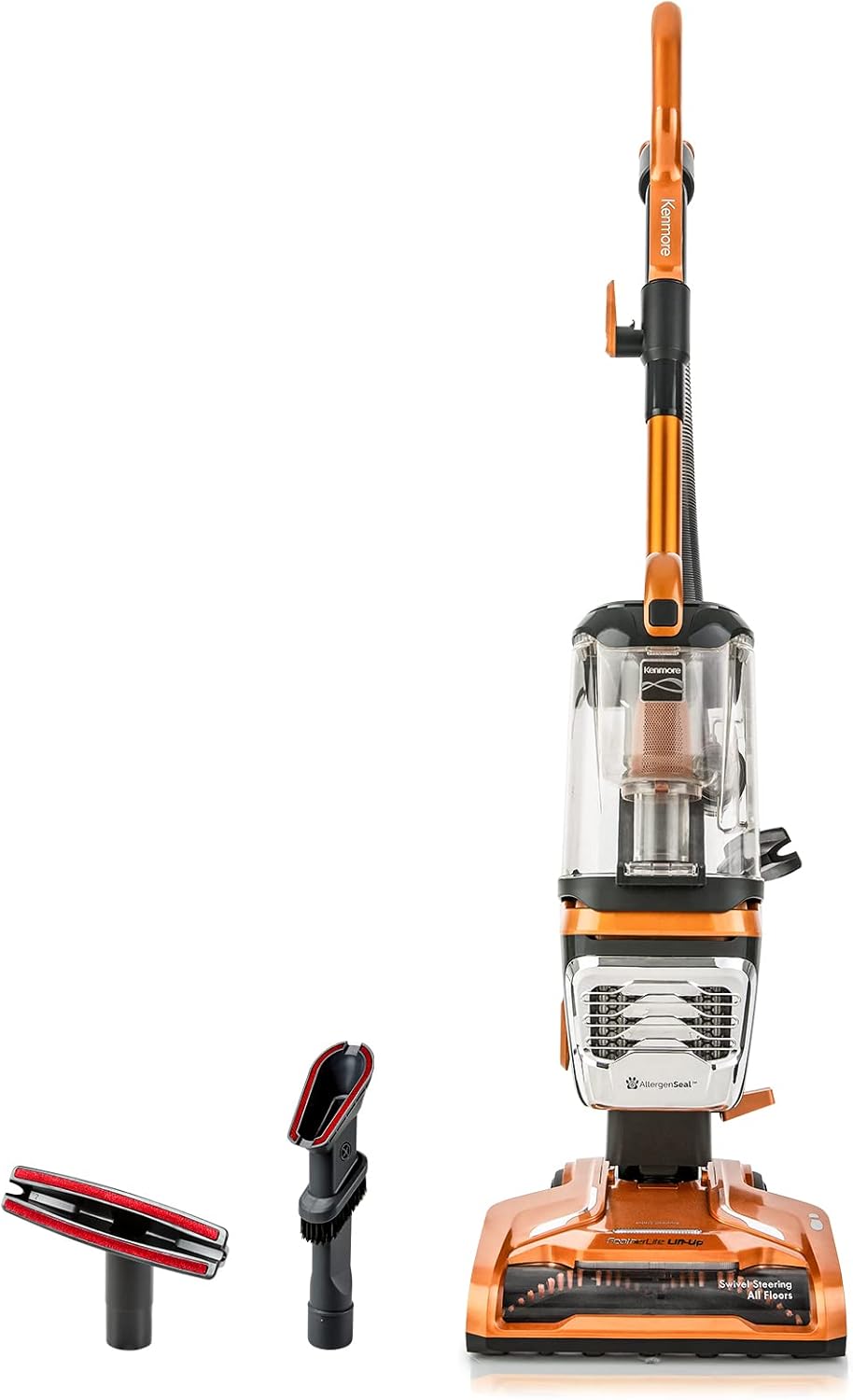
The Kenmore DU4080 is a full-size upright vacuum that emphasizes practical cleaning performance for everyday homes. It uses a dual-motor system and an 850W corded motor to deliver stronger suction for carpets and hard floors, while a completely sealed HEPA filtration system captures 99.97% of particles down to 0.3 microns to reduce airborne allergens. The vacuum is relatively lightweight at under 12.5 pounds and features lift-up technology so the main unit detaches for stairs and above-floor tasks, plus a 9-foot hose and two included tools for crevices and upholstery. Swivel steering and an LED headlight help find and navigate debris under furniture. The bagless dust cup makes maintenance straightforward, though the single-speed control limits fine tuning for delicate surfaces and the reported noise level is around 72 dB. For buyers focused on allergen control, the sealed HEPA path and included tools make this a sensible, easy-to-use option, but expect typical upright bulk versus stick or canister form factors and moderate noise during operation.
Best for: Buyers who prioritize practical allergen reduction and dependable whole-home cleaning and want a straightforward, low-maintenance upright with HEPA filtration.
Less Ideal for: People seeking a very quiet vacuum, variable speed control, or an ultra-compact cordless form factor should consider other designs.
- Sealed HEPA filtration capturing 99.97% of particles down to 0.3 microns for allergy relief
- Dual-motor power suction for stronger cleaning on carpets and hard floors
- Lift-up detachable pod and 9 ft hose for above-floor and stair cleaning
- Includes 3-in-1 combination tool and upholstery tool for targeted pet hair and crevice cleaning
- Bagless dust cup for easy emptying and low ongoing consumable cost
- Single-speed control offers no suction-level adjustment for delicate rugs or quiet mode
- Noise level around 72 dB is noticeable during use
Verdict: Choose the Kenmore DU4080 when you want a no-nonsense upright with sealed HEPA filtration and strong suction for reliable allergy-focused cleaning.
Shark Rotator NV501

| Capacity | 0.88 quarts |
|---|---|
| Filter Type | Foam |
| Power Source | Corded Electric |
| Wattage | 1200 watts |
| Noise Level | 80 db |
The Shark Rotator NV501 is a versatile upright vacuum that combines strong multi-surface suction with a detachable Lift-Away pod for above-floor cleaning. It is used like a conventional upright on carpets and hard floors and converts to a lightweight portable unit for stairs, upholstery, and tight spots using the included dusting brush, crevice tool, and wide upholstery tool. Notable features include a HEPA filter and a sealed system that trap dust and allergens, swivel steering for easier maneuvering around furniture, LED headlights to reveal hidden debris, and a nearly 0.9-quart dust cup for longer cleaning sessions between empties. Practical benefits include effective pet hair pickup, better control in cluttered rooms, and simpler cleaning of stairs and furniture without hauling a heavy canister. Important limitations are its corded design, which restricts range to outlets and requires cord management, and a moderate noise level reported around 80 dB that may be noticeable during use.
Best for: Buyers prioritizing dependable allergen control and a proven, multi-surface upright that also converts to a lighter handheld for stairs and upholstery.
Less Ideal for: People who need cordless freedom for large homes or very quiet operation during daytime use should consider other options.
- HEPA filter with sealed system captures dust and allergens for cleaner exhaust
- Lift-Away pod detaches for lightweight above-floor cleaning on stairs and furniture
- Swivel steering and LED headlights improve maneuverability and visibility
- Includes crevice tool, dusting brush, and wide upholstery tool for versatile cleaning
- Large 0.88 quart dust cup reduces how often you need to stop and empty
- Corded electric design limits reach compared with cordless models
- Noise level around 80 dB can be relatively loud during operation
Verdict: Choose this HEPA-equipped Lift-Away upright if you want reliable allergen capture plus the flexibility to clean floors, stairs, and upholstery with a single, well-rounded machine.
Bissell CleanView Swivel Pet 3836

| Capacity | 1 liters |
|---|---|
| Filter Type | Foam |
| Power Source | Corded Electric |
| Voltage | 120 volts |
| Form Factor | Upright |
The Bissell CleanView Swivel Pet 3836 is an upright vacuum aimed at making pet hair and everyday dirt cleanup easier around furniture and on carpeted floors. It uses a Triple Action Brush Roll and Multi-Cyclonic Suction to lift embedded debris while Scatter-Free Technology helps contain dry messes on hard floors. Swivel steering plus an Active Extension Wand extend reach to clean under and behind furniture and other tight spots, and an XL easy-empty dirt tank reduces how often you stop to empty. The unit includes washable filters and a HEPA-filtered design to help reduce airborne particles during cleaning. Because it is corded and intended for indoor use, runtime figures listed in the item data do not apply the same way they would for cordless models; however corded power provides consistent suction. Expect a straightforward, single-speed upright with basic touch controls that suits regular whole-home maintenance rather than specialized deep-allergy cleaning systems or compact cordless convenience.
Best for: Buyers who want a reliable, corded upright that handles pet hair and everyday debris with easy maneuverability and straightforward maintenance informed by broad user feedback.
Less Ideal for: Users seeking a compact cordless cleaner for quick spot cleaning or those needing a dedicated sealed-allergen system certified for clinical allergy reduction should consider other options.
- Triple Action Brush Roll and Multi-Cyclonic Suction for strong carpet pickup and pet hair removal
- Swivel steering and extension wand for easier reach around furniture and high or tight areas
- XL easy-empty dirt tank reduces how often you need to stop and empty the bin
- Washable filter plus HEPA-style filtration helps limit airborne dust and pet dander during vacuuming
- Single speed controls limit suction adjustment for delicate rugs or specialized surfaces
- No bundled turbo or mini motorized tool listed for deep-upholstery cleaning beyond the brush roll
Verdict: Choose this Bissell if you want a proven upright that cleans pet hair and carpets effectively while offering easy maneuvering and washable filtration for routine allergy-conscious maintenance.
Shark Navigator NV352

| Filter Type | Washable HEPA + Foam Filters |
|---|---|
| Capacity | 1.1 quarts |
| Cleaning Path Width | 11 inches |
| Wattage | 1200 watts |
The Shark Navigator NV352 is a lightweight upright that combines a removable pod for portable cleaning with a sealed HEPA filtration system aimed at reducing dust and allergens. You use it as a regular upright on carpets and hard floors, then press a button to lift away the pod and switch to the wand and included crevice and upholstery tools for stairs, furniture, and tight spots. Notable features include a washable HEPA plus foam filters, swivel steering for maneuverability around furniture, a wide upholstery tool for pet hair, and a one-quart dust cup that makes emptying straightforward. In practice it delivers strong suction for everyday debris and pet hair, while the sealed HEPA system helps contain fine particles during cleaning. Trade-offs are a corded setup that limits range compared with cordless models and a single brushroll mode so you may need to toggle settings manually for very delicate surfaces. For buyers prioritizing allergen control in a conventional upright format, this model balances performance, portability, and filtration without complex maintenance routines.
Best for: Buyers who want a straightforward, proven upright that emphasizes allergen capture and easy above-floor cleaning without complicated setup or upkeep.
Less Ideal for: Households that need long cordless run time, very quiet operation, or multiple automatic brushroll modes should consider other options.
- Detachable Lift-Away pod for portable above-floor cleaning
- Completely sealed HEPA system with washable filters to trap dust and allergens
- Swivel steering improves maneuverability around furniture
- Includes upholstery and crevice tools useful for pet hair and tight spaces
- Corded power limits reach compared with cordless vacuums
- One brushroll mode requires manual adjustment for some floor transitions
Verdict: Choose the Shark Navigator NV352 if you want a reliable upright with lift-away portability and a sealed HEPA system to help reduce household allergens.
Choosing the Right HEPA Vacuum Cleaner for Allergies: Key Factors to Consider
Filter Type and Certification
A true HEPA filter is defined by its ability to capture 99.97% of particles down to 0.3 microns. For allergy control, check whether the vacuum uses a certified HEPA element and whether that element is part of a sealed system. A certified HEPA filter alone is helpful, but without a sealed pathway between the intake and exhaust, unfiltered air can bypass the filter and release captured allergens back into the room.
Consider filter replacement intervals and availability. Some HEPA cartridges are washable, while others require scheduled replacement. Knowing the expected life and cost of replacements influences long-term performance and encourages consistent maintenance.
Sealed System Design
A sealed system ensures that all air drawn into the vacuum passes through the HEPA filter before being exhausted. For allergy sufferers, this reduces the risk of leaks around the dustbin, motor, or hose connections that can reintroduce fine particles into the air. Look for clear design features like gasketed dustbins, clamped filter housings, and one-way airflow channels.
A well-sealed vacuum also makes emptying and servicing safer. Models that allow you to detach and reseal the dust container without stirring up dust reduce exposure during routine chores.
Suction Performance Across Surfaces
Powerful suction matters because allergens often embed in carpet fibers, upholstery, and area rugs. Evaluate how a vacuum maintains suction on different surfaces and how it handles embedded dust and pet dander. Some cleaners offer adjustable power or motorized brushrolls that can be turned off for delicate hard floors.
Consistent pickup reduces the need for repeated passes, which lowers overall cleaning time and the chance of allergen re-suspension. Consider the vacuum's airflow and wattage ratings as one indicator, but prioritize real-world pickup descriptions and brushroll design.
Dustbin, Bagging, and Emptying Method
How a vacuum stores and disposes of captured allergens affects exposure risk. Bagged systems typically isolate dirt more effectively, while bagless models must offer hygienic emptying mechanisms to prevent clouds of dust during disposal. For allergy control, look for dustbins with bottom-release designs that let you eject contents into a trash bag without reaching into the debris.
Also note whether the machine accepts disposable bags, the availability of replacement bags, and whether filters are easily accessible for cleaning without contaminating the work area.
Ease of Maintenance and Filter Access
Frequent, simple maintenance keeps a HEPA vacuum performing at peak efficiency. Check how straightforward it is to remove and replace HEPA filters, clean brushrolls, and clear clogs. Units with tool-free access, washable pre-filters, and clearly labeled filter locations reduce the time and hassle of upkeep.
Maintenance also ties to long-term cost and effectiveness. If replacing filters is complex or requires specialized parts, owners may delay service and lose filtration performance, which undermines allergy control.
Noise and Usability
Noise affects how often people use their vacuum, especially in households with sleeping children, work-from-home adults, or noise-sensitive allergy sufferers. Lower-decibel machines encourage more frequent cleaning cycles, which is important for keeping allergen loads down.
Usability covers weight, maneuverability, and hose/tool reach. Lightweight, well-balanced vacuums with a variety of attachments make it easier to clean upholstery, mattresses, and high corners where allergens collect, increasing the overall effectiveness of your allergy management routine.
How HEPA Filtration Reduces Allergy Symptoms
HEPA filtration captures very small particles such as pollen, mold spores, and pet dander that commonly trigger allergic reactions. By removing these particulates from carpets and the air passing through the vacuum, HEPA-equipped cleaners lower the reservoir of allergens in the home environment.
Using a HEPA vacuum regularly reduces the amount of airborne re-suspension during cleaning when combined with correct technique and sealed emptying. It is not a cure for allergies, but it is an effective part of an overall mitigation strategy alongside ventilation and targeted cleaning.
- Targets particles down to submicron sizes
- Reduces surface and airborne allergen reservoirs
- Works best when paired with sealed containment and regular use
Bagged Versus Bagless: Which Is Better for Allergies?
Bagged systems tend to isolate dust and allergens more effectively because the debris is trapped in a disposable bag that can be removed without contacting the dust. This minimizes exposure during disposal, which is particularly important for severe allergy sufferers.
Bagless vacuums eliminate ongoing bag costs but require careful, hygienic emptying procedures. Some bagless models include bottom-release bins or sealed capsules that help reduce clouds of dust when dumped. Consider how often you are willing to perform maintenance and how comfortable you are handling dust when deciding between the two.
- Bagged: better containment during disposal
- Bagless: lower operating costs but needs careful emptying
- Look for hygienic emptying features regardless of system type
Attachments and Tools That Matter for Allergy Control
The right set of tools extends allergy control to upholstery, curtains, mattresses, and tight spaces. A motorized brush or mini-turbo tool is useful for removing embedded pet hair and dander from upholstery and stairs. Crevice tools and small brush heads help reach corners and vents where allergens collect.
Consider a vacuum with a long, flexible hose and easy-to-change attachments. This reduces the temptation to skip areas and makes targeted cleaning faster and more effective.
- Motorized mini brush for upholstery and pet hair
- Crevice tool for vents and baseboards
- Soft dusting brush for blinds and delicate surfaces
Maintenance Schedule and Best Practices
To keep a HEPA vacuum working at peak allergy-reduction performance, follow a regular maintenance schedule: clean pre-filters monthly, replace HEPA filters according to manufacturer guidance, and clear brushrolls of hair and fibers after heavy sessions. Regular checks for clogs in hoses and motor pathways maintain suction efficiency.
When emptying or changing filters, do it in a well-ventilated area and consider wearing a dust mask if you are particularly sensitive. Store spare filters and bags in a dry, clean place so they are ready when needed.
- Monthly quick checks for pre-filters and brushrolls
- Replace HEPA elements on the recommended schedule
- Empty containers carefully to avoid re-suspension
Using a HEPA Vacuum Alongside Other Allergy Strategies
A HEPA vacuum is one part of a layered approach to allergy control. Combine regular vacuuming with improved ventilation, dust-mite-proof bedding covers, and humidity control to reduce mold and dust mite populations. Washing bedding in hot water and minimizing textiles that trap dust also lowers the overall allergen load.
For homes with pets, more frequent vacuuming and concentrated cleaning of pet resting areas will reduce dander accumulation. Use a HEPA vacuum for routine maintenance and spot-clean high-traffic or high-allergen zones weekly.
- Pair vacuuming with ventilation and humidity control
- Use protective bedding and wash linens frequently
- Increase cleaning frequency in pet areas
How We Chose the Best HEPA Vacuum Cleaner for Allergies
We selected models that prioritize true HEPA-level filtration, verified seal design, and practical usability for allergy sufferers. The editorial filters focused on measurable filtration performance, the vacuum system s ability to contain and remove fine particulates, and serviceability for regular maintenance. We also evaluated suction consistency on carpet and hard floors, as effective pickup prevents re-suspension of trapped allergens. Noise levels were considered because overly loud units discourage frequent use, which reduces cumulative allergen removal. Exclusions: we excluded units without sealed HEPA filtration, vacuums that rely solely on aftermarket filter upgrades, and devices with poor user-service access that impede routine filter replacement and cleaning. The resulting shortlist favors vacuums that balance verified filtration, easy maintenance, consistent suction, and features that reduce allergen exposure during handling and emptying.
Our full evaluation process is outlined in our review methodology.
FAQ
How often should I vacuum if I have allergies?
Often depends on allergy severity and household activity. For moderate allergy control, vacuum high-traffic areas and pet zones two to three times per week and perform whole-home vacuuming once weekly. Increase frequency during high pollen seasons or if pets shed heavily.
Do washable HEPA filters work as well as replaceable ones?
Washable pre-filters can extend the life of the main HEPA element, but not all HEPA cartridges are designed to be washed. Follow the product guidance: washable filters help with maintenance, while true HEPA cartridges often require periodic replacement to maintain rated efficiency.
Is a sealed system necessary if the vacuum has a HEPA filter?
Yes. A HEPA filter without a sealed airflow path can allow unfiltered air to escape around seals or the dustbin. For allergy control, a sealed system ensures captured particles remain contained and are not reintroduced into the room.
Can vacuuming make allergy symptoms worse temporarily?
It can temporarily increase airborne allergens if the vacuum lacks adequate filtration or if the emptying process stirs up dust. Using a true HEPA filter, maintaining a sealed system, and emptying hygienically reduces the chance of symptom flare-ups.
What extra tools should I use for mattresses and upholstery?
A motorized mini brush and a crevice or upholstery tool help dislodge embedded dander and dust from mattresses and furniture. Work slowly with overlapping passes to pull out deep-set particles rather than skim the surface.
Final Verdict
When selecting a HEPA vacuum cleaner for allergies, prioritize certified HEPA filtration within a sealed system and a disposal method that minimizes exposure during emptying. Balance suction and brushroll design to match your floors and upholstery so you remove, not just redistribute, trapped allergens. Regular maintenance, including timely filter replacement and brushroll cleaning, is essential to keep filtration performance high. Focus on the tradeoffs you can live with: bagged containment for lower exposure at disposal, or bagless convenience with hygienic emptying features. Choose the configuration and features that you will maintain consistently to get the greatest allergy relief over time.