
Note: This article contains affiliate links. If you click on these links and make a purchase, we may earn a small commission at no extra cost to you. This helps support our research and content. Read our full affiliate disclosure here.
If allergies, dust sensitivity, or indoor air quality are top concerns, choosing the right HEPA vacuum cleaner matters. A true HEPA filtration system captures fine particles that ordinary vacuums can redistribute, and suction design affects how well carpets and hard floors actually get cleaned. This guide gathers seven shortlisted HEPA vacuum cleaners that performed well on key measures buyers care about, including filtration efficiency, suction consistency, and usability for routine home cleaning. Read on for clear criteria and practical tradeoffs so you can pick a model that fits your living spaces and cleaning habits.
Top Picks at a Glance
| Best Overall The best all-around choice for most situations | Miele Classic C1 Pure Suction |  |
| Best Quality Built to a higher standard if you want something more solid | Shark Rotator NV752 |  |
| Best Value The sweet spot between price and what you get | iXlion Stick Vacuum TV109S |  |
| Best Budget The cheapest option that still gets the job done reliably | Vacmaster Stick Vacuum VSJ01 | 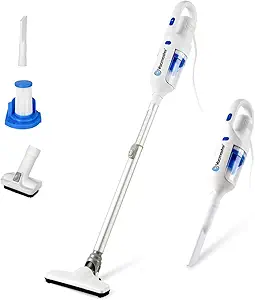 |
| Top Rated A top-rated pick with lots of positive feedback | Miele Guard M1 Parquet XL |  |
| Most Popular A crowd favorite that many people choose with confidence | Kenmore 200 Series Canister Vacuum 81214 |  |
| Best Seller A high-volume bestseller chosen again and again | Shark Navigator NV360 |  |
Miele Classic C1 Pure Suction

| Capacity | 4.76 quarts |
|---|---|
| Noise Level | 64 db |
| Number of Speeds | 6 |
| Wattage | 1200 watts |
| Power Source | Corded Electric |
The Miele Classic C1 Pure Suction is a compact, bagged canister vacuum designed for everyday cleaning of hard floors and low-pile carpets. It offers six suction settings so you can dial power down for delicate surfaces and crank it up for more stubborn dirt, and the universal floorhead handles both smooth floors and low-pile carpet without switching tools. The vacuum includes a crevice tool, dusting brush and upholstery nozzle that clip to the unit for easy access, and the AirClean system (filter bag, motor protection filter and exhaust filter) traps fine dust so room air is cleaner after you vacuum. Its long cord and 29.5 foot operating radius reduce the need to change outlets, and the canister form factor makes it easy to maneuver under furniture. Expect typical bagged-vacuum maintenance like replacing AirClean bags and nonwashable filters. Noise and weight are moderate for the class, and it is optimized for routine household cleaning rather than deep cleaning high-pile rugs or tackling heavy pet hair.
Best for: Buyers who want a reliable, no-nonsense canister vacuum that emphasizes clean exhaust air and adjustable suction for everyday home cleaning.
Less Ideal for: People needing a deep-cleaning solution for thick rugs, heavy shedding pets, or those preferring bagless maintenance-free models.
- AirClean three-stage filtration for strong particle capture
- Six suction levels for surface-specific control
- Universal floorhead works on hard floors and low-pile carpet
- Includes common tools (crevice, dusting brush, upholstery) that store on the unit
- Long operating radius that reduces outlet changes while cleaning
- Filters are not washable and require replacement over time
- Not intended for high-pile carpets or heavy-duty pet hair removal
Verdict: Choose the Classic C1 if you want a compact, bagged canister vacuum with strong filtration and adjustable suction for cleaner indoor air and everyday floor care.
Shark Rotator NV752

| Capacity | 0.88 quarts |
|---|---|
| Filter Type | Washable HEPA + Foam Filters |
| Wattage | 1150 watts |
| Power Source | Corded Electric |
| Cleaning Path Width | 12 inches |
The Shark Rotator NV752 is a full-size powered lift-away upright that combines a detachable pod with a motorized brushroll and HEPA sealed system to tackle carpet, hard floors, stairs, and upholstery. In everyday use you vacuum normally as an upright, then press the lift-away button to detach the pod and bring suction and brushroll power to stairs, furniture, or under low-clearance areas while handheld controls and LED headlights help reveal hidden debris. Notable features include the anti-allergen complete seal with washable HEPA and foam filters, a self-cleaning Pet Power Brush for hair-prone homes, swivel steering for easier maneuvering, and a 0.88-quart dust cup for longer runs between emptying. The unit is corded and reasonably powerful at 1150 watts, so it sustains consistent suction but requires outlet access and storage space. Noise is on the louder side at around 80 dB and the upright form is heavier than compact stick vacuums, so it favors users who prioritize deep cleaning performance and filtration over ultralight portability.
Best for: Buyers who want strong, consistent suction and a HEPA-sealed system for deep cleaning carpets and pet hair and who value powered attachments and lift-away versatility.
Less Ideal for: Those who need an ultralight, cordless option for quick touch-ups or who prioritize very quiet cleaning sessions.
- Powered Lift-Away pod keeps brushroll spinning for powered cleaning on stairs and upholstery
- Anti-allergen complete seal with washable HEPA and foam filters captures fine dust and allergens
- Self-cleaning Pet Power Brush effectively removes pet hair from carpets and upholstery
- Advanced swivel steering and LED headlights improve maneuverability and visibility
- Corded design and heavier upright form reduce portability compared with stick or handheld-only vacuums
- Relatively loud operation around 80 dB during use
Verdict: Choose this Shark if you want a powerful HEPA-sealed upright that converts to a powered lift-away pod for thorough pet- and allergen-focused cleaning.
iXlion Stick Vacuum TV109S

| Filter Type | HEPA Filter |
|---|---|
| Capacity | 1.5 cups |
| Number of Speeds | 3 |
| Battery Life | 55 minutes |
| Voltage | 20 volts |
The iXlion TV109S is a cordless stick vacuum aimed at everyday home cleaning, especially in pet households and multi-surface homes. It uses a 550W motor and an upgraded tangle-free roller brush to pull pet hair and debris from carpets, rugs, and hard floors while an LED headlight helps reveal dust under furniture. A dual-layer HEPA plus stainless steel filter and sealed dustbin are designed to trap fine dust and allergens, and the one-touch dust release makes emptying quick and hands-free. The adjustable extension tube and lightweight 6 lb design make it easy to reach ceilings, stairs, and tight spots, and included crevice and pet tools add versatility. Runtime varies by mode with up to 55 minutes on low and about 20 minutes on max; the removable battery can be swapped for continuous use if you buy a spare. Important trade-offs are routine maintenance of the brush and filters to preserve suction and the need to wait 4 to 6 hours for a full charge if you do not have a second battery.
Best for: Buyers who want a practical, allergy-aware cordless vacuum that balances strong filtration, lightweight handling, and tools for pet hair and everyday upkeep.
Less Ideal for: Large homes needing continuous high-power runtime without swapping batteries or users who prefer corded vacuums for unlimited runtime.
- Detachable battery for extended cleaning sessions or separate charging
- Dual HEPA plus stainless-steel filtration to capture fine dust and pet dander
- Tangle-free roller brush reduces hair wrap and eases maintenance
- One-button hygienic dustbin release prevents hand contact with dirt
- Lightweight, adjustable stick design with LED headlight for maneuvering under furniture
- Max suction runtime is shorter than low-power runtime so heavy cleaning may require recharging or a spare battery
- Requires regular brush and filter maintenance to keep peak performance
Verdict: Choose the iXlion TV109S when you want a lightweight, HEPA-equipped cordless stick that keeps pet hair and allergens under control with flexible runtime options.
Vacmaster Stick Vacuum VSJ01

| Power Source | Corded Electric |
|---|---|
| Wattage | 400 watts |
| Suction | 14 Kpa |
| Filter Type | Washable HEPA filter |
| Cord Length | 16 ft |
The Vacmaster VSJ01 is a lightweight corded stick vacuum that converts to a handheld for spot cleaning around the home and in the car. It uses a 400W motor delivering about 14 kPa of suction and includes a floor nozzle, crevice tool, and a 2-in-1 brush for edges and upholstery. The washable HEPA-style filter captures a high share of particulates and the clear dust cup is easy to empty, which keeps maintenance inexpensive over time. With a 16-foot cord and swivel steering the VSJ01 moves through rooms without frequent outlet changes and the telescoping wand helps reach higher spots. Expect steady, continuous power because it is corded, but there is only one power level so suction cannot be dialed down for delicate surfaces. The unit is very light at under 4 pounds, which makes short cleanups quick, though the modest filtration capture rate and single speed mean it is best for routine debris rather than heavy-duty deep cleaning of thick carpets.
Best for: Buyers looking for an inexpensive, practical HEPA-filtered vacuum that is easy to carry and saves on ongoing filter costs for everyday home and car cleanups.
Less Ideal for: Those who need variable power settings, deep clean performance on thick carpet, or near-complete HEPA removal for severe allergy sufferers should consider higher-end models.
- 2-in-1 stick-to-handheld design for floors, upholstery, and car interiors
- Washable HEPA filter reduces replacement costs and captures fine particulates
- Corded power provides continuous suction without battery runtime limits
- Lightweight build makes it easy to carry and use for quick sessions
- Includes useful attachments: floor nozzle, crevice tool, and 2-in-1 brush
- Single fixed power level limits control for delicate surfaces or heavy debris
- Filter capture rate listed at about 85% which is lower than medical-grade HEPA
Verdict: A budget-friendly, lightweight stick that gives continuous corded suction and a washable HEPA filter for everyday cleaning without battery fuss.
Miele Guard M1 Parquet XL
| Capacity | 4.5 liters |
|---|---|
| Filter Type | AirClean Plus Filter |
| Wattage | 1200 watts |
| Operating Radius | 36 ft. |
| Noise Level | 77 db |
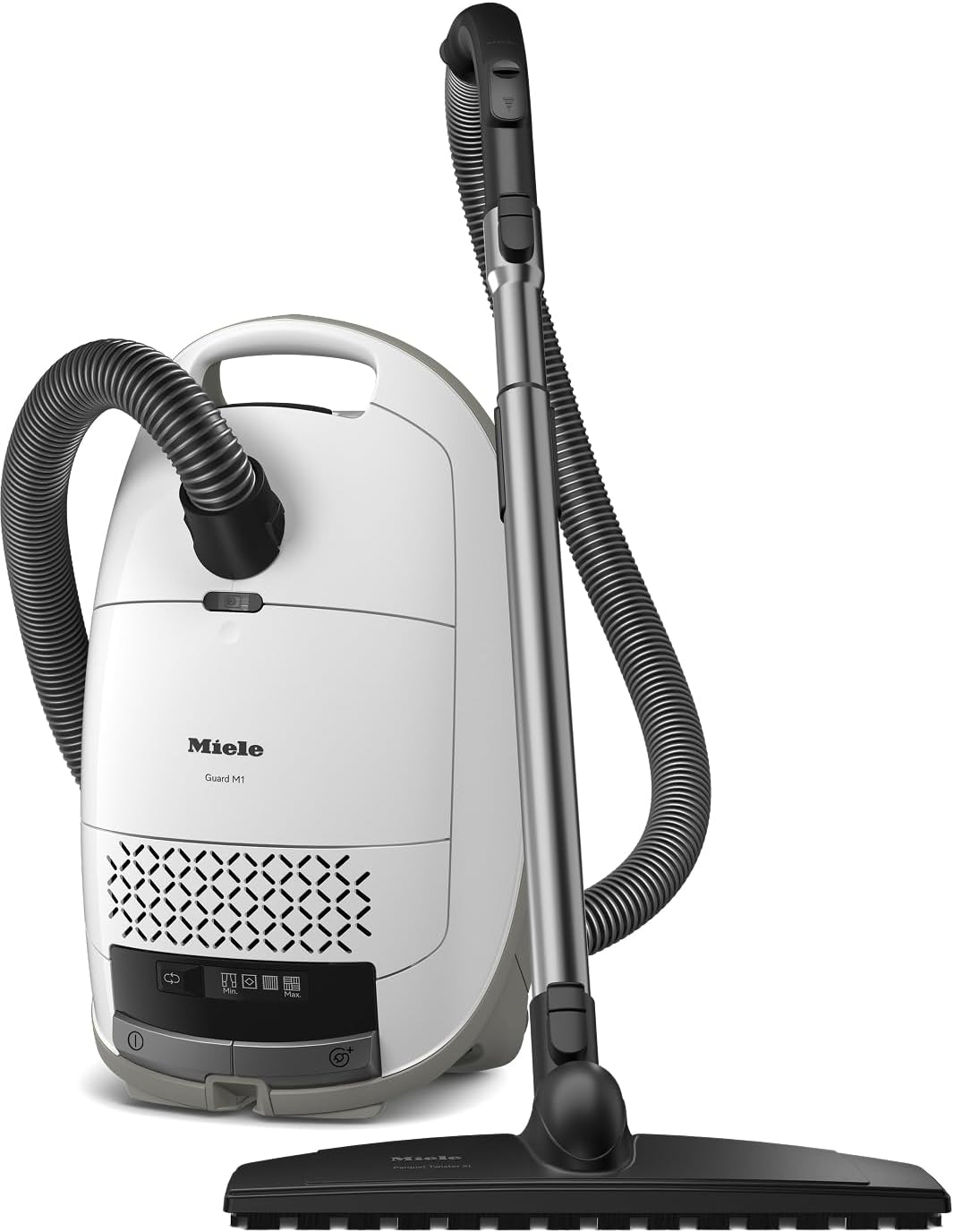
The Miele Guard M1 Parquet XL is a bagged canister vacuum built for cleaning hard floors and low-pile carpet with a focus on hygienic debris capture and durable performance. It uses a 1200W German-engineered motor with four push-button power levels and a footswitch-equipped AllTeQ universal floorhead for quick transitions between surfaces, while the Parquet Twister XL gives gentle, thorough cleaning on delicate flooring. The integrated AirClean Plus filter and HyClean Air CO bags keep dust contained for cleaner room air and easier disposal. Practical touches such as a height-adjustable EasySlide telescopic wand, an ergonomic handle, three onboard nozzles, a parking system and a 36 ft operating radius reduce interruptions during cleaning. Noise is relatively low for this power level and the build and included accessories suggest long-term reliability. Limits to consider are that it is a corded model and the listing notes it is not compatible with Miele electric floorheads or their electric accessories, so buyers wanting powered brush heads should look elsewhere.
Best for: Buyers who prioritize dependable, hygienic cleaning on hard floors and low-pile carpet and want a well-built, traditional canister vacuum that focuses on filtration and consistent suction.
Less Ideal for: People who need cordless convenience or require powered electric floorheads for deep-pile carpets or heavy pet hair.
- Strong 1200W motor with four adjustable power levels for different surfaces
- AirClean Plus filter and HyClean bags for contained, hygienic dust disposal
- Parquet Twister XL plus AllTeQ universal floorhead for safe hard-floor and low-pile carpet cleaning
- Long 36 ft operating radius and ergonomic features reduce interruptions during tasks
- Includes essential onboard accessories (crevice, dusting, upholstery) and telescopic wand for versatility
- Corded design limits maneuverability compared with cordless models
- Not compatible with Miele electric floorheads or powered brush accessories
Verdict: Choose the Miele Guard M1 Parquet XL if you want a reliable, bagged canister vacuum that prioritizes hygienic filtration and consistent cleaning performance on hard floors and low-pile carpets.
Kenmore 200 Series Canister Vacuum 81214

| Filter Type | HEPA Filter |
|---|---|
| Surface Recommendation | Hard Floor, Carpet, Upholstery |
| Power Source | Electrical cable |
| Wattage | 120 watts |
| Hose Length | 9.3 feet |
The Kenmore 200 Series bagged canister vacuum is built for homes that need strong suction and allergy control. Its HEPA filtration captures fine dust, pollen, and pet dander, while the two-motor system drives brush rotation and sustained suction for carpets and hard floors. Practical touches include four height adjustments for different pile heights, a 9.3-foot hose and detachable wand for above-floor cleaning, and three onboard tools (crevice, dusting brush, and bare floor head) that simplify transitions to upholstery, stairs, or car interiors. The 24-foot auto cord rewind and onboard tool storage make daily use tidier, though the unit is a full-size canister so it needs some storage space. Noise level is relatively high at about 78 dB, and because it uses disposable bags owners should factor ongoing bag and HEPA filter replacement into maintenance. For buyers focused on removing allergens and deep-cleaning mixed surfaces, this model delivers practical, factory-quality filtration and cleaning power in a user-friendly package.
Best for: Buyers who prioritize proven allergen control and solid suction backed by many customer reviews and want a straightforward, full-feature HEPA canister for whole-home cleaning.
Less Ideal for: People who need an ultra-quiet, compact cordless machine or who prefer bagless models to avoid recurring bag purchases should consider other options.
- True HEPA filtration captures 99.97% of fine particles for improved indoor air quality
- Two-motor system provides strong suction and effective brush rotation for carpets
- Included tools and long hose offer easy above-floor cleaning and quick transitions
- Automatic 24-foot cord rewind and onboard tool storage keep the unit tidy between uses
- Relatively loud operation around 78 dB compared with quieter vacuum designs
- Requires disposable bags and periodic HEPA filter replacements, adding ongoing costs
Verdict: Choose this Kenmore canister if you want a reliable HEPA-equipped vacuum that focuses on allergen capture and strong cleaning across carpets and hard floors.
Shark Navigator NV360
| Filter Type | HEPA |
|---|---|
| Capacity | 0.9 liters |
| Surface Recommendation | Carpet & Hard floors |
| Power Source | Corded Electric |
| Wattage | 1200 watts |
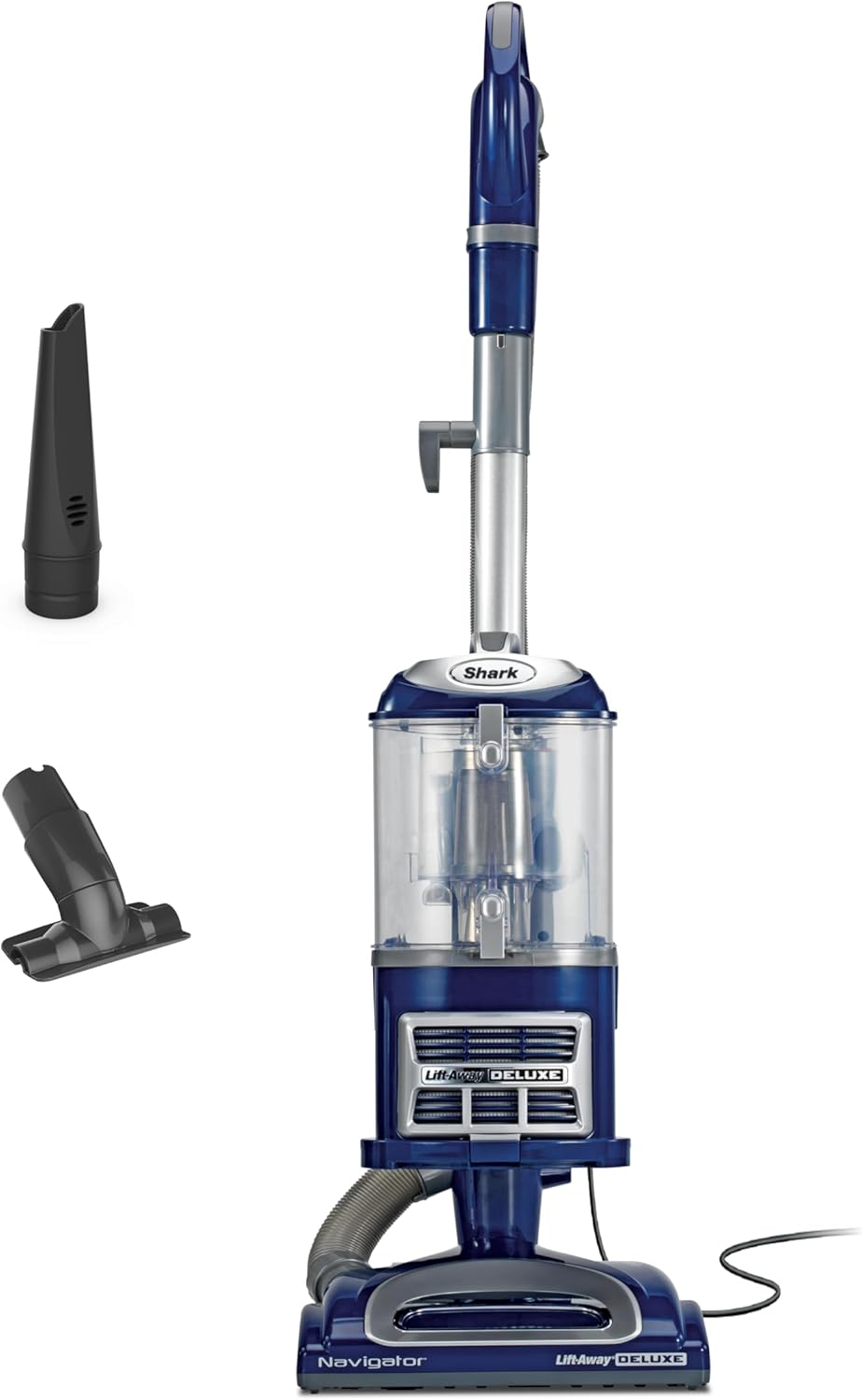
The Shark Navigator NV360 is an upright vacuum that combines full-size suction with a detachable Lift-Away pod for portable cleaning. You use it in upright mode for carpets and hard floors and remove the pod to reach stairs, upholstery, and tight areas using the included crevice and upholstery tools. Key features include a completely sealed HEPA filtration system to trap dust and allergens, swivel steering for easier maneuvering around furniture, and a large 0.9 liter dust cup so you can vacuum longer between emptying. The brushroll can be shut off for delicate floors and the corded power delivers consistent suction without battery concerns. Trade-offs are that it is a corded upright so storage and cord management require a bit more space than stick vacuums, and the unit is heavier than ultra-light models when carrying for extended above-floor work. For buyers who prioritize reliable HEPA filtration and versatile cleaning performance, this model is a practical, dependable choice.
Best for: Buyers who want a dependable, allergy-friendly vacuum with strong suction and the flexibility to clean both floors and above-floor areas without relying on batteries.
Less Ideal for: People who need an ultra-lightweight, cordless solution for quick spot cleans or who must store the vacuum in very small spaces should consider a stick or handheld model instead.
- Completely sealed HEPA system captures dust and allergens
- Lift-Away pod enables lightweight above-floor and stair cleaning
- Swivel steering improves maneuverability around furniture
- Large 0.9 liter dust cup reduces frequency of emptying
- Corded power provides consistent suction for whole-home cleaning
- Corded design requires outlet access and extra cord management
- Heavier than ultra-light stick vacuums for extended handheld use
Verdict: Choose the Shark Navigator NV360 if you want a reliable HEPA-sealed upright that cleans floors and above-floor areas with strong corded suction and proven allergen control.
Choosing the Right HEPA Vacuum Cleaner: Key Factors to Consider
Filtration Efficiency and Certification
High filtration efficiency is the primary reason buyers choose a HEPA vacuum cleaner. A true HEPA filter traps at least 99.97% of particles down to 0.3 microns, which includes many common allergens such as pollen, pet dander, and some fine dust. When assessing models, look for clear filter classification and whether the vacuum employs a sealed system that forces all intake air through the HEPA element.
A filter that lacks proper sealing can allow unfiltered air to bypass the element and defeat the purpose of HEPA filtration. Also consider whether the filter is washable or replaceable and the expected replacement interval. Filters that are easy to replace and widely available save time and reduce the long-term cost of maintaining high filtration performance.
Suction Power and Floor-Type Performance
Suction strength determines how well a vacuum lifts embedded dirt and larger particles from carpets and how effectively it picks up debris on hard floors. Manufacturers sometimes list airflow or wattage metrics; while these numbers are helpful, real-world performance depends on brushroll design, nozzle sealing, and how suction is delivered to different surfaces.
If you have mixed flooring, prioritize a model that maintains suction across low- and high-pile carpets as well as bare floors. Adjustable suction settings and a motorized brushroll that can be turned off for hard floors make a vacuum more versatile. Also consider how the vacuum handles long fibers, rugs, and stairs to avoid frequent clogs or hair wrap that reduce cleaning efficiency.
Seal and Containment of Dust
Containment refers to how well the vacuum traps captured particles without releasing them back into the room during use or when emptying. A sealed-body design with gasketed connections and one-way exhaust paths helps keep contaminants contained. Dustbin designs that minimize dust clouds when emptied are important for allergy sufferers.
Consider bagged versus bagless systems in this context. Bagged units can be easier to empty without exposure, but they require ongoing bag purchases. Bagless designs save consumable costs but should have features like cyclonic pre-separation and easy, low-dust emptying mechanisms to reduce exposure to trapped allergens.
Ease of Maintenance and Filter Access
Routine maintenance affects long-term performance and ownership satisfaction. Accessible filter housings, clear service intervals, and straightforward cleaning procedures reduce the chance that filters are neglected. Check whether the HEPA element is reusable and washable or if it must be replaced on a schedule, and whether secondary pre-filters are used to prolong HEPA life.
Maintenance also includes brushroll cleaning for hair and fiber removal, unclogging pathways, and dustbin cleaning. Tools that provide hand-free or low-contact emptying can be beneficial for people with allergies. Consider the availability and typical lifespan of replacement filters when estimating upkeep.
Attachments, Reach, and Versatility
A vacuum's accessory set determines how well it adapts to real household tasks beyond floors. Crevice tools, upholstery brushes, motorized pet tools, and extension wands expand a vacuum's usefulness for stairs, furniture, and tight spaces. For owners concerned about allergens, upholstery and mattress tools are valuable for extracting embedded particles from fabrics.
Also evaluate hose length, cord length or battery run time for cordless models, and the unit's overall maneuverability. Lightweight, easy-to-steer designs reduce user fatigue during extended cleaning sessions and make it simpler to reach under furniture and into corners.
Noise Levels and Operational Comfort
Noise affects when and how often you can run the vacuum, especially in homes with babies, shift workers, or shared living spaces. Quieter motors and muffled airflow paths make it easier to clean without disturbing others. Noise also correlates loosely with perceived power; however, extremely quiet models may compromise airflow.
Look for published decibel ratings when available, and consider the tradeoff between acceptable noise and suction performance. Handle ergonomics, control placement, and the weight distribution of the machine also influence operator comfort during regular use.
Bagged Versus Bagless HEPA Systems
Bagged systems typically contain dust better during disposal because the bag traps particles that are removed intact. For allergy-sensitive households, the reduced chance of airborne dust when changing a bag can be a major advantage.
Bagless systems avoid ongoing bag purchases and often provide visual confirmation of captured dirt. When choosing a bagless HEPA vacuum, prioritize models with low-dust emptying designs and secondary pre-filters that protect the HEPA element from large debris.
- Bagged: cleaner disposal, ongoing consumable cost
- Bagless: no bag cost, choose low-dust emptying mechanisms
Corded Versus Cordless Considerations
Corded vacuums deliver consistent suction for long sessions and are generally better for large homes or heavy-duty cleaning tasks. They avoid runtime anxiety and often provide stronger airflow compared with similarly sized battery models.
Cordless vacuums offer mobility and quick cleanups without plugging and unplugging. For cordless HEPA models, check battery run time under high-suction settings and whether filters are easy to access for maintenance after repeated use.
- Corded: consistent suction, no runtime limits
- Cordless: convenient for spot cleaning, check run time
Best Practices for Maintaining HEPA Performance
To keep filtration performing at peak levels, follow the manufacturer's maintenance schedule for pre-filters and HEPA elements. Regularly emptying the dustbin or replacing bags before they are overfilled helps maintain airflow and prevents strain on the motor.
Clean brushrolls and check for blockages in hoses and inlets. When replacing filters, use only recommended filter types and ensure gaskets or seals are properly seated to prevent bypass. Storing spare filters and replacement parts can reduce downtime and keep filtration efficient over the life of the machine.
- Empty or replace filters on the recommended schedule
- Clear brushrolls and check hoses for clogs
- Ensure seals and gaskets are intact after filter service
Allergy-Specific Setup and Room-by-Room Tips
Prioritize vacuuming high-traffic and fabric-heavy rooms frequently, including bedrooms and living rooms where pet dander and skin flakes accumulate. Use upholstery and mattress tools on beds and sofas, and vacuum curtains or fabric shades on a regular schedule.
For best airborne-particle control, vacuum before opening windows to reduce outdoor dust entry during rest periods. Consider running an exhaust fan or briefly ventilating after cleaning if you notice any transient dust clouds when emptying a dustbin.
- Vacuum bedrooms and upholstery weekly for allergen control
- Use crevice and upholstery tools to reach hidden reservoirs
- Vacuum prior to dusting to remove loose particles first
When to Replace Filters and How to Track Service
Filters degrade with use and will eventually lose capture efficiency. Track run hours or set calendar reminders for replacement intervals suggested by the manufacturer. If you notice reduced suction, unusual odors, or visible dust bypass during operation, inspect and service filters immediately.
Keep a log of filter changes and part numbers so you can reorder replacements quickly. For washable pre-filters, allow them to fully dry before reinstalling to avoid mold or odors.
- Follow manufacturer interval guidance and log changes
- Inspect filters if suction drops or odors appear
- Allow washable filters to dry completely before reuse
How We Chose the Best HEPA Vacuum Cleaner
We focused on features and design elements that directly affect allergen removal, cleaning effectiveness, and everyday usability. Our selection filters prioritized verified HEPA or HEPA-equivalent sealed filtration systems, consistent suction across floor types, and airflow designs that minimize particle escape. We also looked for models with practical attachments for crevices and upholstery, straightforward maintenance access for filter cleaning or replacement, and durability indicators like filtered dust capacity and motor cooling. Excluded from the shortlist were units that lacked sealed-system filtration, handheld-only designs without adequate filtration claims, and devices with user reports of rapid suction loss. We emphasized measurable specifications and user-oriented features: certified or clearly specified filter efficiency, documented suction or airflow performance, brushroll effectiveness on carpets versus hard floors, filtration maintenance cost and accessibility, and noise levels during operation. Each candidate was assessed against these dimensions to ensure the list favors real-world allergen control and consistent cleaning performance.
Our full evaluation process is outlined in our review methodology.
FAQ
Does a HEPA vacuum cleaner eliminate all allergens in my home?
A HEPA vacuum significantly reduces airborne particulates and many common allergens, but it cannot remove every allergen source. Regular cleaning, combined with other controls like air filtration and reducing sources, gives the best results.
How often should I replace the HEPA filter?
Replacement intervals depend on use and the specific filter type. Many HEPA elements need replacing every 6 to 24 months under typical home use; check the manufacturer's guidance and monitor suction and odors for signs of degradation.
Is a bagged HEPA vacuum better for allergy sufferers?
Bagged designs can reduce exposure during disposal because dirt is contained inside the bag. However, a well-designed bagless system with low-dust emptying and a sealed pathway can also be effective for allergy-sensitive homes.
Can I wash a HEPA filter to save money?
Some models use washable pre-filters but most true HEPA elements are not washable and require replacement. Washing a nonwashable HEPA filter can damage the media and reduce filtration efficiency.
Do HEPA vacuums cost more to maintain?
Maintenance costs vary. HEPA elements and any required bags or pre-filters are ongoing expenses, but regular maintenance prevents performance loss and protects indoor air, which can be worth the investment for allergy control.
Final Verdict
Prioritize sealed HEPA filtration and consistent suction when choosing a vacuum for allergen control. Balance containment features, ease of maintenance, and the accessory set against your home layout and cleaning frequency. For allergy-sensitive households, lean toward designs that make filter servicing easy and limit dust exposure during disposal. With those tradeoffs in mind, you can pick a HEPA vacuum cleaner that delivers meaningful reductions in airborne particles while fitting your daily cleaning habits.