
Note: This article contains affiliate links. If you click on these links and make a purchase, we may earn a small commission at no extra cost to you. This helps support our research and content. Read our full affiliate disclosure here.
If you cook often and expect professional-level responsiveness, choosing a high-end induction range changes how your kitchen performs. These ranges deliver rapid heat adjustments, precise temperature control, and safer cooktop operation versus traditional electric or gas cooktops. Picking the right model matters because differences in cooktop layout, burner power distribution, oven capacity, and smart controls affect daily use and how reliably you can reproduce recipes. This guide shortlists the top five high-end induction ranges across key performance and usability areas. We evaluated temperature accuracy, cooktop versatility, oven baking and roasting consistency, control interfaces, and long-term durability. Use the short summaries below to find the range that best matches your cooking style and kitchen needs.
Top Picks at a Glance
| Best Quality Built to a higher standard if you want something more solid | ZLINE Paramount Induction Range 36" |  |
| Best Value The sweet spot between price and what you get | Forno Torino 30-Inch Induction Range |  |
| Best Budget The cheapest option that still gets the job done reliably | Kenmore 5.6 cu. ft. Induction Range |  |
| Top Rated A top-rated pick with lots of positive feedback | Induction Hardware 36 Inch Induction Range | 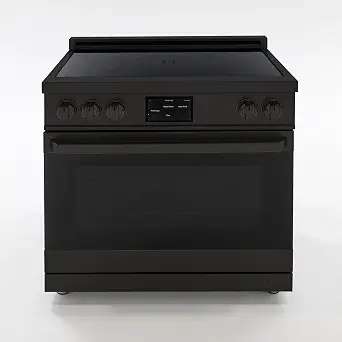 |
| Most Popular A crowd favorite that many people choose with confidence | Kenmore 5.0 cu ft Induction Range |  |
ZLINE Paramount Induction Range 36"

| Capacity | 5.2 cubic feet |
|---|---|
| Voltage | 240 volts |
| Number of Heating Elements | 5 |
| Controls Type | Knob |
The ZLINE 36 in. Paramount induction range pairs a five-zone induction cooktop with a 5.2 cu ft electric convection oven to deliver precise, responsive heat for serious home cooks. The nanotechnology-reinforced anti-scratch glass top and anti-glare matte finish make the cooktop both durable and easy to keep clean, while a bridge zone lets you combine elements for oversized pans or griddles. Controls are traditional knobs with nine adjustable power levels plus a Power Boost mode for rapid boiling or searing. The oven uses digital thermostat technology and convection to speed preheat and produce consistent results across racks, and the Horizon oven window gives a large viewing area to monitor cookware without opening the door. Practical strengths are the fast induction response, flexible zone layout, and a roomy oven that handles multi-rack baking. Limitations include the need for 240V installation and that advanced features rely on manual knob control rather than a touchscreen interface, which may matter to buyers wanting smart connectivity or app control.
Best for: A performance-focused home cook who values fast, precise induction heat and a roomy convection oven for multi-rack baking and high-heat searing.
Less Ideal for: Buyers who need plug-and-play 120V appliances, want integrated smart features, or prefer touchscreen interfaces should look elsewhere.
- Responsive five-element induction cooktop with bridge zone for large cookware
- Durable anti-scratch glass cooktop with anti-glare matte coating for easier cleaning
- Power Boost mode for rapid heating and nine precise cooking levels for control
- Electric convection oven with digital thermostat for faster preheating and even baking
- Large oven window for monitoring without opening the door
- Requires 240V hardwired installation
- No built-in smart connectivity or touchscreen controls
Verdict: Choose this range if you want a high-performance 36" induction range with precise heat control, a flexible five-zone cooktop, and a spacious convection oven for serious home cooking.
Forno Torino 30-Inch Induction Range

| Cooktop total output | 8,800 Watts |
|---|---|
| Oven capacity | 4.32 cubic feet |
| True convection wattage | 3,515 Watts |
| Voltage | 240 volts |
| Number of cooking zones | 4 |
The Forno Torino 30-inch induction range pairs a high-power four-zone induction cooktop with a large, feature-rich oven aimed at serious home cooks. The cooktop delivers 8,800 watts across four zones for very fast boiling and highly responsive temperature changes, and built-in pan sensors keep the smooth glass surface safe and efficient by only activating with compatible cookware. The oven offers 4.32 cubic feet of usable space, true convection driven by a 3,515W element and fan, and a dual-element broiler for even searing and browning. The French-door layout improves access when loading heavy pans and helps keep walkways clear. Controls combine manual stainless knobs with an LED display for straightforward operation, and included accessories cover basic setup with two racks and an air fryer basket. Expect rapid preheat and consistent results for multi-rack baking, but plan for a 240V, NEMA 14-50P electrical hookup and sufficient installation space since this is a heavy freestanding unit. The stainless steel exterior and black enamel interior are durable, though cleaning is manual rather than self-cleaning.
Best for: Buyers who prioritize precise, high-performance cooking and want a versatile, professional-style induction range that handles fast stovetop work and reliable multi-rack oven results.
Less Ideal for: People who cannot accommodate a 240V, 50A electrical supply or who need a lightweight or compact range for smaller kitchen footprints.
- Very high total cooktop power (8,800W) for fast, responsive induction cooking.
- True convection with a dedicated 3,515W element and fan for even multi-rack baking.
- French double-door design improves accessibility and saves kitchen walkway space.
- Dual-element broiler provides uniform top heat for searing and browning.
- Includes practical accessories and a preinstalled NEMA 14-50P power cord for 240V hookup.
- Requires a 240V, 50A circuit and NEMA 14-50P connection, which may need electrical upgrades.
- Manual cleaning only; no self-cleaning cycle is indicated.
- Heavy freestanding unit that needs sufficient floor space and professional installation for leveling and hookup.
Verdict: Choose this range if you want a high-power induction cooktop and a spacious true-convection oven in a professional-style French-door package.
Kenmore 5.6 cu. ft. Induction Range

| Capacity | 5.6 cubic feet |
|---|---|
| Number Of Racks | 3 |
| Number of Heating Elements | 4 |
| Controls Type | Knob |
| Fuel Type | Electric |
This Kenmore induction range pairs a responsive four-element induction cooktop with a roomy 5.6 cu. ft. oven that includes true convection and an air fry function, so it handles everything from rapid boil and precise simmering on the cooktop to even roasting and crisping in the oven. Typical use covers everyday family meals and multi-dish cooking thanks to dual-ring elements for flexible pan sizing, three chrome racks, a built-in temperature probe, and a large viewing window with bright halogen lighting. Practical touches such as a hidden bake element, self-clean mode, storage drawer, and front knob controls make it convenient to operate and maintain. The range delivers fast heat-up and predictable oven results, but buyers should note this model focuses on value rather than premium finishes or advanced smart features; some users may find control feedback and fit-and-finish less refined than high-end alternatives. For its feature set, it gives solid performance for cooks who want induction speed and convection versatility without flagship pricing.
Best for: Buyers seeking induction speed and oven versatility on a budget who prioritize practical performance and essential conveniences over luxury finishes.
Less Ideal for: Shoppers who want top-tier design details, premium materials, or advanced smart features should consider higher-end models instead.
- Induction cooktop with four dual-ring elements for fast, responsive heating and flexible pan sizing
- Large 5.6 cu. ft. oven with true convection and convection conversion for even baking and roasting
- Integrated air fry function and temperature probe for crisping and precise cooking
- Self-clean oven and hidden bake element simplify maintenance
- Front-mounted controls, bright halogen light, and a large viewing window improve usability
- Fit-and-finish and control feedback are more utilitarian compared with premium luxury ranges
- Lacks advanced smart connectivity or high-end finish options
Verdict: If you want induction speed plus a large true-convection oven and air fry capability without premium pricing, this Kenmore delivers practical performance at a budget-friendly level.
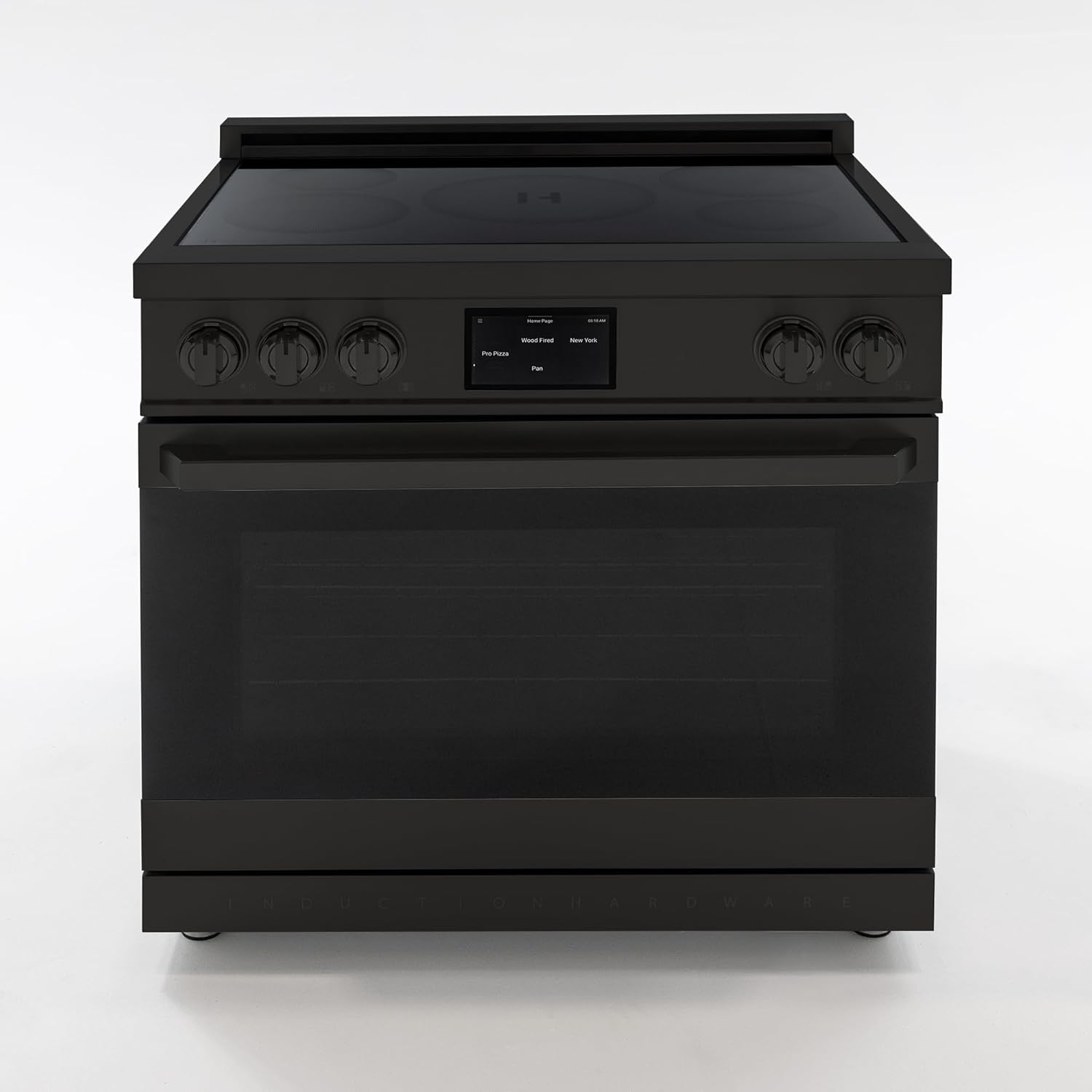
Induction Hardware 36 Inch Induction Range
| Heating Element | Induction |
|---|---|
| Voltage | 240 volts |
| Number of Heating Elements | 5 |
| Installation Type | Slide-In |
This 36-inch induction slide-in range combines a five-element induction cooktop with a convection oven and integrated air-fry mode for versatile kitchen performance. The induction cooktop offers fast, precise heat and subtle target zone markings for accurate pan placement, while the ceramic glass surface is described as ultra-hardened and scratch resistant for daily use. The oven supports convection baking, air fry, dehydrate, and a high-temperature pizza mode designed to pair with the included ceramic pizza stone for crisp crusts. Controls are smart-touch style and the range is designed to be safer and more energy efficient than gas by heating only compatible cookware and reducing surface heat. Practical benefits include quicker heat-up times, easy-to-clean glass top, and multiple oven modes that let you roast, bake, or air fry without extra appliances. Limitations to consider are that induction requires compatible ferrous cookware and the slide-in installation requires a 240V hookup and proper cabinet cutout, so installation and cookware updates may add cost for some buyers.
Best for: Buyers who prioritize a dependable, high-performance range for serious home cooking and want energy-efficient, safe operation with professional-style features.
Less Ideal for: Budget-conscious buyers who are not prepared to replace non-magnetic cookware or accommodate a 240V slide-in installation should consider more basic electric ranges.
- Fast, responsive induction cooktop for precise temperature control
- Multiple oven modes including convection and air fry for flexible cooking
- Included ceramic pizza stone for high-heat baking and crisp crusts
- Durable, scratch-resistant ceramic glass cooktop that is easy to clean
- Requires compatible ferrous cookware to use induction heating
- Slide-in installation needs a 240V connection and correct cabinet fit
Verdict: A reliable, pro-style 36-inch induction range that delivers fast, energy-efficient cooking with versatile oven modes and a durable ceramic cooktop.
Kenmore 5.0 cu ft Induction Range

| Capacity | 5 cubic feet |
|---|---|
| Form Factor | Freestanding |
| Controls Type | Front Panel |
| Heating Element | Radiant |
| Included Components | 2 oven racks; Air Fryer basket; Bottom storage drawer; Power cord |
This Kenmore induction range combines fast, precise induction cooking with a large 5.0 cu. ft. oven for serious home cooks. The four induction elements, including a high-powered 3000W Turbo Boil ring, speed tasks like boiling and searing while dual-ring burners give more flexibility for different pan sizes. True convection and a third heating element help deliver even baking and faster preheating, and the included air-fry basket lets you crisp food in the oven without a separate appliance. The induction surface stays cool to the touch so spills wipe up easily, and the self-clean oven plus hidden bake element simplify maintenance. Front controls keep settings within reach and the stainless steel finish looks modern in most kitchens. Expect typical induction caveats: you will need magnetic cookware and setup may be heavier than a basic range, but performance and the feature set put this model in line with higher-end electric ranges for households that prioritize speed and versatile oven cooking.
Best for: Buyers who value fast, precise cooktop performance and a large, feature-rich oven for entertaining or frequent family cooking and who check peer feedback before committing.
Less Ideal for: Someone who needs a basic, no-frills range or who cannot use magnetic cookware should consider simpler electric or gas models instead.
- Four induction elements including a 3000W Turbo Boil for very fast heating
- True convection with a third heating element for more even baking and faster preheat
- Large 5.0 cu. ft. oven capacity fits multiple dishes for family meals
- In-oven air fry setting with included basket removes need for an extra appliance
- Self-clean oven and hidden bake element make cleanup easier
- Requires magnetic cookware to use induction elements
- Propane listed as fuel type in specs may cause confusion with electric induction setup
Verdict: If you want fast induction cooktop performance plus a large, convection oven and in-oven air fry capability in one appliance, this Kenmore range delivers the essential high-end features buyers look for.
Choosing the Right High-End Induction Range: Key Factors to Consider
Cooktop Temperature Accuracy
How accurately an induction cooktop holds and changes temperature affects everything from delicate simmering to rapid searing. Precise temperature control reduces burnt spots, makes sauce reductions more predictable, and helps maintain consistent simmering for long-cooked dishes.
When shopping, look for ranges with fine-grain power steps or proportional control rather than coarse settings. Features such as temperature probes for the cooktop or documented response times are useful indicators of real-world accuracy.
Burner Power and Zone Flexibility
High-end induction ranges differ in maximum wattage per zone and in whether they offer bridged or expandable zones. Higher wattage matters for rapid boiling and high-heat searing, while flexible zones let you accommodate griddles and oversized pans without cold spots.
Consider the layout of the cooktop and whether the range supports combining zones for large cookware. Think about the kinds of dishes you make most often so the power distribution matches your needs.
Oven Capacity and Heat Consistency
A good oven does more than reach a set temperature. For baking and roasting, even heat distribution and minimal temperature swing are essential. Differences in rack placement, convection airflow design, and insulation quality influence how evenly food cooks.
Match oven capacity and internal layout to the size of meals you typically prepare. If you bake multiple trays, look for ranges with proven convection performance and consistent results across racks.
Control Interface and Smart Features
The control method—knobs, touch controls, or a hybrid—affects how quickly and precisely you can change settings during cooking. Look for interfaces that respond predictably and offer physical feedback when needed for rapid adjustments under heat.
Smart features can be helpful but only when they are reliable. Useful additions include accurate probe sensors, programmable recipes, and clear status feedback. Avoid models where connectivity feels like a gimmick or complicates basic functions.
Safety and Energy Efficiency
Induction cooktops are inherently safer because they limit heat transfer to cookware, but built-in safety features still matter. Automatic shutoff, child locks, hot-surface indicators, and residual heat warnings reduce accidental burns and kitchen incidents.
Energy efficiency shows up as faster boil times and less wasted heat. Consider efficiency alongside power: a very powerful burner is useful only if it is controllable and does not compromise safety.
Maintenance and Build Quality
How easy a range is to clean and how robust its materials are will influence satisfaction over years of ownership. Smooth glass tops with accessible edge seals, removable oven racks with durable coatings, and corrosion-resistant control assemblies make maintenance simpler.
Inspect whether common service parts are readily accessible and whether control surfaces are resistant to wear. A solid mechanical and electrical design predicts fewer failures and lower ownership hassle.
How Induction Cooking Changes Performance
Induction cooking heats cookware directly through electromagnetic coupling, which creates much faster ramp-up times than conventional electric elements. This means you get near-instant responses when you change power levels, giving better control for delicate or time-sensitive cooking tasks.
Because the cooktop surface itself remains relatively cool, spills are less likely to burn on and cleaning is typically easier. For serious home cooks, induction delivers repeatable results that simplify tasks such as tempering chocolate, maintaining a precise simmer, or achieving a reliable sear.
- Faster boil and cooldown times
- More precise low-heat control for simmering
- Easier cleanup for common spills
- Improved safety due to cooler surface temperatures
Cookware Compatibility and What to Keep
Induction requires ferromagnetic cookware to function properly. Most stainless steel and cast iron pans work well, but fully clad or layered constructions can vary in responsiveness. Lightweight aluminum pans without magnetic bases will not heat on an induction range.
If you already have a cookware collection, test each piece for magnetic attraction to ensure compatibility. Also consider whether you need to add a griddle or specialized pans designed for induction to get the most out of a high-end range.
- Test with a magnet: if it sticks, the pan will usually work
- Flat bottoms improve contact and heat transfer
- Thin-base pans may heat unevenly; heavier bases often perform better
Understanding Burner Layouts and Zone Sizes
High-end induction ranges offer a variety of burner layouts, including single large zones, bridgable areas, and multi-coil zones that adapt to pan size. Think about how you arrange cookware during typical cooking sessions and whether you need one or two high-power zones for boiling or searing.
Consider how easy it is to combine zones for oversized pans and how controls indicate which zone is active. Layout decisions affect daily workflow more than raw power numbers when you cook multiple dishes simultaneously.
- Bridgable zones allow large griddles and stockpots
- Multi-coil zones adapt to odd pan sizes
- Even spacing reduces crowding when using multiple pans
Oven Modes and Convection Considerations
Ovens in high-end ranges often provide bake, roast, and convection-assisted modes. True convection uses a fan and sometimes an additional heating element to circulate air for more consistent results, especially useful for multi-rack baking.
Look for features like directional airflow, low-heat probe control, and reliable preheat indicators. The result is more predictable baking and faster recovery between cycles when the cooktop is in heavy use.
- Convection is valuable for even multi-rack baking
- Probe-based cooking improves roast accuracy
- Rapid preheat saves time for weekday cooking
Installation and Kitchen Fit
High-end induction ranges often require a dedicated electrical circuit and sufficient ventilation. Before selecting a unit, confirm that your kitchen wiring and range dimensions match local electrical codes and cabinet clearances.
Consider how the range height and control placement integrate with counters, and whether the handle and door design conflict with nearby cabinets or appliances. Proper planning reduces installation surprises and ensures the range performs as intended.
- Verify amperage and breaker requirements before purchase
- Measure clearances for oven door swing and drawer access
- Confirm ventilation needs relative to your cooktop usage
How We Chose the Best High-End Induction Range
We focused on attributes that matter most to experienced home cooks buying a high-end induction range. Our selection filters prioritized precise cooktop control, measured oven performance, and robust build quality. We looked for models with even and repeatable oven temperatures, rapid cooktop response and consistent power across burners, and flexible cooktop layouts that accommodate varied cookware sizes. We also weighted control ergonomics and smart features that genuinely improve cooking, such as intuitive touch or knob interfaces and reliable probe or preheat functions. Durability factors included heavy-duty cooktop materials and warranties or component-level support. Energy efficiency and safety features, like automatic shutoff and child locks, were part of the evaluation since they affect everyday ownership. Excluded from consideration were entry-level or budget-focused units and ranges that lacked documented oven performance or had limited cooktop zoning. Small countertop induction units and single-burner modules were not included. The final list reflects models that balance precision cooking, flexible layout, intuitive controls, and long-term reliability.
Our full evaluation process is outlined in our review methodology.
FAQ
Do high-end induction ranges need special ventilation?
They do not require special ventilation beyond what any high-power range needs, but strong ventilation is still recommended. High cooking loads produce steam and odors that benefit from a capable hood or exhaust system.
Will all my pans work on an induction range?
Not all pans will work. Cookware needs a magnetic base to couple with the induction field. Test pans with a magnet and prefer flat, heavier-bottomed pieces for the best heat transfer.
How accurate are oven temperatures on high-end induction ranges?
High-end models tend to have tighter temperature control and more consistent convection airflow, which improves baking repeatability. Accuracy still depends on oven design and whether you use probes or verify with an oven thermometer.
Are induction ranges more energy efficient than gas or traditional electric?
Induction systems transfer energy more directly to cookware, which typically reduces wasted heat and shortens cook times. Efficiency gains depend on the dishes you prepare and how you use the burners.
Can I simmer reliably on induction?
Yes. One of induction's strengths is fine low-heat control that maintains steady simmer temperatures, though performance varies by cooktop control granularity and the cookware used.
Final Verdict
Choosing a high-end induction range means balancing cooktop responsiveness, burner layout, and oven consistency against the realities of your kitchen setup. Prioritize cooktop temperature accuracy and zone flexibility if you frequently juggle multiple pans or need powerful searing capability. If baking and multi-rack roasting matter most, give extra weight to oven airflow and probe accuracy. Weigh the tradeoffs between power and control, and confirm electrical and ventilation compatibility before committing. Focus on the criteria outlined here to select a range that delivers the precise, reliable performance expected from a high-end induction appliance.