
Note: This article contains affiliate links. If you click on these links and make a purchase, we may earn a small commission at no extra cost to you. This helps support our research and content. Read our full affiliate disclosure here.
If you run a cafe, food truck, or small scoop shop, a commercial-style ice cream maker is central to consistent product and efficient service. Choosing the right unit affects how many servings you can produce per hour, how often you need to stop for cleaning, and whether your end product stays consistent across busy shifts. This guide covers seven shortlisted ice cream makers for business use, each chosen for capacity, durability, and cleanability. We explain the evaluation criteria and help you match a machine to your expected sales volume and sanitation requirements.
Top Picks at a Glance
| Best Overall The best all-around choice for most situations | FOHERE Commercial Soft Serve 818B |  |
| Best Quality Built to a higher standard if you want something more solid | VEVOR Commercial 3-Flavor Ice Cream Machine |  |
| Best Value The sweet spot between price and what you get | Cuisinart ICE-100 1.5-Quart Ice Cream Maker | 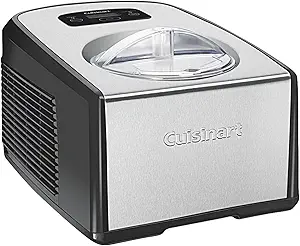 |
| Best Budget The cheapest option that still gets the job done reliably | Hamilton Beach Ice Cream Maker 68330N |  |
| Top Rated A top-rated pick with lots of positive feedback | Cuisinart Ice Cream Maker ICE-30BCP1 |  |
| Most Popular A crowd favorite that many people choose with confidence | Ninja CREAMi NC301 |  |
| Best Seller A high-volume bestseller chosen again and again | Whynter ICM-201SB Ice Cream Maker |  |
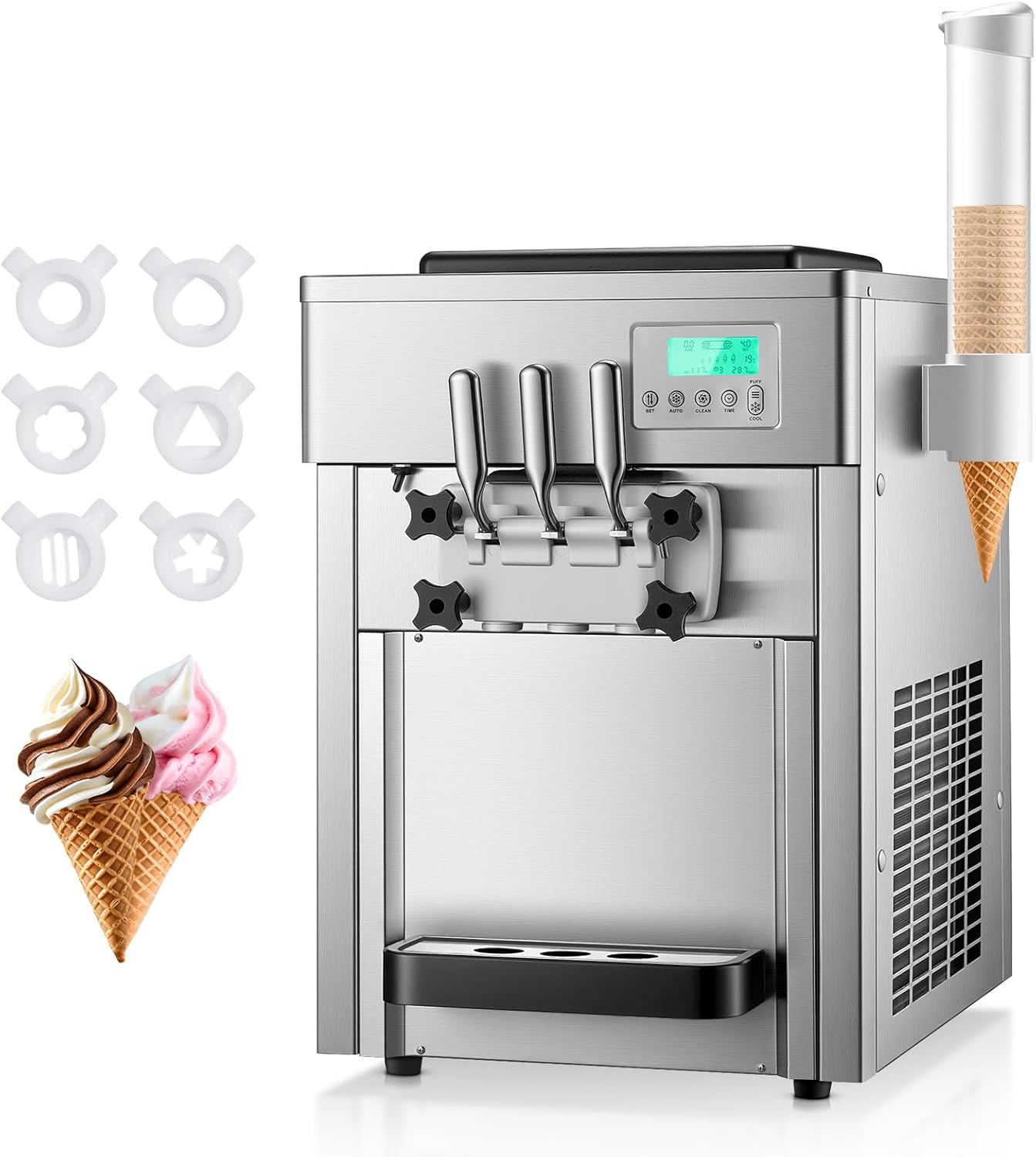
FOHERE Commercial Soft Serve 818B
| Capacity | 8 liters |
|---|---|
| Material | Stainless Steel |
| Operation Mode | Automatic |
| Other Special Features | Automatic Clean, Keep Cool Function, Low Noise, Anti-Slip Base |
This FOHERE 818B commercial soft-serve machine is built for small-to-medium foodservice operations that need steady production and simple operation. It uses a high-performance compressor and stainless steel exterior to freeze mixes quickly—factory claims show a first freeze in about 25 minutes and subsequent cycles in roughly 6 minutes—while two 4L hoppers feed three dispensing heads for two single flavors plus a mixed option. Controls are automatic with pre-cooling and a keep-cool preservation mode to protect mix quality between shifts, and features like automatic cleaning, an anti-slip base, removable drip tray, and external cone holder make daily service easier. The machine is designed for countertop placement and emphasizes durability and low noise for front-of-house use. Important limitations are its substantial weight and footprint for smaller kitchens and the need for regular maintenance and cleaning to keep consistent texture and hygiene in a commercial setting. For balanced businesses that need reliable multi-flavor soft serve without overly complex controls, this model offers a practical mix of capacity and convenience.
Best for: Small cafes, dessert shops, and foodservice operators who want a straightforward, reliable soft-serve machine that delivers multiple flavors and steady production without complex setup.
Less Ideal for: Very small businesses or mobile vendors with tight space or weight limits, and operations that prefer a portable or lower-capacity unit.
- Dual 4L hoppers with three dispensers allow two single flavors plus a mixed flavor for menu variety
- Fast freeze cycle with high-efficiency compressor supports frequent consecutive batches
- Stainless steel construction and removable drip tray simplify cleaning and durability
- Automatic operation with pre-cooling and keep-cool function preserves mix quality between uses
- Heavy and large countertop footprint can be difficult to place in small kitchens
- Commercial maintenance and regular cleaning are required to maintain performance
Verdict: A dependable countertop commercial soft-serve machine that delivers multi-flavor service and consistent production for small to mid-size businesses.
VEVOR Commercial 3-Flavor Ice Cream Machine

| Power | 2200W |
|---|---|
| Production | 20–28 L/hour |
| Capacity | 6 L x 2 |
| Operation Mode | Automatic |
| Material | Stainless Steel |
This VEVOR commercial soft-serve machine is built for steady, high-volume service in small shops and stalls. It uses a 2200W compressor and dual 6L hoppers to deliver roughly 20–28 liters per hour and supports a 2+1 flavor configuration for variety. Key controls sit on an LED panel that handles hardness adjustment, puffing (air incorporation), pre-cooling keep-fresh mode, a low-mix alarm and a one-touch self-clean cycle, which simplifies operation during busy shifts. The built-in puffing pump and hopper agitation aim to improve texture and yield compared with basic machines, and the unit reaches the first batch in about 13–17 minutes with faster subsequent cycles. Construction is stainless steel for easier cleaning and durable daily use. Trade-offs to consider are the machine's large footprint and weight for a countertop model and the need to follow recommended mix ratios and fill levels to avoid noise or performance issues. For teams that need continuous output and on-the-fly texture control, this model is a practical production-focused choice.
Best for: Operators who prioritize steady production and on-demand texture control for a small commercial setting and need a machine that can handle continuous service and flavor variety.
Less Ideal for: Home users or very low-volume vendors who cannot accommodate the unit's weight, footprint, or production capacity should consider smaller or simpler machines instead.
- High production rate (20–28 L/hour) suitable for sustained service periods
- Dual 6L hoppers and 3-flavor dispensing for menu variety and continuous output
- LED controls with hardness, puffing, keep-fresh and low-mix alarm simplify busy operation
- Built-in puffing pump and hopper agitation improve texture and increase yield
- Stainless steel construction and one-touch self-cleaning support durability and maintenance
- Heavy and relatively large for a countertop unit, requiring sturdy placement and sufficient space
- Requires correct mix ratios and consistent hopper fill to avoid noise or inconsistent freezing
Verdict: Choose this machine if you need a durable, production-focused countertop soft-serve unit that delivers continuous output and adjustable texture for a small commercial operation.
Cuisinart ICE-100 1.5-Quart Ice Cream Maker

| Capacity | 1.5 quarts |
|---|---|
| Operation Mode | Automatic |
| Other Special Features of the Product | Programmable |
| Material | Steel |
The Cuisinart ICE-100 is a compressor-driven countertop machine that produces 1.5-quart batches of ice cream, gelato, frozen yogurt, or sorbet without pre-freezing a bowl. It is used like a small commercial unit: add your chilled base, select automatic operation, and the machine churns with a 60-minute countdown timer and an LCD touchpad while a Keep Cool function holds temperature for 10 minutes after churning. Notable features include a built-in compressor so you can make batch after batch, two dedicated paddles for ice cream and gelato for better texture control, and a see-through lid for adding mix-ins while it runs. For business use, the programmable automatic cycle and compressor readiness reduce downtime compared with freezer-bowl machines, and the steel construction looks sturdy for frequent use. The trade-offs are its modest 1.5-quart capacity per batch, which limits throughput for high-volume demand, and its footprint and weight mean it needs a dedicated counter spot and careful handling during cleaning and movement.
Best for: Buyers who need a reliable, ready-to-run countertop machine that delivers consistent small batches with minimal setup and predictable timing for cafe or dessert-shop service.
Less Ideal for: Operators who require large single-batch volumes or very high throughput should consider larger-capacity commercial machines instead.
- Compressor-driven so no pre-freeze bowl required and immediate repeat batches are possible
- Two dedicated churning paddles for better texture control between ice cream and gelato
- Programmable automatic operation with 60-minute countdown and Keep Cool hold for convenience
- Steel construction and commercial-style design suited to frequent use
- See-through lid lets you add mix-ins while churning
- 1.5-quart batch size limits production speed for busy commercial service
- Relatively heavy and sizable for a countertop unit, requiring dedicated space
Verdict: A ready-to-run compressor ice cream maker that delivers consistent, professionally textured 1.5-quart batches ideal for small-scale business service.
Hamilton Beach Ice Cream Maker 68330N

| Capacity | 4 quarts |
|---|---|
| Operation Mode | Automatic |
| Other Special Features of the Product | Detachable Freezer |
The Hamilton Beach 68330N is a straightforward, automatic ice cream maker designed for home kitchens and small gatherings. You freeze the detachable 4‑quart bowl ahead of time, pour in your base and mix‑ins, then assemble the unit, add ice and rock salt to the outer bucket, and turn it on; the machine churns for roughly 20–40 minutes until the mixture firms. Its large capacity makes it practical for serving multiple people in one batch, and the detachable freezer bowl simplifies cleanup and storage compared with built‑in compressor models. The metal construction feels sturdy and the automatic operation removes the need for manual cranking, but it does rely on pre‑freezing the bowl and using ice and salt, which adds prep and space requirements for frequent commercial use. Hand washing is recommended for care, and the unit is intended for residential settings rather than continuous heavy duty shifts. For occasional catering, tasting events, or small shop demos the machine delivers easy-to-make frozen desserts; for sustained business production a compressor model would be more efficient.
Best for: Buyers looking for an affordable, easy-to-use machine to make large single batches for tastings, pop‑ups, or occasional business demos will appreciate its simplicity and capacity.
Less Ideal for: Operators who need continuous, high-volume production or fast back-to-back batches should choose a commercial compressor ice cream maker instead.
- Generous 4‑quart capacity suitable for family portions or small groups
- Detachable freezer bowl that chills the mix without built‑in compressor complexity
- Automatic operation eliminates hand cranking and simplifies use
- Metal construction gives a durable feel for countertop use
- Requires pre‑freezing the removable bowl and using ice and rock salt for operation
- Designed for residential use and not intended for continuous commercial production
Verdict: This is a budget-friendly, easy-to-use 4‑quart machine that makes attractive single batches for small-scale demos or occasional business use.
Cuisinart Ice Cream Maker ICE-30BCP1

| Capacity | 1.23 liters |
|---|---|
| Operation Mode | Automatic |
| Other Special Features of the Product | Programmable |
| Material | Plastic, Stainless Steel |
The Cuisinart ICE-30BCP1 is a countertop automatic ice cream maker designed to churn ice cream, frozen yogurt, sorbet, and frozen drinks with minimal user input. You freeze the double-insulated bowl in advance, pour in your base, and the heavy-duty motor and paddle handle mixing and aeration while the wide ingredient spout makes adding mix-ins simple during the run. Programmable, automatic operation and retractable cord storage make it easy to set up and store, and the brushed stainless steel housing is durable and easy to wipe clean. Because the bowl requires prior freezing, the machine works best for batch or occasional production rather than continuous commercial runs, and its 2-quart capacity limits output per cycle. For a small shop or a business testing recipes, it delivers consistent, fast results; for high-volume commercial service you would need a compressor-style or larger capacity unit.
Best for: Small businesses or food entrepreneurs who need a reliable, easy-to-use countertop machine for recipe testing, limited batches, or occasional retail service and value predictable, consistent performance.
Less Ideal for: High-volume commercial kitchens or shops that need continuous production, faster throughput, or larger single-batch capacity should choose a compressor or commercial-grade machine instead.
- Double-insulated freezer bowl chills mix effectively for smooth texture
- Fully automatic heavy-duty motor handles churning without supervision
- Large ingredient spout allows adding mix-ins mid-cycle
- Programmable operation and compact footprint suit countertop use
- Requires pre-freezing the bowl so you cannot run back-to-back batches without downtime
- 2-quart capacity limits output for sustained commercial service
Verdict: Choose this model if you want a dependable, countertop automatic churner that delivers consistent small batches for recipe development or limited retail service.
Ninja CREAMi NC301

| Capacity | 1 pints |
|---|---|
| Included Components | (2) 16 oz. pints, Creamerizer Paddle, Motor Base |
| Operation Mode | Automatic |
| Material | Stainless Steel |
| Power | 800W |
The Ninja CREAMi NC301 is a compact countertop unit that transforms a frozen 16‑oz pint into scoopable ice cream, gelato, sorbet, milkshakes or smoothie bowls in minutes using Creamify Technology and a Creamerizer paddle. You prepare a base, freeze it in the included pint for about 24 hours, then process on one of seven one-touch programs; a Re-spin option refines texture if the first pass is too firm. It ships with two dishwasher-safe pints and a recipe guide, and the motor base includes a digital display, built-in timer and automatic shutoff for predictable runs. For small-scale foodservice or tasting stations, the machine delivers consistent single‑serve portions and lets you control ingredients for specialty or dietary offerings. Important practical limits: output is one 16‑oz pint at a time and each pint needs full freezing beforehand, so throughput is low compared with commercial batch freezers and you must plan freezing/storage logistics. The unit is stainless steel and easy to clean, but it is designed for home/residential use rather than high-volume continuous service.
Best for: Small businesses or tasting operations that need a reliable, ingredient-controlled way to offer single-serve frozen desserts and prioritize consistent, high-quality texture over high throughput.
Less Ideal for: Businesses that require continuous, high-volume production or larger batch sizes should consider commercial batch freezers or higher-capacity equipment instead.
- Seven one-touch programs for consistent textures across ice cream, gelato, sorbet, milkshakes and more.
- Creamify Technology and re-spin function produce smooth, scoopable results from frozen bases.
- Includes two 16‑oz dishwasher-safe pints and removable Creamerizer paddle for easy cleanup and portion control.
- Digital display, built-in timer and automatic shutoff make runs predictable and simple to operate.
- Processes one 16‑oz pint at a time so production speed is limited for commercial use.
- Requires freezing each pint for about 24 hours, adding storage and scheduling needs.
Verdict: Choose the Ninja CREAMi NC301 if you need a compact, easy-to-use way to produce consistent, single‑serve frozen desserts with precise ingredient control for small-scale hospitality or tasting setups.
Whynter ICM-201SB Ice Cream Maker

| Capacity | 2.1 quarts |
|---|---|
| Material | Stainless Steel |
| Operation Mode | Automatic |
| Other Special Features | Built-In Timer, Motor Protection Function |
The Whynter ICM-201SB is a compact countertop ice cream maker with a built-in compressor so you do not need to pre-freeze the bowl, which makes it practical for repeated batches. It is used by loading your pasteurized mix, selecting run time on the soft-touch LCD, and letting the machine churn and freeze automatically; the included stainless steel removable bowl and BPA-free churn blade simplify cleaning and handling. Notable features include continuous-use compressor cooling, an extended cooling mode to keep finished mixes from softening, and a motor protection function that stops churning if the motor is overloaded. In a small commercial setting this model can reliably produce several 2-quart batches per shift without freezer turnaround, and its upright, space-saving footprint fits behind a counter. The trade-offs are capacity and throughput: at 2.1 quarts per batch it suits low-volume business use but will be slower than larger purpose-built commercial machines, and the unit is designed for residential power and duty cycles rather than heavy industrial loads.
Best for: Small food businesses or startups that need a dependable, low-risk countertop machine to make fresh ice cream, gelato, or sorbet in small batches without freezer prep.
Less Ideal for: High-volume shops or establishments that need continuous large-batch production should choose a larger commercial-grade machine with higher capacity and industrial duty ratings.
- Built-in compressor eliminates the need to pre-freeze the bowl for continuous batches
- Removable stainless steel bowl and BPA-free churn blade make cleanup and handling straightforward
- Extended cooling and motor protection functions help maintain texture and protect the unit during use
- Soft-touch LCD timer provides simple, repeatable control for consistent batches
- 2.1 quart capacity limits throughput for medium to high-volume commercial operations
- Designed for residential power and duty cycles rather than heavy continuous commercial use
Verdict: Choose this self-cooling, 2.1-quart compressor unit if you need a reliable, low-risk countertop machine for making multiple small batches without pre-freezing.
Choosing the Right Ice Cream Maker for Business: Key Factors to Consider
Batch Capacity
Batch capacity determines how much ice cream you can produce per cycle and directly affects how well the machine matches your sales volume. For low-traffic setups, a smaller batch size reduces holding time and waste. For higher-volume operations, larger batch vats or machines with continuous-freeze capability let you produce more servings without constant interruption. Consider both single-batch volume and whether the machine supports back-to-back cycles with minimal cooldown lag.
Continuous Output Rate
Continuous output rate measures how many liters or servings you can produce per hour under realistic working conditions. In service environments, the ability to maintain a steady output during peak hours prevents long customer wait times and reduces the need for multiple machines. Machines with higher throughput often have stronger motors, better heat-exchange systems, and more aggressive refrigeration components. Match the indicated output rate to your busiest service period rather than average demand to avoid bottlenecks.
Sanitation and Cleanability
Sanitation is critical for businesses because food-safety inspections and repeat service demand easy, thorough cleaning. Look for units with smooth, food-grade surfaces, components designed for tool-free removal, and minimal seams or crevices where product can accumulate. Some commercial machines support Clean-In-Place or straightforward disassembly to reach internal contact surfaces. Time required for cleaning between shifts and during service will factor into staffing and downtime costs, so prioritize machines that reduce cleaning time while meeting regulatory standards.
Durability and Serviceability
Durability affects long-term operating cost and reliability. Commercial ice cream makers should have robust motors rated for continuous cycles, corrosion-resistant materials in contact with ingredients, and well-supported mechanical parts like gears and seals. Serviceability is equally important: machines designed for easy access to common wear items, with available replacement parts and clear maintenance procedures, minimize downtime. Consider warranty terms and whether the design allows routine preventive maintenance without specialized tools.
Temperature Control and Consistency
Precise temperature control ensures consistent texture and quality from batch to batch. Machines that maintain a stable freeze point and provide adjustable settings help you produce a range of textures from soft-serve to firmer gelato. Good heat-exchange design and responsive thermostats reduce cycle variability caused by ambient conditions or heavy use. Consistent temperature control also shortens the time needed to reach serving consistency, improving throughput and product predictability.
Footprint and Installation Needs
Physical footprint and installation requirements determine where the machine can fit in your existing workspace and what infrastructure is needed. Larger commercial models may require dedicated counter or floor space, ventilation clearance, and specific electrical services. Some models need direct drain access or a water supply for cleaning or refrigeration support. Evaluate available space, staff workflow, and local codes when selecting a machine to avoid costly modifications or impractical placements.
Matching Machine Size to Your Business
Estimate peak-period servings to pick a machine size that prevents service bottlenecks. A unit that handles peak demand with a small buffer reduces the need for multiple machines and lowers labor overhead for monitoring and switching batches.
Also consider how often you want to change flavors. Larger batch machines reduce the frequency of cycles but increase leftover inventory if you rotate flavors frequently. Smaller continuous-freeze models let you switch more often with less waste but may struggle during peak rushes.
- Low-volume: prioritize smaller batches and faster changeover
- Mid-volume: balance batch size and cooldown speed
- High-volume: favor continuous output and larger vats
Workflow and Kitchen Integration
Place the machine where staff can access it easily during service, with nearby storage for mix, toppers, and serving tools. Think about the sequence of steps from mix prep to freezing to dispensing, and design counters to minimize cross-traffic.
Ensure there is adequate electrical capacity and clearance for ventilation. Some units benefit from flat, stable surfaces and may need floor anchoring or vibration damping in high-frequency environments.
- Plan for safe ingredient staging and quick access to cleaning supplies
- Allow space for cooling and airflow to maintain performance
Sanitation Best Practices for Ice Cream Equipment
Establish a cleaning schedule that fits your service pattern and meets local health regulations. Include daily contact-surface cleaning, a deeper weekly disassembly for internal components, and periodic checks of seals and gaskets.
Use recommended cleaning agents and procedures to avoid damaging food-contact surfaces or refrigeration components. Document the cleaning process and train staff to perform it efficiently to reduce downtime and maintain compliance.
- Rinse immediately after use to prevent residue buildup
- Use manufacturer-recommended food-safe sanitizers
- Keep a maintenance log for inspections and part replacements
Energy Use and Operating Costs
Commercial freezers and compressors are a significant portion of operating cost. Compare models by power draw during active cycles rather than idle wattage alone to understand true consumption during service.
Efficient refrigeration and insulated vats reduce run-time and energy use. Factor in expected daily operating hours when estimating annual energy expense and consider machines that offer standby modes or programmable schedules to cut idle consumption.
- Check rated amps and recommended circuit requirements
- Consider insulation and compressor efficiency for long shifts
Texture, Mix Formulation, and Recipe Flexibility
Different machines handle mix formulations differently. Some units work best with standard dairy mixes, while others can accommodate higher overrun or mix-ins without stress. Verify that the machine provides the control you need for the textures you plan to serve.
If you offer sorbets, frozen yogurt, or dairy-free options, choose a machine with adjustable settings for overrun and firmness to maintain consistent results across recipes.
- Look for adjustable overrun or firmness controls
- Test a range of recipes during setup to calibrate settings
How We Chose the Best Ice Cream Maker for Business
We prioritized machines that deliver reliable output and can withstand frequent use in a commercial setting. Key evaluation criteria included batch capacity and continuous output rate to match different service volumes; construction and component durability focusing on metals, bearings, and motor duty cycle; sanitation and ease of cleaning including tool-free disassembly, FDA-compliant surfaces, and CIP-friendly designs; temperature control and freeze consistency to achieve repeatable texture; and serviceability including access to replacement parts and straightforward maintenance procedures. We excluded small domestic units and novelty countertop models that lack the duty cycle and hygiene features needed in a business environment. We also filtered out any machine with unclear specifications for continuous operation or limited manufacturer guidance on cleaning. The final shortlist emphasizes quantifiable specs and design features that matter for daily commercial use.
Our full evaluation process is outlined in our review methodology.
FAQ
How often should I clean a commercial ice cream maker?
Daily cleaning of all food-contact surfaces is usually required, with deeper disassembly and sanitation at least weekly depending on use. Follow local health codes and the manufacturer cleaning schedule to prevent bacterial buildup and flavor cross-contamination.
What capacity do I need for a small cafe?
For a small cafe, estimate your busiest hour and choose a machine that can produce enough servings in that time plus a safety margin. Often a mid-size batch or a small continuous unit is sufficient, balancing changeover frequency and waste.
Can I run a commercial ice cream maker on a standard outlet?
It depends on the model. Many commercial units require dedicated circuits or higher-voltage service. Check the electrical specifications and plan installation with an electrician to ensure safe, reliable operation.
How long do commercial ice cream machines typically last?
With regular maintenance and proper cleaning, commercial machines can last many years. Longevity depends on duty cycle, build materials, service access, and how promptly wear items like seals and bearings are replaced.
Is it better to have one large machine or multiple smaller units?
The best option depends on your menu flexibility and peak demand. One large machine simplifies maintenance but can lead to more leftover product when rotating flavors. Multiple smaller units allow simultaneous flavors and redundancy but increase space and cleaning needs.
Final Verdict
Selecting the right ice cream maker for business use comes down to matching capacity, sanitation features, and durability to your service model. Prioritize machines that handle your peak output reliably, allow efficient cleaning, and provide stable temperature control for consistent texture. Factor in installation needs and maintenance accessibility to minimize downtime. Balance tradeoffs between larger-batch efficiency and smaller-unit flexibility based on how often you change flavors and the practical constraints of your workspace. With a focus on throughput, cleanability, and serviceability, you can choose a machine that supports consistent product quality and daily operations.