
Note: This article contains affiliate links. If you click on these links and make a purchase, we may earn a small commission at no extra cost to you. This helps support our research and content. Read our full affiliate disclosure here.
When you live on the road, having a dependable ice maker for RVs can make hot days, drinks, and meal prep much easier. Space, power availability, and ice output matter more in mobile kitchens than in traditional homes, so choosing the right unit affects convenience and campsite planning. This guide highlights seven shortlisted ice makers that suit RV use and explains the practical tradeoffs you should weigh, from footprint and noise to power consumption and water hookup options. Read on for clear criteria that match common RV setups and a short explanation of why each shortlisted option made the list.
Top Picks at a Glance
| Best Overall The best all-around choice for most situations | EUHOMY Nugget Ice Maker |  |
| Best Quality Built to a higher standard if you want something more solid | GoveeLife Smart Nugget Ice Maker Pro H8120 |  |
| Best Value The sweet spot between price and what you get | Antarctic Star Countertop Ice Maker | 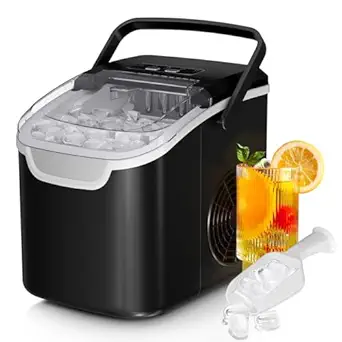 |
| Best Budget The cheapest option that still gets the job done reliably | Crzoe Countertop Ice Maker |  |
| Top Rated A top-rated pick with lots of positive feedback | Antarctic Star Countertop Ice Maker IM5812XH |  |
| Most Popular A crowd favorite that many people choose with confidence | EUHOMY Countertop Ice Maker IM001-B |  |
| Best Seller A high-volume bestseller chosen again and again | Frigidaire 26 lb Countertop Ice Maker |  |
EUHOMY Nugget Ice Maker

| Capacity | 34 pounds |
|---|---|
| Ice Production per Day | 26 pounds |
| Wattage | 15.63 watts |
| Voltage | 115 volts |
| Refrigerant | R600a |
This compact EUHOMY nugget ice maker delivers soft, chewable pebble ice quickly, producing a batch every 6 to 8 minutes and up to 34 pounds per day under ideal conditions. It is designed as a countertop, portable unit with a built-in handle, removable top cover, and a 1.2 quart water tank feeding a 1.8 pound removable ice basket, so it is easy to move into an RV galley or small kitchenette and monitor through the large viewing window. Controls include simple ice/clean buttons with a 15-minute self-clean cycle and indicators for "ice full" and "add water," which help keep operation straightforward. The unit runs quietly at under 50 dB and is energy conscious, claiming roughly 3 kWh daily, though real-world production will vary by ambient temperature. Expect routine emptying and occasional manual cleaning; the plastic construction and modest basket size mean this is best for small groups rather than continuous heavy use. Overall, it offers fast nugget ice in a space-conscious package suited to mobile or small-space living.
Best for: Buyers who want a portable, space-saving nugget ice maker for an RV, small kitchen, or occasional entertaining and value fast, chewable ice over large-capacity output.
Less Ideal for: People who need continuous, high-volume ice for large groups or commercial use should consider larger-capacity or built-for-duty machines instead.
- Fast cycle time with nugget ice ready in about 6 to 8 minutes
- Compact, portable design with built-in handle suited for tight spaces
- Simple controls with auto-clean function and helpful "ice full" and "add water" indicators
- Quiet operation under 50 dB for use in confined or sleeping areas
- Small removable ice basket means frequent emptying for multiple users
- Plastic construction is less durable for heavy or long-term continuous use
Verdict: A compact, quiet nugget ice maker that fits RV life and small spaces by delivering fast, chewable ice without taking up much counter space.
GoveeLife Smart Nugget Ice Maker Pro H8120

| Capacity | 60 pounds daily |
|---|---|
| First ice time | 6 minutes |
| Noise level | 40 dB |
| Water tanks | Dual tanks (2.2L + 4.9L) |
The GoveeLife H8120 is a countertop nugget ice maker built to deliver fast, soft ice on demand for busy households or mobile setups. It produces first batches in about six minutes and can make up to 60 pounds of ice per day using a dual-tank design that reduces refill frequency and yields over 15 pounds per single fill. The unit emphasizes quiet operation with an AI NoiseGuard system that detects and suppresses disruptive evaporator noises to keep running near 40 dB, which is useful in confined spaces. Smart features include an app with scheduling, voice control, a 4.45-inch touchscreen, and two self-cleaning modes (quick and deep) to simplify maintenance. Practical limits for RV use are weight and footprint compared with purpose-built RV models, and it needs a reliable power source for peak output. The H8120 is best when you prioritize rapid production, app convenience, and low noise, but expect it to behave like a full-size countertop ice maker rather than a lightweight travel unit.
Best for: Buyers who need restaurant-style nugget ice quickly in a mobile or small living space and prioritize production speed, noise control, and smart scheduling.
Less Ideal for: Travelers who require a very compact, lightweight ice maker or those relying solely on limited battery power should consider smaller, low-draw alternatives instead.
- Very high daily production up to 60 lb for sustained heavy use
- Fast first-ice time (~6 minutes) for quick needs
- Ultra-quiet operation around 40 dB with AI noise suppression
- Smart app and voice control plus touchscreen for remote scheduling
- Two self-cleaning modes reduce manual descaling and upkeep
- Relatively heavy and large for tight RV spaces compared with compact RV-specific models
- Requires steady power for peak daily output, not optimized for battery-only setups
Verdict: If you want the fastest, quietest countertop nugget ice output for heavy RV-style use, the GoveeLife H8120 delivers high production with smart controls.
Antarctic Star Countertop Ice Maker

| Ice Production per Day | 26 pounds |
|---|---|
| Capacity | 26 pounds |
| Wattage | 88 watts |
| Voltage | 28 volts |
This Antarctic Star countertop ice maker is a small, portable unit designed to deliver bullet-shaped ice quickly for home or mobile use. It produces ice on a roughly six-minute cycle and the manufacturer rates daily output at about 26 pounds, which is useful for topping up coolers, drinks, or a small onboard fridge during trips. The unit includes a removable basket, scoop, and a handle for carrying, and a one-touch self-clean cycle that helps reduce odors and simple maintenance. With an emphasis on energy efficiency the motor and design are claimed to reduce power draw versus larger machines, and operating noise is advertised under 40 dB so it stays unobtrusive in an RV or campsite. Practical limits include the modest ice-basket capacity, so you will need to transfer ice to a cooler for larger gatherings, and the 28 volt listing suggests it is intended for standard household or compatible mobile power setups rather than direct 12V hookup. For routine portable use, it balances output, footprint, and convenience well.
Best for: Buyers wanting a compact, low-noise ice maker to supply drinks on the road or at small gatherings who prioritize portability, quick batch cycles, and easy maintenance.
Less Ideal for: Those who need continuous large-volume ice for big parties or commercial use should choose a higher-capacity unit or a chest-style ice maker instead.
- Produces bullet ice in about six minutes, enabling frequent small batches
- Compact, portable footprint with a carry handle for easy RV placement
- One-touch self-cleaning cycle helps keep ice flavor neutral
- Energy-saving design and low advertised noise make it RV-friendly
- Small internal basket requires frequent emptying or transfer for larger needs
- Voltage listed as 28 volts may need an inverter or adapter for some RV systems
Verdict: A portable, low-noise countertop ice maker that fits RV use when you want quick batches and easy upkeep rather than bulk ice production.
Crzoe Countertop Ice Maker

| Capacity | 26 pounds |
|---|---|
| Wattage | 87 watts |
| Voltage | 120 volts |
| Ice Production per Day | 26 pounds |
| Refrigerant | R600a |
This compact Crzoe countertop ice maker is a portable solution for small spaces that needs fresh ice quickly. It produces nine bullet-shaped ice cubes per cycle in roughly 6–12 minutes and claims up to 26 pounds of ice in 24 hours, which is useful for short trips, beverages, and small gatherings. The unit holds about 1.3 pounds of ice and 1.2 liters of water, and includes a handle, ice basket and scoop for easy transport and storage. Controls are simple and a transparent lid lets you monitor progress, and the self-cleaning mode helps reduce maintenance. The R600a compressor is designed for relatively quiet operation and modest energy use, making it suitable for sleeping areas in an RV when placed away from direct sunlight. Expect limitations common to compact makers: small onboard water and ice capacity means frequent refills and it is sized for occasional use rather than continuous heavy demand.
Best for: RVers or travelers who need an inexpensive, portable ice maker for short trips, tailgates, or campsite use and prioritize compactness and ease of use.
Less Ideal for: People who need large continuous ice production for long trips, big parties, or commercial use should choose a larger or built-in system instead.
- Fast first cycle with 9 bullet-shaped cubes ready in 6–12 minutes
- Portable, lightweight design with handle, included ice basket and scoop
- Self-cleaning mode simplifies maintenance
- Quiet compressor operation suitable for close quarters
- Produces up to 26 lbs of ice per day for intermittent use
- Small internal water and ice reservoirs require frequent refills for extended use
- Designed for light to moderate demand rather than continuous heavy use
Verdict: A budget-friendly, compact ice maker that delivers quick bullet-shaped ice and quiet operation—ideal for RVers who need occasional ice on the road.
Antarctic Star Countertop Ice Maker IM5812XH

| Capacity | 1.5 liters |
|---|---|
| Wattage | 150 watts |
| Voltage | 115 volts |
| Ice Production per Day | 27 pounds |
| Refrigerant | R600a |
This Antarctic Star countertop ice maker is a compact, plug-and-play machine built to make bullet-shaped ice fast for small gatherings or mobile use. The compressor-driven unit makes nine ice bullets in about six minutes and claims up to 27 pounds of ice per day, and you can switch between two cube sizes from the LED control panel. It includes a 1.5 liter water tank and a roughly 1.1 pound ice basket so multiple cycles run before refilling or emptying, and reminder lights tell you when water is low or the basket is full. A one-button auto-clean mode simplifies maintenance compared with hand scrubbing. The slim footprint and lightweight build make it easy to stow or move in an RV or tiny galley, and the R600a refrigerant and 150 W power draw are typical for portable ice makers. Expect the usual limits of a compact unit: ice storage is small and performance will be lower than built-in or commercial freezers, so plan cycles around demand rather than continuous heavy use.
Best for: Buyers who prioritize a dependable, easy-to-use portable ice maker for RVs and small mobile kitchens where quick, regular ice production and minimal maintenance matter.
Less Ideal for: Not a good fit for users needing large onboard ice storage or continuous commercial-level ice production on the road.
- Fast cycle time makes nine bullet ice pieces in about six minutes
- Two selectable ice sizes for faster cooling or slower melt depending on use
- 1.5 L water tank and 1.1 lb ice basket reduce the need for frequent refills during short trips
- LED controls with reminder lights and a one-button auto-clean simplify operation and upkeep
- Compact, lightweight countertop design suitable for tight spaces like RV kitchens
- Limited ice storage capacity requires planning for sustained high demand
- Not designed for continuous heavy-duty or commercial use
Verdict: A compact, reliable countertop ice maker that delivers fast bullet ice and low-maintenance operation ideal for RVs and small mobile kitchens.
EUHOMY Countertop Ice Maker IM001-B

| Ice Production per Day | 26 pounds |
|---|---|
| Capacity | 26 pounds |
| Wattage | 170 watts |
| Voltage | 115 volts |
The EUHOMY countertop ice maker is a portable countertop unit designed to make bullet-style ice quickly for outings like RV trips, small gatherings, or kitchen use. It uses a 170W compressor and a 1.2L water tank to produce ice cycles in about 6 minutes and a claimed daily capacity of roughly 26 pounds, while the included basket holds about 1.3 pounds ready to grab. Controls are simple: add water, press power, and the front indicators tell you when to add water or when the ice bin is full; there is also a one-touch 30-minute auto-clean function. The unit is lightweight with a carrying handle, reasonably quiet in operation at under 45 dB, and comes with a scoop and basket for immediate use. Limitations to note are the small internal storage and water tank, which mean you will need to refill for continuous high-volume use, and the daily production figure is best-case and depends on ambient temperature and placement. For RV use the compact footprint, low noise, and fast cycles make it convenient, but it is not a substitute for larger built-in or commercial machines when you need long continuous runs of ice.
Best for: Buyers who prioritize a compact, low-noise, quick-start ice maker for short trips, tight counter spaces, or occasional entertaining in an RV or small living area and who value visible indicators and easy maintenance.
Less Ideal for: People who need continuous high-volume ice for large parties or commercial use should choose a larger undercounter or dedicated unit instead.
- Fast 6-minute ice cycles for quick batches
- Compact, lightweight design with carry handle for portability
- Quiet operation reported under 45 dB suitable for small spaces
- Simple controls with full and add-water indicators and auto-clean mode
- Includes basket and scoop so it is ready to use out of the box
- Small onboard ice storage and 1.2L tank require frequent refills during heavy use
- Daily production rate is conditional on ambient temperature and may be lower in RV heat
Verdict: A portable, quiet countertop ice maker that delivers fast bullet ice and easy operation, ideal for RVs and small-space entertaining.
Frigidaire 26 lb Countertop Ice Maker

| Ice Production per Day | 26 pounds |
|---|---|
| Capacity | 26 pounds |
| Wattage | 105 watts |
| Voltage | 120 volts |
The Frigidaire 26 lb Countertop Ice Maker is a portable countertop unit designed to produce bullet-style ice quickly for home, office, or small mobile setups. It makes nine bullet-shaped cubes every seven minutes and offers two size settings controlled from a simple LED panel, while a transparent viewing window lets you watch production without opening the lid. The unit holds roughly 1.5 pounds of ice in the storage basket and uses a 2.1 quart water reservoir to run multiple cycles between refills; a drain plug helps with emptying and cleaning. At 105 watts and standard 120V operation it is easy to power from a typical RV shore connection or campsite power pedestal, though it is not designed for direct 12V battery use. Practical benefits include fast production, compact footprint, and straightforward maintenance, but buyers should expect to refill the reservoir for continuous use and note it requires a stable AC supply and modest counter space.
Best for: Buyers who prioritize a dependable, easy-to-use countertop ice source for occasional entertaining in an RV or campsite where stable AC power is available and portability matters.
Less Ideal for: Users who need continuous unattended production on battery power or large built-in capacity should look for models designed for integrated RV power systems or with higher storage.
- Produces up to 26 pounds of ice per day for steady supply
- Makes nine bullet-style cubes every seven minutes for quick batches
- Two ice-size settings and a digital LED panel for easy control
- Transparent window and 2.1 qt water reservoir for convenient monitoring and fewer refills
- Requires 120V AC power and is not compatible with 12V RV outlets without an inverter
- Small internal storage basket holds only about 1.5 pounds of ice at a time
Verdict: A compact, reliable countertop ice maker that delivers fast batches of bullet ice and simple controls for RVers with access to standard AC power.
Choosing the Right Ice Maker for RVs: Key Factors to Consider
Size and Footprint
Space is at a premium in RVs, so the physical dimensions of an ice maker determine where it can live. Measure counter width, cabinet depth, and available height before choosing. A slightly taller but shallower unit can fit where a cube-style machine will not. Consider door swing and access for emptying the ice bin as well.
Footprint affects not only placement but also airflow. Units that need more clearance on the sides or rear will limit installation spots. Also factor in storage and carrying space when the unit is not in active use.
Power Consumption and Source
RVs often have limited electrical capacity, so a low-draw ice maker reduces the risk of tripping breakers or draining batteries. Check both start-up surge and steady-state power use, since compressors and pumps can spike when cycling on. If you run on inverter power, confirm the continuous draw fits within inverter output and battery capacity.
Some ice makers can run from 12V inverters, while others require standard AC hookups. Understanding how the unit integrates with shore power, generator use, or in-vehicle power systems is essential for reliable operation on long trips.
Ice Production and Storage Capacity
Production rate defines how much ice you can expect over a typical day. For occasional drinks, a modest hourly output may suffice, but for entertaining or higher needs, prioritize higher production and larger bin capacity. Also consider how quickly the unit makes its first batch; faster initial cycles are useful when you arrive at a campsite and need ice immediately.
Bin capacity matters because a small storage area will require more frequent harvesting. A machine that produces more ice than it can store still provides value if production is fast and harvesting is convenient.
Water Supply and Filling Method
RV ice makers should match your water setup. Manual-fill units are simple and avoid plumbing changes but require regular refills. Plumbable units connect to a water line and run continuously, which is convenient if your RV has an accessible water hookup. Consider filter compatibility if you have concerns about water quality or taste.
Think about freeze risk if you plan to use the unit when temperatures drop. Drainage and winterization of plumbed or machine-built water lines should be straightforward to prevent damage in cold conditions.
Noise, Ventilation, and Heat Output
Compressors and fans generate noise and heat. In the compact living space of an RV, choose a quieter machine to avoid disturbing sleep or conversations. Noise ratings or user reports about hum and fan cycles can guide expectations.
Ventilation needs also influence placement. Some units exhaust warm air from the back and require clearance, while others vent from the top. Heat output can raise interior temperatures slightly, which matters in small rigs during warm weather or when running the unit inside.
Installation Options for RV Use
Ice makers for RVs come in two main installation styles: countertop portable units and built-in or semi-integrated options. Countertop machines are the most flexible because they do not require plumbing or permanent mounting, making them ideal for renters or those who want to stow the unit when traveling. Built-in style units or those with plumb-to-water capability can be more convenient long term, but they need an appropriate cabinet cutout and access to water lines.
When choosing an installation location, prioritize airflow and easy access to empty the ice bin. Avoid cramped spots where the unit cannot get sufficient venting or where noise will be amplified against hard surfaces.
- Countertop units: easy to move and store, usually manual-fill.
- Plumbable/built-in: more convenience, requires water hookup and installation planning.
- Consider anti-slip mats and vibration dampers to reduce movement while driving.
Managing Power and Energy Use
To avoid overtaxing your RV electrical system, pick a unit with moderate continuous draw and manageable compressor cycles. If you plan to run the ice maker from an inverter, check the inverter rating and the machine's startup draw. Some owners schedule ice runs while the generator is running or overnight when batteries are being replenished.
Energy-saving habits include using the ice maker when shore power is available, minimizing unnecessary door openings, and choosing a machine with an auto-shutoff when the bin is full.
- Compare steady-state draw and startup surge specifications.
- Plan ice-making around times when shore power or generator use is available.
- Consider battery and inverter capacity if operating off-grid.
Maintenance and Winter Care
Routine cleaning keeps ice tasting fresh and prevents scale buildup. Look for easy-access removable trays and filters that can be cleaned without tools. Regularly empty the bin and run a cleaning cycle or vinegar rinse if water quality is uncertain.
Winterizing is important if the RV will be stored in freezing temperatures. Drain water lines, empty the reservoir, and follow manufacturer steps to avoid cracked components. Units that are simple to dry and store are preferable for seasonal rigs.
- Schedule monthly descaling and filter checks when in frequent use.
- Empty reservoirs before winter storage to prevent freeze damage.
- Keep replacement water filters on hand if using plumbed machines.
Maximizing Ice Output in Small Spaces
If you need more ice for guests, focus on machines with faster cycle times and larger daily output rates rather than only bin size. Harvesting frequently and using insulated containers to store ice can extend usable supply without needing a very large machine.
Position the ice maker where ambient temperature is moderate. Placing it in direct sunlight or next to heat-producing appliances reduces efficiency and slows production.
- Use multiple insulated containers to store harvested ice during peak use.
- Run the unit in cooler parts of the RV interior for steady production.
- Avoid stacking items on or against the machine to maintain airflow.
Common Installation Challenges and Fixes
Tight cabinet spaces, limited water hookups, and variable shore-power availability are common obstacles. Simple fixes can include installing flexible water lines, using quick-disconnect fittings, or adding an insulated shelf for a countertop machine. For ventilation, cutting a small rear vent in a cabinet or leaving a dedicated gap can prevent overheating.
Vibration and movement while driving can loosen fittings. Secure connections with hose clamps and check mounts periodically. If noise is an issue, rubber isolation pads under the unit can reduce transmitted sound.
- Use flexible, RV-grade water lines and properly rated fittings.
- Leave recommended clearance for ventilation or add dedicated vents.
- Secure loose connections and use anti-vibration pads as needed.
How We Chose the Best Ice Maker for RVs
We focused on attributes that directly affect everyday RV use instead of broad retail popularity. Our selection prioritized compact footprint and mounting flexibility for limited counter or cabinet space, along with low power draw and the ability to run from RV electrical systems. Ice production rate and usable daily capacity were considered to ensure units could meet small-group needs without excessive cycling. We also evaluated water supply options, including manual-fill versus plumb-to-water-connection capability, because some RV setups lack convenient pressurized water hookups. Noise levels and ventilation needs were assessed to avoid units that disturb living quarters or require significant external clearance. Finally, reliability factors such as simple controls, easy-clean access, and accessible internals were included to minimize maintenance on the road. Units with poor ventilation requirements, excessively high continuous power draw, or impractical installation demands for typical RVs were excluded from the shortlist.
Our full evaluation process is outlined in our review methodology.
FAQ
Can I run an ice maker from my RV battery and inverter?
Often, but it depends on the ice maker's steady-state and startup power draw and your inverter and battery capacity. Low-draw models are more suitable for inverter use. Verify startup surge and continuous consumption before attempting off-grid operation.
Do I need a plumbed water connection for an RV ice maker?
Not necessarily. Many RV-friendly ice makers are manual-fill and work well without plumbing. Plumbed units offer continuous operation but require access to a pressurized water line and appropriate filters.
How noisy are ice makers in an RV setting?
Noise varies by model and where the unit is placed. Compressor cycles and fans produce most sound. Placing the unit on vibration-damping pads and allowing proper clearance can reduce perceived noise in small living spaces.
What maintenance does an RV ice maker need?
Regular cleaning, descaling when mineral buildup occurs, and periodic filter replacement for plumbed units are standard. Also drain and dry the unit before winter storage to prevent freeze damage.
Will an ice maker overheat my RV interior?
Ice makers emit some heat, primarily from the compressor and fan exhaust. In a small RV, that heat can raise ambient temperature slightly. Proper ventilation and locating the unit away from sleeping areas helps manage any warmth.
Final Verdict
Prioritize footprint, power draw, and water-supply flexibility when choosing an ice maker for RVs. The right unit balances daily ice output with the limitations of your rig, such as inverter capacity and available counter space. Accept tradeoffs: smaller machines save space but need more frequent harvesting, while plumbed units add convenience at the cost of installation complexity. Focus on concrete specs like hourly production, steady-state power use, and ventilation needs to make a confident choice for your travel kitchen.