
Note: This article contains affiliate links. If you click on these links and make a purchase, we may earn a small commission at no extra cost to you. This helps support our research and content. Read our full affiliate disclosure here.
When cold weather arrives, picking the right indoor propane heater makes a big difference in comfort, running cost, and peace of mind. You want a unit that warms the space quickly, runs safely inside a living area, and is simple to operate and maintain. This guide shortlists the top indoor propane heaters and explains the practical tradeoffs between heat output, fuel efficiency, and safety systems. Each pick was selected to suit common home heating needs and space sizes rather than industrial use. Read on for a concise evaluation of the most important features and how they match typical household scenarios.
Top Picks at a Glance
| Best Overall The best all-around choice for most situations | Dyna-Glo 30,000 BTU Blue Flame Wall Heater |  |
| Best Quality Built to a higher standard if you want something more solid | Rinnai FC510P Propane Heater |  |
| Best Budget The cheapest option that still gets the job done reliably | BLAZEAL Portable Propane Heater BZ-PH-6001 |  |
| Top Rated A top-rated pick with lots of positive feedback | Mr. Heater Portable Buddy F232000 |  |
| Most Popular A crowd favorite that many people choose with confidence | Mr. Heater Little Buddy F215100 | 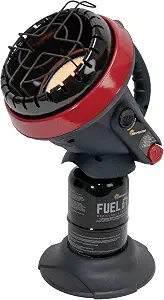 |
Dyna-Glo 30,000 BTU Blue Flame Wall Heater

| Heat Output | 30,000 BTU |
|---|---|
| Heating Coverage | 1000 square feet |
| Fuel Type | Natural Gas (or Propane) |
| Mounting Type | Wall Mount |
| Max Temperature Setting | 100 °F |
This Dyna‑Glo vent‑free wall heater uses blue flame technology and a thermostatic control to deliver up to 30,000 BTU of gas heat for indoor spaces like garages and workshops. It mounts to the wall and operates without electricity, so it can serve as dependable supplemental heat or an emergency back‑up during power outages. Notable features include the built‑in oxygen depletion sensor for safety, battery‑assisted ignition, and compatibility with natural gas or propane (dual fuel). The heater warms by convection, circulating air similar to a central system, and can be paired with an optional blower to improve distribution. Practical benefits are strong heat output for medium‑to‑large spaces and automatic temperature regulation, but buyers should confirm local codes because vent‑free units are restricted in some areas and installation requires proper clearances and gas hookups. Also, there is no integrated fan unless you buy the separate blower accessory, which can limit how quickly heat spreads in larger rooms.
Best for: Buyers who want a robust, no‑electric supplemental heater for garages or workshops and value a thermostatic, safety‑monitored gas unit that can run during power outages.
Less Ideal for: People in areas that prohibit vent‑free appliances, or those who need quiet, evenly distributed forced‑air heat without buying an additional blower accessory.
- High heat output up to 30,000 BTU for effective warming of up to ~1,000 sq ft
- Thermostatic control that automatically maintains desired temperature
- Built‑in oxygen depletion sensor for automatic shutdown if unsafe conditions occur
- Operates without electricity so it works during power outages and in unpowered spaces
- Dual fuel capability supports natural gas or liquid propane
- Vent‑free design may be restricted by local codes and is not suitable where venting is required
- No integrated fan or blower included, so heat distribution can be uneven without the optional accessory
Verdict: Choose this unit if you need a powerful, thermostatically controlled vent‑free gas heater that delivers dependable, no‑electric supplemental heat for a garage or similar indoor space.
Rinnai FC510P Propane Heater

| Heat Output | 10000 BTU |
|---|---|
| Heating Coverage | 285.7 square feet |
| Power Source | propane |
| Voltage | 120 volts |
The Rinnai FC510P is a ventless, wall-mountable propane space heater built to deliver steady, efficient warmth for single rooms. It uses forced-air convection with a radiant element to heat up to roughly 285.7 square feet and produces 10,000 BTU, while a programmable thermostat and digital adaptive control let you set and maintain a target temperature or schedule. Practical features include a cool-to-touch cabinet with a safety lock, self-diagnostics, and multiple safety cutoffs such as a flame failure device, overheat switch, oxygen depletion sensor, and tilt switch for automatic shutoff. It is intended for indoor, floor- or wall-mounted installation and runs on standard propane with 120-volt electrical connection for controls. The heater is compact and quiet in operation, making it suitable for bedrooms, offices, or modular homes, but because it is ventless it requires conscientious placement and proper installation by a qualified technician to meet local codes and ensure safe combustion air management.
Best for: Buyers who prioritize consistent, controllable room heating and want an efficient propane solution for single indoor spaces, especially where a compact, quiet unit is preferred.
Less Ideal for: People who cannot meet ventilation or code requirements for ventless appliances or who prefer zero-combustion indoor heating like electric or sealed-vent systems.
- Programmable thermostat with digital adaptive control for precise temperature scheduling
- Multiple built-in safety systems including oxygen depletion sensor and flame failure device
- Compact ventless design that provides efficient heat to a single room without ducting
- Self-diagnostics feature simplifies troubleshooting and maintenance
- Ventless operation requires adherence to local codes and careful placement for safe indoor combustion
- Professional installation is recommended, adding to initial setup cost
Verdict: A compact, safety-focused ventless propane heater that delivers controllable, efficient warmth for single-room indoor use when professionally installed.
BLAZEAL Portable Propane Heater BZ-PH-6001
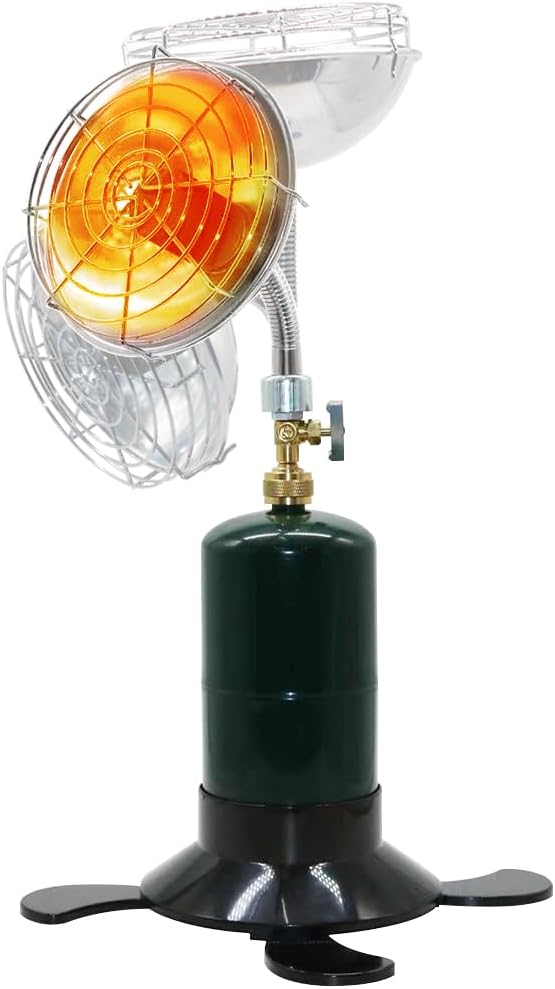
| Heating Coverage | 200 sq ft |
|---|---|
| Heat Output | 6200 BTU |
| Heating Method | Radiant |
| Fuel Type | Propane |
The BLAZEAL portable propane heater is a lightweight tabletop radiant heater designed to give quick warmth for small spaces such as a garage, tent, or patio. It runs on 1 lb propane canisters and uses an upgraded catalytic infrared burner to produce up to 6200 BTU, which the maker rates for roughly 200 sq ft of coverage. Setup is simple: attach the folding tank holder and hose, set the tilt head, and adjust the control knob to change heat output. The aluminum reflector and safety mesh guard help direct heat while protecting the element, and the brass hose fittings aim to reduce leak risk. Because it is gas powered the heater provides fast, electricity-free warmth for outdoor activities, ice fishing, or short indoor tasks where ventilation is available. Limitations include reliance on small disposable propane cylinders and no built-in thermostat or programmable controls, so temperature control is manual and run time depends on tank size. It is also best for spot heating rather than whole-room use.
Best for: Buyers who need an inexpensive, portable source of fast radiant heat for short-term indoor projects, tents, or small outdoor areas and prioritize simplicity and mobility over automated controls.
Less Ideal for: People seeking whole-room heating, long unattended operation, or a permanent indoor heating solution should consider electric or larger dedicated propane systems instead.
- Compact, lightweight tabletop design for easy transport and setup
- Upgraded catalytic infrared burner for steady radiant heat and improved wind resistance
- Rated output of 6200 BTU suitable for spot-heating up to about 200 sq ft
- Durable aluminum reflector and safety mesh guard for focused heat and user protection
- Brass hose fitting and secure tank bracket to reduce leak risk and hold 1 lb canisters
- Operates on 1 lb disposable propane tanks only, so runtime is limited by cylinder capacity
- No thermostat or programmable settings for automated temperature control
- Not intended to heat large rooms; best for localized or short-term use
Verdict: A compact, budget-friendly propane radiant heater that delivers quick spot heat for small indoor or outdoor areas when you need portable, electricity-free warmth.
Mr. Heater Portable Buddy F232000

| Heat Output | 9000 BTU |
|---|---|
| Heating Coverage | 225 sq ft |
| Fuel Type | Propane |
| Number of Speeds | 2 |
The Mr. Heater Portable Buddy is a compact radiant propane space heater built for short-term spot heating in garages, patios, and tents. It runs on a 1-lb propane cylinder (with optional adapter for larger tanks) and offers two heat settings that deliver about 4,000 or 9,000 BTU to heat roughly 225 sq ft. Primary safety features include a low-oxygen shutdown, thermal cut-out, and tip-over switch, and the unit is made from self-extinguishing materials. Practical benefits are straightforward: quick warm-up, an easy-grip handle for carry, and simple piezo ignition so you do not need batteries. Limitations are typical of portable propane units: run time is limited on a small cylinder (around 2.4 hours on high), it produces radiant rather than convective airflow so it warms people and objects more than room air, and it requires careful ventilation and safe fuel handling indoors. For reliable, short-duration heating where electric options are not practical, this unit is a sensible choice.
Best for: Buyers who prioritize a dependable, no-frills propane heater for short-term spot heating in garages, workshops, or outdoor-covered spaces and who value built-in safety features.
Less Ideal for: People needing continuous all-day heating or whole-house warmth should consider larger permanent systems or electric heaters instead.
- Compact and portable with an easy-grip handle for transport.
- Two heat settings (low and high) for flexible output up to 9,000 BTU.
- Built-in safety systems including oxygen depletion sensor, tip-over switch, and thermal shutoff.
- Piezo igniter for reliable push-button lighting without batteries.
- Short run time on a 1-lb propane cylinder, especially on high setting.
- Radiant heat does not circulate warm air, so it is best for spot heating rather than whole-room warming.
Verdict: A dependable, safety-minded portable propane heater for reliable short-term spot heating when electric heat is not an option.
Mr. Heater Little Buddy F215100
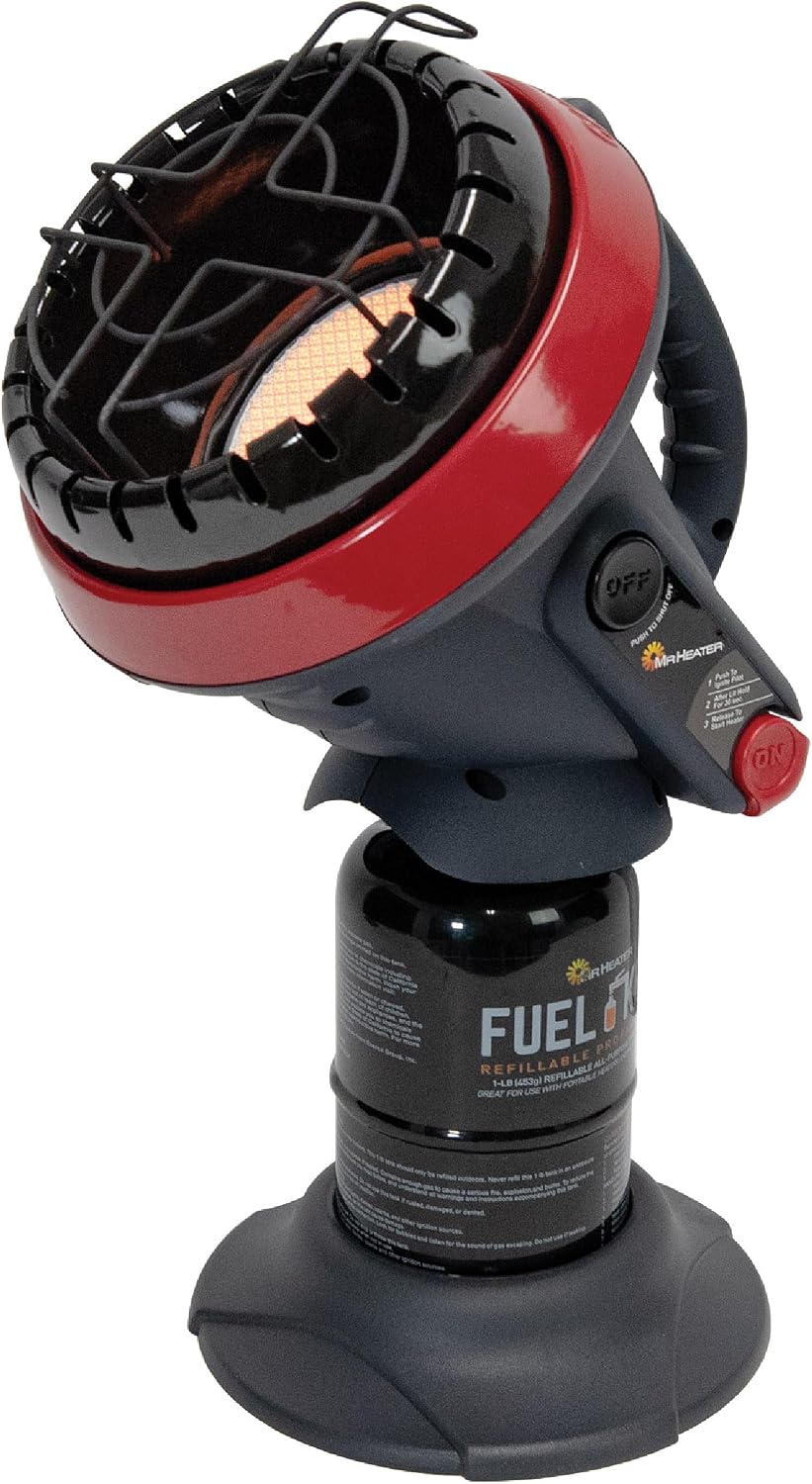
| Heat Output | 3,800 BTU |
|---|---|
| Heating Coverage | 95 |
| Fuel Type | Propane |
| Power Source | gas_powered |
| Ignition | Piezo |
The Mr. Heater Little Buddy is a compact radiant propane heater designed to warm small spaces such as tents, workshops, or a home office. It runs on a 1 lb propane cylinder and produces 3,800 BTU, which the manufacturer rates for areas up to about 95 square feet. Setup is simple thanks to a one-button piezo ignition and an 8-inch round base that keeps the unit stable while occupying minimal floor space. Built-in safety features include an oxygen depletion sensor, tip-over shutoff, cross-thread protection, and a thermocouple-backed self extinguishing system, which makes it a sensible choice for indoor use when ventilation and propane precautions are observed. Practical limits are its single heat setting and modest output, so it is best as a spot heater rather than a whole-room solution, and it requires swapping or refilling small cylinders for multi-hour sessions. Expect quiet, odor-free radiant heat that is easy to move and store, with a straightforward, safety-focused design.
Best for: Buyers who prioritize reliable safety features and quiet, portable heat for small indoor spaces or short outdoor sessions and want a no-frills heater they can move where needed.
Less Ideal for: Those needing to heat larger rooms or continuous all-night operation should consider higher-capacity or electric options instead.
- Compact and lightweight for easy transport and storage
- 3,800 BTU radiant heat suited to warming small indoor spaces
- Multiple safety features including oxygen depletion sensor and tip-over shutoff
- Simple one-button piezo ignition and stable 8-inch base
- Single heat output limits use to spot heating rather than whole-room comfort
- Runs on 1 lb propane cylinders which require replacement for extended use
Verdict: A small, safety-focused propane spot heater that reliably warms single-person spaces with quiet radiant heat.
Choosing the Right Indoor Propane Heater: Key Factors to Consider
Heat Output and Coverage
Heat output, usually rated in BTUs, determines how quickly a heater can raise air temperature and how large a room it can service. Compare the rated output against the square footage of the area you intend to heat and the typical ceiling height. A heater with insufficient BTUs will run continuously without reaching comfort, while an oversized unit can cycle inefficiently.
Also consider how heat is delivered. Radiant units warm people and objects directly and perform well in drafty or intermittently occupied rooms. Convection or forced-air-style indoor propane heaters circulate warm air more evenly for general living areas. Matching output type to the use case improves comfort and reduces fuel consumption.
Fuel Consumption and Run Time
Propane consumption varies by output setting and burner design. Check estimated burn rate and how long a standard refillable or disposable propane cylinder will run at low, medium, and high settings. Longer run times reduce the frequency of cylinder swaps and are helpful if you need heat overnight or during extended power outages.
Also factor in fuel storage and replacement logistics. If you rely on small disposable cylinders, have a plan for keeping spare cylinders accessible. If a heater accepts larger refillable tanks, ensure you can safely store and transport them and that you understand local regulations for indoor storage.
Safety Features and Indoor Certification
Indoor use requires protective systems that reduce fire and carbon monoxide risks. Look for oxygen depletion sensors that shut off the heater if room oxygen falls below safe thresholds and tip-over switches that cut fuel flow if the unit is knocked over. Automatic shutoff for flame failure and sealed combustion designs help control indoor emissions.
Verify that the heater carries relevant indoor-use certifications or clear manufacturer guidance for enclosed spaces. Safety features influence placement options and whether you can use the unit in sleeping areas, near pets, or in small rooms.
Thermostat Control and Temperature Regulation
Precise temperature control improves comfort and fuel economy. Heaters with adjustable thermostats or variable output settings can maintain a set temperature and avoid wasteful on/off cycles. Simple high/low switches are less efficient for maintaining consistent warmth but are sometimes more reliable in basic designs.
Consider whether the unit offers electronic thermostats with digital displays or mechanical thermostats. Electronic controls can offer finer temperature tuning but may require power for the control system. If you expect to use the heater during electrical outages, confirm whether the thermostat and ignition systems are battery powered or manual.
Placement, Mounting, and Portability
Where you plan to use the heater affects the style you should choose. Portable tabletop or floor models are convenient for moving between rooms and for temporary use. Wall-mounted or built-in designs free floor space and provide a more permanent heating solution.
Consider clearance requirements around the unit for safe operation and whether it needs a stable surface or mounting hardware. Portability also includes weight and handle design for carrying cylinders and the heater itself. If you intend to use the heater in multiple rooms, choose a model that balances weight with durable construction.
Maintenance, Cleaning, and Longevity
Routine maintenance preserves safe operation and heating efficiency. Heaters with accessible burner areas and removable panels are easier to clean of dust and debris that can impair combustion. Check whether filters or screens are removable and whether ignition components are user-serviceable.
Also consider the availability of replacement parts for valves, seals, and ignition modules. Simpler mechanical designs can be easier to troubleshoot, while more complex electronically controlled units may offer convenience at the cost of more specialized repairs.
Sizing Your Heater to Room Type
Different rooms have different heating needs. For bedrooms and small home offices, lower-BTU radiant units can provide comfortable local warmth without overheating the space. For open-plan living areas or garages, choose higher-BTU heaters or models designed to circulate warm air more broadly.
Measure the room area and multiply by a standard BTU-per-square-foot guideline for your climate and insulation level. Also account for high ceilings, large windows, and doorways that open frequently. When in doubt, step one size up to ensure the heater can maintain set temperatures on very cold days.
- Bedrooms and small rooms: lower BTU radiant or small convection units
- Living rooms and garages: higher BTU units or forced-air designs
- Intermittent use areas: portable units with quick startup
Indoor Safety Best Practices
Place the heater on a stable, level surface away from foot traffic, curtains, furniture, and combustible materials. Observe the recommended clearances in all directions and keep children and pets at a safe distance while the heater is running.
If the unit includes an oxygen depletion sensor or automatic shutoff, do not disable or bypass these systems. Ventilation matters even with indoor-rated designs; open a window slightly during prolonged operation to prevent stale air buildup and to help disperse any combustion byproducts.
- Keep at least the manufacturer-recommended clearance from walls and furniture
- Do not use extension hoses or modified fittings not specified for indoor use
- Store spare fuel cylinders outdoors and follow local regulations
Ignition and Power Considerations
Consider how the heater ignites. Piezo or battery ignition systems are handy when power is unavailable, while electronic ignitions with digital thermostats may require a power source. Manual match-lit options are less common for indoor-rated heaters but eliminate dependence on batteries.
If you plan to use the heater during a power outage, verify that the control and safety systems remain functional on battery power or that the unit can operate safely without external power. Reliable ignition and obvious indicator lights improve ease of use and reduce the chance of operator error.
- Battery or piezo ignition for off-grid reliability
- Electronic controls for precise temperature management
- Clear status indicators for flame and safety sensor operation
Ventilation and Indoor Air Quality
Even indoor-rated propane heaters can affect air quality. Models with sealed combustion draw air from outside and vent exhaust outdoors, minimizing indoor emissions. Non-sealed designs rely on careful placement and ventilation to reduce carbon monoxide and moisture buildup.
Use carbon monoxide detectors in the same room as the heater and adjacent sleeping areas. Keep an eye on humidity and condensation, since combustion can add moisture to indoor air and increase the risk of mold in poorly ventilated spaces.
- Prefer sealed combustion for best indoor air quality
- Install CO detectors on the same level as the heater
- Monitor for excess moisture when running heaters for long periods
Storage and Cylinder Handling
How you store and swap propane cylinders matters for safety and convenience. Store spare cylinders in a cool, ventilated outdoor area away from direct sunlight and ignition sources. Use recommended connectors and inspect hoses and valves regularly for cracks or leaks.
When changing cylinders, follow a clear sequence: shut off the heater, allow it to cool, disconnect per instructions, and check for leaks after reconnection. Keep a wrench or the specified tool handy so connections are secure and you avoid cross-threading or damaging fittings.
- Store cylinders outdoors in an upright position
- Inspect hoses and connections before each use
- Follow a safe cooldown procedure before cylinder changes
How We Chose the Best Indoor Propane Heater
We prioritized models that balance usable heat delivery with features that make indoor use safe and manageable. Our selection filters focused on measurable specifications and real-world operation: rated heat output in BTUs and coverage area, fuel consumption and run time per standard propane cylinder, presence and reliability of oxygen depletion sensors and automatic shutoff, thermostat or variable heat control, and build features that affect longevity and indoor emissions control. We also considered ease of ignition and re-ignition, maintenance access for routine cleaning, and portability or mounting options for indoor placement. Models were excluded if they were rated only for outdoor or well-vented spaces, lacked certified indoor-safety features, used nonstandard fuel connections that complicate typical home use, or did not provide clear manufacturer documentation for indoor operation. The goal was to surface heaters that are practical for living rooms, garages with limited ventilation, and other enclosed spaces where people spend time, focusing on safety, predictable heat delivery, and everyday convenience.
Our full evaluation process is outlined in our review methodology.
FAQ
Can I safely run an indoor propane heater overnight in a bedroom?
It depends on the heater design and safety features. Only use units certified for indoor use that include oxygen depletion sensors and automatic shutoff. Ensure adequate ventilation and have a working carbon monoxide detector in the bedroom and adjacent areas.
How often do I need to replace or refill propane cylinders?
How often depends on the heater's burn rate and how many hours per day you run it. Most small cylinders last several hours on high heat, while larger refillable tanks can run much longer. Plan for spare cylinders if you use the heater for extended periods.
Are sealed combustion units necessary for indoor heating?
Sealed combustion helps maintain indoor air quality by drawing combustion air from outside and venting exhaust outdoors. They are not strictly required for every indoor application, but they are a safer choice when continuous or long-term indoor operation is expected.
What maintenance does an indoor propane heater typically need?
Routine maintenance includes clearing dust from the burner and intake areas, inspecting hoses and fittings for wear, testing safety shutoffs, and replacing batteries in ignition or control systems. Regular checks prevent combustion issues and maintain efficient operation.
Can I use a heater designed for larger spaces in a small room?
You can, but an oversized heater may cycle frequently and create uncomfortable temperature swings. It can also pose clearance and safety challenges in confined spaces. Choose a unit sized appropriately for the room or use variable output with a reliable thermostat.
Final Verdict
Choosing the right indoor propane heater requires balancing heat output, fuel logistics, and safety features. Prioritize units with appropriate BTU ratings for your room size, reliable safety systems such as oxygen depletion sensors and tip-over shutoffs, and controls that match how you plan to use the heater. Consider ventilation and air-quality impacts, and plan for safe cylinder storage and maintenance. With those tradeoffs in mind, pick the model that best aligns with how often and where you will use it to ensure safe, efficient indoor warmth.