
Note: This article contains affiliate links. If you click on these links and make a purchase, we may earn a small commission at no extra cost to you. This helps support our research and content. Read our full affiliate disclosure here.
If you quilt, a standard household iron is not always enough. Quilting requires controlled heat, accurate steam delivery, and a soleplate that glides without snagging delicate cottons and blends. The right iron makes seams lie flat, simplifies pressing blocks, and helps maintain fabric integrity over repeated use. This guide presents seven shortlisted irons for quilting chosen for their consistent temperature control, steam performance, and user-friendly features. We evaluate each pick across practical criteria quilters care about and explain what to prioritize when choosing an iron for patchwork and applique. Read on to find an iron that supports accurate, fabric-safe pressing and speeds your workflow.
Top Picks at a Glance
| Best Overall The best all-around choice for most situations | oliso M3Pro Project Iron |  |
| Best Quality Built to a higher standard if you want something more solid | oliso TG1600 ProPlus SmartIron |  |
| Best Value The sweet spot between price and what you get | BEAUTURAL Steam Iron 1800W |  |
| Best Budget The cheapest option that still gets the job done reliably | PIOMATIC Mini Travel Iron PM0803 |  |
| Top Rated A top-rated pick with lots of positive feedback | BEAUTURAL Mini Travel Iron |  |
| Most Popular A crowd favorite that many people choose with confidence | BLACK+DECKER Easy Steam Iron IR40V |  |
| Best Seller A high-volume bestseller chosen again and again | BLACK+DECKER Classic Steam Iron F67E-T |  |
oliso M3Pro Project Iron

| Wattage | 1000 watts |
|---|---|
| Voltage | 110 volts |
| Frequency | 50 hertz |
| Base Material | Ceramic |
The oliso M3Pro Project Iron is a small, high-powered steam iron built for detailed sewing and quilting work as well as travel use. Its 2-inch precision tip and Diamond Ceramic-Flow soleplate let you reach seams, bindings, and applique corners with controlled gliding, while the built-in LED ProLight reduces shadows so stitch lines stay visible on dark prints. The iron heats quickly thanks to 1000 watts and offers a 3-position fabric selector for reliable temperature control across synthetics, silks/wools, and cotton/linen. Steam-on-demand and a focused burst function give you targeted moisture when pressing blocks or seams, and the 1.7 fl oz tank plus 8-foot cord make it easy to use in a studio or on the go. The ergonomic mouse-grip handle and included silicone Solemate make longer pressing sessions less fatiguing. Limitations include a small water tank that requires more frequent refills during long projects and a compact footprint that may feel less stable than full-size irons for very large quilts, but its portability and precision are strong positives for detailed patchwork and garment work.
Best for: Quilters and sewists who value precision pressing and portability, and who work on detailed blocks, bindings, and garment construction where a pointed tip and good visibility matter.
Less Ideal for: People who primarily press very large quilts or need long continuous steam sessions without refilling should choose a full-size iron with a larger water reservoir and heavier soleplate.
- 2-inch precision tip for reaching seams, corners, and appliqué details
- Built-in LED ProLight to illuminate fabric ahead of the soleplate
- 1000W heating power and Diamond Ceramic-Flow soleplate for quick heat-up and smooth glide
- Ergonomic mouse-grip design and included silicone Solemate reduce hand fatigue during long sessions
- Automatic dual-voltage and compact size make it travel-ready
- Small 1.7 fl oz water tank requires frequent refills during extended pressing
- Compact body may feel less stable than a full-size iron when pressing very large quilts
Verdict: Buy this if you want a precise, travel-ready iron that lights your fabric and reaches tight seams for quilting and detailed sewing work.
oliso TG1600 ProPlus SmartIron

| Wattage | 1800 watts |
|---|---|
| Voltage | 120 volts |
| Special Features | Auto Lift, 12-foot 360 degree pivot cord, 30 minute Auto Shut-off |
| Base Material | Ceramic |
The oliso TG1600 ProPlus SmartIron is built for heavy use by sewists and quilters who need dependable heat, steam, and hands-free safety. Its 1800 watt heater and TriplePlay steam system deliver strong continuous and burst steam for flattening seams, pressing blocks, and setting creases, while the 2-inch precision detailer tip and extra-large flat soleplate make it easy to finish intricate areas. The signature iTouch auto-lift lowers the iron when you grasp the handle and lifts it when you release, protecting fabric from scorch marks and reducing wrist strain during long sessions. Practical touches include a 12.7-ounce side-fill tank for longer steaming between refills, a long 12-foot 360-degree swivel cord for room mobility, and a 30-minute auto-off for safety. The diamond ceramic-flow soleplate glides smoothly and resists sticky buildup, but the iron is heavier than travel models and its professional features add cost and complexity for casual users. For makers who press a lot, it speeds workflow and reduces fabric risk; occasional users may find it more iron than they need.
Best for: Quilters, sewists, and craft makers who press frequently and prioritize strong steam output, precise tip control, and hands-free fabric protection during long sessions.
Less Ideal for: People who only need an occasional or travel iron or who prefer a very lightweight, minimal appliance for simple touch-ups.
- Powerful 1800W heating with strong continuous and burst steam for stubborn wrinkles and thick fabrics
- iTouch auto-lift system protects fabric from scorches and reduces wrist strain during long pressing sessions
- Large 12.7 oz side-fill water tank lets you steam longer between refills
- Diamond ceramic-flow soleplate provides even heat distribution and smooth gliding
- 12-foot 360-degree swivel cord gives ample reach and maneuverability in a sewing room
- Heavier and more feature-rich than basic irons, which may be unnecessary for casual users
- Professional features and larger size increase cost and storage footprint
Verdict: A performance-focused iron made for serious quilters and sewists who need heavy-duty steam, precise pressing, and fabric-safe auto-lift functionality.
BEAUTURAL Steam Iron 1800W
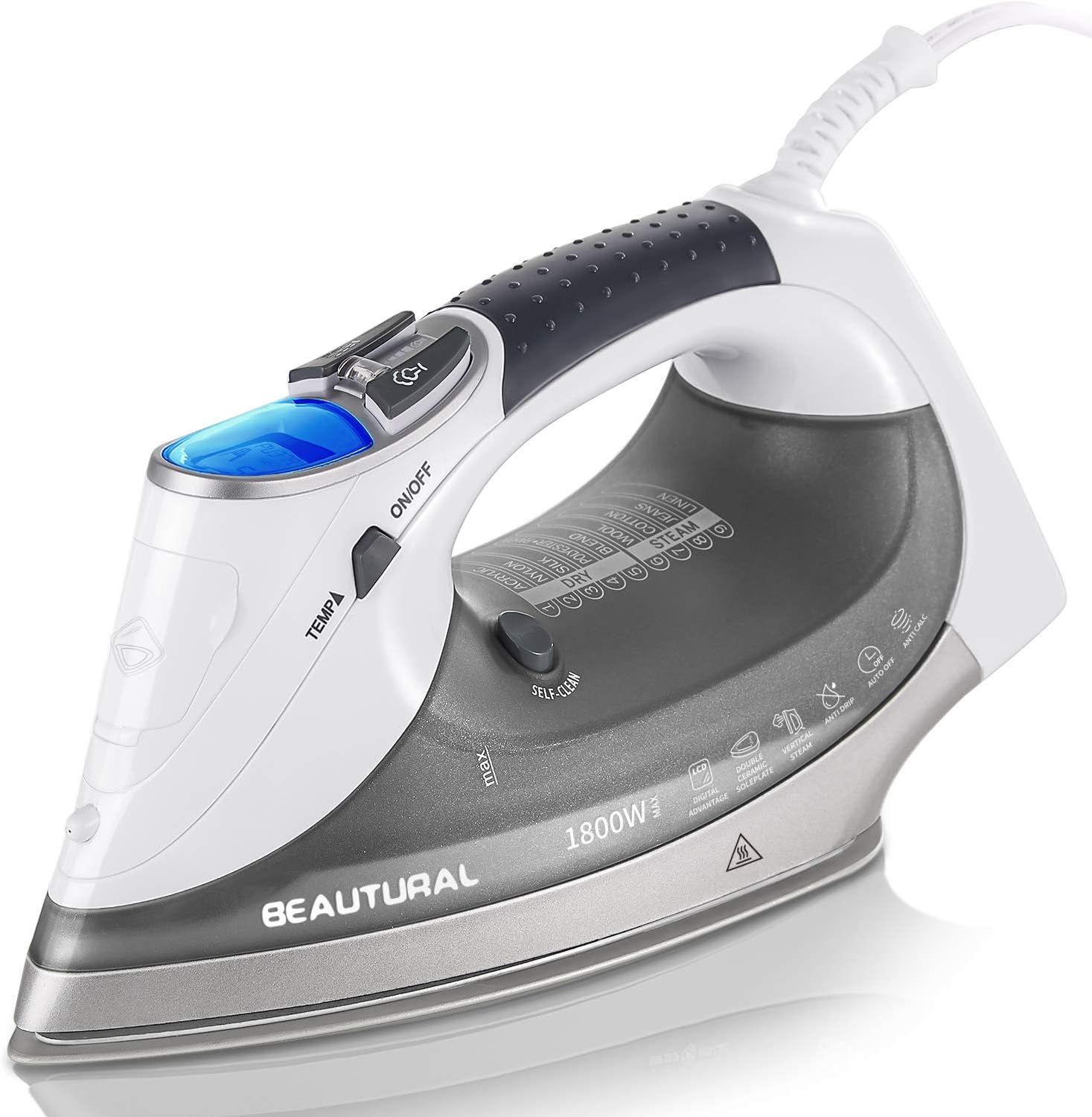
| Wattage | 1800 watts |
|---|---|
| Voltage | 120 volts |
| Frequency | 60 hertz |
| Special Features | Auto Shutoff, Corded, Non-Stick, Self-Cleaning |
This iron targets accurate, worry-free pressing with features that matter for quilting and fabric work. The digital LCD and nine preset temperature settings let you pick the right heat for everything from delicate silks to heavy cottons and denim, reducing the risk of scorch marks on mixed-fabric projects. The double-layer ceramic-coated soleplate is designed to glide smoothly and resist scratching, which helps when pressing seams and bulky quilt layers. Steam bursts, a spray mist, and an 1800W heater deliver stronger, quicker steam for flattening thick batting or multiple fabric layers. Practical extras include a self-cleaning routine and an anti-calcium system to limit mineral buildup, plus a motion-sensing three-way auto shutoff for safety. The iron is corded and fairly standard in size and weight, so it is not a travel specialty, and the LCD/preset workflow may add a small learning curve versus a simple dial. Still, for frequent sewing and quilting use it combines precise temperature control and reliable steam performance in a user-friendly package.
Best for: Quilters and dedicated sewers who prioritize precise, repeatable temperature control and strong steam to press seams, appliqués, and multiple fabric layers safely and efficiently.
Less Ideal for: Casual users who only need a simple, lightweight travel iron or those who prefer analog dial controls for very fast basic pressing.
- Clear LCD with nine fabric presets for accurate temperature selection
- Double-layer ceramic-coated soleplate that glides and resists scratches
- 1800W heating and steam burst function for effective pressing of thick layers
- Self-cleaning and anti-calcium features to reduce mineral buildup and maintenance
- Three-way motion-sensing auto shutoff improves safety during long sewing sessions
- Not designed as a compact travel iron and is a standard corded model
- Preset/LCD controls may take a short time to learn compared with a simple dial
Verdict: For quilting projects that need repeatable temperature settings and strong steam to press bulky seams, this iron delivers precise control and dependable steam performance.
PIOMATIC Mini Travel Iron PM0803

| Special Features | Dual Voltage, Non-Stick |
|---|---|
| Wattage | 400 watts |
| Voltage | 230 volts |
| Frequency | 50 hertz |
The PIOMATIC Mini Travel Iron is a lightweight, dual-voltage mini iron aimed at travel and small sewing or quilting tasks. It heats to a single temperature (about 320°F) and offers five steam outlets plus a detachable water tank for roughly eight minutes of continuous steam, making it useful for quick presses, seam flattening, and touching up small fabric pieces. The non-stick stainless steel soleplate helps glide over fabrics and the heel rest and cord storage improve handling and packing. Because it supports 100–240V with a clear voltage selector, it works internationally when the correct setting is chosen. The trade-offs are its limited steam runtime, single temperature control rather than adjustable heat settings, and modest 400W power, so it will be slower on thicker batting or multiple fabric layers compared with full-size irons. For quilting and handiwork it excels at precise, portable pressing and on-the-go fixes but is not a replacement for a full-size steam iron for heavy repetitive pressing.
Best for: Quilters and craft hobbyists who need an inexpensive, portable iron for pressing seams, applique, and small projects or for taking to classes and retreats.
Less Ideal for: People who need a high-capacity, adjustable full-size steam iron for heavy batting, long sewing sessions, or continuous large-scale pressing.
- Dual-voltage design works in 100–240V regions for travel and international use
- Non-stick stainless steel soleplate provides smooth gliding over fabric
- Detachable water tank with about 8 minutes of continuous steam for quick steaming tasks
- Very lightweight and compact for easy packing and handheld precision
- Single fixed temperature limits control for different fabric types
- Short steam runtime and lower wattage make it less efficient for heavy or repeated pressing
Verdict: A budget-friendly, travel-ready mini iron that gives quilters a portable, dual-voltage tool for precise small-press tasks and on-the-go fixes.
BEAUTURAL Mini Travel Iron

| Wattage | 420 watts |
|---|---|
| Voltage | 110240 volts |
| Special Features | Dual Voltage, Non-Stick |
| Frequency | 50 hertz |
The BEAUTURAL Mini Travel Iron is a small, travel-ready steam iron that doubles as a handy tool for quilting and sewing projects. It heats quickly (about 40 seconds) and offers a voltage selector for 110–240V use, so you can work on projects at home or on the road. The ceramic non-stick soleplate and five steam outlets provide steady glide and continuous steam for pressing seams, appliqué, and small fabric pieces, while the steam on/off switch and three temperature settings let you match heat to delicate fabrics like silk or heavier cotton. Cord storage and a six-foot cord keep the unit tidy and easy to position on a craft table. At 420 watts it is less powerful than full-size irons, so larger pressing tasks take longer and the small soleplate means more passes on big pieces, but for precision work and portability it is well suited. Practical, portable, and straightforward controls make it a useful backup or dedicated quilting iron for travel and tight workspaces.
Best for: Quilters who need a reliable, portable iron for on-the-go pressing, small piecing, and delicate fabric work and who value consistent basic controls and global compatibility.
Less Ideal for: People who routinely press large quilts, long seam allowances, or heavy fabric bundles should choose a full-size, higher-wattage iron for faster, continuous work.
- Dual voltage for worldwide use
- Ceramic non-stick soleplate with five steam outlets for smooth pressing
- Three temperature settings and steam on/off for fabric-specific control
- Compact size and cord storage for easy travel and tidy storage
- Smaller soleplate and lower wattage mean slower pressing on large quilts or bulky fabrics
Verdict: Choose this compact dual-voltage iron when you want a dependable, craft-friendly press that travels easily and handles precise quilting tasks.
BLACK+DECKER Easy Steam Iron IR40V

| Wattage | 1200 watts |
|---|---|
| Voltage | 120 volts |
| Frequency | 50 hertz |
| Special Features | Anti-Drip, Auto Shutoff, Lightweight, Non-Stick Soleplate, Spray & Steam Burst Setting |
The BLACK+DECKER Easy Steam Iron IR40V is a straightforward steam iron designed for routine fabric care and wrinkle removal. It uses SmartSteam technology to adjust steam output based on the fabric setting, and offers an easy-fill translucent water tank plus a push-button spray for stubborn wrinkles. The TrueGlide nonstick stainless steel soleplate helps the iron move smoothly across cottons and blends, and the 3-way auto shutoff adds safety when the iron is left idle on its heel, side, or soleplate. At 1200 watts it heats up reasonably fast and the ergonomic comfort-grip handle with a 360 degree pivot cord makes it easy to maneuver around seams and quilt blocks. For quilting tasks it handles common fabrics and pressing seams well, though it lacks specialty settings like a fine-temperature gauge for delicate interfacing or a large water tank for marathon pressing sessions. The unit is lightweight and simple to use, making it a sensible choice for quilters who want reliable, no-frills pressing for piecing and general pressing.
Best for: Quilters who want a reliable, easy-to-use steam iron for everyday pressing and seam work and who prioritize safety and simplicity over advanced temperature controls.
Less Ideal for: Users who need a heavy-duty iron with large water capacity or precise digital temperature control for specialty fabrics and prolonged professional pressing.
- SmartSteam automatically adjusts steam level by fabric setting to simplify ironing
- TrueGlide nonstick stainless steel soleplate for smooth movement over seams and fabrics
- 3-way auto shutoff provides added safety when left idle
- Ergonomic comfort-grip and 360° pivot cord improve maneuverability during long pressing sessions
- Relatively small water tank may require frequent refills during extended quilting presses
- No fine digital temperature display or specialty settings for delicate interfacing
Verdict: A safe, no-frills steam iron that reliably handles everyday quilting pressing and seam work for hobbyists who value simplicity.
BLACK+DECKER Classic Steam Iron F67E-T

| Wattage | 1100 watts |
|---|---|
| Voltage | 120 volts |
| Frequency | 50 hertz |
| Special Features | Auto Shutoff |
The BLACK+DECKER Classic Steam Iron is a no-frills garment iron that combines a durable aluminum soleplate with steam and dry ironing modes for everyday pressing tasks. It offers eight temperature settings with a fabric guide printed on the housing, so you can match heat to quilt fabrics and batting types without guessing. Steam helps tackle stubborn creases while the anti-drip design reduces water spots when pressing at lower temperatures. Practical touches include a pointed tip and groove for navigating seams, a pivoting cord for better reach, and an automatic shutoff that powers the unit after inactivity for added safety. At 1100 watts the iron heats up reasonably quickly and the aluminum soleplate glides smoothly across cotton and blends; however it lacks advanced soleplate coatings or continuous professional steam output found on higher-end irons. For quilters this iron handles routine pressing and seam work well but it is not a substitute for a dedicated steam press or professional finishing tools.
Best for: Quilters who prioritize a reliable, easy-to-use iron with clear temperature controls and built-in safety for regular piecing and pressing tasks.
Less Ideal for: Users who need a commercial-level continuous steam iron or a dedicated steam press for large quilt projects and professional finishing.
- Aluminum soleplate that glides smoothly across fabric and around seams
- Eight temperature settings with a printed fabric guide for safe heat selection
- Steam or dry modes plus anti-drip design to reduce water spotting
- Auto-shutoff provides extra safety when left unattended
- Pointed tip and groove help press seams, collars, and tight areas accurately
- No advanced steam reservoir or continuous professional steam output for heavy-duty pressing
- Aluminum soleplate lacks premium coated finishes found on higher-end models
Verdict: A dependable, safety-minded steam iron that gives quilters straightforward temperature control and solid pressing performance for everyday sewing and piecing.
Choosing the Right Iron for Quilting: Key Factors to Consider
Temperature Control and Accuracy
Quilting uses a mix of fabrics that respond differently to heat. Precise, repeatable temperature settings reduce the risk of scorching lightweight cottons or under-pressing thicker batting seams. Digital or clearly calibrated dials help you target the proper setting for cotton, batting facings, and any fusible adhesives you may use.
Look for irons with quick, stable recovery so the iron returns to the set temperature after extended pressing. Consistent thermostat performance keeps blocks uniform and prevents the need for repeated passes that can distort seams.
Steam Performance and Control
Even, controllable steam is critical for pressing quilt seams flat without over-wetting layers. Adjustable steam settings let you back off for lightweight piecing or increase moisture for stubborn creases and pressed-in seams. A reliable steam shot is helpful for targeted steam on thick seam allowances.
Anti-drip features prevent water spotting on fabric at lower temperatures. If you often use starch or spray sizing, a steam system that resists clogging and is easy to descale will extend the iron's useful life.
Soleplate Material and Glide
The soleplate determines how smoothly the iron moves over multiple fabric layers and trims. A nonstick or polished stainless surface reduces the chance of dragging across seams, batting, or applique edges. Even heat distribution across the soleplate ensures one pass yields consistent results across a block.
Avoid plates that chip or have rough edges, which can catch threads. Easy-to-clean finishes are useful when you press fusible web or starch so residue does not transfer to fabrics.
Ergonomics and Handling During Long Sessions
Quilters often press for extended periods, so an iron's weight, grip shape, and balance matter. Too-heavy irons can fatigue wrists and shoulders; too-light irons may require more passes. Look for comfortable handle contours and accessible controls so you can change settings without interrupting workflow.
A stable heel rest and secure cord or retractable cord system reduce accidental tipping and make interruptions less likely. Consider the overall feel in your dominant hand and how the iron maneuvers when pressing small pieces and narrow seams.
Water Tank Capacity and Maintenance
Tank size affects how often you need to refill mid-project. Larger tanks reduce interruptions, but the iron should still be easy to fill quickly and without spills. A removable or wide-mouthed fill opening makes topping up faster when you are in the middle of pressing blocks.
Maintenance features such as easy descaling, accessible steam vents, and replaceable filters extend service life, especially if you live in an area with hard water. Anti-drip and self-clean options reduce the chance of water marks on fabrics.
Precision Features for Quilting Tasks
Small, precise features make a big difference in quilting. A pointed tip helps press into narrow corners and along seam intersections. Variable steam burst and spray options let you target problem areas without wetting the entire piece. Some irons include a vertical steam mode useful for pressing hanging pieces or removing wrinkles from finished quilts.
Consider supplemental features like a low-temperature setting for fusible web, a visible water level, and filters that protect internal channels from mineral buildup. These conveniences reduce mistakes and keep your quilting workflow efficient.
Why Quilting Demands Different Iron Characteristics
Quilting differs from general garment pressing because you are often working with multiple fabric layers, narrow seam allowances, and heat-sensitive adhesives. That combination requires an iron that offers accurate control rather than brute power.
An iron tuned for quilting helps you produce crisp seams without distorting blocks, prevents scorch marks on light fabrics, and gives you the ability to press both large sections and tiny pieced units with confidence.
- Multiple-layer pressing needs steady heat and steam distribution
- Pointed tips and smooth soleplates improve control on small pieces
- Anti-drip systems and descaling matter when using frequent steam
Best Practices for Pressing Quilt Seams
Press seams flat instead of ironing back and forth to avoid stretching fabric. Use the tip of the iron to press seam intersections and small corners, and apply steam sparingly on delicate fabrics to avoid distortion.
Press seams open on blocks where bulk matters, and press to one side where traditional construction calls for it. Use a pressing cloth or low heat for delicate or dark fabrics to protect surface texture and color.
- Press, do not iron, to maintain shape
- Use the iron tip for precise control around seams
- Employ a pressing mat or seam roll for three-dimensional areas
Care and Maintenance to Keep an Iron Quilting-Ready
Regular maintenance prevents mineral buildup and ensures consistent steam delivery. Flush and descale according to the manufacturer's guidance or use distilled water when practical to reduce deposits.
Keep the soleplate clean of starch or fusible residue by wiping with a damp cloth when cool and using recommended cleaning agents for stubborn marks. Store the iron upright on a stable rest to avoid accidental fabric scorch during projects.
- Descale periodically to prevent clogs
- Wipe the soleplate after use to remove residue
- Use distilled water if your tap water is hard
Tools and Accessories That Complement an Iron for Quilting
A dedicated pressing surface, such as a wool pressing mat or a seam roll, lets you achieve flat, rounded, or sculpted seams as needed. These surfaces reflect heat back into the fabric and reduce the number of passes required.
Heat-resistant pressing cloths protect delicate fabrics and can prevent shine or scorch marks. A small spray bottle for targeted moisture and a reliable ironing board sized for quilt blocks make pressing more efficient.
- Wool pressing mat for faster, crisper presses
- Seam roll for tubular or three-dimensional sections
- Pressing cloths for delicate fabrics and fusible work
Setting Up Your Workspace for Efficient Pressing
Arrange your ironing board at a comfortable height and keep tools within reach to reduce interruptions. Maintain a clear workflow: fabric pieces, iron, pressing surface, and a place to set pressed blocks should be laid out in sequence.
Good lighting and a stable board surface help you see seam allowances and ensure even pressure. If you work on large quilts, consider a wide board or portable table that supports the fabric without dragging it during pressing.
- Keep a towel or board extension for larger pieces
- Place a small table for holding pressed units
- Use even, bright lighting to inspect seams and fabric grain
How We Chose the Best Iron for Quilting
We focused on features that directly affect quilting results and workshop workflow. Key evaluation criteria included precise temperature control to protect different fabric types, adjustable steam output and shot-of-steam for flattening seams, and soleplate materials that provide smooth glide without sticking to starch or fusible web. We also weighed ergonomics and weight, since quilters press for long sessions and need an iron that feels comfortable and balanced. Durability and the quality of temperature sensors and thermostats were considered to ensure consistent performance over months of frequent use. Safety and convenience features such as stable heel rests, anti-drip systems at low temperatures, and easy-to-fill tanks were part of the selection filters. We excluded irons designed solely for heavy industrial pressing or steam-generator systems that are impractical for typical home quilting setups. We prioritized units that combine home-shop practicality with the specific control and gentleness quilting demands. The final list reflects a balance of precise heat management, reliable steam delivery, comfortable handling, and maintenance-friendly design.
Our full evaluation process is outlined in our review methodology.
FAQ
Can I use steam when pressing cotton quilt blocks?
Often yes. Moderate steam helps relax fibers and set seams, but use a controlled amount to avoid over-wetting. For delicate trims or when using fusible adhesives, reduce steam or use a pressing cloth.
Is a heavier iron better for quilting?
It depends. A moderate weight helps press through multiple layers with fewer passes, but overly heavy irons cause fatigue during long sessions. Choose one that balances pressing power with comfortable handling.
Should I use distilled water in my iron for quilting?
Usually recommended if your tap water is hard. Distilled water reduces mineral buildup, which helps maintain consistent steam output and reduces the need for frequent descaling.
How do I avoid shiny marks on fabrics when pressing?
Use a pressing cloth or lower the temperature for sensitive fabrics. Press with steady, short contacts rather than rubbing, and avoid excessive steam or starch that can leave residue.
What soleplate finish is best for moving over seams and appliques?
A smooth, polished stainless or well-coated nonstick soleplate provides reliable glide over seams and applique edges. Avoid coarse or scratched plates that can catch threads.
Final Verdict
Choosing the right iron for quilting means prioritizing control, predictability, and comfort. Emphasize accurate temperature settings, reliable steam management, and a smooth soleplate so you can press seams flat without damaging fabrics. Balance tank capacity and maintenance needs with ergonomics to minimize interruptions during long projects. Ultimately, pick an iron that matches your typical quilting tasks: precise tip and fine steam control for intricate piecing, steady heat and larger tanks if you press many blocks at once. Focus on consistent performance and ease of use to make pressing a reliable part of your quilting workflow.