
Note: This article contains affiliate links. If you click on these links and make a purchase, we may earn a small commission at no extra cost to you. This helps support our research and content. Read our full affiliate disclosure here.
When you need dependable warmth in a large room, a kerosene heater can deliver high heat output and long run times without relying on the electrical grid. Choosing the right kerosene heater for large rooms matters because insufficient output leaves cold spots and oversized units waste fuel and create safety concerns. This guide shortlists top kerosene heaters suited to spacious living areas, basements, and workshops and explains the practical features that affect daily use. We evaluated units for steady heat delivery, run time per fill, safety features, and ease of use so you can pick a heater that fits your room size and operating routine. Read on for the key considerations and owner-focused guidance before the product rundown.
Top Picks at a Glance
| Best Overall The best all-around choice for most situations | Reddy Heater RFA80T 80,000 BTU |  |
| Best Quality Built to a higher standard if you want something more solid | DEWALT 80,000 BTU Kerosene Heater |  |
| Best Value The sweet spot between price and what you get | VEVOR 9000 BTU Kerosene Heater |  |
| Best Budget The cheapest option that still gets the job done reliably | ehozirta Kerosene Heater |  |
| Top Rated A top-rated pick with lots of positive feedback | Dyna-Glo WK95C8 Kerosene Heater |  |
| Most Popular A crowd favorite that many people choose with confidence | Sengoku HeatMate HMN-110 |  |
| Best Seller A high-volume bestseller chosen again and again | Kero World 10,000 BTU Heater |  |
Reddy Heater RFA80T 80,000 BTU
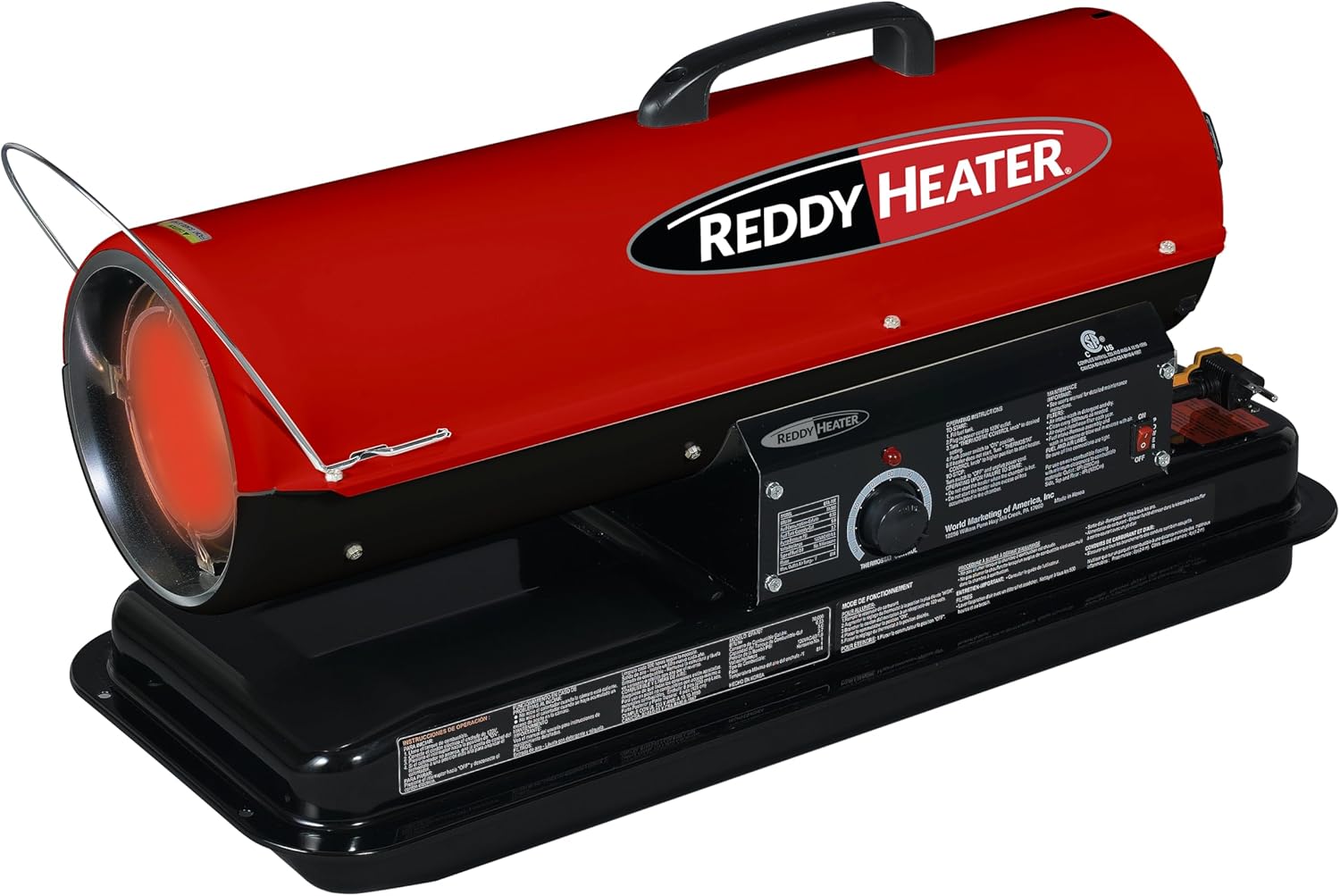
| Heat Output | 80,000 BTU |
|---|---|
| Heating Coverage | Heats up to 2,000 sq. ft. |
| Fuel Type | Kerosene, Diesel, Electric option |
| Run Time | Up to 8.5 hr per 5 gallon tank |
The Reddy Heater RFA80T is a contractor-grade forced-air heater that delivers strong, fast heat for large, open spaces. It runs on kerosene, diesel and several other fuel types and also offers an electric forced-air option, which makes it flexible on job sites or in garages. Key practical features include an electronic thermostat, one-touch electronic start, a high-capacity fan motor for rapid heat distribution, built-in safety systems such as flame-out shut-off and overheat protection, and LED diagnostic readouts. With an 80,000 BTU output and up to roughly 8.5 hours of run time per 5 gallon tank at typical consumption, it can warm areas up to about 2,000 sq ft. The unit is portable with a handle and wheels and includes auxiliary outlets for convenience. Trade-offs are the size and fuel handling needs typical of kerosene/diesel heaters and the noise and ventilation requirements that come with a forced-air, fuel-powered unit, which limit its use in sealed living spaces. For large workshops or construction sites it provides dependable, high-output heating in a durable package.
Best for: Buyers who need a durable, high‑output heater for large, open workspaces and who value fuel flexibility and fast whole‑area heating.
Less Ideal for: People seeking a quiet, low-maintenance heater for small or tightly sealed living rooms or those unwilling to store and manage liquid fuel.
- Very high 80,000 BTU output suitable for large spaces
- Multi-fuel compatibility for kerosene, diesel and other fuels
- Electronic thermostat and LED diagnostics for easier temperature control
- Built-in safety features including flame-out shut-off and overheat protection
- Portable design with handle and wheels and auxiliary power outlets
- Requires handling and storage of liquid fuel and appropriate ventilation
- Larger, louder operation compared with small electric heaters
Verdict: If you need powerful, contractor-grade heat for large garages or job sites and want fuel flexibility, this Reddy Heater delivers reliable, high-output performance.
DEWALT 80,000 BTU Kerosene Heater

| Heat Output | 80,000 BTU/hr |
|---|---|
| Heating Coverage | 2000 sq ft |
| Fuel Type | Kerosene (also works with diesel) |
| Voltage | 110 volts |
| Tank Capacity | 6 Gallons |
The DEWALT 80,000 BTU Forced Air Kerosene Heater is built to deliver powerful spot heat on job sites, in workshops, barns, or other large spaces where ventilation is available. It runs on kerosene or diesel and is factory-set to deliver 80,000 BTU, moving combustion-heated air with a forced-air design to warm areas quickly. Practical features for real-world use include a glove-friendly handle for transport, thermostat controls, and a 6-gallon tank that extends run time between refills. The heater is pedestal-mounted for stable floor placement and operates at standard 110-volt power for its fan and controls. Expect rapid, focused warming for up to about 2,000 sq ft, but keep it outdoors or in very well-ventilated interiors because it is fuel-powered and intended for professional or construction use rather than enclosed living spaces. Its heavy-duty construction and contractor-focused controls make it a reliable choice where sustained high output is the priority, but it requires fuel handling and space with adequate airflow.
Best for: Buyers who need maximum, contractor-grade spot heat for large, ventilated workspaces and prioritize sustained high output and durable construction.
Less Ideal for: People seeking a clean, odorless heater for enclosed homes or small rooms should choose an electric or ventless alternative instead.
- Very high heat output suitable for large, open areas (80,000 BTU).
- Runs on kerosene or diesel for long run times with the 6-gallon tank.
- Glove-friendly handle and pedestal design make it easy to move and position on job sites.
- Factory-installed thermostat and forced-air delivery provide controllable, fast spot heating.
- Not safe for use in enclosed, unventilated living spaces due to combustion and fuel use.
- Relies on liquid fuel which requires storage, refilling, and safe handling.
Verdict: Choose this DEWALT heater when you need contractor-grade, high-output kerosene heat to quickly warm large, well-ventilated spaces.
VEVOR 9000 BTU Kerosene Heater

| Heat Output | 9000 british thermal units |
|---|---|
| Heating Coverage | 30 ㎡ |
| Fuel Type | Kerosene |
| Power Source | Liquid Fuel |
| Max Temperature Setting | 40 °C |
This VEVOR 9000 BTU kerosene heater is a portable, non-electric unit built to warm larger spaces quickly using a 1.3 gallon tank and convection heat. It is typically used in garages, living rooms, tents, or on camping trips where mains power is unavailable; fill the tank, let the wick soak, light, and control output with the EZ flame knob. Practical features include a fuel gauge, adjustable-height lid that raises about 3.6 inches for cooking or higher output, a security grill, and accessories like a funnel and suction tube for easier refilling. The heater claims up to 20 hours runtime at low consumption, which reduces refuel frequency for long sessions. Because it runs on kerosene and is convection-based, it provides steady ambient warmth rather than targeted radiant heat, and indoor use requires proper ventilation and careful placement. The unit is robust and portable but needs routine wick maintenance and safe fuel handling to perform reliably.
Best for: Buyers who prioritize efficient, long-running off-grid heat for large rooms, garages, or camping setups and want a portable, no-electricity solution that is easy to refill and maintain.
Less Ideal for: People who need instant, concentrated radiant heat for close-up comfort, or who cannot provide safe ventilation and kerosene storage in their living space.
- Strong 9000 BTU output that can heat rooms up to about 30 m²
- 1.3 gallon fuel tank offers long runtime up to around 20 hours
- Adjustable-height lid lets you raise the unit for cooking or higher clearance
- Includes practical accessories (funnel, suction tube, gloves, storage bag)
- Requires kerosene fuel and proper ventilation for safe indoor use
- Convection-style heating provides general room warmth rather than focused radiant heat
Verdict: Choose this heater if you need a portable, long-running kerosene unit that reliably warms large rooms without electricity.
ehozirta Kerosene Heater
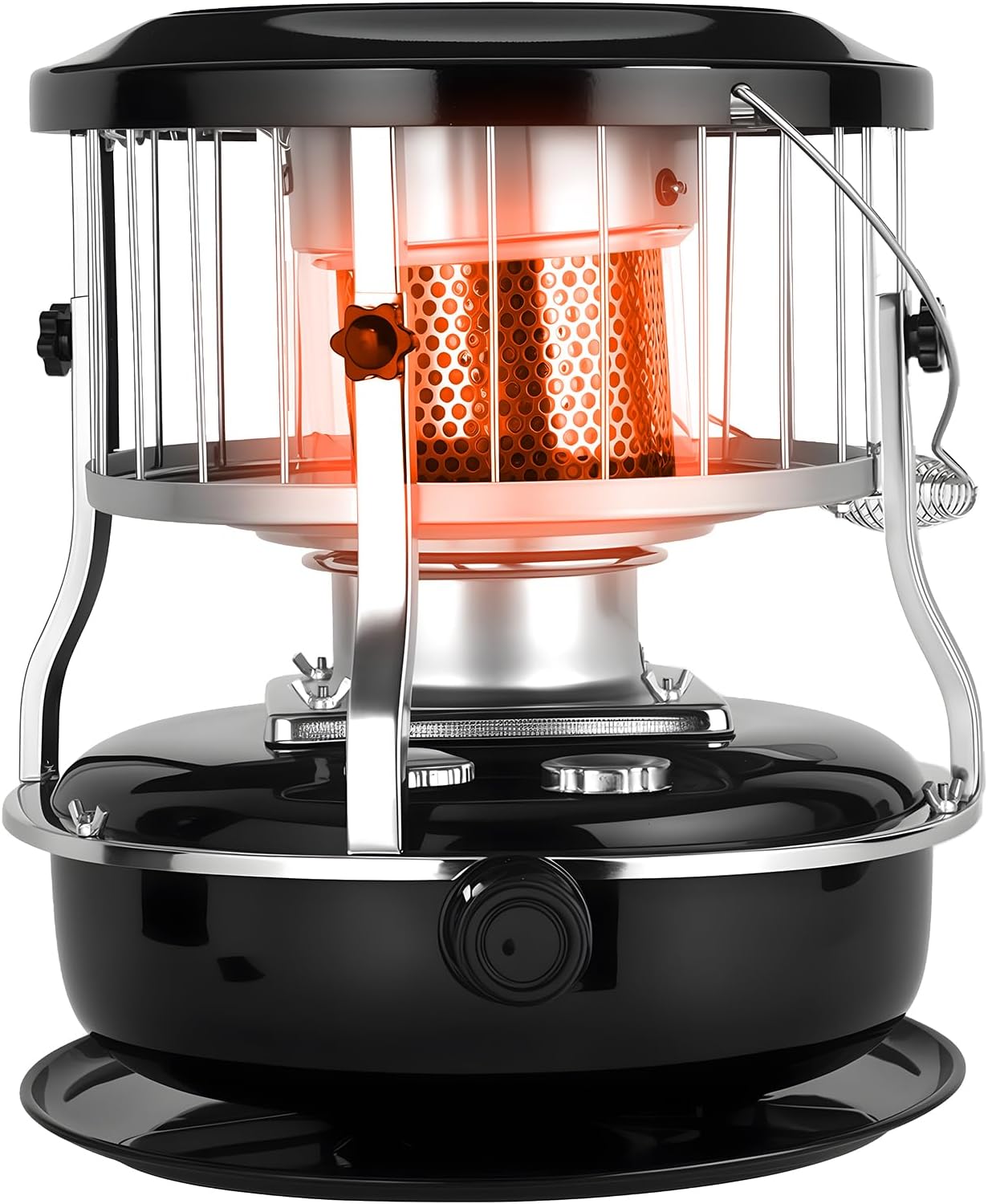
| Heat Output | 9000 BTU |
|---|---|
| Fuel Type | Kerosene |
| Fuel Tank Capacity | 4.5 litres |
| Heating Coverage | 160 sq ft |
| Power Source | fuel_powered |
This compact kerosene heater is a simple, fuel-powered radiant unit intended to heat small rooms and provide emergency warmth without electricity. It uses a 4.5 liter tank to run an advertised 16 to 21 hours per fill and produces up to 9,000 BTU, which the manufacturer says will cover roughly 160 sq ft. The cylindrical design includes a flat top you can use for boiling water or light cooking and a carry handle plus adjustable height for moving between garage, camping, or indoor spots. Control is via a manual knob that adjusts the flame, so operation is straightforward and does not rely on electronics. Important limitations are its small coverage relative to larger space heaters and the need to handle kerosene safely and store fuel. The unit is also basic in features with no thermostat, fan, or safety interlocks listed, so users should follow ventilation and carbon monoxide precautions when using indoors.
Best for: Buyers on a tight budget who need a low-cost, non-electric backup heater for small rooms, garages, or occasional outdoor use and who are comfortable handling fuel and simple manual controls.
Less Ideal for: Anyone seeking a heater for truly large rooms, continuous whole-room climate control, or households unwilling to store and handle liquid fuel safely should look at larger electric or vented options.
- Runs without electricity so it works during outages
- Large 4.5 L tank for long continuous runtime per fill
- Portable with handle and adjustable height for easy placement
- Flat top surface doubles as a cooking or boiling surface
- No built-in thermostat or electronic controls for precise temperature regulation
- Requires kerosene fuel and safe ventilation when used indoors
Verdict: A budget-friendly, fully non-electric kerosene heater best suited for emergency warmth or heating small spaces when you need a long runtime without mains power.
Dyna-Glo WK95C8 Kerosene Heater

| Heat Output | 23800 BTU |
|---|---|
| Heating Coverage | 1000 square_feet |
| Power Source | kerosene |
| Heating Method | Convection |
| Special Features | Tip-Over Protection |
The Dyna-Glo WK95C8 is a non-electric indoor kerosene convection heater intended for zone heating and emergency backup. It delivers up to 23,800 BTU and is sized to warm single large rooms or basements where electricity may be unavailable. The unit uses 1-K kerosene with a 1.9-gallon tank that the manufacturer says runs 8 to 12 hours per fill and has a visible fuel gauge and included siphon pump for refilling. Safety features include a protective grille, cool-top design, tip-over shutoff, and automatic pushbutton ignition with one-touch extinguish, which make it straightforward to operate and reasonably safe for household use. Because it runs without electricity, it is useful during outages and lowers reliance on electric heaters, but it does produce combustion byproducts so proper ventilation and adherence to indoor fuel-heater rules are necessary. The heater is bulky compared with electric space heaters and is restricted from sale in some states, but for someone who prioritizes dependable heat without grid power it performs its intended role well.
Best for: Buyers who need a dependable, non-electric supplemental heater for large rooms or emergency backup and who are comfortable managing kerosene fuel and indoor ventilation.
Less Ideal for: People seeking a low-maintenance, odor-free electric heater or those who cannot meet indoor ventilation and fuel-handling requirements should look elsewhere.
- High heat output (23,800 BTU) suitable for heating large single rooms up to about 1,000 sq ft
- Operates without electricity, providing reliable heat during power outages
- Long run time per tank (8–12 hours per 1.9-gallon fill) with visible fuel gauge and included siphon pump
- Built-in safety features such as tip-over shutoff, safety grille, and cool-top design
- Produces combustion byproducts so it requires adequate ventilation and safe indoor fuel use
- Not compact compared with electric heaters and may be cumbersome to move or store
- Restricted for sale in certain states
Verdict: If you need reliable, high-output heat for a single large room or emergency backup without grid power, this kerosene heater delivers dependable performance and long run times.
Sengoku HeatMate HMN-110

| Heat Output | 10000 BTU |
|---|---|
| Heating Coverage | 380 sq ft |
| Power Source | Kerosene |
| Tank Capacity | 1.2 gallon |
The Sengoku HeatMate HMN-110 is a portable kerosene space heater built for spot-warming larger rooms, garages, or poorly insulated spaces. It produces about 10,000 BTU and uses a 1.2 gallon tank that can run up to roughly 14 hours, which makes it useful for extended heating when electricity is unavailable or costly. Practical features include a push-button start, an EZ flame adjuster for simple output control, a tip-over switch, automatic safety shut-off and protective grills for safer indoor use. Because it is kerosene-fueled it offers cordless operation and sustained heat output without relying on house power, but it does require safe fuel handling, ventilation considerations, and periodic refilling. The heater's pedestal form and built-in safety switches make it reasonably portable and stable on floors, though it is not silent and it needs space for safe placement away from combustibles. For someone who needs a robust, off-grid heat source for a large room or workshop this model is straightforward and dependable.
Best for: Buyers who prioritize reliable, high-output heating for large rooms or workshops and want a cordless, long-running heat source that works when electricity is limited.
Less Ideal for: People who need a low-maintenance, odorless electric heater for shared living spaces or who cannot provide safe ventilation for a combustion heater.
- High heat output (10,000 BTU) suitable for ~380–400 sq ft spaces
- Long run time from 1.2 gal tank—up to about 14 hours per fill
- Cordless operation lets it work without electricity
- Built-in safety features including tip-over switch and automatic shut-off
- Requires kerosene fuel and safe ventilation for indoor use
- Produces operational noise and combustion odor that may bother some users
Verdict: Choose this heater when you need a portable, high-output kerosene unit that delivers long cordless run time for heating large rooms or workshops.
Kero World 10,000 BTU Heater

| Heat Output | 10000 british thermal units |
|---|---|
| Heating Method | Radiant |
| Fuel Type | Kerosene |
| Fuel Tank | 1.0 gallon lift-out tank |
| Operating Time | Up to 14 hours |
This Kero World 10,000 BTU kerosene heater is a straightforward portable radiant unit intended for backup or supplemental heating in small to medium rooms. It uses a 1.0 gallon drop-in tank and two D batteries for a matchless ignition, which lets it run roughly 12 to 14 hours on a fill without electricity. The glass burner and front protective cage deliver fast, targeted radiant warmth, making it useful in workshops, garages, basements, or during power outages. Safety features include tip-over shutoff and a removable fuel tank for easier refills; the all-metal cabinet feels sturdy though utilitarian. Expect quick spot heating rather than whole-house convection heating, and plan to store and handle kerosene safely and ventilate as recommended. Assembly is minimal and a kerosene pump is included, but this is a fuel-burning appliance so it needs routine maintenance and clean fuel to run well.
Best for: Buyers who prioritize reliable, no-electric backup warmth and want a rugged portable heater for workshops, garages, or emergency heating where quick radiant heat is needed.
Less Ideal for: People seeking whole-room convection heating, low-maintenance electric alternatives, or those unwilling to handle fuel storage and periodic heater maintenance.
- Provides fast radiant heat useful for spot warming in workspaces and rooms
- Runs up to about 12–14 hours per 1.0 gallon fill for extended operation
- Battery-powered matchless ignition works without house electricity
- Tip-over shutoff and protective cage add basic indoor safety
- Removable 1.0 gallon lift-out tank and included pump simplify refilling
- Radiant design favors targeted heating rather than even whole-room distribution
- Requires kerosene storage, ventilation, and routine maintenance
- All-metal utilitarian finish lacks aesthetic refinement for living spaces
Verdict: Choose this heater when you need dependable, no-electric radiant heat and long run time for emergency or workshop use.
Choosing the Right Kerosene Heater for Large Rooms: Key Factors to Consider
Heating Capacity
Heating capacity determines whether a kerosene heater can warm a large room effectively. Capacity is usually expressed in BTUs or as a coverage area; choose a unit with sufficient output to overcome heat loss from high ceilings, windows, and open floor plans.
Underestimating capacity results in uneven temperatures and longer runtimes, which increases fuel usage. Overestimating capacity can lead to unnecessary fuel consumption and discomfort from excessive heat. Match rated output to the room's square footage and typical insulation levels for predictable performance.
Run Time and Fuel Tank Size
Run time per tank matters for convenience and operating cost. Larger tanks run longer between refills, which is useful if the heater will operate overnight or in a remote area without frequent attention.
Consider the tradeoff between tank size and portability. A very large tank extends runtime but adds weight and bulk. Also think about expected duty cycle: continuous winter use benefits from long run times, while intermittent use may prioritize lighter, easier-to-store units.
Safety Features and Certifications
Safety is a primary concern with kerosene heaters due to open flames and high surface temperatures. Look for tip-over shutoffs, automatic flame failure protection, cool-touch handles, and stable bases to reduce the risk of accidents.
Verify that the heater has clear instructions for ventilation and fuel handling. Units that include protective grilles and easy-to-access shutoff controls help reduce operator error. While certifications vary regionally, documented safety mechanisms and robust user instructions are essential.
Fuel Efficiency and Consumption
Fuel efficiency affects how often you refill and overall operating cost. Two heaters with similar BTU output can differ significantly in how much fuel they consume to produce that heat.
Efficient combustion and good heat transfer to the room reduce waste. Pay attention to manufacturer run-time estimates and look for features that promote efficient burn, such as adjustable wick or combustion controls. Routine maintenance also preserves efficiency over time.
Ease of Operation and Maintenance
Daily usability influences whether a heater fits your routine. Simple ignition methods, clear control knobs, and accessible tank caps make operation straightforward, while complex setups increase the chance of user error.
Maintenance tasks like wick trimming, cleaning combustion chambers, and replacing consumables should be manageable with basic tools. Units with clear maintenance instructions and readily accessible parts reduce downtime and extend the heater's useful life.
Portability and Placement
Where you plan to place the heater affects the model you choose. Portable units with integrated handles and manageable weight are easier to move between rooms, while larger, stationary units provide steadier long-term heat.
Consider clearance requirements around the heater and the floor surface where it will sit. The unit's footprint, stability, and noise level matter in living spaces. Pick a design that suits how often you will reposition the heater and the kinds of rooms it will serve.
Sizing a Heater for Your Room
Estimate the square footage and account for ceiling height when matching a kerosene heater's rated output to a large room. For open-plan spaces and rooms with high ceilings, use a higher capacity target than for a standard-height single room.
Also consider heat loss factors such as window area, exterior walls, and insulation quality. When in doubt, choose a slightly larger capacity to maintain comfort during colder nights rather than relying on prolonged runtimes at maximum output.
- Measure floor area and multiply for high ceilings.
- Add capacity for drafty windows or poor insulation.
- Prefer steady moderate output over short bursts of high heat.
Ventilation and Indoor Air
Kerosene heaters consume oxygen and produce combustion byproducts. Proper ventilation helps keep indoor air safe and reduces odors. Plan for periodic fresh-air exchange, especially during extended operation.
Place the heater away from flammable materials and avoid operating in completely sealed rooms. If occupants are sensitive to fumes, increase ventilation or limit runtime and monitor indoor air quality.
- Crack a window for long runs.
- Avoid use in rooms without adequate airflow.
- Monitor for unusual smells or soot buildup.
Maintaining Peak Performance
Routine maintenance preserves run time and safety. Regularly inspect and clean the combustion area, replace or trim the wick as recommended, and use clean fuel to avoid clogging and poor combustion.
Keep a simple maintenance kit with gloves, a wick tool, and a soft brush. Follow the manufacturer's recommended intervals for part replacement to maintain efficiency and reduce emissions.
- Clean soot and debris from vents.
- Check and replace wicks on a schedule.
- Use uncontaminated kerosene and store fuel properly.
Placement, Clearance, and Surroundings
Position the heater on a stable, level surface with adequate clearance on all sides. Maintain recommended distances from furniture, curtains, and combustibles to reduce fire risk.
Avoid placing the heater directly against walls or under shelves where heat can accumulate. If the room has foot traffic, choose a location that minimizes accidental contact and provides a clear path for air circulation.
- Maintain manufacturer clearance distances.
- Use a dedicated space free of clutter.
- Keep at least one meter of open space in front for airflow.
Noise, Light, and Occupant Comfort
Kerosene heaters produce some operational noise and an open flame that can emit light. Consider these factors for bedrooms or media rooms where a quiet, dark environment is preferred.
Higher-output units may run warmer on surfaces and generate more sound from fuel feed or fans. If comfort is critical, prioritize models with quieter operation and lower surface temperatures while still meeting heating needs.
- Test noise levels if possible before extended use.
- Plan for reduced light impact in sleeping areas.
- Balance comfort with necessary heat output.
How We Chose the Best Kerosene Heater for Large Rooms
We selected kerosene heaters for inclusion based on a consistent set of practical, measurable criteria that reflect real-world use in large rooms. First, heating capacity was a primary filter; we focused on units that can reliably provide continuous heat across large open spaces rather than just spot heating. Second, we assessed fuel efficiency by comparing typical run times per fuel tank and how effectively the heater converts fuel into usable heat. Third, safety features were a critical screen, with priority given to devices that include tip-over protection, flame failure or safety shutoffs, and guarded surfaces to reduce burn risk. Fourth, ease of operation and maintenance mattered: accessible fuel tanks, simple ignition and control interfaces, and straightforward cleaning routines improved day-to-day ownership. We also considered build quality and serviceability so that a heater in heavy use will remain reliable. Units were excluded if they lacked documented run-time performance for large spaces, failed to meet basic safety expectations, or were designed only for small, enclosed areas. The evaluation favored heaters that balance strong, steady output with manageable fuel consumption and built-in protections appropriate for continuous use in larger rooms.
Our full evaluation process is outlined in our review methodology.
FAQ
How do I know what size kerosene heater I need for a large room?
Estimate the room's square footage and account for high ceilings and poor insulation. Choose a heater whose rated heat output matches or slightly exceeds that adjusted area to maintain steady temperatures.
Is ventilation necessary when running a kerosene heater indoors?
Yes. Kerosene heaters use oxygen and produce combustion byproducts, so some ventilation is important during extended operation. Cracking a window periodically reduces odors and maintains safe indoor air quality.
How often should I perform maintenance on a kerosene heater?
Frequency depends on usage, but a basic check every few weeks during heavy use is common. Inspect and clean the combustion area, trim or replace the wick as needed, and keep fuel clean to ensure efficient operation.
Can a kerosene heater run overnight in a large room?
Many models can operate for long periods on a single tank, but overnight use requires careful attention to ventilation, stable placement, and functional safety shutoffs. Select a unit with dependable run-time ratings and built-in protections.
What should I do if the heater smells strongly or emits soot?
Reduce runtime and increase ventilation immediately. Check for contaminated fuel, dirty wick, or clogged combustion areas and perform cleaning or maintenance. If problems persist, stop using the unit until it can be serviced.
Final Verdict
Choosing a kerosene heater for a large room requires balancing heating capacity, run time, and safety. Prioritize a unit with enough BTU output for your space, long enough run times to suit how you will use it, and clear safety features to protect occupants and property. Weigh the tradeoffs between portability and tank size, and plan for routine maintenance and proper ventilation. With those priorities in mind, you can confidently select a heater that delivers steady, efficient warmth for large-room use.