
Note: This article contains affiliate links. If you click on these links and make a purchase, we may earn a small commission at no extra cost to you. This helps support our research and content. Read our full affiliate disclosure here.
If you brew pour-over coffee, grind consistency and precise particle-size control matter more than nearly any other variable. A good manual coffee grinder for pour-over coffee lets you dial in a uniform medium-fine grind, control dosing, and preserve bean oils by avoiding excess heat. These traits translate directly into cleaner extraction, more predictable brew times, and clearer flavor definition. This guide covers seven shortlisted manual coffee grinders that are best suited for pour-over brewing. We focus on how each option handles grind consistency, adjustment range, and day-to-day usability so you can pick a grinder that matches your brewing style and kitchen routine. Read on for the evaluation criteria and practical buying guidance before the product summaries.
Top Picks at a Glance
| Best Overall The best all-around choice for most situations | Hario Ceramic Coffee Mill MSS-1B |  |
| Best Quality Built to a higher standard if you want something more solid | 1Zpresso K-Ultra Manual Grinder |  |
| Best Value The sweet spot between price and what you get | CEVING Manual Coffee Grinder MCG-MEGA-60 |  |
| Best Budget The cheapest option that still gets the job done reliably | PARACITY Manual Coffee Grinder |  |
| Top Rated A top-rated pick with lots of positive feedback | TIMEMORE Chestnut C3S Grinder | 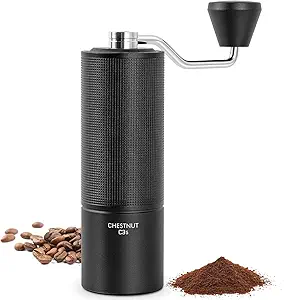 |
| Most Popular A crowd favorite that many people choose with confidence | JavaPresse Manual Coffee Grinder |  |
| Best Seller A high-volume bestseller chosen again and again | CEVING Mini Manual Coffee Grinder | 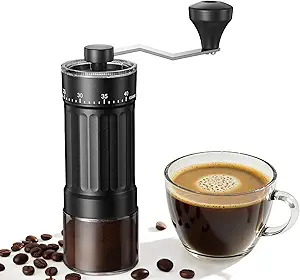 |
Hario Ceramic Coffee Mill MSS-1B

| Material Type | Ceramic |
|---|---|
| Power Source | Manual |
| Capacity | 2 cups |
The Hario Ceramic Coffee Mill is a compact hand grinder built for simple, consistent grinding at home. It uses a ceramic burr that resists rust and keeps beans tasting clean, and a turn-knob adjustment lets you coarsen or refine grounds for pour-over, drip, or French press. The slim body stores easily and the handle is removable for space-saving storage, while the transparent lower chamber makes it easy to monitor how much you have ground. Because it is manual, you control grind speed and noise is minimal compared with electric grinders, though larger batches require more effort. The plastic and resin exterior keeps weight down but is less heavy-duty than metal-bodied models, and capacity is modest, suited to single-cup or two-cup brewing rather than high-volume grinding. Parts disassemble for cleaning, and the straightforward design makes it a reliable choice for those who value portability and control over automated convenience.
Best for: Home brewers who want a compact, low-noise manual grinder that produces consistent pour-over-ready grounds and fits tight storage spaces.
Less Ideal for: Those who grind large daily volumes, prefer electric convenience, or need a heavy-duty metal construction for frequent travel or commercial use should consider other options.
- Ceramic burr resists rust and preserves flavor consistency
- Slim, removable-handle design stores compactly for small kitchens or travel
- Transparent grounds chamber lets you monitor volume while grinding
- Simple grind adjustment knob provides a range of coarseness for pour-over and other methods
- Small 2-cup capacity means frequent refills for multiple servings
- Mostly plastic/resin body is less durable than all-metal alternatives
Verdict: Choose this slim ceramic hand grinder if you want a portable, low-noise tool that reliably produces pour-over-ready grounds for one to two cups.
1Zpresso K-Ultra Manual Grinder

| Burr material | Stainless steel |
|---|---|
| Burr diameter | 48 mm |
| Adjustment | External dial, ~20 microns per click |
| Catch cup capacity | 35–40 g |
| Power source | Manual |
The 1Zpresso K-Ultra is a high-precision hand grinder built for consistent, specialty-level results across brew methods from pour-over to espresso. It uses a 48mm stainless steel conical burr and an external adjustment dial with over 100 clicks at roughly 20 microns per click, so you can micro-tune grind size quickly without disassembly. A magnetic catch cup holds 35–40 g of grounds and snaps securely to speed the workflow, while the foldable crank and included travel case make the grinder easy to pack for travel or small kitchens. The grinder disassembles without tools for fast cleaning, and the burr is fixed to the shaft for stability and long-term consistency. Practical trade-offs are its manual operation, which requires time and effort compared with electric grinders, and the premium build drives the unit toward higher price points than entry-level hand grinders. For pour-over brewers the K-Ultra delivers tight, uniform grounds and repeatable adjustments that help dial in extraction.
Best for: Serious pour-over enthusiasts and precision-focused home brewers who prioritize grind consistency and fine-tuning to extract the best flavor from specialty beans.
Less Ideal for: Casual drinkers who want an instant, no-effort grind or buyers seeking the cheapest possible manual grinder should consider electric or budget alternatives instead.
- Large 48mm stainless steel conical burr for uniform, fast grinding
- External adjustment dial with fine clicks for precise grind control
- Magnetic catch cup that holds 35–40 g and speeds workflow
- Foldable handle and included travel case improve portability
- Tool-free disassembly for easy cleaning and maintenance
- Manual grinding requires more time and physical effort than electric grinders
- Higher-end build and features place it above budget hand grinders
Verdict: If you want precise, repeatable grind control for pour-over brewing in a portable, well-built hand grinder, the 1Zpresso K-Ultra is a top choice.
CEVING Manual Coffee Grinder MCG-MEGA-60

| Capacity | 60 g |
|---|---|
| Burr type | Ceramic conical |
| Grind settings | 40 external settings |
| Power source | manual winding |
The CEVING MCG-MEGA-60 is a manual hand grinder built around a 60 g capacity hopper and an external click-ring that offers 40 distinct grind settings. It is designed for people who want single-dose freshness but dislike repeating small grinds, making it useful for pour-over, drip, French press, and travel use. The ceramic conical burr aims to keep temperatures low and preserve oils for cleaner flavor, while the external adjustment dial makes switching from fine to coarse straightforward and repeatable. Its larger capacity reduces the need for multiple grind cycles when brewing for two or making a larger pour-over, and the portable, lightweight body is convenient for camping or commuting. Expect manual effort for each session and slower throughput compared with electric grinders, and users seeking ultra-fast grinding or fully hands-off convenience should look elsewhere. For pour-over brewers who value control, capacity, and consistent burr geometry, this grinder delivers practical, repeatable results.
Best for: Home brewers who want precise, repeatable grind control for pour-over and occasional larger batches and who prefer a portable manual grinder that cuts down on multiple small grind cycles.
Less Ideal for: People who prioritize speed, hands-off convenience, or grinding very large daily volumes should consider an electric grinder instead.
- Large 60 g capacity lets you grind enough for multiple cups in one session
- External 40-click adjustment dial provides easy, repeatable grind-size changes
- Ceramic conical burr minimizes heat and preserves coffee oils for cleaner flavor
- Lightweight and portable for travel, camping, or brewing away from home
- Manual operation is slower and requires physical effort compared with electric grinders
- May not be ideal for users who need very high-speed grinding or large commercial volumes
Verdict: If you brew pour-over and want a portable grinder that combines a larger single-grind capacity with easy, precise external adjustments, this CEVING model is a practical choice.
PARACITY Manual Coffee Grinder

| Capacity | 1.4 pounds |
|---|---|
| Material Type | Stainless Steel |
| Power Source | Manual |
| Item Weight | 0.85 kg |
This PARACITY manual coffee grinder is a simple hand mill aimed at home pour-over users and travelers who want a quiet, non-electric grinder. It uses a ceramic burr to deliver relatively uniform grinds and an adjustable control to go from coarse for French press to fine for espresso-style or pour-over brewing. The stainless steel crank provides leverage for easier turning, while a nonslip silicone base stabilizes the unit during use. Two clear glass jars let you grind directly into storage containers and check grind amounts at a glance, and most parts disassemble for washing. Because it is manual, expect slower grind times than an electric grinder, and the glass components require careful handling. The unit is lightweight and portable, so it works well for small batches and travel but is not suited to heavy daily grinding for large households.
Best for: Buyers who want a low-cost, portable grinder for small-batch pour-over sessions and value quiet, manual operation over speed.
Less Ideal for: Avoid this if you need to grind large daily volumes quickly or want a heavy-duty grinder for continuous home use.
- Ceramic burr offers consistent, low-heat grinding to preserve flavor
- Adjustable grind knob for a range from coarse to fine
- Includes two glass jars for grinding and storage
- Manual crank and nonslip base make it quiet and stable during use
- Glass jars and parts are fragile and need careful handling
- Slower to grind compared with electric grinders
Verdict: A budget-friendly manual grinder that delivers consistent, low-heat grinds and portable storage for pour-over enthusiasts who prioritize flavor and quiet operation.
TIMEMORE Chestnut C3S Grinder

| Capacity | 25 g |
|---|---|
| Material Type | Aluminum |
The TIMEMORE Chestnut C3S is a compact hand grinder built around a patented S2C steel conical burr and an all-aluminum body designed for durability and consistent performance. It grinds 25 g per fill, making it suitable for one to two cups of pour-over or espresso in daily use, and the dual-bearing design and stepless adjustment let you dial in a wide range of grind sizes. The all-metal construction and absence of internal plastic parts improve longevity and give a solid, tactile feel while cranking. Cleaning is straightforward with the included brush and the grinder is small enough to travel with, though the manual effort required can be tiring for larger batches. For pour-over brewing the burr consistency produces even particle size for reliable extraction, and the stepless knob allows fine tuning to match drippers and recipes. Expect a high-quality, durable grinder that prioritizes consistent grinds over speed or high-capacity use.
Best for: Buyers who prioritize a reliable, long-lasting grinder that produces consistent grinds for pour-over brewing and value precise manual adjustment over speed.
Less Ideal for: Those who regularly prepare multiple cups at once or want the convenience of automatic electric grinding should consider a higher-capacity or powered grinder instead.
- Patented S2C steel conical burr for consistent, uniform particle size
- All-metal aluminum body with no internal plastic for improved durability
- Stepless grind adjustment lets you precisely tune grind size for pour-over
- Compact, travel-friendly footprint suitable for single-cup brewing
- 25 g capacity is small, requiring multiple refills for larger servings
- Manual grinding is slower and more effortful than electric alternatives
Verdict: Choose the Chestnut C3S if you want a compact, durable manual grinder that delivers consistently uniform grinds for reliable pour-over extraction.
JavaPresse Manual Coffee Grinder

| Power Source | Manual |
|---|---|
| Material Type | Stainless Steel |
| Number of Settings | 18 |
The JavaPresse Manual Coffee Grinder is a hand-crank conical burr grinder built for portability and precise control over grind size, with 18 stepped settings that cover espresso through coarse pour-over. You use it by adding beans to the hopper, setting the grind level on the external adjustment ring, and turning the removable crank to produce a consistent grind into the catch cup. The ceramic burrs are quieter and claimed to last longer than steel burrs, and the manual operation eliminates the noise and power needs of electric machines, which makes it convenient for travel or early-morning brewing at home. Its stainless steel body feels sturdy and the tool-free disassembly makes cleaning straightforward. On the downside, manual grinding takes more time and effort than an electric grinder, and the small capacity means multiple refills for larger batches. For pour-over users the fine control and consistency are strong positives, but expect a slower workflow when brewing for several people.
Best for: Buyers who prioritize quiet, portable grinding and want fine control over grind size for single-cup pour-over brewing, with interest in products that have strong user feedback and proven reliability.
Less Ideal for: People who regularly grind large volumes of coffee or want a fast, one-touch electric solution should choose an electric burr grinder instead.
- 18 adjustable grind settings for precise control from fine to coarse
- Ceramic conical burrs that run quietly and resist heat buildup
- No power required, making it fully portable for travel and camping
- Stainless steel construction with removable crank for easy cleaning
- Manual operation is slower and more physically demanding than electric grinders
- Small bean capacity requires multiple batches for larger servings
Verdict: A compact, reliable manual burr grinder that gives pour-over brewers precise, quiet control when portability and proven performance matter most.
CEVING Mini Manual Coffee Grinder

| Capacity | 30 g |
|---|---|
| Material Type | Ceramic |
| Power Source | manual winding |
The CEVING Mini Manual Coffee Grinder is a small, travel-friendly hand mill aimed at people who want freshly ground beans for pour-over or other brew methods without relying on electricity. It uses ceramic conical burrs and an external adjustment ring with 40 settings, so you can dial in fine to coarse grinds for pour-over, French press, or drip. The 30 g bean chamber is enough for one to two cups, and the unit disassembles into a few parts for brushing out grounds. Because it is manual, grinding takes a bit more effort than an electric grinder but stays quiet and produces less heat that can alter flavor. The ceramic burrs help deliver a consistent grind size, though throughput is modest and the small capacity means repeated refills for larger batches. Cleaning is straightforward but the manufacturer advises against water, so maintenance relies on dry brushing. For travelers and home users who value control and portability, this grinder offers precise grind adjustment in a compact package.
Best for: Buyers who prioritize consistent pour-over grinds in a quiet, portable package and prefer a low-risk, easy-to-understand manual tool over an electric grinder.
Less Ideal for: Those who need to grind large quantities quickly, want fully wet-cleanable components, or prefer a motorized grinder for minimal effort.
- 40 external grind settings let you precisely adjust for pour-over and other brew styles
- Ceramic conical burrs give uniform grind and produce less heat than blade grinders
- Compact, lightweight design is easy to carry for travel, camping, or office use
- Simple three-part construction makes disassembly and dry cleaning quick
- 30 g capacity is small, requiring multiple batches for more than two cups
- Manual operation is slower and more physically demanding than electric grinders
Verdict: A compact, travel-ready manual grinder that gives pour-over lovers fine control over grind size without electricity.
Choosing the Right Manual Coffee Grinder for Pour-Over Coffee: Key Factors to Consider
Grind Consistency and Burr Type
Uniform particle size is the single most important factor for pour-over brewing because it controls extraction rate and flavor balance. Burr grinders, especially conical or flat steel/ceramic burrs, produce far more consistent particles than blade-style mills. When evaluating manual grinders, look for explicitly stated burr materials and profiles.
Differences between burr types affect heat retention and wear over time. Ceramic burrs stay cooler and are more wear-resistant in many cases, but they can be more brittle. Steel burrs are durable and easier to sharpen or replace in some designs. Prefer designs with replaceable burrs or long warranties to protect long-term consistency.
Adjustment Range and Precision
Pour-over brewing requires an adjustable grind that can be fine-tuned across a medium-fine to medium setting. The adjustment mechanism should allow for both coarse jumps and small increments so you can adapt to roast level, brew time, and filter type. Look for indexed steps or micro-adjust rings that hold their setting under use.
A large adjustment range is useful if you plan to use the same grinder for other brew methods, but for strictly pour-over use, prioritize precision in the medium-fine zone. Stable locking mechanisms prevent drift during grinding and keep your chosen setting repeatable.
Ergonomics and Grinding Effort
Manual grinding is physical, so handle length, crank design, and rotational smoothness determine how comfortable daily use will be. A longer handle reduces effort per turn and makes it easier to maintain a steady cadence, which improves grind uniformity. The crank should attach securely and rotate without wobble.
Consider the grinder's grip, how it fits in your hand, and how much force is required for your preferred roast level. Harder roasts can require noticeably more effort. For frequent brewing, choose a design that balances compact size with comfortable leverage to avoid arm fatigue.
Capacity and Dosing Accuracy
Capacity determines how many cups you can grind in one session and how portable the grinder is for travel. Many manual grinders are designed for one to two cups per load. If you regularly brew multiple cups, choose a larger hopper or plan to grind in multiple batches.
Dosing accuracy matters for repeatable brewing. Clear markings, removable catch cups, or integrated scales are helpful. Some grinders settle grounds into the catch cup unevenly; look for designs that minimize retention and make it easy to transfer the measured dose to your dripper.
Build Quality and Maintenance
Materials and assembly affect durability, stability during grinding, and how often parts need replacement. Metal housings and robust burr mounts reduce flex and keep grind settings consistent. Pay attention to how parts attach and whether common wear items are user-replaceable.
Maintenance includes how easily the grinder disassembles for cleaning and whether the design traps oils or fines. Simple, tool-free disassembly helps regular cleaning, which preserves flavor and performance. Also evaluate whether the manufacturer documents cleaning intervals or provides spare parts.
Why Manual Grinders Matter for Pour-Over Brewing
Manual grinders let you control the pace and feel of grinding, which can translate into more mindful brewing. Because they generate less heat than many electric grinders, they help preserve volatile aromatics that contribute to bright and nuanced pour-over cups.
Manual grinders also force you to focus on consistency. By choosing a grinder with predictable output and a stable adjustment mechanism, you reduce variables in your brewing routine and make it easier to reproduce a favorite recipe.
- Lower heat generation preserves flavor compounds
- Compact designs are easy to store and travel with
- Manual operation encourages consistent technique
Understanding Grind Size for Pour-Over
Pour-over extraction depends heavily on particle size distribution. A medium-fine grind usually yields balanced extraction for common pour-over drippers, but optimal size varies with filter type, brew ratio, and pouring tempo.
Small adjustments can make large differences in brew time and taste. If your coffee tastes under-extracted or sour, a slightly finer setting can help. If it tastes bitter or over-extracted, coarsen the grind in small increments and re-evaluate.
- Aim for uniform medium-fine particles for most drippers
- Adjust grind to tweak contact time and flavor balance
- Log settings and outcomes to build a repeatable recipe
Daily Use Tips to Get the Best Results
Establish a consistent routine: measure beans, set a repeatable grind setting, and use steady hand speed while grinding. These habits reduce variation more than tiny differences between similar grinders.
Clean your grinder regularly to prevent stale oils and fines from accumulating. Wipe the hopper and brush burrs free weekly for daily brewers, and deep-clean monthly depending on roast frequency and oily beans.
- Weigh beans for accuracy rather than relying on volumetric scoops
- Grind just before brewing to preserve aroma
- Store beans in a cool, dark place to slow degradation
Travel and Portability Considerations
Manual grinders are often the best choice for traveling coffee enthusiasts because they do not require power and tend to be compact. When choosing a travel-friendly grinder, prioritize robust construction, a secure lid, and low retention so you do not carry stale fines between uses.
Consider how the grinder packs into luggage and whether it can be disassembled quickly for TSA checks or cleaning. Some compact designs sacrifice leverage for size, so balance portability with ergonomics if you plan to grind larger doses while away from home.
- Look for secure closures and low parts count for travel
- Test how easy it is to reassemble after packing
- Think about grind capacity relative to how many cups you brew while traveling
Common Mistakes to Avoid
Avoid forcing the adjustment beyond its intended limits. Many grinders include stops or markings; over-tightening can damage threads or burr mounts and change calibration. Make small, consistent adjustments when dialing in your brew.
Do not neglect burr alignment and regular cleaning. Misaligned burrs produce inconsistent particle sizes and clumping. If a grinder vibrates or wobbles, stop use until you verify all fasteners and the crank are properly seated.
- Do not overtighten adjustment rings
- Keep parts clean and dry to avoid corrosion
- Replace worn burrs or components to maintain consistency
How We Chose the Best Manual Coffee Grinder for Pour-Over Coffee
We prioritized features that matter for pour-over brewing and real-world home use. Key evaluation criteria included grind consistency across multiple settings, stepwise and continuous adjustment mechanisms, and the range of grind sizes achievable for common pour-over recipes. We also weighed build quality and burr type to assess durability and stable grind performance over time. Usability measures focused on ergonomics and effort required for hand grinding, including handle design and rotational smoothness. We tested how easy it is to dose and transfer grounds to a paper filter or dripper without spilling. Finally, we considered cleaning accessibility and part separability because regular cleaning affects flavor and grinder longevity. Exclusions: we excluded powered and electric grinders, novelty hand mills that lack repeatable adjustment, and models with non-replaceable or unspecified burr materials. The final picks reflect grinders that balance consistent particle distribution, a useful adjustment range for pour-over, and daily usability.
Our full evaluation process is outlined in our review methodology.
FAQ
How often should I clean a manual grinder used for pour-over?
Clean the exterior and hopper weekly for daily use, and brush or vacuum burrs free of fines after each few uses. Perform a deeper disassembly and cleaning every 4 to 8 weeks depending on roast oiliness and frequency to prevent buildup that affects flavor.
Can a single manual grinder handle multiple brew methods?
Many manual grinders have an adjustment range broad enough to handle pour-over, Aeropress, and French press, but not all do both well. If you mainly brew pour-over, prioritize precision in the medium-fine range over an extreme adjustment range.
Are ceramic burrs better than steel for pour-over?
Ceramic burrs tend to run cooler and resist wear, which helps preserve flavors. Steel burrs are durable and often provide sharper cutting edges. Both can work well for pour-over; prioritize consistent particle size and replaceability over material alone.
How do I know when burrs need replacing?
Signs include increased effort for the same grind setting, more fines or inconsistent extraction, and visible wear or chipping. If you notice a sudden change in grind distribution or brewing results, inspect the burrs and consult maintenance guidance for replacement intervals.
Will hand grinding affect flavor through heat buildup?
Hand grinding generally produces less heat than high-speed electric grinders, so it minimizes thermal degassing and preserves volatile aromatics. Short, steady grinding sessions and avoiding excessive force further reduce any heat-related impact.
Final Verdict
Choose a manual grinder that delivers consistent particle size in the medium-fine range and offers a stable, repeatable adjustment system. Balance ergonomics against capacity so daily use stays comfortable, and favor designs that are easy to disassemble for cleaning. Remember that technique and consistency matter as much as hardware, so prioritize a grinder you will use regularly and maintain. With a stable setting, solid burrs, and a comfortable crank, you will get predictable pour-over results and clearer, more enjoyable cups.