
Note: This article contains affiliate links. If you click on these links and make a purchase, we may earn a small commission at no extra cost to you. This helps support our research and content. Read our full affiliate disclosure here.
If you want café-style milk texture without electric gadgets, a manual milk frother is a compact, low-cost way to upgrade drinks at home. These handheld tools let you create hot or cold foam with minimal counter space and no power outlet, which is handy for small kitchens, travel, or quick morning routines. The right frother produces fine microfoam for lattes and cappuccinos, is durable enough for daily use, and cleans quickly so it does not become a chore. This guide shortlists the top manual milk frothers we recommend for home use. We evaluated each option for froth consistency, construction, ergonomics, and ease of cleaning so you can pick the one that matches your preparation style. Read on to find a frother that fits your routine and delivers the texture you want.
Top Picks at a Glance
| Best Overall The best all-around choice for most situations | Bialetti Manual Glass Milk Frother 6703 |  |
| Best Quality Built to a higher standard if you want something more solid | Cabilock Manual Milk Frother |  |
| Best Value The sweet spot between price and what you get | Bellemain Manual Milk Frother |  |
| Best Budget The cheapest option that still gets the job done reliably | HOMEGOAL Manual Milk Frother |  |
| Top Rated A top-rated pick with lots of positive feedback | Fino Milk Frother Pitcher 14 oz |  |
| Most Popular A crowd favorite that many people choose with confidence | Digead Stainless Steel Rotary Whisk |  |
| Best Seller A high-volume bestseller chosen again and again | Bodum Latteo Manual Frother |  |
Bialetti Manual Glass Milk Frother 6703

| Power Source | Manual |
|---|---|
| Capacity | 3 cups |
| Material Type | Glass |
| Wattage | 230 watts |
The Bialetti manual glass milk frother uses a double-action pump to create thick, rich foam for lattes, cappuccinos, and hot chocolate without electricity. You pump the stainless-plunger assembly up and down inside the glass vessel to aerate milk; the non-slip base keeps the frother stable during use and the glass jar is microwave-safe so you can heat milk in the same container. With a three-cup capacity it handles multiple drinks or larger single servings, and the clear glass makes it easy to watch foam development. Because it is hand-operated there is no fussing with cords or motors and cleanup is straightforward if you hand wash as recommended. Expect the frother to require a bit of elbow grease for very dense foam and be careful with the glass if you bump it against harder surfaces. This model is a simple, durable option for someone who wants barista-style foam without an electric appliance.
Best for: Buyers who want a simple, low-tech way to make rich frothed milk at home and prefer a durable, visually clear jar they can heat in the microwave and store on the counter.
Less Ideal for: People who need fully hands-off electric frothing, very frequent commercial use, or the most lightweight, shatterproof travel option should consider other designs.
- Double-action pump produces noticeably thick foam.
- Glass vessel is microwave-safe so you can heat milk in the same container.
- Non-slip base improves stability while frothing.
- Three-cup capacity covers multiple servings or larger drinks.
- Hand operation requires physical effort for very dense foam.
- Glass construction is breakable and needs careful handling.
Verdict: Choose this manual glass frother if you want thick, barista-style foam from a simple, microwave-safe device without relying on electricity.
Cabilock Manual Milk Frother

| Capacity | 800 centiliters |
|---|---|
| Material Type | Stainless Steel |
| Power Source | Manual |
| Other Special Features of the Product | Cordless, Ergonomic Handle, Manual Operation |
The Cabilock Manual Milk Frother is a cordless, hand-pump pitcher designed to produce thick foam for coffee, lattes, cappuccinos, matcha and hot chocolate without electricity. You add milk to the stainless steel pitcher, secure the lid and work the plunger; the double mesh screen helps incorporate air to build foam, and the 800ml capacity handles multiple servings so you can make drinks for guests or repeat pours. The stainless body and wide opening make filling, pouring and hand-washing straightforward, and its manual operation means consistent performance without batteries or motors. Frothing quality will depend on milk type and temperature, and it takes a bit of effort to reach very dense microfoam compared with electric frothers, but the control lets a practiced user tune texture. For someone focused on hands-on performance and repeatable results, this frother gives a sturdy, cafe-style manual option in a compact package.
Best for: Buyers who prioritize hands-on control and performance over automation and want a durable manual tool for making cafe-style foam for multiple cups.
Less Ideal for: People who need one-touch convenience, very fast single-cup frothing, or fully hands-off operation should choose an electric frother instead.
- Double mesh plunger designed to produce thicker, more stable foam
- 800ml stainless steel pitcher holds multiple servings for group use
- Cordless manual operation gives precise, repeatable control over foam texture
- Wide opening and stainless finish are easy to fill, pour, and rinse by hand
- Manual pumping requires physical effort and practice to achieve very fine microfoam
- Hand wash only care may be less convenient than dishwasher-safe alternatives
Verdict: A robust manual frother built for users who want precise, repeatable foam control and enough capacity to make multiple cafe-style drinks without electricity.
Bellemain Manual Milk Frother

| Capacity | 14 ounces |
|---|---|
| Material Type | Stainless Steel |
| Power Source | Hand Pump |
| Included Components | Cleaning Brush, Milk Frother |
The Bellemain Manual Milk Frother is a hand‑pump frother designed to create dense, long‑lasting foam for espresso drinks, lattes, and cold cocktails. You use it by pumping the plunger so milk is forced through a fine stainless steel mesh; depending on desired thickness froth forms within a few dozen pumps and can be left to settle briefly for a creamier texture. The stainless steel construction feels durable and resists staining or denting, and the 14‑ounce body makes enough foam for one large drink or two small serves. Because it requires no power, it is portable for travel and simple to maintain; the frother is dishwasher safe and includes a small cleaning brush. Limitations are the manual effort and time required compared with electric whisks and that hot froth can cool slightly during pumping, so you may want to heat milk after frothing if you need it piping hot. It works with dairy and plant milks but may require extra pumping for very low‑fat or thick alternatives.
Best for: Buyers who prioritize durable, low‑maintenance tools and want a portable, electricity‑free way to make café‑style foam at home or on the go.
Less Ideal for: People who need instant, hands‑free frothing for frequent high‑volume use or who prefer consistently piping‑hot froth with minimal effort.
- Produces dense, creamy foam that holds longer than airy electric froths
- Durable food‑grade stainless steel body resistant to dents and rust
- No batteries or electricity required, making it fully portable
- Dishwasher safe and includes a cleaning brush for easy cleanup
- Requires manual pumping which takes more time and effort than electric frothers
- Frothed milk can cool during the process if you need very hot milk
Verdict: A rugged, no‑power manual frother that delivers dense, long‑lasting foam for buyers who value durability and low maintenance.
HOMEGOAL Manual Milk Frother

| Capacity | 400 ml |
|---|---|
| Material Type | Stainless Steel |
| Power Source | Manual |
| Product Care Instructions | Dishwasher Safe |
This manual milk frother is a simple handheld pitcher that uses a plunger and double-mesh aerator to create thick foam for cappuccinos, lattes, and hot chocolate in about 40–60 seconds. Made of stainless steel with a heat-resistant handle and lid, it holds up to 400 ml but the maker suggests filling only 100–150 ml to allow room for foam expansion. Operation is straightforward: add cold or warm milk, insert the plunger, and pump until the milk triples in volume. It is dishwasher-safe and works with dairy and many non-dairy milks, which makes it economical compared with battery frothers or espresso machines. The unit has no power needs and is durable, but manual pumping can be tiring if you regularly make multiple drinks and the effective working volume is smaller than the full capacity to avoid overflow. Expect quick, café-style foam for occasional home use with minimal cleanup and without extra cost for batteries or electricity.
Best for: Buyers who want a low-cost, durable way to get cafe-style milk foam at home without batteries or appliances and who value simple, no-frills operation.
Less Ideal for: People who make large batches of frothed milk often, want hands-free electric frothing, or need very large single-serve volumes should consider powered frothers instead.
- Stainless steel construction with heat-resistant handle and lid for durability and safe handling.
- Double-mesh aerator produces thick, creamy foam in under a minute.
- No power required so it is economical and usable anywhere.
- Dishwasher-safe pitcher and simple parts for easy cleanup.
- Effective foam volume is smaller than full capacity to prevent overflow, requiring smaller fills per use.
- Manual pumping can be physically tiring if making multiple drinks back-to-back.
Verdict: A rugged, budget-friendly manual frother that delivers quick, creamy foam without batteries or extra equipment.
Fino Milk Frother Pitcher 14 oz

| Capacity | 14 ounces |
|---|---|
| Material Type | Stainless Steel |
| Lid Material | Nylon |
The Fino Milk Frother is a handheld stainless steel pitcher that uses a plunger with a double-mesh aerator to create dense milk foam in about 30 to 60 seconds. You add chilled or warmed milk to the 14-ounce pitcher, secure the lid, then pump the plunger up and down until the foam reaches the desired texture; the lid's easy-grip handle and French-press style mechanism make operation straightforward and quiet. Because it needs no batteries or power, it is economical and simple to maintain, and the 18/8 stainless body plus nylon lid stand up to everyday use and are top-rack dishwasher safe for easy cleanup. It works with dairy and many nondairy milks, so you can make cappuccinos, lattes, hot chocolate, or iced drinks without an electric frother. The main limitation is capacity: 14 ounces makes multiple small servings but is not suited to large batches, and manual pumping requires a short burst of effort compared with automatic devices.
Best for: Buyers who prioritize a dependable, low-maintenance frother that works without power and lasts under regular home use, ideal for making one to two specialty drinks at a time.
Less Ideal for: Those who need to froth large volumes at once or want a fully hands-free, automatic frothing solution should consider electric frothers instead.
- No electricity or batteries required, so it is reliable and always ready to use.
- Double-mesh plunger produces thick, cafe-style foam for a variety of milks.
- Durable 18/8 stainless steel construction with nylon lid for everyday use.
- Top-rack dishwasher safe for easy cleaning.
- 14-ounce capacity limits how much foam you can make in a single batch.
- Manual pumping requires physical effort and some practice to reach consistent texture.
Verdict: A simple, robust manual frother that reliably delivers thick foam without batteries or electricity, perfect for dependable everyday use.
Digead Stainless Steel Rotary Whisk

| Head Material | Stainless Steel |
|---|---|
| Item Type Name | Hand Mixer with Whisk |
| Included Components | manual egg beater |
| Unit Count | 1 Count |
The Digead Stainless Steel Rotary Whisk is a semi-automatic hand-push whisk that spins when you press the handle, letting you quickly froth milk, beat eggs, and mix light batters without electricity. Its food-grade stainless steel head and riveted spring mechanism aim for durability and rust resistance while the 12-inch length gives good reach into cups, bowls, and small pots. In practice it makes short work of frothing single servings of milk for coffee and whisking eggs for omelets; the spinning action saves wrist effort compared with a fixed balloon whisk. It is simple to clean and small to store, but it is not intended for heavy-duty batter mixing or large-volume whisking where a powered frother or stand mixer would be faster. For buyers who want a low-tech, reliable milk frother and occasional whisk, this delivers a sturdy, easy-to-use option backed by many customer reviews; those needing high-volume or multi-speed electric frothing should look elsewhere.
Best for: Buyers who want a simple, durable manual milk frother and occasional whisk that works without batteries or power and prefer products with established customer feedback.
Less Ideal for: Those who regularly make large batches, need adjustable frothing speeds, or prefer automated electric frothers for convenience.
- Food-grade stainless steel head resists rust and feels durable
- Semi-automatic push-to-spin mechanism froths milk and whisks with less wrist effort
- 12-inch length provides good reach into cups, bowls, and small pots
- Riveted construction claimed to be more secure than welded joints
- Not suitable for heavy batters or large-volume mixing
- No motorized speed control or multiple speed settings
Verdict: A rugged, no-power-required rotary whisk that reliably froths single servings of milk and handles light whisking tasks.
Bodum Latteo Manual Frother
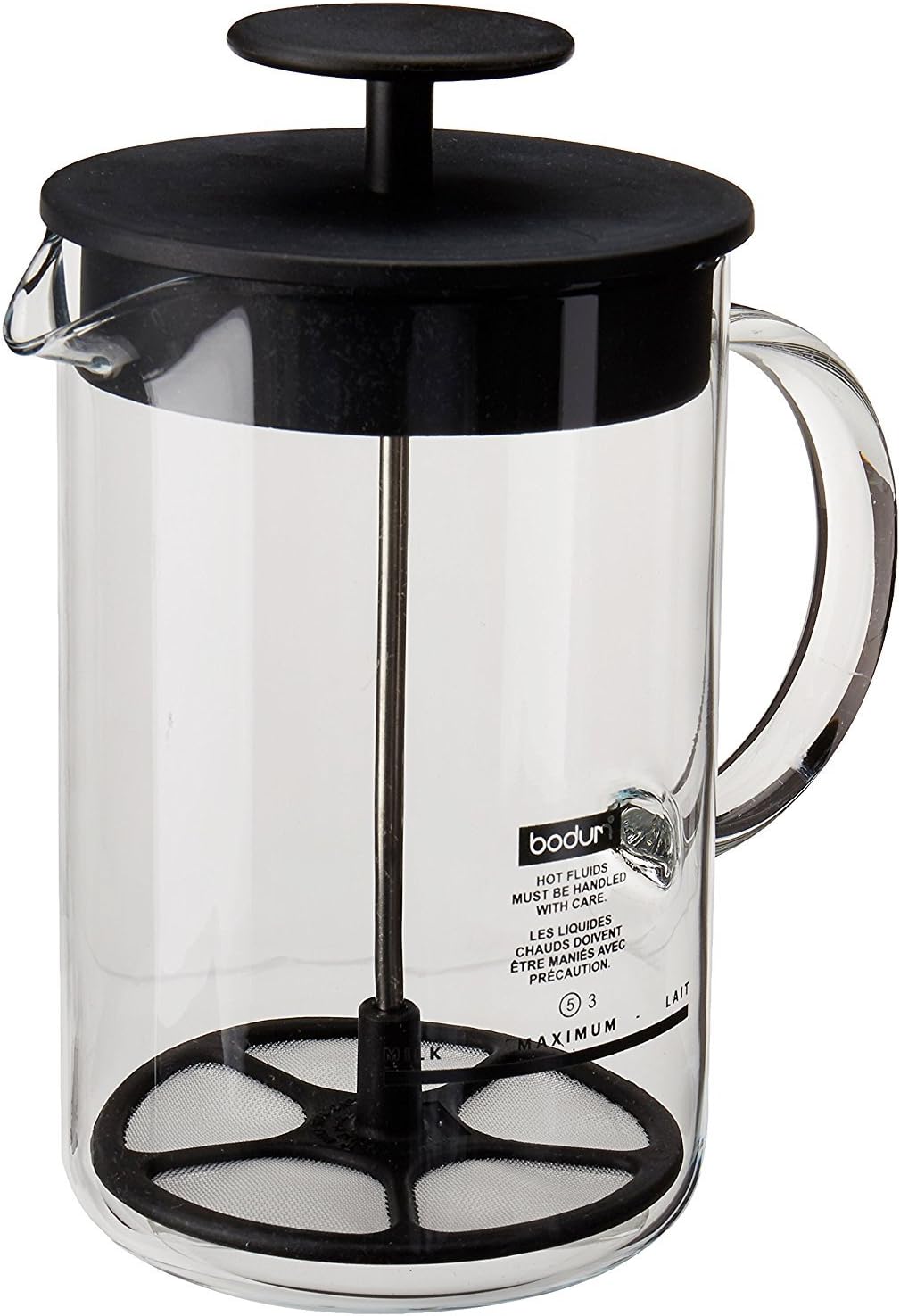
| Capacity | 8 ounces |
|---|---|
| Material Type | Glass |
| Power Source | Manual |
| Product Care Instructions | Dishwasher Safe |
The Bodum Latteo Manual Frother is a simple hand-operated frother with a heat-resistant borosilicate glass carafe and a plunger whisk assembly that whips cold milk into foam in roughly 60 to 90 plunges. It is used by filling to the indicated line, plunging up and down to thicken the milk, letting the foam rest, and optionally warming the froth in the microwave after removing the plunger. Notable features include a deep-rimmed silk plastic lid that reduces spillover, a comfortable plunger handle, and dishwasher-safe components for easy cleanup. Because it is manual, you get control over foam texture and can quickly produce a small serving of cafe-style foam without electricity or complex controls. The main limitations are its 8-ounce capacity, which suits single servings but not making multiple drinks at once, and the manual effort required compared with electric frothers. For buyers who prioritize reliability, straightforward care, and a glass carafe, this is a practical, low-tech option.
Best for: Buyers who want a low-risk, reliable way to make cafe-style milk foam at home without electronics and who value easy cleaning and a glass carafe.
Less Ideal for: People who need to froth multiple drinks quickly or prefer a fully hands-off electric frother.
- Heat-resistant borosilicate glass carafe gives clear view of foam and is microwave-safe after removing plunger
- Dishwasher-safe parts make cleaning quick and low-effort
- Simple manual design requires no power and offers direct control over foam texture
- Silk plastic lid with deep rim helps prevent foam from escaping the spout
- 8-ounce capacity limits use to one small drink at a time
- Manual plunging requires physical effort and time compared with electric frothers
Verdict: A dependable, no-frills manual frother that delivers quick, controllable foam and easy cleanup for single-serve home use.
Choosing the Right Manual Milk Frother: Key Factors to Consider
Froth Quality And Consistency
Froth quality determines whether you get fine microfoam suitable for latte art or coarse, short-lived bubbles. A manual frother must generate enough air and shear to create stable foam that blends with espresso. Look for designs with dense, well-shaped whisks or pump heads that agitate milk evenly.
Consistency matters across different milk temperatures and types. Some manual frothers work better with whole milk than with almond or oat milk, so evaluate how reliably a frother produces foam with the milks you use most. Consistent foam reduces wasted drinks and improves the at-home café experience.
Materials And Construction
Materials affect durability, heat resistance, and how safe the frother is with hot liquids. Stainless steel components and food-safe plastics resist staining and odor retention while withstanding regular exposure to warm milk. Thin metal or weak plastics can bend or warp over time, reducing frothing efficiency.
Pay attention to joint construction and whether moving parts are sealed or prone to milk ingress. Solid assembly reduces play in the mechanism and keeps performance steady over months of daily use.
Ergonomics And Pump Mechanism
A manual frother relies on your hand motion, so ergonomic design is central to comfort and control. Handles that are too small, slippery, or awkwardly weighted make prolonged frothing tiring and less effective. Mechanical designs vary from handheld pump rods to battery-free plungers; the stroke length and resistance influence how easily you can produce foam.
Try to match the mechanism to your routine. If you plan to froth many drinks in a row, favor comfortable grips and smoother action. For occasional single cups, a compact, simple mechanism may be preferable.
Cleaning And Maintenance
Milk residues can build up quickly and cause off flavors or hygiene issues, so easy cleaning is critical. Simple disassembly, dishwasher-safe parts, or designs with minimal crevices reduce cleaning time and the risk of trapped milk. Consider how often you will clean the tool and whether daily rinse-and-wipe is realistic for your routine.
Maintenance also includes replacing worn seals or whisk heads if applicable. Frothers with replaceable components can stay useful longer without full replacement.
Capacity And Compatibility With Milk Types
Capacity affects how much foam you can prepare in a single motion. If you typically make two or more drinks at once, choose a larger cup or a frother that can handle greater volume without splashing. Small-capacity options are fine for single servings but require repeated frothing for multiple drinks.
Compatibility with different milk types matters because plant-based milks foam differently from dairy. Some manual frothers deliver acceptable foam with oat or soy milk, while others struggle. Consider the milk you use most and whether the frother is known to work well with that type.
How Manual Frothers Work
Manual milk frothers generate foam by physically introducing air into milk and shearing it with a whisk or mesh. Common designs include pump plungers that force milk through a small aperture and handheld wire whisks that rapidly agitate the liquid. Both approaches create bubbles and break them down into a stable microfoam texture when used correctly.
Understanding the basic mechanics helps you use the tool more effectively. Warm milk produces better foam because proteins are more cooperative at moderate temperatures. Short, vigorous strokes typically produce finer bubbles than slow, long motions. The technique is as important as the tool itself.
- Warm milk froths more easily than cold milk.
- Short, rapid motions yield finer microfoam.
- Mesh or dense whisk heads produce more uniform bubbles.
Tips For Frothing Different Milks
Milk composition affects foamability. Whole milk tends to foam richer and more stable microfoam, while skim milk creates larger volumes of foam that can be airy. Plant-based alternatives vary widely: barista-style oat and soy milks are formulated to froth well, but almond and rice milks often need different technique or more vigorous frothing.
To improve results with plant-based milks, try slightly warmer liquid, longer pumping or whisking, and using a smaller volume per froth cycle. Letting foam rest briefly allows larger bubbles to dissipate, leaving a smoother finish.
- Use moderately warm milk, not boiling hot.
- Adjust frothing time by milk type for best texture.
- Smaller batches often yield better foam with plant milks.
Cleaning And Care Best Practices
Rinse and disassemble the frother immediately after use to prevent milk from drying into crevices. If parts are dishwasher-safe, place them on the top rack; otherwise wash with warm soapy water and a soft brush. Dry all components thoroughly before reassembly to avoid corrosion or mold.
Inspect seals and moving parts periodically for wear. Lubricate any metal-on-metal joints only if recommended by the manufacturer and using food-safe lubricants. Replace worn whisk heads or seals when performance drops to maintain consistent froth quality.
- Rinse immediately after each use to prevent buildup.
- Hand-wash tight areas with a soft brush if needed.
- Store dry to avoid corrosion and odors.
Choosing The Right Capacity And Accessories
Match the frother size to how many drinks you make at once. Single-cup frothers keep things compact, while larger jugs or cups let you froth milk for two or more drinks without repeated effort. Accessories like heat-resistant frothing cups or silicone grips can improve thermal handling and comfort.
Some manual frothers include interchangeable whisk heads or different cup sizes. These extras add versatility but also increase the number of parts to clean. Decide whether added flexibility is worth the extra maintenance for your routine.
- Select capacity based on typical batch size.
- Consider included accessories for comfort and versatility.
- Fewer parts mean simpler cleaning; extras increase maintenance.
When To Replace A Manual Frother
Replace the frother if the whisk loses tension, parts become loose, or persistent odors and staining remain despite cleaning. Mechanical wear reduces froth quality and can make the tool harder to operate. Small, replaceable components can extend overall lifespan, but beyond a point replacement is the practical option.
Signs to watch for include reduced foam volume, audible grinding in the mechanism, visible corrosion, or warped handles. Regular inspection after cleaning helps you catch these issues early.
- Loss of froth performance indicates wear.
- Visible corrosion or warped parts warrant replacement.
- Replace seals or whisk heads when available to extend life.
How We Chose the Best Manual Milk Frother
We selected manual milk frothers by focusing on attributes that directly affect home frothing performance and everyday usability. Key evaluation points included froth quality and speed, which reflect how well the tool aerates milk and how quickly it produces stable foam appropriate for espresso drinks and cold beverages. Build durability and materials were assessed to ensure long service life and resistance to corrosion or warping from repeated use. Ergonomics and handling matter for a hand-operated tool, so we prioritized comfortable grips, balanced weight, and straightforward pumping or whisking motion. Ease of cleaning and disassembly was another essential filter because residue and hidden nooks shorten a toolâÂÂs useful life. We also considered capacity and how the frother performs with different milk types, including dairy and common plant-based alternatives. Excluded items include powered or battery-operated frothers and devices that require a separate motor base. We focused only on handheld manual designs and compared like for like. The final list reflects a balance of reliable froth production, durable construction, user comfort, and straightforward upkeep.
Our full evaluation process is outlined in our review methodology.
FAQ
Can a manual frother create microfoam good enough for latte art?
Often yes, but results depend on technique and milk choice. With warm whole milk or barista-style plant milk and short, vigorous strokes, many manual frothers can produce fine microfoam suitable for basic latte art. Complex designs may be harder to achieve without practice.
How long does it take to froth milk manually?
Typically 20 to 60 seconds depending on the frother design, milk temperature, and volume. Short, rapid pumping or whisking yields faster results; larger batches and plant-based milks may take longer.
Are manual frothers hygienic for daily use?
Yes, if you clean them promptly after each use. Milk residues dry quickly and can trap bacteria or odors, so rinse and wash components after frothing. Stainless materials and simple designs reduce problem areas and help maintain hygiene.
Will a manual frother work with cold milk for iced drinks?
Yes, manual frothers can aerate cold milk, though foam texture may differ from warm milk. Cold froth is often lighter and less stable, so use a smaller volume and whip longer for better results.
Can I use a manual frother with non-dairy milks?
Usually, but performance varies. Barista-formulated oat and soy milks tend to froth well, while almond and rice milks can be more challenging. Adjust technique and temperature to improve foam with plant-based options.
Final Verdict
A manual milk frother is an economical, space-saving way to create café-style foam at home when you prioritize simplicity and control. Focus on froth quality, durable materials, and a comfortable mechanism when choosing a tool. Consider capacity and how the frother performs with the specific milk types you use most. Prioritize a frother that balances consistent foam production with easy cleaning and solid construction. That tradeoff will deliver the best day-to-day experience and ensure the tool remains useful over time.