
Note: This article contains affiliate links. If you click on these links and make a purchase, we may earn a small commission at no extra cost to you. This helps support our research and content. Read our full affiliate disclosure here.
If you hunt deer, a purpose-built meat grinder can change how you process game at home. The right grinder saves time, yields consistent texture for sausages and burgers, and reduces waste by letting you handle whole quarters, trim, and connective tissue efficiently. This guide shortlists the top meat grinders for deer hunters, focusing on units designed to handle large cuts, bone-free trim, and extended runs without overheating. We evaluated durability, grind consistency, motor endurance, and ease of cleaning to find reliable options. Read on for a clear breakdown of what matters when choosing a grinder and how each shortlisted type performs against those needs.
Top Picks at a Glance
| Best Overall The best all-around choice for most situations | STX Turboforce II 4000 |  |
| Best Quality Built to a higher standard if you want something more solid | LEM BigBite Dual Grind #8 |  |
| Best Value The sweet spot between price and what you get | AAOBOSI Meat Grinder MGC04 |  |
| Best Budget The cheapest option that still gets the job done reliably | CHEFFANO Meat Grinder AZ-MG091DG |  |
| Top Rated A top-rated pick with lots of positive feedback | LEM BigBite #8 Meat Grinder | |
| Most Popular A crowd favorite that many people choose with confidence | STX Turboforce 3000 Meat Grinder |  |
| Best Seller A high-volume bestseller chosen again and again | Aiheal Electric Meat Grinder MG-2430RB |  |
STX Turboforce II 4000
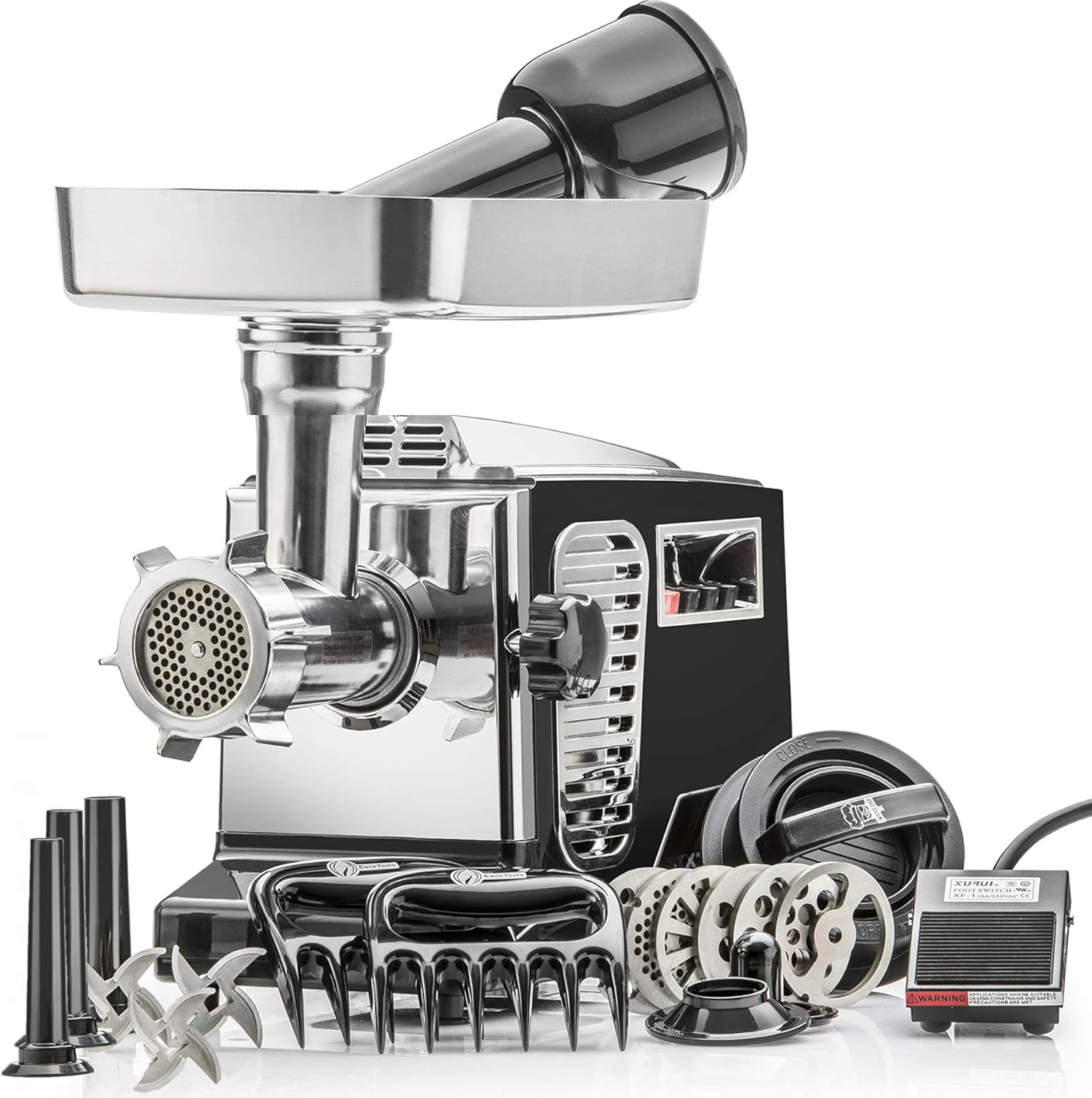
| Capacity | 3 pounds |
|---|---|
| Wattage | 2000 watts |
| Voltage | 120 volts |
| Included Components | Grinding head, 6 plates, 3 blades, sausage tubes, kubbe attachment, foot pedal |
The STX Turboforce II 4000 is a high-capacity home grinder built for frequent, heavy use. It uses a 2000 watt motor with a quad air induction cooling system and circuit breaker to sustain long runs, and the size 12 head and 2.5-inch output let you process large quantities of meat quickly. The unit includes multiple stainless cutting blades, six grinding plates, sausage tubes, a kubbe attachment, meat pusher, meat claws and a foot pedal for hands-free control. In practice it grinds efficiently and can handle soft bones, making it useful when trimming and processing whole-game cuts. The large feed tray and high throughput rate make short work of deer processing sessions, though the unit is fairly large and not intended for occasional tabletop use. Cleaning requires disassembly of several metal parts and attention to the drivetrain, and the plastic housing means buyers should handle it carefully during transport. For hunters who process many pounds at a time this grinder brings factory-style capacity and useful sausage-making extras to a home shop.
Best for: Hunters and home processors who regularly grind and make sausages from large game and want a high-capacity, durable machine that can run long sessions.
Less Ideal for: If you only grind small batches infrequently or need a lightweight portable unit for field processing, a smaller tabletop grinder would be a better fit.
- 2000 watt motor and air-cooled design for sustained high-volume grinding
- Size 12 grinding head and 2.5-inch output for processing large cuts quickly
- Comes with multiple plates, blades and sausage/ kubbe attachments for versatile use
- Foot pedal control allows hands-free operation during heavy batches
- Includes meat claws and patty press to simplify post-grind tasks
- Large, heavier machine that is less convenient for infrequent or purely portable use
- Housing includes plastic components that require careful handling to avoid damage
- Disassembly and cleaning of multiple metal parts takes time after heavy sessions
Verdict: For deer hunters who process large quantities at home, this powerful Turboforce grinder delivers commercial-style throughput and the attachments needed to turn venison into ground meat and sausages.
LEM BigBite Dual Grind #8

| Horsepower | 0.50 HP |
|---|---|
| Capacity | 4.5 pounds |
| Material Type | Stainless Steel |
| Power Source | Electric |
The LEM BigBite Dual Grind #8 is a heavy-duty, 0.5 HP electric meat grinder built to process large volumes of red meat for burgers, sausage, and pet food preparation. Its BigBite throat and dual-edge knife with two plates let you run two grinds in a single pass, saving time and producing a finer, more consistent texture without refeeding. The stainless steel head, plates, and included grinding plates (first grind, 4.5 mm, 10 mm) plus sausage stuffing tubes make it practical for turning deer, beef, pork, and lamb into ground meat or sausage. It disassembles for straightforward cleaning, and a built-in tray stores plates and the knife. At roughly 4.5 pounds per minute throughput the grinder is quick for small batches and single-animal processing, and its noise-dampening design reduces operational sound compared with louder hobby grinders. Limitations: the dual-grind design cannot handle chicken bones and the unit is relatively heavy and sized for a dedicated prep area rather than occasional countertop use.
Best for: Hunters and performance-focused home processors who need a rugged, commercial-style grinder to quickly convert venison and other large game into ground meat and sausage.
Less Ideal for: Casual users who only grind small amounts infrequently or those who need a lightweight, portable grinder for occasional countertop use.
- Dual-grind BigBite system grinds twice in one pass for finer, consistent results
- Stainless steel head, plates, and knife for durability and food-safe contact
- Includes multiple grind plates and three stuffing tubes for sausage making
- Disassembles easily for cleaning and has built-in storage for plates and knife
- Cannot process chicken bones or other hard bones
- Relatively heavy and sized more for a dedicated prep area than casual countertop use
Verdict: Choose this grinder if you want a durable, BigBite dual-grind unit designed to efficiently turn deer and other red meat into consistently fine ground meat and sausage.
AAOBOSI Meat Grinder MGC04

| Capacity | 1.5 kg |
|---|---|
| Wattage | 2800 watts |
| Voltage | 120 volts |
| Power Source | electric |
The AAOBOSI MGC04 is a heavy-duty home meat grinder built for routine processing tasks like grinding venison, making sausage, and shredding vegetables or cheese. It includes a stainless steel housing, two cutting blades, three grinding plates, a sausage stuffer, kubbe kit, and slicing/shredding attachments so you can switch from coarse to fine grind and form sausages without extra purchases. The listed 2800W peak motor and 1.5 kg capacity suggest brisk throughput—AAOBOSI says it can grind about 1.5 kg per minute on a 7 mm plate—while thermal protection, overload cutoff, and a reverse function help prevent jams and motor damage when handling sinew or tougher pieces. Most parts disassemble for hand washing and the blades and plates are dishwasher-safe, but avoid grinding bones or large tendons to prevent clogging. The unit is sized for counter use and includes safety locking features, though it requires basic cleaning after processing game and careful trimming beforehand to maintain consistent performance.
Best for: Hunters and practical home processors who want a versatile grinder that handles regular batches of trimmed game, makes sausage, and stores useful attachments in one unit.
Less Ideal for: People who need industrial-scale throughput, frequent bone grinding, or a lightweight travel-friendly unit should consider a commercial or specialized grinder instead.
- Multiple grinding plates and cutting blades let you choose coarse to fine grind for different recipes.
- Includes sausage stuffer and kubbe kit so you can make sausages and stuffed preparations without extra accessories.
- High peak wattage and stated throughput speed support fast processing of trimmed game meat.
- Safety features such as overload protection, thermostat cutoff, and reverse function reduce risk of motor damage and help clear jams.
- Stainless steel construction and removable parts make cleaning and long-term use easier.
- Manufacturer capacity and wattage are peak figures and performance depends on pre‑trimmed meat and avoiding bones.
- Not intended for grinding bones or very large, sinewy cuts which can still jam the feed.
- Counter footprint and weight require dedicated storage space when not in use.
Verdict: A well-equipped, high‑power home grinder that lets hunters efficiently process trimmed deer into ground meat and sausage without buying extra accessories.
CHEFFANO Meat Grinder AZ-MG091DG

| Capacity | 180 pounds |
|---|---|
| Material Type | Stainless Steel |
| Power Source | Corded Electric |
| Included Components | Sausage maker, food pusher, 2 blades, 3 cutting plates, kubbe attachments |
The CHEFFANO AZ-MG091DG is a countertop electric meat grinder built for routine home processing tasks like grinding, sausage stuffing, and making kibbe. It ships with three stainless steel cutting plates (fine, medium, coarse), two blades, kubbe and sausage attachments, a food pusher, and a removable auger assembly so you can swap modes quickly between grinding and stuffing. The motor is described with a 350W continuous rating and a high peak value for short bursts, which helps it push through whole cuts and moderate volumes of meat at an estimated output around 3 lb/min. Controls include forward and reverse to clear jams, and most metal components detach for hand washing. Practical limits are that it is a home-sized machine rather than commercial gear, parts are not dishwasher-safe, and the stated peak wattage is for brief bursts rather than sustained heavy-duty use. For hunters processing field-dressed venison at home, it offers a full accessory set and stainless steel parts at a budget-friendly level, but it is best used for typical batches rather than continuous professional throughput.
Best for: Hunters who want an affordable, capable home grinder to process venison into burger, sausages, and kibbe without paying for commercial equipment.
Less Ideal for: People who need a commercial‑scale grinder for nonstop heavy throughput or a fully dishwasher-safe cleaning routine should consider higher‑end or commercial models.
- Includes three stainless steel cutting plates and multiple accessories for grinding, sausage stuffing, and kibbe making.
- Stainless steel construction on food-contact parts improves durability and cleaning compared with plastic grinders.
- Forward and reverse controls help clear jams and make operation easier when handling sinew or connective tissue.
- Rated motor with a moderate continuous power and higher peak capability lets it handle whole cuts and mixed meat reliably for home batches.
- Not designed for continuous commercial use; peak wattage is for short bursts only.
- Attachments are hand-wash only and not dishwasher-safe, adding cleanup time after heavy processing.
Verdict: A budget-friendly stainless steel home grinder that gives deer hunters the accessories and motor punch needed to turn field-dressed venison into burgers and sausages without splurging on commercial gear.
LEM BigBite #8 Meat Grinder
| Capacity | 7 pounds per minute |
|---|---|
| Material Type | Stainless Steel |
| Power Source | electric |
| Horsepower | 0.50 HP |
The LEM BigBite #8 is a robust electric meat grinder built for repeated, small-to-medium batch grinding. It uses a 0.5 HP motor and stainless-steel construction to process about 7 pounds per minute, making it practical for turning deer or bulk purchases into burger, sausage, or pet food. The unit ships with three plates, a knife, a stomper, and sausage-stuffing tubes, and its permanently lubricated motor plus straightforward disassembly make cleanup and maintenance easier. Noise-dampening design reduces operational sound compared with lighter consumer grinders, and the stainless housing resists corrosion in field conditions. It is not intended for bones and is a bench-style machine that requires a stable workspace and enough storage room. While heavier and more industrial than kitchen countertop models, its commercial-grade build and available replacement parts support long-term reliability for hunters who process meat regularly.
Best for: Hunters and home processors who prioritize a durable, factory-quality grinder they can use often to process deer and bulk meat into burgers and sausage.
Less Ideal for: If you need a lightweight, highly portable grinder for occasional countertop use or want to grind bones, choose a smaller portable model or a bone-capable commercial unit instead.
- Stainless steel construction for durability and corrosion resistance
- 0.5 HP motor capable of roughly 7 pounds per minute grinding
- Includes multiple plates, knife, stomper, and sausage stuffing tubes for versatile use
- Permanently lubricated motor and easy disassembly simplify maintenance and cleaning
- Noise-dampening design for quieter operation than many comparable grinders
- Not rated or designed for grinding bones
- Large and heavy footprint requires dedicated bench space and storage
- Higher weight and commercial build make it less portable than compact home models
Verdict: A durable, commercial-style grinder built to reliably process deer and bulk meat for hunters who need repeatable, long-term performance.
STX Turboforce 3000 Meat Grinder

| Wattage | 1800 watts |
|---|---|
| Capacity | 3 pounds |
| Voltage | 110 volts |
The STX Turboforce 3000 is a purpose-built home meat grinder that handles large batches of fresh meat for burgers, sausage, kibbe and other ground preparations. It uses a size 12 grinding head with a large hopper and an AVI auger design to accept larger portions, and the package includes three stainless cutting blades, five grinding plates, three stuffing tubes, a kubbe attachment and burger press to support a variety of recipes. The unit is rated for a 1800 W motor (3000W peak claim) and is capable of grinding up to roughly 180–240 pounds per hour when meat is properly prepped, so it suits hunters who need to process multiple deer. Practical benefits include the high-capacity hopper and multiple plate sizes for coarse to fine grinds, plus stainless components where meat contacts metal for easier cleaning. Important limitations are that it is designed for home use only and explicitly should not be used on bones, tendons, vegetables or other hard materials, and the 110V single-voltage motor restricts use to standard household outlets.
Best for: Hunters who want a powerful home grinder to process whole deer into burgers, sausage and other ground products and who prioritize proven accessories and high throughput over commercial duty ratings.
Less Ideal for: Those who need a commercial-grade, bone-capable grinder for meat shops or continuous heavy daily use should seek a purpose-built commercial unit instead.
- Large hopper and AVI auger permit grinding larger portion sizes and reduce reloading.
- Includes multiple grinding plates, stuffing tubes, kubbe attachment and burger press for versatile processing.
- Stainless steel cutting blades and food-grade aluminum head for durable meat-contact surfaces.
- High throughput capable of processing well over 100 pounds per hour when meat is prepped correctly.
- Not designed to grind bones, tendons, or other hard materials, limiting whole-animal processing methods.
- Intended for home use rather than continuous commercial use, which may affect long-term heavy-duty durability.
Verdict: A versatile, high-throughput home meat grinder with the accessories and hopper size hunters need to process deer at home.
Aiheal Electric Meat Grinder MG-2430RB

| Power | 300W (3200W max locked) |
|---|---|
| Material Type | Stainless Steel |
| Capacity | 44 pounds |
| Included Components | 2 Blades, 3 Plates, 3 Sausage Tubes, 1 Pusher |
This Aiheal grinder is built for home but aimed at high-volume tasks like processing big game after a hunt. It uses a copper motor rated at 300W with a 3200W max locked power and includes three grinding plates (2mm, 5mm, 7mm), two cutting blades, and three sausage tubes so you can grind fine to coarse and stuff several sizes of sausage. The stainless steel construction and removable cutting attachments make cleanup straightforward, and safety features such as a locking knob and overload protection help prevent overheating and motor damage during heavy batches. In practice it handles beef, pork, venison, and poultry with consistent output and the included pusher and reverse/unclogging button reduce jams. It is not a commercial stand-alone unit and the manufacturer warns against dishwasher use for parts, so expect some manual disassembly and drying. For hunters who bring back large carcasses, this grinder speeds processing and gives control over grind and seasoning, but it requires basic prep and care to keep the motor healthy over repeated heavy use.
Best for: Hunters and home cooks who want a reliable, safety-minded machine to process deer and other game into ground meat and sausages at home.
Less Ideal for: People who need a heavy-duty commercial grinder for continuous large-scale processing should consider a pro-grade machine instead.
- Includes three grinding plates for fine to coarse grinds
- Comes with three sausage stuffer tubes and two blades for versatile sausage making
- Stainless steel parts and removable cutting attachments ease cleaning and durability
- Copper motor with overload protection and reverse/unclog button reduces risk of jams and overheating
- Not intended as a commercial-grade grinder for continuous industrial use
- Manufacturer advises parts should not go in the dishwasher, requiring hand drying to prevent corrosion
Verdict: Aiheal’s grinder gives deer hunters a versatile, safety-focused home unit that handles whole-game processing and sausage making without the complexity of commercial equipment.
Choosing the Right Meat Grinder for Deer Hunters: Key Factors to Consider
Motor Power and Duty Cycle
A grinder's motor power determines how well it handles dense deer meat and extended runs. Choose a model with enough continuous-duty capacity to process entire quarters without overheating. Motors with thermal protection or a rated duty cycle prevent burnout during heavy sessions.
Higher horsepower does not always mean better if the motor uses weak gears or poor cooling. For deer processing, prioritize motors designed for sustained torque, not just peak ratings, because connective tissue and fatty seams can stall underpowered units.
Gear Train and Internal Construction
Durable internal components are essential when grinding large volumes of game. Metal gear trains and robust augers resist wear from bone chips and frozen pockets. Avoid grinders that use plastic internals or press-fit parts that fail under repeated heavy loads.
Inspect whether the grinder uses stainless or plated steel for food-contact parts and whether the gearbox isolates those components from grease or contaminants. Solid construction reduces the chance of mid-session failures and makes the machine easier to maintain over hunting seasons.
Plate Options and Grind Control
A good selection of cutting plates lets you adjust texture for burger, sausage, or coarse roasts. For deer, having at least three plate sizes covers coarse trim, standard burger, and fine sausage mixes. Plate material and sharpness affect throughput and heat buildup during long runs.
Interchangeable knives and plates that are easy to swap without tools speed processing. Consider how the grinder feeds trimmings into the auger; a well-designed throat and feed tray reduce jamming and make consistent grinding simpler.
Throughput and Feed Design
Throughput is how many pounds you can process per minute and it matters when you bring home a whole deer. A higher throughput minimizes overall processing time but must be matched to motor torque to avoid clogs. Feed design, including hopper size and pusher ergonomics, impacts how quickly you can move meat into the auger.
Look for grinders with wide throats and solid-fed pushers that let you work in larger chunks. Think about how you will trim and pre-cut meat; the grinder should accept normal trimming sizes without excessive pre-processing.
Ease of Cleaning and Maintenance
Game processing produces fatty residues and connective tissue that can be difficult to remove if parts are fiddly or porous. Choose grinders with simple disassembly, dishwasher-safe or easily scrubbed plates and knives, and clear access to the auger and throat.
Consider how seals and gaskets are designed. Fewer crevices and replaceable seals reduce cross-contamination risk and extend service life. Regular maintenance tasks such as oiling gearboxes or replacing blades should be straightforward.
Portability and Power Options
Hunters may process meat in a garage, shed, or seasonal camp, so portability and how the grinder is powered matter. Electric corded units offer steady power for long runs, while lighter or battery-capable models can be useful in remote setups. Weight and mounting options affect stability during heavy-duty use.
If you process in a non-climate-controlled space, consider how the grinder handles colder temperatures and whether the motor needs warm-up time. Look at cord length and plug type to ensure compatibility with where you will work.
Preparing Deer Meat for the Grinder
Proper preparation speeds processing and protects the grinder. Trim silver skin, large sinew bundles, and any contaminated areas before feeding meat into the throat. Cut quarters or loins into strips or chunks that fit the hopper comfortably to avoid jamming.
Keep meat chilled but not frozen solid. Slightly cold meat passes through the auger more cleanly and reduces smear from fat warming. If you need to work in very warm conditions, process smaller batches and refrigerate between runs to maintain texture.
- Remove visible hair, dirt, and gross contamination before grinding.
- Cut pieces to a consistent size for steady throughput.
- Chill meat to firm but pliable temperature for best results.
Sausage Making and Mix Ratios
Grinders that include or accept sausage attachments let you turn venison into a wider range of products. Venison is very lean, so plan fat additions carefully to reach desired juiciness. Common ratios range from 70/30 to 85/15 lean-to-fat depending on the recipe.
Mix meat and fat cold and grind twice for even distribution. Use coarse plate first, then finish with a finer plate for stable sausage texture. Proper seasoning and binders help retain moisture in lean game sausages.
- Double-grind for even fat distribution.
- Keep meat and fat below 40 F while working.
- Test small batches to dial in seasoning and fat ratio.
Maintenance Tips to Extend Service Life
Regular maintenance prevents breakdowns during the busy processing season. After each use, disassemble food-contact parts, wash them thoroughly, and dry to prevent corrosion. Lubricate any specified gearbox parts according to the manual and replace seals that show wear.
Sharpen or replace knives and plates as they dull because blunted cutting surfaces increase motor strain and raise operating temperatures. Store detachable parts in a dry location and check fasteners periodically for tightness.
- Wash and dry plates, knives, and the auger after every use.
- Inspect the gear train and seals seasonally.
- Keep spare blades and common consumables on hand during hunting season.
Setting Up a Safe Processing Space
Create a clean, well-lit workspace with stable surfaces and easy access to cold storage. Keep the grinder on a level table or mount it to prevent movement during high-throughput runs. Plan drainage or waste collection so trimmings and fluids do not create slip hazards.
Protect meat from temperature spikes by working near coolers or refrigerators. Use proper food-safety practices, including frequent handwashing, sanitized tools, and prompt refrigeration of ground meat to limit bacterial growth.
- Ensure a stable, level mounting surface.
- Have coolers or refrigeration ready for processed meat.
- Sanitize tools and surfaces between batches.
When to Call a Professional Processor
Processing an entire deer can be time-consuming for a first-time hunter or if you lack suitable equipment. If you prefer to avoid the upfront investment or need custom butchery services like aging or whole-muscle cuts, a professional processor handles the heavy lifting and may offer value for complex requests.
Consider a pro if you need specialty services such as natural casing stuffing, commercial-style smoking, or long-term dry aging that require additional equipment and expertise. For routine grinding and sausage making, a robust home grinder is often sufficient.
- Use a professional for specialty cuts or aging services.
- Professionals can handle large volumes quickly if you lack time.
- Balance cost versus convenience and desired finished products.
How We Chose the Best Meat Grinder for Deer Hunters
We prioritized features that matter when processing whole deer and heavy batches of game meat. Primary evaluation criteria included motor endurance, measured by continuous run capability and thermal protection; grind consistency, including plate options and feed design; build durability, focusing on metal gears and food-safe die-cast components; and throughput, meaning how many pounds per minute the machine can move without stalling. We also scored ease of cleaning and disassembly since deer processing produces sticky, fatty residues that slow cleanup. Noise and power source considerations were factored for hunters who process in home garages or rural outbuildings. We excluded models intended only for light household use or those with plastic gear trains that are prone to failure under big-game loads. We also filtered out single-function devices lacking multiple plate sizes or basic sausage-making attachments. The final shortlist favors units that combine high-capacity motors, durable feeding systems, and parts designed for regular heavy use by hunters.
Our full evaluation process is outlined in our review methodology.
FAQ
How much horsepower do I need to grind a whole deer?
It often depends on build quality and duty cycle, but many hunters find that motors rated for continuous operation with moderate horsepower handle whole deer best. Focus on units with thermal protection and solid gear trains rather than just peak horsepower numbers.
Can I grind partially frozen deer meat?
Partially frozen meat can be easier to grind because it reduces smearing, but fully frozen chunks can damage blades and strain the motor. Cut frozen sections down to manageable sizes and let them temper slightly before feeding them to the grinder.
How often should I sharpen or replace the blades and plates?
Frequency depends on workload, but inspect blades and plates after heavy sessions and replace or resharpen when you notice decreased throughput or ragged cuts. Regular sharpening prevents extra stress on the motor and maintains consistent texture.
Is it better to double-grind venison for sausages?
Double-grinding is commonly recommended for venison sausage to evenly distribute any added fat and seasoning and to create a consistent texture. Start with a coarser plate, mix in fat and seasonings, then finish with a finer plate.
How do I prevent my grinder from clogging with sinew or tendon?
Trim long sinew strands and cut down tough connective tissue before grinding. Feed smaller, consistent pieces and periodically reverse or clear the auger if a jam starts. Keeping meat cold also minimizes stringy behavior.
Final Verdict
When selecting a meat grinder for deer hunters, prioritize motor endurance, durable internal construction, and a range of plate sizes to handle everything from coarse trim to fine sausage. Balance throughput with torque so you can process large batches without frequent clogs or overheating. Ease of cleaning and straightforward maintenance reduce downtime during peak processing windows. Choose a unit that fits your typical processing volume and workspace, and plan for basic consumables like spare blades and seals to keep the machine reliable season after season.