
Note: This article contains affiliate links. If you click on these links and make a purchase, we may earn a small commission at no extra cost to you. This helps support our research and content. Read our full affiliate disclosure here.
If you want vegetables that stay crisp, colorful, and nutrient-rich without extra oil or long cook times, a microwave food steamer for vegetables can change weekday meals. These compact steamers are designed to fit in most microwaves, speed up prep, and reduce cleanup compared with pots and pans. Choosing the right model matters because capacity, vent design, and materials all affect texture and how evenly vegetables cook. This guide covers six shortlisted microwave food steamers for vegetables across common home-use needs. We evaluated steam performance, ease of use, and cleanup so you can pick a steamer that fits your microwave and your usual vegetable portion sizes. Read on for the buying criteria and practical advice to match a steamer to your routine.
Top Picks at a Glance
| Best Overall The best all-around choice for most situations | ReneeChef Micro Cookware 2 Quart |  |
| Best Quality Built to a higher standard if you want something more solid | Anyday 4-Cup Microwave Cookware |  |
| Best Value The sweet spot between price and what you get | PrepSolutions Mini Microwave Steamer |  |
| Best Budget The cheapest option that still gets the job done reliably | GoodCook Microwave Steamer |  |
| Top Rated A top-rated pick with lots of positive feedback | Cuisinart Microwave Steamer CTG-00-MST |  |
| Most Popular A crowd favorite that many people choose with confidence | Sistema Heat & Eat Steamer 3.2L |  |
ReneeChef Micro Cookware 2 Quart

| Material | Plastic, Silicone |
|---|---|
| Finish Type | Non-Stick |
| Product Care Instructions | Dishwasher Safe |
| Capacity | 2 quarts |
This 2-quart ReneeChef microwave steamer is a simple plastic and silicone cooker built for fast, low-effort steaming and one‑pot microwave meals. You add a small amount of water, lock the vented lid in place, and steam vegetables, poach chicken, heat soup, or cook rice in minutes; the lid holes let steam escape for easier draining and the grooved handles make opening safer. The steamer is BPA-free, high temperature resistant, and dishwasher safe, which keeps maintenance minimal and reduces worry for health-conscious buyers. Marked internal scales help portioning, and the locking lid is designed to prevent spills when carrying. Because it is fundamentally a microwave container and not an electric rice cooker, results depend on your microwave power and timing may require trial and error for perfectly cooked rice or larger pieces of meat. The plastic construction keeps it lightweight but less durable than metal alternatives and it lacks precise temperature or timer controls. For straightforward, low-risk microwave rice and vegetable steaming, it is a practical, easy-to-clean option.
Best for: Buyers who want a low-effort, health-minded way to steam vegetables and cook small batches of rice in a microwave without fuss or complicated equipment.
Less Ideal for: Users seeking a dedicated electric rice cooker with precise settings, larger capacity, or long-term heavy-duty durability should look elsewhere.
- BPA-free and made from heat-resistant materials for safer microwave use
- Dishwasher safe for easy cleanup
- Locking vented lid prevents spills and aids safe draining
- Internal measurement marks simplify portioning
- Plastic construction is less durable and may stain or retain odors over time
- No electronic controls or precise cooking settings, so rice results vary by microwave
Verdict: A straightforward, BPA-free microwave steamer that makes fast, healthy rice and vegetable cooking easy for risk-averse buyers who prefer simple, low-maintenance tools.
Anyday 4-Cup Microwave Cookware

| Capacity | 4 cups |
|---|---|
| Material Type | Borosilicate Glass, Silicone |
| Oven Safe | Bowls up to 500°F, lids up to 400°F |
| Closure Type | Twist Lock |
This 4-cup Anyday microwave cookware is built around a thick borosilicate glass bowl and a vented glass lid with a silicone gasket and stainless rim, letting you steam vegetables, cook rice, and reheat meals while keeping food plastic-free. In daily use it works like a mini steamer and microwave-safe casserole: lock the lid, open or close the vent knob to trap or release steam, then cook on high for a few minutes to steam greens or finish sides. The bowl is oven-safe to 500°F and freezer- and dishwasher-safe, so it moves from cook to store to reheat without swapping containers. The twist-lock lid and flat stackable shape make storage efficient, and the glass construction avoids odors and staining that plastic can develop. The main practical limits are its 4-cup capacity, which suits single portions or side dishes but not family-sized batches, and the glass is heavier and more fragile than plastic alternatives, so handle with care when hot. For performance-focused cooks who want fast, even microwave steaming and plastic-free storage, this is a versatile small steamer.
Best for: Home cooks who prioritize fast, high-quality microwave steaming of vegetables and small sides and who want a plastic-free, multipurpose container that moves from cook to store to oven.
Less Ideal for: People who need large-capacity steamers for family meals or a lightweight, unbreakable container for travel or heavy-duty everyday use.
- Borosilicate glass construction keeps food plastic-free and resists staining and odors
- Vented glass lid with silicone gasket traps steam for efficient microwave steaming
- Safe for microwave, oven (bowls to 500°F, lids to 400°F), freezer, and dishwasher
- Twist-lock lid and stackable shape simplify airtight storage and organization
- 4-cup capacity is limited to single portions or small side dishes
- Glass is heavier and more fragile than plastic alternatives
Verdict: A compact, plastic-free glass steamer that delivers fast, reliable microwave steaming for vegetables and single‑serve sides.
PrepSolutions Mini Microwave Steamer
| Capacity | 16 ounces |
|---|---|
| Material | Plastic |
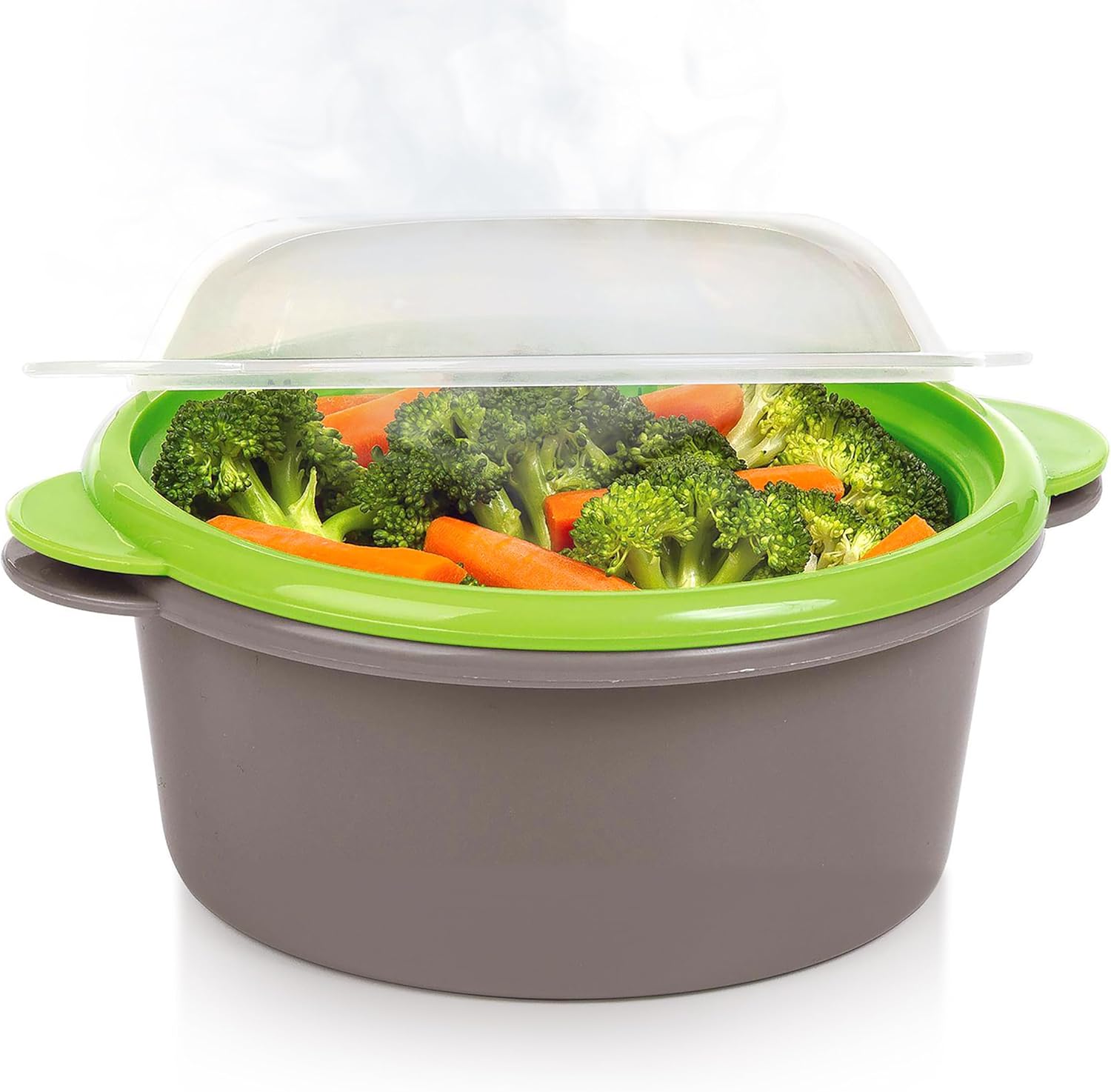
The PrepSolutions Mini Microwave Steamer is a small, practical tool for steaming single servings of fresh or frozen vegetables in the microwave. You fill the base with a little water, add produce to the included steamer basket, cover, and heat for a few minutes to get tender, evenly steamed results without a stove. The basket doubles as a colander for easy draining and the nonstick surface combined with dishwasher-safe, BPA-free plastic keeps cleanup simple. Its 2-cup (16 ounce) capacity is tailored to one-person portions, so it works well for quick side dishes or meal prep when you want fast, low-effort veggies. The unit is lightweight and basic, so it lacks features like multi-tier steaming or a tight locking lid, but that simplicity makes it inexpensive and easy to store. If you want a no-fuss microwave steamer to replace single-use plastic bags or improvised bowls, this does the job reliably.
Best for: Buyers who prioritize fast, low-effort meal prep and need a compact, easy-to-clean microwave solution for single servings of vegetables.
Less Ideal for: Those cooking for multiple people, preparing large portions, or requiring advanced steaming features should consider larger or multi-tier steamers.
- Compact 2-cup capacity ideal for single servings and small kitchens
- Steamer basket doubles as a colander for easy draining and serving
- Nonstick surface plus dishwasher-safe construction simplifies cleaning
- Made from BPA-free plastic for safer food contact
- Small capacity limits use for families or larger portions
- Basic design lacks adjustable vents or multi-tier steaming
Verdict: A simple, space-saving microwave steamer that delivers fast single-serving vegetables with minimal cleanup.
GoodCook Microwave Steamer

| Capacity | 14 ounces |
|---|---|
| Material | Plastic |
| Finish Type | Non-Stick |
| Product Care Instructions | Dishwasher Safe |
The GoodCook Microwave Steamer is a simple plastic microwave cooker that uses a two-tier tray and adjustable vented lid to steam fresh or frozen vegetables and small fillets of fish. You add water to the bottom tray, place food on the perforated steaming tray, set the vent position, and run it in the microwave for short cycles; the clear lid makes it easy to check progress. Its dishwasher-safe, nonstick plastic construction keeps cleanup low-effort and the rectangular shape stores flat in a cabinet. Because it is purely manual with no electronics or complex parts, it is reliable for everyday reheating and light meal prep but is limited in capacity—best for single servings or side dishes rather than whole meals. The unit preserves moisture and cuts cook time compared with stovetop steaming, though frequent high-heat microwave use may eventually discolor the plastic. For budget-minded cooks who want a dependable, no-frills steamer, this does the job well.
Best for: Buyers who prioritize a durable, fuss-free accessory for quick vegetable or small-fish steaming in the microwave and want a straightforward, low-maintenance tool.
Less Ideal for: Those who need large-capacity steaming for family meals or want stainless-steel, oven-safe cookware should look elsewhere.
- Simple to use with a clear lid to monitor cooking
- Adjustable steam release vent for controlled steaming
- Dishwasher-safe nonstick plastic for easy cleanup
- Compact rectangular shape for easy storage
- Small 14-ounce capacity limits portions to single servings
- Made of plastic which may discolor with heavy microwave use
Verdict: A budget-friendly, no-frills microwave steamer that reliably handles single-serving vegetables or fish with minimal maintenance.
Cuisinart Microwave Steamer CTG-00-MST

| Capacity | 6.5 cups |
|---|---|
| Material | Plastic |
The Cuisinart Microwave Steamer is a lightweight microwave accessory for quickly steaming vegetables, fish, and poultry without a stove-top steamer. You add water to the base, place food on the perforated tray, cover, and microwave; the unit's stay-cool handles make it easy to remove when cooking is finished. Its 6.5-cup capacity fits family side dishes or single portions, and the clear lid lets you monitor progress. Because it is made of microwave-safe plastic it heats quickly and is easy to clean by hand or top-rack dishwasher. The design is basic with no gauges or accessories, so timing and doneness depend on your microwave and portion sizes rather than built-in controls. If you want a durable, no-frills way to preserve vegetable texture and nutrients with minimal fuss, this steamer does the job, but it does not replace larger countertop steamers or multi-function appliances for heavy use or batch cooking.
Best for: Buyers who prioritize a reliable, low-maintenance way to steam vegetables quickly in the microwave and prefer straightforward, easy-to-clean cookware.
Less Ideal for: People who need large-capacity or heavy-duty steamers for batch cooking or those who want preset controls and multi-function appliances.
- Simple one-step steam cooking—add water, load tray, and microwave
- Clear lid allows visual monitoring during cooking
- Stay-cool handles for safer removal after heating
- Dishwasher-safe and easy to clean
- Made of plastic which may wear faster than metal steamers
- No timing or temperature guidance built into the unit
Verdict: A dependable, no-frills microwave steamer that makes quick, healthy vegetable sides with minimal upkeep.
Sistema Heat & Eat Steamer 3.2L

| Capacity | 3.2 liters |
|---|---|
| Material | Plastic |
| Microwave Safe | Yes (without lid) |
| Dishwasher Safe | Top rack |
The Sistema Heat & Eat is a simple microwave steamer built for everyday vegetable cooking and reheating. It uses a removable steamer basket so you can lift food out without burning your fingers, and the lid's steam-release vent helps reduce microwave splatter while letting excess steam escape. The container is microwave-safe (lid off in the microwave), top-rack dishwasher safe, and freezer/fridge safe, which makes meal prep and cleanup straightforward. At 3.2 liters it holds enough for family side dishes or batch steaming greens, potatoes, or mixed vegetables. Because it is molded plastic it is lightweight and durable for regular use, but it will not give the browning or texture you get from stovetop or oven steaming, and prolonged high-heat cycles may reduce long-term clarity compared with glass. The secure KLIP IT locking clips and easy-lift tabs make it convenient to move from microwave to counter without spills. For cooks who value quick, low-fuss steaming of vegetables and easy cleanup, this is a practical everyday tool.
Best for: Buyers who prioritize quick, low-fuss vegetable steaming and want a proven, easy-to-clean container backed by broad customer use and social proof.
Less Ideal for: People seeking stovetop-style texture, browning, or professional steaming performance should consider cookware designed for those results.
- Removable steamer basket allows safe, easy removal of cooked vegetables
- Steam-release vent and locking clips reduce microwave splatter and secure the lid
- Microwave, top-rack dishwasher, fridge and freezer safe for versatile use
- 3.2 liter capacity fits family side dishes or batch steaming
- Made of plastic so it will not brown or crisp food like stovetop steaming
- Long-term heat exposure can affect plastic clarity compared with glass
Verdict: A dependable, easy-to-use microwave steamer ideal for fast, no-fuss vegetable steaming and simple cleanup.
Choosing the Right Microwave Food Steamer for Vegetables: Key Factors to Consider
Steam Delivery and Evenness
How steam is generated and directed inside the steamer directly affects vegetable texture. Even steam distribution prevents hot spots that overcook thin pieces while leaving denser pieces underdone. Look for designs with raised platforms, internal vents, or domed lids that channel steam around foods rather than concentrating it in one area.
For mixed-vegetable batches, consider whether the steamer allows separation or layering so smaller vegetables do not get buried under heavier items. The better the internal steam flow, the more predictable the result across different vegetable types.
Capacity and Internal Layout
Capacity determines how much you can cook at once and whether the steamer fits your household needs. Too small a capacity means multiple batches; too large a footprint can block microwave rotation or heat unevenly. Check the usable internal volume and whether the design includes racks or compartments that aid portioning.
Internal layout also influences how vegetables sit relative to steam sources. A shallow tray with a raised rack encourages steam circulation, while deep, crowded containers can trap water and produce soggy results. Choose a size that matches your typical servings and leaves space for circulation.
Venting, Pressure Control, and Condensation Management
Venting controls how steam escapes and whether pressure builds briefly inside the container. Controlled venting reduces the risk of sudden steam release when opening and helps manage condensation that would otherwise drip back onto food. Some steamers offer adjustable vents or one-way pressure valves to tailor steam intensity to denser vegetables.
Condensation management features like drip channels or angled lids help keep vegetables from sitting in accumulated water, which preserves texture. Consider how the steamer vents and what happens to condensed water during and after cooking.
Materials, Safety, and Heat Resistance
Materials must be clearly rated for microwave use and for contact with hot foods. Microwave-safe plastics and silicone are common because they are lightweight and inexpensive, but confirm they are free of BPA and rated for repeated high-heat cycles. Avoid containers with metal parts that could spark in a microwave.
Durability matters for repeated use: rigid materials resist warping, and thicker construction tends to last longer. Also consider odor and stain resistance if you cook strongly colored or aromatic vegetables frequently.
Ease of Cleaning and Maintenance
A steamer that is quick to disassemble and dishwasher-safe will see more use. Complex lids, small crevices, and glued components trap food particles and make cleaning tedious. Smooth interiors and removable racks simplify scrubbing and prevent buildup.
Also consider whether seals or gaskets are removable and replaceable and whether the design resists mineral deposits from hard water or prolonged contact with acidic vegetables.
How Microwave Steaming Preserves Nutrients
Microwave steaming shortens cook times by combining focused steam with microwave energy, which limits nutrient loss that occurs with extended boiling. Because vegetables cook faster and do not sit submerged in water, water-soluble vitamins and minerals are retained to a greater degree than with traditional boiling.
To maximize nutrient retention, avoid overcooking and remove vegetables from the container promptly when the cycle ends. Using a lid that traps but does not overpressurize steam helps finish cooking without extended heat exposure.
- Shorter cook times preserve water-soluble vitamins
- Covered steaming prevents direct contact with excess water
- Even steam reduces the need for prolonged heat exposure
Matching Steamer Size to Your Microwave
Measure the interior dimensions of your microwave before buying. Some medium-to-large steamers fit most turntables, but bulkier models can block rotation or sit off-center, causing uneven cooking. Consider the diameter and height of the steamer plus any handles or vents that add to its footprint.
Also think about how many portions you typically cook. If you often prepare single servings, a compact model will be more efficient. For family meals, a larger capacity with layered racks can cut total cook time by letting you steam more at once while maintaining circulation.
- Check microwave turntable diameter before choosing a steamer
- Account for height so the lid does not contact microwave ceiling
- Prefer modular or stackable trays if you need flexible capacity
Practical Tips for Even Vegetable Steaming
Cut vegetables into uniform pieces so they cook at the same rate. Denser items like carrots and potatoes should be cut smaller or par-cooked briefly before combining with tender vegetables. Arrange pieces in a single layer or on a raised rack when possible to expose surfaces to steam.
Use the recommended water amount rather than filling the container arbitrarily. Excess water can pool and cause boiling rather than gentle steaming. After microwaving, allow a short standing time with the lid closed so residual steam finishes cooking without direct microwave energy.
- Uniform cuts equalize cooking times
- Reserve standing time to finish cooking gently
- Avoid overcrowding the tray for better circulation
Cleaning and Storage Best Practices
Rinse the steamer promptly after use to prevent residue from drying and staining. If parts are dishwasher-safe, place them on the top rack to avoid warping. For hand washing, use a soft brush to reach vents and seams.
Store the steamer with the lid slightly ajar if possible to prevent trapped moisture and odors. Periodically check vent holes for mineral buildup from water and descale gently if needed using mild vinegar and thorough rinsing.
- Top-rack dishwasher placement prevents heat damage
- Air out lids to avoid stale odors
- Clean vents and gaskets regularly to maintain performance
Common Microwave Steaming Mistakes to Avoid
One frequent mistake is using too much water, which converts steaming into boiling and produces limp vegetables. Another is failing to allow an adequate resting period after microwaving; opening the lid immediately can halt the gentle finishing effect of residual steam and may cause splatter.
Also avoid layering incompatible items in the same batch without accounting for different cook times. If you are unsure, steam denser vegetables first or separate them using a dual-tier tray so you can control exposure independently.
- Measure water precisely to avoid boiling
- Let food rest briefly with the lid closed
- Separate items with different cook times when possible
How We Chose the Best Microwave Food Steamer for Vegetables
We narrowed candidates by focusing on features that most influence real-world steaming results for vegetables. Key evaluation criteria were steam delivery and evenness, which determine whether broccoli florets and root vegetables cook uniformly without sogginess. Capacity and internal layout were assessed for realistic household portions and layering behavior. Materials and construction were evaluated for food safety and heat resistance, favoring BPA-free plastics or microwave-safe silicone that withstand repeated use. We also examined venting and pressure-control features that let steam escape predictably to avoid overcooking, along with lid seal design that affects condensation and drip-back onto vegetables. Ease of cleaning, including dishwasher-safe parts and simple geometry, was another major filter because residue and trapped moisture shorten product lifespan. Finally, stability and fit in standard microwave turntables were considered to prevent tipping during rotation. Exclusions: we excluded multi-function countertop steam ovens and electric standalone steamers because they do not match the microwave-only use case. We also excluded designs lacking clear microwave-safety markings or those with complicated assembly that increase cleaning burdens.
Our full evaluation process is outlined in our review methodology.
FAQ
How much water should I put in a microwave food steamer for vegetables?
Most microwave food steamers require only a few tablespoons to a quarter cup of water depending on size. Follow the manufacturer guidance but aim for the minimum that generates consistent steam to avoid boiling the vegetables.
Can I use a microwave food steamer for frozen vegetables?
Often yes. Frozen vegetables typically need a slightly longer cook time and may benefit from a brief thaw step or a slightly longer standing time after microwaving. Check the steamer's venting to ensure it handles the extra moisture from frozen items.
Are microwave steamers safe for repeated use?
They are safe when made from microwave-rated materials and used according to instructions. Inspect for warping or cracks over time, and avoid units without clear microwave-safety labeling.
Will steaming remove vegetable flavor?
Steaming generally preserves natural flavors better than boiling because flavors do not leach into cooking water. Overcooking, however, can dull flavors, so aim for brief cook cycles and prompt serving.
How do I prevent soggy vegetables when microwaving?
Prevent sogginess by cutting vegetables uniformly, avoiding overcrowding, using the correct water amount, and allowing a short resting period after cooking so steam dissipates evenly. Using a raised rack also helps circulation.
Final Verdict
When choosing a microwave food steamer for vegetables, prioritize steam evenness and a capacity that matches your regular portions. Materials and vent design affect safety, durability, and final texture, while easy-to-clean components determine how often you will actually use the steamer. Expect tradeoffs: compact models save space but may require batching, while larger units offer convenience at the cost of fitting your microwave. Focus on the factors that match your cooking habits and kitchen layout to pick a steamer you will reach for regularly.