
Note: This article contains affiliate links. If you click on these links and make a purchase, we may earn a small commission at no extra cost to you. This helps support our research and content. Read our full affiliate disclosure here.
Choosing a microwave with venting matters when your kitchen needs both fast reheating and effective hood ventilation. A properly vented microwave removes steam, cooking odors, and grease before they spread through the house, and it usually sits above the range where airflow and clearances matter. This guide highlights seven shortlisted microwaves with venting that balance extraction power, installation flexibility, and user-friendly controls. Below you will find practical evaluations that focus on airflow performance, noise, ducting options, and installation considerations to help you pick the right unit for your kitchen layout and cooking habits.
Top Picks at a Glance
| Best Overall The best all-around choice for most situations | Empava Over-the-Range Microwave |  |
| Best Quality Built to a higher standard if you want something more solid | Samsung Smart SLIM Over-the-Range Microwave |  |
| Best Value The sweet spot between price and what you get | Midea Over the Range Microwave 1.7 Cu Ft | 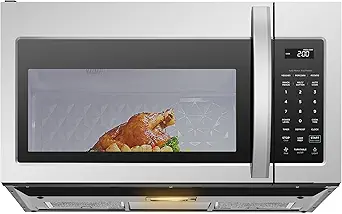 |
| Best Budget The cheapest option that still gets the job done reliably | GE 30" Over-the-Range Microwave JVM3160RFSS |  |
| Top Rated A top-rated pick with lots of positive feedback | GE Over-the-Range Microwave PVM9179BLTS |  |
| Most Popular A crowd favorite that many people choose with confidence | BLACK+DECKER Over the Range Microwave EM044K6CE-SS | 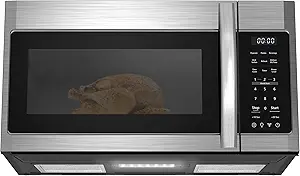 |
| Best Seller A high-volume bestseller chosen again and again | Frigidaire Over-The-Range Microwave FFMV1846VS |  |
Empava Over-the-Range Microwave

| Capacity | 1.7 cubic feet |
|---|---|
| Output Microwave | 1000 watts |
| Vent Fan CFM | 300 |
| Number of Power Levels | 11 |
| Cooking Program | Sensor Cooking |
This Empava over-the-range microwave combines a roomy 1.7 cubic foot cavity with 1000 watts of cooking power and a built-in two-speed 300 CFM venting fan, so it handles everyday reheating and light cooking while also providing cooktop ventilation. Controls are touchscreen with one-touch express pads and sensor cooking presets for common foods, and the glass turntable and stainless steel interior are easy to wipe clean. LED cooktop lighting is bright and helpful when working at the range, and a child lock and cooking-complete reminder add useful safety and convenience. Practical limitations include a basic control layout rather than a high-end interface and recirculation vent orientation as shipped, which may reduce venting effectiveness compared with ducted installs. The unit is best suited for households that want a capable over-the-range microwave with solid fan performance and straightforward features without premium bells and whistles.
Best for: Buyers who want a dependable over-the-range microwave with solid cooking power and an effective fan for everyday family use, without needing premium smart features.
Less Ideal for: Users seeking top-tier interfaces, advanced connectivity, or maximum ducted ventilation performance for heavy cooking environments should consider other models.
- Powerful 1000W output for faster reheating and cooking
- Integrated 300 CFM two-speed venting fan helps clear smoke and odors
- Sensor cooking and pre-programmed auto menus simplify everyday use
- Stainless steel interior and glass turntable are easy to clean
- Bright LED cooktop lighting improves visibility while cooking
- Ships set for recirculation venting which can be less effective than ducted exhaust
- Control layout and features are basic compared with premium models
Verdict: A practical over-the-range microwave that pairs 1000W cooking with a 300 CFM fan for balanced everyday performance and reliable venting.
Samsung Smart SLIM Over-the-Range Microwave

| Capacity | 1.1 cubic feet |
|---|---|
| Wattage | 1100 |
| Ventilation | 550 CFM |
| Turntable Diameter | 11.5 inches |
| Number of Power Levels | 5 |
The Samsung Smart SLIM is an over-the-range microwave designed to save space while providing strong ventilation and modern connectivity. It pairs a 1.1 cubic foot cavity and 1100 watt cooking output with a 550 CFM hood vent and dual wide grease filters, so it handles everyday reheating and heavier stovetop steam better than typical compact OTR units. Controls are touch-based with Wi‑Fi and voice control for remote start and basic commands, and the wide LED light bar improves cooktop visibility. Sensor Cook and multiple cook programs simplify common tasks, while a ceramic enamel interior resists staining. The slim depth makes it a fit for shallower installations but the unit sacrifices extra interior room compared with deeper models. Installation requires over-the-range wiring and ducting for full vent performance, and the microwave offers five power levels rather than variable digital increments. For buyers prioritizing venting performance and smart features in a compact footprint, this unit blends both, though those wanting the largest internal capacity or the most granular power control may prefer a larger model.
Best for: Buyers who need strong venting and smart connectivity in a slim over-the-range package and who prioritize cooktop ventilation and compact installation over maximum interior volume.
Less Ideal for: People who need the largest interior capacity or the most precise power control for specialty cooking should consider deeper, higher-capacity over-the-range models instead.
- High 550 CFM ventilation with dual wide grease filters for strong hood performance
- Compact 1.1 cu ft cavity that fits slim over-the-range spaces
- 1100 watt output and Sensor Cook for effective, even heating
- Wi‑Fi and voice control for remote operation and convenience
- Ceramic enamel interior that is easier to clean and resists stains
- Slim depth means less usable internal space than deeper OTR microwaves
- Only five power levels limits fine-grained power adjustments
Verdict: Choose this Samsung Smart SLIM if you want a compact over-the-range microwave that delivers strong 550 CFM venting plus smart Wi‑Fi and voice controls in a space-saving footprint.
Midea Over the Range Microwave 1.7 Cu Ft

| Capacity | 1.7 cubic feet |
|---|---|
| Power Consumption | 1000 watts |
| Number of Programs | 19 |
| Number of Power Levels | 10 |
| Ventilation | 300 CFM |
The Midea over-the-range microwave is a straightforward venting microwave designed to handle everyday family cooking while clearing smoke and odors from the cooktop. It offers a 1.7 cubic foot cavity and a 12.5-inch turntable so it fits common dishes and a rotisserie chicken, and the 1000W output with 10 power levels gives enough range for reheating, defrosting, and basic cooking. The unit includes 18 one-touch auto menus and a touchscreen control panel for fast presets, plus a bright cooktop light to illuminate the range below. Venting performance is rated at 300 CFM with adjustable fan speeds, which is strong for an over-the-range model and helps keep the kitchen air clearer during frying or sautéing. Practical buyers should note it is a basic stainless steel unit without advanced connectivity or convection functions, and installation requires standard over-the-range mounting and ducting considerations. For everyday cooking and effective venting in a mid-sized kitchen, this model delivers useful features without unnecessary complexity.
Best for: Buyers who want a practical, no-frills over-the-range microwave that combines solid cooking power with strong venting to keep a mid-sized kitchen clear of smoke and odors.
Less Ideal for: If you need smart features, convection baking, or a compact countertop unit, this dedicated over-the-range model is not the right choice.
- 1000W power with 10 power levels for versatile reheating and cooking
- 19 auto programs and one-touch presets simplify common tasks like popcorn and defrost
- 300 CFM adjustable venting effectively removes smoke and odors from the cooktop
- Bright cooktop light improves visibility while cooking
- 1.7 cu.ft capacity accommodates large dishes and a rotisserie chicken
- No smart connectivity or advanced cooking modes such as convection
- Installation requires proper over-the-range mounting and ducting which may need professional help
Verdict: Choose this Midea over-the-range microwave if you want reliable 1000W cooking plus strong 300 CFM venting in a simple, easy-to-use package.
GE 30" Over-the-Range Microwave JVM3160RFSS

| Capacity | 1.6 cubic feet |
|---|---|
| Wattage | 1000 watts |
| Venting | Two-speed 300 CFM |
| Power Levels | 9 |
| Installation Type | Over-the-Range |
The GE JVM3160RFSS is an over-the-range microwave that pairs basic cooking controls with a built-in vent hood for smoke and odor removal. It offers 1,000 watts and a 1.6 cubic-foot cavity suited to reheating, defrosting and simple family meals, with one-touch presets, weight/time defrost and a selectable turntable on/off for larger dishes. The integrated two-speed, 300 CFM venting clears steam and cooking smells above the cooktop while LED lighting gives adjustable surface illumination. Installation is intended for standard over-the-range mounting and the control pad keeps operation straightforward for everyday use. Expect dependable, no-frills performance rather than advanced smart features or high-end finishes; the stainless steel interior and exterior are practical but not premium, and the unit focuses on consistent heating rather than speed-cooking tricks. For shoppers who need a combined microwave and effective venting without extra bells, this model covers core needs reliably.
Best for: Buyers who need a practical over-the-range microwave with reliable venting and straightforward controls and who prioritize function and value over advanced features.
Less Ideal for: Customers seeking smart-connected microwaves, premium finishes, or advanced convection/air-fry cooking capabilities should look elsewhere.
- Integrated two-speed 300 CFM vent effectively removes smoke and odors above the cooktop
- 1,000W power with 1.6 cu ft capacity fits common family reheating and cooking tasks
- One-touch controls and weight/time defrost simplify everyday use
- Turntable on/off adds flexibility for large or odd-shaped dishes
- LED surface light with night-light setting improves cooktop visibility
- Basic feature set with no smart connectivity or advanced cooking modes
- Not designed for high-end or professional kitchen aesthetics
Verdict: A straightforward over-the-range microwave that combines solid 1,000W cooking performance with an effective 300 CFM vent for buyers focused on value and ventilation.
GE Over-the-Range Microwave PVM9179BLTS

| Capacity | 1.7 cubic feet |
|---|---|
| Wattage | 950 watts |
| Heating Method | Convection |
| Vent Power | 300 CFM |
| Installation Type | Over-the-Range |
This GE over-the-range microwave combines countertop-sized capacity with built-in venting and convection to handle everyday cooking and light baking above a cooktop. It offers 950 watts of microwave power, convection bake/roast modes, and sensor cooking controls that simplify tasks like reheating and defrosting, while the Chef Connect feature can sync the microwave lighting or controls with compatible GE cooktops. The three-speed, 300 CFM venting blower is intended to capture steam and cooking odors from the range below, and the LED cooktop lighting provides clear task lighting for the stove. Controls are button-based with a touchscreen input for straightforward operation, and the steam clean option helps reduce manual scrubbing inside the stainless steel cavity. Trade-offs include a single microwave power level listed and a relatively modest 1.7 cu ft capacity that may limit larger cookware, and the unit is fairly heavy which affects installation. For kitchens that need reliable venting over the range plus the flexibility of convection, this unit delivers sensible features in a familiar, easy-to-use package.
Best for: Buyers who prioritize a dependable over-the-range solution that combines effective venting with basic convection and easy-to-use controls for daily home cooking.
Less Ideal for: Those who need the largest internal capacity or very fine microwave power control for specialized cooking should look at larger or more configurable models.
- Built-in 3-speed 300 CFM venting blower to remove steam and odors
- Convection cooking adds bake and roast capability beyond standard microwaving
- Sensor cooking controls simplify reheating and defrosting
- Stainless steel interior for easier cleaning and durability
- LED cooktop lighting improves visibility at the range below
- Listed with only one microwave power level which limits fine power adjustment
- 1.7 cu ft capacity may not accommodate very large dishes
- Heavy unit weight makes installation more challenging
Verdict: Choose this GE over-the-range microwave when you want reliable venting plus the added versatility of convection in a straightforward, durable kitchen appliance.
BLACK+DECKER Over the Range Microwave EM044K6CE-SS

| Capacity | 1.7 cubic feet |
|---|---|
| Wattage | 1000 watts |
| Number of Power Levels | 10 |
| Cooking Programs | Beverage, Defrost, Melt/Soften, Popcorn, Reheat |
This BLACK+DECKER over-the-range microwave pairs a roomy 1.7 cubic foot interior and a 12.4-inch turntable with 1000 watts of microwave power, making it useful for everyday reheating, defrosting, and simple cooking. It uses touch controls and one-touch auto cook menus for Popcorn, Beverage, Melt/Soften, Reheat, and Defrost, plus 10 power levels and multi-stage cooking for more precise results. As an over-the-range unit it includes a two-speed, 300 CFM vent fan and integrated light to clear fumes and brighten the cooktop below. Installation is standard for OTR models and the stainless steel interior and exterior are straightforward to wipe down. The main compromises are its manual defrost and absence of advanced inverter controls, so delicate thawing or very even power at low settings may require extra attention, and the vent is basic compared with higher-end range hoods. For buyers prioritizing a dependable venting microwave that simplifies common tasks, this model offers a solid, practical balance of capacity, power, and venting.
Best for: Buyers who want a reliable over-the-range microwave that combines roomy capacity and strong microwave power with an integrated vent and simple controls for everyday cooking and reheating.
Less Ideal for: Anyone seeking premium, even low-power cooking precision or a professional-grade range hood replacement should consider higher-end options instead.
- 1.7 cu ft interior with 12.4-inch turntable fits larger plates and casserole dishes
- 1000 watts and 10 power levels allow fast reheating and flexible cooking
- Built-in two-speed 300 CFM vent fan and light for over-the-range ventilation
- One-touch auto cook menus and touchscreen controls simplify common tasks
- Stainless steel interior and exterior are easy to clean
- Manual defrost and lack of inverter technology can produce uneven results at low power
- Vent functionality is basic compared with dedicated high-end range hoods
Verdict: A practical over-the-range microwave that delivers strong 1000W cooking performance and integrated venting for buyers who want dependable everyday cooking and exhaust in one unit.
Frigidaire Over-The-Range Microwave FFMV1846VS

| Capacity | 1.8 cubic feet |
|---|---|
| Wattage | 1000 watts |
| Turntable Diameter | 12.35 inches |
| Number of Programs | 6 |
This Frigidaire over-the-range microwave combines a roomy 1.8 cubic foot cavity with 1000 watts of cooking power and a two-speed ventilation hood, so it functions as both a microwave and a cooktop hood. It is used like a standard OTR unit: one-touch preset buttons for common foods, an add-30-seconds control for quick boosts, and an extra-large 12.5-inch glass turntable that accommodates large bowls and a 13" x 9" baking dish. The LED interior and exterior lighting improve cooktop visibility while the zero-clearance door opens to 90 degrees to avoid hitting adjacent cabinets. Practical benefits include simpler meal prep with convenient presets and built-in venting that helps remove steam and light cooking odors without a separate hood. Limitations are a single power level setting and basic controls rather than advanced sensor cooking, so timing may need manual adjustment for some foods, and venting is limited to two fan speeds rather than variable high-performance extraction.
Best for: Buyers who prioritize a familiar, reliable over-the-range microwave with built-in venting and easy one-touch controls for everyday cooking.
Less Ideal for: Users who need advanced sensor cooking, multiple power levels for precise tasks, or high-capacity commercial-style ventilation.
- Large 1.8 cu. ft. cavity fits a 13" x 9" baking dish
- Built-in two-speed ventilation doubles as an over-the-range hood
- LED interior and cooktop lighting for improved visibility
- One-touch presets and add-30-seconds make common tasks quick
- Only one listed power level which limits fine-grained power control
- Basic control panel lacks advanced sensor or multi-stage cooking
Verdict: A roomy, straightforward over-the-range microwave that combines reliable 1000-watt cooking and basic two-speed venting for everyday kitchens.
Choosing the Right Microwave with Venting: Key Factors to Consider
Extraction Power and Airflow
Extraction power determines how effectively the microwave removes steam, smoke, and cooking odors from the cooktop area. Look for manufacturer-specified airflow numbers or multiple fan speeds so you can match ventilation to the intensity of cooking. Higher extraction capacity is useful for frequent or high-heat cooking, while lower settings reduce noise for light tasks.
Airflow interacts with kitchen ducting and hood height. A unit with strong extraction but poor duct routing can underperform, so consider both the fan rating and the venting path when assessing real-world effectiveness.
Ducting Options and Installation Requirements
Microwaves with venting typically support top-vent, rear-vent, or convertible recirculation modes. The available ducting options affect where the unit can be placed and how easy it is to route the exhaust through existing walls or ceilings. Confirm the clearances required above the range, the duct diameter supported, and whether the unit includes a transition adapter for your duct type.
Installation complexity influences both cost and feasibility. Cabinets may need modification for top or rear venting, and some kitchens cannot accommodate external ducting, which makes recirculation the only option. Factor in whether you have access for a professional installer or the tools and skills to handle cutouts and properly seal ducts.
Noise and Fan Speed Control
Noise matters because these units run at fan speeds while you cook and may be audible in open-plan homes. Look for models that list decibel levels or offer several fan speeds. Variable-speed fans let you balance extraction and quiet operation: run higher speeds for heavy frying and lower speeds for simmering.
Also check whether the fan motor is isolated or uses vibration-reducing mounts, as this reduces rattle and resonance through cabinetry. A quieter fan can make the kitchen more pleasant during long cooking sessions and reduces distraction in nearby living spaces.
Filter Type and Ease of Maintenance
Grease and charcoal filters are central to long-term performance. Grease filters trap oil and should be easy to remove and clean, ideally dishwasher-safe. Units that use charcoal or carbon filters for recirculation will require periodic replacement, so check availability and lifespan of replacement filters.
Maintenance access affects real-world upkeep. A microwave with hinged access or simple-release clips for filters reduces the time and cost of cleaning. Consider how often you cook at high heat and plan for more frequent filter cleaning or replacement if so.
Control Layout and Venting Modes
Controls determine how easily you can switch venting modes, adjust fan speed, and access timers or lights while cooking. Look for clearly labeled buttons or a simple interface that lets you change fan levels without navigating complex menus. Dedicated vent controls make it easy to engage the fan quickly when a cooking task starts.
Some units include timed venting or humidity-triggered modes that automate fan operation. These can be useful, but they should not replace straightforward manual control. Ensure the control layout matches how you cook so the ventilation is used consistently and effectively.
Ducted Vs Recirculating Venting: Pros and Cons
Ducted systems route cooking exhaust outside the home, which removes heat, moisture, grease particles, and odors more effectively than recirculation. If your kitchen layout supports a straight, adequately sized duct run, a ducted microwave with venting will deliver the best long-term air quality and prevent grease buildup inside cabinets.
- Ducted: Better odor and moisture removal, requires external ductwork and wall or roof penetration.
- Recirculating: Easier retrofit, uses charcoal filters, reduces need for new ductwork but is less effective at removing heat and humidity.
Measuring and Matching Fan Performance to Your Kitchen
Match the microwave fan performance to your cooktop size and typical cooking style. Large ranges and frequent high-heat frying benefit from higher airflow and a short, direct duct run. For smaller cooktops or light use, moderate airflow with quieter operation can be a better tradeoff. Consider the overall kitchen volume and whether exhaust air will be shared with other ventilation systems.
- Look for higher airflow ratings for frequent searing or wok cooking.
- Short, straight ducts preserve airflow; long or convoluted runs reduce effective extraction.
Making Installation Easier
Preparation is the key to a smooth install. Verify cabinet cutout dimensions, available stud locations, and where existing wiring or gas lines sit. If reversing duct direction is needed, ensure the unit supports the required transition pieces. Mark and measure twice before cutting to avoid rework.
- Confirm required clearances above the cooktop and behind the cabinet.
- Have proper mounting hardware and a helper; microwaves with venting are often heavy and require two people to lift into place.
Maintenance Routines That Keep Venting Effective
Establish a cleaning schedule for grease filters and the exterior vent path. Grease filters typically need cleaning every 1 to 3 months depending on usage; charcoal filters should be replaced per manufacturer guidance. Wiping the exterior and checking the vent outlet for blockages keeps airflow consistent over time.
- Clean washable grease filters in the dishwasher or with warm, soapy water.
- Periodically inspect the external vent cap and ductwork for bird nests or debris if you have outdoor ducting.
Lighting and Additional Features to Consider
Under-cabinet lighting is a common feature on over-the-range microwaves and can replace or supplement hood lights. Consider the brightness and beam pattern, and whether the lights use replaceable bulbs or integrated LEDs. Other useful features include timed venting, auto-off lights, and simple sensor programs that reduce the need to manually adjust settings while cooking.
- Integrated LED lights last longer and draw less power than incandescent bulbs.
- Sensor cooking can reduce guesswork for reheating, but ensure sensor logic does not interfere with venting controls.
How We Chose the Best Microwave with Venting
We prioritized models that address the practical needs of homeowners installing an over-the-range microwave with venting. Our selection process focused on measurable ventilation and installation factors rather than brand popularity. Key evaluation criteria included tested airflow or listed extraction capacity, available ducting options and ease of duct routing, control layout and venting modes, unit noise at typical fan speeds, and long-term maintenance considerations such as grease filter access and replaceability. We excluded compact countertop-only microwaves and units that do not list venting or exhaust specifications. We also filtered out units lacking clear installation documentation or those that only offer recirculation with minimal filtration. The final shortlist balances extraction effectiveness, installation flexibility, reasonable operating noise, and straightforward upkeep so buyers can compare meaningful performance attributes when choosing a vented microwave.
Our full evaluation process is outlined in our review methodology.
FAQ
Can I convert a recirculating microwave to ducted venting later?
Often you can convert by installing the correct vent transition and running ductwork to the outside. Check the unit's installation manual to confirm that it supports top or rear external venting and the required duct size.
How loud are microwave vents at typical settings?
Noise varies by model and fan speed but is usually noticeable on higher settings. Models with multiple speeds let you run quieter at low extraction levels and increase power only when needed.
How often should I clean or replace the filters?
Washable grease filters generally require cleaning every 1 to 3 months depending on cooking frequency. Charcoal or carbon recirculation filters need replacement according to the manufacturer's schedule, which is typically several months to a year.
What duct size should I use for best performance?
Larger, straighter ducts preserve airflow better. Many units work with 3- to 4-inch ducts, but refer to the installation requirements for the recommended diameter and try to minimize bends and length to keep extraction effective.
Will a vented microwave remove smoke from heavy frying?
A vented microwave improves smoke and odor removal compared with recirculation, but very heavy smoke or grease-laden fumes may still require a dedicated high-capacity range hood for best results.
Final Verdict
Prioritize extraction capacity, ducting compatibility, and noise when choosing a microwave with venting. Tradeoffs are common: stronger fans remove more moisture and odors but usually run louder and may require more robust ducting. Ease of maintenance and filter access also matter because real-world performance depends on keeping filters clean and ducts clear. Choose a unit whose venting options match your kitchen layout and installation willingness. If you need an easier retrofit, favor units with flexible ducting or simple recirculation filters. For the best air quality, opt for external ducting and higher airflow while planning for professional installation if needed.