
Note: This article contains affiliate links. If you click on these links and make a purchase, we may earn a small commission at no extra cost to you. This helps support our research and content. Read our full affiliate disclosure here.
If you need cleaner air in a small room, bedroom, or office, a Mini Air Purifier can reduce dust, pollen, and odors without taking up much space. Choosing the right compact purifier matters because small units vary widely in filtration speed, noise, and maintenance needs. This guide summarizes seven shortlisted mini air purifiers that suit small spaces and light-duty use. We evaluated candidates for real-world factors like filtration effectiveness, fan and noise performance, and ease of upkeep. Read on to see which compact options match your priorities and which tradeoffs to expect as you pick the best fit.
Top Picks at a Glance
| Best Overall The best all-around choice for most situations | VOOPNU HEPA Air Purifier DH-JH12 |  |
| Best Quality Built to a higher standard if you want something more solid | DREO Air Purifier 338 |  |
| Best Value The sweet spot between price and what you get | AromaRoom AP103-A Air Purifier |  |
| Best Budget The cheapest option that still gets the job done reliably | Rosekm Small Air Purifier AP001R |  |
| Top Rated A top-rated pick with lots of positive feedback | AROEVE MK01A Air Purifier |  |
| Most Popular A crowd favorite that many people choose with confidence | Levoit Core Mini-P |  |
| Best Seller A high-volume bestseller chosen again and again | Levoit LV-H128 Mini Air Purifier |  |
VOOPNU HEPA Air Purifier DH-JH12

| Coverage (laboratory) | 250 ft² per 15 minutes / 1,076 ft² per hour |
|---|---|
| Filtration | H13 true HEPA triple-layer |
| Noise level | 22 dB (low) |
| Speeds | 3 fan speeds |
| Model number | DH-JH12 |
The VOOPNU DH-JH12 is a small, user-friendly air purifier aimed at improving air quality in bedrooms, offices, and other compact spaces. It uses a 360° intake and an H13 true HEPA triple-layer filter to capture fine particles and claims to remove 99.97% of airborne pollutants; VOOPNU reports it cleans 250 ft² every 15 minutes and covers up to 1,076 ft² per hour in lab testing. Controls are simplified to one-tap operation with three fan speeds plus a timer, and the unit runs quietly down to about 22 dB, making it suitable for overnight use. A built-in essential oil tray lets you add scent while filtering. Practical benefits include easy placement thanks to the small footprint, a washable pre-filter option in some variants, and multiple certifications (DOE, ETL, FCC, CARB, CE, ROHS) that support safety and emissions claims. Important limitations are its small physical size and lightweight construction, which mean it is best for single rooms rather than whole-house use, and replacement filters are required on a regular schedule to maintain performance.
Best for: Buyers who want a compact, low-noise purifier for a bedroom, office, or small living area and value straightforward controls and H13 filtration over whole-home coverage.
Less Ideal for: People seeking high-capacity or whole-house air cleaning should choose a larger, higher-CADR purifier instead.
- H13 true HEPA triple-layer filtration captures very small airborne particles
- 360° intake promotes even room circulation from a compact footprint
- Very quiet operation down to 22 dB suitable for nighttime use
- Simple one-touch controls with three speeds and a timer for easy everyday use
- Built-in essential oil tray lets you add scent without separate accessories
- Small, lightweight design limits effectiveness to single rooms rather than large open areas
- Regular filter replacements required to sustain filtration performance
Verdict: A compact, very quiet H13 HEPA purifier that delivers dependable single-room air cleaning with simple controls and an essential oil option.
DREO Air Purifier 338

| CADR (AHAM Verified) | 115 CFM |
|---|---|
| Filtration | Pre-filter + HEPA + Activated carbon |
| Coverage (1 ACH) | up to 856 sq. ft. |
| PM2.5 Sensor | High-precision real-time monitoring |
| Noise level | as low as 18 dB |
The DREO Air Purifier 338 is a compact HEPA purifier designed to clean indoor air quickly and quietly. It uses a 3-in-1 filter (pre-filter, HEPA, activated carbon) to capture particles down to 0.3 μm and reduce common odors, while a high-precision PM2.5 sensor and four-color LED display give immediate feedback on air quality. AHAM-verified 115 CFM CADR and a 360° spiral airflow intake mean it refreshes air rapidly for its size, with Auto, Turbo, Normal, and Sleep modes plus four fan speeds to match conditions and noise tolerance. HyperSilent motor technology and Sleep Mode keep operation as low as 18 dB on the quietest setting, making it suitable for bedrooms and workspaces. Energy Star certified annual usage helps limit running costs. The unit also includes an aroma box for scent diffusion. Limitations are typical for small purifiers: coverage claims vary by ACH assumptions and filter replacement will be a recurring cost; it is best for room-level use rather than whole-house cleanup.
Best for: Buyers who prioritize measurable cleaning performance and quick air turnover in small to medium rooms and want real-time air quality feedback to guide operation.
Less Ideal for: People needing to purify very large open-plan areas or whole-home systems should choose a larger-capacity unit or whole-house solution.
- AHAM-verified 115 CFM CADR for measurable performance
- 3-in-1 HEPA filter captures up to 99.97% of 0.3 μm particles
- Real-time PM2.5 sensor with easy-to-read LED AQI indicator
- Very quiet operation down to 18 dB and a dedicated Sleep Mode
- Auto and Turbo modes plus four fan speeds for flexible control
- Designed for room-level coverage so not suitable for whole-house purification
- Requires periodic filter replacements which add to operating cost
- Aroma box may not appeal to users who want pure scent-free filtration
Verdict: Choose the DREO 338 if you want a compact, AHAM-verified purifier that refreshes room air quickly while staying exceptionally quiet.
AromaRoom AP103-A Air Purifier
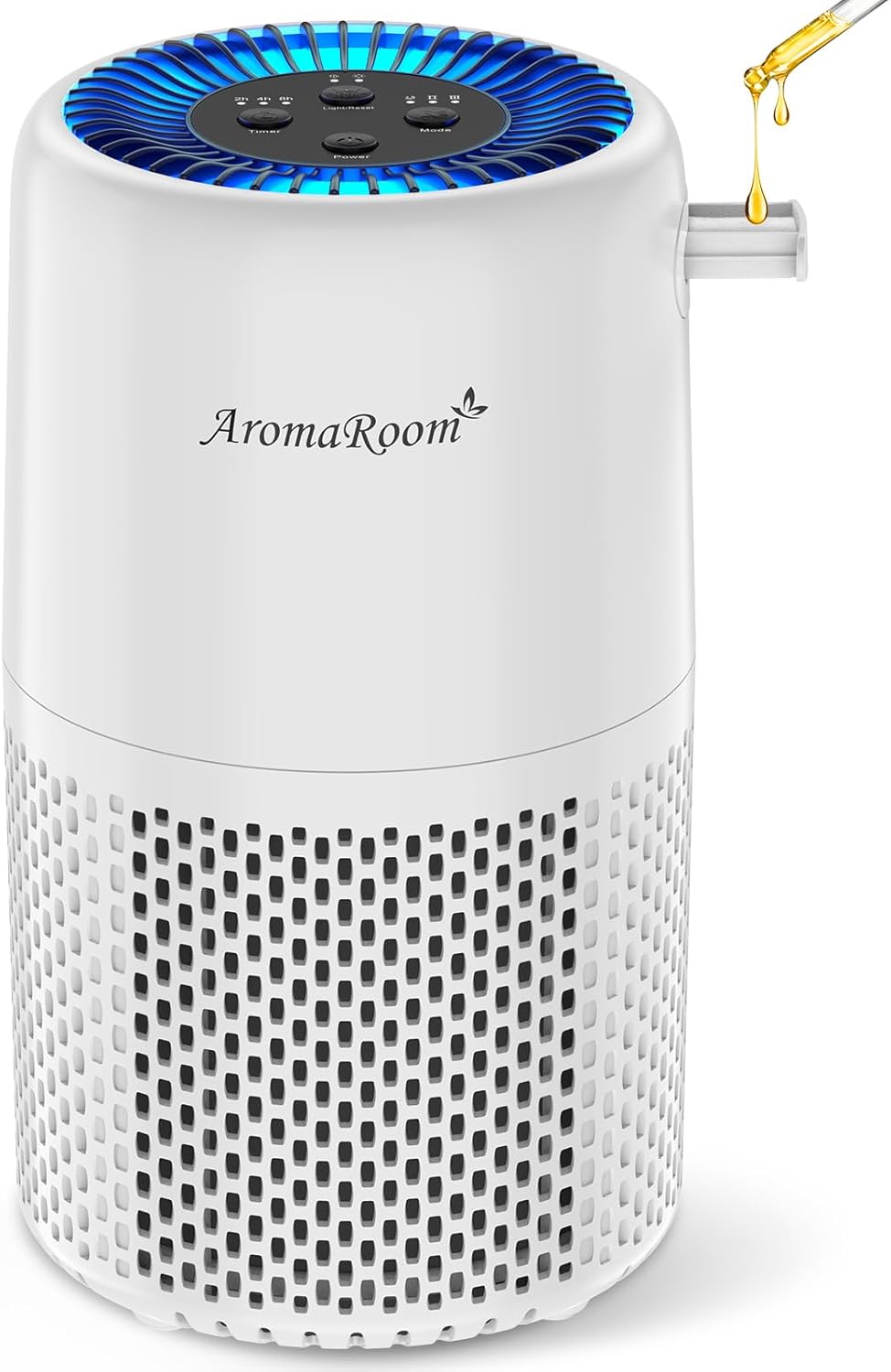
| Filtration | H13 HEPA 3-in-1 |
|---|---|
| Coverage | Circulates air twice per hour in 323 ft² (30 m²) |
| Noise level | 22 dB (sleep mode) |
| Timer | 2/4/8 hours |
The AromaRoom AP103-A is a small, countertop air purifier built for bedrooms, nurseries, and other compact spaces where quiet operation matters. It uses a three-in-one H13 HEPA filtration system that captures fine particles including dust, pollen, pet dander and smoke particulates down to 0.1–0.3 microns, and the manufacturer rates it to circulate room air twice per hour in a roughly 323 ft² space. Controls include sleep mode that drops noise to about 22 dB, three timer options (2/4/8 hours) and a fragrance pad for light aromatherapy. In practice the unit is easy to place, relatively unobtrusive, and the low-noise setting is suitable for overnight use. The purifier is best for maintaining baseline air cleanliness and reducing odors in small rooms; filter replacement is recommended every 3–6 months, so ongoing filter costs and swapping are part of ownership. It is not designed for large open-plan areas or heavy smoke clearing where higher CADR or larger units would work faster.
Best for: Buyers who need a compact, low-noise purifier to reduce allergens and odors in bedrooms or small living spaces and prioritize quiet overnight operation and simple maintenance.
Less Ideal for: People who need rapid purification for large open-plan rooms, heavy wildfire smoke removal, or industrial-level particle control should choose a larger, higher-output purifier.
- True H13 HEPA filter captures particles down to 0.1–0.3 microns, including pollen and pet dander
- Very quiet sleep mode rated around 22 dB for overnight use
- Compact footprint suitable for bedside tables and small rooms
- Includes aromatherapy pad for adding fragrance
- Recommended filter replacement every 3–6 months increases ongoing cost
- Air circulation claim (twice per hour) is for a modest room size and may be slow in larger spaces
Verdict: AromaRoom AP103-A is a quiet, compact H13 HEPA purifier ideal for keeping bedrooms and small rooms fresher with minimal noise and fuss.
Rosekm Small Air Purifier AP001R

| Filter Type | H13-grade HEPA Filter |
|---|---|
| Noise Level | As low as 28 dB |
| Power | Corded (not rechargeable) |
The Rosekm AP001R is a pocket-sized tabletop air purifier built for single-person spaces like desks, bedside tables, and dorm rooms. It uses an H13-grade true HEPA filter to capture particles down to 0.3 microns and claims to remove common indoor irritants such as dust, pollen, pet dander, and some odors. The unit is corded and lightweight, so it is easy to move between rooms, and it runs quietly—advertised noise as low as 28 dB—making it suitable for sleep or focused work. A small aroma pad lets you add essential oils if you want light scenting. Practical limits are its coverage and runtime expectations: the compact footprint means it is meant for close-range air cleaning rather than whole-room performance, and filters should be replaced regularly to maintain effectiveness. The simple controls and optional soft night light keep operation straightforward, though you should plan for periodic filter purchases. For buyers who need a low-cost, unobtrusive purifier for near-field use, this model is a sensible option.
Best for: Buyers who want an inexpensive, no-frills purifier to improve air quality at a desk, nightstand, or other small personal space and prioritize quiet, compact design.
Less Ideal for: People looking to clean air across an entire living room, open-plan area, or multiple rooms should consider a larger-capacity purifier instead.
- H13 true HEPA filter captures particles down to 0.3 microns
- Very compact and lightweight for easy placement and portability
- Quiet operation suitable for bedrooms or workspaces
- Optional soft blue night light and aroma pad for light scenting
- Designed for very small, close-range spaces so not effective for large rooms
- Corded power only, not battery operated
Verdict: A compact, budget-friendly HEPA tabletop purifier that quietly improves near-field air quality in small personal spaces.
AROEVE MK01A Air Purifier

| Coverage Area | Up to 287 sq.ft |
|---|---|
| Decibel | 22dB |
| Filter Lifespan | 3-6 months |
| Item model number | MK01A |
The AROEVE MK01A is a small tabletop air purifier designed for bedrooms and personal spaces up to about 287 sq ft. It uses a multi-stage filter to capture particles such as smoke, pollen, pet dander, and hair, and its 360-degree dual-channel intake helps circulate air across a room. In daily use the unit runs very quietly on low and sleep modes—the manufacturer cites noise as low as 22 dB—so it is unobtrusive overnight or while working. The purifier also includes an aroma pad so you can add a few drops of essential oil for light fragrance, and an LED indicator alerts you when the filter needs replacement; filters are expected to be changed every 3–6 months depending on use. Trade-offs are typical for a mini purifier: it is intended for smaller rooms rather than whole-home cleaning, and it does not list an activated carbon capacity for odor or VOC removal beyond particle filtration. For buyers who want a compact, low-noise unit that consistently moves air in a single room, the MK01A is a practical choice.
Best for: Buyers who prioritize a quiet, reliable purifier for a bedroom or personal workspace and want straightforward maintenance reminders and steady particle filtration.
Less Ideal for: Those seeking a primary air purifier for large open-plan areas or heavy odor and chemical removal should consider larger units with dedicated carbon or VOC-rated filters.
- 360-degree dual-channel air inlets for consistent room circulation
- Very low reported noise level (around 22 dB) suitable for bedrooms and sleep
- Filter replacement indicator simplifies maintenance
- Aroma pad for optional light fragrance while purifying
- Designed for small to medium rooms, not suitable as a whole-house solution
- No explicit spec for gas/VOC or heavy-odor removal beyond particulate filtration
Verdict: A compact, whisper-quiet purifier that reliably cleans particles in single rooms while signaling when its filter needs replacing.
Levoit Core Mini-P
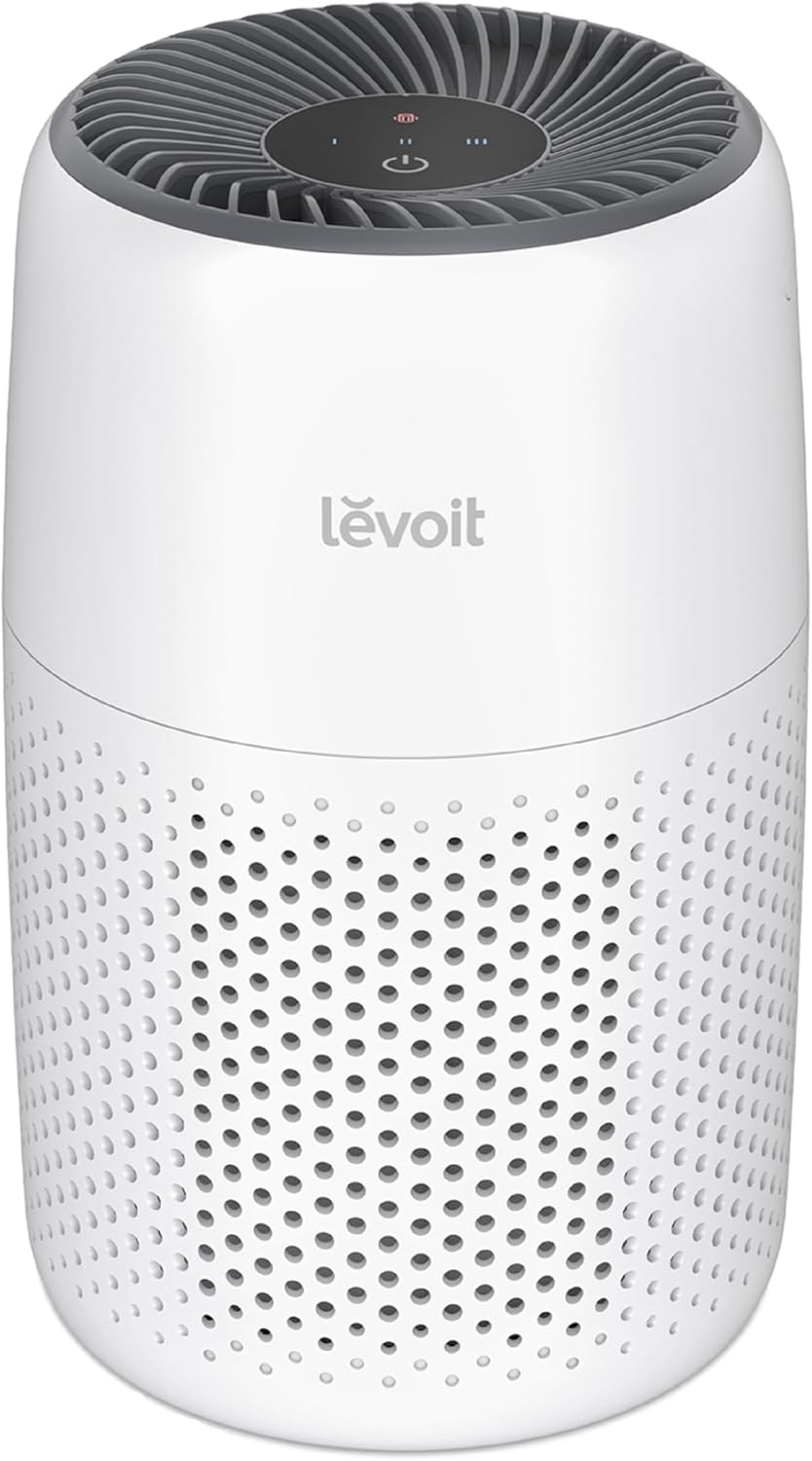
| Rated Power | 7W |
|---|---|
| Noise Level | 27–45dB |
The Levoit Core Mini-P is a small, plug-in air purifier intended for desktops, bedrooms, and other personal spaces where a full-size unit would be overkill. It uses a pre-filter and main filter to capture lint, hair, pet dander, smoke and fine particles, and includes a small fragrance sponge for light aromatherapy. The unit runs quietly (27–45 dB) and draws very little power (rated 7W), so it can sit by a workstation or on a nightstand without adding noticeable noise or energy load. Practical touches include a sleep mode, an auto-off display and a compact adapter stored inside the unit for tidy placement. Limitations are its size and coverage: this is built for localized use rather than whole-room cleaning, and the aromatherapy feature accepts only a tiny amount of oil to avoid damage, so do not expect strong scent delivery.
Best for: Buyers who prioritize proven performance and wide user satisfaction for a compact, quiet purifier to improve air quality at a desk, bedside, or small room.
Less Ideal for: People seeking whole-room coverage or high CADR performance for open living areas should choose a larger purifier instead.
- Effective filtration for desktop-sized spaces with a pre-filter plus main filter
- Very low noise levels suitable for sleeping or focused work
- Low power draw (7W) for continuous use
- Built-in aromatherapy sponge and tidy adapter storage for convenience
- Not intended to purify larger rooms or open-plan spaces
- Aromatherapy accepts only 2–3 drops so scent output is subtle
Verdict: A compact, quiet, and energy-frugal personal air purifier that reliably cleans the air at a desk or bedside while offering light aromatherapy.
Levoit LV-H128 Mini Air Purifier

| Rated Power | 10W |
|---|---|
| Coverage Area | AHAM-verified for 47 ft² |
| Noise Level | 27-44dB |
| Power Adapter | 100-240V, 50/60Hz |
The Levoit LV-H128 is a small, portable air purifier intended for single rooms, desktops, and bedside use. It uses a 3-stage dual-sided filter to remove dust, pollen, pet dander, and common airborne particles and is AHAM-verified to deliver 4.8 air changes per hour in a 47 ft² area, which makes its performance predictable for small spaces. The unit runs quietly at 27 to 44 dB and includes a sleep mode that turns the display off on the lowest fan setting, so it is easy to keep running overnight. At 10W rated power and a universal 100-240V adapter, it is energy efficient and simple to move between rooms. Practical limitations are its small coverage area and modest CADR numbers, so it is not suitable for larger living rooms or whole-home purification; the small filter also means regular replacements if run continuously. Controls are straightforward and the compact footprint fits tight desks or nightstands but buyers should plan around the verified small-room use case.
Best for: Buyers who want a simple, reliable purifier for a bedroom, office, or dorm room and prioritize proven small-room performance and low noise over high-capacity cleaning.
Less Ideal for: People who need to purify larger living spaces, open-plan rooms, or whole-home coverage should choose a higher-capacity purifier instead.
- AHAM-verified performance for predictable small-room air changes
- Quiet operation with sleep mode suitable for bedrooms
- Low power draw (10W) and wide input voltage for energy-efficient use
- Compact, lightweight design that is easy to relocate
- Coverage and CADR are limited to small rooms and desktop areas
- Filter size and runtime imply more frequent filter replacements under continuous use
Verdict: A compact, AHAM-verified mini purifier that reliably cleans and runs quietly in small bedrooms, offices, or desks.
Choosing the Right Mini Air Purifier: Key Factors to Consider
Filtration Stages and Particle Capture
A mini air purifier's ability to remove particulate pollution depends on the type and quality of its filters. HEPA or true HEPA-style filter stages capture fine particles like dust, pollen, and many smoke particles. Some compact units add prefilters to trap hair and large debris and an activated carbon layer to reduce odors and common volatile organic compounds.
Because small units have limited airflow capacity, filter quality matters more than filter count. A well-designed single HEPA stage paired with a modest carbon layer often outperforms multiple low-grade filters. Check filter specifications and expected particle size capture to understand real-world performance.
Noise Level and Fan Speed Control
Noise is a major factor for bedside or desktop purifiers. Mini units often trade airflow for quiet operation, so look for models with multiple fan speeds and a low-noise night mode. Manufacturers sometimes list decibel levels; compare low- and high-speed figures to understand how disruptive a unit will be in a sleeping or working environment.
Fan control also affects adjustable performance. A unit with precise speed steps or a continuously variable fan allows you to balance cleansing speed against noise and energy use. Consider whether you need an ultra-quiet device for sleep or a slightly louder unit that cleans faster during active periods.
Actual Room Coverage and Clean Air Delivery
Mini purifiers are designed for small spaces. Manufacturer area ratings can be optimistic, so focus on Clean Air Delivery Rate or recommended room square footage for continuous operation. A unit that lists performance for rooms up to 100 square feet will suit desks, nurseries, and small bedrooms, while larger area claims indicate it may be better suited for living rooms.
Remember that layout and airflow in your room influence real results. Place the unit on a stable, elevated surface with clear intake and outflow paths for best circulation. For very small spaces, a lower-rated purifier may be sufficient and quieter.
Filter Replacement Frequency and Cost
Maintenance is a recurring ownership cost that affects long-term satisfaction. Mini purifiers often use smaller, specialized filters that need replacement every few months depending on usage and local air quality. Check stated filter lifespans and whether the unit has indicator lights or Bluetooth alerts to signal when a change is needed.
Also consider filter availability and whether replacements are proprietary or standard sizes. Units with easy, tool-free filter access reduce the hassle of upkeep. Factoring in expected replacement intervals and costs helps avoid surprises and keeps the purifier performing as intended.
Energy Use and Continuous Operation
Small purifiers are typically low-power, but continuous operation can still add to household energy use. Look for units with energy-efficient motors and low-wattage standby modes. Some models are rated for continuous 24/7 use with minimal energy draw, which is useful for allergy seasons or overnight use.
If you plan to run the purifier constantly, estimate monthly energy consumption based on wattage and expected hours. Energy-efficient designs also tend to produce less heat and place less strain on moving parts, which can extend the unit's usable life.
Physical Size, Placement, and Aesthetics
The point of a mini purifier is compactness, but physical footprint and output orientation matter. A tall, narrow unit may fit better on a small desk, while a low-profile model might tuck under a shelf. Consider where you will place the purifier and whether its intake and outflow will be obstructed by furniture.
Also evaluate build quality and styling. A quiet, unobtrusive appearance helps if the purifier will sit in a visible area. Sturdiness and stable feet prevent accidental tip-overs, while simple controls reduce the learning curve for daily use.
Where Mini Purifiers Work Best
Mini air purifiers excel in enclosed, small-volume environments: bedside tables, home offices, nurseries, and dorm rooms. Their compact size makes them ideal when you need targeted air cleaning near a breathing zone rather than conditioning an entire open-plan area.
Expect faster apparent improvement near the unit and slower change across a whole room. For best results, place a mini purifier within a few feet of the primary occupancy area and avoid blocking the intake or outlet vents.
- Ideal for rooms under roughly 150 square feet
- Best used near the person who needs cleaner air
- Not intended as a substitute for whole-home systems
Placement Tips to Maximize Performance
Position the purifier on a stable surface at least a few inches from walls and furniture to maintain airflow. Elevated placement, such as a small table or shelf, can help distribute cleaned air more effectively than floor placement in some layouts.
Avoid enclosed shelves or cramped corners that restrict intake. If the unit is used at night, consider directing airflow away from the pillow to prevent drafts while still circulating air in the sleeping area.
- Keep at least 4 inches clearance on all sides
- Avoid placing behind curtains or inside cabinets
- Rotate placement if you notice uneven cleaning over time
Understanding Filter Indicators and When To Replace
Many mini purifiers include LED indicators, timers, or app notifications for filter replacement. Indicators are helpful but not perfect; they often estimate based on runtime rather than actual particle loading. If you have pets or live in a high-dust area, plan for more frequent changes than the baseline interval.
When replacing filters, follow the manufacturer's guidance for proper disposal and seating. Replacing filters promptly preserves airflow and filtration efficiency and helps avoid motor strain from clogged media.
- Treat indicator lights as guides, not absolute measures
- Inspect prefilters regularly for hair and lint
- Keep a spare filter on hand if you rely on continuous operation
Noise Management Strategies
To balance air cleaning with comfort, run the purifier at a higher speed when you are away from the room or during active periods, then switch to a low or night mode while sleeping or working. Many users schedule higher speeds for short bursts to clear peaks of pollutants and then maintain a low baseline.
If noise from the purifier is disruptive, move it slightly farther from the bed or workspace while keeping it within effective range. White-noise masking or using the purifier as the background noise source can also make higher speeds less intrusive.
- Use high speed for pulses of heavy cleaning, low speed for overnight use
- Combine with room ventilation strategies on mild days
- Check for loose panels or debris if noise seems louder than expected
Special Considerations for Allergy and Asthma Sufferers
For people sensitive to allergens, prioritize units with verified HEPA filtration and a reliable seal so air passes through the filter rather than around it. Also consider a purifier with an activated carbon stage to reduce odor-triggering compounds that can exacerbate discomfort.
Consistent daily operation during allergy seasons is often more effective than intermittent use. Pair the purifier with regular cleaning routines and humidity control to reduce dust mite and mold triggers in small rooms.
- Run continuously during high pollen or symptom days
- Maintain indoor humidity around 30 to 50 percent
- Use alongside vacuuming and bedding care for best results
How We Chose the Best Mini Air Purifier
We applied practical, buyer-focused filters to identify mini air purifiers suited to small rooms and personal spaces. First, we limited selections to compact tabletop or desktop units with documented filtration stages appropriate for particulate removal and common household odors. We prioritized units with measured clean air delivery performance for small-room square footage and models that balance airflow with quiet operation. Key evaluation criteria included filtration effectiveness for particles and VOCs, noise and fan control, energy use and run-time efficiency, and ease of filter replacement and routine cleaning. We also considered build quality, safety features such as tip-over protection and certified electrical compliance, and the availability of replacement filters. We excluded large-room or industrial purifiers and units that rely solely on ionization without any particulate filter stage. The result is a short list of compact, practical mini air purifiers that fit typical home and office use cases.
Our full evaluation process is outlined in our review methodology.
FAQ
How large of a room can a mini air purifier effectively clean?
Mini purifiers are generally intended for small rooms, often up to around 100 to 150 square feet depending on airflow. Coverage claims vary, so match rated coverage to your room size and expect reduced effectiveness in open-plan or cluttered spaces.
Are mini air purifiers noisy at night?
Noise varies by model and fan speed. Many mini purifiers include a low or night mode designed to be quiet enough for sleeping. Running at higher speeds will be louder but can be used intermittently to boost cleaning before switching back to quiet operation.
How often do filters need to be replaced on a mini purifier?
Filter life depends on usage and local air quality but often ranges from 3 to 12 months. Units used continuously or in dusty homes will require more frequent changes. Look for units with clear replacement intervals and indicator features to avoid clogged filters.
Can a mini purifier remove odors and VOCs?
Some mini purifiers include an activated carbon or similar adsorbent stage to reduce common household odors and certain volatile organic compounds. However, carbon capacity is limited in compact units, so strong or continuous odor sources may overwhelm a mini purifier quickly.
Is it safe to leave a mini air purifier running all day?
Most mini purifiers are designed for continuous operation and have low energy draw. Ensure the unit has basic safety features and is placed on a stable surface with proper clearance. Regular maintenance and filter changes help maintain safe, efficient operation.
Final Verdict
For small rooms and personal spaces, prioritize filtration effectiveness, quiet operation, and straightforward maintenance when choosing a Mini Air Purifier. Expect tradeoffs between airflow and noise: faster cleaning usually means louder fan speeds, while ultra-quiet models often clean more slowly. Consider your typical use pattern — continuous low-speed operation for allergy control or intermittent high-speed bursts for rapid clearing — and match that to a unit with the right filter type and replacement schedule. With those priorities in mind, you can confidently select a compact purifier that fits your placement constraints and delivers meaningful air-quality improvement in the spaces where you spend the most time.