
Note: This article contains affiliate links. If you click on these links and make a purchase, we may earn a small commission at no extra cost to you. This helps support our research and content. Read our full affiliate disclosure here.
If you want cold beer on tap nights or perfectly chilled wine by the glass, the right mini fridge makes entertaining easier and protects your bottles and cans. A purpose-built mini fridge for beer and wine keeps consistent temperatures, uses space efficiently, and avoids vibration or rapid temperature swings that can ruin a bottle. This guide shortlists the top mini fridges for beer and wine and explains how we evaluated them for home bars and small kitchens. Below you'll find the shortlisted models that met our practical requirements, plus clear buying guidance on cooling range, capacity, and installation so you can pick the unit that fits your space and serving habits.
Top Picks at a Glance
| Best Overall The best all-around choice for most situations | EUHOMY BR-145 Beverage Refrigerator |  |
| Best Quality Built to a higher standard if you want something more solid | Tylza 24" Dual Zone Wine Refrigerator |  |
| Best Value The sweet spot between price and what you get | Tylza Beverage Refrigerator TAYL86 |  |
| Best Budget The cheapest option that still gets the job done reliably | Erivess Beverage Refrigerator JG07-1 |  |
| Top Rated A top-rated pick with lots of positive feedback | hOmeLabs Beverage Refrigerator HME030065N | 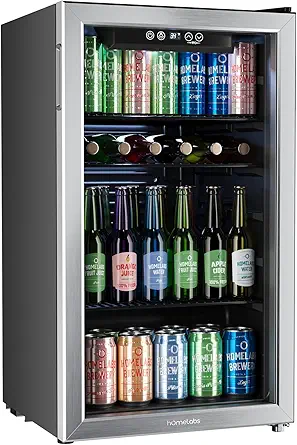 |
| Most Popular A crowd favorite that many people choose with confidence | Electactic Beverage Refrigerator 3.2 Cu.Ft | 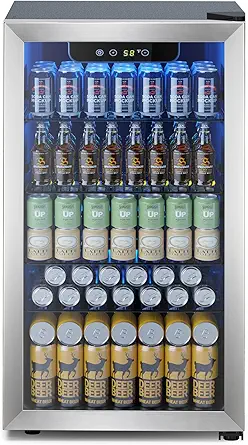 |
| Best Seller A high-volume bestseller chosen again and again | EUHOMY BR013-110 Beverage Refrigerator |  |
EUHOMY BR-145 Beverage Refrigerator

| Capacity | 4.5 cubic feet |
|---|---|
| Temperature Range | 32°F to 61°F |
| Cooling Method | Compressor |
| Defrost System Type | Frost Free |
| Number Of Shelves | 4 |
The EUHOMY BR-145 is a compact beverage refrigerator built to store beer, wine and canned drinks in a household or small office setting. It uses a compressor cooling system with a digital control panel that lets you set temperatures between 32°F and 61°F, so you can chill beer cold or keep white wine at serving temperature. Internal LED lighting and adjustable glass shelves make organizing up to 145 cans or around 37 wine bottles straightforward, and the reversible double-pane glass door with airtight seal helps reduce temperature swings. The unit is rated to operate quietly at about 40 dB and is frost free, which reduces maintenance. Trade-offs include a modest annual energy consumption figure and a built-in installation orientation that may require planning for ventilation if tucked under counters. The fridge is practical for parties, home bars, or kitchens where a dedicated beverage cooler is preferred to a full-size refrigerator.
Best for: Buyers who want a versatile, quiet beverage fridge that can handle both chilled beer and serving-temperature wine for home bars, parties, or small offices and value adjustable shelving and precise temperature control.
Less Ideal for: People needing a portable or ultra-low-energy mini fridge for occasional use or those who require a freezer compartment should look at alternative models.
- Wide temperature range (32°F to 61°F) for both beer and wine storage
- Holds up to 145 cans or about 37 bottles, useful capacity for a compact footprint
- Adjustable glass shelves and LED interior light simplify organization and visibility
- Compressor cooling and frost-free operation provide steady, low-maintenance temperatures
- Reversible tempered glass door with airtight seal helps retain cold and blocks UV light
- Relatively high annual energy consumption compared with some small fridges
- Built-in installation recommendation may need clearance planning for ventilation
Verdict: A roomy, compressor-cooled 4.5 cu ft beverage refrigerator that balances precise temperature control and quiet operation for beer and wine lovers.
Tylza 24" Dual Zone Wine Refrigerator

| Capacity | 4.2 cubic feet |
|---|---|
| Temperature range left zone | 35-50°F |
| Temperature range right zone | 41-64°F |
| Annual energy consumption | 163 kilowatt hours per year |
| Installation type | Under-Counter/Freestanding/Built-In |
This Tylza 24" dual-zone fridge is a focused beverage chiller for households or small bars that need separate temperature control for wine and drinks. It provides two independently controlled cooling zones with adjustable ranges (left 35–50°F, right 41–64°F) and a touch control panel with temperature memory to restore settings after power interruptions. The unit fits under counters or works freestanding and offers a mix of metal and wood shelving that can be rearranged to fit bottles or stacks of 12‑oz cans, with the manufacturer listing capacity for about 20 Bordeaux bottles and 88 cans. A rotary scroll inverter compressor and fan circulation aim for even cooling while running quietly under 38 dB, and the double-layered glass door plus a keyed lock help protect stored bottles. Practical limits include a moderate 4.2 cu ft capacity that will not suit large collections and a 24" footprint that requires planning for built-in installation; buyers should also expect typical compressor vibration and longer pull-down times compared with commercial blast chillers. For a performance-focused mini fridge that balances low noise, dual zones, and flexible shelving, this is a sensible option.
Best for: Buyers who prioritize precise temperature control and low-noise operation for mixed wine and beverage storage in a home bar or under-counter setup.
Less Ideal for: Those needing large-capacity cellars or professional rapid-cooling performance for high-volume commercial use should look elsewhere.
- Independent dual cooling zones with specific temperature ranges for wine and beverages
- Quiet inverter compressor design operating under 38 dB for low noise environments
- Touch control with temperature memory restores settings after power outages
- Flexible metal and wood shelving that can be removed or rearranged to fit bottles and cans
- Built-in or freestanding installation options for versatile placement
- 4.2 cubic foot capacity limits the number of bottles for serious collectors
- Not a rapid commercial-style cooler so pull-down times may be slower than specialty units
Verdict: Choose this fridge when you want a quiet, dual-zone under-counter cooler that keeps wine and cans at independently controlled serving temperatures.
Tylza Beverage Refrigerator TAYL86

| Capacity | 3.22 cubic feet |
|---|---|
| Can/Bottle Capacity | 130 cans or 75 bottles |
| Temperature Range | 34-64°F |
| Cooling Method | Compressor |
| Defrost System Type | Frost Free |
The Tylza TAYL86 is a compact compressor beverage fridge designed for cooling large numbers of cans or bottles in a small footprint. It uses a rotary compressor and 360 degree circulating air to keep temperatures steady across the interior, while a touch LED control lets you set temperatures from 34 to 64 F with 1 degree precision and switch between Fahrenheit and Celsius. Four removable chrome-plated stainless shelves plus a bottom rail and slots make it easy to arrange cans, bottles, and mixed sizes, and the Low-E double tempered glass door improves insulation and reduces condensation. Practical extras include a keyed door lock, reversible door panels, adjustable legs, temperature memory after power loss, and a frost-free defrost system. Trade-offs are typical for compact units: it is bench- or freestanding-only and not inverter-driven, so it will draw steady compressor power during operation and requires dedicated space for ventilation. For someone prioritizing reliable cooling and flexible storage in a small entertaining area, this delivers predictable performance and useful controls.
Best for: Buyers who want maximum chilled beverage capacity and reliable, precise cooling in a compact fridge for a home bar, office, or small entertaining space and who prioritize predictable performance and configurable storage.
Less Ideal for: Users who need an ultra-low-noise, built-in undercounter solution or who require inverter efficiency for low-power or mobile installations should look elsewhere.
- Holds up to 130 cans or 75 bottles in a 3.22 cu ft interior for high capacity in a compact footprint
- Precise touch LED temperature control from 34 to 64 F with 1°F increments and temperature memory after power loss
- Low-E double tempered glass door reduces condensation and improves insulation while showing contents
- Removable stainless steel shelves, bottom rail, and bottle slots for flexible mixed storage
- Includes keyed lock, reversible door panels, and adjustable legs for secure and flexible installation
- Compressor-powered with no inverter, so it uses steady power and may be less efficient than inverter models
- Freestanding or countertop installation only, requires space for ventilation and cannot be built-in
Verdict: Choose this Tylza fridge if you need a compact, high-capacity beverage cooler with precise temperature control and flexible shelving for beer and wine.
Erivess Beverage Refrigerator JG07-1

| Capacity | 1.3 cubic feet |
|---|---|
| Unit Count | 60 Count |
| Cooling Method | Compressor |
| Defrost System Type | Manual |
| Installation Type | Freestanding/Countertop/Built-in |
The Erivess JG07-1 is a small, single-zone beverage fridge built for straightforward drink storage and display. It holds about 60 standard cans in its 1.3 cu ft interior and uses a compressor with a small convection fan for faster, more even cooling down to around 40 F. The unit has a reversible left-hinge acrylic front door and one removable shelf to help organize cans or a few bottles, and its memory function restores the preset temperature after power interruptions. Installation is flexible — freestanding, countertop, or built-in — and the compressor design is described as low-noise for use in kitchens or entertainment spaces. On the downside the interior is basic with a single shelf and no separate temperature zones, so it is intended only for beverages and not for fresh food. Buyers should also expect modest energy use and a compact footprint that limits larger bottles and long-term bulk storage. For a budget-focused shopper wanting an under-counter cooler for beer and soda, this model covers the essentials with few frills.
Best for: Buyers looking for an affordable, no-frills under-counter cooler to keep beer and soda chilled for casual entertaining or a small household.
Less Ideal for: Those who need multi-zone cooling, storage for large wine bottles, or a fridge for food and long-term bulk storage should consider larger or more feature-rich models.
- Compact 1.3 cu ft capacity fits under counters and stores about 60 standard cans
- Compressor cooling with convection fan for faster, more even temperature control
- Reversible acrylic front door provides visible display without opening
- Memory function restores preset temperature after power interruptions
- Quiet operation suitable for kitchens and living areas
- Single-zone interior and one shelf limit mixed beverage temperatures and large bottles
- Basic feature set without advanced temperature controls or digital display
- Not suitable for storing fresh food items
Verdict: A budget-friendly, compact beverage cooler that reliably chills up to 60 cans and fits under counters for simple beer and soda storage.
hOmeLabs Beverage Refrigerator HME030065N

| Capacity | 3.2 cubic feet |
|---|---|
| Storage | 120 slim cans |
| Temperature range | 34°F-50°F |
| Cooling method | Compressor |
| Defrost system | Automatic |
This hOmeLabs beverage refrigerator is a compact, freestanding cooler built for storing cans and bottles in a small home bar, office, or dorm. It uses a compressor-based cooling system with a whisper-quiet compressor and a touch-button digital thermostat that can be set as low as 34°F to keep beers and chilled wines cold. The reinforced glass door and interior LED light make it easy to find drinks without opening the door, and three removable chrome wire shelves let you rearrange space for tall bottles or stacks of slim cans. Setup is simple thanks to automatic defrost and adjustable feet, and the reversible door makes placement flexible in tight spots. Expect steady cooling and modest energy use for a unit of this size, but note it is a compact, single-zone cooler so it cannot hold separate temperature zones for both beer and wine styles that need different temperatures.
Best for: Buyers who prioritize a reliable, straightforward beverage cooler for steady daily use and want a durable, quiet unit they can place in a small home bar, office, or dorm room.
Less Ideal for: People seeking a dual-zone fridge to store wines and different beer styles at distinct temperatures or those wanting the lowest possible energy use should consider other options.
- Holds up to 120 slim cans in a 3.2 cu ft interior for dense beverage storage
- Digital touch temperature control down to 34°F for consistent cooling
- Whisper-quiet compressor and LED interior light for low-noise, visible storage
- Three removable chrome shelves and adjustable feet for flexible organization and leveling
- Reinforced glass door with reversible hinge for easy visibility and placement
- Single-zone cooling limits storing beer and wine at different ideal temperatures
- Annual energy consumption is relatively high for a small unit at 288 kWh/year
Verdict: A dependable, quiet single-zone beverage cooler that stores a lot of cans in a compact footprint, ideal when consistent, fuss-free cooling is the priority.
Electactic Beverage Refrigerator 3.2 Cu.Ft

| Capacity | 3.2 cubic feet |
|---|---|
| Cooling Method | Compressor |
| Temperature Range | 32 to 61 F |
| Number Of Shelves | 4 |
| Power Source | Corded Electric |
This Electactic 3.2 cu.ft beverage refrigerator is built to keep cans and bottles chilled for home bars, game rooms, or undercounter placement. The compressor-based cooling maintains consistent temperatures between 32 and 61 F, and the digital touch control with a clear display makes setting and monitoring temperature straightforward. The airtight glass door and LED interior light let you see contents without wasting cold air, and four removable wire shelves make it easy to store standard cans, taller bottles, or a mix of formats. The unit is designed for quiet operation and can be installed freestanding or under a counter with a reversible door. Practical limitations include a manual defrost system and a modest annual energy draw listed at 180 kWh, and the wire shelves do not offer the bottle-specific cradles some wine-focused coolers provide. For buyers who prioritize a visible, easy-to-use cooler that holds a lot of cans, this model delivers useful capacity and reliable cooling in a compact footprint.
Best for: Buyers who want a high-capacity, visible beverage cooler for home bars or entertaining and who rely on other shoppers' experience to confirm reliability before committing.
Less Ideal for: Someone needing a dedicated wine cellar for long-term bottle aging or precise multi-zone wine storage should consider a wine-specific cooler instead.
- 3.2 cu.ft capacity that fits up to 130 standard cans for large beverage storage
- Digital touch temperature control with display for precise cooling from 32 to 61 F
- Compressor cooling and airtight glass door keep temperatures stable
- Four removable adjustable wire shelves and interior LED light for flexible organization
- Reversible door and freestanding or undercounter installation options
- Manual defrost requires occasional user maintenance
- Wire shelves lack dedicated bottle cradles for laying wine bottles flat
Verdict: A roomy, compressor-cooled beverage fridge with digital controls that is ideal for serving beer and chilled wine at home.
EUHOMY BR013-110 Beverage Refrigerator

| Capacity | 3.2 cubic feet |
|---|---|
| Temperature range | 37°F to 61°F |
| Cooling method | Compressor |
| Number of shelves | 5 removable shelves |
| Defrost system type | Frost Free |
This EUHOMY 3.2 cu ft beverage refrigerator is built to store cans and bottles for a home bar or office without a freezer compartment. It uses a compressor cooling system and an internal fan to keep temperatures even across the cabinet while a touchscreen digital control lets you set temperatures from 37°F to 61°F for beer, soda, or lightly chilled wine. The reversible double-layer glass door and tight gasket help hold a consistent internal climate, and five removable wire shelves make it easy to reconfigure space for tall bottles or rows of cans. Practical touches include an LED display, built-in handle, adjustable feet, and a quiet operation level suitable for living spaces. Expect decent energy efficiency for a compressor model but note this is a compact unit so long-term storage for large wine collections is limited; noisy heavy use or very warm ambient rooms may push the compressor harder than in cooler locations. The unit comes with one year of product support.
Best for: Buyers who want a reliable, easy-to-use compact fridge for chilled beer and casual wine storage in a home bar, office, or small apartment and prefer a conservative, dependable appliance choice.
Less Ideal for: Collectors needing long-term wine storage or anyone who wants large capacity or a dedicated dual-zone wine cooler should consider larger or specialized units instead.
- Wide temperature range (37°F to 61°F) for storing beers and lightly chilled wines
- Compressor cooling with internal fan for more consistent temperatures than thermoelectric units
- Five removable shelves let you customize layout for cans or bottles
- Reversible double-layer glass door and tight seal preserve internal climate
- Quiet operation and adjustable feet make it easy to place in living areas
- 3.2 cu ft capacity limits how many bottles you can store compared with full-size wine coolers
- Annual energy consumption reported relatively high for very small units
- One year of support rather than a longer factory warranty
Verdict: A compact, compressor-cooled beverage fridge that reliably chills beer and everyday wines while offering flexible shelving and conservative features for risk-averse buyers.
Choosing the Right Mini Fridge for Beer and Wine: Key Factors to Consider
Temperature Range and Accuracy
Temperature range determines what drinks you can store and serve straight from the unit. Beer typically benefits from colder set points, while many wines need a slightly warmer and steady temperature. Look for units that offer a clearly marked control and a thermostat capable of holding chosen set points within a degree or two.
Accuracy matters because frequent temperature swings can accelerate oxidation in opened wine and affect carbonation in beer. If you plan to store both cans and bottles, choose a fridge with a broad and reliably maintained range so you do not need a separate unit.
Storage Layout and Capacity
Capacity alone does not equal usable space. Consider interior dimensions, shelf spacing, and whether shelves are removable or reconfigurable. Shelves that tilt or slide make it easier to store tall wine bottles while still allowing cans to lie flat or stack.
Think about your typical inventory: weekend hosts may prefer more can capacity and a low-shelf area for wine, while occasional wine drinkers may want cradles or horizontal racks. Measure the bottles and cans you plan to store against the fridge interior to avoid surprises.
Vibration and Internal Stability
Vibration affects delicate beverages differently. Wine benefits from minimal vibration to prevent sediment disturbance and to preserve aging characteristics. Beer can lose carbonation or become foamy when subject to excessive movement.
Check for compressor types and any advertised vibration-reduction features. Units with solid shelving, tight door seals, and well-damped compressors will better protect both beer and wine during storage.
Noise Level
Mini fridges are often placed in living rooms, home offices, or small entertainment areas where loud noise can be a nuisance. Noise ratings and user scenarios matter: a quieter unit is preferable if it will sit near conversation areas or bedrooms.
Consider whether the unit operates intermittently or continuously and whether fan noise increases when cooling from room temperature. Units with lower continuous noise are easier to live with in social spaces.
Door Type and Seal
Door design affects both convenience and thermal performance. Glass-front doors make it easy to see stock and can enhance a bar setup, but double-pane or treated glass is needed to reduce heat transfer and condensation. Solid doors can provide slightly better insulation but require opening to check contents.
A strong magnetic or mechanical seal prevents warm air leaks that force the compressor to run more often. Check that the door hinges and gasket are sturdy and that the door opens fully enough to remove tall bottles without obstruction.
Energy Use and Running Cost
Energy consumption affects monthly operating cost and environmental footprint. Smaller units vary widely in efficiency depending on insulation, compressor technology, and thermostat control.
Look for models with efficient compressors and good insulation. If the fridge will run 24/7 in a frequently used area, slightly higher upfront efficiency can pay off over time. Also consider sleep or power-save modes if available for occasional use.
Sizing the Right Mini Fridge for Your Needs
Choose a size based on how you entertain and the space available. If you regularly host groups, prioritize interior volume and shelf flexibility. For occasional use or a bedroom setup, a smaller, quieter unit may be better.
Measure the installation spot including door swing and any ventilation clearance recommended by the manufacturer. Remember that usable interior volume is affected by shelf thickness and layout, so check real internal dimensions rather than just listed liters or cubic feet.
- Allow clearance for airflow around the back and sides.
- Account for door opening direction and obstruction by cabinets.
- Confirm internal shelf spacing for tall bottles.
Glass Door Vs Solid Door Units
Glass doors are attractive for display and let you see stock without opening the door, which reduces cold-air loss. If you choose glass, prefer units with double-pane or UV-treated glass to limit heat transfer and light exposure that can affect beer hop character or wine aging.
Solid doors typically insulate better and may maintain temperature with less compressor runtime. If you prioritize insulation and minimal light exposure for stored wine, a solid door can be advantageous.
- Glass door: better display, watch for light exposure.
- Solid door: improved insulation, less light impact.
Placement, Ventilation, and Installation Tips
Most mini fridges need a few inches of clearance on the sides and back to allow the compressor to shed heat. Installing a unit in an enclosed cupboard without ventilation will reduce performance and shorten life. Place the fridge on a level surface to reduce vibration and door misalignment.
Avoid placing the fridge near heat sources such as ovens or direct sunlight. In tight spaces, ensure air can circulate from the vent area and follow the manufacturer's clearance guidelines for safe operation.
- Keep at least the recommended clearance around vents.
- Level the unit to avoid rattling and door gaps.
- Avoid direct sunlight and nearby heat sources.
Maintaining Temperature Stability
Minimize door openings to keep temperatures steady. When stocking new drinks from room temperature, stagger loading and avoid large thermal shocks that force the compressor to run longer and raise interior humidity.
Regularly check door seals and clean condensate drains if present. Using an independent thermometer inside the fridge gives real-time confirmation that set points are being met and helps you adjust for seasonal temperature changes in the room.
- Use an internal thermometer for verification.
- Stagger loading cold and room-temperature items.
- Inspect and clean door seals periodically.
Storing Mixed Containers Efficiently
Designate zones for cans and bottles to make the most of limited space. Horizontal wine storage conserves space and keeps corks moist, while vertical racks or can trays let you access beverages without rearranging the whole fridge.
Removable shelving or adjustable racks allow you to switch between mostly cans and mostly bottles depending on the occasion. Consider adding a slim removable tray for loose bottles or small kegs to prevent rolling.
- Use horizontal racks for wine bottles when possible.
- Reserve a shelf for frequently accessed cans.
- Keep fragile bottles secure during loading and unloading.
How We Chose the Best Mini Fridge for Beer and Wine
We prioritized features that matter most for storing beer and wine in compact units. First, we required stable, adjustable temperature control that covers typical beer and wine ranges. Second, usable internal layout and capacity were essential so the fridge can hold a mix of bottles and cans without wasted space. Third, vibration and compressor design were evaluated because excessive movement shortens wine life and unsettles carbonation in beer. Fourth, noise level and energy efficiency were considered for units placed in living spaces. We also looked at door design, shelving flexibility, and cooling speed since these affect day-to-day convenience. Units that lacked a reliable temperature thermostat, had fixed shelving that prevented efficient storage, or introduced strong interior vibration were excluded. Our selection focused on mini fridges that combine precise cooling, practical storage geometry, and quiet operation suitable for home entertaining contexts.
Our full evaluation process is outlined in our review methodology.
FAQ
What temperature should I set a mini fridge for both beer and wine?
It depends on the style: lagers and most beers chill well around 38 to 45°F, while many wines are best stored near 50 to 55°F long term or served slightly cooler. If you plan to store both, select a unit with an adjustable range and decide whether to keep beer colder or wine slightly warmer based on which you access more often.
Can I store opened wine in a mini fridge?
Yes. Keeping opened wine in a cool, steady environment slows oxidation and preserves flavor for several days. Use a tight stopper and store bottles upright if you plan to drink them within a few days, or horizontal if you want the cork to stay moist for longer storage.
Are thermoelectric mini fridges suitable for beer and wine?
Thermoelectric units are quieter and lighter but generally less capable of holding low temperatures in warm rooms and are less efficient for heavy loads. They can work for serving purposes in stable ambient conditions but may struggle if you need lower temperatures or frequent access.
How important is a vibration-free compressor for wine?
Reducing vibration is important for wine, especially for bottles with sediment or wines you plan to age. Excessive vibration can disturb sediments and subtly accelerate chemical reactions. For casual short-term storage, minor vibration is less critical but still worth minimizing.
Will a glass door affect my stored wine or beer?
Glass doors allow light into the cabinet, which can affect certain beers and the slow aging of wine. If you choose a glass door, look for treated or double-pane glass and avoid placing the fridge in direct sunlight to mitigate light-related deterioration.
Final Verdict
Choosing the right mini fridge for beer and wine is about balancing temperature control, interior layout, and vibration management based on how you serve and store drinks. Prioritize a unit with a dependable temperature range and flexible shelving if you switch between bottles and cans frequently. If you want to display stock, consider treated glass doors but ensure light exposure is controlled. For long-term preservation or quieter spaces, focus on low vibration and noise ratings. Use the evaluation criteria above to match a fridge to your space and entertaining habits so you end up with a practical, reliable cooler for drinks.