
Note: This article contains affiliate links. If you click on these links and make a purchase, we may earn a small commission at no extra cost to you. This helps support our research and content. Read our full affiliate disclosure here.
A dorm-room refrigerator has to do more than keep snacks cold. You need a unit that fits tight spaces, runs quietly during study hours, and offers enough usable capacity for drinks, perishables, and a few leftovers. Choosing the right mini fridge for dorm life affects daily convenience, food safety, and electrical costs in shared housing. This guide shortlists seven top mini fridges for dorm use and evaluates them on the practical criteria that matter to students: usable interior layout, power draw and efficiency, noise levels, footprint and fit, and basic durability. Read on to find a compact option that matches your storage needs and dorm rules.
Top Picks at a Glance
| Best Overall The best all-around choice for most situations | Upstreman BR321 3.2 Cu.Ft Mini Fridge |  |
| Best Quality Built to a higher standard if you want something more solid | Midea 3.1 Cu Ft Mini Fridge |  |
| Best Value The sweet spot between price and what you get | Upstreman FR17 Mini Fridge |  |
| Best Budget The cheapest option that still gets the job done reliably | CROWNFUL Mini Fridge CF-PC4 |  |
| Top Rated A top-rated pick with lots of positive feedback | EUHOMY 3.2 Cu Ft Mini Fridge |  |
| Most Popular A crowd favorite that many people choose with confidence | Frigidaire Retro 3.2 Cu Ft Fridge |  |
| Best Seller A high-volume bestseller chosen again and again | Frostorm Mini Fridge BC-90 |  |
Upstreman BR321 3.2 Cu.Ft Mini Fridge

| Capacity | 3.2 cubic feet |
|---|---|
| Freezer Capacity | 0.3 cubic feet |
| Defrost System Type | Manual Defrost |
| Cooling Method | Compressor |
| Voltage | 115 volts |
The Upstreman BR321 is a compact compressor mini fridge that provides basic, reliable cooling for dorm rooms, bedrooms, or offices. It offers 3.2 cubic feet of total capacity with a 0.3 cu ft freezer, two adjustable glass shelves, a crisper drawer, and three door shelves to organize drinks, snacks, and small food items. Temperature is set with a five-level adjustable thermostat (32°F to 50°F) and the unit runs quietly at about 38 dB while meeting ETL and Energy Star efficiency claims. Practical touches include reversible door hinges, adjustable leveling feet, and a manual defrost cycle with a supplied defrost tool. Expect straightforward performance rather than advanced features: the manual defrost and modest freezer mean it is not for heavy freezer use or long-term food storage, and the compressor-style cooling may produce occasional vibration. Overall it is a sensible, space-saving fridge that balances capacity and convenience for personal use in tight living spaces.
Best for: A practical buyer who wants a quiet, energy-efficient mini fridge that maximizes usable storage in a small footprint for daily dorm, bedroom, or office use.
Less Ideal for: Not a good choice for someone who needs substantial freezer capacity, automatic defrosting, or commercial-grade temperature precision.
- Compact 3.2 cu ft capacity with dedicated 0.3 cu ft freezer for drinks and small items
- Adjustable thermostat with five temperature levels for flexible cooling
- Quiet operation rated around 38 dB suitable for bedrooms or study areas
- Reversible door and adjustable leveling feet for flexible placement
- Energy Star certified and ETL listed for efficient, certified operation
- Manual defrost requires occasional maintenance and is less convenient than auto-defrost
- Freezer space is small and not suitable for large amounts of frozen food or ice cubes
- No lock or advanced temperature controls for precise food storage
Verdict: A quiet, energy-efficient 3.2 cu ft mini fridge that balances usable storage and convenience for dorms and small living spaces.
Midea 3.1 Cu Ft Mini Fridge

| Capacity | 3.1 cubic feet |
|---|---|
| Annual Energy Consumption | 270 kilowatt hours per year |
| Cooling Method | Compressor |
| Defrost System Type | Manual Defrost |
| Installation Type | Freestanding |
The Midea 3.1 cu ft mini fridge is a compact, performance-oriented small refrigerator with a separate top freezer that suits dorm rooms and small apartments. It uses an R600A compressor and multi-airflow design to deliver steady cooling while keeping annual energy use low at about 270 kWh, and the inverter-equipped compressor helps maintain consistent temperatures with moderate noise. The unit includes removable glass shelves, a crisper drawer, a 2L bottle rack and an interior LED light for everyday convenience, while the reversible door and electronic lock add flexibility and security. Temperature ranges are adjustable for both fridge and freezer so you can dial in colder settings for drinks or keep items near freezing. Expect manual defrosting in the freezer and modest interior capacity—it will handle beverages, meal-prep containers and small frozen items but not large platters. For buyers prioritizing energy-efficient, quiet operation and dependable cooling in a tight footprint, this model delivers; if you need large storage or automatic defrost, look at larger refrigerators.
Best for: Students and small-space renters who want an energy-efficient, quiet mini fridge that provides reliable cooling and a separate freezer while fitting into a dorm or compact kitchen layout.
Less Ideal for: Households needing large refrigerated capacity, automatic frost-free freezers, or heavy-duty commercial use should choose a full-size refrigerator instead.
- ENERGY STAR certified with R600A compressor for lower annual energy use
- Separate top freezer and adjustable thermostat for flexible temperature control
- Removable glass shelves, crisper drawer, and 2L bottle rack maximize usable storage
- Reversible door and electronic lock provide installation flexibility and added security
- Quiet operation suitable for bedrooms or dorm rooms
- Freezer requires manual defrosting
- 3.1 cu ft capacity limits storage of large items or family-size groceries
- Wire shelving listed in specs may be less durable than all-glass shelving in some areas
Verdict: Choose this mini fridge if you want a quiet, energy-efficient compact refrigerator with a usable freezer that fits dorm and small-space needs.
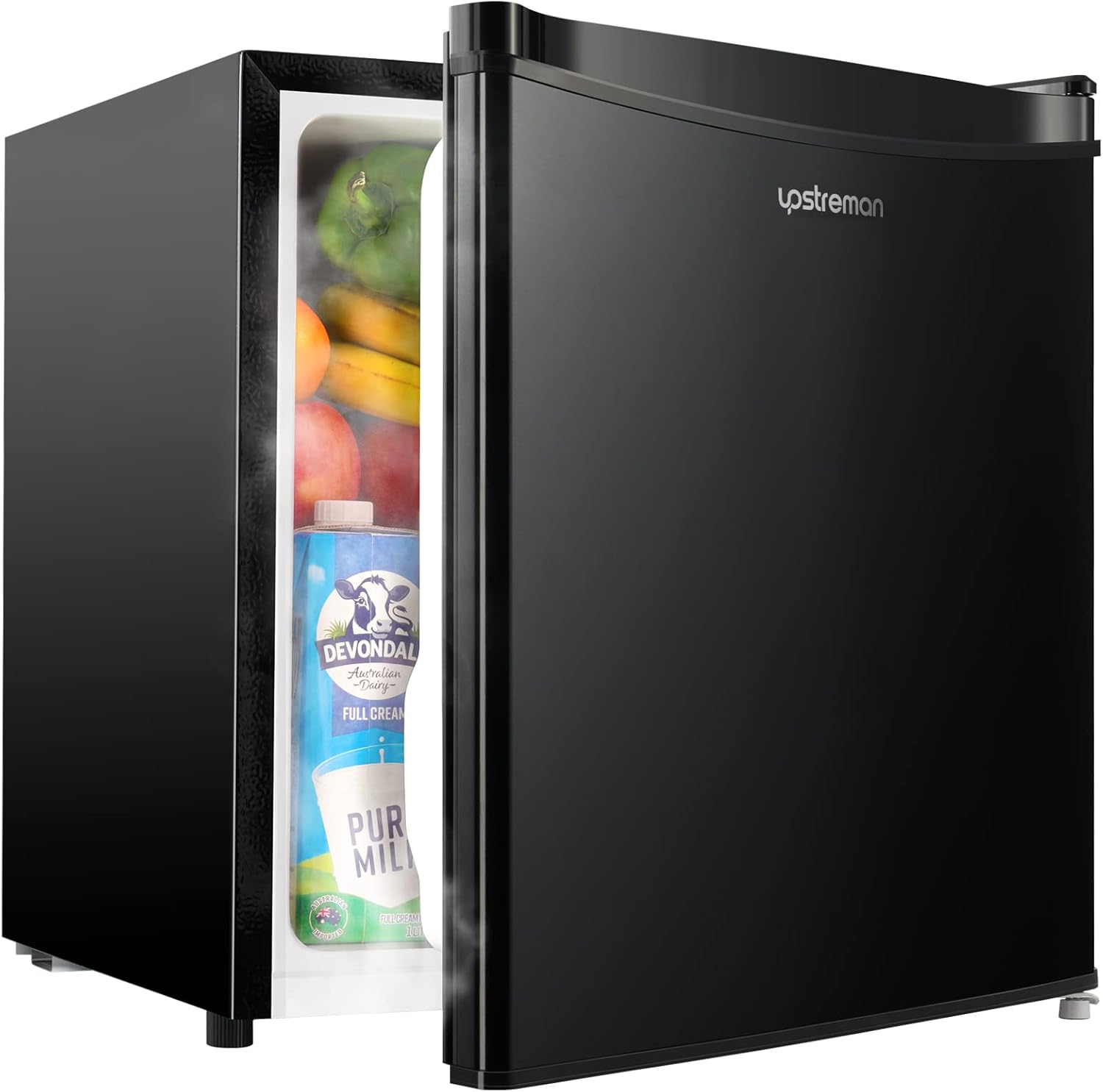
Upstreman FR17 Mini Fridge
| Capacity | 1.7 cubic feet |
|---|---|
| Freezer Capacity | 0.2 cubic feet |
| Defrost System Type | Manual Defrost |
| Voltage | 115 volts |
| Cooling Method | Compressor |
The Upstreman FR17 is a small freestanding mini fridge designed for dorms, offices, and bedrooms where space is limited. It offers 1.7 cubic feet of total capacity with a 0.2 cu ft freezer compartment for ice and short-term frozen storage, a reversible door, one main shelf and two door shelves for basic organization. The compressor cooling and R-600A refrigerant mean steady temperatures and reasonable efficiency, and the manual-defrost freezer keeps the design simple and repairable. Its adjustable five-setting thermostat (about 33.8 to 46.4°F) lets you tune cooling for drinks and perishables, and the listed noise level around 38 dB is quiet enough for a dorm room. Expect straightforward setup and minimal features beyond cooling—there is no automatic defrost, interior light, or advanced temperature control. Annual energy use is reported, so this is an energy-conscious choice, though the small freezer limits long-term frozen storage. For buyers who need a reliable, compact refrigerator without bells and whistles, the FR17 covers essentials well.
Best for: Someone furnishing a dorm room or small apartment who prioritizes compact, efficient cooling and straightforward operation over extras.
Less Ideal for: Buyers who need larger long-term freezer capacity, precise digital temperature control, or built-in lighting and convenience features should look elsewhere.
- Compact footprint fits counters, desks, or small corners
- Includes a small top freezer for ice and short-term frozen items
- Adjustable 5-step thermostat for simple temperature control
- Quiet compressor operation around 38 dB suitable for dorms or bedrooms
- Reversible door and basic shelving for flexible placement and organization
- Freezer is very small and not suitable for long-term frozen storage
- Manual defrost requires periodic maintenance
- No interior light or advanced temperature features
Verdict: A tight, energy-conscious mini fridge with a small freezer that reliably handles basic dorm refrigeration needs without extras.
CROWNFUL Mini Fridge CF-PC4

| Capacity | 4 liters |
|---|---|
| Cooling Method | Thermoelectric |
| Power | AC and 12V DC |
| Certification | ETL |
The CROWNFUL 4‑liter mini fridge is a tiny countertop cooler and warmer designed for personal items like skincare, breast milk, snacks, or up to six 12‑oz cans. It uses a thermoelectric cooling system with a switch to select cooling or warming and an internal thermostat that cools roughly 10–20°C below ambient or heats up to about 149°F (65°C). The unit is lightweight, includes a detachable shelf and carry handle, and can run from a household AC outlet or a 12V car socket, which makes it easy to move between a dorm room and a car. Noise is low thanks to a brushless fan motor rated around 25 dB in sleep mode, and the fridge is ETL listed for safety. Expect limitations in capacity and absolute cooling performance since thermoelectric systems depend on room temperature; it will not reach refrigerator temperatures in very warm ambient conditions and is best for short‑term storage and small items rather than full meal prep. The simple controls and compact footprint make it a practical economy choice for personal use in tight spaces.
Best for: Students or commuters who need an inexpensive, highly portable personal cooler for skincare, drinks, or small snacks and prioritize space savings and ease of transport.
Less Ideal for: Anyone who needs true refrigerator temperatures, large capacity for meal prep, or extended long‑term cold storage should choose a larger compressor fridge instead.
- Very compact 4‑liter capacity fits on a desk or nightstand
- Dual AC and 12V power options for dorm, car, or travel use
- Can both cool and warm items with a simple switch
- Detachable shelf and carry handle improve portability and organization
- Quiet brushless fan enables near‑silent operation in bedrooms or dorms
- Thermoelectric cooling performance depends on ambient temperature and may not reach very low fridge temps in hot rooms
- Very limited capacity not suitable for storing full meals or large containers
Verdict: A wallet‑friendly, ultra‑compact personal fridge that cools or warms small items and is ideal for tight dorm spaces and mobile use.
EUHOMY 3.2 Cu Ft Mini Fridge

| Capacity | 3.2 cubic feet |
|---|---|
| Freezer Capacity | 0.96 cubic feet |
| Cooling Method | Compressor |
| Defrost System Type | Manual |
| Voltage | 115 |
The EUHOMY 3.2 cu ft mini fridge combines a small refrigerator compartment with a 0.96 cu ft top freezer, making it a practical dorm or bedroom appliance. It uses a compressor cooling system and offers three temperature settings via an adjustable thermostat, so it cools efficiently and keeps items like drinks, produce, and frozen treats at usable temperatures. The interior has adjustable glass shelves, a crisper drawer, and an LED light for visibility at night, while the reversible door and adjustable feet make placement flexible in tight spaces. Noise is kept low for bedroom use and the unit is UL listed for safety. Expect basic manual defrosting and modest energy use; the annual energy figure is listed and a simple compressor means more consistent cooling than thermoelectric alternatives but slightly higher power draw. The fridge includes an electronic lock for added security and comes with a one year manufacturer support plan. For dorm use it is straightforward to operate, space-conscious, and built with practical features rather than luxury extras.
Best for: Buyers who prioritize a dependable, no-frills mini fridge for a dorm or bedroom and want consistent compressor cooling and flexible placement options.
Less Ideal for: If you need a completely maintenance-free unit with auto-defrost or are placing the fridge in a very tight energy budget scenario, consider other models with lower annual energy use or frost-free features.
- Two-zone layout with dedicated top freezer and fridge for flexible storage
- Compressor cooling with adjustable thermostat for consistent temperatures
- Adjustable glass shelves and crisper drawer increase usable storage organization
- Reversible door and adjustable feet allow versatile placement in small rooms
- Interior LED light improves visibility without adding heat to the compartment
- Manual defrost freezer requires occasional maintenance
- Not the lowest energy consumption compared with some ultra-efficient compact models
Verdict: A reliable compressor mini fridge with a small top freezer and practical features, built for dorms where steady cooling and flexible placement matter.
Frigidaire Retro 3.2 Cu Ft Fridge

| Capacity | 3.2 cubic feet |
|---|---|
| Freezer Capacity | 0.2 cubic feet |
| Defrost System Type | Manual |
| Cooling Method | Compressor |
| Voltage | 110 volts |
This Frigidaire retro compact fridge brings vintage styling and practical small-space cooling to dorm rooms, offices, or bedrooms. It offers 3.2 cubic feet of refrigerated storage plus a 0.2 cu ft chiller for ice or frozen snacks, two glass shelves and a 2L door basket that handle bottles, cans and snacks in an organized way. The compressor cooling system and manual defrost keep temperatures consistent while the reversible door gives flexible placement, and the integrated side bottle opener is a convenient touch for entertaining. Setup is simple on a countertop and the flat-back design helps the unit sit flush against walls. Expect typical mini-fridge limits: the freezer is small so frozen storage is minimal, manual defrost requires occasional maintenance, and a compact compressor unit can be louder than full-size fridges. For buyers who want a mix of retro look and everyday functionality in a dorm-friendly size, this model balances style and utility well.
Best for: Buyers who want a compact, stylish dorm or bedroom fridge that doubles as décor and prioritizes organized beverage and snack storage with easy placement.
Less Ideal for: People who need significant freezer capacity, virtually silent operation, or a hands-off defrosting system should consider larger or different mini-fridge designs.
- Eye-catching retro design that doubles as room decor
- 3.2 cu ft capacity with two glass shelves and a 2L door basket for organized storage
- Reversible door and flat-back profile for flexible placement in small spaces
- Built-in side bottle opener and can dispenser improve convenience for entertaining
- Small 0.2 cu ft chiller/freezer limits frozen storage and bulk ice
- Manual defrost requires periodic maintenance
- Compressor mini-fridges can be noisier than larger, more insulated models
Verdict: A stylish, dorm-ready compact refrigerator that pairs retro looks with practical refrigerated storage and flexible placement.
Frostorm Mini Fridge BC-90

| Capacity | 3.2 cubic feet |
|---|---|
| Freezer Capacity | 0.35 cubic feet |
| Defrost System Type | Automatic |
| Door Orientation | Reversible |
| Annual Energy Consumption | 210 kilowatt hours per year |
The Frostorm BC-90 is a compact 3.2 cubic foot refrigerator with a built-in 0.35 cu ft upright freezer that suits dorm rooms and small apartments. It is freestanding with a reversible door and two adjustable glass shelves plus door bins, so you can arrange beverages, snacks, and meals in a variety of layouts; the small freezer handles ice and short-term frozen items. Temperature is controlled by a simple 1–5 mechanical dial and the unit uses an automatic defrost system for low maintenance. Energy use is modest at about 0.6 kWh per day, and the fridge runs on standard 115V power with ETL certification for basic safety. Expect straightforward installation and cleaning, but note the freezer is small and manual defrosting of that compartment may be required occasionally for heavy use. For buyers prioritizing predictable, fuss-free refrigeration in a compact footprint, this model delivers reliable everyday performance without complicated controls.
Best for: Buyers who want a straightforward, low-maintenance mini fridge for a dorm, bedroom, or small office and value predictable performance and simple controls over advanced features.
Less Ideal for: Anyone who needs significant long-term frozen storage or a fridge with advanced temperature controls and smart features should look at larger or feature-rich models.
- 3.2 cu ft capacity with a dedicated upright freezer for ice and short-term frozen storage
- Reversible door and adjustable shelves for flexible placement and interior layout
- Simple mechanical thermostat and automatic defrost system for easy operation
- ETL certified and runs on standard 115V power for reliable, safe use in dorms
- Freezer compartment is small and best suited for ice or very short-term storage
- Some users may need to manually defrost the freezer occasionally with heavier use
Verdict: A reliable, easy-to-use mini fridge with a small freezer that gives dorm residents predictable cooling and flexible placement without complicated features.
Choosing the Right Mini Fridge for Dorm: Key Factors to Consider
Usable Capacity and Interior Layout
Nominal capacity numbers do not always translate to usable storage. Shelving shape, the presence of removable shelves, and door storage all affect how many drinks, ready meals, and fresh items you can stash. Dorm buyers should prioritize flexible shelves and clear organization because you will likely store a mix of tall bottles, small containers, and a few perishable items.
Consider interior height, shelf adjustability, and whether the unit has a small freezer compartment that reduces usable fridge space. A well-organized interior reduces waste and allows you to fit more practical items without needing a larger unit.
Energy Efficiency and Power Draw
Low energy consumption matters in dorms where electrical allowances may be limited and students monitor monthly usage. Look for units designed for low wattage operation and consistent temperature control, because frequent compressor cycling or inefficient insulation will raise power draw. Energy-efficient models also run cooler and place less stress on dorm circuits.
If your building has strict electrical rules, favor fridges that specify typical running watts and have modest startup currents. Thermostat control type and insulation thickness both influence long-term power use.
Operational Noise
Noise is a real quality-of-life issue in tight living spaces. Compressors, fans, and vibration against a desk can create persistent hums that interfere with studying or sleeping. Choose models with low decibel ratings, rubberized feet to reduce vibration transfer, and stable compressors that do not cycle loudly.
Also consider how placement affects perceived noise. A fridge tucked under a desk may sound louder than one on a dedicated shelf. Prioritize quieter designs if you plan to keep the unit in your primary living or study area.
Footprint, Door Swing, and Fit
Dorm rooms have awkward nooks and limited circulation space. A compact footprint matters, but so does door swing direction and clearance for opening. Measure your intended location and compare door hinge orientation and reversible-door options. Some units fit under desks or in closets only if the door opens the right way.
Also check stated external dimensions and account for a little clearance for ventilation. Proper fit ensures you do not block walkways or violate dorm rules about appliance placement.
Temperature Control and Food Safety
Keeping perishables safe requires stable and reachable temperatures. Look for fridges with easy-to-use thermostats and consistent cooling across shelves. Units that cool unevenly can create cold spots and warm pockets that spoil food faster. A small freezer compartment helps with ice packs and frozen meals but reduces fridge volume.
Consider whether the thermostat is stepped or continuous and whether the unit recovers quickly after door openings. Stable temperature control reduces food waste and simplifies meal planning.
Durability and Serviceability
Dorm life subjects appliances to knocks, frequent moves, and irregular maintenance. Choose a mini fridge built with sturdy materials, secure door latches, and accessible components for basic troubleshooting. A serviceable compressor and removable door seals make simple fixes easier during a school year.
Warranty length and straightforward support channels matter because they reduce the risk of being stuck with a nonworking unit midterm. Durable design also lowers the chance of leaks, rust, or broken shelves from everyday use.
Sizing a Mini Fridge for Dorm Layouts
Measure the intended spot before you shop. Account for ventilation gaps, the direction the door needs to swing, and any furniture that will sit nearby. Profiles labeled as compact or slim are helpful for narrow niches but check usable interior height for tall bottles.
Think beyond capacity numbers. A fridge that fits spatially but has awkward shelf spacing can hamper storage. If you plan to store meal prep containers, prioritize units with adjustable shelves or removable inserts.
- Measure width, depth, and height of the chosen location
- Allow a few inches of clearance for ventilation
- Verify door swing and consider reversible hinges if needed
- Check interior shelf adjustability for tall items
Placement, Ventilation, and Safety
Proper placement affects cooling efficiency and safety. Avoid enclosing the fridge tightly in a sealed cabinet unless the design allows for rear ventilation. Restricted airflow forces the compressor to run harder, increasing noise and energy use.
Keep the unit away from direct heat sources such as radiators or heaters. Place it on a level, stable surface and use rubber feet or a small mat to reduce vibration transfer to desks or shelves.
- Leave clearance at the back for heat dissipation
- Avoid placing near heat-generating electronics
- Keep it level to prevent compressor stress
Noise Management and Practical Study Tips
If you need the fridge in a study area, favor models with low reported decibel ratings and anti-vibration features. Even quiet compressors can sound noticeable in a small room when placed on thin furniture.
Small behavior changes reduce perceived noise. Put a thin rubber mat under the fridge, avoid repeated door openings during quiet hours, and place frequently accessed items within easy reach to limit disturbance.
- Use rubber pads to dampen vibration
- Store commonly used items in door shelves for quick access
- Position the fridge on a sturdy surface rather than a hollow shelf
Power and Circuit Considerations in Dorms
Dorm rooms may have limited circuit capacity and shared breakers. Look for fridges with modest startup and running wattage to avoid tripping circuits when combined with other devices. Some units list typical running watts and peak startup amps; those numbers are useful during selection.
If you plan to run multiple small appliances, distribute load across different outlets on separate circuits where possible. Avoid daisy-chaining surge protectors or extension cords that are not rated for continuous appliance use.
- Check running watts and startup current if specified
- Avoid using extension cords not rated for appliance loads
- Balance other device use to reduce circuit trips
Cleaning, Maintenance, and Odor Control
Regular cleaning keeps a mini fridge hygienic and odor-free. Wipe shelves and door seals periodically and remove spills quickly to prevent stains and smells. A lightly soapy water solution and a soft cloth are usually sufficient.
For odor control, use airtight containers for leftovers and consider a small absorbent deodorizer designed for refrigerators. Check door seals regularly for cracks and replace them if they no longer form a tight seal.
- Wipe up spills promptly to prevent odors
- Store leftovers in sealed containers
- Inspect and clean door gaskets periodically
How We Chose the Best Mini Fridge for Dorm
We focused on factors that directly affect dorm living and daily use. Key criteria included usable interior capacity and shelving flexibility, because tight dorm spaces reward smart layout more than headline liter numbers. Energy efficiency and power draw were emphasized to limit nightly electricity use and avoid overloading shared circuits. Noise output was a priority because quiet operation matters for study and sleep. Footprint and door swing were considered to ensure the units fit typical dorm closets, under-desk spaces, or small alcoves. Durability and warranty coverage rounded out the evaluation to signal which models are likely to hold up through a school year. We excluded full-size refrigerators, specialty beverage-only coolers, and units requiring complex installation or dedicated electrical circuits. We also filtered out models with inconsistent reported noise ratings or poor user-serviceability. The remaining selections were scored against concrete, repeatable metrics: interior layout and shelving, energy use, operational noise, physical footprint and fit, and construction quality.
Our full evaluation process is outlined in our review methodology.
FAQ
How much space do I actually need in a dorm mini fridge?
It depends on whether you plan to store mostly drinks or a mix of meals and perishables. For drinks and snacks a small 1.7 to 2.5 cubic foot unit often suffices. If you plan to store leftovers and fresh produce regularly, look for something with adjustable shelving and closer to 3.0 cubic feet.
Can I plug a mini fridge into a dorm outlet with other devices?
Often yes, but it depends on the circuit and what else is running. Mini fridges draw a modest continuous load but can have a higher startup current. Avoid using overloaded power strips and distribute devices across different room outlets when possible.
Are compressor units better than thermoelectric models for dorm use?
Compressor refrigerators generally cool more effectively and handle heavy use better, especially for perishable food. Thermoelectric units are quieter and lighter but are less effective in hot rooms and do not reach as low temperatures reliably.
How loud is a typical dorm mini fridge?
Many modern mini fridges operate in a quiet range that is tolerable for dorms, but perceived loudness varies with placement. Expect a low, steady hum from the compressor; if noise is a primary concern, prioritize models with low decibel specs and anti-vibration features.
Do mini fridges need special maintenance during the school year?
Maintenance is minimal: keep the interior clean, check door seals for tightness, and ensure vents are clear. If the fridge will be moved between semesters, empty and defrost any freezer compartment, clean thoroughly, and allow it to dry before storage.
Final Verdict
Choosing the right mini fridge for dorm life means balancing usable interior space, low energy draw, and quiet operation. Prioritize flexible shelving and reliable temperature control if you store meals regularly, and favor compact footprints with reversible doors when space is tight. Remember to account for placement, ventilation, and circuit load when making your choice. Focus on the decision factors that matter most to your living situation and pick the smallest unit that meets your storage needs while minimizing noise and power use. That approach will give you the most practical, trouble-free fridge for a dorm room.