
Note: This article contains affiliate links. If you click on these links and make a purchase, we may earn a small commission at no extra cost to you. This helps support our research and content. Read our full affiliate disclosure here.
If you plan to dry age small cuts at home, choosing the right mini fridge matters for food safety and flavor. A purpose-suited mini fridge stabilizes temperature and humidity while minimizing odor transfer and airflow fluctuations that can spoil a dry-aging cycle. This guide shortlists the leading compact units designed or easily adapted for dry aging and explains the practical criteria we used to evaluate them. Below you'll find the top picks for home dry aging, followed by detailed buying factors and hands-on guidance about setup, maintenance, and troubleshooting.
Top Picks at a Glance
| Best Overall The best all-around choice for most situations | VEVOR Dry Aging Fridge 99 lbs |  |
| Best Quality Built to a higher standard if you want something more solid | Pemberly Row 24" Undercounter Dry Aging Refrigerator |  |
| Best Value The sweet spot between price and what you get | Tehanld 3.2 Cuft Beverage Fridge |  |
| Best Budget The cheapest option that still gets the job done reliably | Antarctic Star Mini Fridge F6840-B |  |
| Top Rated A top-rated pick with lots of positive feedback | hOmeLabs Beverage Refrigerator HME030065N | 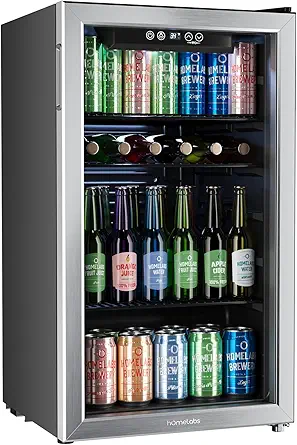 |
| Most Popular A crowd favorite that many people choose with confidence | Upstreman BR321 3.2 Cu.Ft Mini Fridge |  |
| Best Seller A high-volume bestseller chosen again and again | EUHOMY BR-145 Beverage Refrigerator |  |
VEVOR Dry Aging Fridge 99 lbs

| Capacity | 99 pounds |
|---|---|
| Refrigerant | R-600A |
| Shelf Type | Stainless Steel |
| Cooling Method | Compressor |
| Installation Type | Built-in or Freestanding |
This VEVOR dry aging fridge packs professional dry-aging features into a countertop-friendly cabinet for home or small commercial use. It provides precise temperature and humidity control, an air circulation system to keep conditions stable, and food-grade 304 stainless steel for all meat-contact surfaces, making cleanup straightforward and limiting odors or corrosion. The unit can be configured built-in or freestanding and includes removable hooks, a shelf and trays so you can hang or lay cuts up to the model capacity; each hook holds up to 11 lb and the shelf up to 66 lb. For buyers wanting a dedicated meat aging appliance, the lock and stable environment help produce consistent flavor development similar to restaurant results. Expect some trade-offs: the 99 lb total capacity is generous for home use but small for larger commercial kitchens, and the unit is relatively heavy and requires space planning for installation. Overall it is a practical, purpose-built mini dry ager for cooks who want controlled dry aging without a full walk-in setup.
Best for: Home cooks or small-restaurant operators who want to produce consistent dry-aged beef and other meats in a compact, purpose-built unit without building a walk-in aging room.
Less Ideal for: Large-scale butchers or restaurants that need high-throughput aging capacity or multi-rack commercial systems should choose a larger commercial dry ager.
- Precise temperature and humidity control creates a stable dry-aging environment
- Food-grade 304 stainless steel on meat-contact parts resists corrosion and is easy to clean
- Removable hooks, shelf, and trays allow flexible organization of hanging and shelved cuts
- Built-in or freestanding installation fits kitchens and small commercial spaces
- 99 lb capacity and single-shelf layout can be limiting for larger commercial operations
- Unit is heavy and requires planning for placement and installation
Verdict: A compact, pro-style mini dry ager that brings restaurant-style temperature and humidity control to home cooks and small operators who want consistent dry-aged meat.
Pemberly Row 24" Undercounter Dry Aging Refrigerator

| Configuration | Compact Freezerless |
|---|---|
| Temperature Range | 36–43°F |
| Humidity | 80% |
| Capacity | 5.3 |
| Defrost System Type | Automatic |
This Pemberly Row 24" undercounter dry aging refrigerator is built to create a controlled environment for dry aging beef, pork, charcuterie, and other specialty proteins. It holds a 36–43°F temperature range and targets about 80% humidity while circulating air and using an integrated UVC system to reduce odors and microbial load, which helps produce consistent aging results. The unit includes digital temperature controls, dual interior LEDs, a reversible tempered glass door, stainless steel interior and exterior, and automatic defrost for low-maintenance operation. It installs into a standard 24-inch cutout and ships with a setup kit, making it suitable for residential kitchens that need a professional-style aging cabinet. On the downside, its 5.3 cu ft capacity is modest, so it suits smaller batches rather than large commercial loads, and the product is a freestanding undercounter configuration that may require planning for ventilation and placement. Energy consumption is listed, so operators should factor that into long-term use.
Best for: Buyers who prioritize restaurant-quality aging performance in a compact unit and want precise environmental control for small-batch dry aging at home or in a test kitchen.
Less Ideal for: Users who need large-volume commercial capacity or who require a built-in cabinet-depth installation without freestanding ventilation clearance.
- Precision-controlled temperature range for stable aging conditions
- Automated humidity control and air circulation to maintain consistent moisture and airflow
- Integrated UVC disinfection to reduce odors and help maintain a cleaner interior
- Stainless steel interior/exterior and reversible tempered glass door for durability and visibility
- Digital controls and included setup kit simplify installation and daily use
- 5.3 cu ft capacity is limited to small batch aging
- Freestanding undercounter configuration may need space planning for ventilation
Verdict: Choose this unit when you want a compact, chef-grade dry aging cabinet that delivers precise temperature and humidity control for small-batch professional results.
Tehanld 3.2 Cuft Beverage Fridge

| Capacity | 3.2 cubic feet |
|---|---|
| Cooling Method | Compressor |
| Temperature Range | 35-65°F (2-18°C) |
| Number Of Shelves | 3 |
| Refrigerant | R-290 |
This Tehanld 3.2 cu ft beverage fridge is a compact compressor-cooled unit designed for consistent, cabinet-style refrigeration in small spaces. It holds roughly 128 cans or about two dozen wine bottles across three removable wire shelves and uses a digital touch panel to set temperatures between 35 and 65°F, with an option to switch between °F and °C. The glass door with a dense seal and low-e coating plus 360° recirculated air cooling help promote even temperatures throughout the interior, and the built-in LED makes contents easy to check. It runs quietly and is rated for modest annual energy use, making it suitable for continuous operation in a garage, workshop, or kitchen corner. For dry aging specifically, the compressor cooling and adjustable temperature range give basic control, but the unit does not list active humidity control or a dedicated dry-aging mode, so additional steps such as adding a humidity-stabilizing container or probe monitoring are necessary. The fridge is best used freestanding and benefits from the removable shelves for arranging larger cuts or racking small trays.
Best for: Buyers who want a compact, energy-conscious refrigerator that provides steady, adjustable cold storage and flexible shelf configurations for small-scale dry-aging or long-term meat storage monitoring.
Less Ideal for: People seeking a turnkey dry-aging appliance with precise humidity control, airflow customization, or commercial-capacity racks should consider purpose-built dry-aging units instead.
- Compressor cooling with 35–65°F temperature range for stable, low-temperature storage
- Three removable shelves and wire shelving allow flexible arrangements for trays or racks
- Glass door with low-e coating and tight door seal helps maintain interior temperature
- Quiet operation and relatively low annual energy consumption suitable for continuous use
- No built-in humidity control or meat/dry-aging specific features
- Right-hand door orientation may limit placement in some spaces
Verdict: A practical, energy-efficient compact fridge with stable compressor cooling and flexible shelving that can serve as an economical starting point for small-scale dry aging when paired with external humidity monitoring and control.
Antarctic Star Mini Fridge F6840-B

| Capacity | 1.7 cubic feet |
|---|---|
| Freezer Capacity | 0.2 cubic feet |
| Cooling Method | Compressor |
| Defrost System Type | Manual |
| Voltage | 115 volts |
This Antarctic Star 1.7 cu ft mini fridge is a basic compressor-powered countertop unit designed to store drinks, snacks, and small food items while offering a 0.2 cu ft freezer compartment for short-term frozen storage. It uses a 7-speed adjustable thermostat with a cooling range down to about 32°F and a single wire shelf plus door shelves to organize cans and small containers. The reversible door and quiet compressor make placement flexible in dorms, offices, or tight kitchen spots, and the manual defrost system keeps the unit mechanically simple. For buyers on a budget it delivers usable cold storage in a small footprint, but its limited interior space and basic temperature control mean it is not optimized for precision tasks; maintaining steady low-humidity conditions and exact temperatures needed for dry aging is difficult with this model. Energy consumption is relatively high compared with larger modern units, and you will need to monitor temperature closely and accept occasional manual defrosting.
Best for: Buyers prioritizing a low-cost, compact refrigerator for casual cold storage in dorms, offices, or small kitchens who want a simple compressor unit with a small freezer and flexible door orientation.
Less Ideal for: Anyone seeking a climate-controlled, low-humidity cabinet for serious dry aging or long-term precision temperature and humidity management should look at purpose-built appliances instead.
- Compressor cooling with adjustable 7-speed thermostat allows colder temperatures down to around 32°F
- Compact 1.7 cu ft footprint fits on countertops or in small spaces
- Reversible door and quiet operation give flexible placement options
- Includes a small freezer compartment for short-term freezing or ice cream storage
- Manual defrost requires periodic maintenance and can raise interior humidity during defrost cycles
- Limited internal capacity and basic temperature control make precise long-term temperature stability harder to achieve
- Annual energy consumption listed is relatively high for a mini fridge
Verdict: A budget-friendly compact compressor mini fridge that delivers basic cold storage but is not suited for precise dry-aging control.
hOmeLabs Beverage Refrigerator HME030065N

| Capacity | 3.2 cubic feet |
|---|---|
| Storage | Holds up to 120 cans |
| Temperature range | 34°F to 50°F |
| Cooling method | Compressor |
| Defrost system | Automatic |
This hOmeLabs beverage refrigerator is a compact, freestanding cooler meant to store and display drinks using a compressor-based chiller and a reinforced glass door. It cools from 34°F to 50°F via a touch-button digital control and interior LED light, with three removable chrome wire shelves for flexible arrangement of cans or bottles. The whisper-quiet compressor and automatic defrost make it suitable for locations where low noise and low maintenance matter, and the reversible stainless-steel framed glass door lets you set it up to suit room layout. For dry aging use the fixed cooling range and steady compressor operation can maintain a consistent low temperature, but the unit lacks explicit humidity control and the glass door means it will exchange more thermal energy with its surroundings than a solid-door cabinet. Expect reliable, quiet beverage storage and easy shelf reconfiguration, but plan additional humidity management and insulation if you need precise dry-aging conditions.
Best for: Buyers who prioritize steady, low-noise refrigeration and want a compact, freestanding cooler that reliably holds beverages while allowing easy shelf reconfiguration and visible display.
Less Ideal for: Those needing a dedicated dry-aging cabinet with precise humidity control and heavy insulation should consider purpose-built units instead of this beverage fridge.
- Digital touch temperature control with range down to 34°F for consistent cooling
- Whisper-quiet compressor for low-noise operation suitable for shared spaces
- Three removable chrome wire shelves for flexible interior organization
- Reversible glass door with LED interior lighting for clear product display
- Automatic defrost reduces upkeep
- No built-in humidity control needed for precise dry aging
- Glass door and display design make temperature stability more sensitive to ambient conditions
Verdict: Choose this compact, quiet compressor beverage refrigerator if you need reliable, visible low-temperature storage and can manage humidity externally for dry-aging projects.
Upstreman BR321 3.2 Cu.Ft Mini Fridge

| Capacity | 3.2 cubic feet |
|---|---|
| Freezer Capacity | 0.3 cubic feet |
| Cooling Method | Compressor |
| Defrost System Type | Manual Defrost |
| Voltage | 115 volts |
The Upstreman BR321 is a compact compressor mini fridge that pairs a 0.3 cu.ft freezer with 2.9 cu.ft of refrigeration space in a slim freestanding cabinet. It cools via a rotary scroll compressor and offers five adjustable temperature settings so you can dial in colder or warmer interior temperatures for beverages, dairy, or short-term food storage. Practical touches include two adjustable glass shelves, three door bins, a crisper drawer, leveling feet, and a reversible door for tight layouts. The unit is ETL listed, runs quietly (manufacturer states about 38 dB), and is rated energy efficient, which helps with continuous operation. Important limitations for dry aging: the small capacity and manual defrost mean it cannot maintain large cuts or long multi-week aging projects, and the thermostat is stepped rather than digitally precise. For buyers wanting a compact, efficient fridge for light-duty cooling or short-term controlled chill, this model is convenient; for precise long-term meat aging you would need a dedicated temperature-and-humidity controlled cabinet or larger conversion-ready unit.
Best for: Buyers who prioritize a reliable, energy-efficient small refrigerator for dorms, offices, or apartments and want an easy-to-use unit with adjustable shelving and a reversible door.
Less Ideal for: People seeking a fridge for extended or precise dry aging of large meat cuts or multi-week cures should choose a larger, humidity- and temperature-controlled curing cabinet instead.
- Compact footprint that fits dorms, offices, or small kitchens
- Includes a separate freezer compartment for ice packs and small items
- Adjustable thermostat with five settings for basic temperature control
- Adjustable glass shelves and door bins offer flexible interior organization
- Energy efficient and ETL listed for safer continuous operation
- Manual defrost requires occasional maintenance and can affect internal humidity
- Thermostat is not digitally precise which limits tight temperature control for specialty uses
Verdict: A compact, energy-efficient mini fridge that works well for light-duty chilling and small-scale short-term projects but not for extended precision dry aging.
EUHOMY BR-145 Beverage Refrigerator

| Capacity | 4.5 cubic feet |
|---|---|
| Temperature Range | 32°F to 61°F |
| Cooling Method | Compressor |
| Defrost System Type | Frost Free |
| Number Of Shelves | 4 |
The EUHOMY BR-145 is a compact beverage fridge built around a rotary_scroll compressor and a digital temperature controller that adjusts between 32°F and 61°F. It is designed to store cans, bottles, or other goods on four glass shelves and three racks while LED lighting and a double-pane tempered glass door provide visibility and added insulation. Typical use is undercounter or freestanding in a home bar, office, or small kitchen where steady, cooler-than-room temperatures are needed. The compressor cooling and frost-free system keep temperatures consistent and the unit is rated to run at about 40 dB for quiet operation. Practical benefits include a roomy interior that claims up to 145-can capacity, reversible door for flexible placement, and adjustable shelving for different pack types. Important limitations for dry aging are that this is a beverage refrigerator rather than a purpose-built dry-aging cabinet: it lacks active humidity control, dedicated airflow tailored for meat aging, and formal temperature lock features, so careful monitoring and separate humidity management would be required for safe dry aging at home.
Best for: Buyers who prioritize a reliable, quiet compressor fridge with stable temperature control for storing beverages or experimenting cautiously with dry aging while adding separate humidity monitoring.
Less Ideal for: People seeking a turnkey dry-aging cabinet or commercial dry-aging setup should avoid this unit and choose a dedicated dry-aging appliance with built-in humidity and airflow controls.
- Compressor cooling with digital temperature control for stable temperature maintenance
- Compact 4.5 cu ft interior that fits many cans and bottles while still being undercounter-friendly
- Adjustable glass shelves and reversible door increase placement and storage flexibility
- Quiet operation around 40 dB suitable for kitchens and offices
- No dedicated humidity control or circulation settings designed for meat dry aging
- Not marketed as a food dry-aging appliance so lacks features like UV filtration or temperature lockout
Verdict: If you want a quiet, stable compressor mini fridge to experiment with small-scale dry aging while using external humidity control, this EUHOMY BR-145 gives the temperature stability and interior space to try it safely.
Choosing the Right Mini Fridge for Dry Aging: Key Factors to Consider
Temperature Consistency
Dry aging requires a narrow temperature window, typically just above freezing up to about 38°F. Units with tight regulation and small incremental setpoints are less likely to drift during multiweek cycles, which reduces spoilage risk.
Look for a mini fridge with a thermostat and active cooling that maintains consistent internal conditions under varying room temperatures. Rapid temperature swings accelerate bacterial growth and ruin texture, so temperature stability should be a top decision driver.
Humidity Control
Relative humidity affects surface drying and the development of the dry-aged crust. Too dry and the exterior will over-desiccate; too humid and you encourage unwanted microbial growth.
Consider fridges with built-in humidity controls, or those that allow easy integration of humidity trays, wired humidistats, or small electronic humidifiers. Also evaluate how easy it is to monitor humidity over long cycles, since levels can shift as meat loses moisture.
Airflow and Ventilation
Gentle, directed airflow prevents stagnant pockets that promote uneven drying and spoilage. Fans that circulate air without blasting directly on exposed meat help form an even crust while protecting interior moisture balance.
Inspect how air moves inside the cabinet, whether vents can be directed, and whether the fan speed is appropriate for slow aging. Avoid units designed for high-flow rapid cooling because they can dry the surface too quickly.
Interior Size and Rack Configuration
Your fridge should accommodate the cuts you plan to age plus racks or hooks for hanging. Sufficient headroom and adjustable shelving let you stage multiple pieces and rotate them with minimal disruption.
Compact models vary widely in usable volume. Measure the usable interior (not just external dimensions) and confirm you can fit racks, trays, or a small hanging rail comfortably while preserving airflow around each piece.
Materials and Cleanability
Dry-aging cabinets need surfaces that are nonporous and easy to sanitize. Interior finishes that absorb odors or are rough encourage bacterial buildup and transfer of unwanted aromas between cycles.
Choose interiors with smooth stainless or coated finishes and removable components for deep cleaning. Consider how seals, gaskets, and drain paths are constructed because these areas routinely trap moisture and require regular maintenance.
Odor Isolation and Door Sealing
Preventing cross-contamination of smells is important if the fridge shares space with other foods. A tight door seal and minimal air exchange help maintain a stable environment and keep the dry-aging aroma contained.
Inspect the quality of the door gasket, magnetic or compression sealing features, and whether the cabinet design minimizes leaks. Strong sealing also helps the unit achieve and hold target humidity levels with less active humidification.
Setting Up a Mini Fridge for Dry Aging
Position the unit on a level surface away from heat sources and direct sunlight. Allow clearance behind and above the cabinet for ventilation so the compressor can run efficiently.
Install adjustable shelving or a stainless rack to maximize usable space and ensure even airflow. If you plan to hang cuts, add a small removable rail or hooks placed to avoid blocking vents.
Calibrate the thermostat and humidistat before adding meat. Run the empty cabinet for several days with monitoring devices to verify steady temperature and humidity. Make adjustments to fan direction or humidification accessories until conditions remain stable.
- Leave at least one inch of space around cuts for airflow.
- Use dedicated monitoring devices rather than built-in displays when possible.
- Pre-cool the cabinet and verify setpoints for 48–72 hours before starting a cycle.
Managing Humidity Without Built-In Controls
Many compact fridges do not include precise humidity controls, but you can manage moisture with simple accessories. Passive methods include placing evaporation trays with water and salt, or using charcoal and desiccant packs to fine-tune dryness.
Active options use small, controllable humidifiers or electronic humidistats that switch a humidifier or dehumidifier on and off. These give tighter control but require periodic refilling and monitoring.
Record humidity trends daily during the first week of any new method so you can adapt the system. Small changes in ambient room humidity will shift interior levels over long aging periods.
- Passive tray: low maintenance, less precise.
- Electronic humidifier: precise, needs power and maintenance.
- Desiccant packs: useful to reduce humidity spikes.
Sanitation and Maintenance During Multiweek Cycles
Cleanliness matters for safe at-home dry aging. Before each cycle, wipe down all interior surfaces with a food-safe sanitizer and ensure racks are clean and corrosion-free. Avoid cleaners that leave residues or strong scents.
During aging, minimize cabinet openings. Each door opening alters temperature and humidity and increases contamination risk. When you must inspect or trim, work quickly and reseal the cabinet promptly.
After finishing a cycle, perform a deep clean and allow the interior to air out before starting the next batch. Replace any sponges, cloths, or trays that show staining or odor retention.
- Use food-grade sanitizers and rinse thoroughly.
- Limit door openings to scheduled inspections.
- Deep clean after every cycle to prevent odor buildup.
Monitoring and Troubleshooting Common Issues
Track temperature and humidity with independent loggers that have alarms. These tools alert you to excursions so you can act before meat safety is compromised.
If you see excessive surface mold, raise air circulation slightly and reduce humidity; thin white molds are normal and trimable, but fuzzy or colored growths indicate problems. If odors develop during a cycle, check seals, clean the interior, and run the unit empty to air it out.
If temperature fluctuates when the compressor cycles, add thermal mass such as water-filled bottles to stabilize internal temperature swings. Ensure that added items do not block airflow around the meat.
- Use independent loggers with alarm thresholds.
- Trim thin white mold; investigate colored or fuzzy growths.
- Add thermal mass to buffer temperature swings if needed.
Legal and Food Safety Considerations
Home dry aging carries food safety responsibilities. Follow recommended temperature ranges and monitor for signs of spoilage. If you are uncertain about a cut, err on the side of caution and discard questionable meat.
Local regulations and health guidance vary. This guide focuses on equipment and technique, not on legal compliance. If you plan to sell dry-aged products, consult local food safety authorities about required permits and inspection regimes.
- Keep records of temperature and humidity during each cycle.
- Discard meat showing signs of spoilage such as strong off-odors or unusual textures.
- Consult local health guidance before commercial use.
How We Chose the Best Mini Fridge for Dry Aging
We focused on features that directly affect the safety and quality of at-home dry aging. Key evaluation criteria included precise temperature control and stability, humidity management or compatibility with humidity accessories, airflow design that supports gentle circulation without desiccating exposed meat, and interior layout that accommodates racks and hanging cuts. We also considered insulation and cabinet sealing to limit odor exchange, energy efficiency for long aging cycles, and construction materials that are easy to sanitize. Units were excluded if they lacked reliable temperature setpoints in the appropriate range for dry aging, had poorly documented airflow or relied solely on ambient ventilation, or used interior finishes that trap odors or are difficult to clean. We also filtered out units intended solely for beverage storage that cannot be adapted safely. The final shortlist emphasizes repeatable conditions and user control, because small deviations over weeks create major differences in results.
Our full evaluation process is outlined in our review methodology.
FAQ
What temperature should I set a mini fridge for dry aging?
Aim for a stable range slightly above freezing, typically around 32°F to 38°F. Exact setpoints depend on desired aging speed and cut size, but consistency is more important than a single number.
How long can I dry age meat in a mini fridge?
Dry-aging cycles commonly range from a few weeks to several months. Shorter cycles emphasize tenderness, while longer cycles intensify flavor. Monitor conditions closely because longer times increase risk if temperature or humidity drift.
Do I need to hang the meat or can I use racks?
Both methods work. Hanging improves airflow around the entire surface, while racks are simpler for smaller pieces. Ensure adequate spacing so air can circulate freely regardless of method.
Is mold always a problem during dry aging?
Thin white molds are common and can be trimmed off before cutting and cooking. Colored or fuzzy molds suggest contamination and should be treated as spoilage. Good sanitation and stable humidity reduce mold risks.
How often should I open the fridge during an aging cycle?
Keep openings to a minimum. Check visually on a schedule and plan any trimming or inspections to limit door time. Each opening alters internal conditions and increases contamination risk.
Can I use a regular refrigerator for dry aging?
Regular refrigerators are not ideal because they often have variable humidity and frequent door openings that disrupt stability. A dedicated mini fridge adapted for aging provides better control and cleaner results.
Final Verdict
Focus on stability and control when choosing a mini fridge for dry aging. Prioritize models that offer precise temperature regulation, manageable humidity, gentle airflow, and interiors that are easy to sanitize. Tradeoffs often involve capacity versus control: larger interiors give more space but may require stronger fans or additional accessories to maintain uniform conditions. Choose a unit that aligns with how much you plan to age and how hands-on you want to be with monitoring and maintenance. With careful setup and routine checks, a properly selected mini fridge can deliver safe, flavorful dry-aged results at home.