
Note: This article contains affiliate links. If you click on these links and make a purchase, we may earn a small commission at no extra cost to you. This helps support our research and content. Read our full affiliate disclosure here.
Turning a compact refrigerator into a fermentation chamber is one of the most practical upgrades a homebrewer can make. The right mini fridge gives you consistent temperatures, enough interior space for your fermenter, and a chassis that adapts well to external controllers and insulation. This guide shortlists seven top mini fridges specifically suited to fermentation use and focuses on real-world buyer needs: temperature stability, usable interior volume, and modding friendliness. Read on to see which features matter most and why these units made the cut before the detailed product summaries.
Top Picks at a Glance
| Best Overall The best all-around choice for most situations | Honeywell H115BCS Beverage Cooler |  |
| Best Quality Built to a higher standard if you want something more solid | Ivation 12-Bottle Wine Cooler |  |
| Best Value The sweet spot between price and what you get | Antarctic Star 3.2 Cu Ft Beverage Refrigerator |  |
| Best Budget The cheapest option that still gets the job done reliably | KRIB BLING Beverage Refrigerator KB03-FLB-45 |  |
| Top Rated A top-rated pick with lots of positive feedback | KimchiMama Slim Kimchi Refrigerator |  |
| Most Popular A crowd favorite that many people choose with confidence | hOmeLabs Beverage Refrigerator HME030065N | 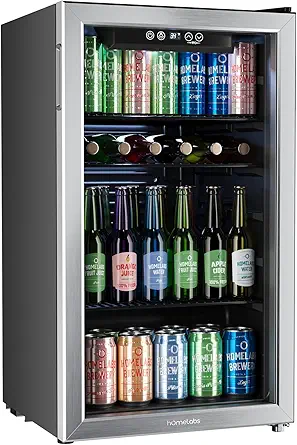 |
| Best Seller A high-volume bestseller chosen again and again | Feelfunn 3.2 Cu.Ft Beverage Refrigerator |  |
Honeywell H115BCS Beverage Cooler
| Capacity | 116 Can |
|---|---|
| Cooling Method | Thermoelectric |
| Thermostat Range | 34°F–50°F |
| Door Material Type | Tempered Glass |
| Number Of Shelves | 4 |
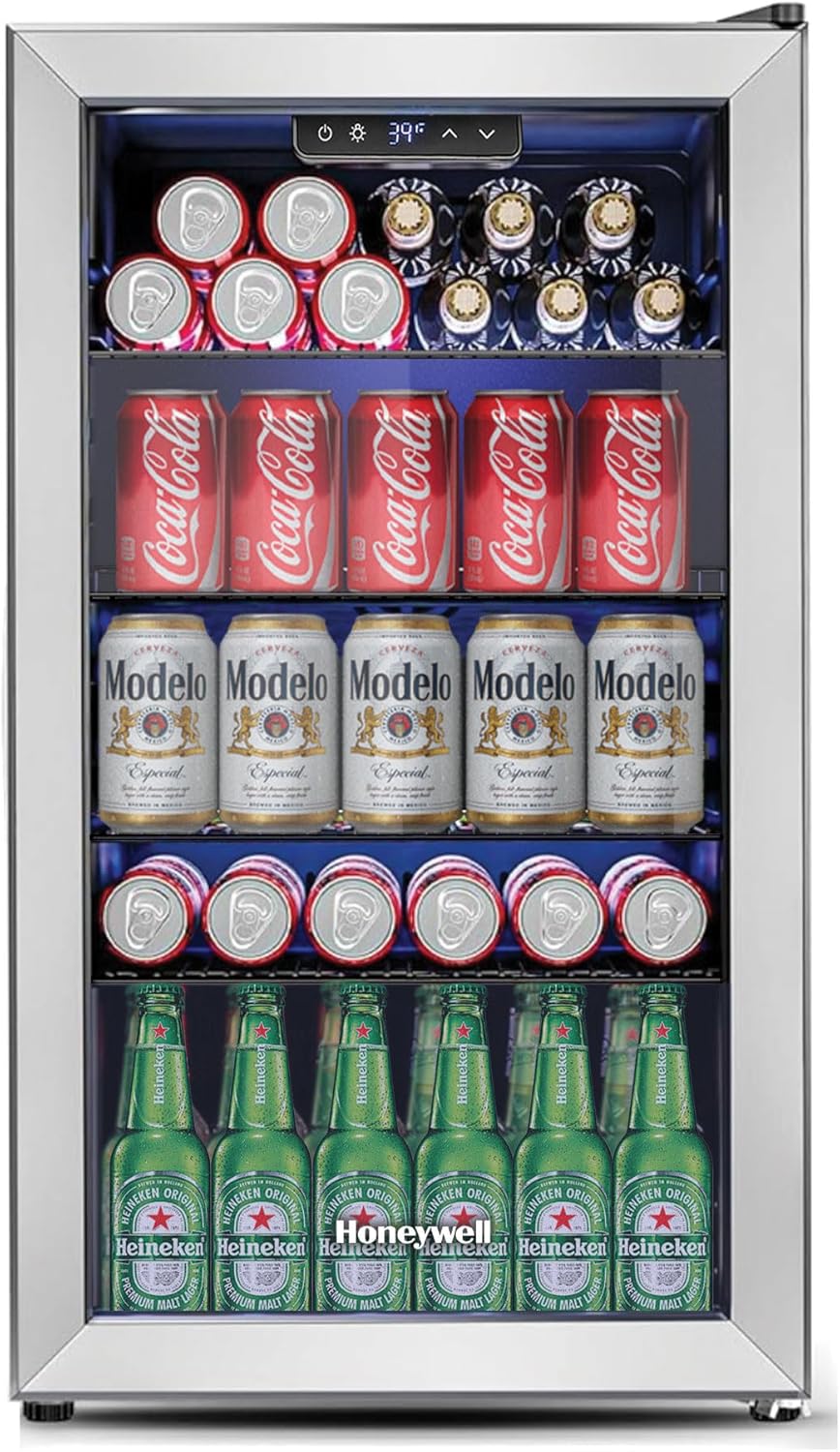
The Honeywell H115BCS is a compact display-style beverage cooler designed to hold up to 116 cans while keeping temperatures between 34°F and 50°F via an adjustable digital thermostat. It uses thermoelectric cooling behind a tempered three-pane glass door with interior LED lighting and three slide-out PVC-coated wire shelves for organizing cans or bottles. Typical use is as an undercounter or freestanding cooler for a home bar, office, or small commercial display where appearance and easy access matter. Practical benefits include a reversible door and adjustable legs for leveling, a frost-free operation that reduces maintenance, and electronic lock capability for securing contents. For fermentation chamber use, the adjustable thermostat and solid temperature range give more control than basic mini fridges, but thermoelectric systems generally struggle to reach and hold very low temperatures or handle rapid temperature swings under heavy load. The unit is reasonably energy efficient for its class and offers commercial styling, though users seeking precise, low-temperature control for fermentation may prefer a compressor fridge with tighter regulation.
Best for: Homebrewers or hobby fermenters who want a compact, display-style cabinet with an adjustable thermostat and easy access for small-batch fermentation or temperature conditioning.
Less Ideal for: Serious fermenters who need precise, low-temperature stability for lagering or temperature-sensitive protocols should consider a compressor-based refrigerator instead.
- Adjustable digital thermostat with 34°F–50°F range for flexible cooling.
- Tempered three-pane glass door with interior LED light for clear display and visibility.
- Removable, slide-out PVC-coated wire shelves simplify organization and cleaning.
- Frost-free thermoelectric cooling reduces defrost maintenance and runs quietly.
- Reversible door and adjustable legs make placement and leveling easier.
- Thermoelectric cooling is less effective at maintaining very low or highly stable temperatures compared with compressor systems.
- Listed capacity and cooling performance may be affected when loaded with fermenting vessels and accessories.
Verdict: Choose this Honeywell cooler if you want a compact, attractive cabinet with an adjustable thermostat and easy access for small-batch fermentation or conditioned storage.
Ivation 12-Bottle Wine Cooler
| Capacity | 1.2 cubic feet |
|---|---|
| Temperature Range | 41-64°F |
| Power | 95W / 1.2 Amps |
| Cooling Method | Compressor |
| Refrigerant | R-600A |
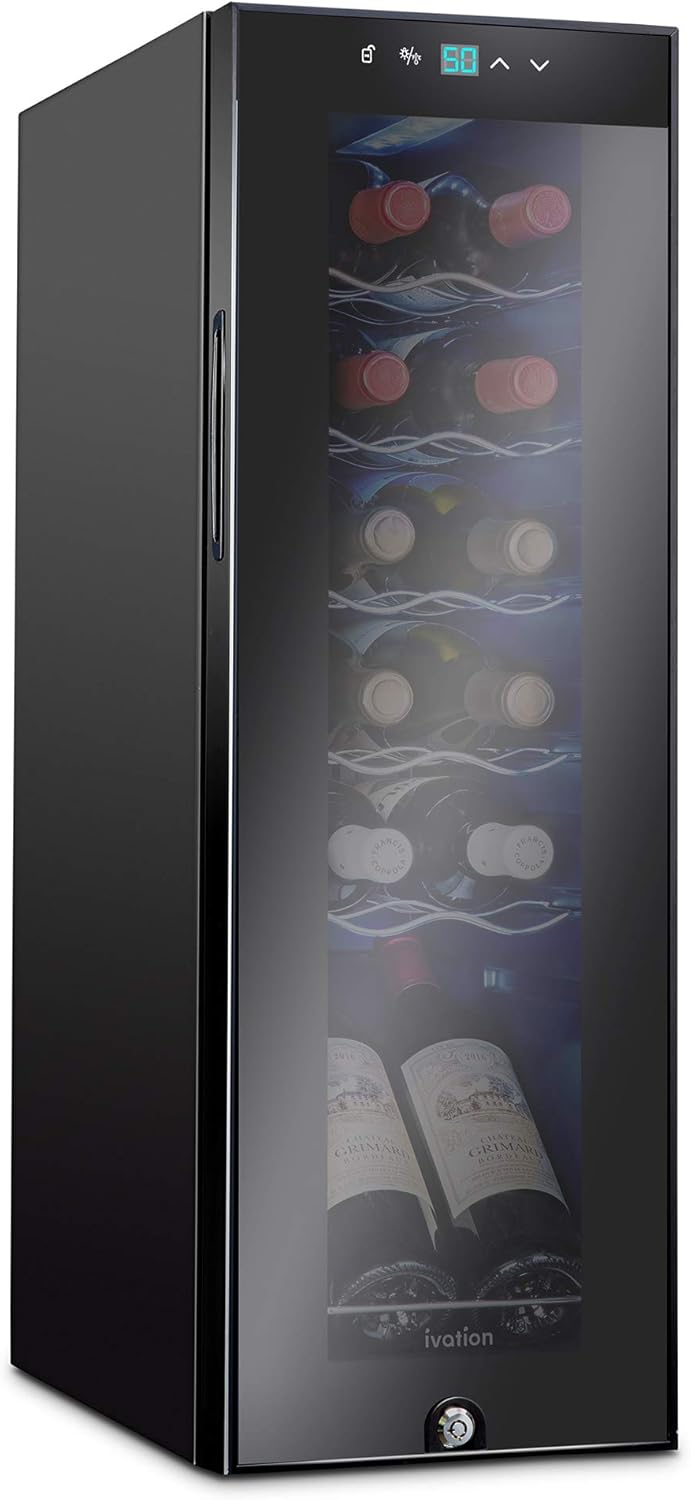
This Ivation 12-bottle cooler uses a compressor cooling system and internal fan to hold a stable 41–64°F range, making it suitable for both chilling and longer-term storage. It installs freestanding and has six removable wire racks so you can fit standard 750 ml bottles or rearrange for larger formats. The digital touch display shows temperature in Fahrenheit or Celsius and can be locked to prevent accidental changes, while the double-paned UV-resistant glass and rubber gasket help keep light and air out. Vibration-reducing compressor operation preserves sediment and the interior LED provides soft illumination for inspections without harsh heat. As a compact unit it draws modest power (rated 95W) and includes a keyed lock for security. Limitations include a small 1.2 cu ft capacity that restricts larger fermentation batches and single-zone control that prevents separate temperature settings for multiple products. The unit is best when you need a reliable, quiet compressor fridge with precise temperature stability in a compact footprint rather than a higher-capacity or dual-zone system.
Best for: Buyers seeking a compact, performance-focused compressor fridge that holds steady temperatures for precise fermentation or small-batch aging and who prioritize stability and quiet operation.
Less Ideal for: Those who need higher capacity, multiple temperature zones, or to run several fermentations at different setpoints simultaneously should look at larger or dual-zone units.
- Compressor cooling with inverter ensures stable, low temperatures suitable for fermentation control.
- Wide adjustable temperature range (41–64°F) with digital touch controls and lock for set-and-forget operation.
- Double-paned UV-resistant glass and airtight gasket protect contents from light and external air.
- Removable wire racks allow flexible bottle arrangement and easier cleaning.
- Quiet, vibration-reducing operation that minimizes disturbance to sediments or sensitive contents.
- Small 1.2 cubic foot capacity limits the number and size of fermentation vessels you can fit.
- Single temperature zone cannot maintain different temperatures for multiple simultaneous projects.
Verdict: Choose this cooler when you want a compact, compressor-driven fridge that delivers stable, low-temperature control for small-batch fermentation and precision cooling.
Antarctic Star 3.2 Cu Ft Beverage Refrigerator

| Capacity | 3.2 cubic feet |
|---|---|
| Cooling Method | Compressor |
| Temperature Range | 32°F-61°F |
| Number of Shelves | 5 |
| Voltage | 115 volts |
This Antarctic Star beverage refrigerator is a compact compressor-cooled unit intended for steady, low-vibration chilling of drinks or small-batch fermentation projects. It uses a rotary scroll compressor and a small convection fan to maintain a consistent internal temperature between 32°F and 61°F, and the double-pane tempered glass door with stainless trim and interior LED lighting makes contents easy to monitor without opening the door. Five adjustable shelves and reversible door orientation let you arrange cans and bottles for efficient storage, and the unit includes a keyed lock and leveling legs for placement stability. Because defrosting is manual, occasional maintenance is needed to prevent frost buildup if run at very low temperatures, and the glass door means added insulation loss versus a solid-door fridge. Noise is relatively low thanks to the quiet compressor, but the unit is not silent. For someone converting a compact fridge into a fermentation chamber, its steady compressor cooling, temperature range, and adjustable shelving make it a practical candidate with modest installation and maintenance requirements.
Best for: A practical buyer who needs a compact, steady-cooling fridge that can be reconfigured for bottles, cans, or small fermentation setups and values reliable compressor performance over lowest upfront cost.
Less Ideal for: If you need an ultra-quiet, plug-and-play fermentation chamber with automatic defrost or maximum insulation, choose a purpose-built fermenter or a solid-door, higher-efficiency unit instead.
- Compressor cooling with convection fan provides steady, low-vibration temperature control.
- Wide adjustable temperature range (32°F–61°F) suitable for chilling drinks or maintaining fermentation temps.
- Five adjustable shelves and reversible door let you optimize internal layout for bottles, cans, or fermenters.
- Double-pane tempered glass door and interior LED make it easy to monitor contents without opening the door.
- Includes leveling legs and a keyed lock for stable placement and basic security.
- Manual defrost requires occasional maintenance if run near freezing temperatures.
- Glass-front door offers less insulation than a solid door, which can increase cycling in warm rooms.
- Annual energy consumption is relatively high compared with very small thermoelectric units.
Verdict: Choose this compact Antarctic Star fridge when you want reliable compressor cooling and flexible shelving for a practical DIY fermentation chamber.
KRIB BLING Beverage Refrigerator KB03-FLB-45

| Capacity | 1.6 cubic feet |
|---|---|
| Size | 75 cans |
| Cooling Method | Compressor |
| Compressor Type | Inverter Compressor |
| Defrost System Type | Automatic |
This compact KRIB BLING beverage refrigerator is a freestanding, compressor-cooled cooler intended for storing cans or bottles in small spaces. It uses an inverter compressor and automatic defrost to provide quiet, energy-conscious cooling with an advertised temperature range down to about 32°F, and removable chrome shelves let you rearrange the interior for cans or short bottles. Typical uses include a dorm room, office, or small fermentation chamber where space is limited and you need stable, low-noise cooling. The door is glass with a key lock and the unit includes LED lighting and a single shelf/rack layout so capacity is focused rather than flexible for tall bottles. Practical limitations for fermentation: the single-zone design and modest interior volume limit how much equipment or multiple-temperature setups you can run, and temperature control appears to be via simple level settings rather than a built-in precision controller, so adding an external thermostat controller is likely for accurate fermentation work. The unit is energy efficient and quiet, but buyers should expect basic, no-frills operation rather than lab-grade temperature stability.
Best for: A budget-minded buyer who needs a quiet, space-saving cooler for a single small fermentation chamber or to store a limited number of temperature-sensitive brews.
Less Ideal for: Those planning multi-batch fermentation, large carboys, or who require precise built-in temperature control without adding an external controller should look at larger, dedicated fermentation fridges.
- Compact footprint fits small spaces
- Inverter compressor for quieter, more efficient operation
- Adjustable and removable shelves for different can or short bottle layouts
- Glass door with key lock and internal LED light for visibility
- Single-zone cooling and simple level thermostat limit precise temperature control
- Small interior capacity restricts larger fermentation setups or multiple carboys
Verdict: A low-cost, compact cooler that delivers quiet, efficient single-zone refrigeration ideal for small fermentation chambers when paired with an external temperature controller.
KimchiMama Slim Kimchi Refrigerator

| Capacity | 4.3 cubic feet |
|---|---|
| Defrost System Type | Frost Free |
| Voltage | 110 volts |
| Cooling Method | Compressor |
| Included Components | 7 Kimchi containers with lids |
The KimchiMama Slim Kimchi Refrigerator is a purpose-built compact fridge that keeps fermented foods at controlled temperatures and humidity while offering several dedicated modes. It is intended as a small upright unit for apartments or kitchens where buyers want a separate space for kimchi, gochujang, and similar foods; controls let you switch between Kimchi, Fermentation, Fridge, Freezer, Beer, Wine, and Liquor modes and a one-touch fermentation cycle runs a 7-day program then switches to storage. The appliance uses an inverter compressor and a frost-free system for even cooling and includes seven BPA-free kimchi containers sized for batch organization. Practical benefits include glass shelves, a deodorizing filter, and modest energy use for a compact fridge, plus freestanding installation and 110V compatibility. Important limitations are its small 4.3 cu ft capacity, upright footprint, and single-door layout, which mean it is not suited to large-volume storage or replacing a full-size refrigerator. If you need reliable, repeatable fermentation in a compact unit, this model focuses on that use without extra bells.
Best for: Buyers who prioritize a reliable, repeatable fermentation environment and want a compact, dedicated appliance to store and age kimchi or other fermented foods without using their main refrigerator.
Less Ideal for: Those who need large-capacity cold storage, frequent bulk food access, or a multi-use replacement for a full-size refrigerator should consider larger units instead.
- Designed specifically for kimchi and fermentation with dedicated modes and a one-touch 7-day fermentation cycle
- Inverter compressor and frost-free cooling for consistent temperature distribution
- Includes seven BPA-free kimchi containers to organize batches out of the box
- Digital temperature and humidity control plus deodorizing filter for fresher, odor-managed storage
- Compact freestanding form fits small kitchens and apartments
- Limited 4.3 cu ft capacity restricts the total amount of kimchi or other foods you can store
- Single-door upright design may be harder to load bulk containers compared with chest-style units
Verdict: Choose this slim kimchi refrigerator when you want a compact, reliable fermentation chamber with mode-driven controls and included containers for organized batch storage.
hOmeLabs Beverage Refrigerator HME030065N

| Capacity | 3.2 cubic feet |
|---|---|
| Temperature range | 34°F-50°F |
| Cooling method | Compressor |
| Number of shelves | 3 |
| Voltage | 120 volts |
This hOmeLabs beverage refrigerator is a compact compressor unit designed to store drinks while offering visible display through a double-glazed glass door and internal LED lighting. It uses a whisper-quiet compressor and a touch-button digital thermostat that cools as low as 34°F, with three removable chrome shelves to reconfigure space for cans, bottles, or small fermenters. The compressor cooling and automatic defrost make it suitable for steady temperature control compared with thermoelectric mini-fridges, and the reversible door and adjustable feet simplify placement in tight spaces or under counters. Important limitations for fermentation chamber use are the clear glass door and internal LED, which let light reach contents unless you block them, and the unit is not specified with fine-grain temperature-hold features or external probe ports, so you will need an external controller or a drill/mod to add a temperature controller and sensor access for precise ferm temps. The fridge is energy rated with listed annual consumption and performs well for hobbyist setups when paired with an appropriate external temperature controller and light-blocking measures.
Best for: A cautious hobby fermenter who values a stable compressor-driven cold source and wants a visible, reconfigurable interior they can modify with an external controller to achieve steady fermentation temperatures.
Less Ideal for: People who need a plug-and-play fermentation chamber with built-in probe ports, variable-speed cooling, or factory-grade precision control should consider purpose-built fermentation units instead.
- Compressor cooling provides stronger, more consistent cold than thermoelectric units.
- Digital touch temperature control with a 34°F low setpoint for a wide fermentable range.
- Three adjustable, removable shelves allow flexible interior layout for carboys, bottles, or fermenters.
- Reversible glass door and adjustable feet improve placement options and leveling.
- Whisper-quiet compressor suitable for home use or small spaces.
- Glass door and interior LED expose contents to light unless blocked, which can affect light-sensitive ferments.
- No built-in external probe port or factory temperature controller for precise fermentation control.
- Annual energy consumption is relatively high compared with small thermoelectric fridges.
Verdict: A reliable compressor mini fridge with adjustable shelving that makes a solid, modifiable base for a hobby fermentation chamber when paired with an external temperature controller and light-blocking steps.
Feelfunn 3.2 Cu.Ft Beverage Refrigerator

| Capacity | 3.2 cubic feet |
|---|---|
| Temperature Range | 34–64°F |
| Cooling Method | Compressor |
| Noise Level | ~36 dB |
| Shelves | 4 adjustable/removable |
The Feelfunn 3.2 cu ft beverage refrigerator is a compact compressor-cooled unit built to store a large number of drinks while maintaining a consistent internal temperature. It uses a rotary-scroll compressor and 3D air circulation to keep temperatures even across four adjustable shelves, and a digital control lets you set temperatures roughly between freezing and cellar range. The glass door with double-layer low-E glazing and interior LED lighting makes contents visible without long door openings, and the reversible door and adjustable feet support either freestanding or undercounter placement. Noise is relatively low at about 36 dB, so it can sit near living or work spaces without being intrusive. For fermentation chamber use the compressor cooling and digital setpoint make it feasible to hold steady temperatures, but buyers should note this is a beverage fridge without dedicated fermentation features like a built-in temperature offset, integrated fan control for high-precision cycling, or included external controller wiring. The unit is ETL listed and uses R-600A refrigerant, and Feelfunn offers a one-year accessory service.
Best for: A cautious buyer who wants a reliable, compressor-cooled compact fridge that can be repurposed as a basic fermentation chamber with some external temperature control and occasional monitoring.
Less Ideal for: Homebrewers who demand precise, automated temperature cycling or integrated fermentation features should consider dedicated fermentation cabinets or fridges designed for controller integration.
- Compressor-based cooling with 3D air circulation for more even internal temperatures.
- Digital temperature control with a wide listed range for storing different beverages.
- Reversible glass door and adjustable shelves allow flexible placement and storage layouts.
- Quiet operation (~36 dB) suitable for nearby living or work areas.
- No built-in fermentation-specific controls or external controller interface for tight temperature cycling.
- Glass door reduces insulation compared with solid-door units, which can affect temperature stability.
- Annual energy consumption is relatively high compared with very small units.
Verdict: A dependable compressor mini fridge with digital control and roomy interior that makes a safe, straightforward base for a DIY fermentation chamber when paired with an external controller.
Choosing the Right Mini Fridge for Fermentation Chamber: Key Factors to Consider
Temperature Stability
Consistent temperature is the core requirement for a fermentation chamber. Small compressors and limited thermal mass in mini fridges can lead to large swings if the unit cycles frequently. Look for models with steady duty cycles and minimal overshoot so your external controller can maintain setpoints without aggressive cycling.
Temperature stability affects yeast health and fermentation timing. A fridge that fluctuates several degrees will increase the need for controller intervention and may force you to insulate more heavily or add thermal mass to damp swings.
Usable Interior Volume and Layout
Interior volume matters less than how that space is arranged. Shelf positions, door shelving, and whether the evaporator is exposed in the cabinet determine what fermenter sizes you can fit. Measure your fermenter including any airlocks, stands, or temperature probes before buying.
A fridge with removable or adjustable shelves and a recessed compressor area gives you more flexibility. Consider headspace for bottles or secondary fermenters if you plan to lager or cold-crash within the same chamber.
Insulation and Door Sealing
Good insulation reduces compressor runtime and helps maintain stable conditions during door openings. A tight door gasket prevents warm air infiltration and condensation that can affect fermentation. Check door alignment and gasket quality when evaluating an enclosure.
If the insulation is thin or the seal is poor, you will need to add external insulation or use a thicker-walled chamber option. That increases complexity and may affect how you route wiring for a temperature controller.
Controller Compatibility and Modding Ease
Most homebrewers use an external temperature controller to manage fermentation temperatures. The ease of mounting a sensor, routing probe wiring, and accessing the compressor power makes installation simpler and safer. Look for fridges with accessible rear panels, a removable kickplate, or interior spaces where a probe can be secured away from direct airflow.
Also consider whether the compressor runs on a predictable cycle and whether the chassis allows external relays or solid-state controllers to be installed without extensive modification. Units that require cutting into refrigerant lines or major rework are poor choices for casual modding.
Power Draw and Efficiency
A more efficient mini fridge reduces energy costs and tends to run longer between cycles, which helps temperature stability. Check published power ratings and consider how insulation and ambient room temperature will affect runtime. A fridge that draws more power might cool faster but will also cycle more frequently and increase electricity use.
If you plan to run your fermentation chamber continuously, efficiency adds up over weeks of active fermentation and longer conditioning periods. Also factor in compressor placement and how heat rejection from the back affects the surrounding area.
Noise and Vibration
Noise and vibration matter if the fermentation chamber will live in a living space or near quiet rooms. Small compressors can be louder or produce vibration that transmits through shelving and glass carboys. Consider the unit's compressor mounting and whether anti-vibration pads or isolation mounts will be needed.
Lower noise models improve the convenience of having fermentation equipment nearby and reduce the risk of transmitted vibration affecting your fermenters. This matters more for long dry-hop or lagering periods where the chamber runs continuously.
Sizing the Chamber for Your Fermenter
Before choosing a mini fridge for fermentation chamber use, measure your fermenter with any fittings and clearance for an airlock. Account for the need to move the fermenter in and out without forcing corners or tipping it. A tight fit increases the risk of knocks and makes cleaning harder.
Also think about future needs. If you may move to larger batches or want to cold-crash multiple vessels, choose a cabinet with removable shelving and a bit of extra vertical clearance.
- Measure height with airlock attached and include transfer hoses.
- Check interior depth with door fully open to ensure swing clearance.
- Prefer adjustable shelves or removable trays for flexibility.
Mounting a Temperature Probe Correctly
Sensor placement affects how well your controller reads the true fermenter temperature. The probe should be secured to the fermenter or placed in a thermowell if you have one. Avoid placing the sensor directly in front of the evaporator or in a spot with strong cold air drafts.
Use grommets or small drilled ports to route probe wiring without compromising the door seal. If you must thread wiring through the back panel, use cable clamps and sealants to maintain insulation integrity.
- Attach probe to fermenter side with thermal tape for best readings.
- Keep sensor away from direct airflow and evaporator fins.
- Seal any cable entry points to preserve insulation.
Adding Thermal Mass to Reduce Cycling
Adding a thermal mass such as a water jug or glycol bath stabilizes temperature and reduces compressor cycling. The mass absorbs short bursts of cooling or warming and smooths out fluctuations between compressor cycles.
Place thermal mass near the fermenter and not directly on the evaporator to avoid freezing spots. The exact size of the mass depends on cabinet volume and desired dampening effect.
- Use sealed jugs of water or a dedicated glycol container.
- Balance thermal mass size with available space so airflow is not blocked.
- Combine with a controller that has sensible hysteresis settings for best results.
Managing Condensation and Drip Control
Condensation can form during cold-crash or when the door is opened frequently. Ensure the drain pan is accessible and that any defrost or drip channels are clear. If moisture is excessive, use a removable tray or desiccant in a safe location away from the fermenter.
Periodic wiping and a plan for water removal preserve interior finishes and reduce the risk of mold. Good door seals and limiting door openings are the simplest preventive measures.
- Check and clean the drain pan regularly.
- Use an absorbent tray to collect runoff during defrost cycles.
- Keep door openings brief and infrequent during active fermentation.
Safety and Electrical Considerations
When adapting a mini fridge for fermentation, follow basic electrical safety: avoid overloading circuits, use properly rated relays and controllers, and keep wiring tidy and strain-relieved. If you add a separate relay or controller, ensure it is installed away from moisture and secured to prevent accidental disconnection.
Do not modify refrigerant lines or compressor components unless you are qualified. Many useful controller setups only require probe wiring and a plug-in relay, which preserve the integrity of the sealed refrigeration system.
- Use a grounded outlet and avoid extension cords for permanent setups.
- Mount controllers and relays in well-ventilated areas away from drip paths.
- Label cables and fuse or circuit-protect any added components.
How We Chose the Best Mini Fridge for Fermentation Chamber
We evaluated candidate mini fridges for fermentation chambers using metrics that matter to homebrewers and hobby fermenters. Key filters included measurable temperature stability at fermentation ranges, interior usable volume and shelving layout, and the fridge's insulation and compressor behavior. We also considered electrical characteristics such as power draw and duty cycle, plus the ease of adapting the unit to external temperature controllers or adding a temperature probe. Units with poor insulation, erratic compressor cycling, or incompatible interior layouts were excluded. We prioritized fridges that balance compact footprint with enough internal clearance for common fermenter sizes, and that show predictable cooling patterns suitable for low-temperature fermentation control. Finally, we checked build features that affect long-term reliability—door seal quality, internal finish for easy cleaning, and accessibility of the compressor compartment for any external wiring or modifications. These criteria ensured selections that are practical, adaptable, and appropriate for home fermentation projects.
Our full evaluation process is outlined in our review methodology.
FAQ
What fermentation temperature range can I maintain in a mini fridge?
Most mini fridges will comfortably maintain common ale and lager fermentation ranges when paired with an external controller. Exact achievable temperatures depend on ambient room heat, insulation, and compressor capacity, so expect variation between models.
Can I use a mini fridge for lagering at near-freezing temperatures?
Some mini fridges can reach near-freezing temperatures, but consistently holding just above freezing may require added insulation or a controller with tight hysteresis. Monitor for freezing hotspots and consider adding thermal mass to avoid ice formation on fermenters.
How do I prevent my fermenter from freezing against the evaporator?
Avoid placing the fermenter directly against the evaporator or in tight contact with cold fins. Use a shelf or spacer to keep the fermenter a few inches from the coldest surfaces and place the temperature probe on the fermenter wall to let the controller cycle before the fridge gets excessively cold.
Is it safe to run a mini fridge continuously as a fermentation chamber?
Yes, many mini fridges operate continuously without issue when used as fermentation chambers, provided the unit is ventilated properly and not overloaded. Regularly inspect seals, clear vents, and ensure the compressor has adequate airflow to avoid overheating.
Do I need a special controller for fermentation use?
An external temperature controller that cuts power to the fridge based on probe readings is the typical solution. Choose a controller with appropriate relay ratings and temperature resolution. Advanced users may prefer controllers with programmable profiles, but basic on/off controllers are sufficient for most batches.
Final Verdict
Choosing a mini fridge for a fermentation chamber is about balancing interior fit, stable cooling behavior, and ease of modification. Prioritize temperature stability, sufficient usable space for your fermenter, and a cabinet that accepts a probe and external controller without invasive work. Consider insulation, thermal mass, and noise if the chamber will live in a shared space. With attention to these tradeoffs, you can select a compact refrigerator that reliably supports consistent fermentation and makes temperature management straightforward.