
Note: This article contains affiliate links. If you click on these links and make a purchase, we may earn a small commission at no extra cost to you. This helps support our research and content. Read our full affiliate disclosure here.
Picking the right mini fridge for food matters when you need dependable short-term storage in a small space. Whether you want a dedicated unit for meal prep, dorm use, or extra kitchen overflow, the right compact refrigerator preserves ingredients, prevents spoilage, and fits into your daily routine. This guide covers seven carefully shortlisted mini fridges for food, selected for consistent cooling, usable capacity, and practical features. Below you will find concise evaluations and an explanation of the criteria we used so you can match a model to your storage needs and usage patterns.
Top Picks at a Glance
| Best Overall The best all-around choice for most situations | Midea 3.1 Cu Ft Mini Fridge |  |
| Best Quality Built to a higher standard if you want something more solid | EUHOMY Mini Fridge CRF006-31 |  |
| Best Value The sweet spot between price and what you get | Upstreman FR17 1.7 Cu.ft Mini Fridge |  |
| Best Budget The cheapest option that still gets the job done reliably | DEMULLER 45L Mini Fridge |  |
| Top Rated A top-rated pick with lots of positive feedback | Saeoola Mini Fridge 3.1 Cu Ft |  |
| Most Popular A crowd favorite that many people choose with confidence | Cooluli Classic 4L Mini Fridge |  |
| Best Seller A high-volume bestseller chosen again and again | Frostorm BC-90 3.2 Cu Ft Mini Fridge |  |
Midea 3.1 Cu Ft Mini Fridge

| Capacity | 3.1 cubic feet |
|---|---|
| Configuration | Compact Freezer-on-Top |
| Defrost System Type | Manual |
| Cooling Method | Compressor |
| Specification Met | Energy Star |
The Midea 3.1 cu ft mini fridge is a compact two-door refrigerator with a small freezer compartment designed for dorms, apartments, or secondary kitchens. It uses a compressor with R600A refrigerant and is Energy Star certified, so it runs efficiently and is billed with low annual energy use. Inside you get removable glass shelves, a crisper drawer, a 2L bottle rack and LED interior lighting, plus a mechanical thermostat and manual defrost that make temperature control and cleaning straightforward. The reversible door and adjustable legs help fit it into tighter layouts, while the compressor and multi-air flow system aim to keep temperatures steady for perishables. Practical limitations are its modest freezer space and manual defrosting, which means more hands-on maintenance than frost-free models, and the fridge is best for small households rather than full meal prep for families. For buyers who want a reliable, energy-efficient compact fridge that balances useful storage and low operating cost, this model delivers sensible everyday performance.
Best for: Buyers seeking an energy-efficient, space-conscious refrigerator for a dorm, apartment, or as a secondary fridge who value low operating cost and simple, reliable cooling.
Less Ideal for: Households that need large freezer capacity or a frost-free model for minimal maintenance should consider larger or automatic-defrost refrigerators instead.
- Energy Star certified with low annual energy consumption
- Removable shelves and crisper drawer for flexible organization
- Reversible door and adjustable legs for placement flexibility
- LED interior light for clear visibility of contents
- Small top freezer offers limited frozen storage
- Manual defrost requires periodic maintenance
Verdict: A compact, energy-efficient mini fridge that balances usable storage and low running cost for small-space everyday food storage.
EUHOMY Mini Fridge CRF006-31
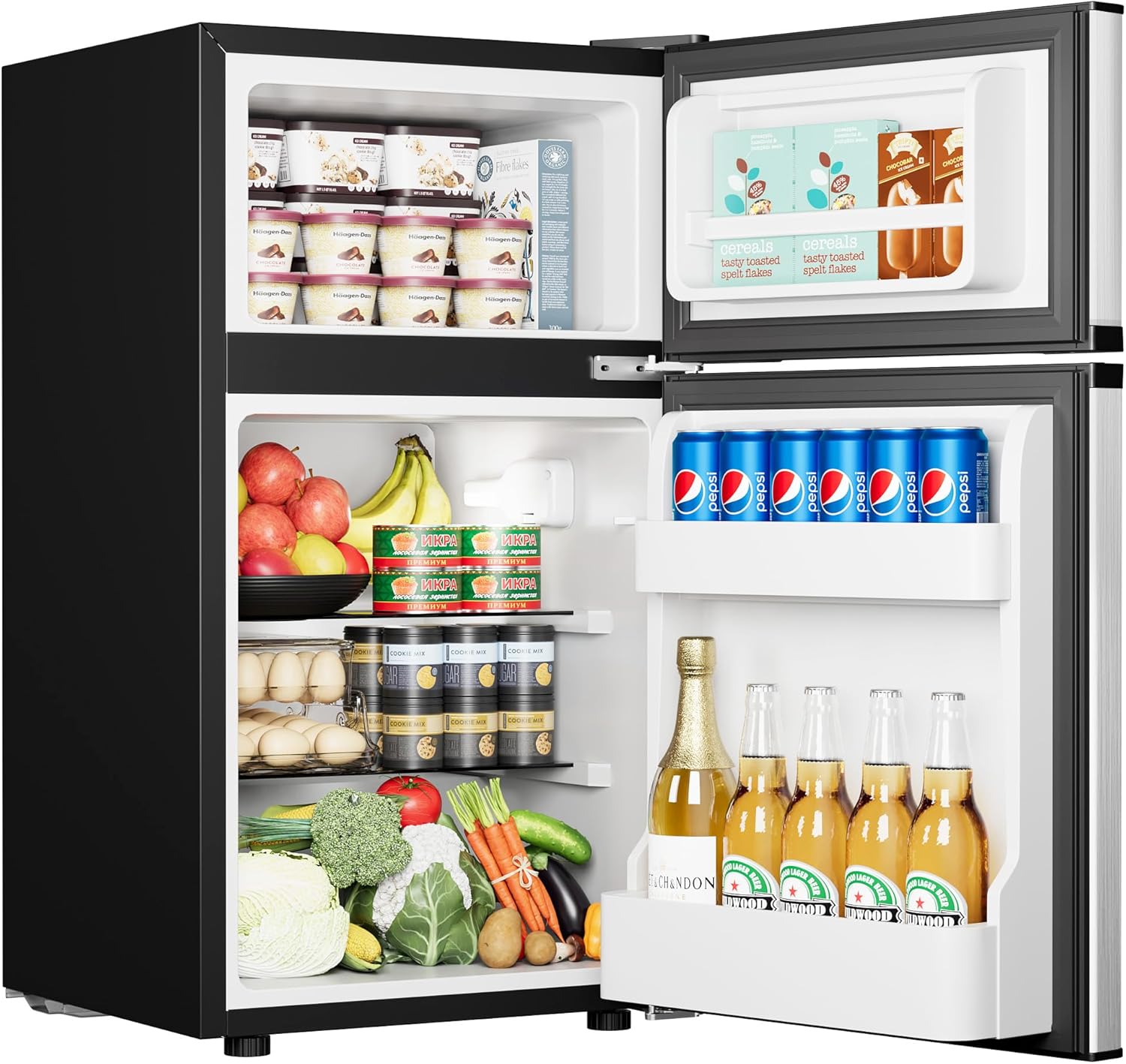
| Capacity | 3.2 cubic feet |
|---|---|
| Freezer Capacity | 0.96 cubic feet |
| Cooling Method | Compressor |
| Defrost System Type | Automatic |
| Voltage | 115 volts |
This EUHOMY 3.2 cu ft mini fridge pairs a 0.96 cu ft top freezer with a 2.24 cu ft fresh-food compartment to handle both frozen and refrigerated storage in small spaces. It uses a rotary scroll compressor with inverter technology, which delivers consistent cooling and quieter operation compared with direct‑cool units, and it offers three-level temperature adjustment so you can dial in temperatures for drinks, produce, or frozen items. The interior includes adjustable glass shelves, a crisper drawer and an LED light for easy organization, and the reversible door and adjustable feet make placement flexible in dorms, bedrooms, or offices. Energy use is rated with daily consumption information and the unit meets UL specifications, though the annual energy figure is relatively high for its size. Practical limitations are a modest freezer volume that only fits small quantities and a single-zone compressor design that means aggressive temperature changes can affect both compartments. For buyers prioritizing steady, fridge-first performance in a compact footprint, this model is a solid, functional choice.
Best for: Buyers who need reliable, fridge-first cooling performance in a small footprint and value steady compressor cooling and flexible placement over maximum freezer space.
Less Ideal for: People who rely on large frozen storage for meal prep or bulk freezing should choose a model with a larger freezer or a separate chest/freezer unit.
- Compressor with inverter technology for stable cooling and relatively low noise
- Two-door layout with a dedicated top freezer and adjustable glass shelves for organized storage
- Reversible door and adjustable feet allow flexible placement in tight spaces
- Built-in LED light and crisper drawer improve visibility and produce storage
- Freezer capacity (0.96 cu ft) is small and only suitable for limited frozen storage
- Annual energy consumption is comparatively high for a compact refrigerator
Verdict: Choose this mini fridge if you want dependable compressor cooling and a dedicated top freezer in a compact, placement-friendly package.
Upstreman FR17 1.7 Cu.ft Mini Fridge
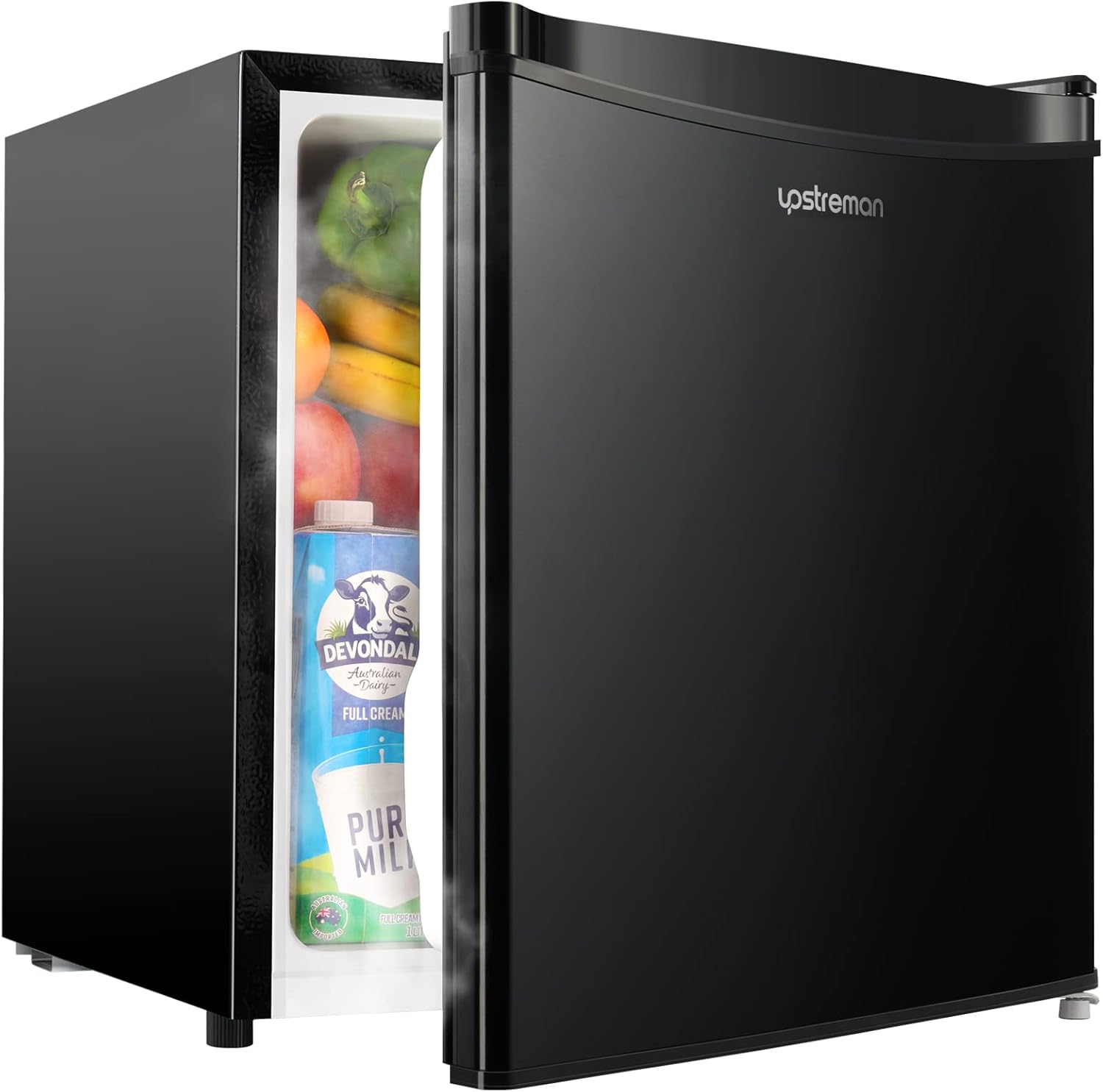
| Capacity | 1.7 cubic feet |
|---|---|
| Freezer Capacity | 0.2 cubic feet |
| Defrost System Type | Manual Defrost |
| Cooling Method | Compressor |
| Refrigerant | R-600A |
The Upstreman FR17 is a small compressor-driven mini fridge that balances space efficiency and basic food storage needs. It has a 1.7 cubic foot capacity with a 0.2 cu ft top freezer, a single shelf, two door shelves, and a five-step adjustable thermostat that lets you dial in temperatures for drinks and leftovers. It runs quietly at about 38 dB and uses R-600A refrigerant, which helps keep energy use low; the listing reports roughly 204 kWh annually. The reversible door and compact footprint make placement flexible for counters, dorm rooms, or small kitchens, and the included ice tray and defrost tool are practical extras. Limitations are the small internal volume and manual defrost, so it is not suited for large-batch meal storage or long-term frozen-food keeping. For buyers prioritizing a compact, energy-efficient fridge for everyday chilled food and occasional ice, the FR17 is a sensible, no-frills option.
Best for: Buyers who need a space-saving, energy-conscious fridge for everyday chilled food and beverages in a dorm, office, or small apartment and who prefer a simple, low-noise appliance.
Less Ideal for: Households that need substantial refrigerated or frozen storage for meal prep, large families, or anyone who wants a frost-free, high-capacity fridge.
- Compact 1.7 cu ft footprint fits small spaces and can sit on counters or under desks
- Built-in 0.2 cu ft freezer for ice and short-term frozen items
- Adjustable 5-step thermostat for basic temperature control
- Quiet operation around 38 dB suitable for bedrooms and offices
- Energy-efficient compressor with R-600A refrigerant and reported low annual consumption
- Manual defrost requires periodic maintenance to prevent frost build-up
- Very limited internal storage and only one shelf restricts organized food storage
- Not suitable for long-term freezing or heavy meal-prep storage needs
Verdict: A compact, energy-efficient mini fridge with a small top freezer that delivers quiet, practical cold storage for single-person spaces and dorm living.
DEMULLER 45L Mini Fridge

| Capacity | 45 liters |
|---|---|
| Freezer Capacity | 0.8 cubic feet |
| Refrigerator Net Capacity | 1.6 cubic feet |
| Defrost System Type | Manual Defrost |
| Cooling Method | Compressor |
This DEMULLER 45L mini fridge is a small freestanding refrigerator with a top freezer that gives personal-scale storage for one person. It uses a compressor cooling system and offers seven temperature settings via a knob so you can dial freezer and fridge temperatures between roughly -0.4°F and 50°F; the top compartment is a 0.8 cu ft freezer and the lower area is about 1.6 cu ft for everyday items. Two removable shelves and two door racks let you reconfigure the interior for bottles, snacks, and meal prep containers, while adjustable feet help level the unit on uneven floors. Manual defrosting keeps the design simple and repairable, and the brand reports normal operation noise around 38 dB so it stays unobtrusive in a dorm room or small kitchen. Expect limited total capacity and the need to defrost periodically, but the straightforward controls, compact footprint, and compressor cooling make it a practical budget choice for buyers needing a basic, efficient mini fridge for food storage.
Best for: Buyers on a tight budget who need a simple, space-saving fridge for everyday food and a small freezer compartment, such as students, single-person apartments, or office use.
Less Ideal for: Families, meal preppers, or anyone who needs large-capacity refrigeration or a frost-free, low-maintenance unit should look for larger models.
- Compressor cooling provides faster and more consistent chilling than thermoelectric units
- Seven-step adjustable thermostat for fine-tuning freezer and fridge temperatures
- Two removable shelves and door racks allow flexible organization
- Compact freestanding footprint fits small spaces like dorms or offices
- Reported quiet operation around 38 dB suitable for nearby living areas
- Manual defrost requires periodic thawing and draining
- Very limited total capacity not suitable for multi-person households
Verdict: If you need an affordable, compact fridge with a usable freezer and reliable compressor cooling for one person, this 45L DEMULLER mini fridge is a practical pick.
Saeoola Mini Fridge 3.1 Cu Ft

| Capacity | 3.1 cubic feet |
|---|---|
| Freezer Capacity | 1.2 cubic feet |
| Defrost System Type | Manual Defrost |
| Annual Energy Consumption | 221 kwh |
| Cooling Method | Compressor |
This Saeoola mini fridge is a freestanding compact refrigerator aimed at everyday food storage in small spaces. It uses an R-600A compressor with manual defrost and a 5-level adjustable thermostat that lets you set temperatures between 32°F and 51°F, making it suitable for chilled items and a small frozen section. Inside, three tempered glass shelves and a crisper drawer organize produce while removable shelves simplify cleaning and reconfiguration. The unit is rated for low noise under 38 dB and modest energy use (about 0.5 kWh per day), which helps keep operating costs down in dorms, offices, or bedrooms. Installation is straightforward thanks to adjustable feet for leveling on uneven floors. Important limitations are its manual defrost requirement and modest freezer capacity, which means heavier long-term frozen storage or frequent ice management will be needed. The fridge is best used for daily food, drinks, and short-term frozen items rather than replacing a full-size kitchen refrigerator.
Best for: Buyers who prioritize dependable, quiet daily food storage in small living spaces and want a straightforward, easy-to-maintain mini fridge.
Less Ideal for: Those who need large or long-term freezer capacity or a frost-free model for heavy frozen food use should consider a larger refrigerator.
- Adjustable 5-level thermostat for precise temperature control between 32°F and 51°F
- Removable tempered glass shelves and crisper drawer for organized storage and easy cleaning
- Low noise operation under 38 dB suitable for bedrooms or offices
- Energy-efficient R-600A compressor with low daily power consumption
- Manual defrost means occasional thawing and cleaning is required
- Freezer space is limited at 1.2 cu ft, not ideal for large frozen-item storage
Verdict: A practical, quiet mini fridge that gives reliable chilled storage and flexible shelving for everyday food needs in small spaces.
Cooluli Classic 4L Mini Fridge

| Capacity | 4 liters |
|---|---|
| Cooling Method | Thermoelectric |
| Power Source | AC/DC/USB |
| Defrost System Type | Manual Defrost |
| Certification | ETL |
The Cooluli Classic 4L is a small thermo-electric cooler/warmer meant for short-term storage of food, drinks, skincare, and medications. It cools about 20°–22°C (35°–40°F) below ambient or heats up to roughly 149°F, and it switches between modes with a simple manual toggle. Its compact, lightweight design and built-in handle make it easy to move between a countertop, dorm, office, or vehicle, and the included AC, DC, and USB cords give flexible powering options for indoor and travel use. Thermoelectric cooling is quiet and refrigerant-free, but it cannot match compressor fridges for fast cooling or very low temperatures, and usable capacity is limited to a few cans or small jars. Wire shelving and a small door shelf help organize contents, though the left-hinged door and manual defrost mean occasional maintenance. For keeping snacks, single-serve drinks, skincare products, or temperature-sensitive meds on hand, this unit is convenient; for larger food storage or long-term refrigeration needs, a full-size or compressor mini fridge is a better choice.
Best for: Buyers who prioritize a compact, moveable fridge to keep a few beverages, skincare items, or temperature-sensitive meds nearby and who want flexible power options for home and travel.
Less Ideal for: People who need regular chilled storage for family food, meal prep, or larger quantities should choose a compressor mini fridge with greater capacity and lower temperatures.
- Very portable and lightweight with a molded top handle for easy carrying
- Cools and warms so it works for drinks, skincare, and medications
- Multiple power options: AC, DC, and USB for versatile use at home or in vehicles
- Thermoelectric operation is quiet and refrigerant-free
- Small 4-liter capacity limits how much food or drink it can hold
- Thermoelectric cooling is slower and less cold than compressor-based refrigerators
- Manual defrost and left-hinged door can be less convenient for some placements
Verdict: A lightweight, travel-friendly 4L cooler/warmer best for holding a few drinks, skincare items, or meds when portability and versatile power are the main priorities.
Frostorm BC-90 3.2 Cu Ft Mini Fridge

| Capacity | 3.2 cubic feet |
|---|---|
| Freezer Capacity | 0.35 cubic feet |
| Defrost System Type | Automatic |
| Voltage | 115 |
| Number Of Shelves | 2 |
The Frostorm BC-90 is a compact upright mini fridge designed for bedrooms, offices, and dorm rooms where full-size refrigeration is unnecessary. It combines a 3.2 cu ft fresh food compartment with a 0.35 cu ft upright freezer that can make ice and hold short-term frozen items, while a simple 1–5 mechanical thermostat and automatic defrost make temperature control straightforward. Adjustable glass shelves and door bins let you organize bottles, meal prep containers, and snacks, and the reversible door gives placement flexibility in tight spaces. The unit is ETL certified and claims modest energy use (about 0.6 kWh/day), so operating costs are low. Trade-offs are typical for this class: the freezer is small and best for ice and quick freezes rather than long-term storage, and the simple mechanical controls lack digital precision and advanced modes. Quiet operation and a durable, easy-to-clean interior make it practical for everyday food storage where space and budget are priorities.
Best for: Buyers who prioritize a reliable, easy-to-use compact refrigerator for everyday food and drink storage and who want low running costs and placement flexibility in small spaces.
Less Ideal for: People needing true frozen-food storage or large-capacity freezers for meal prepping or long-term freezing should choose a larger freezer-grade appliance.
- Generous 3.2 cu ft total capacity for a mini fridge with separate freezer compartment
- Automatic defrost reduces maintenance
- Reversible door allows flexible placement in small rooms
- Adjustable glass shelves and door bins for flexible organization
- ETL certification and low estimated daily energy use for economical operation
- Freezer is small and not suited for long-term frozen storage
- Mechanical thermostat lacks fine digital temperature control
Verdict: A practical, energy-conscious mini fridge with a small upright freezer that fits dorms and apartments when you need dependable daily food storage.
Choosing the Right Mini Fridge for Food: Key Factors to Consider
Temperature Control and Uniformity
Accurate temperature settings and even cooling matter because food safety depends on keeping perishable items below recommended temperatures. A mini fridge that holds a steady, appropriate temperature reduces bacterial growth and extends the life of dairy, meat, and prepared meals.
Look for precise thermostats, clear temperature readouts, or multiple cooling zones if you plan to store a mix of raw ingredients and ready-to-eat foods. Consider how the compressor or thermoelectric system maintains temperature when the unit is filled versus largely empty, because loading affects airflow and uniformity.
Usable Capacity and Interior Dimensions
Advertised capacity in liters or cubic feet is useful, but interior layout determines how much food you can realistically store. Shelves that are adjustable or removable let you fit taller containers and stack items efficiently. Door bins are valuable for condiments and small items, saving shelf space.
Measure the containers and packaging you commonly use, and compare those measurements to the fridge's actual interior dimensions. A slightly larger external footprint can be worthwhile if it converts to more usable shelf area or smarter storage options.
Energy Use and Noise Levels
Mini fridges run continuously, so energy consumption affects household electricity use and operating cost over time. Energy-efficient compressors and good insulation reduce run time and heat transfer.
Noise matters if the unit will sit in a bedroom, office, or study area. Look for specifications on decibel output or reviews noting quiet operation. Thermoelectric models are often quieter but may be less effective in warm rooms, while compressor units typically cool better but can be louder when cycling.
Interior Layout and Flexibility
A flexible interior supports diverse food storage needs. Features like adjustable shelves, a small freezer compartment, deli drawers, and removable door bins let you adapt the fridge to weekly grocery runs, meal prep containers, or a combination of tall bottles and boxed goods.
Consider how easily shelves clean and reposition, and whether the unit offers specialized storage such as crisper-style compartments or spill-proof shelving that contain leaks and simplify maintenance.
Maintenance, Durability, and Serviceability
Durable materials and simple maintenance prolong a mini fridge's usable life. Look for door gaskets that compress evenly to keep cold air in, corrosion-resistant shelving, and an interior finish that wipes clean.
Ease of defrosting or a frost-free feature reduces hands-on upkeep. Accessibility of spare parts and straightforward access to the back panel for basic service are practical considerations for long-term ownership.
Placement and Installation Constraints
Where you plan to put the mini fridge affects which model fits best. Clearance for ventilation, door swing direction, and the proximity to heat sources like direct sunlight or ovens change cooling efficiency and longevity.
Check the unit's recommended ventilation gap and whether the door is reversible. Also ensure the power outlet placement and cord length accommodate the intended location without unsafe extension leads.
Mini Fridge Types and How They Affect Food Storage
Mini fridges use different cooling approaches and interior designs, and those distinctions influence real-world food storage. Compressor-based units generally provide stronger cooling and better performance in warm rooms, which helps keep perishable foods safe. Thermoelectric models run quieter and use fewer moving parts but may struggle with higher ambient temperatures.
Beyond cooling technology, layout choices such as a small integrated freezer compartment or a removable shelf system change what you can store. If you keep frozen ingredients or ice packs, pick a unit with a functional freezer section rather than a fridge-only interior.
- Compressor: Better low-temperature performance and recovery after door openings
- Thermoelectric: Quiet operation, suitable for milder ambient temperatures
- Freezer compartment: Useful for frozen items but may reduce usable fridge space
Measuring Your Needs: Capacity Vs. Footprint
Translate advertised capacity into real items you plan to store. Think in terms of meal-sized containers, milk cartons, and taller bottles. A slightly larger footprint that adds meaningful shelf width or height is often more valuable than a marginal increase in listed liters.
Also consider how often you restock. If you shop weekly and store full meal-prep containers, prioritize usable internal volume. If you mostly chill snacks or a few items, a smaller compact can be more space-efficient.
- Measure key containers before comparing models
- Evaluate shelf adjustability to accommodate tall items
- Account for awkward shapes like pizza boxes or meal prep tubs
Food Safety Practices for Mini Fridges
Even a well-performing mini fridge needs sensible food-handling to maintain safety. Store raw meats on the lowest shelf in sealed containers to prevent drips. Keep ready-to-eat foods separate and at slightly cooler zones when possible.
Regularly monitor the internal temperature with a simple thermometer and clean spills promptly to prevent odors and bacterial growth. Rotate older items forward and label leftovers with dates to reduce waste and the chance of consuming spoiled food.
- Use an appliance thermometer to verify temperature stability
- Store raw proteins on lower shelves in leakproof containers
- Label and date leftovers and perform periodic cleanouts
Placement Tips to Maximize Cooling Efficiency
Where you place the mini fridge affects performance. Keep it away from direct sunlight, ovens, or other heat sources. Allow the recommended ventilation clearance around the unit so the compressor or condenser can dissipate heat efficiently.
If the space is tight, consider whether the model offers reversible door hinges or a counter-depth design. Maintaining level placement reduces vibration and helps seals work correctly.
- Maintain manufacturer-recommended clearance for ventilation
- Avoid placing near heat sources or in unshaded windows
- Ensure door swing fits the intended location or choose reversible hinges
Organizing a Mini Fridge for Meal Prep
Organize shelves by food type and frequency of use. Dedicate one shelf to prepared meals, another to dairy and beverages, and use door bins for condiments and small jars. Use stackable containers that match interior dimensions to maximize space.
Consider a small set of labeled containers so you can stack efficiently and identify contents quickly. Clear containers help spot spoilage early and reduce the time the door is open while searching for items.
- Use uniform, stackable containers to save space
- Keep high-turnover items at eye level for quick access
- Reserve the lower shelf for raw items in sealed containers
How We Chose the Best Mini Fridge for Food
We focused on the technical and practical features that most directly affect how well a mini fridge stores food. Selection began with a broad pool of compact refrigerators and narrowed using concrete, category-specific filters: consistent temperature control across the main compartment, effective internal layout and usable liter capacity, energy efficiency rated for continuous operation, ease of cleaning and maintenance, and build quality including gasket and shelf durability. We favored units with adjustable shelving and clear temperature controls because those factors change how much real food you can store and how evenly it chills. We excluded models designed primarily for beverages or cosmetics that lack shelving or a deli drawer, and any units clearly intended for temporary transport rather than stationary food storage. We also filtered out refrigerators without clear temperature adjustment or with poor insulation claims. The products that made the list balance measured cooling performance, practical layout, and everyday reliability relevant to storing perishables.
Our full evaluation process is outlined in our review methodology.
FAQ
What internal temperature should a mini fridge for food maintain?
Aim for an internal temperature at or below 40°F (4°C) for refrigerated foods. Use an appliance thermometer to confirm readings and adjust the thermostat as needed, since built-in dials can be imprecise.
Is a mini fridge with a small freezer compartment necessary for meal prep?
A small freezer is helpful if you need to store ice packs or frozen ingredients, but it reduces usable fridge space. Choose based on whether you regularly keep frozen items or prioritize fresh storage capacity.
How often should I defrost or clean a mini fridge used for food?
Clean spills and spoiled food immediately and do a full interior cleaning and defrosting schedule based on frost buildup. Many users perform a basic wipe-down every few weeks and a deeper clean every few months.
Will a thermoelectric mini fridge keep food cold enough?
Thermoelectric units can be effective in cooler indoor environments and for light-duty food storage, but they may struggle in warm rooms or with frequent door openings. For regular perishable storage, compressor units typically offer more reliable cooling.
How should I organize raw meat in a mini fridge?
Store raw meat on the lowest shelf in sealed, leakproof containers to prevent cross-contamination. Place it below ready-to-eat items and clean the shelf immediately if any juices escape.
Final Verdict
Prioritize steady temperature control and usable interior layout when choosing a mini fridge for food. Balancing actual shelf space, adjustable storage, and energy-efficient cooling will determine how well a unit supports meal prepping and perishable storage. Decide which tradeoffs matter most to you: maximum chilled volume, a small freezer compartment, or quieter operation. Use the evaluation criteria above to match a compact refrigerator to your routine, and focus on consistent cooling and practical organization for the best day-to-day results.