
Note: This article contains affiliate links. If you click on these links and make a purchase, we may earn a small commission at no extra cost to you. This helps support our research and content. Read our full affiliate disclosure here.
A well-chosen mini fridge can make a kitchenette feel more functional and comfortable without dominating limited floor area. You want dependable cooling, usable interior layout, and energy efficiency so the unit supports daily use without turning into a noisy, high-cost appliance. This guide looks at seven shortlisted mini fridges selected for typical kitchenette setups, covering small apartments, studio suites, office kitchenettes, and guest spaces. Below you will find practical evaluation points and concise explanations that focus on capacity, footprint, temperature control, and upkeep. After the picks we explain the criteria used to select these models so you can match features to your own space and routines.
Top Picks at a Glance
| Best Overall The best all-around choice for most situations | Frigidaire Compact Refrigerator 3.2 Cu Ft |  |
| Best Quality Built to a higher standard if you want something more solid | Frigidaire Retro Refrigerator EFR751 |  |
| Best Value The sweet spot between price and what you get | Igloo 3.2 Cu. Ft. Mini Fridge |  |
| Best Budget The cheapest option that still gets the job done reliably | Frestec Mini Fridge FTC16RE |  |
| Top Rated A top-rated pick with lots of positive feedback | EUHOMY 3.2 Cu Ft Mini Fridge |  |
| Most Popular A crowd favorite that many people choose with confidence | Upstreman BR321 3.2 Cu Ft Mini Fridge |  |
| Best Seller A high-volume bestseller chosen again and again | EUHOMY 3.2 Cu.ft Beverage Refrigerator |  |
Frigidaire Compact Refrigerator 3.2 Cu Ft

| Capacity | 3.2 cubic feet |
|---|---|
| Freezer Capacity | 1 cubic feet |
| Defrost System Type | Manual |
| Cooling Method | Compressor |
| Voltage | 110 volts |
This Frigidaire compact refrigerator is a straightforward small upright fridge with a 3.2 cu ft capacity and a top freezer that suits kitchenettes and other tight spaces. It uses a compressor cooling system and offers two glass shelves, a clear crisper bin, a can dispenser and three door shelves plus a 2L bottle space for everyday food and drink organization. The unit is freestanding with a reversible right-oriented door, manual defrost freezer and an electronic lock option for added security. Practical benefits include a flush-back design for neat installation, energy-efficient operation with modest annual consumption, and simple controls that make it easy to keep beverages chilled and produce fresh. Trade-offs are typical for this class: limited total storage for families or bulk shopping, manual defrosting adds maintenance, and the single-door freezer has only about 1 cu ft of space. For a kitchenette where footprint, reliability, and organized storage matter more than large capacity, this model delivers sensible performance and a clean retro look.
Best for: Buyers wanting a reliable, space-saving fridge for a kitchenette, studio, or office who value organized storage and energy efficiency over large capacity.
Less Ideal for: Not a good choice for shoppers who need large refrigerated volume, frequent bulk storage, or a frost-free freezer.
- Compact 3.2 cu ft capacity fits narrow kitchenettes and small spaces
- Two glass shelves plus dedicated can dispenser and crisper for organized storage
- Top freezer provides separate frozen storage around 1 cu ft
- Reversible door and flush-back design make placement flexible
- Manual defrost freezer requires periodic maintenance
- Limited overall capacity not suited for larger households
Verdict: A compact, energy-conscious 3.2 cu ft fridge that fits kitchenettes and small spaces while offering simple organized storage and dependable compressor cooling.
Frigidaire Retro Refrigerator EFR751
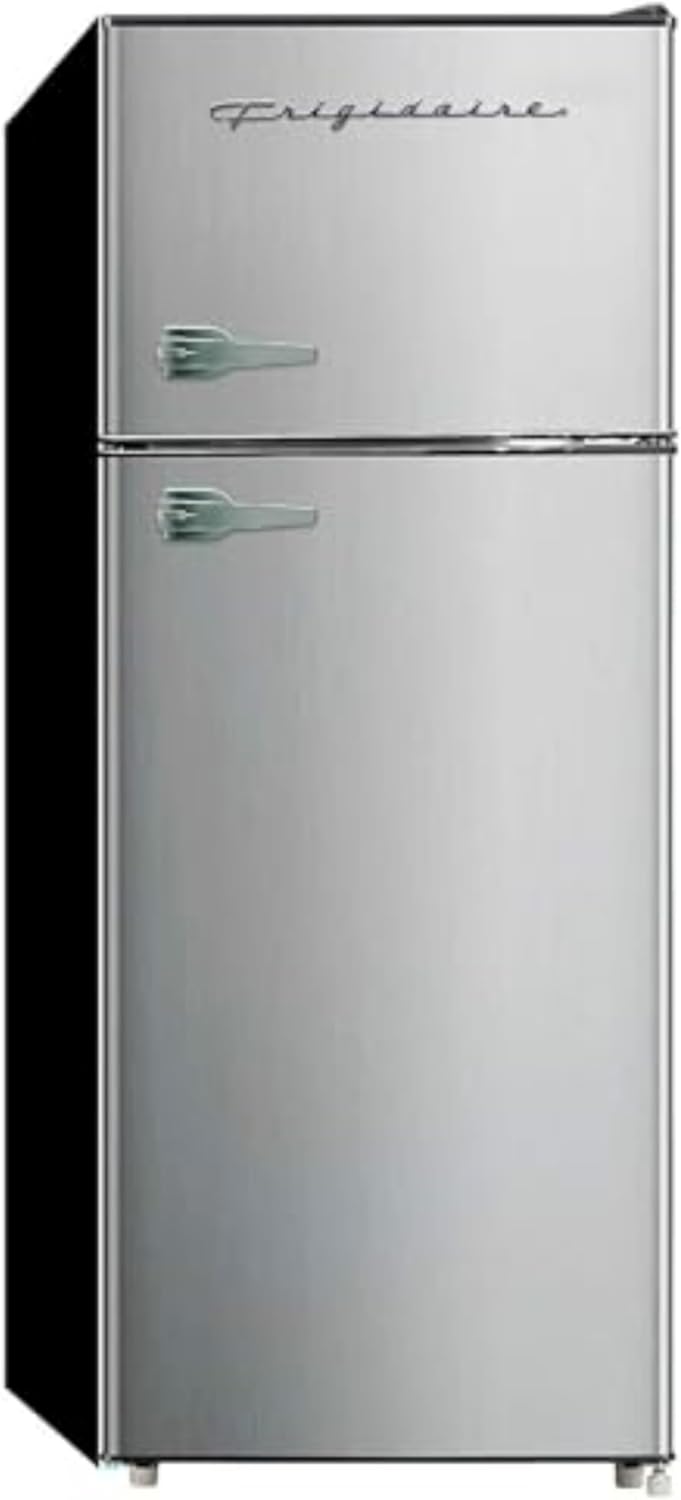
| Capacity | 7.5 cubic feet |
|---|---|
| Freezer Capacity | 2 cubic feet |
| Defrost System Type | Manual |
| Power Source | Corded Electric |
| Compressor Type | rotary_scroll |
This Frigidaire apartment-size refrigerator pairs a retro stainless steel exterior with practical, everyday cooling for small kitchens. It provides 7.5 cubic feet of total capacity with a separate 2 cu ft top freezer, adjustable glass shelves, a transparent crisper and clear door bins to keep items organized. Mechanical controls and an adjustable thermostat make temperature changes straightforward, while front leveling legs and rear castors simplify placement in tight spaces. The compressor-based cooling and rotary scroll compressor suggest reliable basic performance, but the unit uses a manual defrost freezer and does not have energy-star efficiency, so running costs are higher than newer high-efficiency models. Setup is simple because the door is reversible and the smooth back allows close-to-wall installation, though the weight and dimensions require planning for delivery and doorway clearance. For a kitchenette that needs a compact, visually distinctive fridge with sensible storage and dependable cooling, this model delivers; buyers prioritizing top-tier energy efficiency or frost-free freezer convenience should consider alternatives.
Best for: Buyers who need a compact, visually distinct kitchenette refrigerator that prioritizes straightforward, reliable cooling and usable interior organization over ultra-low energy use.
Less Ideal for: Those who want the most energy-efficient mini fridge or a frost-free freezer for low-maintenance operation should look elsewhere.
- Separate top freezer with an adjustable/removable wire shelf for flexible frozen storage
- Adjustable glass refrigerator shelves and clear door bins for organized storage
- Reversible door hinge and front leveling legs with rear castors for easy placement
- Simple mechanical controls and an adjustable thermostat for straightforward temperature management
- Manual defrost freezer requires occasional user maintenance
- Annual energy consumption is relatively high compared with energy-star rated compact units
Verdict: A practical, retro-styled 7.5 cu ft fridge that delivers reliable compressor cooling and flexible storage for a kitchenette where solid performance and looks matter most.
Igloo 3.2 Cu. Ft. Mini Fridge

| Capacity | 3.2 cubic feet |
|---|---|
| Freezer Capacity | 0.2 cubic feet |
| Cooling Method | Compressor |
| Defrost System Type | Automatic |
| Refrigerator Cooling Range | 32–50°F |
This Igloo 3.2 cu. ft. mini fridge packs a usable interior and a separate 0.2 cu. ft. freezer into a narrow freestanding cabinet suited for kitchenettes. It uses a compressor cooling system and an adjustable mechanical thermostat to keep temperatures between 32 and 50°F, and two removable frameless glass shelves with spill guards plus vertical can and tall bottle storage make everyday organization straightforward. The small freezer accepts ice trays and frozen snacks while an electronic lock adds basic security. Automatic defrost and a quiet compressor help reduce maintenance and noise in tight living spaces. On the downside the unit is not ultra-efficient by modern standards (annual energy listed) and its capacity, while roomy for a mini fridge, still limits bulk grocery storage or large frozen items. For a kitchenette this model balances usable shelf layout, a real freezer compartment, and simple temperature control in a compact footprint.
Best for: Buyers who need a practical, space-saving refrigerator for a kitchenette or small apartment and prioritize organized storage and a real freezer over maximum capacity.
Less Ideal for: Anyone who needs large-capacity refrigeration or extensive freezer space for meal prep and bulk storage should consider a larger fridge or dedicated freezer.
- Separate freezer compartment for ice and frozen snacks
- Adjustable mechanical thermostat with 32–50°F range
- Two removable glass shelves with spill-prevention guards
- Compressor cooling for consistent temperatures and quiet operation
- Annual energy consumption is relatively high compared with some compact models
- Capacity still limits storage of large frozen items or bulk groceries
Verdict: A compact, compressor-cooled mini fridge with a usable freezer and practical shelving that fits kitchenettes where efficient layout matters more than bulk capacity.
Frestec Mini Fridge FTC16RE

| Capacity | 1.7 cubic feet |
|---|---|
| Freezer Capacity | 0.2 cubic feet |
| Cooling Method | Compressor |
| Defrost System Type | Manual |
| Voltage | 115 volts |
This Frestec 1.7 cu ft mini fridge is a straightforward, space-saving fridge for a kitchenette, dorm, or office. It uses a compressor cooling system and includes a 0.2 cu ft internal freezer for ice or frozen snacks, a removable glass shelf to accommodate taller items, and a reversible door to suit tight layouts. Temperature is set with a six-position knob and the unit offers a one-touch defrost control and an internal light, while adjustable feet help level it on uneven floors. The manufacturer rates it as low-noise operation and it is compact enough to tuck under a counter or beside a kitchenette cabinet. Expect basic, no-frills performance: manual defrost means occasional maintenance, and the 1.7 cu ft capacity limits how much you can store compared with full-size refrigerators. Energy use is modest for the class, but this is a utilitarian appliance rather than a high-end or feature-rich model.
Best for: Buyers on a tight budget who need a reliable, compact refrigerator for a kitchenette, dorm, or office where space is the primary constraint and simple cooling is sufficient.
Less Ideal for: People who need large-capacity refrigeration, advanced temperature control, or frost-free convenience should consider larger or higher-end models instead.
- Very compact footprint fits under counters or in small kitchenettes
- Includes a small internal freezer for basic frozen storage
- Reversible door and adjustable feet increase placement flexibility
- Removable glass shelf allows taller items to be stored
- Advertised low-noise operation suitable for shared spaces
- Manual defrost requires periodic user maintenance
- Limited 1.7 cu ft capacity restricts bulk food storage
Verdict: A budget-friendly, space-saving compressor mini fridge with a small freezer and flexible placement options for tight kitchenette setups.
EUHOMY 3.2 Cu Ft Mini Fridge

| Capacity | 3.2 cubic feet |
|---|---|
| Freezer Capacity | 0.96 cubic feet |
| Cooling Method | Compressor |
| Defrost System Type | Manual |
| Door Orientation | Reversible |
This EUHOMY mini fridge pairs a small top freezer with a 2.24 cu ft refrigerator compartment to cover basic refrigeration and frozen-storage needs in a kitchenette or dorm room. It uses a compressor cooling system and offers three temperature settings, adjustable glass shelves, a crisper drawer, and an internal LED light, so arranging drinks, produce, and frozen snacks is straightforward. The reversible door and adjustable feet make placement flexible in tight kitchenettes, and the unit is designed for freestanding installation with a relatively quiet compressor for low-noise rooms. Practical limits are its manual defrost freezer and compact capacity that will not replace a full-size kitchen refrigerator, and the annual energy figure suggests moderate power use compared with high-efficiency models. Expect simple controls and standard durability for everyday light use rather than heavy family-level storage.
Best for: Buyers who need a reliable, straightforward secondary fridge for a kitchenette, office, or small apartment and value flexible placement and consistent cooling over extra capacity.
Less Ideal for: Not well suited for households that need large-capacity refrigeration or a frost-free freezer for heavy frozen storage.
- Two-zone layout with separate top freezer and refrigerator for basic frozen and chilled storage
- Compressor cooling with adjustable temperature settings for consistent performance
- Adjustable glass shelves and crisper drawer allow flexible organization
- Reversible door and adjustable feet increase placement options in small kitchenettes
- Internal LED light improves visibility in low-light spaces
- Freezer requires manual defrosting
- Compact 3.2 cu ft capacity limits bulk storage for larger households
Verdict: A dependable two-door mini fridge that delivers practical, flexible cooling for kitchenette and small-space needs.
Upstreman BR321 3.2 Cu Ft Mini Fridge

| Capacity | 3.2 cubic feet |
|---|---|
| Freezer Capacity | 0.3 cubic feet |
| Cooling Method | Compressor |
| Defrost System Type | Manual Defrost |
| Voltage | 115 volts |
The Upstreman BR321 is a compact compressor mini fridge designed to offer usable refrigerator space in tight spots such as kitchenettes, dorm rooms, or offices. It provides 3.2 cu ft total capacity with a 0.3 cu ft freezer, two adjustable glass shelves, a crisper drawer, and three door shelves for cans and condiments. Temperature is set with a 5-level adjustable thermostat (32°F to 50°F) and the reversible door plus leveling feet make placement flexible. The rotary-scroll compressor delivers reliable cooling and the unit is relatively quiet at about 38 dB while carrying an Energy Star style efficiency claim. Expect manual defrosting for the freezer and a basic control set without advanced functions like fast-cool or precise digital control. Installation is simple since it is freestanding and uses a standard Type B plug, but the fridge is heavier than some ultra-compact models and the small freezer is not meant for long-term ice or ice cream storage. For a kitchenette this model balances usable interior layout and quiet, efficient operation in a small footprint.
Best for: Buyers who prioritize a proven, compact refrigerator that fits a kitchenette or small apartment and want quiet, energy-conscious operation backed by many user reviews.
Less Ideal for: People who need a large or high-performance freezer, digital temperature control for sensitive items, or a lightweight travel-style mini fridge.
- Compact footprint with 3.2 cu ft total capacity and a dedicated 0.3 cu ft freezer for basic frozen storage
- Adjustable glass shelves and door bins allow flexible organization for bottles, cans, and taller items
- Reversible door and leveling feet make placement adaptable to small kitchenette layouts
- Quiet compressor operation (about 38 dB) and energy-efficient operation suitable for continuous use
- Freezer is small and requires manual defrosting, so it is not suitable for long-term frozen storage
- Thermostat is basic (5-level) with no digital precision or rapid-cool feature
Verdict: A quiet, energy-efficient 3.2 cu ft mini fridge that delivers practical storage and flexible placement for kitchenettes and small living spaces.
EUHOMY 3.2 Cu.ft Beverage Refrigerator

| Capacity | 3.2 cubic feet |
|---|---|
| Temperature range | 37°F to 61°F |
| Cooling method | Compressor |
| Number of shelves | 5 removable shelves |
| Installation type | Freestanding |
The EUHOMY 3.2 cu ft beverage refrigerator is a compact, freestanding cooler built for storing cans, bottles and a modest wine collection in a kitchenette or home bar. It uses a compressor cooling system with an internal circulation fan and a double-layer glass door to keep temperatures steady across the 37°F to 61°F range shown on a digital touch display. Five removable wire shelves let you rearrange the interior to fit bottles or stacked cans, and the reversible door and adjustable feet make placement flexible in tight kitchenettes. It is frost free and intended for everyday beverage storage rather than long-term wine aging, and the manufacturer recommends letting it stand upright 24 hours before first use. Practical benefits include quiet operation (advertised ~36 dB) and relatively low daily energy use, but expect modest usable volume compared with full-size refrigerators and typical compressor noise when the system cycles. The unit ships with one year of product support and is best where a reliable, straightforward drink cooler is needed without advanced wine-conditioning features.
Best for: Buyers who want a reliable, easy-to-use drink cooler for a kitchenette or small apartment and prioritize steady temperatures and simple maintenance over specialty wine features.
Less Ideal for: People who need large-capacity refrigeration, dedicated long-term wine storage with dual-zone climate control, or a fully integrated undercounter appliance.
- Digital temperature control with 37°F–61°F range for precise drink chilling
- Compressor cooling with circulation fan for even temperature distribution
- Five removable shelves allow flexible storage configurations
- Reversible door and adjustable feet for flexible placement in small spaces
- Frost-free operation and double-layer glass door to protect contents
- 3.2 cu ft capacity limits storage compared with larger undercounter refrigerators
- Compressor units produce audible cycles that may be noticeable in very quiet rooms
Verdict: A dependable, compact compressor beverage fridge that delivers precise temperature control and flexible shelving for kitchenette drink storage.
Choosing the Right Mini Fridge for Kitchenette: Key Factors to Consider
Usable Interior Capacity and Layout
The stated capacity in liters or cubic feet is only part of the story. Measure the actual usable space, noting shelf placement, door bins, and any dedicated freezer compartment. A fridge with adjustable or removable shelves lets you stack tall bottles or larger food containers without wasted vertical space.
Think about how you use the kitchenette. If you store more beverages than leftovers, prioritize shelf width and bottle storage. If frozen items are important, check the freezer compartment size and whether it reduces usable fridge volume. Interior lighting and clear shelf materials also make it easier to see and organize contents in a compact interior.
Footprint and Installation Fit
Mini fridges for kitchenettes must fit within tight footprints and sometimes under counters or beside cabinets. Measure the intended location carefully, including clearance for door swing and rear ventilation. Some models have reversible doors to accommodate left- or right-handed setups, which increases placement flexibility.
Consider ventilation requirements; many compact refrigerators need several inches of airflow behind and above the unit. Also factor in how the unit will be moved into place—narrow doors, staircases, or elevators can restrict the size you can realistically install.
Energy Consumption and Operating Cost
Energy efficiency is crucial in small living spaces where the fridge may run continuously and contribute noticeably to monthly electricity use. Look for models with lower annual kWh estimates and efficient compressors or thermoelectric systems that match your usage pattern.
Energy use also affects heat output, which matters in a kitchenette with limited ventilation. Units that run cooler and draw less power reduce the risk of raising ambient temperatures and minimize strain on shared conditioning systems.
Noise and Compressor Type
Noise matters more in a kitchenette that shares space with living or sleeping areas. Compressor-driven fridges typically cool faster and maintain temperature better but can be louder. Thermoelectric models are often quieter but perform worse at high ambient temperatures.
Check manufacturer noise ratings if available and prefer models with muffling features or variable-speed compressors for quieter operation. Placement can also influence perceived noise; elevating the unit slightly or using vibration-damping pads can reduce rattles on uneven floors.
Temperature Control and Consistency
Reliable temperature control keeps food safe and beverages enjoyable. Look for fridges with simple, accurate thermostats and a temperature range suitable for chilled items and any small frozen compartment you plan to use. Consistent cooling is more important than a single low-temperature spec because fluctuations can cause spoilage.
If you store temperature-sensitive items, consider models with better insulation and tighter temperature tolerances. Rapid recovery after opening the door is another important aspect of maintaining stable interior conditions in a busy kitchenette.
Maintenance, Cleaning, and Durability
Ease of cleaning affects long-term usability. Removable shelves, a defrost drain, and rounded interior corners simplify routine maintenance and reduce odors. Exterior finishes that resist fingerprints and scratches will help the unit look good in a visible kitchenette setting.
Durable door seals and hinges reduce air leakage and maintain efficiency. Consider warranty terms and the expected lifespan of common components like compressors and thermostats when weighing long-term value.
Sizing the Unit to Your Kitchenette
Start by measuring the available floor and vertical space, including clearances for door swing and ventilation. Sketch the intended placement and mark where the door will open to ensure it does not block walkways or counters.
Decide whether the unit needs to tuck under a counter or stand alone. Under-counter placements demand precise height measurements and often limit venting options, while freestanding units are easier to relocate but take up visible space.
- Measure height, width, and depth plus at least 1 to 2 inches of rear clearance for airflow
- Account for reversible door swing and whether plumbing or cabinetry could block opening
- Check if the fridge must fit through hallways or door frames during installation
Freezer Needs in a Compact Setup
Many mini fridges include a small freezer compartment suitable for ice trays and occasional frozen meals. Determine how often you will rely on frozen storage and whether a small compartment meets that need without consuming too much fridge space.
If frozen storage is essential, look for units with a dedicated door for the freezer or a larger integrated compartment. Keep in mind that increasing freezer size often reduces chilled storage, so weigh the tradeoff against your typical grocery habits.
- Small freezer compartments are fine for ice, ice packs, and compact frozen meals
- Frequent frozen-food users may need a unit with a larger internal freezer or a separate small freezer
Quiet Operation Strategies
When the refrigerator shares space with living areas, low noise should be a priority. Look for models with low-decibel ratings, brushless motors, or variable-speed compressors that reduce noise during steady-state operation.
Placement affects noise perception. Position the unit on a level, solid surface and consider rubber feet or anti-vibration pads to minimize rattles. If noise remains a concern, a thermoelectric model might be acceptable for light-duty cooling, though performance may vary with room temperature.
- Verify noise ratings if published and compare similar-sized units
- Use vibration-damping pads to reduce floor-borne sound
- Avoid placing the fridge directly against thin cabinetry to prevent amplified vibrations
Energy-Savvy Use and Temperature Tips
Set thermostat settings conservatively to avoid overcooling. A slightly higher setting can keep food safe while lowering energy use. Keep door openings brief and organized to minimize temperature spikes.
Clean condenser coils or vents periodically if accessible to maintain efficiency. If the kitchenette gets very warm, place the fridge away from heat sources, and allow adequate space for airflow to reduce compressor workload.
- Avoid crowded interiors that block air circulation around shelves
- Keep the fridge out of direct sunlight or next to heat-emitting appliances
- Perform occasional coil or vent cleaning to sustain efficiency
Installation and Ventilation Considerations
Proper ventilation prevents overheating and maintains cooling performance. Most compact refrigerators need space at the rear and above for air exchange; confirm clearance requirements in the product specifications before final placement.
If you plan to install the fridge under cabinetry or in a built-in niche, ensure there is a route for heat to escape. Some installations work better with a vented toe-kick or slightly elevated platform to increase airflow.
- Follow manufacturer clearance guidelines for rear and top ventilation
- Consider elevating the unit slightly if floor-level airflow is restricted
- Reversible doors and recessed handles can help in tight installations
How We Chose the Best Mini Fridge for Kitchenette
We prioritized features that directly affect everyday performance in small kitchenettes. Capacity and interior layout were key because a fridge that fits into a tight footprint is useless if shelves and door bins do not accommodate bottles, containers, and leftovers. Energy efficiency and rated annual consumption were weighed heavily to ensure the unit keeps running costs and heat output low in compact living areas. Temperature control and cooling consistency were used to estimate how well each model would preserve perishables and beverages. Noise level and compressor type were included to assess whether a unit will be tolerable in an open-plan kitchenette or next to a sleeping area. Build quality and materials influenced expected durability and ease of cleaning. We excluded large, undercounter, or commercial refrigeration units that exceed typical kitchenette dimensions or power draws. Units with very poor insulation or lacking basic temperature regulation were also filtered out. The final shortlist reflects a balance of usable interior volume, footprint efficiency, low operating noise, modest energy consumption, and practical maintenance features such as removable shelving and reversible doors.
Our full evaluation process is outlined in our review methodology.
FAQ
How much capacity do I need for a kitchenette?
It depends on usage. For solo occupants or light beverage storage, a 1.7 to 3.5 cubic foot unit often suffices. If you plan to store meals, larger containers, or a small freezer is important, aim for higher capacity while checking the footprint.
Are thermoelectric mini fridges a good choice for kitchenettes?
Thermoelectric models are quieter and lighter but usually less effective in warm rooms and for freezing items. They can be a good fit for low-duty beverage cooling in moderate ambient temperatures.
Can a mini fridge be installed under a counter?
Some mini fridges fit under counters, but you must verify height and ventilation requirements. Under-counter placement often needs additional clearance or venting solutions to avoid overheating and reduced efficiency.
What causes a mini fridge to run loudly?
Common causes include an aging or high-capacity compressor, loose internal components, or uneven floor vibration. Ensuring the unit is level, tightened, and on anti-vibration pads often reduces noise.
How often should I clean the interior and coils?
Wipe interior surfaces monthly or as spills occur, and clean condenser coils or vents every six months if accessible. Regular cleaning maintains airflow and reduces strain on the cooling system.
Is it better to get a reversible door?
Reversible doors increase placement flexibility in tight spaces by letting you choose the hinge side. If you foresee moving the unit or installing it beside counters, reversible doors are a useful feature.
Final Verdict
For a kitchenette, prioritize usable interior layout and a footprint that fits your intended placement while leaving room for ventilation. Balance freezer needs against chilled storage and favor units with modest energy consumption and low noise suitable for shared living spaces. Focus on the factors that matter most to your routine—capacity and shelf configuration if you store food, or quiet operation and energy efficiency if the fridge sits near living or sleeping areas. Considering those tradeoffs will help you choose a mini fridge that delivers reliable cooling without compromising space or comfort.