
Note: This article contains affiliate links. If you click on these links and make a purchase, we may earn a small commission at no extra cost to you. This helps support our research and content. Read our full affiliate disclosure here.
Picking the right mini fridge for an RV matters more than in a house because space, power draw, and vibration resistance directly affect daily comfort on the road. The right unit lets you store fresh food and drinks, cut down on stops, and avoid frequent defrosting or power surprises. This guide collects the top shortlisted mini fridges for RVs, chosen for low energy use, secure mounting options, and usable interior layout. Below you will find the factors that shaped our selections, practical buying considerations, and focused advice to help you match a compact refrigerator to your rig and travel style.
Top Picks at a Glance
| Best Overall The best all-around choice for most situations | Midea Compact Refrigerator WHS-65LB1 |  |
| Best Quality Built to a higher standard if you want something more solid | BODEGA 83L RV Refrigerator |  |
| Best Value The sweet spot between price and what you get | EUHOMY 1.7 Cu.Ft Mini Fridge |  |
| Best Budget The cheapest option that still gets the job done reliably | Antarctic Star Mini Refrigerator |  |
| Top Rated A top-rated pick with lots of positive feedback | Midea 3.1 Cu Ft Mini Fridge |  |
| Most Popular A crowd favorite that many people choose with confidence | CROWNFUL Mini Fridge CF-PC4 |  |
| Best Seller A high-volume bestseller chosen again and again | EUHOMY WC-6B Mini Fridge | 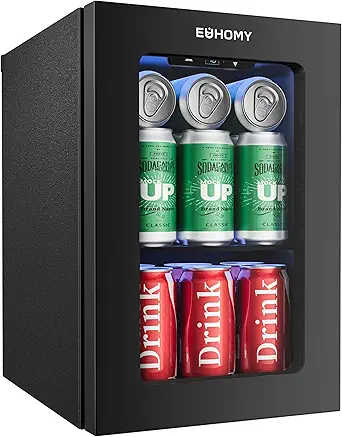 |
Midea Compact Refrigerator WHS-65LB1

| Capacity | 1.6 cubic feet |
|---|---|
| Annual Energy Consumption | 207 kilowatt hours per year |
| Configuration | Internal Freezer |
| Defrost System Type | Automatic |
| Door Orientation | Reversible |
This Midea 1.6 cu ft compact refrigerator is a small, energy-efficient fridge built for tight spaces like dorms, offices, and RVs. It uses an R600A compressor and is ENERGY STAR certified, which keeps annual energy use low and helps limit impact on campsite power or battery draw when used in an RV with limited electrical capacity. The unit has a small internal chiller compartment for quick cooling, a removable glass shelf to fit taller items, and a reversible door for flexible placement. Controls are simple mechanical thermostat settings that let you dial in cooler temperatures for beverages and perishables, and the fridge runs quietly at under 42 dB so it will not add intrusive noise in a small cabin. Limitations: the chiller is meant for short-term cooling and will not freeze items, and the 1.6 cu ft capacity only accommodates a few bottles and small food items, so it is best as supplemental refrigeration rather than the sole food storage for extended trips. Installation is freestanding only and it lacks inverter compatibility, so consider power arrangement if you plan to run it off an RV inverter or generator.
Best for: Buyers who want a compact, energy-conscious secondary fridge for short RV trips or tight galley spaces and prioritize low power draw and quiet operation.
Less Ideal for: Not a good choice for RVers who need freezer capacity or want a primary refrigerator for long trips with large food loads.
- ENERGY STAR certified with a high-efficiency R600A compressor for lower annual energy use
- Reversible door and removable shelf for flexible placement and internal layout
- Quiet operation under 42 dB suitable for small living spaces
- Simple mechanical thermostat with multiple temperature settings for easy adjustment
- Chiller compartment is not a true freezer and cannot fully freeze or store frozen foods
- Small 1.6 cu ft capacity limits how much food and drink you can carry
Verdict: A quiet, energy-efficient 1.6 cu ft compact fridge that works well as supplemental refrigeration in small RV galley spaces where low power use matters.
BODEGA 83L RV Refrigerator

| Capacity | 83 liters |
|---|---|
| Temperature range | -4℉ to 46℉ |
| Power input | 12/24V DC |
| Cooling method | Compressor |
| Defrost system type | Automatic |
The BODEGACOOLER 83L RV Refrigerator is a 12/24V compressor fridge designed for road trips and extended vehicle use, combining a main refrigerator area and a small freezer in one freestanding unit. It cools from -4°F to 46°F, offers dual-zone operation and both manual and WiFi app control for remote temperature and mode adjustments. Practical touches include a removable crisper, shelf, bottle holder, egg tray, interior light, drain plug, and a reversible door so you can fit it into varied layouts. The compressor supports Max and ECO modes for faster cooling or lower power draw and includes three-level battery protection and 45° anti-tilt stability for bumpy roads. Expect relatively quiet operation under 45 dB and a factory-style scroll compressor intended for long life. The trade-offs are the bulk and weight typical of a true compressor unit compared with thermoelectric coolers, and installation requires a 12/24V vehicle power source and some space for a freestanding cabinet. For buyers who need dependable, low-temperature performance on the road, this unit delivers real refrigerator-grade cooling in an RV-friendly package.
Best for: Buyers prioritizing reliable, low-temperature performance and consistent cold storage on road trips or in vans who want a compressor fridge that handles both refrigeration and freezing with smart controls.
Less Ideal for: Those seeking the smallest, lightest camping cooler or occasional-use chilled storage should consider lighter, lower-capacity options instead.
- True compressor cooling with -4°F to 46°F range for both refrigeration and freezing needs
- Dual-zone layout and removable compartments for flexible storage and simultaneous fridge/freezer use
- WiFi app control plus manual operation for remote temperature and mode changes
- Battery protection and 45° anti-tilt stability suited for vehicle use and rough roads
- Interior organization accessories and reversible door improve usability in tight RV spaces
- Larger and heavier than portable thermoelectric coolers, requiring more space and a strong mounting surface
- Needs 12/24V DC power and may require attention to vehicle power consumption on long trips
Verdict: If you need dependable refrigerator-grade cooling and dual-zone freezer capability for RV life, this 83L compressor unit is built to perform on the road.
EUHOMY 1.7 Cu.Ft Mini Fridge

| Capacity | 1.7 cubic feet |
|---|---|
| Wattage | 275 watts |
| Door Orientation | Reversible |
| Voltage | 115 volts |
| Number Of Shelves | 1 |
This 1.7 cubic foot EUHOMY mini fridge is a small compressor-cooled refrigerator intended for tight spaces like RVs, dorms, or offices. It combines a 1.5 cu ft refrigeration area with a 0.2 cu ft freezer compartment and a removable wire shelf so you can fit bottles, produce, and a few frozen meals. The adjustable thermostat (32°F to 50°F) and compressor cooling deliver steady temperatures and better performance in warm environments compared with thermoelectric units, while the ETL mark and reported 38 dB noise level make it suitable for sleeping areas. The reversible door helps with placement in cramped RV galley layouts, and the fridge claims low daily energy use thanks to an efficient compressor. Expect limited shelving and small total capacity, so larger items or long grocery hauls will not fit, and the simple temperature knob lacks precise digital control. Its strengths are space efficiency, quiet compressor operation, and basic freezer capability, making it a practical choice when space and reliable cooling are top priorities.
Best for: Buyers who need a reliable, space-saving refrigerator for an RV galley and prioritize steady cooling and quiet operation over large capacity.
Less Ideal for: People who frequently store large containers, meal-prep for multiple people, or need precise digital temperature control should consider a larger or more feature-rich unit.
- Compressor cooling provides consistent low temperatures even in warm ambient conditions
- Reversible door allows flexible installation in tight RV galley spaces
- Adjustable thermostat with a 32°F–50°F range covers both fridge and light freezer needs
- Removable wire shelf lets you reconfigure interior for taller items
- Quiet operation around 38 dB suitable for sleeping areas
- Only 1.7 cu ft total capacity limits storage to a few days of food for one person
- Basic analog temperature control without precise digital settings
Verdict: A compact, quiet compressor mini fridge that delivers reliable cooling in small RV spaces where efficient, steady performance matters most.
Antarctic Star Mini Refrigerator

| Capacity | 4 liters |
|---|---|
| Cooling Method | Thermoelectric |
| Power Source | Corded Electric (AC/DC) |
| Defrost System Type | Manual Defrost |
This Antarctic Star mini fridge is a small, budget-oriented compact cooler aimed at keeping a handful of drinks, cosmetics, or skincare products chilled on a countertop or in a vehicle. It uses thermoelectric cooling and offers AC 120V and DC 12V power options, so it can run at home or from a car socket, and the removable shelf gives flexibility for taller items. The interior LED frame provides visibility and a decorative touch while the manufacturer rates cooling about 18°C (32°F) below ambient, enough to keep beverages cool but not reach true freezer temperatures. Noise is low at around 25 dB, which makes it suitable for sleeping areas. Expect practical limits: the 4 L capacity only fits a few cans and the thermoelectric system will be less effective in very hot conditions compared with compressor models. For short trips, dorm rooms, or an RV berth where space and price matter, it performs as a simple, portable cooler with basic features.
Best for: Buyers who need an inexpensive, ultra-compact cooler for short RV trips or tight spaces and prioritize portability and low noise over large capacity.
Less Ideal for: People who plan to store large quantities, need fast deep-freezing, or rely on strong cooling in very hot climates.
- AC 120V and DC 12V power options let you run it from household or car sockets
- Very compact 4 L footprint fits small spaces like RV bunks or countertops
- Removable shelf increases interior flexibility for different items
- Quiet operation around 25 dB suitable for sleeping areas
- Small 4 L capacity limits storage to roughly six 12-oz cans
- Thermoelectric cooling is less effective than compressor systems in high ambient heat
Verdict: A very affordable, ultra-portable mini fridge that runs from both house and car power, ideal for short RV trips and tiny spaces.
Midea 3.1 Cu Ft Mini Fridge

| Capacity | 3.1 cubic feet |
|---|---|
| Freezer Capacity | 0.92 cubic feet |
| Annual Energy Consumption | 270 kwh |
| Cooling Method | Compressor |
| Defrost System Type | Manual |
The Midea 3.1 Cu Ft Mini Fridge is a small compressor-based refrigerator with a freestanding design and a 0.92 cu ft top freezer, built for tight spaces like dorms, offices, and RVs. It uses an R600a high-efficiency compressor and is ENERGY STAR certified, which translates to lower annual energy use (about 270 kWh) and quieter operation around 45 dB, helpful when power and noise matter on the road. Interior features include two removable glass shelves, a crisper drawer, a 2L bottle rack, an interior LED light, and a reversible door so you can fit it into different RV layouts. Temperature is adjusted with a simple mechanical thermostat covering typical fridge and freezer ranges. The unit is manually defrosted, so the freezer will need occasional thawing, and its compact capacity means limited storage for longer trips or larger households. For RV users who prioritize steady cooling, energy efficiency, and a small, adaptable footprint, this model delivers practical, reliable refrigeration with straightforward controls.
Best for: RV owners who need a reliable, energy-efficient compact refrigerator that fits tight galley spaces and prioritizes steady cooling and low power use over large capacity.
Less Ideal for: People planning long off-grid trips without frequent resupply or families needing substantial refrigerated storage should consider larger-capacity or dual-power solutions.
- ENERGY STAR certified with R600a compressor for lower power draw
- Relatively quiet operation (~45 dB) suitable for small living spaces
- Reversible door and removable glass shelves increase placement and storage flexibility
- Top freezer provides true frozen storage separate from the fridge compartment
- LED interior light and simple mechanical thermostat for easy use
- Manual defrost freezer requires periodic thawing
- 3.1 cu ft capacity is limited for longer trips or multiple occupants
Verdict: A compact, energy-efficient mini fridge built for dependable, low-power cooling in tight RV layouts.
CROWNFUL Mini Fridge CF-PC4

| Capacity | 4 liters |
|---|---|
| Cooling Method | Thermoelectric |
| Power | AC and 12V DC |
| Certification | ETL |
| Capacity (cans) | Holds up to six 12-oz cans |
This CROWNFUL mini fridge is an ultra-compact cooler and warmer designed for personal items like skincare, snacks, or up to six 12-ounce cans. It uses thermoelectric cooling with a reversible switch for heating, an internal thermostat, and a detachable shelf to organize small items. The unit is intended for countertop or portable use and includes both an AC power cord and compatibility with a 12V car outlet, which makes it usable in vehicles and RVs. It is ETL listed and advertises quiet brushless fan operation for low-noise environments. Practical benefits include a very small footprint and a carry handle for easy relocation, plus the ability to keep cosmetics, breast milk, or beverages at a targeted temperature. Limitations are its tiny 4-liter capacity and cooling performance that depends on ambient temperature, so it cannot reach deep refrigeration in hot conditions and is unsuitable for bulk food storage or long-term chilling on high-heat days.
Best for: Buyers who need a tiny, portable fridge for single items, skincare, or a few beverages while traveling or living in tight RV spaces and who prioritize compactness and plug-and-play convenience.
Less Ideal for: Anyone who needs to store multiple meals, large containers, or reliably cold perishables during hot weather should choose a larger compressor refrigerator instead.
- Very compact 4-liter capacity fits small spaces in an RV or vehicle
- Runs on both household AC and 12V DC for in-car or RV use
- Switchable cool and warm modes let you store skincare or warm small items
- Quiet brushless fan suited for cabins or sleeping areas
- Detachable shelf and carry handle improve portability and organization
- Limited usable volume restricts it to single-serving items or cosmetics
- Thermoelectric cooling only lowers temperature relative to ambient, so performance drops in hot conditions
Verdict: A tiny, quiet, dual-power mini fridge that fits tight RV spaces and keeps a few drinks or skincare products cool or warm on the go.
EUHOMY WC-6B Mini Fridge

| Capacity | 18 liters |
|---|---|
| Temperature range | 40°F to 61°F |
| Cooling method | Compressor |
| Voltage | 115 volts |
| Installation Type | Freestanding |
The EUHOMY WC-6B is a countertop-style compressor mini fridge sized for drinks and small bottles, offering a 40°F to 61°F digital temperature range and a removable shelf for flexible storage. It uses a compressor cooling system rather than a thermoelectric module, so it maintains steady temperatures even when ambient conditions change, which is useful in moving or variable environments like an RV. The unit runs quietly (claimed under 40 dB) and includes an LED light and a UV-protective door that helps shield contents from sunlight. Installation is freestanding and the single right-hinged door opens to reveal one wire shelf and space for about two dozen 330 ml cans. Trade-offs include the very small 18 L capacity and manual defrost, so it is best for drinks and short-term chilled items rather than full meal storage, and the door is plastic rather than glass or metal. For buyers focused on reliable temperature control in a compact package, this model delivers steady cooling and low noise, but you must plan around its limited interior volume.
Best for: A cautious buyer who wants dependable, stable cooling in a small, portable fridge for chilled drinks on the road or in tight RV spaces.
Less Ideal for: Not a good choice for users needing to store meals, bulk groceries, or large bottles long-term; consider larger RV-specific refrigerators for those needs.
- Compressor cooling provides more stable temperatures than thermoelectric units
- Compact footprint suited to countertops or small RV cabinets
- Digital temperature control with a 40°F–61°F range for beverage chilling
- Removable shelf lets you adjust space for bottles or taller items
- Quiet operation (advertised under 40 dB) for low-noise environments
- Very small 18 L capacity limits storage to drinks and a few small items
- Manual defrost requires occasional maintenance
Verdict: Choose the EUHOMY WC-6B if you need a quiet, compressor-driven mini fridge that keeps drinks cold reliably in a very compact RV-friendly footprint.
Choosing the Right Mini Fridge for RVs: Key Factors to Consider
Power Draw and Compatibility
How much power a mini fridge uses is a top priority for RV owners because it directly affects battery life and generator runtime. Look for manufacturers that list steady-state amp or watt draw at common thermostat settings and note any high-startup currents that could trip inverters or converters.
Consider whether the unit supports 12V DC operation, 110V AC, or both. A model that runs efficiently on 12V or has a low idle draw will extend off-grid stays and reduce generator fuel use. Also check for power-saving modes or built-in thermostats that maintain temperature with minimal cycling.
Interior Layout and Capacity
A fridge's labeled capacity is less important than how that space is arranged. Shelving, bottle storage, door bins, and a usable freezer compartment determine how much fresh food versus frozen items you can carry. Adjustable shelves and removable bins increase flexibility for taller bottles or bulk items.
Think about the types of meals you prepare on the road. If you cook often, you may prefer more shelf space and a larger freezer. If you primarily store beverages and small perishables, a narrow but tall layout with door bottle holders could be more efficient.
Mounting, Fit, and Door Swing
In an RV, a fridge must be secured against movement and compatible with the available cabinet opening. Check for built-in mounting points, tie-down brackets, or a flat back suitable for recessed installation. Reversible doors or models with flexible hinge options are especially useful in tight galley arrangements.
Consider clearance for door opening and whether the unit will be accessible when parked in different orientations. You may need to plan for trim, filler panels, or a small cabinet modification to achieve a flush, rattle-free fit.
Noise and Vibration
Operating noise matters in a small living space. Compressor-based mini fridges are usually louder than thermoelectric units but tend to cool faster and maintain temperature better in varied ambient conditions. Evaluate published decibel ratings when available and pay attention to user reports of vibration or rattling.
Look for models with vibration-dampening feet or rubber gaskets and keep in mind that secure mounting reduces noise by preventing loose panels from resonating while driving.
Defrosting Method and Maintenance
How a fridge handles frost buildup affects convenience and the effective usable volume. Frost-free or automatic defrost systems reduce maintenance but may use slightly more energy. Manual defrost units can be more energy efficient but require periodic draining and cleanup.
Also check how easy the unit is to clean and service: removable shelves, accessible drain tubes, and replaceable door seals make long-term upkeep simpler. Consider the availability of user-replaceable parts and how the design affects routine cleaning while on the road.
Choosing the Right Capacity for Your Trip
Match fridge capacity to travel habits rather than trying to maximize size. Short weekend trips with mostly shelf-stable food need far less refrigerated volume than multi-week tours where you will store fresh produce and frozen meals.
Measure the cabinet or counter opening and imagine practical loads: a week of groceries for two people, a few frozen entrees, or mostly beverages. Prioritize interior layout and shelf flexibility over the headline liter rating for better real-world usability.
- Plan around common items you carry: milk cartons, wine bottles, or frozen meal trays.
- Account for airflow space around the unit to avoid overheating and reduced compressor life.
- If you rely on 12V power, prefer smaller fridges with documented low amp draw.
Power Options and Off-Grid Use
If you expect to dry camp or boondock regularly, favor models that are intentionally designed for low-voltage operation and show steady-state power consumption. Some units offer dual-voltage capability that automatically switches between AC and DC, but confirm what happens when shore power drops.
Consider pairing the fridge with a battery monitor, solar charging, or an inverter sized for the fridge's startup current. Efficient temperature management and insulation also reduce cycling and conserve power.
- Verify the fridge's startup amp draw to size your inverter or breaker.
- Look for thermostats with clear settings so you can reduce draw when full cooling performance is not required.
- Use coolers or frozen blocks to reduce fridge workload during extended power gaps.
Installation Tips for Secure Fitment
Secure mounting prevents movement and reduces road noise. Use included brackets or create a small lip or face frame so the fridge cannot shift during transit. If the unit will be recessed, leave the recommended clearance for airflow and routing of power and drain lines.
Plan door swing during installation and consider reversible doors if the galley layout might change. Seal gaps around the installation to prevent vibration and to keep cold air from leaking into surrounding cabinets.
- Bolt or strap the refrigerator to the floor or a fixed cabinet using rated hardware.
- Keep the power cord accessible but protected from foot traffic and storage items.
- Test the door while the RV is in motion if possible to ensure latches and seals hold.
Maintaining Performance on the Road
Regular maintenance keeps a mini fridge running efficiently. Clean door seals, clear condenser fins if exposed, and defrost according to the manufacturer's guidance. Inspect electrical connections periodically for corrosion or loosened terminals in high-vibration environments.
Monitor interior temperature with a small thermometer so you can spot cooling issues early. Adjust thermostat settings seasonally because ambient temperatures in an RV can swing more than in a home.
- Keep a small thermometer inside to verify actual food temperatures.
- Wipe up spills promptly to avoid odors and mold buildup.
- Check door gaskets for cracks and replace them before they lead to excessive cycling.
Balancing Noise, Cooling, and Efficiency
Decide which tradeoffs you are willing to accept. Quieter models may cool more slowly or have smaller compressors, while high-performance compressors maintain lower temperatures at the expense of noise and slightly higher draw.
If you sleep near the galley, prioritize low noise and vibration. If precise freezer performance is critical for long trips, choose models with stronger compressors and robust mounting to limit transfer of vibration into the cabin.
- Consider installing a sound-absorbing panel behind the fridge if noise is an issue.
- Place a rubber mat under the fridge to reduce transmitted vibration.
- Avoid placing the fridge in direct sun or next to heat sources that force extra cycling.
How We Chose the Best Mini Fridge for RVs
We focused on criteria that matter for RV owners and vanlifers who need dependable cooling in a tight, mobile environment. Key filters included real-world energy consumption measured in watts or amp draw at typical fridge settings, usable refrigerated and freezer volume, and how the interior layout impacts storage for bottles, meal prep, and perishables. We also evaluated mounting and anchoring features, vibration and shock resistance, and available door swing or reversible hinges that affect installation options in small kitchens. Durability and serviceability were considered through construction quality and access to replaceable parts such as door seals and temperature controls. Noise level under normal operation and defrost method—manual, automatic, or frost-free—also influenced selections because these affect comfort on long drives. We excluded units intended strictly for stationary, indoor use that lack low-voltage or efficient compressor options. Our shortlist emphasizes compact refrigerators that balance low energy draw, secure fitment in RV spaces, and usable storage layouts that work for life on the road.
Our full evaluation process is outlined in our review methodology.
FAQ
Can I run a mini fridge off my RV battery while boondocking?
Often yes, but it depends on the fridge's power draw and your battery capacity. Choose a low-amp model or use a battery monitor and solar charging to avoid depleting your battery unexpectedly.
Do compressor mini fridges work better in hot climates than thermoelectric models?
Usually compressor units maintain stable temperatures in higher ambient temperatures and when the fridge is frequently opened. Thermoelectric models are quieter but are less effective in hot conditions and with heavy loads.
How much clearance does a mini fridge need when installed in an RV cabinet?
Clearance requirements vary, but allow space for airflow around the rear and top as specified by the manufacturer. Insufficient ventilation can raise operating temperatures and shorten compressor life.
Is a frost-free mini fridge worth it for RV use?
It depends on your tolerance for maintenance and power budget. Frost-free units reduce manual defrosting but typically use more energy, so they may not be ideal for prolonged off-grid use without sufficient power resources.
What should I do if my fridge rattles while driving?
Check mounting hardware and tighten any loose fasteners, add vibration-damping pads under the feet, and ensure internal items are secured. Loose trim or panels can amplify normal compressor sounds when driving.
Final Verdict
When choosing a mini fridge for an RV, prioritize energy efficiency, usable interior layout, and secure mounting over raw capacity. Decide whether quiet operation or freezer performance matters more for your travel style, and match the unit to your typical trip length and power resources. Balance tradeoffs consciously: smaller, efficient fridges extend off-grid stays while larger compressor units offer stronger cooling at the cost of noise and slightly higher draw. Use the factors in this guide to narrow options and pick the configuration that fits your rig and routines with confidence.