
Note: This article contains affiliate links. If you click on these links and make a purchase, we may earn a small commission at no extra cost to you. This helps support our research and content. Read our full affiliate disclosure here.
If you spend nights away from home or work from changing locations, a travel-ready mini fridge can keep snacks, beverages, and small perishables cold and within reach. The right unit should be compact enough to stow in a car, light enough to carry, and versatile in power so it works in hotel rooms, RVs, or at a campsite. This guide shortlists seven top mini fridges for traveling and explains the features that matter for portability, power, and daily use. We evaluated cooling method, power compatibility, size, and durability to help you pick the best fit for your travel routine. Read on to compare the options and find the one that matches how and where you travel.
Top Picks at a Glance
| Best Overall The best all-around choice for most situations | EUHOMY CFC-18 19QT Refrigerator |  |
| Best Quality Built to a higher standard if you want something more solid | Megiu HC-22P5 23-Quart Car Refrigerator |  |
| Best Value The sweet spot between price and what you get | Frigidaire Mini Cooler EFMIS151 |  |
| Best Budget The cheapest option that still gets the job done reliably | DUMOS Mini Fridge 4L |  |
| Top Rated A top-rated pick with lots of positive feedback | I1MOTOR Portable Car Refrigerator VC-WSAK18 |  |
| Most Popular A crowd favorite that many people choose with confidence | Cooluli Classic 4L Mini Fridge |  |
| Best Seller A high-volume bestseller chosen again and again | Upstreman BR321 3.2 Cu.Ft Mini Fridge |  |
EUHOMY CFC-18 19QT Refrigerator

| Capacity | 18 liters |
|---|---|
| Voltage | 12 volts |
| Cooling Method | Compressor |
| Defrost System Type | Frost Free |
| Included Components | AC adaptor, DC power cord, User Manual |
The EUHOMY CFC-18 is a compact 19‑quart compressor refrigerator intended for travel, trucking, and small-space use where you need reliable cooling without ice. It runs on both 12/24V DC and 100–240V AC power, offers ECO and MAX modes plus a quick‑chill compressor that can drop from room temperature to near‑refrigeration in minutes, and supports Bluetooth/app control for remote adjustments. The lid uses a magnetic seal and rubber gasket for improved insulation and the unit includes three levels of battery protection to avoid draining a vehicle battery while driving. It is built as a freestanding chest with a single shelf and reversible door orientation, and its inverter compressor and anti‑shock design help it run quietly and handle bumpy roads. Practical limitations are its modest 19QT capacity, which suits drinks and small meals but not larger grocery loads, and annual energy consumption is notable for buyers tracking efficiency. For short trips, camping, or keeping medications and beverages cool in a vehicle or small room, it is a well‑rounded portable fridge.
Best for: Buyers who want a compact, reliable compressor fridge for road trips, camping, or truck use and prioritize remote control and battery protection over maximum cargo capacity.
Less Ideal for: People needing a large-capacity or energy‑minimal household refrigerator for full grocery storage or long‑term home use.
- Dual power options with included AC and DC cords for car or home use
- Compressor cooling that reaches refrigeration temperatures quickly
- Bluetooth/app control for remote temperature adjustments
- Three‑level battery protection to prevent vehicle battery drain
- Magnetic sealing lid and anti‑shock design for better insulation and stability on the road
- Limited 19‑quart capacity restricts bulk food storage
- Not the most energy efficient based on listed annual consumption
Verdict: A compact, travel-ready compressor fridge that balances fast cooling, app control, and vehicle-safe battery protection for on-the-road refrigeration needs.
Megiu HC-22P5 23-Quart Car Refrigerator

| Capacity | 23 quarts |
|---|---|
| Cooling range | -18°C to +15°C |
| Power | 12/24V DC, 110–240V AC (adapter included) |
| Average power consumption | ~45W ( <1 kWh/day ) |
| Noise level | ≤40 dB |
The Megiu HC-22P5 is a compressor-based portable fridge designed for road trips, camping, and vehicle use where rapid, dependable cooling matters. It runs from a 12/24V DC socket or a standard 110–240V AC adapter, uses a rotary scroll inverter compressor, and the touch LED control lets you set temperatures between -18°C and +15°C so it doubles as a freezer or fridge. In real-world use the unit reaches 0°C in about 17 minutes and -18°C in roughly 50 minutes, while drawing around 45W on average and offering battery protection to stop the compressor if your vehicle battery runs low. The removable basket, impact-resistant ABS shell, and up-facing lid make loading and cleaning straightforward, and the stated noise level under 40 dB keeps operation unobtrusive in camp or cabin. Important limitations are its 23‑quart capacity, which is enough for a small group but not for extended family provisioning, and the manual defrost means periodic draining or thawing for freezer use. The included AC and DC cables and a three-year compressor warranty add practical value for frequent travelers.
Best for: Travelers and outdoor enthusiasts who prioritize fast, reliable cooling and freezer capability in a portable refrigerator for car, RV, or campsite use.
Less Ideal for: Buyers who need large-capacity food storage for family road trips or those who prefer fully automatic frost-free units should consider larger or different models.
- Compressor inverter design reaches freezer temperatures (-18°C) for frozen storage on the road
- Works from 12/24V DC and 110–240V AC with included cables for versatile power options
- Low average power draw (~45W) with built-in battery protection to avoid draining a vehicle battery
- Quiet operation under 40 dB thanks to inverter compressor, suitable for campsite or inside vehicle
- Removable basket and up-facing lid simplify loading, cleaning, and organizing contents
- Manual defrost requires regular maintenance when used at freezer temperatures
- 23‑quart capacity is modest for larger groups or long trips
Verdict: Choose the Megiu HC-22P5 when you need a compact, fast-cooling compressor fridge that reliably reaches freezer temperatures on the road.
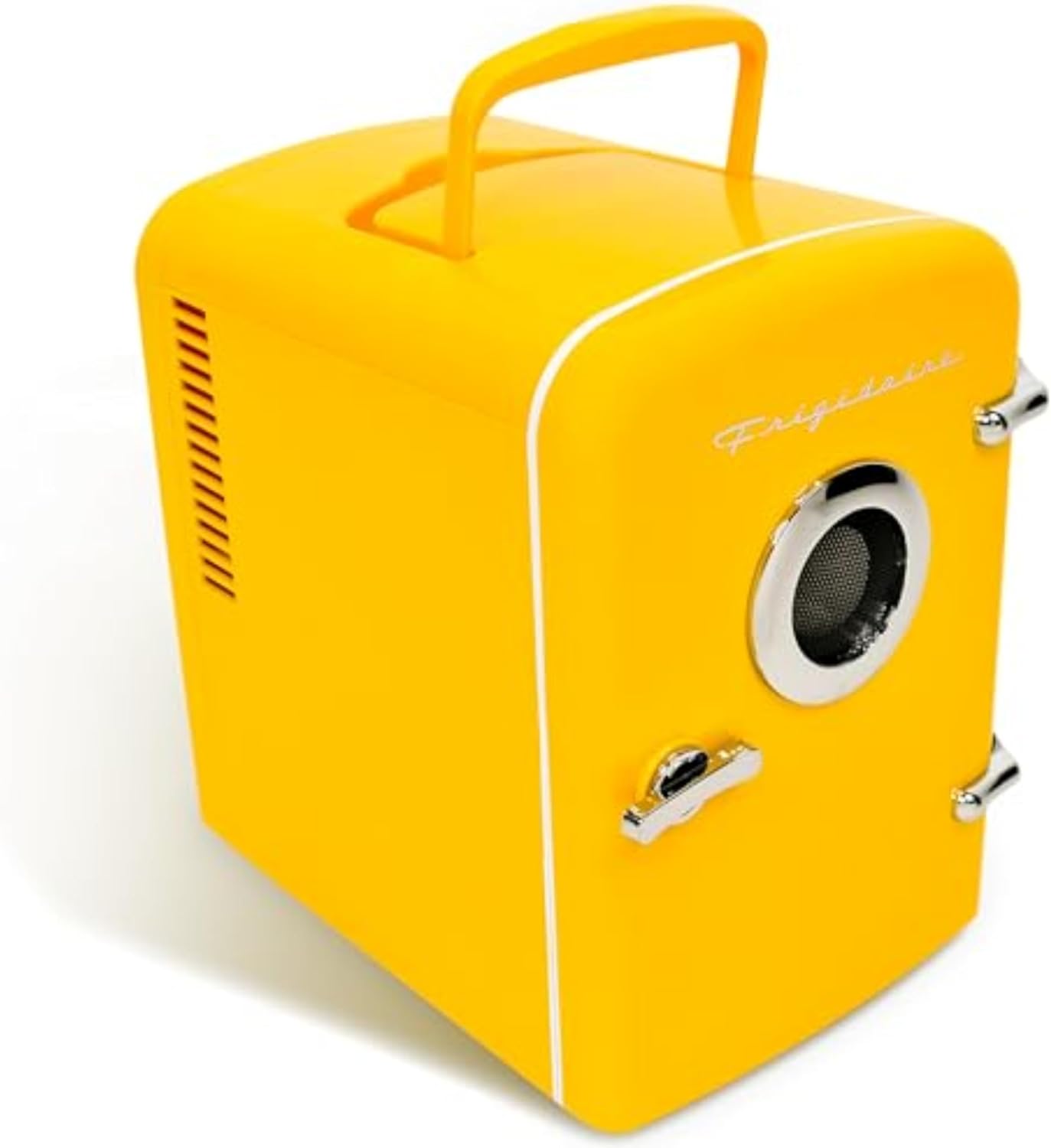
Frigidaire Mini Cooler EFMIS151
| Capacity | 4 liters |
|---|---|
| Cooling method | Thermoelectric |
| Power source | AC and 12V car adapter |
| Defrost system | Automatic |
This Frigidaire mini cooler is a compact, thermoelectric personal fridge that holds about 4 liters — roughly six cans — and is built for travel and small-space use. It runs on AC or a 12V car adapter, has an inset handle and light locking latch for portability, and cools approximately 26–28 degrees Fahrenheit below ambient, making it suitable for drinks, snacks, and skincare items. The unit is freon-free and quiet in operation thanks to its thermoelectric system, and the insulated interior helps retain cold when unplugged for short periods. Controls are manual with a single plastic shelf and automatic defrost, so it is simple to use but not adjustable like larger appliances. Expect limited capacity and modest cooling compared with compressor fridges, and it is primarily intended for short trips, dorm desks, vehicle use, or bedside storage rather than full kitchen refrigeration.
Best for: Travelers and small-space users who prioritize a lightweight, easy-to-transport cooler that plugs into a car or household outlet for short trips, dorm rooms, or bedside chilling.
Less Ideal for: Anyone needing long-term food storage, deep chilling, or a replacement for a full-size fridge should choose a compressor-based or larger capacity model instead.
- Dual power options with both household AC cord and 12V car adapter for true portability
- Thermoelectric cooling that operates quietly and uses no refrigerants
- Compact 4-liter capacity fits about six cans and small skincare items
- Insulated interior retains temperature briefly when unplugged and includes a carrying handle
- Thermoelectric cooling is less powerful than compressor models, so it cannot reach very low temperatures under hot ambient conditions
- Very limited storage space with only one shelf, unsuitable for larger or multiple items
Verdict: A lightweight, portable mini cooler with AC and car power that is ideal for travelers who need a simple, quiet way to chill a few drinks or skincare items on the go.
DUMOS Mini Fridge 4L

| Capacity | 4 liters |
|---|---|
| Cooling Method | Thermoelectric |
| Power Source | AC/DC (110V AC / 12V DC) |
| Noise Level | 31 dB |
| Defrost System Type | Manual |
The DUMOS 4L Mini Fridge is a tiny, lightweight cooler that fits up to six 12-ounce cans and runs on either AC or 12V DC power, making it suitable for travel, dorms, or a bedroom vanity. It uses a semiconductor thermoelectric cooling system with an adjustable thermostat that can cool roughly 30°F below ambient, and it operates quietly at about 31 dB. The unit is manual-defrost and freezerless, with one removable shelf and a left-opening door to organize skincare or beverages. Practical benefits include a built-in handle for carrying, very low weight for packing, and the flexibility to run from a car outlet or household socket. Important limitations are the very small 4-liter capacity and modest cooling power compared with compressor refrigerators, so it is best for short trips or single-person use rather than long-term food storage or rapidly chilling large items.
Best for: Buyers who prioritize a very compact, travel-ready cooler that can run from a car or wall outlet and need a lightweight way to keep a few drinks or skincare items cool on short trips.
Less Ideal for: People who need to store meals for multiple days, chill large bottles, or require fast, near-freezing temperatures should choose a larger compressor refrigerator instead.
- Portable and lightweight with a built-in handle for easy travel and transport
- Runs on both AC and 12V DC power for use in cars or standard outlets
- Quiet thermoelectric cooling that avoids compressors and chemical refrigerants
- Adjustable thermostat for more precise temperature control
- Compact footprint fits on countertops, in dorms, or inside luggage compartments
- Very limited 4-liter capacity that fits only a few cans or small skincare items
- Thermoelectric cooling is slower and less cold than compressor-based mini fridges
Verdict: A very compact, car-capable mini fridge that delivers quiet, lightweight cooling for short trips and single-person travel needs.
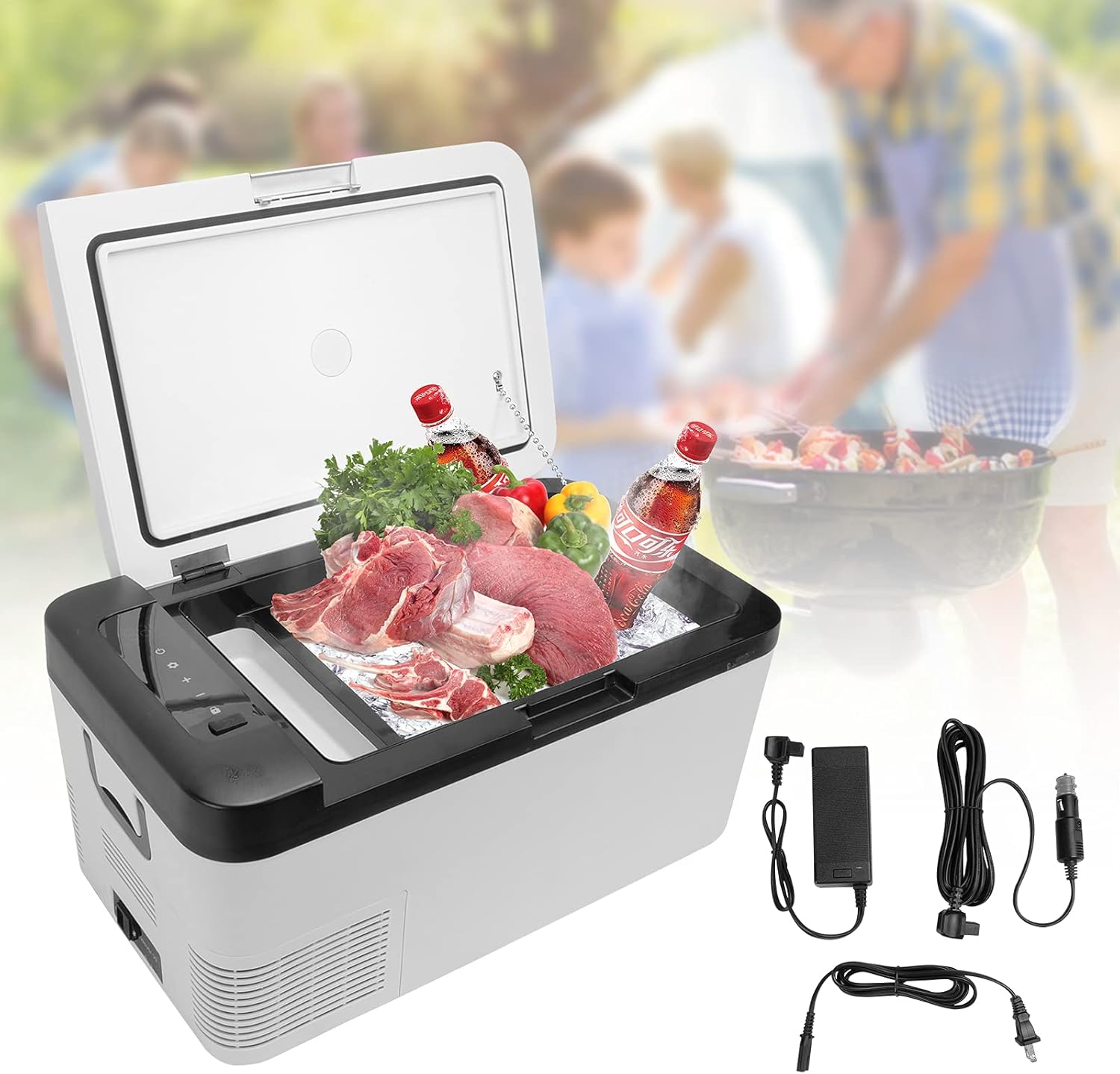
I1MOTOR Portable Car Refrigerator VC-WSAK18
| Capacity | 19 quarts |
|---|---|
| Power adapters | 12/24V DC and 110-240V AC |
| Cooling method | Compressor |
| Defrost system | Automatic |
This compact 19‑quart portable compressor refrigerator functions as a small freezer for road trips, RVs, boats, and picnics, running from either a vehicle 12/24V socket or household 110–240V power. It uses a compressor cooling method with automatic defrost, so it maintains low temperatures reliably rather than relying on ice, and the included DC and AC power cords make switching power sources straightforward. The unit is freestanding and has a single door and plastic construction that keeps weight reasonable for transport while the rotary-style compressor balances cooling performance and energy use. Practical benefits include consistent cooling comparable to a small freezer, automatic defrost to reduce maintenance, and wide voltage support for international or mixed vehicle/home use. Trade-offs are its modest 19‑quart capacity and the 24‑pound listed weight, which means it is better for small loads and may be bulky for tight cabins; the plastic finish and basic feature set also mean fewer convenience extras like digital controls or removable baskets. For travelers who need dependable compressor cooling on the road, this unit covers the essentials without frills.
Best for: Travelers who prioritize a reliable, compressor‑based portable freezer for road trips, RVing, or boating and want a unit that works from both vehicle and household power.
Less Ideal for: Those needing large-capacity cold storage for extended group trips or ultralight packers who need a very lightweight option.
- Compressor cooling provides consistent low temperatures without ice
- Runs on both 12/24V DC and 110–240V AC for vehicle and household use
- Automatic defrost reduces maintenance
- Includes both DC and AC power cords for immediate use
- Relatively small 19‑quart capacity limits volume for longer trips
- Listed weight around 24 pounds makes it less convenient to carry for long distances
Verdict: A dependable, compressor‑cooled 19‑quart portable freezer that works from vehicle or household power for travelers who need steady cold performance on the road.
Cooluli Classic 4L Mini Fridge

| Capacity | 4 liters |
|---|---|
| Cooling Method | Thermoelectric |
| Power Source | AC/DC/USB |
| Defrost System Type | Manual Defrost |
| Cools down to | 35°–40°F below ambient |
The Cooluli Classic 4L is a lightweight thermo‑electric mini fridge that cools or warms small items and is built for travel and countertop use. It holds about four liters—roughly six cans or a few skincare items—and runs on AC, DC, or USB power so you can use it in a hotel room, car, office, or dorm. Switching between cooling and warming is done with a simple flip of the switch, and the included AC and DC cords plus a USB cable make it easy to power from a wall outlet, vehicle socket, or a 2A power bank. Its thermo‑electric design is quiet and freon‑free, reducing noise and environmental concerns, though cooling performance is relative to ambient temperature and it does not freeze. The compact form and molded handle make it easy to carry, and the interior wire shelf provides basic organization. Buyers should note the small capacity and that it uses manual defrost and a left‑hinged plastic door, which limit heavy food storage and long‑term refrigeration needs.
Best for: Travelers who need a compact, easy-to-carry fridge to keep drinks, skincare, medications, or small food items cool or warm while on the road or staying in temporary lodging, and who value proven user satisfaction and reliability.
Less Ideal for: People who need to store large volumes, freeze items, or require precise long‑term refrigeration for perishables should choose a larger compressor fridge or a dedicated medical cooler.
- Multiple power options including AC, DC and USB for use in cars, hotels, and with power banks.
- Both cooling and warming modes with a simple switch for flexible use.
- Very lightweight and portable with a molded top handle for easy carrying.
- Thermo‑electric operation is quiet and freon‑free, suitable for bedrooms and offices.
- Small 4‑liter capacity limits how much you can store at once.
- Cooling is relative to ambient temperature and will not reach freezer temperatures.
Verdict: If you want a proven, ultra‑portable cooler/warmer for travel that runs from AC, DC, or USB power, the Cooluli Classic 4L is a reliable compact choice.
Upstreman BR321 3.2 Cu.Ft Mini Fridge

| Capacity | 3.2 cubic feet |
|---|---|
| Freezer Capacity | 0.3 cubic feet |
| Cooling Method | Compressor |
| Defrost System Type | Manual Defrost |
| Voltage | 115 volts |
The Upstreman BR321 is a compact compressor mini fridge built for dorms, offices, and small apartments where space and quiet operation matter. It offers 3.2 cu.ft total capacity with a small 0.3 cu.ft freezer, two adjustable glass shelves, a crisper drawer, and three door shelves to organize bottles, snacks, and dairy. Temperature is set with a five-step adjustable thermostat rated from about 32 to 50°F, and the reversible door and leveling feet make placement flexible. The compressor-based rotary scroll system cools efficiently and the unit is Energy Star rated with modest annual energy use. Noise is claimed at 38 dB, so it should not disturb a sleeping passenger or a hotel room. Limitations include manual defrosting and modest freezer space that is not suitable for storing ice or large frozen items, and the unit is freestanding rather than built-in for vehicle installations. For travel use, its compact footprint and low noise are helpful, but consider how you will secure power and whether the freezer size meets your needs.
Best for: Travelers who prioritize a quiet, energy-efficient compact fridge for short-term stays, dorms, or small hotel rooms and want a reliable, easy-to-use cooler rather than specialty portable freezers.
Less Ideal for: People who need a built-in or vehicle-ready refrigerator, long-term travel with heavy frozen storage needs, or freezer-first portable coolers should look elsewhere.
- Compact 3.2 cu.ft capacity with dedicated freezer compartment
- Adjustable thermostat with five temperature steps for varied foods
- Reversible door and leveling feet for flexible placement
- Energy Star rated compressor cooling for efficient operation
- Multiple shelves and door bins for organized storage
- Freezer is very small and cannot hold ice or large frozen items
- Manual defrost requires occasional maintenance
Verdict: Choose the Upstreman BR321 when you want a quiet, energy-efficient compact compressor fridge with flexible placement and basic freezer space for short trips and small living spaces.
Choosing the Right Mini Fridge for Traveling: Key Factors to Consider
Size and Capacity
Travel mini fridges vary from small thermoelectric coolers to compact compressor units. Measure the interior capacity against what you typically pack—skincare and medications need different space than cans or food containers. Consider external dimensions and how the unit will fit in your vehicle, trunk, or travel bag.
Also think about shelf layout and whether adjustable shelving or removable bins are necessary for your items. A slightly larger internal volume with a smart layout often beats a marginally smaller model with poor usable space.
Power Options and Compatibility
A travel mini fridge should support the power sources you use most. Look for units with both AC and DC inputs or USB-C/USB-A powering for flexibility. Some fridges run on 12V car outlets, while others need an inverter. Verify input voltage ranges and included cables.
Battery-powered or plug-and-play USB options can be invaluable for short outings, but note their run-time limits. Confirm whether the fridge can maintain temperature on lower-voltage sources and how it behaves when power fluctuates.
Cooling Method and Temperature Range
Thermoelectric models are lightweight and quiet but struggle in hot ambient temperatures and do not freeze. Compressor-based mini fridges provide stronger cooling and can reach near-freezing temperatures but tend to be heavier and may run louder. Absorption models are uncommon for travel due to weight and power needs.
Match the cooling method to your needs: choose thermoelectric for lightweight, mild cooling needs; pick compressor units if you need reliable chill or brief freezing capability while traveling.
Weight and Ease of Transport
Every added pound impacts how practical a fridge is to carry between locations. Check both empty weight and how heavy the unit becomes when loaded. Features like molded handles, recessed grips, and balanced weight distribution make carrying easier.
If you plan to move the fridge frequently, consider units designed for one-person lifting and those that fit standard luggage or vehicle storage areas to avoid awkward handling.
Latch and Interior Security
When a fridge is used in transit, doors must stay closed and interior items should not shift. Look for positive latches, magnetic seals, or lockable doors that prevent accidental openings during driving. Interior straps, moveable dividers, or molded trays help keep bottles and containers upright.
A stable interior is also easier to clean after trips. Consider how easily spills can be contained and whether the inner surfaces are removable or wipeable.
Noise, Energy Use, and Thermal Efficiency
Noise matters in small enclosed spaces like hotel rooms or camper cabins. Compressor units are typically louder than thermoelectric ones. Energy efficiency affects how long you can run the fridge from limited power sources and whether it will tax vehicle batteries.
Check manufacturer ratings for power draw or expected current draw on DC power. Efficient insulation and a good seal reduce compressor runtime and overall energy consumption.
Packing and Vehicle Placement Tips
Where you place a mini fridge in a vehicle affects both safety and cooling performance. Place heavier units low and close to the center to minimize shifting and improve vehicle handling. Ensure airflow vents are not blocked by soft luggage or blankets, since blocked ventilation can reduce cooling efficiency.
Use non-slip mats or tie-down straps in trunks or cargo areas to prevent sliding. For longer trips, periodically check that the fridge is still secure and that straps remain tight. When loading food, keep frequently used items near the door and heavier containers at the bottom to avoid tipping.
- Position unit on flat surface away from direct sunlight.
- Leave a few inches clearance around vents.
- Use straps or brackets for long drives.
Maintaining Temperature While Moving
Mini fridges can struggle to maintain steady temperatures during long drives or when powered intermittently. Pre-cool the unit before loading it with perishables. Keep cold packs or frozen bottles inside to act as thermal buffers if you expect power interruptions.
Avoid opening the door frequently while traveling because each opening lets warm air in. If you must access contents, do so quickly and reseal the door firmly to preserve cold interior conditions.
- Pre-chill the unit for at least an hour on power.
- Use insulated bags for items you will access often.
Cleaning and Routine Care on the Road
Road use exposes fridges to dirt and spills. Wipe spills promptly with a damp cloth and mild detergent. Remove and dry any trays or racks after cleaning to prevent mold and lingering odors.
Check seals and hinges regularly for wear. Keep vents dust-free and inspect power cables for fraying. For winter or long storage between trips, empty and dry the unit fully and store it with the door slightly ajar to prevent mildew.
- Clean interior weekly during extended trips.
- Air-dry removable components before reinstalling.
Using a Mini Fridge in Different Travel Settings
Hotels, hostels, RVs, and camps all present different constraints. In hotels, quiet operation and small footprints help maintain discretion and fit on dressers. In RVs, prioritize DC compatibility and vibration-resistant latches. For car camping, consider battery or power-bank-capable units.
Plan for available power at your destinations and pack appropriate adapters. When camping off-grid, bring extra cold packs or a portable battery pack rated for fridge use to supplement runtime.
- Match power options to typical stops you make.
- Consider quiet models for shared sleeping spaces.
Safety Tips for Transporting Food and Medicines
Perishable foods and temperature-sensitive medications require steady cooling. Store these items near the coldest part of the fridge and monitor interior temperature with a small thermometer when possible. Replace melting ice packs promptly and avoid storing items that could leak directly onto medications.
Label medication containers and keep them in an interior compartment that is less likely to be moved during transit. If you must carry injectable medications, consult guidance on transportation and storage for those specific products.
- Use a thermometer for critical items.
- Separate medications from raw foods to avoid contamination.
How We Chose the Best Mini Fridge for Traveling
We focused on traits that matter when a fridge leaves the kitchen and spends most of its life in transit. Our selection process prioritized compactness, power versatility, and reliable cold performance across realistic travel scenarios. We evaluated units that offer both AC and DC or USB power options, have secure latching and stable interiors to prevent spills in motion, and meet practical size and weight constraints for common travel bags and vehicle spaces. Durability and ease of cleaning were included because road use exposes appliances to bumps and dirt. Noise and thermal efficiency were examined to ensure comfortable use in small rooms or vehicles. We excluded full-size dorm or household refrigerators and specialty medical coolers that require regulatory handling. We also omitted units that rely solely on fragile or unproven power adapters. Final selections reflect a balance of transport practicality, dependable cooling under varied power sources, and build quality suitable for repeated travel.
Our full evaluation process is outlined in our review methodology.
FAQ
Can a travel mini fridge run from a car outlet without draining the battery?
Often it depends on the fridge's power draw and how long you run it. Short trips typically pose little risk, but prolonged use with the engine off can deplete a vehicle battery. Use the engine periodically or a dedicated deep-cycle battery for extended off-engine operation.
Are thermoelectric fridges safe for keeping medications cool?
Thermoelectric units can maintain a modest temperature drop below ambient but usually cannot reach near-freezing conditions. They may be acceptable for some medications that require mild cooling, but check the medication's storage requirements and use a compressor model if lower temperatures are necessary.
How do I size a mini fridge for weekend travel?
Estimate the types and number of items you routinely carry, then add margin for ice packs or extra beverages. A small 4 to 10 liter unit suits solo weekend trips for drinks and snacks, while couples or longer trips often need larger capacity or multiple coolers.
Will a mini fridge stay cold inside a hot car during summer?
Performance declines as ambient temperature rises, especially for thermoelectric models. Compressor units handle hot conditions better but will run more frequently and use more power. Park in shade and ventilate the car when possible to help maintain internal temperatures.
Can I carry a mini fridge on public transport or flights?
Carrying a mini fridge on public transport depends on size, weight, and local transit rules. Most airlines treat larger units as checked luggage and have restrictions on batteries. Check transport provider policies before attempting to bring a powered unit on public transit or flights.
Final Verdict
Choosing a mini fridge for traveling means balancing portability, power flexibility, and cooling capability. Prioritize the power options you will actually use, the weight you can reasonably carry, and whether you need occasional freezing or just chilled storage. Expect tradeoffs: lighter thermoelectric units win on carry convenience but lag in hot conditions, while compressor models offer stronger cooling at the cost of weight and noise. Decide which attributes matter most for your itinerary and select the model that aligns with those priorities to get reliable cooling on the road.