
Note: This article contains affiliate links. If you click on these links and make a purchase, we may earn a small commission at no extra cost to you. This helps support our research and content. Read our full affiliate disclosure here.
If you need a compact refrigerator that keeps drinks and snacks visible while staying out of the way, a mini fridge with a glass door can be the ideal choice. These units make it easy to see contents at a glance, help reduce door openings, and fit into dorms, home offices, or entertainment areas where full-size refrigerators would be impractical. In this guide we've shortlisted six top-performing mini fridges with glass doors and evaluated them on real-world criteria buyers care about, including usable capacity, temperature consistency, noise, and layout flexibility. Read on to find the model that best matches your space and usage patterns.
Top Picks at a Glance
| Best Overall The best all-around choice for most situations | Feelfunn 3.2 Cu.Ft Beverage Refrigerator |  |
| Best Quality Built to a higher standard if you want something more solid | ORYMUSE 24" Beverage Refrigerator |  |
| Best Value The sweet spot between price and what you get | Erivess Compact Beverage Refrigerator |  |
| Best Budget The cheapest option that still gets the job done reliably | Erivess Beverage Refrigerator 1.7 Cu Ft |  |
| Top Rated A top-rated pick with lots of positive feedback | hOmeLabs Beverage Refrigerator HME030065N | 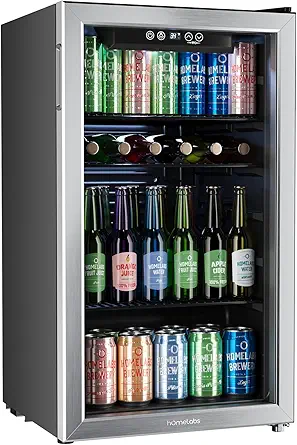 |
| Most Popular A crowd favorite that many people choose with confidence | EUHOMY 3.2 Cu.ft Beverage Refrigerator |  |
Feelfunn 3.2 Cu.Ft Beverage Refrigerator

| Capacity | 3.2 cubic feet |
|---|---|
| Can Capacity | 126 Count |
| Temperature Range | 34–64°F |
| Cooling Method | Compressor |
| Noise Level | ≤36 dB |
This Feelfunn 3.2 cu ft beverage refrigerator is a compact glass‑door cooler designed to store cans and bottles neatly for kitchens, bars, dorms or offices. It uses a rotary compressor and 3D circulating air cooling to hold steady temperatures across a wide 34–64°F range, while the digital panel makes setpoint changes straightforward. The double‑layer glass door with Low‑E coating and interior LED lighting shows off contents and helps insulation, and four adjustable/removable shelves let you mix cans and bottles or place some bottles upright. It is rated for quiet operation (≤36 dB) and lists ETL certification, so it is suitable for under‑counter or freestanding installation. Expect manual defrosting and no lock, and the unit is not a freezer so it will not freeze items. Annual energy numbers and stated low running noise are useful for small spaces, but buyers who need a built‑in freezer compartment or advanced humidity control should look elsewhere. The fridge ships with basic accessories and a one‑year parts/service offering.
Best for: Buyers who want a balanced, all‑around glass‑door mini fridge that combines good capacity, visible display and straightforward temperature control for home bars, kitchens, or small commercial spots.
Less Ideal for: People who need a freezer function, high‑security locking, or precise humidity control for long‑term wine storage should choose a different specialty appliance.
- Large 3.2 cu ft capacity fits up to 126 cans or multiple wine bottles
- Wide temperature range (34–64°F) with digital control for beverage-specific chilling
- Adjustable and removable shelves allow mixed can and bottle storage
- Double‑layer Low‑E glass door and interior LED lighting showcase contents while aiding insulation
- Manual defrost only, so periodic thawing is required
- No lock or dedicated freezer compartment
Verdict: A roomy, quiet glass‑door mini fridge that balances visible presentation and reliable compressor cooling for everyday beverage storage.
ORYMUSE 24" Beverage Refrigerator

| Capacity | 4.9 cubic feet |
|---|---|
| Unit Count | 180 Count |
| Temperature Range | 37-64°F |
| Cooling Method | Compressor |
| Installation Type | Built-In or Freestanding |
This ORYMUSE 24" beverage refrigerator is a compressor-cooled undercounter fridge built to store a large number of drinks while maintaining stable temperatures. It is typically used in kitchens, wet bars, or rec rooms where you want ready access to cans and bottles; the unit offers a 37 to 64°F range, four wire shelves, front ventilation for built-in installs, and soft-close double-tempered glass doors with a key lock for security. The reciprocating compressor delivers relatively fast, low-vibration cooling and the manufacturer rates noise under 40 dB, so it stays quiet during normal use. A touch-control panel and interior blue LED lighting make adjustments and inventory checks simple. Trade-offs include its single-zone design if you need strict separation for wine and beer and the lack of detailed energy-efficiency certifications beyond DOE and ETL listing, though the spec lists annual consumption. For buyers who prioritize capacity and reliable compressor performance in a compact glass-door package, this unit is a practical choice.
Best for: Buyers who want high-capacity, reliable compressor cooling in a compact glass-door fridge for entertaining spaces or busy kitchens and prioritize performance over multi-zone precision.
Less Ideal for: Those needing a dedicated dual-zone wine cooler for separate red and white storage or buyers seeking the most energy-efficient certified model available.
- Large 4.9 cu ft capacity fits up to 180 12 oz cans for high-volume storage
- Compressor cooling with reciprocating compressor provides stable, fast temperature control
- Soft-close double-tempered glass door with lock adds security and a clear display
- Front ventilation and built-in or freestanding installation increase placement flexibility
- Quiet operation under 40 dB suitable for kitchens and living spaces
- Single temperature zone limits simultaneous optimal storage for different drink types
- No explicit high-efficiency certification beyond DOE and ETL listed
Verdict: A high-capacity, compressor-driven glass-door beverage fridge that delivers quiet, stable cooling for performance-focused buyers who need lots of ready-to-serve drinks.
Erivess Compact Beverage Refrigerator

| Capacity | 3.2 cubic feet |
|---|---|
| Cooling method | Compressor |
| Temperature range | Cools down to 37°F |
| Shelves | 4 adjustable chrome shelves |
| Installation type | Freestanding/Countertop/Built-in |
The Erivess Compact Beverage Refrigerator is a single-zone, freestanding cooler designed to store and display cans and bottles with a glass front and stainless steel frame. It cools down to about 37°F using a compressor and small convection fan, and includes an easy-touch digital display and temperature controls for quick adjustments. Interior LED lighting and four adjustable chrome shelves make organizing cans and bottles straightforward, while automatic defrost and an extra temperature sensor simplify maintenance. The unit is marketed for under-counter or countertop installation and is relatively quiet for regular home or office use. Important limitations are that it is a beverage-only fridge, so it should not be used for fresh foods, and the capacity and shelf arrangement may require rearranging bottles to fit taller containers. For buyers prioritizing a visible, organized drink cooler with simple controls and low noise, this model delivers sensible features without frills.
Best for: Buyers who want a tidy, display-ready drink cooler for an office, apartment, or entertainment area and who prioritize simple controls, low noise, and easy upkeep.
Less Ideal for: People needing a multi-use mini fridge for fresh food storage, meal prep, or large bottles and containers that exceed the shelf spacing.
- Glass front and stainless steel frame provide a display-friendly look
- Digital touch controls and large display make temperature changes easy
- Four adjustable and removable chrome shelves for flexible storage
- Whisper-quiet compressor with convection fan for consistent cooling
- Automatic defrost and extra temperature sensor reduce maintenance
- Designed for beverages only and not suitable for fresh foods
- May require shelf rearrangement to fit taller bottles or odd-shaped containers
Verdict: A practical, quiet glass-door beverage cooler that makes organizing and displaying cans and bottles simple while keeping maintenance minimal.
Erivess Beverage Refrigerator 1.7 Cu Ft

| Capacity | 1.7 cubic feet |
|---|---|
| Cooling Method | Compressor |
| Defrost System Type | Frost Free |
| Voltage | 110 volts |
| Number Of Shelves | 2 |
This compact Erivess beverage refrigerator is a budget-friendly glass-door cooler sized for small kitchens, offices, or bars and holds up to 76 cans or several bottles of wine. It uses a compressor with an internal air-cooled system to deliver even, quiet cooling and a frost-free design that removes the need for manual defrosting. The unit has two removable metal shelves that can be rearranged to fit cans or taller bottles and a reversible door for flexible placement. A touch digital display lets you set temperatures between 37 and 61°F and a soft blue LED interior light showcases contents behind the glass door. Practical benefits include easy temperature control, low noise for shared spaces, and the convenience of auto-defrost. Expect the typical compromises of a small-capacity cooler: limited total storage and a compact footprint that does not replace a full-size fridge, and the design prioritizes beverage display over heavy-duty food storage.
Best for: Buyers on a tight budget who want an affordable glass-door mini fridge for displaying and chilling drinks in a home bar, office, or dorm.
Less Ideal for: Those needing large-capacity refrigeration, long-term food storage, or a full-size kitchen refrigerator should look elsewhere.
- Compressor and air-cooled system for even, quiet cooling
- Frost-free operation eliminates manual defrosting
- Digital touch display with adjustable temperature range (37–61°F)
- Reversible glass door and removable shelves for flexible placement and storage
- Soft blue LED interior lighting for product display
- Small 1.7 cu ft capacity limits total beverage and bottle storage
- Not intended to replace a full-size refrigerator for food storage
Verdict: A low-cost glass-door mini fridge that delivers quiet compressor cooling, frost-free convenience, and flexible shelving for chilled drinks in small spaces.
hOmeLabs Beverage Refrigerator HME030065N

| Capacity | 3.2 cubic feet |
|---|---|
| Storage | 120 cans |
| Cooling method | Compressor |
| Temperature range | 34°F-50°F |
| Defrost system | Automatic |
This hOmeLabs beverage refrigerator is a freestanding, glass-door cooler designed to store cans and bottles neatly while keeping drinks as cold as 34°F. It uses a compressor-based cooling system with a whisper-quiet compressor and a touch-button digital control panel to set and maintain temperature between 34°F and 50°F, and an internal LED light makes it easy to see contents without opening the door. Three removable chrome wire shelves and adjustable feet let you reconfigure the interior for tall bottles or stacked cans, and the reversible stainless-steel-framed glass door offers flexible placement. Practical benefits include steady, quiet cooling for home bars, offices, dorms, or under-counter use and a clear display that reduces door openings. Important limitations are its compact 3.2 cubic foot capacity, which limits large-bottle storage and bulk supply needs, and that it consumes a moderate amount of energy relative to full-size refrigerators.
Best for: Buyers seeking a reliable, display-style mini fridge that provides steady, low-noise cooling for a home bar, office, dorm, or under-counter installation and values consistent temperature control and visible storage.
Less Ideal for: Those who need large-capacity refrigeration for full-party service, extensive bottle storage, or the lowest possible energy use should consider larger or more efficient alternatives.
- Clear double-glazed glass door with interior LED for easy visibility
- Digital touch temperature control that adjusts from 34°F to 50°F
- Whisper-quiet compressor suitable for office or living spaces
- Three removable shelves and adjustable feet for flexible storage
- 3.2 cubic foot capacity limits large bottles and very large party storage
- Annual energy consumption listed is relatively high for a compact unit
Verdict: A dependable, quiet glass-door mini fridge that delivers consistent, adjustable cooling and clear display storage for small bars, offices, and dorm rooms.
EUHOMY 3.2 Cu.ft Beverage Refrigerator

| Capacity | 3.2 cubic feet |
|---|---|
| Temperature range | 37°F to 61°F |
| Cooling method | Compressor |
| Shelves | 5 removable shelves |
| Defrost system | Frost Free |
The EUHOMY 3.2 cu. ft. beverage refrigerator is a freestanding mini fridge built for drinks storage and display. It holds up to 130 standard cans across five removable wire shelves and offers a reversible glass door that showcases contents while helping block UV. A compressor cooling system with an internal circulation fan and digital touchscreen lets you set temperature precisely from 37°F to 61°F, so bottles and cans stay consistently chilled. The unit is frost free, runs quietly (manufacturer lists about 36 dB), and reports modest energy use around 0.69 kWh per day. Practical touches include adjustable feet, a built-in handle, and a tight door seal for better insulation. Expect typical mini-fridge limits: the 3.2 cu. ft. interior means larger bottles or irregular items may require shelf reconfiguration, and compressor mini-fridges can take longer to reach set temperature after initial setup. For someone prioritizing visible, organized beverage storage in a home bar, office, or bedroom, this balances capacity and control without complicated controls or added freezer space.
Best for: Buyers who want a showpiece beverage fridge for a home bar, office, or bedroom and who value visible, adjustable storage with precise temperature control and quiet operation.
Less Ideal for: People needing a built-in undercounter unit, freezer function, or very large cold-storage capacity should look at larger refrigerators instead.
- Shows contents with double-layer UV blocking glass door for display and light protection
- Precise digital temperature control from 37°F to 61°F for consistent beverage chilling
- Five removable shelves allow flexible configurations to fit cans and bottles
- Compressor cooling plus internal circulation fan for even temperature distribution
- Reversible door and adjustable feet enable flexible placement
- 3.2 cu. ft. interior can be tight for large bottles or varied container sizes
- Compressor-based mini fridge may need longer to reach target temperature after setup
Verdict: A compact glass-door beverage fridge that combines visible display with precise digital temperature control for organized home or office drink storage.
Choosing the Right Mini Fridge with Glass Door: Key Factors to Consider
Usable Capacity and Shelf Layout
Capacity ratings often list gross liters or cubic feet, but usable capacity depends on shelf configuration and how the interior is organized. Adjustable shelves, split-level trays, and removable bins allow you to switch between storing cans, tall bottles, or boxed items. Consider not just the headline volume number but how the space will accept the items you actually plan to store.
If you want a unit primarily for beverages, measure typical bottle or can heights to make sure they fit without removing shelves. For mixed use with snacks and small perishables, look for flexible shelving that lets you create tall and short zones as needed. The layout will have a bigger daily impact than a marginal difference in raw capacity.
Cooling Performance and Temperature Control
Consistent interior temperature is critical for preserving chilled drinks and sensitive foods. Look for fridges with a clear stated temperature range and a reliable thermostat or digital control. Some compressors offer tighter control and faster recovery after the door opens, which matters in high-traffic locations.
Also consider whether the unit has active cooling versus thermoelectric options, and how that affects performance in warmer room temperatures. For frequent door openings, faster recovery time and even air distribution prevent warm spots and keep contents at the intended chill level.
Noise Level and Vibration
Mini fridges are often located in bedrooms, dorms, or offices where noise matters. Compressor-driven models can be louder but usually cool more reliably, while thermoelectric units are quieter but may struggle in hot rooms. Check rated decibel levels when available, and consider the effect of vibration on glass bottles or sensitive items.
Look for rubber mounts, balanced compressors, and low-vibration shelving if you plan to store fragile glass. Even small differences in noise become noticeable in quiet environments, so factor this into your placement decision and expect to move a louder unit away from a sleeping or work area.
Door Construction and Seal
A glass door offers visibility, but the quality of the door and its seal determines insulation performance. Thicker tempered glass and magnetic gaskets reduce heat gain and help maintain set temperatures. A tight seal also reduces cycling frequency and can improve energy usage.
Pay attention to door hinge design and whether the unit offers reversible doors. If the door has interior condensation or fogging issues, that can indicate poor sealing or inadequate defog features. Good door construction balances visibility with low thermal transfer.
Energy Use and Operating Cost
Mini fridges run continuously, so electricity use adds up. Energy-efficient compressors and improved insulation lower running costs and heat output. Look for clear power consumption figures or energy ratings and compare them based on expected daily duty cycles.
Consider how placement affects efficiency. Units in warm or poorly ventilated spots work harder and consume more power. If energy draw is a priority, prioritize systems with efficient compressors and low standby consumption rather than headline capacity alone.
Installation, Placement, and Ventilation
Where you put a mini fridge affects performance. Most models need clearance around vents for airflow; cramped cabinetry or enclosed shelving can force the compressor to run harder. Placement against direct sunlight or heat sources will also reduce efficiency and cooling capacity.
Plan for door swing and access, measure to ensure the unit will fit through doorways during installation, and consider any leveling needs on uneven floors. Good ventilation and space for the condenser can noticeably improve long-term reliability.
Glass Door Care and Maintenance
Keeping the glass door clean and the gasket in good shape extends the life of the fridge and maintains clear visibility. Wipe the glass with a mild, non-abrasive cleaner to remove fingerprints and spills. Avoid harsh chemicals that can damage the tempered glass coating or the gasket material.
Periodically inspect the door gasket for cracks or compression. A leaking seal will let warm air in, increasing run time and causing temperature drift. Replace worn gaskets when necessary and make sure the door closes evenly on its hinges.
- Clean glass with a diluted dish soap solution and soft cloth.
- Check door alignment and hinge tightness every few months.
- Vacuum condenser coils or ventilation grilles annually where accessible.
Placement Tips for Quiet and Efficient Operation
Choose a location with stable ambient temperature and good airflow around the condenser vents. Avoid placing the fridge in direct sunlight or next to heat-producing appliances. Leave manufacturer-recommended clearance at the back and sides to ensure proper ventilation.
If you need the unit in a bedroom or office, place it on a solid, level surface and consider an anti-vibration mat. Maintain a gap between the fridge and walls or furniture to reduce noise transfer and allow for easier maintenance access.
- Keep at least a few inches of clearance for airflow.
- Avoid enclosed cabinets without ventilation.
- Use a level to ensure doors seal crisply.
Storing Beverages Vs Food: Interior Setup Strategies
If you primarily store bottles and cans, arrange shelves to create tall vertical slots so that tall bottles fit without adjusting shelving every time. Use the front rows for frequently used items and the back for overflow to minimize open-door time.
For mixed use with perishables, reserve one shelf for ready-to-eat items and another for sealed packages. Use shallow bins for condiments and small items to keep the visible area tidy. Good organization reduces door-open time and helps the compressor maintain set temperatures.
- Rotate stock so older items are at the front.
- Group similar items for quick access.
- Avoid overpacking which blocks airflow between shelves.
Temperature Settings and Monitoring
Set the thermostat to a stable target and allow the unit 24 hours to reach equilibrium before loading heavily. Use a small standalone fridge thermometer to verify the actual internal temperature and adjust the control as needed. Glass doors can let more heat in when sunlight hits them, so compensate placement and settings accordingly.
For beverage-only use, aim for a slightly higher cold setting than freezing to avoid ice buildup. For mixed perishables, maintain temperatures in the 34 to 40 F range to keep dairy and prepared foods safe while preventing freezing of sensitive items.
- Verify internal temperature with an independent thermometer.
- Avoid placing warm items directly into the fridge.
- Allow airflow around stored items for even cooling.
When to Choose Compressor Cooling Vs Thermoelectric
Compressor-based mini fridges generally provide stronger cooling and better stability in warmer rooms or under heavy use. They recover temperature faster after door openings and handle higher ambient temperatures more reliably. If you plan to store perishables or will frequently open the door, compressor units are typically the more practical choice.
Thermoelectric units can be quieter and lighter, making them appealing for bedroom or low-duty applications where ambient room temperature remains moderate. However, they may struggle on hotter days and are less suited for heavy-duty or food-storage applications.
- Choose compressor units for consistent temperature under load.
- Consider thermoelectric models for quiet, light-duty use in cool rooms.
- Match cooling type to your typical ambient conditions and load.
How We Chose the Best Mini Fridge with Glass Door
We focused on attributes that materially affect everyday use of a mini fridge with a glass door. Primary filters included usable internal capacity and shelf layout because those determine how much you can store and how easily you access bottles, cans, and small food items. Cooling performance and temperature stability were essential for preserving beverages and perishables, so we prioritized units with verified temperature ranges and reliable thermostatic control. Noise level and vibration were considered to ensure suitability for bedrooms and offices. Build quality and door sealing were evaluated to reduce energy waste and keep internal temperature steady. Finally, we looked at energy efficiency and electrical load to estimate ongoing operating cost. We excluded full-size refrigerators, units without a clear glass front, and specialty appliances like wine-only coolers that lack adjustable shelving. We also filtered out models without clear documentation on capacity or operating temperature. The remaining candidates were compared across the concrete dimensions above to produce a practical set of top picks for compact visible-cooling needs.
Our full evaluation process is outlined in our review methodology.
FAQ
Can a mini fridge with a glass door keep food as cold as a solid-door mini fridge?
A glass-door mini fridge can reach the same temperature settings as a solid-door unit, but it may be more sensitive to room conditions and sunlight. Good insulation, a tight gasket, and proper placement help a glass-door unit maintain comparable coldness for everyday use.
Are glass-door mini fridges suitable for bedrooms or dorm rooms?
They can be suitable if you choose a model with low noise and low vibration. Compressor models tend to be louder than thermoelectric ones, so check noise ratings and place the fridge on a stable surface to minimize disruption.
How often should I defrost or clean a mini fridge with a glass door?
Defrosting frequency depends on frost buildup and model type, but an annual deep clean and occasional defrost are common. Wipe spills promptly and inspect seals periodically to prevent odors and maintain efficiency.
Will the glass door fog up or develop condensation?
Fogging can occur if there is humidity or a poor door seal. Proper sealing, controlled interior humidity, and avoiding placing the unit in humid, warm spots reduce condensation risk. Some models include anti-fog coatings or heaters to mitigate this.
Is it safe to store open food containers behind a glass door?
Yes, as long as the internal temperature is held in a safe range and food is covered or sealed to prevent cross-contamination. Use shallow containers with lids for ready-to-eat items and monitor temperatures regularly.
Final Verdict
For most buyers, prioritize usable internal layout and consistent temperature control when choosing a mini fridge with a glass door. Balance noise and cooling type against where you plan to place the unit, and check door quality to avoid energy losses. If visibility and quick access are important, a well-sealed glass-front unit with adjustable shelving and a reliable compressor will offer the best everyday performance. Weigh these tradeoffs to select the configuration that matches your storage needs and room conditions.