
Note: This article contains affiliate links. If you click on these links and make a purchase, we may earn a small commission at no extra cost to you. This helps support our research and content. Read our full affiliate disclosure here.
If you want straightforward cooling without the bulk or maintenance of a freezer, a mini fridge without freezer compartment can be a smarter choice. These units prioritize consistent temperatures, flexible shelving, and efficient use of interior space—qualities that matter in dorm rooms, offices, bedrooms, and small apartments. This guide shortlists seven top mini fridges without freezer compartments and explains the decision factors we used to evaluate them, including cooling performance, interior layout, energy use, and noise. Read on to find the compact cooler that best fits your space and daily habits.
Top Picks at a Glance
| Best Overall The best all-around choice for most situations | COWSAR 4.4 Cu.Ft Mini Fridge |  |
| Best Quality Built to a higher standard if you want something more solid | Crosley Retro Mini Fridge RRX3210AM |  |
| Best Value The sweet spot between price and what you get | Magic Chef Retro Mini Refrigerator |  |
| Best Budget The cheapest option that still gets the job done reliably | Smad Dorm Fridge 3.2 cu.ft |  |
| Top Rated A top-rated pick with lots of positive feedback | roomwell 3.3 Cu Ft Mini Fridge |  |
| Most Popular A crowd favorite that many people choose with confidence | Magic Chef 2.6 Cu. Ft. Mini Fridge |  |
| Best Seller A high-volume bestseller chosen again and again | EUHOMY WC-6B Mini Fridge | 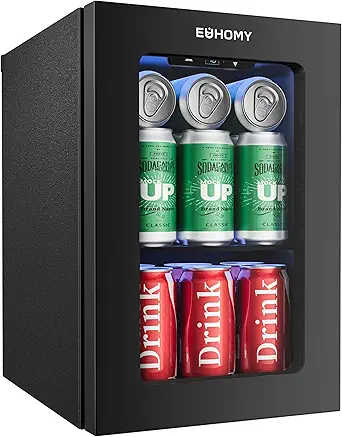 |
COWSAR 4.4 Cu.Ft Mini Fridge

| Capacity | 4.4 cubic feet |
|---|---|
| Configuration | Compact Freezerless |
| Defrost System Type | Manual |
| Number Of Shelves | 3 |
| Annual Energy Consumption | 253 kilowatt hours per year |
The COWSAR 4.4 Cu.Ft Mini Fridge is a straightforward, freezerless compact refrigerator aimed at small apartments, dorms, or office use. It cools via an energy-efficient compressor with a mechanical thermostat that offers seven settings for a 32 to 50°F range, so you can dial in temperatures for drinks, produce, or prepared meals. The interior includes three removable glass shelves for flexible storage and easy cleaning, plus adjustable leveling feet and a reversible door to fit tight layouts. With an annual energy consumption listed at 253 kWh and a reported noise level under 43 dB, it runs quietly and keeps operating costs modest. The unit uses manual defrost, so expect occasional maintenance to manage frost and moisture. Build and finish are basic but functional, and the fridge trades features like a freezer compartment or digital controls for a simpler, lower-complexity design. If you want a compact, efficient fridge that prioritizes usable shelving and quiet operation, this model delivers a balanced set of capabilities for everyday small-space refrigeration.
Best for: Buyers who want a quiet, energy-conscious refrigerator with flexible shelving and simple temperature control for small living spaces and everyday food storage.
Less Ideal for: Those who need a freezer, precise digital temperature management, or advanced features like auto-defrost and smart controls should consider other options.
- 4.4 cu ft usable capacity suitable for dorms and small kitchens
- Seven-setting mechanical thermostat for simple temperature control
- Three removable glass shelves for flexible storage and easy cleaning
- Reversible door and adjustable feet for flexible placement
- Energy-efficient compressor with relatively low annual energy use
- Manual defrost requires occasional maintenance to prevent frost buildup
- No freezer compartment or digital/precise electronic controls
Verdict: A quiet, energy-efficient freezerless mini fridge that balances usable interior shelving and simple temperature control for everyday small-space refrigeration.
Crosley Retro Mini Fridge RRX3210AM

| Capacity | 3.2 cubic feet |
|---|---|
| Cooling Method | Compressor |
| Defrost System Type | Manual |
| Voltage | 115 volts |
The Crosley Retro Mini Fridge is a 3.2 cubic foot compressor refrigerator that pairs vintage styling with practical cooling for bedrooms, offices, dorms, and undercounter installs. It uses a compressor-based cooling method with manual defrost and a reversible door, and the interior offers two adjustable glass shelves, a large crisper, and three clear door bins for organized storage. The unit includes a bright LED interior light, chrome handle, magnetic gasket sealing, and anti-slip feet to keep it stable. In use it keeps drinks and perishables chilled without the temperature fluctuations that can come from small freezer cycles, and the lack of a freezer generally reduces noise and energy draw. Important trade-offs are its manual defrost requirement and the limited 3.2 cu ft capacity, which may require more frequent restocking for larger households. Annual energy consumption is listed, so buyers focused on running costs can compare it to other compact models. For those who prioritize style and steady refrigerated storage in a small footprint, this model balances look and function effectively.
Best for: Buyers who need a stylish, reliable refrigerated-only unit for a single-person space or office and who value steady cooling and aesthetic design over larger capacity.
Less Ideal for: People who need freezer storage, large family meal prep, or extended bulk food storage should look for larger or freezer-equipped appliances.
- Retro aesthetic with a sturdy chrome handle that adds visual character
- Compressor cooling provides consistent chill performance without a freezer cycle
- Adjustable glass shelves and multiple door bins for flexible organization
- Bright LED interior light and magnetic gasket sealing for easy access and a good seal
- Manual defrost requires occasional maintenance to prevent frost buildup
- Small 3.2 cu ft capacity limits how much perishable food can be stored
Verdict: A compact, retro-styled refrigerator that delivers steady, freezerless cooling in small spaces for buyers who prioritize performance and design.
Magic Chef Retro Mini Refrigerator

| Capacity | 1.6 cubic feet |
|---|---|
| Configuration | Compact Refrigerator |
| Defrost System Type | Manual |
| Cooling Method | Compressor |
| Installation Type | Countertop |
This Magic Chef retro mini refrigerator is a compact, single-door fridge that prioritizes style and basic cooling for small spaces. It delivers 1.6 cubic feet of usable refrigerated space with a removable glass shelf and door storage, making it easy to store cans, bottles, and small food items in an office, dorm, or game room. The compressor cooling and adjustable temperature control let you keep consistent cold temperatures while the interior LED light improves visibility. Manual defrost and a single shelf keep the design simple and low-cost, and the retro chrome handle and matte finish add visual appeal. Energy Star listing and a modest annual energy figure mean it will not significantly raise running costs, but the lack of a freezer means it will not handle frozen storage and manual defrost requires occasional maintenance. The fridge is best when you need a reliable, compact cooler that looks good and holds daily drinks and snacks without extra features or complex controls.
Best for: Buyers who want a space-saving, visually distinctive countertop fridge for daily drinks and snacks and who prioritize simple, reliable cooling over extra features.
Less Ideal for: Those who need frozen storage, advanced temperature zones, or a zero-maintenance frost-free system should consider different models.
- Compact 1.6 cu. ft. capacity fits on countertops and in small rooms
- Removable glass shelf and door storage allow flexible organization
- Interior LED light improves visibility inside the cabinet
- Adjustable temperature control with compressor cooling for consistent performance
- Energy Star rated for better energy efficiency
- No freezer compartment for frozen food storage
- Manual defrost requires occasional maintenance
Verdict: A stylish, energy‑efficient 1.6 cu. ft. countertop fridge that delivers simple, reliable cooling for drinks and snacks without a freezer.
Smad Dorm Fridge 3.2 cu.ft
| Capacity | 3.2 cubic feet |
|---|---|
| Configuration | Freezerless |
| Defrost System Type | Frost Free |
| Number Of Shelves | 2 |
| Voltage | 110 volts |
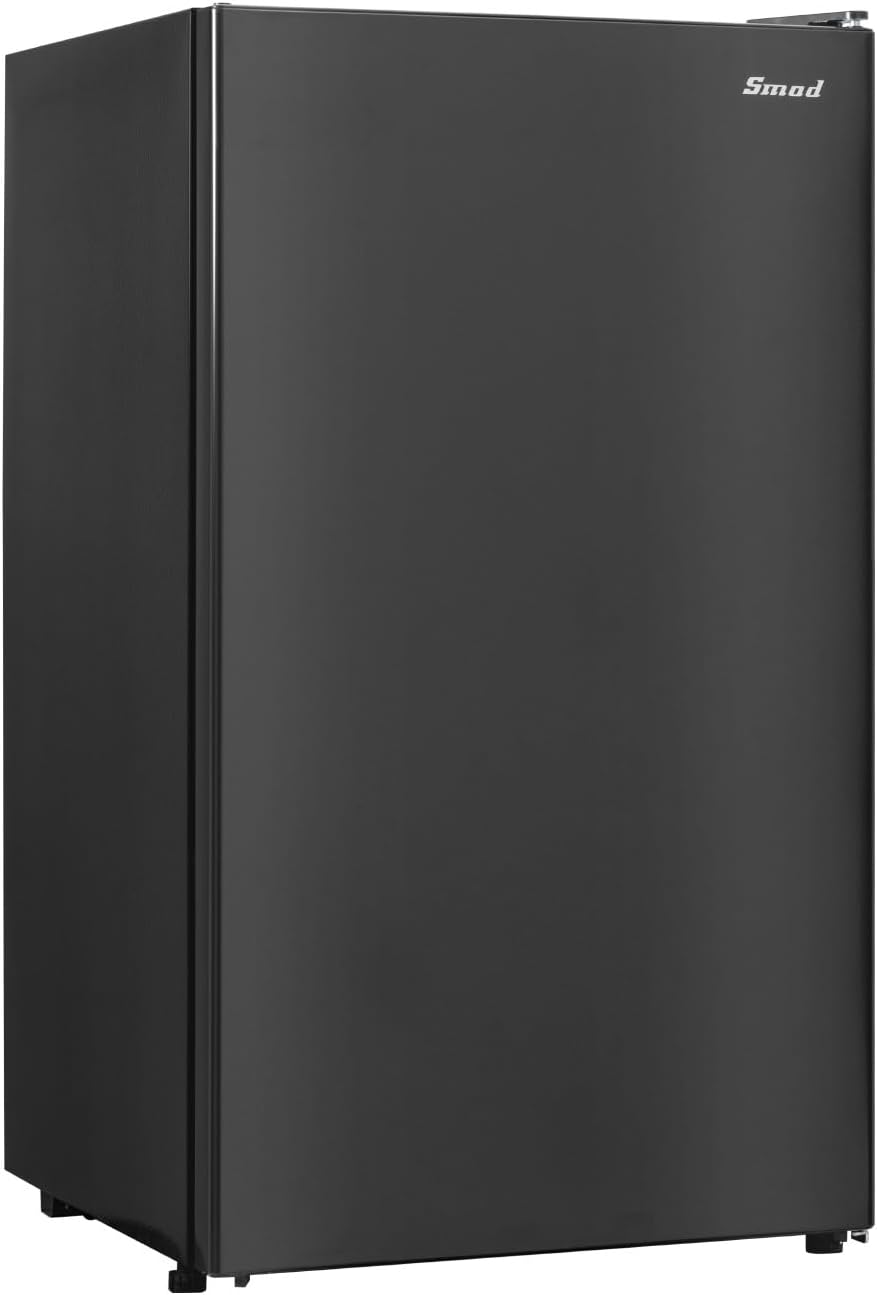
The Smad Dorm Fridge is a space-saving 3.2 cubic foot refrigerator built for rooms and offices that need reliable, quiet cooling without a freezer compartment. It offers dual-zone cooling with a small chiller area and a main compartment adjustable between about 32 and 50°F through a 7-level thermostat, so you can tailor temperatures for drinks, snacks, and fresh food. Two removable tempered glass shelves and three door bins give flexible storage and make cleaning straightforward, while the reversible door helps fit tight layouts. Measured at roughly 38 dB in operation, it stays unobtrusive in a bedroom or study, and the manufacturer states energy-efficient performance at about 0.6 kWh per day. Practical touches include a drip tray to catch spills and a frost-free system to reduce manual defrosting. Expect the benefits of a low-cost, compact fridge that prioritizes simplicity and quiet running over advanced controls or a freezer section.
Best for: Buyers seeking an affordable, no-frills compact refrigerator for a dorm, small apartment, or office who prioritize quiet, simple cooling and easy placement.
Less Ideal for: People who need a freezer section, precise digital temperature control, or the highest possible energy efficiency for heavy daily use should consider other options.
- Compact 3.2 cu.ft capacity fits dorms, offices, and small apartments
- Quiet operation around 38 dB suitable for bedrooms and study areas
- Two removable tempered glass shelves and three door bins for flexible storage
- Reversible door and drip tray improve installation and maintenance
- Energy-efficient operation at approximately 0.6 kWh per day
- No freezer compartment limits frozen storage options
- Basic mechanical thermostat lacks digital precision or presets
- Annual energy figure higher than some ultra-efficient mini models
Verdict: A quiet, budget-friendly 3.2 cu.ft freezerless mini fridge that delivers simple, energy-conscious cooling for small rooms and offices.
roomwell 3.3 Cu Ft Mini Fridge

| Refrigerator Net Capacity | 3.28 cubic feet |
|---|---|
| Defrost System Type | Automatic |
| Voltage | 115 volts |
| Refrigerant | R-600A |
| Specification Met | Energy Star |
This roomwell 3.3 cu ft mini fridge is a freestanding, single-door refrigerator built for dorm rooms, offices, and tight kitchens where freezer space is unnecessary. It uses a compressor with R-600A refrigerant and automatic defrost, and stores items on three full-width glass shelves plus door racks with a tall-bottle section and can dispenser. The adjustable thermostat covers a practical range for chill-only use, and leveling legs plus a reversible door make placement flexible. Energy Star compliance and a quoted low annual energy consumption make it an efficient choice for continuous operation, and the included key lock and interior light add convenience for shared spaces. Limitations include the absence of a freezer compartment and modest 3.28 cu ft net capacity, so it will not replace a full-size refrigerator for families or heavy meal prep; also the compressor is a basic rotary-scroll type rather than a premium inverter drive, so it may be louder under heavy load. The product arrives as a simple, low-maintenance option when you need reliable cold storage without extra features or complexity.
Best for: Buyers who prioritize a reliable, low-maintenance chill-only refrigerator for a dorm, office, or small apartment and want an efficient appliance that runs continuously without fuss.
Less Ideal for: People who need frozen storage, larger capacity for family meal prep, or the quietest inverter-compressor operation should consider other models.
- Compact footprint fits tight spaces and has a flat-back design for close placement against walls
- Automatic defrost and an adjustable mechanical thermostat reduce maintenance
- Energy Star rated with low reported annual energy consumption for continuous use
- Reversible door, leveling legs, and interior light increase placement and usability options
- No freezer compartment limits frozen storage and meal prep options
- Capacity is modest at about 3.28 cu ft, so it holds limited groceries for more than one person
- Compressor is a basic rotary-scroll type which may be louder than inverter-style compressors
Verdict: A dependable, energy-efficient mini fridge that delivers simple, low-maintenance cold storage without a freezer for small spaces.
Magic Chef 2.6 Cu. Ft. Mini Fridge

| Capacity | 2.6 cubic feet |
|---|---|
| Defrost System Type | Manual |
| Cooling Method | Compressor |
| Number Of Shelves | 2 |
| Door Orientation | Reversible |
The Magic Chef 2.6-cu. ft. mini fridge is an all-refrigerator designed for dorms, offices, and small apartments where a freezer is not needed. It uses a compressor cooling system and offers a full-range temperature control so you can chill beverages or keep prepared foods fresh. The interior includes two glass shelves and door storage sized for cans and taller items, and the reversible door and flat-back design make placement flexible in tight spots. Setup is simple as a freestanding unit and the manual defrost system keeps mechanics straightforward, though it does require occasional defrosting. Energy use is moderate and listed at about 215 kWh/year, so it is not the lowest-draw model but meets standard efficiency expectations. The unit is basic rather than feature-heavy, so you get practical, reliable refrigeration without smart controls or an internal freezer compartment.
Best for: Buyers who prioritize simple, reliable refrigerated storage for a bedroom, dorm, or office and want easy placement options with minimal setup and fuss.
Less Ideal for: People who need an internal freezer, advanced features like Wi-Fi or auto-defrost, or the absolute lowest possible annual energy use should consider other models.
- All-refrigerator layout maximizes usable fresh food space
- Reversible door and flat-back design allow flexible placement
- Full-range temperature control for customized cooling
- Glass shelves and door can holders help organize beverages and snacks
- Manual defrost requires periodic upkeep
- Annual energy consumption is moderate at 215 kWh/year
Verdict: A practical, space-efficient all-fridge that delivers straightforward cooling and flexible placement for buyers who want simple refrigerated storage without a freezer.
EUHOMY WC-6B Mini Fridge

| Capacity | 18 liters |
|---|---|
| Cooling Method | Compressor |
| Temperature Range | 40°F to 61°F |
| Defrost System | Manual |
| Installation Type | Freestanding |
The EUHOMY WC-6B is a small compressor-driven beverage refrigerator designed for tight spaces where you want stable cooling without a freezer compartment. It holds about 24 standard cans (18 L) on a single removable shelf and offers one-touch digital temperature control across a 40°F to 61°F range, so you can set consistent serving temperatures for drinks. The compressor cooling method provides stronger and steadier performance than thermoelectric units, and the unit is rated to run quietly (under 40 dB) which makes it suitable for bedrooms, home offices, or bars. The right-hinged door includes LED lighting and UV-protective glazing to preserve contents from light exposure. Practical limitations are its very small capacity and a manual defrost design, so it is best for single-user beverage storage rather than meal prepping or family use, and interior space is constrained once you place bottles upright. For buyers focused on dependable, no-frills beverage chilling in a compact footprint, this model delivers predictable temperature control and low noise.
Best for: Buyers who prioritize steady, quiet cooling and simple, reliable operation in a very compact refrigerator for a bedroom, office, or small bar.
Less Ideal for: Those who need larger internal capacity, a freezer compartment, or a model for family meal storage should look at larger refrigerators.
- Compressor cooling provides stable, reliable temperatures compared with thermoelectric models
- Digital temperature control spanning 40°F to 61°F for precise beverage chilling
- Very quiet operation (under 40 dB), suitable for bedrooms and offices
- Removable shelf lets you reconfigure storage for cans or a few bottles
- UV-protective door and interior LED light preserve and display contents
- Very small interior capacity limits it to drinks for one or two people
- Manual defrost requires occasional maintenance
Verdict: Choose this model if you want a compact, compressor-cooled mini fridge that delivers quiet, consistent beverage temperatures in a tiny footprint.
Choosing the Right Mini Fridge Without Freezer Compartment: Key Factors to Consider
Cooling Consistency
Reliable, even cooling across the cabinet is the most important practical factor for a fridge without a freezer compartment. Uneven temperatures lead to spoiled food and uneven beverage chilling. Look for units with well-sealed doors, properly placed vents, and a design that encourages airflow rather than dead zones.
Thermostat accuracy and available temperature settings matter because some mini fridges are designed for drinks only, while others can safely store perishables. Consider how the unit maintains temperature with frequent door openings, especially in shared spaces.
Interior Layout and Shelving
Because there is no freezer taking up space, interior layout becomes the main way manufacturers add utility. Adjustable shelves, removable bins, and door storage options determine how much usable volume you truly get. Shelves that adjust in small increments let you accommodate taller bottles or stackable containers.
Check whether shelves are wire or solid glass. Glass shelves are easier to clean and contain spills better, while removable bins speed up cleaning and allow flexible organization. Measure the interior clearances if you plan to store specific items like tall bottles or meal prep containers.
Energy Efficiency and Running Cost
A mini fridge often runs continuously, so energy use is an important long-term cost consideration. Look at the appliance's energy consumption specifications or Energy Star listing when available. More efficient compressors and better insulation reduce electricity draw and can justify a slightly higher upfront cost.
Also consider the unit's compressor type. Some mini fridges use small, efficient compressors while others rely on thermoelectric cooling; the latter can be quieter but may struggle in hot ambient rooms and are usually less efficient for food storage.
Noise Level and Vibration
Noise matters for bedrooms, offices, and shared living areas. Compressor-driven mini fridges produce cycling noise and occasional vibration. If quiet operation is a priority, look for measured decibel ratings or user reports about low hums and minimal rattling.
Rubber feet and a sturdy cabinet reduce vibration transmission. Avoid placing a fridge on unstable furniture or shelving, and allow a little clearance so the unit can dissipate heat quietly without working harder.
Size, Capacity, and Fit
Mini fridges without freezer compartments come in many footprints. Measure the intended location carefully, accounting for door swing, ventilation clearance, and how the unit will be loaded. Exterior dimensions do not always reflect usable interior capacity, so compare liter or cubic-foot capacity plus shelf configuration.
Think about future needs as well. A slightly larger interior can accommodate occasional guests or bulk grocery runs, but oversized units may waste space in tiny rooms or draw more power than necessary.
Maintenance and Cleaning
Because there is no freezer, spills and condensation can collect on shelves and at the bottom of the cabinet. Easy-to-remove shelving, smooth interior surfaces, and a simple drip pan or drain make cleaning much faster. Check whether the door gasket is replaceable and how accessible the back access panel is for occasional dusting.
A user-friendly temperature control and clear defrost instructions help avoid moisture buildup. Regular maintenance tasks should be straightforward for owners who may not have professional service available.
When a No-Freezer Mini Fridge Is the Better Choice
A mini fridge without a freezer compartment is ideal when you need maximum refrigerated volume in a compact footprint. Without a freezer shelf, more of the cabinet can be used for beverages, meal containers, or fresh groceries. This makes these units especially well suited to offices, dorm rooms, media rooms, and any space where frozen storage is handled separately.
Another advantage is simplified maintenance. There is no ice buildup to manage and interiors are often easier to organize. If you already have access to separate frozen storage elsewhere, choosing a refrigerator-only mini fridge can reduce wasted space and improve day-to-day usability.
- More usable refrigerated volume for bottles, meal prep, and produce
- Simpler interior layout with easier cleaning and fewer hard-to-reach areas
- Potentially lower power draw if the unit is well-insulated and sized correctly
Placement, Ventilation, and Installation Tips
Place the mini fridge on a level surface with at least a couple of inches clearance at the back and sides unless the manual specifies otherwise. Proper airflow around the compressor area reduces cycling frequency and helps the unit maintain consistent temperatures.
Avoid installing the fridge inside enclosed cabinets or directly against heat sources. In tight spaces, choose models specifically rated for built-in or under-counter use and follow the ventilation recommendations to prevent overheating and premature compressor wear.
- Keep vents unobstructed and dust-free for best cooling performance
- Allow 1 to 2 inches of clearance for passive airflow unless otherwise specified
- Avoid direct sunlight and placements near stoves or heating vents
Organizing a Refrigerator-Only Mini Fridge
Use stackable containers and small bins to separate produce, dairy, and beverages. Since there is no freezer, you will want to dedicate zones for perishable items and ready-to-eat foods to avoid cross-contamination and maximize shelf life.
Door storage is convenient for condiments and beverages but keep heavier items on solid shelves. If the unit has adjustable shelving, reserve one shelf for tall bottles and another for shorter meal-prep containers to get the most out of the interior height.
- Label containers and rotate perishable items weekly
- Store raw meat on the lowest shelf to prevent drips
- Use the door for low-risk items like condiments and drinks
Understanding Temperature Controls
Many mini fridges use a simple numbered dial rather than a precise digital thermostat. Numbered controls are fine for general use, but they do not tell you the exact interior temperature. If you store sensitive perishables, consider adding a small fridge thermometer to monitor actual conditions.
If the unit has a digital control, you can set a target temperature more precisely. Keep in mind that ambient room temperature and frequent door openings affect how hard the compressor runs and how steady internal temperatures remain.
- Use a separate thermometer for accuracy when storing perishables
- Set controls slightly colder in warmer rooms to maintain safe food temperatures
- Avoid repeatedly changing the setting; let the fridge stabilize after adjustments
Dealing with Moisture and Odors
Without a freezer trap, moisture can accumulate in the main compartment, especially in humid climates or with frequent door use. Wiping spills promptly and periodically airing the interior by leaving the door open for a few minutes during cleaning reduces mildew risk.
To control odors, use open baking soda boxes or small charcoal pouches. Regular cleaning of removable shelves and door seals prevents trapped residue from becoming a lasting smell problem. For persistent condensation, check door sealing and leveling as common culprits.
- Wipe spills immediately and clean removable parts regularly
- Use baking soda or charcoal for basic odor control
- Check door gasket for gaps if condensation accumulates
How We Chose the Best Mini Fridge Without Freezer Compartment
We focused on features that directly affect everyday use of mini fridges without freezer compartments. Our selection criteria emphasized consistent cooling across the interior, interior layout flexibility, energy efficiency for long-term running costs, noise levels for shared or quiet spaces, and build quality to ensure reliable sealed-box cooling. We also considered ease of cleaning and basic temperature controls because owners often lack service access in smaller living spaces. Excluded from consideration were combination models with integrated freezers, units intended solely for outdoor or commercial use, and specialty appliances that require external ventilation modifications. We prioritized compact units designed for indoor residential settings and those that provide clear, user-facing specifications for capacity and power consumption. The final shortlist balances measured practical features and design choices that matter to daily users of mini fridges without freezer compartments.
Our full evaluation process is outlined in our review methodology.
FAQ
Are mini fridges without freezer compartments good for storing fresh food long term?
They can store fresh food safely for short to medium durations if they maintain proper refrigerator temperatures. For longer-term storage you will need a full-size fridge or separate freezer; monitor temperatures and follow safe food storage guidelines.
How much ventilation space does a mini fridge need?
Most models need at least one to two inches of clearance on the sides and back to allow for adequate airflow, but check the manufacturer recommendations. Tighter built-in installations may require specific ventilation pathways.
Can I use a mini fridge without a freezer for beverages only?
Yes. A refrigerator-only mini fridge is often ideal for beverages because it maximizes chilled capacity and simplifies organization. Choose one with stable cooling and adjustable shelves to fit bottles or cans.
How noisy are these fridge-only mini fridges?
Noise varies by compressor design and cabinet build. Many modern mini fridges run quietly enough for bedrooms and offices but expect some low-frequency hum and occasional cycling sounds. Look for units with vibration damping if noise is a concern.
Do mini fridges without freezers use more or less energy than models with freezers?
Energy use depends on insulation, compressor efficiency, and capacity. Removing a freezer compartment can reduce wasted chilled volume, which may improve effective efficiency, but compare specific energy ratings rather than assuming one type is always lower.
What maintenance is required for a refrigerator-only mini fridge?
Regular tasks include wiping shelves, checking and cleaning the door gasket, dusting the back or compressor vents, and defrosting if the model develops frost. These steps keep the unit efficient and hygienic.
Final Verdict
A mini fridge without a freezer compartment is a practical choice when you prioritize usable refrigerated space, simple maintenance, and flexible organization in a compact unit. Focus on cooling consistency, interior layout, and energy efficiency when comparing options, and match the exterior footprint to your intended location. Weigh the tradeoffs between capacity and noise, and favor models with removable shelves and good door seals. With those priorities in mind, you can confidently pick a refrigerator-only mini fridge that meets your daily needs.