
Note: This article contains affiliate links. If you click on these links and make a purchase, we may earn a small commission at no extra cost to you. This helps support our research and content. Read our full affiliate disclosure here.
If you cook small batches of short-grain Japanese rice, a dedicated mini rice cooker can simplify meal prep while producing the sticky, glossy texture you expect. A well-chosen compact cooker saves counter space and yields reliable results for singles, couples, or small households without the guesswork of stovetop methods. This guide covers our shortlisted mini rice cookers for Japanese rice, focusing on consistent doneness, proper moisture control, and user-friendly maintenance. Below you will find the top compact models we considered, plus practical buying factors and care tips to help you pick a cooker that fits your kitchen and cooking habits.
Top Picks at a Glance
| Best Value The sweet spot between price and what you get | Bear Mini Rice Cooker 2-Cup |  |
| Best Budget The cheapest option that still gets the job done reliably | AROMA Mini Rice Cooker ARC-302NGBL |  |
| Top Rated A top-rated pick with lots of positive feedback | Zojirushi Micom Rice Cooker NS-LGC05XB | 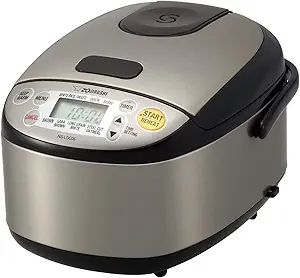 |
| Most Popular A crowd favorite that many people choose with confidence | Dash Mini Ceramic Rice Cooker |  |
| Best Seller A high-volume bestseller chosen again and again | Toshiba Mini Rice Cooker TRCS02 | 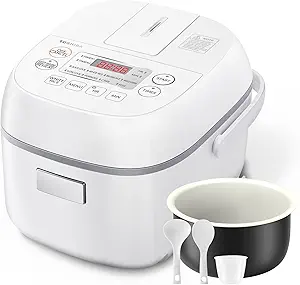 |
Bear Mini Rice Cooker 2-Cup

| Capacity | 2 cups (uncooked) / 1.2L |
|---|---|
| Wattage | 200 watts |
| Power Source | Corded Electric |
| Keep Warm | Automatic keep-warm |
The Bear Mini Rice Cooker is a simple, space-saving cooker designed to make small batches of rice with minimal fuss. You load rice and water, press the single button, and the cooker completes a cycle then switches to keep-warm automatically, which is handy for staggered meals. Its 1.2L (2 uncooked cup) capacity suits one to two people and the nonstick inner pot with clear measuring marks makes portioning and cleanup straightforward; the detachable inner lid and extended steam port help reduce boilovers. Rated at 200 watts and using a 3D-style heating liner, the cooker claims a roughly 25-minute quick-cook time for white rice and can handle simple grains like quinoa or oats. Practical touches include a rice paddle and measuring cup included in the kit and dishwasher-safe components. Limitations are its small capacity—unsuitable for larger families—and the basic control layout offers no presets for different rice textures or brown rice timing, so you may need to adjust water ratios for preferred stickiness when making Japanese-style rice.
Best for: Buyers who want a reliable, no-frills cooker to make perfectly portioned Japanese-style white rice with minimal effort and easy cleanup in small kitchens or while traveling.
Less Ideal for: Those who cook for larger households, need multi-rice presets or timers for batch cooking, or want a cooker with advanced fuzzy-logic controls.
- Compact, portable footprint for dorms, small kitchens, or travel
- One-touch operation with automatic keep-warm for effortless everyday use
- Nonstick inner pot with measuring marks simplifies portioning and cleanup
- Detachable inner lid and extended steam port reduce boilovers and speed cleaning
- Includes rice paddle and measuring cup so it is ready to use out of the box
- Only a 2-cup uncooked capacity, too small for family meals
- No advanced presets or specific brown-rice/texture programs
Verdict: Pick this compact one-touch cooker if you want an easy, low-fuss way to cook small batches of fluffy Japanese-style rice and keep it warm without complicated controls.
AROMA Mini Rice Cooker ARC-302NGBL

| Capacity | 1 quarts |
|---|---|
| Wattage | 250 watts |
| Power Source | Corded Electric |
| Voltage | 120 volts |
This compact Aroma mini rice cooker is built for small households and quick weekday meals; it cooks 2 uncooked cups (about 4 cups cooked) of rice with a single-button operation and flips to Keep Warm automatically. The ceramic-coated inner pot provides a naturally nonstick surface for easier cleanup, and the tempered glass lid lets you check progress without lifting and cooling the pot. Beyond rice it handles oatmeal, soups, and simple one-pot dishes, and the included rice measuring cup and spatula make portioning straightforward. At 250 watts it uses little power and the simple controls are unintimidating for first-time rice cooker users, though there are no advanced cycle options or digital controls for specialty Japanese rice textures. The portable size is good for countertops, small kitchens, and dorms, but it is best suited to single cooks or couples rather than larger families who need bigger capacity or precision settings.
Best for: Buyers who want an inexpensive, no-frills cooker to make reliably good small batches of rice and simple one-pot meals with minimal effort.
Less Ideal for: People who regularly cook for larger groups or who need precise multi-stage cooking settings for specialty rice varieties should look at larger or digital models.
- Compact footprint fits small kitchens or dorms
- Ceramic coated inner pot with nonstick surface for easier cleanup
- One-touch operation with automatic Keep Warm for set-and-forget cooking
- Tempered glass lid lets you monitor food without releasing heat
- Limited capacity not suitable for larger households
- No advanced or dedicated cycles for specialized Japanese rice textures
Verdict: A cheap, compact, and easy-to-use mini cooker that delivers reliable small-batch rice with minimal fuss.
Zojirushi Micom Rice Cooker NS-LGC05XB

| Capacity | 3 cups |
|---|---|
| Wattage | 450 watts |
| Power Source | Corded Electric |
| Material | Stainless Steel |
The Zojirushi Micom 3-cup rice cooker is a small, no-nonsense unit built for consistently good Japanese-style rice in a compact footprint. It uses Micom fuzzy logic controls with dedicated menu settings for long-grain white, brown/GABA brown, steel-cut oats, and regular porridge, so you can select the cycle that matches the grain and get predictable texture. The stainless steel inner pot and nonstick finish make scooping and cleanup straightforward, and practical touches like a fold-down carry handle and built-in retractable power cord make it easy to store or move. At 450 watts it heats quickly for small batches, and the keep-warm function maintains serving temperature after cooking. Its limits are its 3-cup capacity, which is best for one to two people, and the lack of advanced features like programmable delayed starts beyond the preset menus. For buyers who want a compact, well-made cooker that reliably makes proper Japanese rice without fuss, this model delivers dependable results.
Best for: Buyers who prioritize a reliably cooked pot of Japanese-style rice in a compact, durable appliance and who need a simple, fuss-free cooker for daily small-batch use.
Less Ideal for: Large households, those who cook rice for meal prep in large quantities, or buyers who want smart features and extensive programmability.
- Micom fuzzy logic with multiple grain-specific menu settings for consistent texture
- Compact 3-cup capacity suited to small households or single cooks
- Stainless steel construction with nonstick inner pot for easier cleaning and durable feel
- Fold-down handle and retractable power cord for easy transport and storage
- Small capacity limits use for larger families or batch cooking
- No advanced programmability like long delay timers or smartphone control
Verdict: A compact, well-built Micom rice cooker that reliably produces properly cooked Japanese rice for one to two people.
Dash Mini Ceramic Rice Cooker

| Capacity | 2 cups |
|---|---|
| Power Source | Corded Electric |
| Material | Aluminum |
| Lid Material | Ceramic |
The Dash Mini Ceramic Rice Cooker is a pint-sized, no-frills cooker aimed at single-serve meals and small kitchens. It cooks up to 2 cups of rice (1 cup uncooked) with a one-switch interface and an indicator light that flips the unit to keep-warm automatically when cooking completes. The removable pot has a ceramic nonstick coating and a glass lid, which makes cleanup straightforward and helps prevent sticking for short-grain Japanese-style rice. Included accessories like the measuring cup and paddle make portioning and serving easy, and the cool-touch handles improve safety when moving the cooker. Because the unit is small and lightweight it is convenient for dorms, RVs, and tight countertops, and the simple controls mean consistent results without a learning curve. Limitations are its single basic cooking cycle and small capacity, so it cannot handle larger family portions or advanced menu settings for specialized rice textures, and the aluminum body means it is more about portability than heavy-duty daily use.
Best for: Buyers who want a reliable, easy-to-use single-serve cooker that produces consistent, fluffy rice without complicated controls and who value compact, portable gear with positive user feedback.
Less Ideal for: Those who need multi-cup capacity, advanced cooking modes for precise Japanese rice textures, or a heavy-duty daily-use cooker for a family kitchen should look elsewhere.
- Compact 2-cup capacity ideal for single servings and small counters
- Ceramic nonstick removable pot simplifies cleanup and reduces sticking
- Automatic keep-warm with indicator light keeps rice ready after cooking
- Lightweight and portable design suitable for dorms, RVs, and travel
- Only a single basic cooking cycle with no texture presets for specialized rice
- Small capacity cannot serve larger households or batch cooking
Verdict: Choose this mini cooker if you want a compact, portable appliance that reliably makes single-serve rice with easy cleanup and a simple, worry-free operation.
Toshiba Mini Rice Cooker TRCS02
| Capacity | 3 cups |
|---|---|
| Wattage | 460 watts |
| Power Source | Corded Electric |
| Voltage | 110 volts |
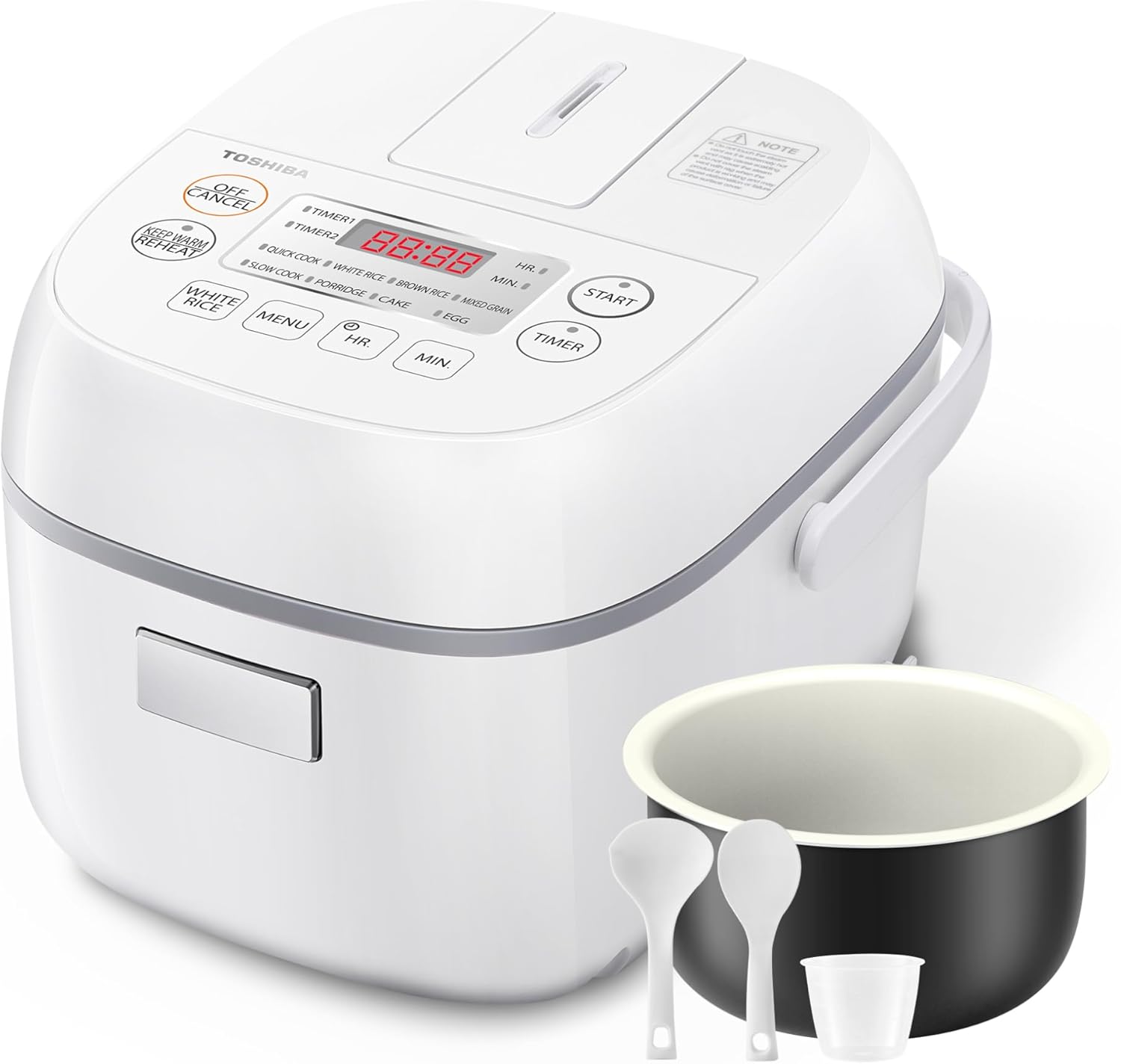
| Included Components | rice ladle, spoon, measuring cup, inner pot |
This Toshiba mini rice cooker is a compact, one-touch appliance that uses 3D fuzzy logic and an intelligent 6-step cooking process to handle white rice, brown rice, mixed grains and several other dishes. You use the simple control panel to pick one of eight programs, set a 24-hour delay timer if you want rice ready later, and rely on the automatic keep-warm to hold servings for hours. Practical touches include a removable nonstick inner pot, detachable steam vent and a detachable power cord for safer storage. The cooker is geared toward small households and can also steam, slow-cook, make porridge or even bake simple cakes, so it is useful beyond basic rice. Important limits are its small 3-cup uncooked capacity, hand-wash care for the inner pot, and the lack of dishwasher-safe components, which adds maintenance time compared with fully dishwasher-safe models. For someone who values predictable results and easy programming in a compact footprint, this delivers consistent cooked rice without a steep learning curve.
Best for: Buyers who want a compact, dependable cooker that makes Japanese-style rice consistently with minimal fiddling and programmable timing for planned meals.
Less Ideal for: Those who need large batch capacity for gatherings or want fully dishwasher-safe components and heavier-duty commercial-style appliances.
- Fuzzy logic 3D cooking adjusts time and temperature for consistent rice texture.
- Eight preprogrammed functions for rice types and other dishes increase versatility.
- 24-hour delay timer and automatic keep-warm add convenience for meal planning.
- Removable steam vent and nonstick inner pot simplify routine cleaning and maintenance.
- Small capacity only suitable for 1–3 people or limited batch cooking.
- Inner pot is not dishwasher-safe, requiring hand washing for regular use.
Verdict: Choose this Toshiba mini cooker if you want a small, risk-averse way to get reliably cooked Japanese-style rice with programmable timing and fuzzy-logic control.
Choosing the Right Mini Rice Cooker for Japanese Rice: Key Factors to Consider
Doneness & Texture Settings
Short-grain Japanese rice requires a specific balance of heat and steam to produce the characteristic sticky, slightly glossy grains. A cooker with dedicated settings for white or short-grain rice or an adjustable steam/duration profile helps you replicate that texture consistently. Without appropriate modes, small batches can cook too quickly or dry out at the edges, producing undercooked centers or hard grains.
Look for units that allow slight program adjustments or that advertise short-grain compatibility. Consistency across cycles matters more than a single good result because rice hydration can vary with each batch and with different rice ages.
Steam Venting and Moisture Retention
How a mini cooker vents steam and traps moisture affects stickiness and surface sheen. A well-designed steam cap or inner-lid keeps condensed water from dripping back unevenly while allowing enough escape to prevent sogginess. Poor venting often leads to a wet top layer or an overly dry seam around the pot edge.
Consider how the lid and vent are constructed and whether parts are easy to remove and clean. Some compact models incorporate a condensation collector or a tight-fitting inner-lid to balance retention and release, which is especially helpful when preparing small volumes of Japanese rice.
Inner-Pot Material and Heat Distribution
The inner pot material determines heat transfer and sticking behavior. Thick, evenly machined pots distribute heat more uniformly across the small cooking surface, reducing hotspots that cause burning or uneven doneness. Nonstick coatings can simplify cleanup but should be durable enough to resist scratching when scooping sticky rice.
Stainless or heavy-aluminum pots offer predictable thermal behavior, while high-quality nonstick interiors reduce the need for vigorous scrubbing. Consider whether the pot is removable and if replacement parts are available for long-term ownership.
Capacity Relative to Household Needs
Mini rice cookers trade capacity for footprint. Choose a size that matches typical portions: too large and your rice may not steam correctly in tiny batches; too small and you will be forced into multiple cycles. Most mini cookers are aimed at one to three servings, so evaluate the included measuring cup guidance and maximum cooked-rice yields.
Also think about storage and counter placement. A compact unit that sits comfortably on a regular shelf or in a small cabinet is preferable for kitchens with limited space, but ensure it still accommodates the inner pot size you need.
Ease of Cleaning and Maintenance
Sticky short-grain rice often clings to surfaces, so user-friendly cleaning matters. Removable inner lids, dishwasher-safe bowls, and simple steam ports reduce maintenance time and the likelihood of trapped starch building up. Small parts that are easy to disassemble and reassemble make routine care less of a hassle.
Check whether seals and gaskets are accessible for cleaning and whether the manufacturer recommends hand washing for key components. Simpler mechanical designs with fewer crevices tend to stay cleaner and last longer under frequent use.
Control Simplicity and Reliability
For everyday use, straightforward controls reduce the chance of mistakes that affect texture. A few clear buttons or a reliable mechanical timer is often better than overly complex menus on a small cooker. Reliability of electronics and the repeatability of settings are critical because tiny variations in time or temperature can change the outcome significantly.
A clear indicator for cooking versus keep-warm states and a predictable timer behavior help you plan meals and avoid repeated re-heating cycles that degrade rice quality.
Preparing Japanese Rice for a Mini Cooker
Rinsing and soaking are key steps before you load rice into a mini cooker. Rinse until the water runs mostly clear to remove excess surface starch, which helps prevent over-clumping. For short-grain Japanese rice, a brief soak—typically 20 to 30 minutes—allows grains to absorb water evenly and shortens the active cooking phase.
Measure water using the cooker's guidance when possible. Mini cookers have smaller pot geometry and their internal markings or manufacturer directions account for that shape. If no markings are available, start with standard short-grain water ratios and adjust slightly after the first batch to dial in texture.
- Rinse until water is nearly clear to remove excess starch
- Soak 20–30 minutes for more even hydration before cooking
- Use the cooker's water lines or adjust ratios after testing one batch
Cleaning Sticky Rice Residue Without Scrubbing
Soak the inner pot with warm water immediately after serving to loosen stuck starch. Letting residue sit will make cleanup harder and can damage nonstick coatings if you scrape aggressively. Many users find a 10–15 minute soak breaks adhesion and allows a soft sponge to finish cleaning easily.
For stubborn spots, a mixture of baking soda and warm water left for a short period can help lift residue without harsh scouring. Always check care instructions for the inner pot material before using abrasive cleaners or tools.
- Soak promptly after use to loosen sticky rice
- Use nonabrasive sponges and mild cleaners
- Avoid metal scrapers on coated pots to prevent damage
Maximizing Flavor in Small Batches
Because mini cookers handle small volumes, slight changes in water or rice amount significantly influence flavor and texture. Consider using a short presoak and then steaming for a few minutes after the cooker signals done to let flavors settle. A short natural release period preserves moisture and yields better mouthfeel.
You can add subtle flavor elements such as a small piece of kombu during soaking for a mild umami boost, but avoid heavy seasonings during cooking which may affect the pot and seals over time.
- Allow a natural rest after cooking for even moisture distribution
- Add gentle flavorings during soak rather than during active cooking
- Test slight water adjustments to tune stickiness to your preference
Space and Storage Tips for Compact Cookers
Choose a mini cooker that fits how and where you will store it. A slim, vertical profile works well for tall cabinet spaces, while low-profile units slide easily into pantry shelves. Consider whether the power cord tucks away and whether the lid locks or is removable for stacking during storage.
If counter space is limited, designate a small stand or pull-out shelf near your prep area so the cooker is easy to access. Regularly inspect seals and inner-pot condition if you store the cooker for weeks at a time, as long-term storage can trap odors or moisture.
- Measure storage space before purchasing to ensure a good fit
- Prefer removable lids or flat tops for easier stacking
- Store with the lid slightly ajar to prevent trapped moisture
How We Chose the Best Mini Rice Cooker for Japanese Rice
We focused on features that materially affect how Japanese short-grain rice turns out in small batches. Primary evaluation criteria included doneness and texture control, the accuracy and flexibility of the cooking cycle for short-grain rice, moisture retention and steaming performance, and the physical size and capacity to suit 1–3 servings. We also assessed ease of cleaning and maintenance since sticky rice and compact pots can make upkeep more involved, and checked durability features such as inner-pot construction and lid seals that influence long-term reliability. We excluded any large or full-size cookers and devices lacking a dedicated short-grain or white-rice mode, because general-purpose multi-cookers often do not replicate the precise steam balance needed for Japanese rice in small quantities. We prioritized units with clear, adjustable settings or proven rice-specific programs, reliable inner-pot materials, and simple, serviceable designs. Safety features, warranty/basic build quality, and straightforward controls were additional tiebreakers when models had similar cooking results.
Our full evaluation process is outlined in our review methodology.
FAQ
Can a mini rice cooker make proper Japanese short-grain rice?
Yes. A mini rice cooker designed for short-grain or white rice can produce the desired sticky texture, provided you follow rinsing and soaking steps and use settings calibrated for small batches. Consistent water ratios and a natural rest after cooking help achieve the ideal outcome.
How much rice does a mini cooker typically make?
Most mini cookers are sized for one to three servings of cooked rice. Exact yields vary by model, but these units are meant for small households or individual portions. Check the cooker's capacity guidance to match your usual meal portions.
Do I need to use the cooker's measuring cup?
Using the included measuring cup and the cooker's water markings helps ensure consistent results because mini pots have different geometry than larger cookers. If no cup is provided, start with standard short-grain ratios and adjust after an initial test batch.
How do I keep the inner lid and steam vent clean?
Remove and rinse the inner lid and any detachable vent components after each use when possible to prevent starch buildup. Wipe seals with a soft cloth and periodically soak removable parts to dissolve residue. Avoid abrasive tools that could damage surfaces.
Will a nonstick inner pot affect rice texture?
A good nonstick inner pot primarily affects cleanup rather than texture, but coatings that change heat transfer slightly can influence browning at the pot bottom. Thicker, evenly heated pots—coated or uncoated—tend to produce more consistent doneness.
Final Verdict
For small-batch Japanese rice, prioritize a mini cooker that offers specific short-grain or white-rice settings, reliable steam management, and an inner pot that heats evenly. Balance capacity against how often you will cook single portions and pick a unit that is easy to disassemble and clean. Small tradeoffs exist between compact footprint and precise control, so opt for the features that matter most to your routine—consistent texture and simple maintenance are the most important for satisfying results.