
Note: This article contains affiliate links. If you click on these links and make a purchase, we may earn a small commission at no extra cost to you. This helps support our research and content. Read our full affiliate disclosure here.
Picking the right mixer makes a big difference in how reliably and quickly you can handle baking, dough, and everyday prep tasks. The right machine reduces mixing time, produces consistent results from batters to bread dough, and stands up to regular kitchen use. This guide shortlists the top mixers for typical home kitchens and explains the practical tradeoffs between motor strength, bowl size, and attachments. Below are our top picks, followed by clear buying factors and answers to common user questions to help you choose the best mixer for your routine.
Top Picks at a Glance
| Best Overall The best all-around choice for most situations | Cuisinart Stand Mixer SM-50BC |  |
| Best Quality Built to a higher standard if you want something more solid | Breville Handy Mix Scraper BHM800 |  |
| Best Value The sweet spot between price and what you get | Kitchen in the box 3.2QT Stand Mixer | 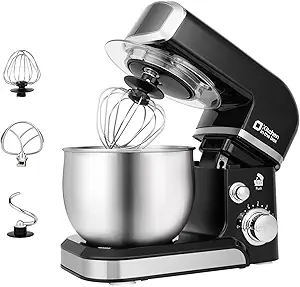 |
| Best Budget The cheapest option that still gets the job done reliably | OVENTE Hand Mixer HM151 |  |
| Top Rated A top-rated pick with lots of positive feedback | KitchenAid Classic Series K45SS |  |
| Most Popular A crowd favorite that many people choose with confidence | KitchenAid Artisan 5-Qt Mixer |  |
| Best Seller A high-volume bestseller chosen again and again | Hamilton Beach 6-Speed Hand Mixer |  |
Cuisinart Stand Mixer SM-50BC
| Capacity | 5.5 quarts |
|---|---|
| Wattage | 500 watts |
| Number of Speeds | 12 |
| Controls Type | Knob |
| Container Material | Stainless Steel |
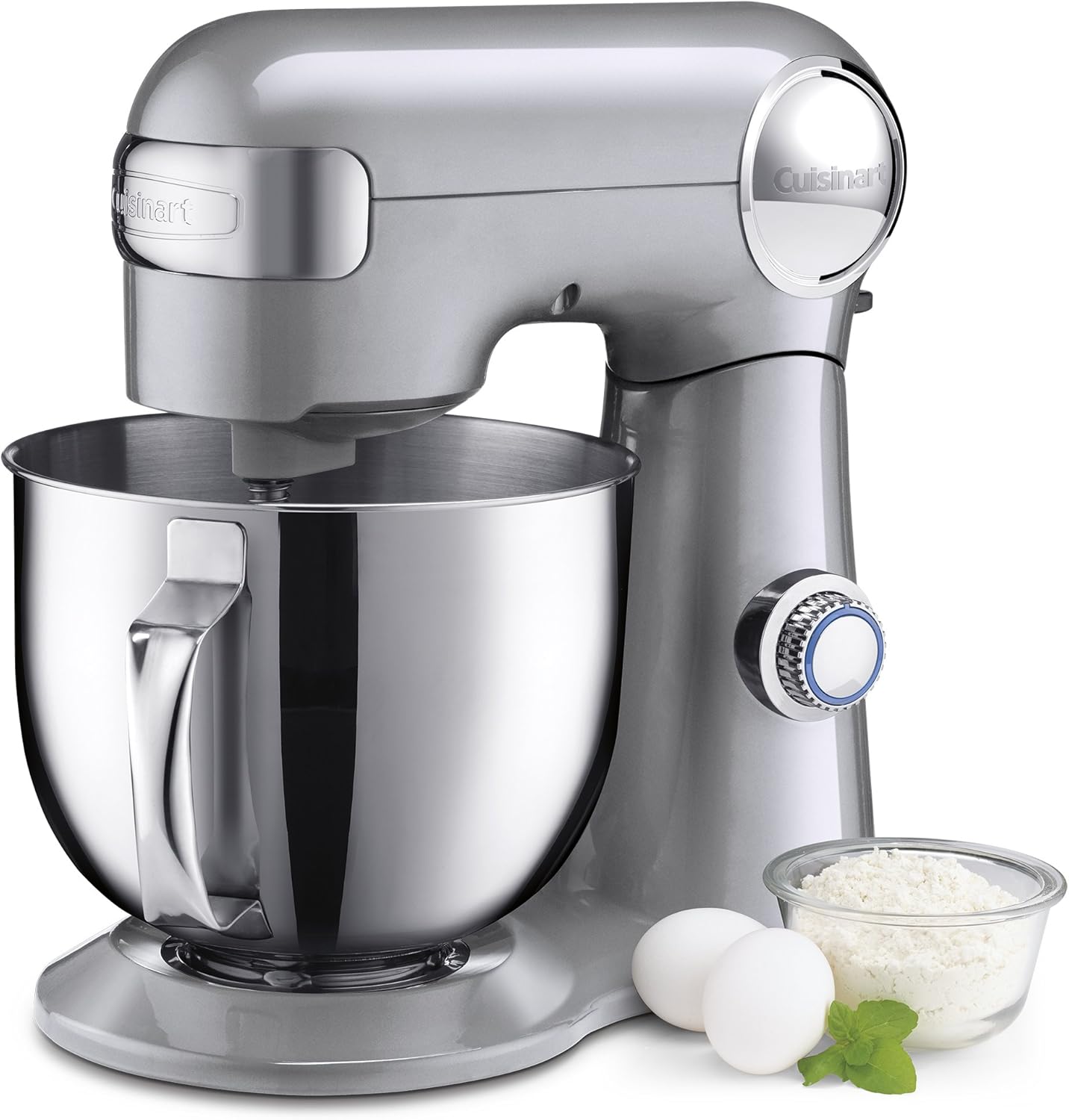
The Cuisinart SM-50BC is a midsize, metal-bodied stand mixer aimed at everyday home bakers and cooks. It uses a 500-watt motor and 12 speed settings to handle tasks from whipping egg whites to kneading dough, and the tilt-back head makes accessing the included 5.5-quart stainless steel bowl straightforward. The kit ships with a chef's whisk, flat paddle, dough hook and a splash guard with pour spout, and the bowl and accessories are dishwasher-safe for easy cleanup. Its die-cast metal construction feels solid on the counter and the control knob gives fine speed control for delicate batters and heavier mixes. The mixer also accepts a range of optional attachments for pasta, grinding, and frozen desserts if you want to expand capabilities later. Expect a reliable all-purpose machine for cookies, cakes, breads, and small-batch pasta, though heavier commercial workloads will push the motor and users looking for extra-large capacity should consider larger models.
Best for: Home cooks who want a dependable, well-built all-purpose stand mixer that handles everyday baking and small-batch specialty tasks without fuss.
Less Ideal for: Commercial bakers or users who need very large batch capacity or the highest-powered motors for continuous heavy-duty mixing.
- Solid die-cast metal construction provides durability and stable operation
- 500-watt motor with 12 speeds covers delicate whipping to dough kneading
- 5.5-quart stainless steel bowl fits most home baking batches
- Includes whisk, paddle, dough hook, and splash guard for common tasks
- Bowl and accessories are dishwasher-safe for easy cleanup
- Not intended for heavy commercial use or very large batch mixing
- Some competitors offer higher wattage or larger capacities at similar prices
Verdict: A sturdy, midsize stand mixer that delivers reliable performance for home bakers who want a durable, versatile machine for everyday use.
Breville Handy Mix Scraper BHM800
| Wattage | 240 watts |
|---|---|
| Voltage | 120 volts |
| Number of Speeds | 9 |
| Noise Level | 50 db |
| Included Components | 2 Scraper Beaters, 2 Dough Hooks, 2 Balloon Whisks |
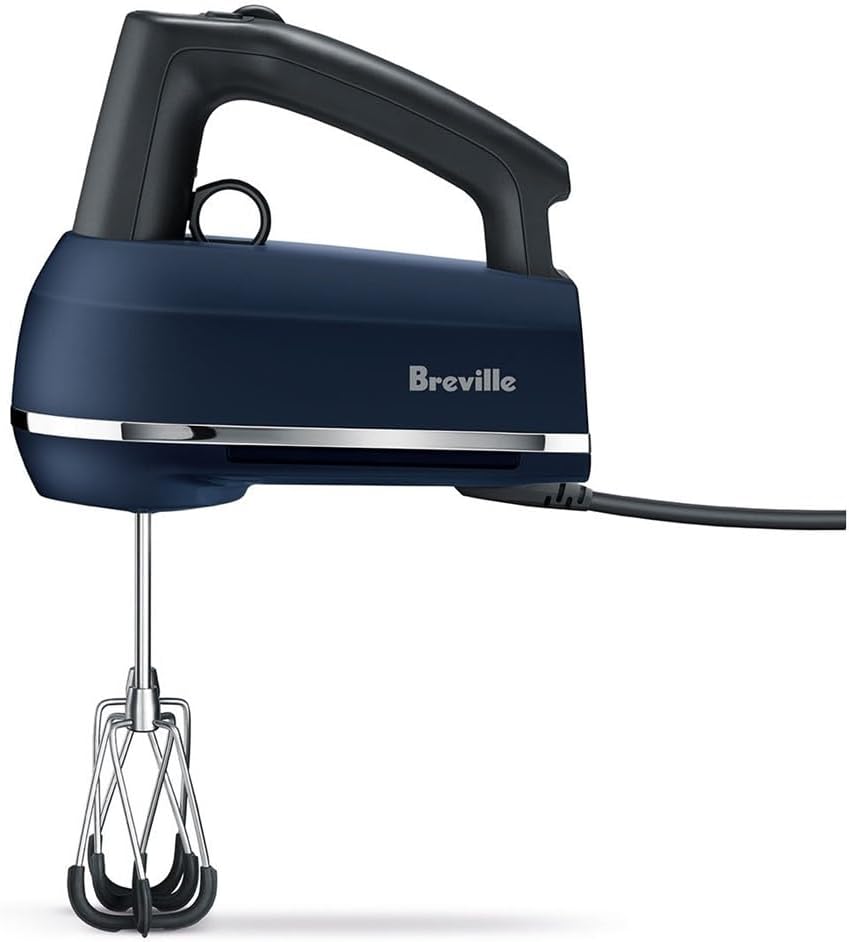
The Breville Handy Mix Scraper is a performance-minded hand mixer built for regular bakers who want control without a bulky stand mixer. It detects which attachment is fitted and automatically adjusts motor response so beats and whisks run at the right cadence, while the nine speeds plus a boost setting cover everything from gentle folding to fast whipping. The rubber scraper beaters keep ingredients moving off the bowl sides for more even mixing and reduce the typical clanging noise of metal beaters. An ergonomic handle and a detachable storage compartment for the two scraper beaters, two dough hooks, and two balloon whisks make it comfortable to use and easy to stow. At 240 watts it has enough muscle for most batters and smaller doughs, but very heavy or high-volume bread dough will still benefit from a stand mixer. The quiet operation and thoughtful controls make it a strong choice for home bakers who prioritize consistent results and usable power in a handheld package.
Best for: Bakers who want precise speed control and quieter, more complete mixing from a handheld tool and who bake frequently enough to value performance over minimalism.
Less Ideal for: People who regularly mix large batches of heavy bread dough or need professional-level power and capacity should consider a full-size stand mixer instead.
- Attachment-sensing motor that auto-recalibrates for correct speed
- Rubber scraper beaters mix more thoroughly and reduce noise
- Nine speeds plus boost provide a wide control range for different tasks
- Includes multiple attachments: scraper beaters, dough hooks, and balloon whisks
- Ergonomic handle and compact storage compartment for tidy storage
- 240-watt motor can struggle with very heavy or large-volume doughs
- Plastic external housing is less robust than full metal-bodied mixers
Verdict: Choose this hand mixer for quiet, consistent performance and intelligent speed control that handles most home baking tasks confidently.
Kitchen in the box 3.2QT Stand Mixer

| Capacity | 3.2 QT |
|---|---|
| Power | 300 watts |
| Number of Speeds | 6 |
| Included Components | Whisk, Beater, Dough Hook |
This Kitchen in the box stand mixer is a lightweight, space-saving mixer aimed at simple home baking tasks. It uses a 3.2 quart stainless steel bowl and a tilt-head design to make attaching the included aluminium dough hook, flat beater, and stainless steel whisk straightforward. The mixer offers six speeds controlled by a knob, which covers everything from slow stirring to whipping meringues, and four suction feet help keep the unit steady during operation. The transparent splash guard reduces mess when working with wetter batters and the removable accessories are dishwasher safe for easier cleanup. Key limitations are the small bowl and 300 watt motor, so it is best for small batches, everyday cookies, cakes, and light dough rather than high-volume or professional baking. Build materials are mostly ABS plastic with metal accessories, so it balances affordability with durability but will not replace a heavy-duty commercial mixer. For buyers who need a compact, easy-to-store mixer for regular household use, it performs well; those who bake large batches frequently should choose a larger capacity, higher-power model instead.
Best for: Buyers who want a practical, space-saving mixer for everyday home baking and small-batch recipes and value easy storage and simple operation.
Less Ideal for: Frequent bakers who make large batches, commercial users, or anyone needing a high-power mixer for dense kneading should consider larger, more powerful models.
- Compact, lightweight design that saves counter and storage space
- 3.2 QT stainless steel bowl with tilt-head access for easy attachment changes
- Three included metal attachments (dough hook, flat beater, whisk) for common mixing tasks
- Six speed settings via knob give usable control from stirring to whipping
- Dishwasher-safe accessories and a splash guard simplify cleanup
- Small 3.2 QT capacity limits batch size and is not suited for large or commercial baking
- 300W motor may struggle with very heavy doughs or prolonged heavy mixing
Verdict: A compact, no-frills stand mixer that delivers convenient, reliable performance for small-batch home baking.
OVENTE Hand Mixer HM151

| Wattage | 150 watts |
|---|---|
| Number of Speeds | 5 |
| Controls Type | Push Button |
| Included Components | 2 Whisk Beater, Snap-On Case |
The OVENTE HM151 is a straightforward, budget-friendly hand mixer for everyday baking tasks. Its 150-watt motor and five speed settings let you whip cream, beat egg whites, and mix batters with reasonable control, while the two stainless steel whisk attachments handle most home recipes. The mixer is lightweight and ergonomically shaped, making short mixing jobs comfortable, and the beater-eject button simplifies swapping or cleaning attachments. A handy snap-on storage case keeps the beaters and cord together for neat countertop or drawer storage. Expect it to perform well for cookies, pancakes, mashed potatoes, and light meringues, but heavy doughs or very dense batters will push the motor toward its limits. The build is mainly plastic, so it feels less premium than higher-end models, but that also helps keep the price low and the unit easy to store and handle.
Best for: Buyers looking for an affordable, no-frills mixer for routine baking and light to medium mixing tasks who value compact storage and ease of use.
Less Ideal for: People who frequently mix heavy doughs, large batches, or need prolonged high-power performance should choose a more powerful stand or high-watt hand mixer instead.
- Five adjustable speeds give good control for a variety of mixing tasks
- Includes two stainless steel whisk beaters that are dishwasher safe
- Lightweight ergonomic design reduces hand fatigue during short jobs
- Snap-on storage case keeps beaters and cord organized
- 150W motor can struggle with heavy doughs or very dense mixtures
Verdict: A compact, low-cost hand mixer that delivers reliable performance for everyday whipping, beating, and light mixing tasks.
KitchenAid Classic Series K45SS
| Capacity | 4.5 quarts |
|---|---|
| Wattage | 275 watts |
| Number of Speeds | 10 |
| Included Components | Flat beater, Dough hook, 6-wire whip |
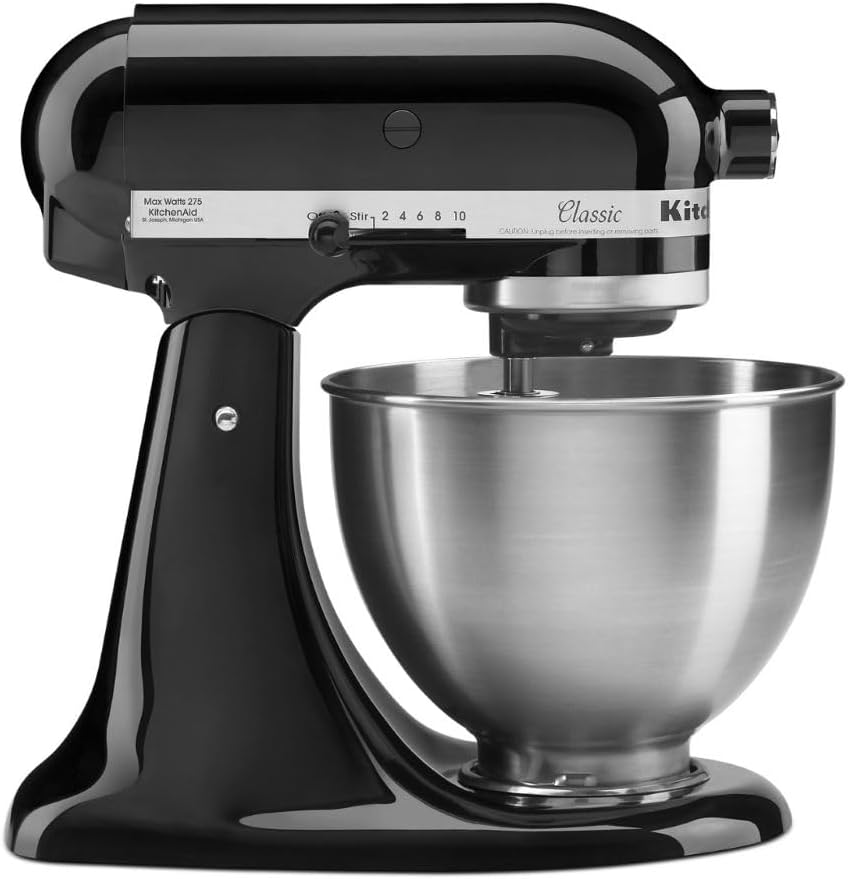
The KitchenAid Classic Series K45SS is a straightforward tilt-head stand mixer built for everyday baking and mixing. It pairs a 4.5-quart stainless steel bowl with a metal housing and a 275-watt motor to handle mixing, whipping, and light dough kneading across 10 speeds. The package includes a coated flat beater, dough hook, and 6-wire whip so you can make batters, whipped cream, and small batches of bread or cookie dough without buying extras. The tilt-head design makes adding ingredients and switching attachments easy, and the mixer's power hub accepts optional KitchenAid attachments for tasks like pasta making or grinding. Because of its simple controls and robust construction, it performs reliably for regular home use, though it is not designed for very heavy commercial workloads or very large batches beyond its 4.5-quart capacity. Noise is typical for its class and the mixer is heavier than compact models, which helps stability during mixing but makes it less portable.
Best for: Home bakers who prioritize a reliable, well-built mixer that can handle everyday recipes and occasional attachment use and who want a product that lasts rather than the lowest-cost option.
Less Ideal for: People who need a lightweight, highly portable mixer or who frequently prepare very large commercial batches should consider a heavier-duty or larger-capacity machine.
- Durable metal construction for long-term, stable use.
- 4.5-quart stainless steel bowl suitable for small to medium batches.
- Includes flat beater, coated dough hook, and 6-wire whip for common baking tasks.
- 10 speeds provide fine control from stirring to whipping.
- Power hub lets you add optional attachments for expanded functionality.
- Not intended for commercial or very large-batch mixing due to motor size and capacity.
- Relatively heavy, making it less convenient to move or store frequently.
Verdict: Choose this KitchenAid Classic if you want a durable, reliable home stand mixer that handles everyday baking tasks and accepts optional attachments for extra versatility.
KitchenAid Artisan 5-Qt Mixer

| Capacity | 5 quarts |
|---|---|
| Wattage | 325 watts |
| Number of Speeds | 10 |
| Voltage | 120 volts |
The KitchenAid Artisan 5-Quart Tilt-Head Stand Mixer is a robust, general-purpose mixer built for home bakers who make everything from cookie dough to whipped cream. Its metal construction and 325-watt motor deliver steady power across 10 speeds, and the tilt-head design makes it easy to add ingredients and swap the included coated flat beater, dough hook, and 6-wire whip. The 5-quart stainless steel bowl handles large batches—KitchenAid cites up to nine dozen cookies using the flat beater—and the pouring shield helps keep messes down. Controls are simple: a single knob for speed selection and a firm head lock while mixing. The mixer also accepts a broad range of optional hub-powered attachments for tasks like pasta or grinding, although those are sold separately. Downsides to consider are its weight and footprint, which make it less portable and require decent counter space, and the higher-end price compared with lightweight hand mixers. For serious home bakers who value durability and a proven platform, this mixer is a practical long-term choice.
Best for: Buyers who prioritize a durable, proven stand mixer with flexible speed control and the ability to scale to larger batches, and who plan to rely on social proof and long-term ownership when choosing appliances.
Less Ideal for: People who need a lightweight, highly portable mixer for occasional use or who have very limited counter or storage space should consider smaller alternatives.
- Durable metal construction built for frequent home use
- Powerful 325-watt motor with 10 speed settings for versatile mixing
- 5-quart stainless steel bowl handles large batches
- Includes flat beater, dough hook, wire whip, and pouring shield for common tasks
- Compatible with many optional hub-powered attachments
- Heavy and relatively large, so it is not easy to move or store
- Attachments and specialty tools are sold separately
Verdict: Choose this KitchenAid Artisan if you want a durable, full-size home mixer with proven performance and broad accessory options.
Hamilton Beach 6-Speed Hand Mixer

| Wattage | 250 watts |
|---|---|
| Number of Speeds | 6 |
| Included Components | Traditional Beaters, Whisk, Snap on Storage Case |
| Voltage | 120 volts |
The Hamilton Beach 6-Speed hand mixer is a straightforward, no-frills tool for mixing, whisking, and light baking tasks. It uses a 250 watt peak-power motor and six speed settings with a QuickBurst button to handle everything from cookie dough additions to whipped cream; two traditional beaters and a whisk are included and dishwasher safe. The built-in bowl rest stabilizes the mixer on the rim while you add ingredients, and the snap-on storage case keeps the beaters and whisk together with the cord for tidy storage. In real-world use it feels lightweight and easy to control for frequent home baking sessions, and the detachable beaters eject with the speed dial for cleaner handling. Limitations are typical for corded hand mixers: it is best for small to medium batches rather than very heavy doughs, and the plastic housing and basic controls keep costs down compared with pro-grade metal models. For everyday cooks who want a reliable, familiar mixer, this model covers the essentials without complexity.
Best for: Buyers who want a dependable, simple hand mixer for routine home baking and prefer familiar features that reduce hassle and storage clutter.
Less Ideal for: People who regularly mix large volumes or need a heavy-duty, pro‑grade mixer for dense doughs should look at stand mixers or higher-power handheld models.
- Six speed settings plus QuickBurst give control for a variety of recipes
- 250W peak motor provides enough power for most home mixing tasks
- Snap-on storage case keeps beaters, whisk, and cord together
- Bowl rest stabilizes the mixer when pausing to add ingredients
- Dishwasher-safe attachments and simple eject make cleanup easier
- Not suited for very heavy kneading or large commercial batches
- Plastic body and basic controls are less durable than professional metal models
Verdict: A reliable, easy-to-use hand mixer that covers everyday baking needs while keeping attachments and cord neatly stored.
Choosing the Right Mixer: Key Factors to Consider
Motor Power and Torque
Motor power and torque determine how well a mixer handles heavy doughs and long mixing cycles. Higher torque keeps the beater moving consistently through thick bread dough and dense batters without bogging down, which reduces mixing time and prevents overheating.
Pay attention to how manufacturers describe continuous torque versus peak wattage. Continuous torque matters more for tasks like kneading, while peak wattage is less informative for sustained performance. A strong motor also gives you more headroom for attachments that add load, such as pasta rollers or meat grinders when those accessories are supported.
Bowl Capacity and Material
Bowl size affects how much you can mix at once and what recipes fit comfortably. A larger bowl lets you scale up for family baking and batch prep, while a smaller bowl is more efficient for small recipes and saves counter space.
Material matters for durability and heat transfer. Stainless steel bowls resist staining and odor retention and are usually dishwasher safe. Glass or ceramic bowls can look nicer but may be heavier and more fragile. Consider shape as well; a wider bowl improves accessibility for spatulas, while deeper bowls reduce splatter during high-speed mixing.
Attachment Versatility
The range of included and optional attachments expands a mixer's usefulness beyond simple mixing. Standard beaters, dough hooks, and whips cover most baking tasks. Additional attachments such as flexible beaters, shredding, or pasta-making tools add value for cooks who want a multi-use appliance.
Check how attachments mount and whether the mixer supports a standardized accessory hub. Easy-to-change attachments save time and reduce frustration during recipe transitions. Also consider whether attachments are dishwasher safe or require hand washing for upkeep.
Ease of Cleaning and Maintenance
Cleaning frequency is high with mixers, so designs that minimize crevices and use dishwasher-safe components save time. Removable bowls, easily detachable beaters, and accessible crevices help prevent buildup of dried batter or oils.
Maintenance also includes motor ventilation cleaning and occasional lubrication for older-style gear-driven units. Units with tool-free access for routine care reduce long-term hassle. Consider how available replacement parts and common service procedures are if you plan to keep the mixer for many years.
Speed Control and Stability
Good speed control gives you the ability to start slow to avoid splatter, accelerate smoothly for emulsions, and sustain a steady low speed for kneading. A variable speed dial with a clear range is preferable to a set of two or three vague speed settings.
Stability during operation prevents the unit from walking across the counter and reduces noise. Heavier bases, non-slip feet, and well-engineered planetary action keep beaters in contact with ingredients and improve mixing efficiency.
Size, Weight, and Countertop Fit
The physical footprint and weight affect where the mixer can live in your kitchen and how easy it is to store or move. Heavier, full-size stand mixers are stable but take permanent countertop space. Lightweight or compact mixers are easier to store but may sacrifice capacity and stability.
Think about how often you will use the mixer and whether it should remain on the counter. If storage is necessary, check whether the mixer disassembles easily and how much space the bowl and attachments require when put away.
Mixer Types and Which Suits Your Kitchen
Stand mixers and hand mixers serve different needs. Stand mixers provide hands-free power and higher capacity, making them ideal for frequent bakers and anyone preparing large batches. Hand mixers are portable, take up less space, and work well for occasional whipping, light batters, and small tasks.
Within stand mixers, gear-driven units are compact and reliable for most home uses, while belt-driven designs often isolate vibration better and can be quieter. Consider where the mixer will be stored and how often you will use it when choosing between these formats.
- Stand mixers: Best for heavy doughs, large batches, and attachment use
- Hand mixers: Best for small tasks, quick whipping, and tight storage
- Drive system: Gear-driven for compactness, belt-driven for smoother noise profile
Attachments That Expand What a Mixer Can Do
Attachments broaden a mixer's capabilities beyond mixing. Basic attachments cover most baking tasks, but optional accessories can turn a mixer into a small food-processing hub. If you plan to make pasta, grind meat, or slice vegetables, check that the mixer supports those attachments reliably.
Also look at how attachments are stored and whether the manufacturer includes a case or tray. Organized storage prevents lost parts and speeds up recipe flow.
- Whisk: For meringues and whipped cream
- Dough hook: For bread and heavy doughs
- Flat beater: For cookie doughs, frostings, and batters
- Optional hubs: Pasta rollers, grinders, and slicers when supported
Practical Tips for Using and Caring for a Mixer
Start mixing on low to incorporate ingredients without splatter, then increase speed as needed. For dough, use pulse or interval mixing to prevent motor overheating on heavy loads. Allow the motor to rest between long, heavy cycles if you are making multiple loaves or large batches.
Clean attachments promptly after use to prevent hardened residue. Wipe the mixer body with a damp cloth and avoid submerging the head. Periodically check for loose fasteners and inspect the power cord for wear.
- Begin at low speed to avoid splatter
- Use dough hooks for kneading instead of beaters
- Let heavy batches rest to avoid motor strain
- Hand wash delicate attachments when necessary
Space-Saving Storage and Countertop Considerations
Measure the available counter and cabinet space before choosing a mixer. Full-size stand mixers can be tall and deep, and the bowl often adds to the stored footprint. If you need to stow the mixer frequently, look for models with a removable head or collapsible attachments that fit compactly.
For small kitchens, consider whether a hand mixer plus a separate mixing bowl could meet your needs while saving space. If keeping a stand mixer on the counter, reserve a stable area with non-slip mats to reduce vibration and movement.
- Measure height with bowl and attachments attached
- Consider non-slip pads to improve stability
- Plan storage for the bowl and all attachments
Common Mistakes to Avoid
A common mistake is choosing the mixer with the highest wattage without confirming torque or continuous load capability. Wattage does not always correlate with how well a mixer handles heavy doughs. Another error is overlooking how easy it is to remove and clean attachments, which can turn frequent use into a chore.
Also avoid underestimating the importance of a secure base. A lightweight mixer can be frustrating if it moves during mixing, so match the machine's weight and base design to the tasks you plan to do most.
- Do not rely on peak wattage alone
- Check ease of disassembly for cleaning
- Ensure the base prevents walking during use
How We Chose the Best Mixer
We focused on attributes that matter most to home cooks and serious bakers. Our selection filtered for durable construction, consistent motor performance under load, and compatibility with common mixing tasks such as whipping, creaming, and kneading. We prioritized models with straightforward controls and accessible maintenance because ease of use affects everyday satisfaction. Attachment versatility and bowl capacity were included to ensure the mixers handle both small-batch and larger recipes. Noise and vibration levels were considered, since a quieter, stable unit is easier to run for longer mixing cycles. Excluded from consideration were specialty appliances that do not primarily function as stand or hand mixers, and any units lacking clear specification for continuous motor torque or that had poor serviceability. The final list balances raw power, practical capacity, cleaning convenience, and long-term reliability to reflect real-world kitchen needs.
Our full evaluation process is outlined in our review methodology.
FAQ
What mixer power do I need for bread dough?
For regular bread dough, look for a mixer rated for continuous torque rather than just high peak wattage. Mid-to-high torque ratings handle kneading better and reduce the risk of the motor stalling. If you bake large or dense loaves often, choose a model specified for heavy-duty or commercial-style kneading cycles.
Can I use a hand mixer instead of a stand mixer?
Yes for small batches and light tasks like whipping cream or mixing pancake batter. However, hand mixers are less suitable for heavy bread dough and long kneading sessions because they typically lack the torque and stability of a stand mixer.
How often should I clean mixer attachments?
Clean attachments after each use to prevent dried batter and buildup. Most common attachments are dishwasher safe, but check the care instructions. Wipe the mixer head and base regularly and inspect vents for accumulated flour or dust.
Are larger bowls always better?
Not always. Larger bowls let you scale recipes but can be inefficient for small batches and take more storage space. Choose a bowl size based on the typical quantity you prepare; some buyers keep both a standard and a smaller bowl when the mixer supports multiple sizes.
Do attachments affect warranty or maintenance?
Using attachments designed for the mixer is usually required to avoid undue wear and to keep warranty coverage intact. Heavy or nonstandard accessories can place extra load on the motor, so follow manufacturer guidance on supported attachments and maintenance schedules.
Final Verdict
Prioritize the attributes that match how you cook. If you frequently bake bread or large batches, emphasize motor torque, durable construction, and a spacious bowl. For occasional bakers or limited kitchens, prioritize compact size, easy storage, and simple cleaning. Balance attachment versatility against everyday convenience to avoid buying features you will rarely use. With those tradeoffs in mind, choose a mixer that fits your most common tasks and offers the serviceability and controls that make daily use effortless.