
Note: This article contains affiliate links. If you click on these links and make a purchase, we may earn a small commission at no extra cost to you. This helps support our research and content. Read our full affiliate disclosure here.
A good Non Electric Panini Press turns everyday ingredients into crisp, evenly pressed sandwiches without relying on electricity. Whether you grill outdoors, use a camp stove, or want a compact countertop solution that runs on stovetop heat, the right press affects crust development, filling warmth, and how quickly you can serve multiple sandwiches. This guide shortlists the top options for home use and evaluates each by how well it seals and presses, how it handles heat, and how simple it is to clean and store. Read on for practical buying criteria and actionable advice to match a press to your cooking setup.
Top Picks at a Glance
| Best Overall The best all-around choice for most situations | i-WANO Stovetop Panini Maker |  |
| Best Quality Built to a higher standard if you want something more solid | Lodge Cast Iron Panini Press LPP3 |  |
| Best Value The sweet spot between price and what you get | Norpro Italian Panini Press 963 |  |
| Best Budget The cheapest option that still gets the job done reliably | ZOOFOX Sandwich Maker Pan |  |
| Most Popular A crowd favorite that many people choose with confidence | Yoshikawa Hot Sand Maker SJ1681 |  |
i-WANO Stovetop Panini Maker

| Material Type | Aluminum |
|---|---|
| Coating Description | Non-stick fluororesin coating |
| Compatible Devices | Gas |
| Capacity | 1 kg |
This stovetop panini maker is a compact, manually operated grill made from cast aluminum with a nonstick fluororesin interior and detachable top and bottom pans for direct-flame use on gas. You assemble a sandwich, clamp the two pans together and hold them over a gas flame or camp stove to quickly toast bread and melt fillings; the sealed edges keep messy fillings inside and create a crisp crust. The smooth, pattern-free cooking surfaces make it easy to cook eggs, sausages, or pancakes as well as pressed sandwiches, and the nonstick coating helps release melted cheese and reduces cleanup, though the unit requires hand washing. Its lightweight, portable design and fold-apart pans suit outdoor cooking and small kitchens, while the thick aluminum body promotes even browning. Limitations include reliance on a gas flame—it is not for induction or electric stovetops—and the need to manage heat manually for consistent results, so it is less convenient than electric presses for multitasking cooks.
Best for: Buyers who want a simple, portable way to make crispy, sealed grilled sandwiches and occasional stovetop griddled foods without electricity, and who value straightforward, hands-on cooking for home or outdoor use.
Less Ideal for: People who need a hands-off, timed electric press, those who cook primarily on induction or electric glass-top ranges, or users wanting dishwasher-safe convenience.
- Detachable top and bottom pans for easy flipping and versatile cooking
- Nonstick fluororesin coating eases food release and cleanup
- Cast aluminum body provides even heat distribution and browning
- Lightweight and portable design suited for camping and small kitchens
- Designed for direct gas flame only, not compatible with induction or electric cooktops
- Requires manual heat control and attention for even cooking
Verdict: Choose this panini maker if you want a lightweight, Japanese-made stovetop press that delivers evenly browned, sealed sandwiches for gas and outdoor cooking.
Lodge Cast Iron Panini Press LPP3
| Material | Cast Iron |
|---|---|
| Finish Type | Natural, Oil-Based Seasoning |
| Included Components | Lodge LPP3 8.25 Inch Cast Iron Panini Press |
| Product Care Instructions | Hand Wash Only |
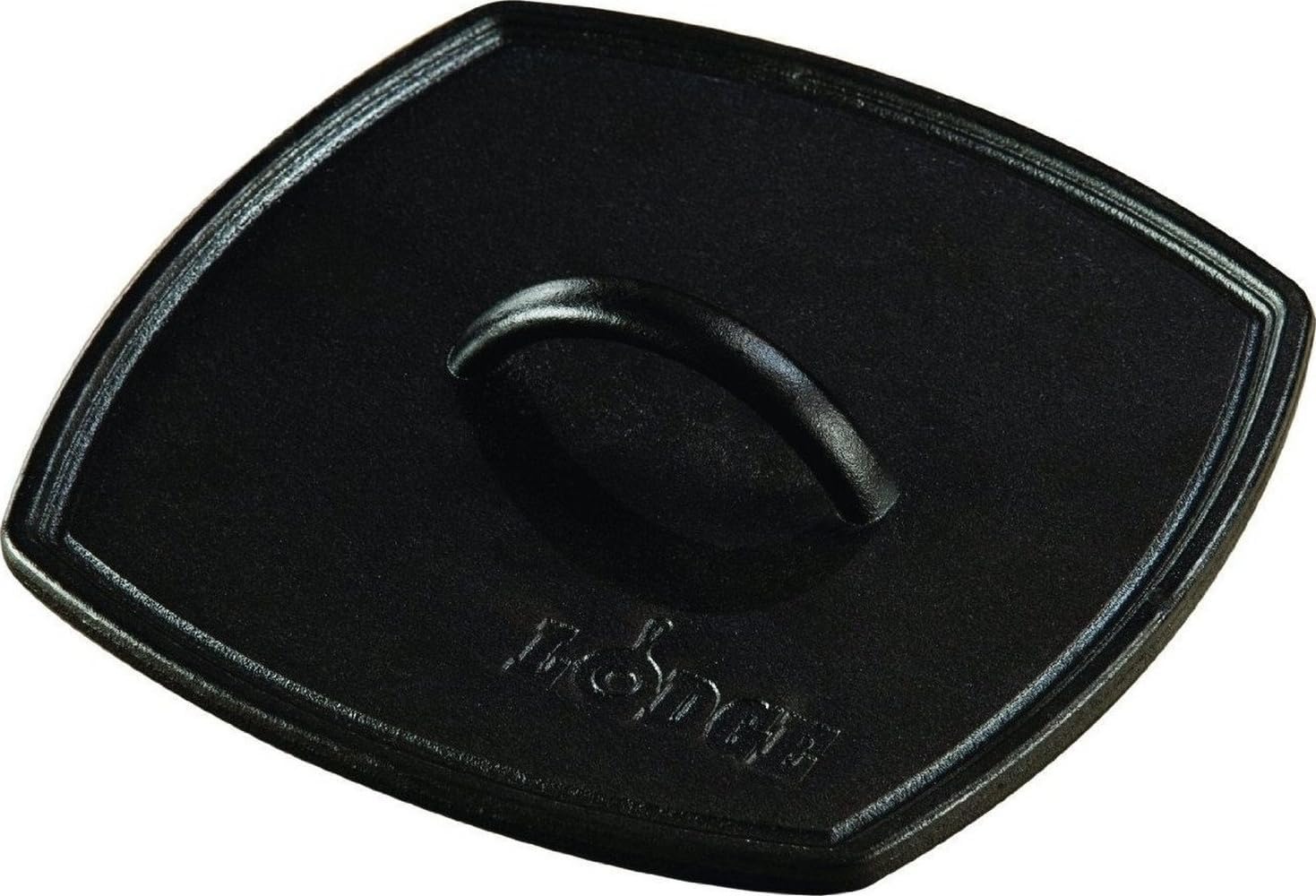
The Lodge Cast Iron Panini Press is a simple, durable cast iron weight you set on top of sandwiches, burgers, or bacon to improve contact with the griddle and speed browning. Because it is made from solid cast iron and pre-seasoned with vegetable oil, it provides steady, even pressure that helps create crisp edges and visible grill marks on sandwiches and other items cooked on a skillet or outdoor griddle. The looped handle makes it easy to lift and reposition while the square shape covers more surface than a round press, so it fits typical panini and sandwich sizes without awkward overhang. It is hand-wash only and quite heavy, which is normal for cast iron but makes it less convenient to store or move frequently. Expect the seasoning to improve with use and to maintain performance by occasionally re-seasoning. This tool is a low-tech, long-lasting way to get consistent pressed results without electricity or complex controls.
Best for: Buyers who prioritize cooking performance and durable, low-tech tools for achieving even browning and pressed sandwiches will appreciate this press.
Less Ideal for: People who want lightweight, dishwasher-safe, or electric sandwich presses with temperature control should consider alternatives.
- Heavyweight cast iron construction provides steady, even pressure for consistent browning
- Pre-seasoned surface is ready to use and becomes more nonstick with continued use
- Square shape covers more area for sandwiches and griddle cooking
- Looped handle offers a secure grip for lifting and repositioning
- Requires hand washing and occasional re-seasoning to maintain its surface
- Heavy weight makes it less convenient to store or move frequently
Verdict: If you want a rugged, performance-focused non-electric press that delivers even contact and durable, improving seasoning, this Lodge cast iron press is the practical choice.
Norpro Italian Panini Press 963

| Material | Cast Iron |
|---|---|
| Other Special Features of the Product | Non Stick Coating |
| Wattage | 1200 watts |
The Norpro Italian Panini Press is a simple enamel-coated cast-iron clamshell that shortens grill time by pressing and cooking both sides simultaneously on a stovetop. You place your sandwich or protein between the two plates and heat the closed press over medium heat; the cast iron holds and distributes heat evenly for good sear marks and consistent cooking. Its enamel coating helps prevent sticking and makes cleanup easier than raw cast iron, though it still requires hand washing and thorough drying to avoid damage. The press is compact and durable, good for small kitchens and occasional use, and the solid weight helps maintain contact for even grilling. Limitations are its manual nature — you control heat and timing without thermostats — and its cooking surface is modest, so it is best for single sandwiches or small cuts rather than large batch work. For buyers who want a reliable, non-electric press that gives restaurant-style grill marks without extra gadgets, this is a practical, low-tech option.
Best for: Buyers who prioritize a straightforward, durable non-electric press to get grilled sandwiches and small proteins with good sear without relying on appliances or complicated controls.
Less Ideal for: People who need to cook multiple sandwiches at once, want temperature control or timed automation, or prefer dishwasher-safe convenience.
- Enamel-coated cast iron provides even heat retention and good searing
- Clamshell design grills both sides at once to cut cooking time
- Durable, simple construction with minimal parts to fail
- Manual stovetop operation requires attention to avoid burning or uneven cooking
- Small cooking surface limits use to one sandwich or small cuts at a time
Verdict: A rugged, no-frills cast-iron press that delivers even, stovetop-grilled sandwiches and small cuts without electricity.
ZOOFOX Sandwich Maker Pan

| Material Type | Aluminum Alloy, Plastic |
|---|---|
| Compatible Devices | Campfire, Electric Coil Stoves, Gas Stoves |
| Additional Features | Non Stick |
| Maximum Temperature | 380 °C |
| Capacity | 5.9 liters |
This ZOOFOX sandwich maker is a simple, non-electric flip pan for making grilled sandwiches, paninis and other quick stovetop snacks. It uses a clamshell design with nonstick coated aluminum alloy plates and a locking handle so you clamp a sandwich and cook it over gas, electric coil or a campfire; the listing notes it will not work on induction cookers. In normal use you place the sandwich inside, lock the handles, cook briefly on one side then flip the pan to brown the other side. The aluminum heats quickly and the nonstick finish helps food release and cleanup, though care is needed because the product is hand-wash only. Practical benefits include portability for camping, low-cost construction, and compatibility with several heat sources; limitations are lack of induction compatibility and the need for cautious cleaning to protect the coating. The unit is compact and best for single sandwiches or small snacks rather than batch cooking larger meals.
Best for: Buyers seeking a low-cost, portable non-electric solution for grilled sandwiches and camping who prioritize simplicity and versatility over high capacity.
Less Ideal for: People who need to cook multiple sandwiches at once, rely on induction cooktops, or want an appliance with dishwasher-safe parts should look elsewhere.
- Lightweight aluminum construction that heats quickly
- Nonstick coating for easier food release and cleaning
- Works on gas, electric coil and campfire for versatile outdoor use
- Locking handles let you clamp and flip for even browning
- Not compatible with induction cookers
- Hand wash only which requires gentle care to preserve the coating
Verdict: A budget-friendly, portable stovetop sandwich pan that delivers quick grilled sandwiches for campers and minimalists.
Yoshikawa Hot Sand Maker SJ1681

| Material | Aluminum |
|---|---|
| Finish Type | Non-Stick (fluorine resin) |
| Product Care Instructions | Hand Wash Only |
| Included Components | User Manual |
The Yoshikawa SJ1681 is a handheld, non-electric hot sand maker intended for making toasted sandwiches and folded waffles over a gas flame or camp stove. Its aluminum alloy body with a fluorine resin nonstick finish keeps bread from sticking and makes flipping and release easier, while the phenolic resin handle stays cooler to the touch. It bakes a single sandwich-sized cavity and is sized for compact portable use, so it is handy for camping, picnics, or small kitchens where you want a simple stovetop press without electricity. Care is manual since the unit is hand-wash only, and direct-flame use means you need to watch heat closely to avoid scorching thin fillings. The unit is light and easy to store but lacks temperature control or multiple plate options found on larger presses, so results depend on stove heat and technique. For buyers who value a straightforward, low-tech sandwich press for outdoor or gas-stove use, this is a practical, easy-to-operate choice.
Best for: Buyers who want a simple, portable, non-electric sandwich press for gas stoves or outdoor cooking and who prefer a proven, low-tech design backed by user feedback.
Less Ideal for: People who need high-volume cooking, precise temperature control, or dishwasher-safe convenience should consider other appliance-style presses.
- Aluminum alloy body with fluorine resin nonstick finish for easier release and cleaning
- Designed for direct flame use, suitable for camping and gas stovetops
- Lightweight, compact form factor that is easy to store and transport
- Phenolic resin handle provides heat resistance for safer handling
- Hand-wash only and no temperature control means more active monitoring and care
- Single cavity limits output to one sandwich at a time
Verdict: A lightweight, reliable stovetop sandwich press that delivers nonstick convenience for camping and gas-stove cooking without electricity.
Choosing the Right Non Electric Panini Press: Key Factors to Consider
Construction Material
The material determines how the press heats and how long it lasts. Cast iron holds heat very well and produces strong browning, but it is heavier and requires seasoning or careful drying to prevent rust.
Aluminum variants heat more quickly and weigh less, which helps with handling, but thin aluminum can develop hot spots. Look for thicker-gauge bases and corrosion-resistant finishes to balance quick heating with even surface contact.
Heat Retention And Distribution
A press that retains heat spreads temperature across the bread and filling so both sides brown uniformly without repeated reheating. Poor heat distribution forces you to rotate the press or flip sandwiches multiple times, which can compress fillings unevenly.
Consider how you will heat the press. If you plan to use a camp stove or open flame, robust materials that absorb and hold heat are preferable. For quick stovetop work, a design that reaches target temperature fast while still maintaining a steady surface temperature is more practical.
Clamping Mechanism And Thickness Capacity
A reliable clamp or locking hinge creates the characteristic pressed profile and ensures fillings cook evenly under pressure. Fixed, nonadjustable clamps are simple but may not suit thicker sandwiches or layered ingredients.
Adjustable hinges or removable spacer options let you tailor the compression level so croissants, ciabatta, or panini with generous fillings all get pressed without squashing delicate components.
Surface Finish And Cleanability
The surface finish affects both food release and cleaning. Smooth, well-seasoned cast iron or high-quality nonstick coatings reduce sticking and make wiping away crumbs easier.
Designs with minimal seams and flush edges are easier to clean because food does not get trapped. Consider whether the press tolerates hand washing or needs careful maintenance; some finishes benefit from seasoning rather than abrasive scrubbing.
Weight, Balance, And Handle Safety
Weight helps with pressing, but excessive heft can make the tool unwieldy for routine use. Balanced weight allows you to flip the press on a stove safely and apply even pressure without arm strain.
Heat-resistant handles and a secure grip are important for safety, particularly if you will use the press over high heat or an open flame. Removable or cool-touch handles simplify handling and storage.
Size And Storage Considerations
Size dictates how many sandwiches you can press at once and whether the press fits your stovetop or storage space. Larger plates handle family-sized meals but require more storage room and can be heavier to maneuver.
If you have limited cabinet space or cook for one or two people, a compact press with a smaller footprint may be a better everyday choice. Also think about stacking and whether the press disassembles to save space.
Stovetop Use And Heat Sources
Non electric panini presses are versatile when it comes to heat sources, but each source has tradeoffs. A gas stovetop provides quick, adjustable heat and works well for thick presses, while an induction cooktop requires a press with a ferrous base. Open-flame grilling or camp stoves are great for outdoor use but demand robust materials that tolerate direct flame.
Match the press material and base thickness to your primary heat source. Thicker bases perform better over uneven heat, while thinner designs heat faster but may need more attentive handling.
- Gas stove: fast heat changes, good for heavy presses
- Electric coil: steady heat, may require preheating
- Induction: requires magnetic base
- Open flame: needs durable, flame-resistant construction
Seasoning And Maintenance Tips
Cast iron presses benefit from regular seasoning to maintain a naturally nonstick surface and prevent rust. After cleaning, dry the press thoroughly and apply a thin layer of oil before storing. Avoid soaking or dishwasher use for uncoated cast iron.
For coated or aluminum presses, use nonabrasive cleaners and avoid metal utensils that can scratch the finish. Periodic inspection of hinges and fasteners helps catch wear before it affects safety or performance.
- Dry completely after washing to prevent rust
- Use vegetable oil for seasoning cast iron
- Avoid metal scrapers on coated surfaces
- Check hinge screws regularly and tighten if needed
Maximizing Crispness Without Overcompressing
Achieving a crisp exterior while preserving filling texture is a balance of heat, pressure, and timing. Preheat the press until it is evenly hot, but avoid excessive force that squeezes out moisture and flattens delicate fillings.
Use moderate pressure for the first minute or two, then increase slightly to finish browning. For very thick or layered sandwiches, consider a brief pre-toast step on the bread to set the crust before pressing.
- Preheat fully for uniform browning
- Start with light pressure, then firm up
- Pre-toast bread for high-moisture fillings
- Use parchment for messy fillings to limit cleanup
Transporting And Outdoor Use
If you plan to use your press for camping or picnics, prioritize durability, low maintenance, and manageable weight. A press that nests with other cookware or has a removable handle makes packing simpler. Consider how you will clean it at the campsite and favor finishes that tolerate quick wipes.
Also think about safety when handling hot metal outdoors. Long handles or protective gloves help when removing a hot press from coals or a grill.
- Look for compact designs for travel
- Removable handles reduce packed volume
- Choose corrosion-resistant finishes for outdoor conditions
- Bring a small brush and oil for on-site maintenance
Common Mistakes To Avoid
A frequent mistake is using too much pressure too early, which forces out cheese and juices and creates a soggy interior. Another error is overheating a thin press, leading to burned exteriors before fillings warm through.
Avoid leaving food on the press to cool, which can make cleaning harder and encourage sticking. Finally, do not neglect regular maintenance such as drying and light oiling for cast iron units.
- Do not over-compress sandwiches at the start
- Avoid overheating thin materials
- Clean soon after use to prevent buildup
- Maintain seasoning on cast iron models
How We Chose the Best Non Electric Panini Press
We focused on attributes that matter for successful stovetop and open-flame panini pressing. First, we prioritized construction and materials that affect durability and heat transfer, including heavy-gauge cast iron, aluminum with even base thickness, and corrosion-resistant coatings. Second, we evaluated heat retention and distribution properties so the press delivers consistent browning without constant repositioning. Third, we considered the locking and hinge mechanisms because a secure, adjustable clamp ensures even compression and accommodates varied sandwich thicknesses. Fourth, ease of cleaning and maintenance was essential, covering surface coatings, seam accessibility, and whether parts tolerate hand washing without trapping food. Finally, we looked at storage footprint and handling features such as cool-touch handles and balanced weight for safe flipping. We excluded electric or plug-in devices and any complex, multi-function appliances that do not operate purely from stovetop or open-flame heat. The final list reflects items that score well across these concrete, measurable dimensions and are practical for regular home use.
Our full evaluation process is outlined in our review methodology.
FAQ
Can I use a non electric panini press on an induction cooktop?
You can if the press has a magnetic base such as cast iron or a magnetic stainless steel layer. Lightweight aluminum without a ferrous layer will not work with induction.
How do I prevent bread from sticking to the press?
Preheat the press fully and apply a light layer of oil or butter to the bread rather than the press surface. For seasoned cast iron, maintain the seasoning and avoid abrasive scrubbing.
Is a heavier press always better for compression?
Not always. Heavier presses provide natural weight for pressing, but excessively heavy tools can be hard to handle and increase the risk of overcompressing soft fillings. Balance weight with grip and control.
What's the best way to clean a cast iron non electric press?
Wipe out food residue with a brush or scraper while warm, rinse if needed, dry immediately, and apply a thin coat of oil to protect the surface. Avoid soaking or using the dishwasher.
Can I press sandwiches with very wet fillings like tomatoes?
You can, but slice and pat fillings dry to reduce excess moisture. Consider pre-toasting the bread to create a barrier and use moderate pressure to avoid sogginess.
Final Verdict
When choosing a Non Electric Panini Press, prioritize the combination of material and heat-handling that suits your usual cooking setup. If you use open flame or camp stoves frequently, favor robust, heat-retaining construction. For fast stovetop work, a lighter press with good base thickness and an even surface can be more convenient. Balance clamping adjustability with manageable weight and easy cleaning. Focus on the features most relevant to how and where you will cook, and you will end up with a press that delivers consistent, crisp sandwiches without unnecessary maintenance overhead.