
Note: This article contains affiliate links. If you click on these links and make a purchase, we may earn a small commission at no extra cost to you. This helps support our research and content. Read our full affiliate disclosure here.
If you want grilled sandwiches without worrying about hazardous coatings or off-gassing, choosing a non-toxic panini press matters. A safe surface and stable temperature control affect both the flavor and the long-term healthfulness of what you cook. This guide shortlists seven top non-toxic panini presses chosen for their cooking performance, surface materials, and user-focused features. Below you will find picks that prioritize durable, chemical-conscious surfaces, reliable heat distribution, and easy maintenance. We also outline the key criteria used to evaluate these presses to help you match a model to your cooking habits.
Top Picks at a Glance
| Best Overall The best all-around choice for most situations | GreenPan 6-in-1 Grill & Griddle |  |
| Best Quality Built to a higher standard if you want something more solid | Breville Sear and Press Grill BGR700BSS |  |
| Best Value The sweet spot between price and what you get | George Foreman Family Grill & Panini |  |
| Best Budget The cheapest option that still gets the job done reliably | Lodge Cast Iron Panini Press LPP3 |  |
| Top Rated A top-rated pick with lots of positive feedback | Cuisinart Griddler FIVE |  |
| Most Popular A crowd favorite that many people choose with confidence | OVENTE Electric Sandwich Maker GPS401B |  |
| Best Seller A high-volume bestseller chosen again and again | Chefman Panini Press Grill |  |
GreenPan 6-in-1 Grill & Griddle

| Wattage | 1600 watts |
|---|---|
| Voltage | 120 volts |
| Number of settings | 3 |
| Material | Healthy Ceramic Nonstick, PFAS-Free, Stainless Steel |
The GreenPan 6-in-1 Grill & Griddle is a flexible countertop appliance that serves as a contact grill, griddle, panini press, and can open flat to act as two cooking surfaces at once. It uses diamond-infused Thermolon Volt ceramic nonstick plates that are PFAS- and PFOA-free, which makes cleanup easy and reduces the need for added fats when cooking sandwiches, burgers, vegetables, and more. The plates are reversible and removable, so you can switch between ridged grill marks and a flat griddle surface and pop them in the dishwasher for tougher messes. Adjustable top and bottom heat with an LED temperature display and three heat settings let you sear or gently warm foods, and the automatic cover-height adjustment ensures even contact for different sandwich thicknesses. At 1600 watts it heats quickly, but the unit is a bit bulky for small kitchens and the three-setting control is simpler than precise digital thermostats. For buyers seeking a toxin-free, easy-to-clean panini press that also doubles as a griddle, this is a practical, versatile choice.
Best for: Buyers who want a single, toxin-free appliance that handles paninis, burgers, and griddle cooking with easy cleanup and flexible plate options for everyday countertop use.
Less Ideal for: Those who need a very compact, lightweight press for small kitchens or who require precise, variable-temperature controls for delicate cooking.
- Thermolon diamond-infused ceramic nonstick coating made without PFAS or PFOA
- Reversible, removable plates for grill or griddle use and dishwasher-safe cleaning
- Lay-flat design doubles cooking area to use grill and griddle at the same time
- Adjustable top and bottom temperature control with LED display for searing or warming
- Three basic heat settings limit fine temperature control compared with precise digital models
- Relatively heavy and takes counter space when stored
Verdict: Choose this grill if you want a versatile, PFAS-free panini press that doubles as a reversible grill and griddle with easy-to-clean removable plates.
Breville Sear and Press Grill BGR700BSS

| Wattage | 1800 watts |
|---|---|
| Voltage | 120 |
| Number of settings | 3 |
| Material | Stainless Steel Ceramic non-stick plates |
The Breville Sear and Press Grill is built for performance cooking at home, offering three one-touch presets for Panini, Burger and Sear plus an open flat BBQ mode that delivers a 240 sq in grilling surface. It uses independent electronic temperature control for each plate so you can sear at high heat or run different temperatures on top and bottom for mixed cooks. The reversible ceramic plates have a factory-quality nonstick ceramic coating that is PFOA and PTFE free and they are quick-release and dishwasher safe for easier cleanup. Practical touches include a removable drip tray for fat capture, plate tilt for drainage and compatibility with optional waffle plates to expand use. Trade-offs are its 1800-watt power draw and substantial footprint compared with compact presses, and some users may prefer cast-iron-style plates for long-term searing character, but the Breville delivers consistent, high-heat marks and precise control for performance-focused cooks.
Best for: Buyers who prioritize high-heat searing, precise temperature control, and a versatile appliance that can press sandwiches, grill steaks, and convert to a flat griddle.
Less Ideal for: Anyone needing an ultra-compact or low-power device for small kitchens or those who prefer the flavor and seasoning qualities of cast-iron griddles.
- Independent electronic temperature control for each plate enables precise searing and multi-temperature cooks
- Reversible ceramic grill and griddle plates with PFOA- and PTFE-free coating for nonstick performance without those chemicals
- Open flat BBQ mode offers a large 240 sq in surface for grilling and griddling
- Quick-release dishwasher-safe plates and removable drip tray simplify cleanup
- Higher power draw and larger countertop footprint than compact presses
- Ceramic plates deliver a different sear character than seasoned cast-iron for users seeking a charred crust
Verdict: A high-performance, non-toxic ceramic-coated grill that gives precise temperature control and serious searing power for cooks who want steakhouse-style results at home.
George Foreman Family Grill & Panini

| Material | Ceramic, Plastic |
|---|---|
| Material Type Free | PFAS Free |
| Wattage | 1500 watts |
| Voltage | 120 volts |
This George Foreman Family Grill & Panini is a roomy electric press designed for everyday household use and feeding several people at once. It uses an Advanced George Tough ceramic nonstick coating that is PFAS-free and advertised as more durable than the brand's standard finish, which makes cooking with little or no added oil straightforward and cleanup easier. The hinge adjusts up to 1 inch so you can press sandwiches flat or accommodate thicker cuts of meat, and the sloped plate helps direct grease into a removable drip tray for healthier results. The 1500-watt cooking element brings plates up to grilling temperature quickly for searing and toasting, and the low-profile design supports vertical storage to save counter or cabinet space. Expect simple controls and straightforward use rather than precision temperature settings, and while plates are scratch resistant they are ceramic-coated so metal tools and abrasive cleaners should be avoided to preserve the finish.
Best for: Buyers who want a practical, family-capacity indoor grill that reduces exposure to PFAS and makes cleanup simple while fitting into limited kitchen storage.
Less Ideal for: People seeking a professional-grade press with digital temperature control or heavy-duty metal grill plates should look elsewhere.
- PFAS-free ceramic nonstick coating for lower-chemical concern cooking
- Adjustable hinge and 1" clearance lets you press paninis or thicker cuts
- Removable drip tray and sloped plates channel grease for easier cleanup
- 1500-watt element heats quickly for effective searing and toasting
- No precise temperature controls for recipes that need exact heat settings
- Ceramic coating still requires gentle care to avoid scratches over time
Verdict: Choose this grill if you want a family-size, PFAS-free ceramic panini press that heats fast and keeps cleanup simple.
Lodge Cast Iron Panini Press LPP3
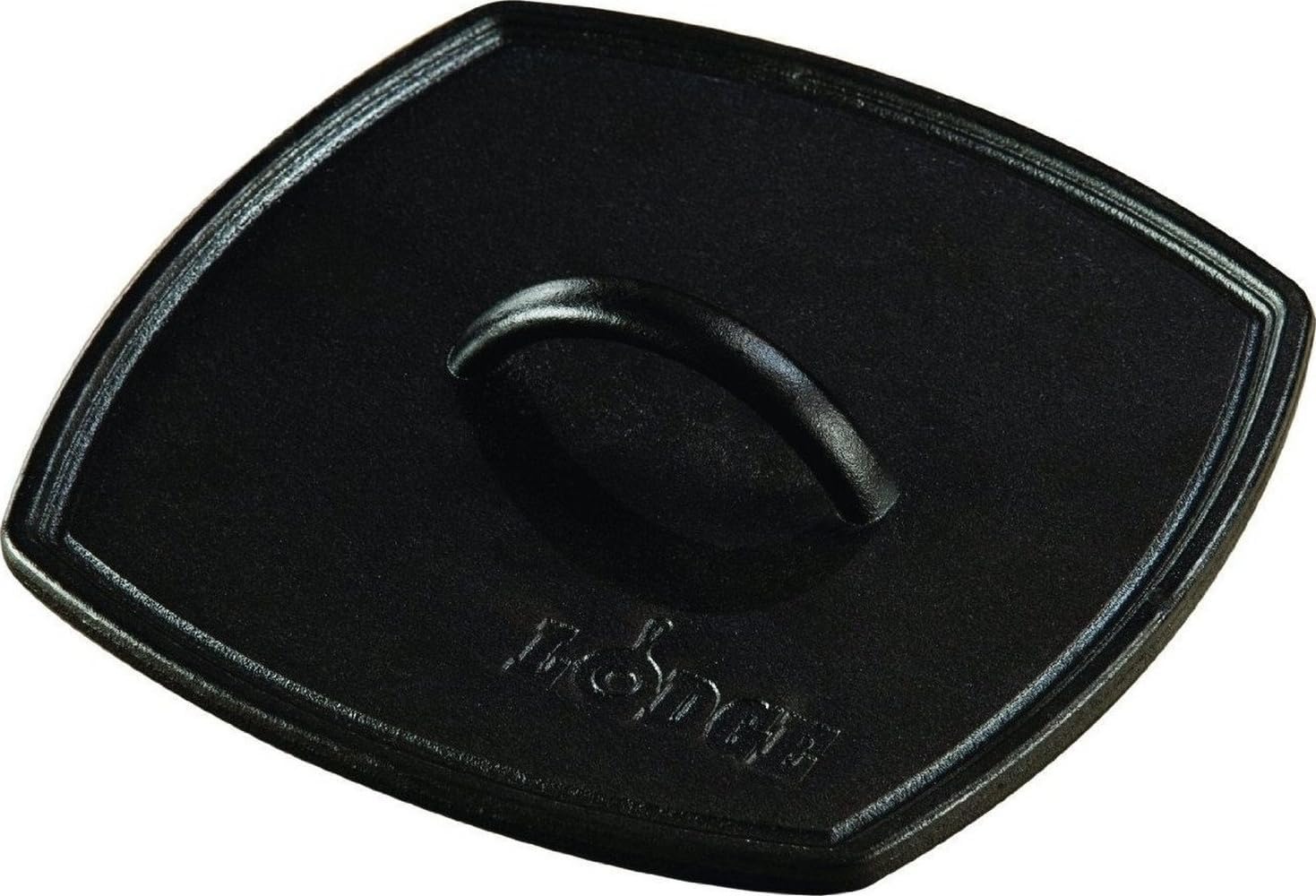
| Material | Cast Iron |
|---|---|
| Finish Type | Natural, Oil-Based Seasoning |
| Product Care Instructions | Hand Wash Only |
| Included Components | Lodge LPP3 8.25 Inch Cast Iron Panini Press |
The Lodge Cast Iron Panini Press is a simple, heavy-duty square press meant to sit on top of a hot pan or griddle to press sandwiches, bacon, and other small items evenly. Made from seasoned cast iron with a looped handle, it delivers consistent weight across the cooking surface to encourage good browning and clear grill marks while improving contact for even heating. Because it is factory-seasoned with vegetable oil the surface is naturally nonstick and will develop more seasoning with repeated use. Its durable cast iron construction is built for longevity and works equally well on stovetop pans or outdoor griddles, though it must be heated indirectly with the cooking surface rather than having its own heat source. Care is traditional cast iron care: hand wash, dry thoroughly, and re-season occasionally; it is heavy and not as convenient to move as lighter presses. The press is a low-tech, long-lasting option for buyers seeking a non-toxic, metal-only tool rather than coated or electric appliances.
Best for: Buyers prioritizing a durable, chemical-free press for everyday sandwiches and griddle cooking who want a simple, long-lasting tool rather than an electric appliance.
Less Ideal for: Users who prefer lightweight, quick-clean or electric panini presses with temperature controls and integrated heating should consider other designs.
- Heavyweight cast iron provides steady, even pressure for browning and grill marks
- Factory-seasoned with vegetable oil for an initial naturally nonstick surface
- Simple, durable construction built to last for years of use
- Looped handle offers a secure grip and easier maneuvering on hot pans
- Requires hand washing and periodic re-seasoning like other cast iron cookware
- No built-in heating or temperature control so it depends on your pan or griddle heat
Verdict: A rugged, factory-seasoned cast iron press that gives non-toxic, reliable results for anyone who wants a simple, long-lasting panini press.
Cuisinart Griddler FIVE

| Wattage | 1500 watts |
|---|---|
| Voltage | 120 volts |
| Number of settings | 5 |
| Material | Stainless Steel |
The Cuisinart Griddler FIVE is a compact countertop appliance that combines a contact grill, panini press, full grill, full griddle, and half grill/half griddle in one unit. It is typically used for sandwiches, grilled meats, vegetables, and breakfast items; the floating cover and reversible, dishwasher-safe nonstick plates make switching between grill and griddle simple. The LCD display and digital controls let you set temperatures from 175°F to 450°F and use a sear function to develop browning on steaks or panini. Practical features include integrated drip tray for grease management and removable plates that store flat for easy cupboard storage. Because the plates are reversible and dishwasher-safe, cleanup is straightforward after heavier use. The main limitations are that countertop footprint and plate area are modest compared with full-size grills, and precise temperature control depends on placement and thickness of food, so thinner items heat faster than thick cuts. For everyday sandwich making and small-batch grilling, this model delivers reliable, repeatable results.
Best for: Buyers who prioritize a dependable, all-in-one countertop grill that handles daily sandwiches, panini, and small grilling tasks with consistent performance and easy maintenance.
Less Ideal for: Those who need a large-capacity grill for feeding many people or who want restaurant-scale searing and surface area should consider a full-size grill instead.
- Five cooking modes in one unit for flexible meal prep
- Digital LCD with adjustable temperature and timer for repeatable results
- Reversible, removable nonstick plates that are dishwasher-safe for easy cleanup
- Sear function to improve browning and flavor on meats
- Cooking surface area is limited compared with larger standalone grills
- Temperature outcome can vary with food thickness, requiring occasional monitoring
Verdict: Choose the Griddler FIVE when you want a reliable, multi-function countertop grill that consistently delivers easy-to-clean performance for sandwiches and everyday grilling.
OVENTE Electric Sandwich Maker GPS401B

| Wattage | 750 watts |
|---|---|
| Voltage | 120 |
| Number of settings | 3 |
| Material | Stainless Steel |
The OVENTE GPS401B is a small, no-frills sandwich maker designed to toast two sandwiches quickly. It uses a 750W fast-heating element and three thermostat settings to deliver evenly browned, sealed-edge sandwiches, and the power and preheat indicator lights make it easy to know when the unit is ready. Nonstick cooking plates speed food release and wipe-downs, and the stainless steel exterior feels durable while the cool-touch locking handle and anti-skid feet improve safety during use. Its lightweight, compact footprint stores upright to save cabinet space, which is handy in dorms or small kitchens. Limitations include modest power that slows thicker or very dense fillings and the fixed plate design that only fits two sandwiches at a time, so it is not suited for large households or batch cooking. There is no removable drip tray or digital timer, so you need to watch cook time manually. For everyday grilled cheese, omelets, and quick breakfasts this model is straightforward and reliable for its price point.
Best for: Buyers looking for an affordable, compact sandwich maker for quick single-meal breakfasts, dorms, or small kitchens who prioritize simplicity and easy cleanup.
Less Ideal for: Families or users who need to toast multiple sandwiches at once, want advanced controls like timers, or require higher power for very thick or filled sandwiches.
- Fast-heating 750W element for quick toasting
- Nonstick plates for easy food release and simple cleaning
- Compact, lightweight design that stores upright to save space
- Stainless steel body with cool-touch handle and indicator lights for safer operation
- Fixed two-sandwich plate limits capacity for larger households
- No removable drip tray or digital timer for hands-off cooking
Verdict: A budget-friendly, compact sandwich maker that reliably produces quick, easy toasted sandwiches for one or two people.
Chefman Panini Press Grill
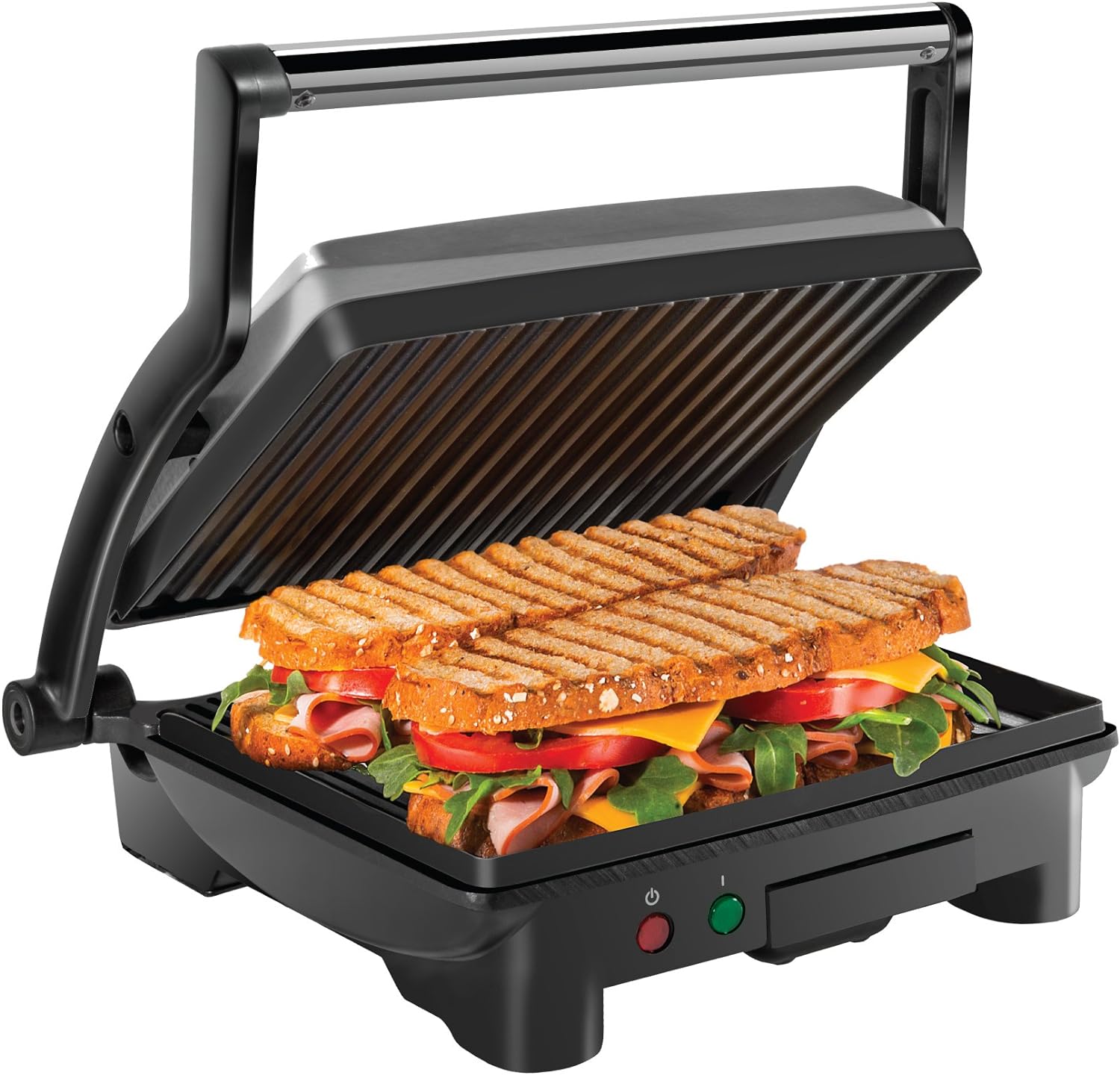
| Wattage | 1000 watts |
|---|---|
| Voltage | 120 |
| Number of settings | 4 |
The Chefman Panini Press Grill is a small, flexible contact grill built for everyday sandwich making and quick grilling tasks. It heats to press up to four sandwiches at once on the closed surface or opens fully to lay flat for burgers, chicken, fish, and vegetables. The floating hinge helps the unit accommodate thin grilled cheeses and thick stuffed paninis alike, while the nonstick coated plates and removable drip tray simplify cleanup and grease management. The stainless steel exterior and 1000-watt power provide straightforward, reliable performance for routine home use, and the tilt design funnels grease away from food. Because the plates are labeled PFAS, PFOA, and lead free, this model suits buyers prioritizing non-toxic cookware surfaces. Limitations include modest cooking area per sandwich and the manual controls with only four settings, so it is best for simple grilling rather than precision temperature control or large-batch cooking.
Best for: Buyers who want a straightforward, low-chemical panini press that reliably makes sandwiches and occasional grilled foods without complicated controls or specialized settings.
Less Ideal for: If you need a large-capacity grill, precise temperature control for searing, or pro-level speed for heavy use, this compact unit is not the best fit.
- Floating hinge adjusts to different sandwich thicknesses for versatile pressing
- Opens 180 degrees to serve as a flat grill for meats and vegetables
- Nonstick plates plus removable drip tray make cleanup quick
- Stainless steel exterior with 1000W heating for dependable, even cooking
- Materials specified as lead free, PFAS free, and PFOA free for lower chemical concern
- Cooking surface is relatively small per sandwich, limiting capacity for large families
- Only manual controls with four settings so you cannot set precise temperatures
Verdict: Choose this Chefman unit if you want an easy-to-use, low-chemical panini press that doubles as a small flat grill for everyday home cooking.
Choosing the Right Non-Toxic Panini Press: Key Factors to Consider
Surface Material and Coating
The plate surface determines whether a press stays non-toxic under repeated high-heat use. Look for finishes manufactured from ceramic, stainless steel, hard-anodized aluminum with a well-documented, PTFE-free process, or other mechanically bonded surfaces that do not rely on soft polymer coatings.
A stable surface resists peeling, scratching, and chemical breakdown when exposed to high temperatures. If the surface is removable, check that the connection method is robust and that replacement parts are available. The long-term safety of the press depends as much on how the surface ages as on its initial composition.
Heat Distribution and Plate Design
Even heating across the cooking surface prevents hot spots that can burn food and create uneven browning. Plate thickness, internal heating elements, and plate material all influence how heat spreads. Thicker plates and embedded heating elements typically yield steadier, more even heat.
Consider whether the plates are ridged or flat and how that affects contact with sandwiches. Ridged plates create grill marks and allow fats to drain, while flat plates maximize contact for uniform browning. For non-toxic considerations, plate design should not require coatings that risk flaking under stress.
Temperature Control and Range
Accurate temperature control helps you achieve consistent results across bread types and fillings. Look for adjustable thermostats with clear markings or digital controls with presets. Controls that maintain set temperatures reduce the risk of overheating surfaces beyond safe limits.
A wider temperature range is useful if you plan to toast delicate breads at lower heat or sear thicker sandwiches at higher heat. Equally important is how reliably the unit holds the set temperature during repeated use.
Cleaning and Maintenance
Cleaning method affects both hygiene and the longevity of the cooking surface. Non-toxic surfaces are often marketed as easier to clean, but abrasive scouring can damage finishes and expose base metals. Choose presses with gently removable plates or smooth stainless surfaces that allow wiping with a soft cloth.
Consider drip trays, accessible seams, and whether the press allows safe cleaning of electrical and hinge areas. Proper maintenance reduces the chance of surface deterioration that could compromise non-toxicity over time.
Size, Footprint, and Storage
The physical dimensions determine how well a press fits your kitchen and the portion sizes you can grill. Home users typically need a press that handles two sandwich-sized portions without taking excessive counter space.
Also consider vertical storage options, hinge stow features, and the ease of lifting or stowing a heavier, more durable press. A unit that is annoying to store or awkward to handle will see less use, which undermines its usefulness regardless of material safety.
Mechanical Durability and Warranty
The hinge, latch, and plate attachment points are mechanical stress areas that influence how long a press remains safe and functional. A durable construction reduces the risk of warping or plate separation that could expose underlying materials.
Check for robust metal components, reinforced hinges, and meaningful warranty terms. A longer usable life means fewer replacements and less chance of using degraded surfaces that might not stay non-toxic.
Why Non-Toxic Matters For High-Heat Cooking
High-heat appliances risk breaking down some traditional coatings. When a press reaches searing temperatures, unstable finishes can degrade, releasing unwanted compounds or flaking into food. Choosing a unit built with stable materials reduces those risks.
Non-toxic in this context means materials that remain inert at cooking temperatures and resist mechanical wear. It also includes avoiding soft polymer coatings that are not designed for repeated high-heat cycles. Prioritizing material stability protects both flavor and health.
- Stable surfaces stay intact under repeated heating and cooling cycles
- Non-coated or mechanically bonded finishes reduce chemical exposure risk
- Durable mechanical parts prevent plate separation and exposure of base metals
Plate Styles: Flat Vs Ridged
Flat plates maximize contact for even browning and are often easier to clean. They are ideal for paninis with lots of fillings or pressed wraps that benefit from uniform pressure.
Ridged plates produce attractive grill marks and allow fats to run away from the sandwich. They are useful when you want a crunchier exterior but may be slightly harder to clean, especially where ridges trap melted cheese.
- Flat: best for even browning and simpler cleanup
- Ridged: best for grill marks and fat drainage
Practical Cleaning Tips To Preserve Surface Safety
Wipe down slightly warm plates with a soft cloth and mild detergent rather than abrasive pads. If plates are removable, soak them briefly to loosen stuck-on food and dry thoroughly before reassembly.
Avoid metal utensils that can scratch the surface and consider silicone or wooden tools. Regular light cleaning prevents buildup that might necessitate aggressive scrubbing later, which can damage protective finishes.
- Clean after each use to prevent baked-on residue
- Use non-abrasive cleaners and tools
- Dry plates completely to prevent corrosion where applicable
How Plate Thickness and Element Placement Affect Results
Thicker plates hold heat better and reduce temperature fluctuation when you add cold ingredients. Even element placement, such as continuous heating rods or embedded panels, helps avoid hot or cold spots across the cooking surface.
If consistent searing is important to you, favor presses that emphasize plate mass and even heating. That reduces the need to flip or reposition sandwiches during cooking.
- Thicker plates equal steadier heat retention
- Embedded elements promote even temperature across the plate
- Lightweight plates heat faster but may show more fluctuation
Choosing The Right Size And Capacity
Consider how many sandwiches you typically prepare and the available countertop space. Smaller presses are fine for single portions or occasional use, while larger units make short work of feeding multiple people.
Also evaluate whether the press has an adjustable hinge to accommodate thicker sandwiches and whether the cooking surface size matches the bread you prefer.
- Match plate size to typical sandwich dimensions
- Adjustable hinge helps with thicker fillings
- Consider storage when selecting larger units
How We Chose the Best Non-Toxic Panini Press
We prioritized panini presses that use well-documented, low-risk cooking surfaces and materials, then filtered for consistent heat performance and practical user features. Our selection criteria emphasize surface safety, verified high-heat stability without toxic breakdown, and construction materials that resist flaking, peeling, or chemical migration over time. We also considered temperature control precision and how evenly plates heat across a typical sandwich-sized cooking area. Practical usability was another filter: presses had to offer reasonable cleaning options, durable hinge and latch systems, and a footprint suitable for common kitchen counters. We excluded any models with unverified coating claims or insufficient documentation about materials under high heat. Also excluded were units with known durability problems related to plate finish. The final list balances safety, everyday cooking performance, and ease of maintenance to reflect what matters most to home cooks seeking a non-toxic panini press.
Our full evaluation process is outlined in our review methodology.
FAQ
What does non-toxic mean for a panini press surface?
Non-toxic refers to materials and finishes that remain stable at cooking temperatures and do not release harmful compounds or flake into food. It commonly means avoiding soft polymer coatings that are not rated for repeated high-heat use.
Are stainless steel plates safer than coated plates?
Stainless steel is inert and resists flaking, making it a reliable non-toxic option when well made. However, well-bonded, PTFE-free finishes can also be safe if they are engineered for sustained high-heat use. Evaluate documentation about heat stability for any surface.
How should I clean a non-toxic panini press without damaging the surface?
Wipe warm plates with a soft cloth and mild soap, or remove and soak removable plates if the design allows. Avoid abrasive pads or metal utensils that can scratch finishes and expose base materials.
Does a non-toxic press need special maintenance to stay safe?
Regular gentle cleaning and avoiding harsh scrubbers will extend the life of the cooking surface. Inspect plates periodically for scratches or flaking and discontinue heavy use if the surface shows significant damage.
Will a non-toxic press deliver the same browning as a coated one?
Yes, non-toxic surfaces like stainless steel, hard-anodized aluminum, or high-quality ceramic can brown and sear effectively. The result depends more on heat distribution and plate contact than the presence of a specific coating.
Final Verdict
Focus your decision on surface material stability and how the press holds and distributes heat. Prioritize units with documented, heat-stable finishes or inert metals, reliable temperature control, and a plate design that matches how you like to grill sandwiches. Balance size, cleaning practicality, and mechanical durability when choosing. That approach helps you pick a non-toxic panini press that delivers consistent results and long-term peace of mind.