
Note: This article contains affiliate links. If you click on these links and make a purchase, we may earn a small commission at no extra cost to you. This helps support our research and content. Read our full affiliate disclosure here.
Choosing a pressure cooker combo slow cooker with non-toxic materials matters for everyday home cooking because coatings and construction directly affect food safety and long-term durability. Whether you braise, pressure-cook, or set it to slow-simmer, the right model reduces maintenance time and keeps flavors clean. This guide covers five shortlisted non-toxic pressure cooker combo slow cookers that met strict material and usability standards. We evaluated each option for safety of cooking surfaces, temperature control, and cleaning convenience so you can pick a unit that fits your cooking habits and kitchen routines. Read on for practical buying guidance and the decision criteria used to assemble the list.
Top Picks at a Glance
| Best Overall The best all-around choice for most situations | Ninja HyperHeat Pressure Cooker PC201SP |  |
| Best Quality Built to a higher standard if you want something more solid | Breville Fast Slow Pro BPR700BSS | 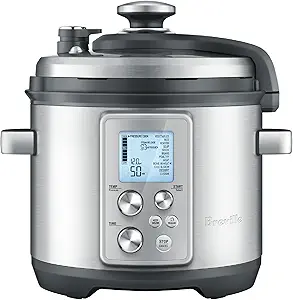 |
| Best Value The sweet spot between price and what you get | Blue Diamond 6QT Electric Pressure Cooker |  |
| Best Budget The cheapest option that still gets the job done reliably | OLIXIS 10‑In‑1 Electric Pressure Cooker |  |
| Top Rated A top-rated pick with lots of positive feedback | Cosori 6-Quart Pressure Cooker |  |
Ninja HyperHeat Pressure Cooker PC201SP
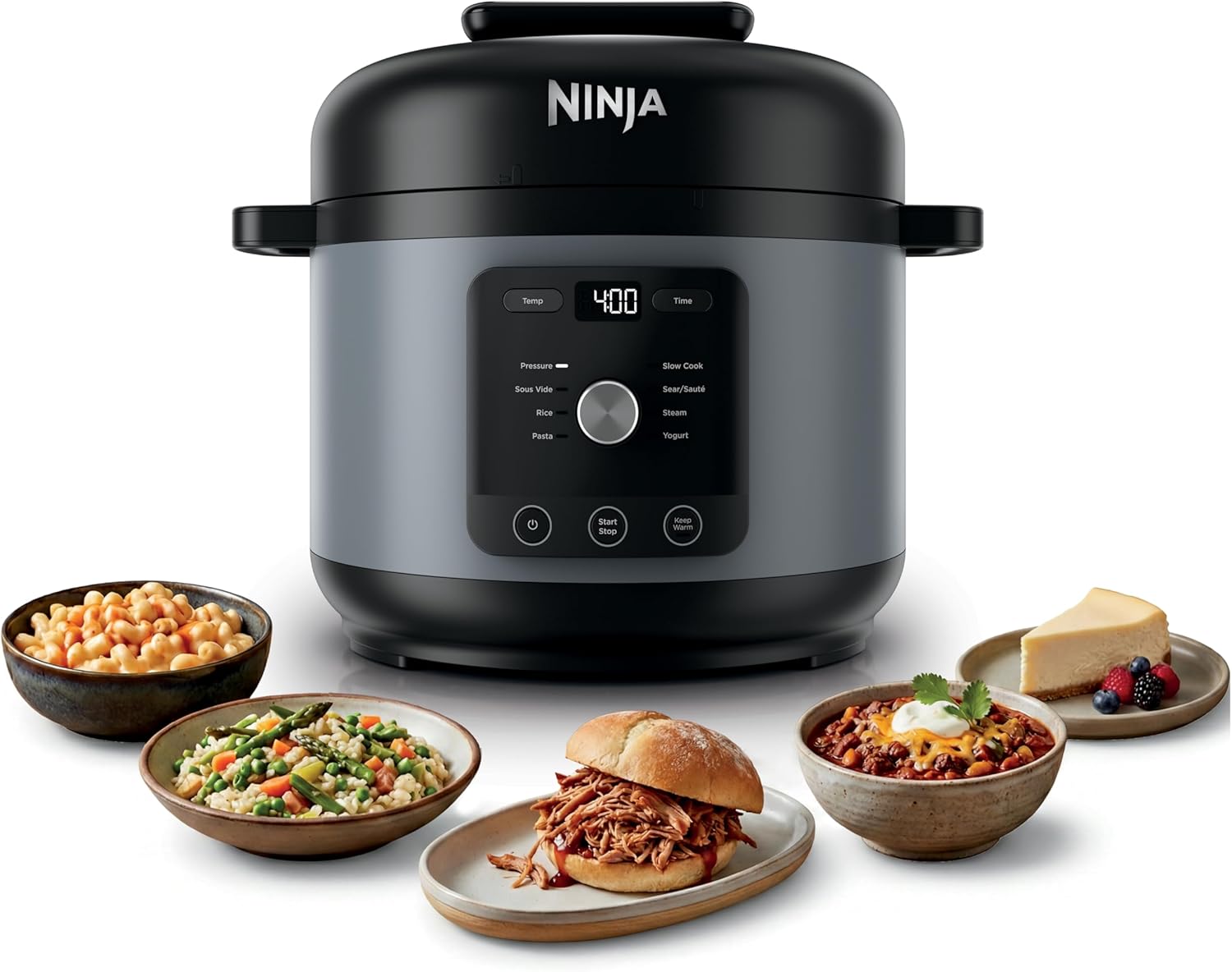
| Wattage | 1200 watts |
|---|---|
| Capacity | 6 quarts |
| Control Method | Push Button |
| Operation Mode | Both Manual and Automatic |
The Ninja HyperHeat is a high-power multi cooker built to replace several countertop appliances in one unit. It pressure cooks, slow cooks, steams, sous vides, sautés, makes rice and yogurt, and its HyperHeat system is designed to build pressure quickly so common dishes finish faster than traditional slow cooking. The wide 9.5-inch cooking surface lets you sear directly in the removable SimpliServe pot, which then lifts out for serving to cut down on dishes and transfer work. The ceramic nonstick pot is PFAS-free for cleaner cooking and wipes down easily after use. Controls are simple push-button presets with both manual and automatic modes for flexibility. Expect faster performance and strong searing compared with lower-wattage cookers, but the unit is fairly large and heavier than basic models, so it needs countertop space and may be overkill for solo cooks. The HyperHeat pressure build and multifunction set make it a practical choice for families and cooks who want one safe, versatile cooker that handles weeknight meals and entertaining.
Best for: Buyers who want one dependable, non-toxic appliance to handle everyday family meals and occasional entertaining without juggling multiple devices.
Less Ideal for: People with very limited kitchen space, minimal cooking needs, or those who prefer a lightweight, ultra-compact cooker for occasional single-person meals.
- Multi-function 9-in-1 design replaces several appliances for versatile cooking
- 1200-watt HyperHeat base speeds pressure build for shorter cook times
- Removable SimpliServe pot lets you serve directly from the cooker
- Ceramic PFAS-free nonstick pot for easier cleaning and non-toxic surface
- Relatively large and heavy compared with basic pressure cookers
- Takes up significant countertop or storage space
Verdict: Choose this Ninja if you want a powerful, family-sized, PFAS-free multi cooker that replaces several appliances and speeds up everyday meals.
Breville Fast Slow Pro BPR700BSS

| Capacity | 6 quarts |
|---|---|
| Wattage | 700 watts |
| Control Method | Touch |
| Number of settings | 11 |
The Breville Fast Slow Pro is a 6‑quart multi‑cooker that automatically adjusts time, temperature and pressure between fast and slow modes so you can pressure cook, slow cook or steam with minimal monitoring. It uses dual sensors in the bowl and one‑press programs to manage 11 pressure and slow‑cook settings, and the full‑feedback LCD shows pressure, temperature and a countdown timer while the auto steam release handles venting hands‑free. The removable, dishwasher‑safe lid and ceramic‑coated cooking bowl make cleanup and serving straightforward, and included stainless rack and basket expand steaming and roasting options. Safety is emphasized with a triple‑safe stainless lid construction and multiple release methods. Expect a slightly larger footprint and heavier unit compared with simple slow cookers, and the ceramic bowl, while convenient, is a fixed capacity so very large batches require multiple cycles. For buyers prioritizing accurate control, safety, and a nonstick ceramic inner surface, it delivers dependable, versatile performance.
Best for: Buyers who want precise, performance‑focused control in a single appliance for pressure, slow and steam cooking and who value hands‑off safety and a nonstick ceramic cooking surface.
Less Ideal for: People who need a very compact or ultra‑lightweight cooker for occasional one‑pot meals or who regularly cook very large volumes in a single batch.
- One‑press multi cooking with dual sensors for accurate temperature and pressure control
- Hands‑free auto steam release that selects quick, pulse, or natural release automatically
- Ceramic‑coated removable cooking bowl that is dishwasher safe and free of PFOA/PTFE
- Clear LCD that displays pressure, temperature and countdown for precise monitoring
- Triple‑safe stainless steel lid construction and hinged removable lid for safety and easy cleaning
- 6‑quart fixed capacity may require multiple batches for large gatherings
- Unit is heavier and takes more counter space than basic slow cookers
Verdict: Choose this if you want a performance‑oriented, non‑toxic ceramic multi‑cooker that delivers precise automated pressure and slow cooking with strong safety features.
Blue Diamond 6QT Electric Pressure Cooker

| Capacity | 6 QT |
|---|---|
| Cooking Modes | 16 presets |
| Pot Finish | Diamond-infused ceramic nonstick |
| Dishwasher Safe Pot | Yes |
This Blue Diamond 6QT electric pressure cooker is a multi‑function cooker aimed at replacing several devices on your counter. It offers 16 cooking modes including pressure cook, slow cook, sauté, steam, rice, yogurt, and cake, plus delay start and quick or smart release options for flexible timing. The removable pot uses a diamond-infused ceramic nonstick coating that is marketed as PFAS-, PFOA-, lead-, and cadmium-free and is dishwasher-safe, which makes cleanup straightforward and reduces sticking when browning or simmering. The control panel is large and simple with one-touch presets that let you run complete meals without babysitting. Practical safety features include an easy on/off lid with a locking safety valve and a program that adjusts pressure automatically for better flavor. Trade-offs to expect are the usual learning curve for multi‑program appliances and that feature-rich interfaces can be more than some cooks need, and the 6-quart size may be larger than necessary for singles or couples.
Best for: Buyers who want a single, non-toxic multi‑cooker to streamline meal prep and value easy cleanup and preset convenience over minimal controls.
Less Ideal for: People who prefer a very simple, minimalist cooker with only basic pressure functions or those who strictly need a smaller single-serve appliance.
- Wide 16-mode cooking range replaces several single-use appliances
- Diamond-infused ceramic nonstick pot that is PFAS/PFOA and heavy-metal free
- Dishwasher-safe removable pot for easier cleanup
- One-touch presets and large display simplify common programs
- Smart Release and quick release options for flexible pressure control
- Interface and many presets add complexity compared with a basic electric pressure cooker
- 6-quart capacity may be more than needed for very small households
Verdict: A versatile 6‑quart multi‑cooker with a PFAS‑free diamond ceramic pot that simplifies meal prep and cleanup for buyers optimizing kitchen gear.
OLIXIS 10‑In‑1 Electric Pressure Cooker

| Capacity | 3 quarts |
|---|---|
| Wattage | 700 watts |
| Controller Type | Digital |
| Operation Mode | Automatic |
The OLIXIS 10‑In‑1 Electric Pressure Cooker is a compact multi cooker aimed at everyday meals for one to two people. It combines ten preset programs—rice, meat, stew, yogurt, canning, steam and more—with a digital control pad and a 24‑hour delay start so you can set meals to be ready later. The 3‑quart ceramic coated inner pot helps food release easily and simplifies cleanup while the stainless steel exterior resists scratches. Built‑in safety features, including pressure release valves and heat sensors, make it straightforward to use for pressure cooking and slow cooking tasks. At 700 watts it cooks faster than conventional methods and the keep‑warm mode holds food after cooking. Limitations include the small 3‑quart capacity, which suits singles or couples but not families, and a modest wattage that means longer high‑pressure cycles versus higher‑powered models. The cooker is a practical, space‑saving option if you want a programmable, low‑toxicity inner pot and simple controls for everyday slow cooking and pressure recipes.
Best for: Buyers looking for an affordable, compact pressure cooker with a ceramic inner pot and simple programmable controls for everyday meals in a small household.
Less Ideal for: Those who regularly cook for large families, need high‑speed pressure cycles, or want a larger-capacity multicooker for batch meal prep should consider bigger, higher‑powered models.
- Ceramic nonstick inner pot for easier food release and cleaner cooking surface
- Ten smart presets cover common pressure and slow‑cook tasks
- Digital controls with 24‑hour delay start and automatic keep‑warm for hands‑off timing
- Stainless steel exterior offers durability and scratch resistance
- Integrated safety valves and heat sensors for secure pressure operation
- 3‑quart capacity is small for larger families or batch cooking
- 700‑watt power is modest compared with higher‑watt multicookers
Verdict: A budget-friendly, small-footprint multicooker with a ceramic inner pot and preset cooking programs ideal for singles or couples seeking a low‑toxicity slow cooker alternative.
Cosori 6-Quart Pressure Cooker
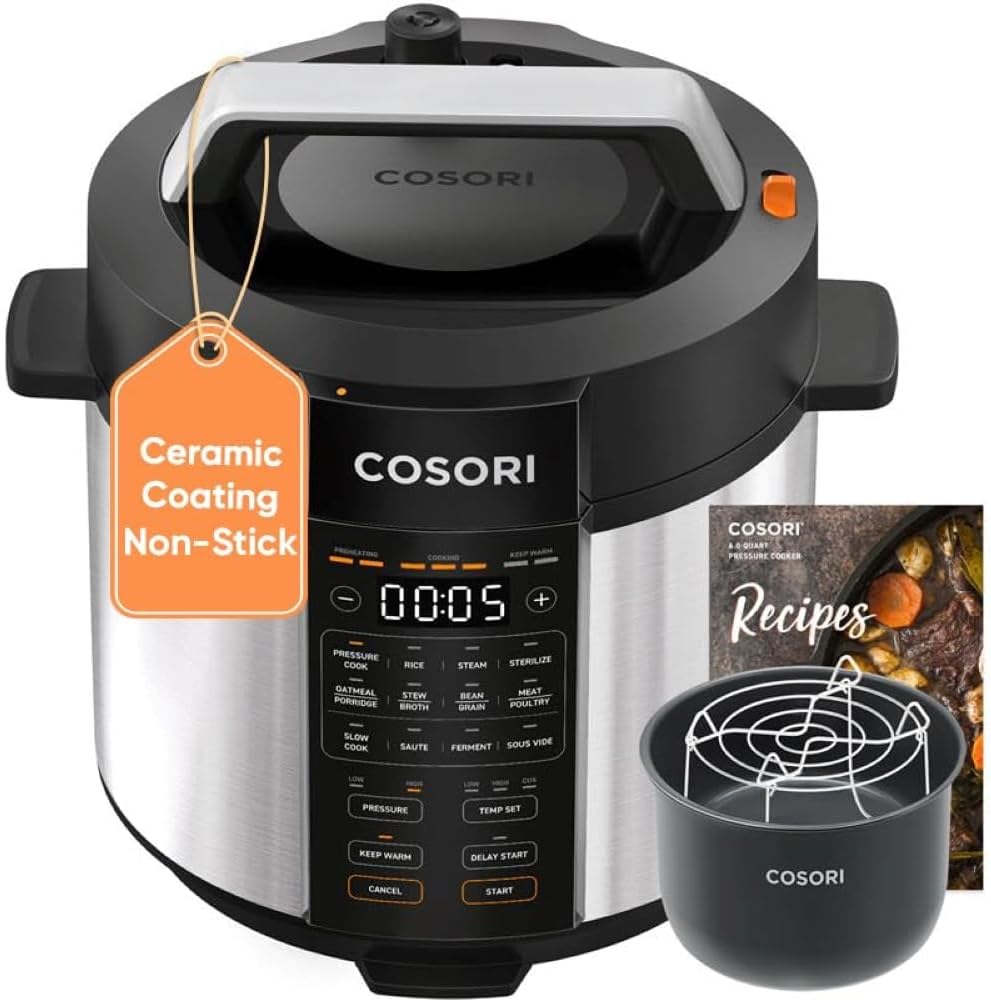
| Capacity | 6 quarts |
|---|---|
| Wattage | 1100 watts |
| Control Method | Touch |
| Inner Pot | Ceramic nonstick (BPA-free) |
The Cosori 6-quart pressure cooker is a versatile countertop multi-cooker that replaces several appliances by offering pressure cook, slow cook, rice, steam, sous vide, sauté and ferment modes in one unit. It is used like a typical electric pressure cooker: add ingredients to the ceramic-coated inner pot, choose a preset on the touch panel, and let the cooker manage time and temperature automatically. Key features include a BPA-free nonstick ceramic inner pot that is dishwasher-safe, 13 cooking presets, a hassle-free steam release switch with a safer venting design, and a stainless steel exterior that wipes clean easily. At 1100 watts it brings food to pressure quickly, which shortens cook times compared with conventional methods and is handy for weeknight meals and batch cooking. Practical limitations are its 6-quart capacity, which may be small for very large families, and its reliance on presets for convenience may limit manual control for expert users. The cooker includes typical safety features like overheat protection and a double-layer lid to reduce steam risks.
Best for: Buyers who prioritize a reliable, safe multi-cooker with a non-toxic ceramic inner pot and easy presets for everyday cooking and meal prep.
Less Ideal for: People who regularly need very large-capacity pots or who want fine-grain manual temperature control for advanced cooking techniques.
- Ceramic nonstick inner pot that is BPA-free and dishwasher-safe
- Multiple built-in presets and 9-in-1 functions for one-pot versatility
- Safer venting layout and multiple safety protections for pressure cooking
- Stainless steel housing that is easy to clean and durable
- 6-quart size may be limiting for very large batches or big families
- 1100W power requires a standard outlet and can draw noticeable current during use
Verdict: Choose this Cosori if you want a reliable, safety-minded multi-cooker with a dishwasher-safe ceramic inner pot for non-toxic everyday pressure and slow cooking.
Choosing the Right Non-Toxic Pressure Cooker Combo Slow Cooker: Key Factors to Consider
Cooking-Surface Materials
The composition and finish of the inner pot determine whether food contacts reactive metals or protective coatings. Non-toxic choices are typically uncoated stainless steel or well-documented ceramic-glazed interiors. Knowing the exact material helps you avoid unwanted metal leaching or degraded coatings over time.
Material matters for heat distribution too. Thicker-gauge stainless steel or a multi-layer base improves even heating and reduces hot spots when pressure cooking or slow simmering. If you plan to sear or brown ingredients before slow cooking, prioritize interiors that tolerate higher direct-heat contact without damage.
Pressure And Temperature Control
Reliable pressure regulation and consistent temperature maintenance are essential for both safety and recipe outcomes. Good control systems offer multiple pressure settings and gradual release options so delicate foods do not overcook, while high-pressure settings finish braises and beans more quickly.
Look for units with precise low-temperature slow-cook modes and programmable timers. Consistent control reduces the need for monitoring and helps reproduce recipes accurately, whether you are using the pressure function for fast meals or the slow-cooker mode for all-day braises.
Cleaning And Maintenance
How easy it is to keep the cooker clean affects daily usability and long-term hygiene. Removable, dishwasher-safe inner pots and seals simplify cleanup, but check whether gaskets and valves are easy to disassemble for periodic deep cleaning. Trapped food around the lid or vent can degrade seals and affect pressure behavior over time.
Consider whether the interior tolerates abrasive scrubbing or metal utensils. Surfaces that scratch easily can harbor bacteria and shorten the life of protective finishes. Clear manufacturer guidance on cleaning procedures is a practical plus.
Programmability And User Interface
A clear control panel with intuitive presets makes it easier to switch between pressure and slow-cook modes without a learning curve. Useful features include adjustable time and temperature, delay-start, and a reliable keep-warm setting that does not degrade food texture after cooking.
Physical controls or tactile knobs can be preferable for quick adjustments, while well-designed digital interfaces should show temperature, pressure stage, and remaining cooking time clearly. The goal is predictable results and minimal fuss.
Safety Features And Construction
Safety matters more with pressure-capable appliances than with standard slow cookers. Look for secure lid-locking mechanisms, visible pressure indicators, multiple pressure-release methods, and automatic shutoffs for overpressure or overheating. Robust handle and hinge designs reduce the chance of accidental spills during use.
Solid build quality also affects long-term safety. Warped lids or thin pot bases can compromise seals. Durable external housings and insulated handles make daily handling safer and more comfortable.
Why Non-Toxic Finishes Matter
Non-toxic finishes lower the risk of unwanted chemicals transferring into food when items are cooked at high temperatures over extended periods. Pressure and slow-cooker modes both expose food to heat where a damaged or poorly specified coating could break down. Choosing a known, inert cooking surface reduces that risk and gives you confidence when preparing acidic or long-simmered dishes.
Beyond safety, finish choice affects flavor and cleaning. Uncoated stainless interiors are durable and often easiest to maintain, while ceramic-glazed pots can offer nonstick properties without synthetic coatings. Understanding the tradeoffs helps you select a model that matches how you cook.
- Uncoated stainless steel resists leaching and tolerates high-heat searing
- Ceramic-glazed interiors provide easier release but may require gentler handling
- Verify manufacturer care instructions to maintain any protective finish
Using Pressure And Slow Modes Together
A combo cooker gives you speed or low-and-slow results in one unit, but each mode has different requirements. Pressure cooking requires a tight seal and safety mechanisms, while slow cooking benefits from gentle, steady heat. Choose models that let you switch modes without complex reassembly.
For multi-step recipes, consider how the unit handles transitions. Look for programmable sequences, preheat behavior, and whether the unit notifies you when it shifts from high pressure to natural release. Those details reduce mistakes and make it simpler to follow multi-stage recipes.
- Check how the unit transitions between modes and how timers behave during mode changes
- Natural pressure release is better for delicate textures; quick release suits firm vegetables and meats
- Some models keep food warm automatically after cycle completion which is useful for variable schedules
Maintaining Seals, Valves, And Gaskets
Gaskets and valves need regular attention to maintain pressure performance and hygiene. Inspect seals for cracks or deformation and replace them according to the manufacturer schedule. Clean valves and steam pathways to prevent buildup that can impair release functionality.
A design that allows easy removal of the sealing ring and quick access to vents will reduce the time and effort required for maintenance. Keeping these parts clean also extends service life and helps avoid pressure faults.
- Remove and wash sealing rings after heavy use or when cooking sticky foods
- Check vents for food particles that can impede proper pressure release
- Store gaskets dry and replace periodically if they show wear
Practical Tricks For Better Results
To get reliable outcomes, preheat the cooker for searing steps if your model supports it, and use the appropriate liquid-to-ingredient ratios recommended for pressure versus slow cooking. Thicker liquids can scorch in slow-cook mode while pressure cooking will require some liquid to build steam.
Use natural release for large roasts and quick release for vegetables to avoid overcooking. When using ceramic-glazed pots, avoid sudden temperature shocks which can stress the glaze. These simple practices improve both food quality and the lifespan of the cooking surface.
- Sear ingredients before slow-cooking for better browning if the inner pot tolerates it
- Adjust liquid amounts depending on whether you use pressure or slow mode
- Let units cool slowly to protect ceramic or glazed finishes
Cleaning Tips To Preserve Non-Toxic Surfaces
Use soft cloths or nonabrasive sponges to clean ceramic or coated interiors to prevent scratches. For stainless steel, soaking and gentle scrubbing usually remove stuck-on food without harming the surface. Avoid harsh cleaners that can etch or dull finishes.
Regularly remove and clean the lid components to prevent trapped food from accumulating. If the pot is dishwasher-safe, confirm the manufacturer's guidance for detergents and placement to avoid discoloration or accelerated wear.
- Hand-wash gaskets and let them air dry to prevent mold
- Avoid metal utensils on delicate glazed surfaces
- Use baking soda paste for stubborn stainless stains instead of steel wool
How We Chose the Best Non-Toxic Pressure Cooker Combo Slow Cooker
We prioritized units built with inert, well-documented cooking surfaces and reliable temperature regulation because material safety and consistent heat control are the primary concerns for non-toxic cooking appliances. Each candidate had to offer a pressure-cooking mode plus a true slow-cooking function with programmable timers to ensure versatility across recipes. We assessed ease of cleaning and maintenance, including whether interior surfaces tolerate scrubbing, dishwasher-safe components, and how seals and valves are accessed for routine cleaning. Construction quality and longevity factors were reviewed, focusing on thick, warp-resistant cooking pots and durable lids and handles. Usability features such as clear control panels, useful presets, and safety interlocks were required to make daily use straightforward. We excluded units with undisclosed interior coatings or ambiguous material claims. We also filtered out products lacking basic safety features for pressure cooking, such as multiple pressure-release options and secure lid locks. The finalists represent a balance of verified, non-reactive materials, user-focused controls, and manageable upkeep requirements. The scoring emphasized material safety, temperature control accuracy, cleaning convenience, and overall build reliability.
Our full evaluation process is outlined in our review methodology.
FAQ
Are ceramic-glazed interiors truly non-toxic for long cooking times?
Ceramic-glazed interiors are generally inert when the glaze is intact, making them a good non-toxic choice for long cooks. Performance depends on glaze quality and care; avoid abrupt temperature changes and follow cleaning guidance to preserve the finish.
Can I use metal utensils in a non-toxic pressure cooker combo slow cooker?
That depends on the interior. Uncoated stainless steel tolerates metal utensils, while ceramic-glazed or delicate finishes should use wooden or silicone tools to avoid scratching and damaging the surface.
How often should I replace seals and gaskets in a combo cooker?
Gaskets should be inspected regularly and replaced when they show cracking, loss of elasticity, or visible wear. Heavy users might replace them annually, while occasional cooks may wait longer; follow manufacturer intervals if provided.
Does slow-cook mode require extra liquid compared with pressure cooking?
Yes. Slow cooking uses lower temperatures and longer times, so less evaporation occurs and you may actually need similar or slightly more liquid for flavor extraction. Pressure cooking needs enough liquid to build steam but generally requires less total cooking time.
Is it safe to leave a combo cooker on keep-warm for several hours?
Most models have keep-warm modes designed for short-term holding and will maintain safe temperatures without degrading food quality for a few hours. Extended holding can affect texture and moisture; monitor food and follow any manufacturer guidance on maximum hold times.
Final Verdict
When choosing a non-toxic pressure cooker combo slow cooker, prioritize verified cooking-surface materials and solid pressure control mechanisms. Balance programmability and ease of cleaning with durable construction to reduce maintenance and extend service life. Remember tradeoffs: ceramic glazes ease cleanup but require gentler handling, while uncoated stainless is rugged but may need more elbow grease to remove stuck-on food. Focus on material safety, control reliability, and practical features that match how you cook to pick a unit that will be safe, versatile, and dependable for everyday use.