
Note: This article contains affiliate links. If you click on these links and make a purchase, we may earn a small commission at no extra cost to you. This helps support our research and content. Read our full affiliate disclosure here.
If you want rice cooked safely and consistently, choosing a non-toxic pressure rice cooker can reduce exposure to questionable coatings while delivering fast, even results. The right cooker should combine inert, food-safe inner surfaces with pressure control that preserves texture and nutrients. This guide shortlists the top options in the non-toxic pressure rice cooker category and explains the practical tradeoffs you should weigh. We evaluated safety of inner coatings, pressure and temperature control, ease of cleaning, and long-term durability to build the selections that follow. Read on for what matters most when selecting a safer pressure rice cooker.
Top Picks at a Glance
| Best Overall The best all-around choice for most situations | Our Place Dream Cooker 6 Qt |  |
| Best Quality Built to a higher standard if you want something more solid | Zojirushi NP-HCC10XH Rice Cooker |  |
| Best Value The sweet spot between price and what you get | COMFEE' 6-Quart Pressure Cooker |  |
| Best Budget The cheapest option that still gets the job done reliably | GreenLife 1.5 QT Rice Cooker |  |
| Most Popular A crowd favorite that many people choose with confidence | Cosori 6-Quart Pressure Cooker |  |
Our Place Dream Cooker 6 Qt

| Capacity | 6 quarts |
|---|---|
| Wattage | 1000 watts |
| Control Method | Touch |
| Cooking Program | Keep Warm, Pressure Cook, Sauté, Slow Cook |
| Voltage | 120 volts |
The Our Place Dream Cooker is a counter-ready 4-in-1 multicooker built for everyday family cooking. It combines pressure cook, slow cook, sauté/sear and keep-warm modes in a single 6-quart unit and uses a touchscreen panel for straightforward time and temperature control rather than a long preset list. The inner pot has a ceramic nonstick coating formulated without PFAS, which helps food release and cuts cleanup time, and the cooker offers an auto steam release plus multiple safety features for confident pressure cooking. At 1000 watts with a locking lid and touch controls, it heats quickly and handles stews, rice, braises and batch meals reliably. Trade-offs include a fixed 6-quart capacity that may be overkill for solo cooks and the aluminum construction and non-dishwasher inner pot mean you will want to follow care instructions to preserve the coating. The streamlined design and stay-cool surfaces make it convenient to keep on the counter for regular use.
Best for: Buyers who want a single, family-capable appliance that handles pressure cooking, slow cooking and sautéing while prioritizing non-toxic ceramic surfaces and easy daily use.
Less Ideal for: If you need a very small cooker for solo meals, require a dishwasher-safe insert, or prefer heavier stainless steel construction, look elsewhere.
- Ceramic nonstick inner pot made without PFAS for easier food release and cleaning
- Auto steam release and multiple built-in safety features for pressure cooking confidence
- Touchscreen controls allow customized time and temperature settings instead of rigid presets
- 1000W power and locking lid deliver quick, reliable cooking across modes
- Compact, countertop-friendly design with stay-cool surfaces
- Inner pot and many components are not dishwasher safe so cleaning requires more care
- Aluminum construction may feel less heavy-duty than stainless steel alternatives
Verdict: Choose the Dream Cooker if you want a family-sized, non-toxic multicooker that simplifies pressure cooking and everyday meals with a simple touchscreen and ceramic inner pot.
Zojirushi NP-HCC10XH Rice Cooker

| Capacity | 5.5 cups |
|---|---|
| Wattage | 1.2 KW |
| Power Source | Corded Electric |
| Materials | Stainless Steel inner lid; BPA-free nonstick pan |
The Zojirushi NP-HCC10XH is an induction heating rice cooker that uses a triple-heater system to deliver even, high heat for accurate results across rice types. It handles white, jasmine, sushi, mixed, porridge, sweet, brown, GABA brown and quick-cook modes, and includes delay timer, clock and extended keep-warm so rice is ready when you are. The spherical thick inner pan and nonstick coating make serving and cleanup straightforward, while the stainless steel inner lid and exterior keep the unit durable and easy to wipe down. At 1,230 watts the cooker brings water to boil quickly and the IH system plus programmable menus produce reliably textured rice from delicate sushi to hearty brown grains. Limitations include hand-wash care and a modest 5.5-cup capacity that may be small for larger households, and the unit lacks pressure-cooking functionality so it does not speed-cook like pressure rice cookers. For cooks prioritizing precise heat control and nonstick surfaces in everyday rice cooking, this model performs very well.
Best for: Serious home cooks who want consistent, restaurant-quality rice textures and precise heat control rather than the fastest cook times.
Less Ideal for: Those who need pressure cooking to speed up brown rice or who routinely cook for large groups should consider larger-capacity or pressure-capable alternatives.
- Induction heating with triple heaters for even, precise cooking
- Multiple menu settings for white, brown, GABA and specialty rice types
- Stainless steel inner lid and coated thick inner pan for durability and easier cleanup
- Extended keep-warm and delay timer for flexible meal timing
- Not a pressure rice cooker so it cannot shorten cook times like pressure models
- Requires hand washing for care instructions
- 5.5-cup capacity may be small for large families
Verdict: Choose this Zojirushi when you want precise induction heating and a wide range of rice programs for consistently excellent rice rather than faster pressure cooking.
COMFEE' 6-Quart Pressure Cooker

| Capacity | 6 quarts |
|---|---|
| Wattage | 1000 |
| Control Method | Touch |
| Closure Type | locking lid |
| Material | Ceramic |
The COMFEE' 6-quart pressure cooker is a multi-function electric cooker designed to replace separate appliances for pressure cooking, rice, yogurt, slow cooking, steaming, sautéing and more. It offers 13 programmable presets and a touch control plus mechanical knob for selecting modes, which makes one-touch meals and set-and-forget cooking straightforward for weeknight dinners. The ceramic-coated inner pot is marketed as non-toxic and BPA-free, providing a nonstick surface that simplifies cleaning and reduces reliance on oils. Safety features include a locking lid, pressure-limiting valve, anti-block cover and overheat protection for reliable operation under pressure. At 1000 watts it reaches pressure quickly but may use more energy than low-power slow cookers, and the unit is fairly full-featured rather than minimalistic, so buyers who prefer a single-purpose rice cooker might find some controls unnecessary. Accessories like a steam rack, measuring cup and ladle are included, making it ready to use out of the box.
Best for: Buyers who want a single, versatile cooker that prioritizes non-toxic ceramic cooking surfaces and programmable convenience to replace several kitchen appliances.
Less Ideal for: If you only want a very simple, low-power rice cooker with minimal controls, this multi-function pressure cooker is more capable than necessary.
- Ceramic-coated inner pot claimed to be non-toxic and BPA-free for healthier cooking
- 13 programmable presets cover rice, meat, beans, yogurt, steaming and more
- Multiple safety mechanisms including locking lid and pressure-limiting valve
- Includes useful accessories (measuring cup, steam rack, ladle) so it is ready to use
- 1000W power may be higher than basic rice cookers and impacts energy use
- Feature-rich interface may be more than needed for buyers seeking a simple rice-only cooker
Verdict: Choose this cooker when you want a non-toxic ceramic inner pot plus a full suite of programmable presets to simplify many cooking tasks in one appliance.
GreenLife 1.5 QT Rice Cooker

| Capacity | 6 cups |
|---|---|
| Wattage | 300 watts |
| Power Source | Corded Electric |
| Material | Ceramic |
| Lid Material | Glass |
This compact GreenLife rice cooker cooks up to 6 cups of finished rice from a one‑touch control and automatically switches to Keep Warm when the cycle finishes. It uses a removable PFAS‑free ceramic nonstick inner pot that releases rice easily and wipes or rinses clean; the pot and included paddle and measuring cup are dishwasher safe for convenience. The unit supports both white and brown rice and has a glass lid and cool‑touch handles for safe transport. At 300 watts it is energy efficient and fits well on small counters or in apartments. The cooker is deliberately simple rather than programmable, so you do not get advanced timing or multi‑function settings, but that simplicity makes it reliable and easy for everyday use. If you want a non‑toxic, easy‑clean basic cooker that reliably produces fluffy rice without extra bells, this model delivers.
Best for: Buyers who want an affordable, easy‑to‑use rice cooker that prioritizes non‑toxic ceramic coating and straightforward daily performance in small kitchens.
Less Ideal for: People who need a pressure rice cooker, extensive programmable controls, or multifunction cooking beyond basic rice and grains should look elsewhere.
- PFAS‑free ceramic nonstick pot for healthier cooking and easy release
- Removable, dishwasher‑safe inner pot and accessories for easy cleaning
- One‑touch operation with automatic Keep Warm simplifies day‑to‑day use
- Compact footprint suited to small kitchens and apartments
- Glass lid and cool‑touch handles for safer handling and visibility while cooking
- No advanced programmable settings or pressure cooking function included
- Limited to basic white and brown rice cycles, not a multi‑use cooker
Verdict: A simple, budget‑friendly rice cooker that delivers non‑toxic ceramic nonstick cooking and fuss‑free results for everyday rice needs.
Cosori 6-Quart Pressure Cooker
| Capacity | 6 quarts |
|---|---|
| Wattage | 1100 watts |
| Control Method | Touch |
| Inner Pot | Ceramic nonstick, dishwasher-safe |
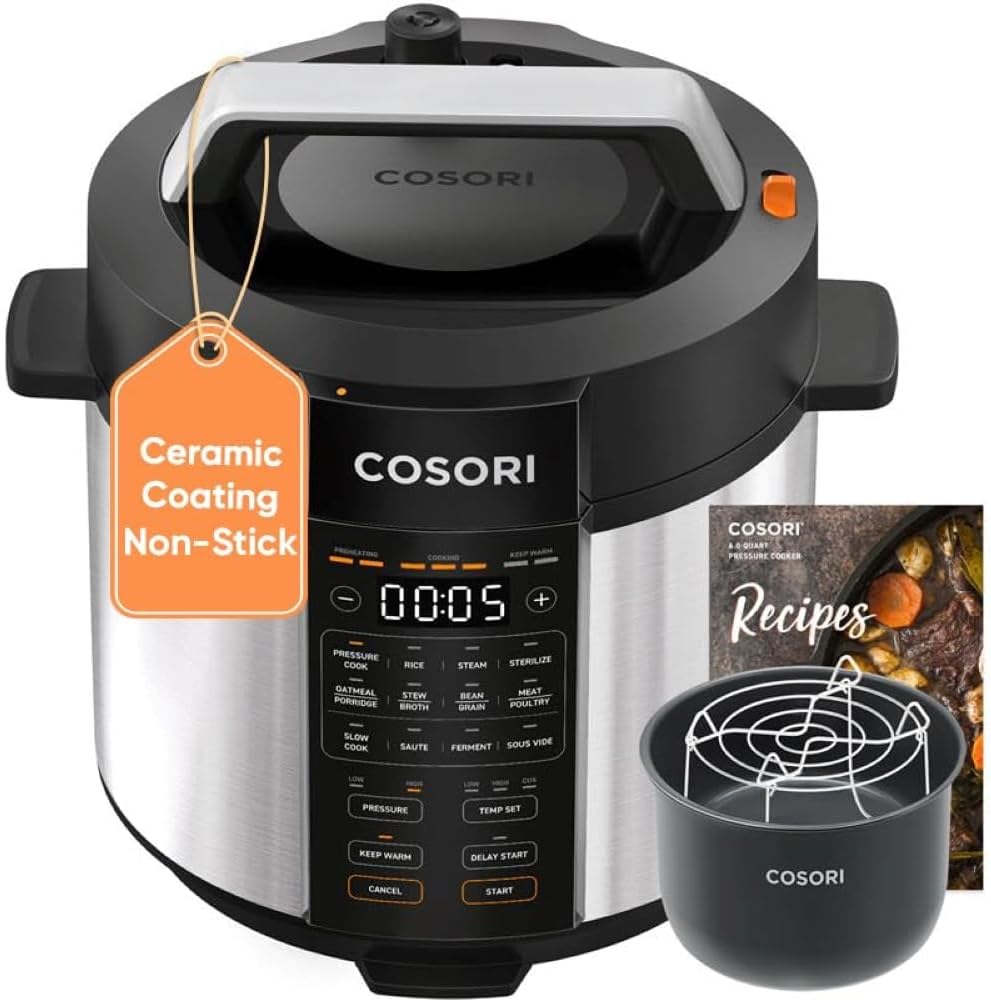
The Cosori 6‑quart pressure cooker is a versatile electric multi-cooker that pairs 1100W heat with a ceramic nonstick inner pot and a touchscreen control panel to handle pressure cooking, rice, steaming, sautéing, slow cooking, fermenting and sous vide. In daily use it replaces several single-purpose appliances: pick a preset or use manual controls, add ingredients, lock the lid and the unit manages pressure and timing while offering a dedicated rice mode and a keep-warm function. The dishwasher-safe ceramic inner pot and widened pot gap make cleanup easier, and the lid locking plus multiple safety protections and a recessed steam-release design reduce venting risk. Practical limitations include the 6‑quart capacity that may be small for very large families and the physical footprint typical of a stainless steel housing, and while ceramic coating reduces stick, it still requires gentle utensils to avoid wear. The included recipe book and steam rack add value for cooks who want a range of preset meals without trial and error.
Best for: Buyers who prioritize non-toxic cooking surfaces and want a single, safety-focused multi-cooker that handles rice and pressure-cooked meals with minimal fuss and clear user feedback.
Less Ideal for: Large households that regularly cook very large quantities or cooks who need an ultra-light, travel-friendly unit should consider larger or lighter alternatives.
- Ceramic nonstick inner pot that is dishwasher-safe and labeled BPA-free for food contact
- Nine built-in cooking functions plus 13 presets for one-pot versatility
- 1100W heating gives reasonably fast pressure and rice cooking
- Multiple safety features and a safer angled venting design reduce burn risk during release
- Includes steam rack and recipe book to get started right away
- Capacity limited to 6 quarts which may not suit very large batches
- Stainless steel housing and weight make it less portable than lighter plastic-bodied models
Verdict: Pick this Cosori if you want a safety-minded multi-cooker with a ceramic, BPA-free inner pot that handles rice and pressure cooking in one non-toxic appliance.
Choosing the Right Non-Toxic Pressure Rice Cooker: Key Factors to Consider
Inner Cooking Surface Material
The material that lines the inner pot is the primary determinant of chemical safety. Look for inert surfaces such as uncoated stainless steel or well-documented ceramic or enamel finishes that are free of PTFE and PFOA. Manufacturing disclosures and third-party safety certifications help confirm that the surface will not leach harmful substances into food under heat and pressure.
Beyond safety, the inner material affects heat transfer and stick resistance. Stainless steel is durable and nonreactive but may require more attention to prevent sticking with certain rice types. Ceramic-based finishes can be naturally nonstick but vary in long-term durability. Prioritize materials with clear safety documentation and realistic care instructions to maintain a non-toxic cooking surface over time.
Pressure Regulation and Control
Accurate pressure regulation matters because it affects texture, cooking time, and safety. A pressure rice cooker should maintain consistent internal pressure across cycles and include reliable release mechanisms to avoid sudden steam bursts. Look for models with clearly labeled pressure stages or adjustable settings so you can tailor cycles for white rice, brown rice, and mixed grains.
Control systems that balance automated pressure management with manual override options are useful for troubleshooting and for cooks who need finer control. Reliable sensors and simple, durable valves reduce the risk of uneven cooking or safety issues related to faulty seals or inconsistent pressure.
Sealing System and Build Quality
A strong seal and well-constructed lid are central to both safety and performance. A poor seal can cause steam leaks, longer cook times, and unreliable pressure buildup. Inspectors and buyers should consider gasket material, lid lock robustness, and hinge design when assessing durability.
Metal parts that contact steam should be corrosion-resistant, and gaskets should be replaceable. Durable hardware and straightforward gasket replacement options extend the appliance's usable life and reduce the chance of performance degradation that can compromise both cooking results and user safety.
Ease of Cleaning and Maintenance
Cleaning regimen affects both food safety and the longevity of non-toxic surfaces. Removable inner pots and simple gasket access make routine cleaning easier and help prevent buildup that can harbor bacteria or degrade the cooking surface. Dishwasher-safe components are convenient but only preferable if the manufacturer confirms the inner surface maintains its non-toxic integrity after repeated dishwasher cycles.
Regular inspection and occasional gasket replacement should be part of maintenance. Models that minimize hidden crevices where starch and grime accumulate will save time and help keep the inner surface in good condition, preserving both safety and cooking performance.
Cooking Performance and Consistency
Performance is about more than speed. A non-toxic pressure rice cooker should produce evenly cooked grains with predictable moisture levels across typical recipes. This depends on heat distribution, pressure stability, and the design of the inner pot. Consistent results reduce the need for repeated attempts and make the appliance genuinely useful for everyday cooking.
Consider how well the cooker handles different rice types and small versus large batches. Some units are optimized for quick white rice cycles while others are tuned to longer brown rice or mixed-grain programs. Choose a model whose performance matches how you normally cook rice.
Non-Toxic Inner Surfaces: What to Expect
Non-toxic inner surfaces usually fall into a few categories: uncoated stainless steel, ceramic-glazed enamel, or proprietary ceramic-like coatings with documented safety data. Each has tradeoffs in heat transfer, stick resistance, and durability. Stainless steel offers excellent durability and no coating to wear away, but food can stick without sufficient water ratios or stirring.
Ceramic-glazed pots are often naturally nonstick and easier to clean, but glazes vary by manufacturer and some formulations chip over time if mishandled. Look for clear manufacturer guidance on care and any safety testing or certification they disclose.
- Stainless steel: most durable, nonreactive, may require more attention to sticking
- Ceramic/enamel: nonstick feel, variable durability, watch for chipping
- Documented safety: prioritize models with clear safety claims or third-party testing
Practical Tips for Using a Pressure Rice Cooker Safely
Always follow water-to-rice ratios recommended for your cooker and rice type since pressure cooking shortens cook times and concentrates heat. Use the pressure-release method the manufacturer prescribes to avoid splattering and to preserve texture. Quick-release may be fine for some white rice cycles but can leave grains undercooked for denser varieties.
Inspect the gasket and vent regularly for residue or wear. Clean removable parts promptly after use and dry components thoroughly before reassembly. Replace gaskets at the first sign of cracking or loss of elasticity to preserve a tight seal and safe pressure operation.
- Follow manufacturer water ratios for each rice type
- Use recommended pressure-release procedures
- Inspect and clean gaskets and vents after each use
Adapting Recipes and Water Ratios
Pressure rice cookers may require slightly different water ratios than stovetop or conventional electric rice cookers. Because pressure traps steam, you often need less water for the same rice type. Start with the lower end of the recommended range and make small adjustments across batches to dial in texture.
For mixed grains and pilafs, consider pre-soaking or using brief pre-saute steps to ensure even hydration. Keep notes on each rice type and batch size so you can replicate successful results without guesswork.
- Reduce water slightly compared to conventional rice cookers
- Make incremental adjustments and keep a cooking log for repeatable results
- Soak dense grains as needed for even cooking
Maintenance Routine That Preserves Non-Toxic Surfaces
A maintenance routine protects both the safety and performance of the cooker. After each use, remove and wash the inner pot according to care instructions. Avoid abrasive pads on ceramic or enamel finishes and avoid metal utensils that can scratch protective surfaces.
Periodically clean steam vents and wipe the lid interior to remove starch residue. If your model allows gasket removal, clean the sealing ring separately and let it air dry. Replace any component that shows wear before it affects sealing or surface integrity.
- Hand wash sensitive inner surfaces with nonabrasive cleaners
- Clean vents and lid interior to prevent residue buildup
- Replace gaskets and worn parts promptly
How Capacity and Batch Size Affect Choice
Select a capacity that fits your typical batch size. Undersized cookers can overflow and overfill seals, while oversized units may underperform on very small portions because of how heat and pressure scale inside the pot. Match common household portions to the cooker capacity to ensure consistent results.
Consider whether you often prepare full family batches or small single servings. Some models are optimized to maintain pressure and heat efficiency across a wide range of volumes, while others are most consistent in their middle capacity range.
- Match cooker capacity to typical batch sizes
- Be wary of overfilling pressure cookers beyond safe fill lines
- Choose models that maintain consistent pressure across volume ranges
How We Chose the Best Non-Toxic Pressure Rice Cooker
We focused on attributes that directly affect food safety, cooking results, and everyday usability for pressure-style rice cookers with non-toxic inner surfaces. Evaluation criteria included the composition and safety certifications of inner cooking surfaces, the precision and repeatability of pressure and temperature controls, construction quality and sealing performance under repeated use, and how straightforward routine cleaning and maintenance are. We also considered energy efficiency during typical rice cycles and the clarity and safety of included user interfaces and pressure-release mechanisms. Products were excluded if they used questionable nonstick coatings without clear safety documentation, lacked reliable pressure control features, or had poor sealing designs that invite steam leaks or uneven cooking. Our shortlist favors cookers with documented inert or ceramic-based cooking surfaces, robust pressure regulation, and practical cleaning and maintenance characteristics.
Our full evaluation process is outlined in our review methodology.
FAQ
Are ceramic inner pots always safer than nonstick coatings?
Ceramic-glazed pots are often a safer alternative to traditional PTFE nonstick coatings, but their safety depends on glaze composition and durability. Well-documented ceramic or enamel finishes that are intact and free from chipping are typically lower risk, while unknown or poorly documented coatings should be avoided.
How often should I replace the gasket on a pressure rice cooker?
Gasket replacement frequency depends on use and care but often ranges from one to several years. Inspect the gasket regularly for cracks, deformation, or loss of elasticity and replace it as soon as performance or sealing appears compromised.
Can I use metal utensils with non-toxic inner pots?
Avoid metal utensils on delicate ceramic or enamel surfaces to prevent scratching and chipping. Stainless steel inner pots are more tolerant of metal utensils, but using wood or silicone tools will always extend the life of the cooking surface.
Do dishwasher cycles affect non-toxic inner surfaces?
Some inner surfaces are labeled dishwasher-safe, but repeated dishwasher cycles can accelerate wear for certain ceramic or enamel finishes. Follow manufacturer care instructions and prefer hand washing if the goal is to preserve the surface over many years.
Will a non-toxic inner surface change cooking times?
Cooking times are influenced more by pressure control and heat distribution than by surface material, but the inner pot can affect heat transfer and sticking. Expect to test and adjust water ratios and timing slightly when switching to a different cooker or inner material.
Final Verdict
When choosing a non-toxic pressure rice cooker, prioritize the inner pot material and documented safety of coatings alongside reliable pressure regulation and durable sealing. Consider how you cook most often and match capacity, cleaning needs, and control features to those habits. Tradeoffs are common: the most chemically inert surfaces may require different care or slightly different cooking techniques. Focus on safety documentation, straightforward maintenance, and pressure consistency to select a cooker that delivers dependable, safer results.