
Note: This article contains affiliate links. If you click on these links and make a purchase, we may earn a small commission at no extra cost to you. This helps support our research and content. Read our full affiliate disclosure here.
If you need dependable surveillance around your property after dark, choosing the right outdoor wireless night-vision security camera system matters. Low-light performance, reliable wireless connectivity, and weather resistance determine whether cameras actually capture usable footage when incidents occur. This guide shortlists the top systems for outdoor night monitoring and explains the practical tradeoffs you should weigh before buying. We evaluated image clarity, connection stability, and installation factors to assemble a focused selection of six top contenders. Read on for clear criteria that will help you pick a system that fits your layout and security goals.
Top Picks at a Glance
| Best Quality Built to a higher standard if you want something more solid | eufy SoloCam E42 4-Cam Kit | 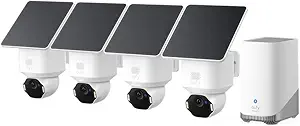 |
| Best Value The sweet spot between price and what you get | GMK CG6 4-Pack 2K Cameras |  |
| Best Budget The cheapest option that still gets the job done reliably | realhide CB54 2K Outdoor Camera |  |
| Top Rated A top-rated pick with lots of positive feedback | Ring Outdoor Cam (Stick Up Cam) Battery |  |
| Most Popular A crowd favorite that many people choose with confidence | Blink Outdoor 4 3‑Camera Kit |  |
| Best Seller A high-volume bestseller chosen again and again | Blink Outdoor 4 XR 4-Camera System |  |
eufy SoloCam E42 4-Cam Kit

| Power Source | Battery Powered |
|---|---|
| Battery Power | 55.98 watt-hours |
| Video Capture Resolution | 4k |
| Connectivity Protocol | Wi-Fi |
| Indoor Outdoor Usage | Outdoor |
The eufy SoloCam E42 4-Cam Kit pairs four weatherproof 4K cameras with a HomeBase 3 to deliver high-resolution, always-on outdoor monitoring without a subscription. Each camera offers SolarPlus 2.0 for extended battery operation, 360 degree pan and tilt coverage for fewer blind spots, and BionicMind AI that recognizes and auto-tracks people and vehicles to reduce false alerts. The kit includes strobe lights and a siren for active deterrence and two-way audio for remote interaction. HomeBase 3 provides built-in storage (16 GB) and supports large HDD expansion for continuous recording and local archiving. In practice the system is aimed at owners who want detailed, long-range footage and smart detection without monthly fees, but it requires a compatible router or HomeBase network and occasional firmware/app updates for best performance. Direct-power mode enables true 24/7 recording when wired, otherwise solar/battery operation may limit continuous capture depending on placement and sunlight. Setup is typical wall-mount installation and the app centralizes alerts, live view, and playback.
Best for: Buyers who prioritize high-resolution, performance-focused outdoor surveillance and want local, subscription-free storage with active deterrence features.
Less Ideal for: People who need a minimal, always-continuous recording solution powered only by batteries in low-sunlight locations or those seeking a basic, budget camera without installation.
- True 4K resolution for clear, long-range identification and license plate detail
- SolarPlus 2.0 extends battery life for low-maintenance outdoor operation
- AI motion detection with auto-tracking reduces false alarms and captures moving subjects
- HomeBase 3 with built-in storage and expandable HDD enables local 24/7 recording without subscription
- Integrated strobe light, siren, and two-way audio provide active deterrence and remote interaction
- Continuous 24/7 recording requires direct power or wired connection rather than relying solely on solar power
- Full feature set and best performance depend on using HomeBase 3 and keeping firmware/app updated
Verdict: Choose the SoloCam E42 kit when you want high-performance, 4K outdoor coverage with smart AI tracking and local, subscription-free recording.
GMK CG6 4-Pack 2K Cameras

| Video Capture Resolution | 1296p (3MP) |
|---|---|
| Viewing Angle | 110 degrees |
| Night Vision Range | 33 feet |
| Waterproof Rating | IP65 |
| Power Source | Battery Powered (hybrid plug-in supported) |
The GMK CG6 4-pack is a battery-first outdoor bullet camera system designed for straightforward home surveillance. Each camera captures 2K (1296p/3MP) video with a 110-degree field of view and offers color night vision plus an infrared mode for low-light detail. Setup is app-driven over 2.4GHz Wi-Fi and the VicoHome app handles live view, two-way talk, AI PIR motion detection with person/vehicle/package filters, and push alerts. Storage is flexible with local microSD or optional encrypted cloud (7-day trial), and the unit supports an intelligent siren and flashing light for active deterrence. Practical touches include IP65 weatherproofing, removable battery operation that claims up to 3,000 PIR triggers per charge, and a hybrid option to keep high-traffic cameras plugged in. Limitations to plan for: these cameras do not support 5GHz Wi-Fi and are not intended for continuous 24/7 recording on battery power, so placement and recording strategy affect battery life and coverage. For buyers wanting easy wireless placement and event-focused recording, this system balances visibility and convenience well.
Best for: Buyers who want an easy-to-install outdoor camera kit that prioritizes event-based recording, flexible wireless placement, and straightforward app control for family-safe home monitoring.
Less Ideal for: Users who need continuous round-the-clock recording or who require 5GHz Wi-Fi connectivity for higher-bandwidth networks.
- 2K (3MP) video with color night vision for clearer nighttime detail
- Wire-free battery design with claimed long standby and hybrid plug-in option for high-traffic spots
- AI PIR motion detection with customizable alerts reduces false alarms
- Two-way audio plus siren and white light for active deterrence
- IP65 rating for year-round outdoor use
- Supports only 2.4GHz Wi-Fi, no 5GHz compatibility
- Not designed for continuous 24/7 recording on battery power
Verdict: Choose the GMK CG6 4-pack if you want a plug-flexible, event-focused outdoor camera system with 2K color night vision and easy app-based controls.
realhide CB54 2K Outdoor Camera

| Effective Video Resolution | 2000 |
|---|---|
| Frame Rate | 30 frames per second |
| Power Source | Battery Powered |
| Night Vision Range | 8 meters |
| Wireless Technology | Wi-Fi (2.4G & 5G) |
The realhide CB54 is a compact, battery-powered outdoor camera aimed at simple, no-hassle monitoring. It captures 2K UHD video at 30 fps and uses a built-in spotlight to deliver full-color night vision, making it easier to identify faces or license plates after dark. Setup is wireless and fast: mount with screws, connect to the app over 2.4GHz or 5GHz Wi-Fi, and choose between free cloud storage or local SD card recording for backups. Two-way audio lets you speak to visitors, and AI motion detection sends instant phone alerts when activity is detected. The IP66 weatherproof rating and advertised 1–6 month battery life mean it is well suited for porches, driveways, and remote locations without easy power access. Expect typical limitations of battery cameras such as varying runtimes depending on motion frequency and occasional dependence on Wi-Fi quality for live view and cloud uploads, but local SD recording helps mitigate connectivity interruptions.
Best for: Buyers who want an affordable, easy-to-install outdoor camera with higher-than-average resolution and flexible storage options for basic home surveillance without running wires.
Less Ideal for: Users who need continuous wired power, professional-grade analytics, or guaranteed enterprise uptime for mission-critical monitoring.
- 2K UHD resolution with full-color night vision for clearer identification at night
- Dual-band Wi-Fi (2.4GHz/5GHz) for more stable live view and faster playback
- Free cloud storage plus local SD card support for redundant recording options
- Long battery life up to six months under typical conditions reduces maintenance
- IP66 weatherproof build suitable for rain, snow, and outdoor exposure
- Battery life varies with motion and settings, so high-traffic areas will need more frequent charging
- No detailed waterproof rating shown in specs beyond IP66 mention, limiting precise ingress expectations
Verdict: A budget-friendly outdoor camera that delivers 2K video and full-color night vision with flexible cloud or SD storage, ideal for basic home security without wiring.
Ring Outdoor Cam (Stick Up Cam) Battery
| Power | Rechargeable battery |
|---|---|
| Connectivity | Wi-Fi |
| Night Vision | Color night vision |
| Two-way Talk | Yes |
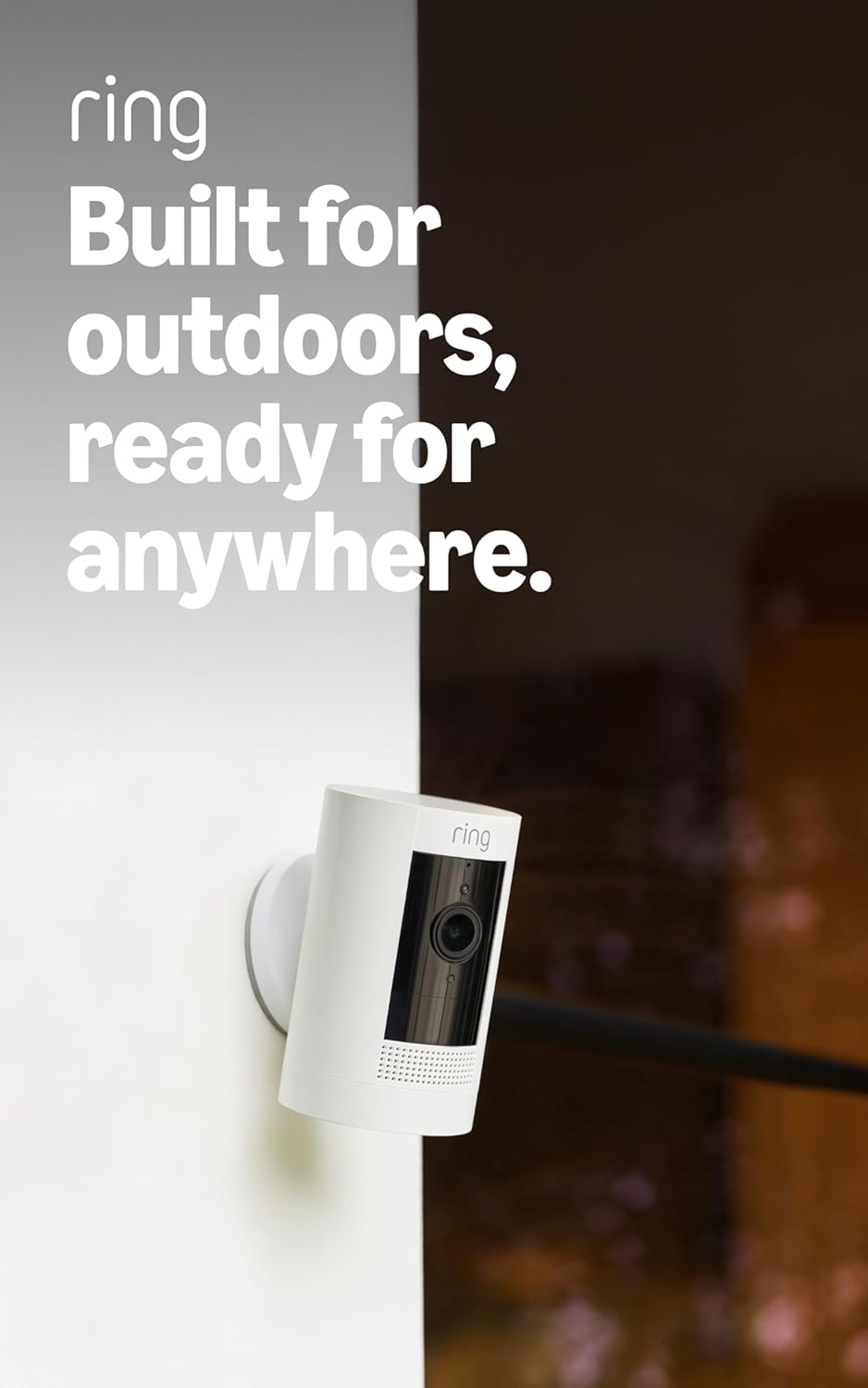
The Ring Outdoor Cam (Stick Up Cam) Battery is a versatile wireless camera meant for exterior use but simple enough to place almost anywhere. It connects to your Wi-Fi and the Ring app to provide live view, two-way talk, motion alerts, and color night vision so you can check activity day or night. Install options include a tabletop placement or the included bracket for wall mounting, and the rechargeable battery pack makes it a cordless option where running power is impractical. In daily use it delivers push alerts and remote two-way communication from the app, and multiple cameras can be managed from the same account for broader coverage. Important considerations are that some advanced features such as video history and intelligent alerts require a Ring Protect subscription, and battery operation means you will need to recharge or swap the pack periodically depending on activity and settings. For straightforward outdoor monitoring with flexible placement and Alexa integration, this camera is a practical choice.
Best for: Buyers who prioritize dependable outdoor coverage with flexible, cordless installation and easy smartphone monitoring for everyday home security.
Less Ideal for: Users who need continuous, always-on wired power or full-featured cloud recording without a subscription should consider wired or alternative solutions.
- Battery-powered design allows cordless placement where running power is difficult
- Weather-resistant construction suitable for outdoor mounting
- Color night vision and live view improve low-light monitoring
- Two-way talk lets you hear and speak to visitors through the app
- Works with Alexa for voice control and smart home integration
- Full video history and some intelligent alerts require a paid Ring Protect subscription
- Battery needs periodic recharging or replacement depending on activity levels
Verdict: A reliable, weather-resistant wireless camera that delivers flexible cordless placement and essential day/night monitoring for straightforward outdoor security.
Blink Outdoor 4 3‑Camera Kit

| Video resolution | 1080p HD |
|---|---|
| Night vision | Infrared night vision |
| Power | AA Energizer lithium batteries (included) |
| Included cameras | 3 cameras |
| Connectivity | Sync Module Core |
The Blink Outdoor 4 three‑camera kit is an entry-level wireless security system aimed at basic home perimeter monitoring. Each camera records 1080p HD video with infrared night vision and two‑way audio, and the included Sync Module Core coordinates the cameras and accepts the AA Energizer lithium batteries that are claimed to last up to two years under typical use. Setup is straightforward using the Blink app, and enhanced dual‑zone motion detection reduces false alerts while offering faster notifications to your phone. The system lacks built-in local storage with the Sync Module Core, so continuous recording and clip backups rely on the cloud subscription trial or optional Sync Module XR/Sync Module 2 accessories for local microSD or USB storage. Person detection is available behind an optional subscription. Integration with Alexa enables voice viewing and basic arm/disarm control. For buyers wanting a low-maintenance, easy-to-install outdoor kit that emphasizes long battery life and simple cloud workflows, this delivers good value; buyers needing guaranteed local storage or advanced on‑device analytics will want a different configuration or add-on modules.
Best for: Buyers who prioritize easy wireless installation, long battery life, and straightforward smartphone alerts for outdoor perimeter monitoring.
Less Ideal for: Users who require guaranteed local storage, advanced on-device analytics, or continuous high-resolution recording without a subscription should consider systems with built-in NVR or local storage.
- Wireless, battery-powered cameras that simplify installation without wiring
- Up to two-year battery life with included AA Energizer lithium batteries under typical use
- 1080p HD video with infrared night vision for clear day and night monitoring
- Dual-zone enhanced motion detection for faster, more focused alerts
- Includes Sync Module Core and three mounting kits for a ready-to-install kit
- Sync Module Core does not provide built-in local storage so cloud or additional modules are required to retain clips
- Advanced person-detection features require an optional subscription
Verdict: A simple, long‑battery‑life outdoor camera kit that’s easy to install and ideal for buyers who want basic, cloud‑forward perimeter monitoring.
Blink Outdoor 4 XR 4-Camera System

| Camera count | 4 cameras |
|---|---|
| Range (open air) | 1000 ft |
| Range (typical) | 400 ft |
| Battery life | Up to two years |
The Blink Outdoor 4 XR kit combines four battery-powered Outdoor 4 cameras with a Sync Module XR to deliver extended-range wireless security around a property. The Sync Module XR runs on the 900MHz band to increase range — Blink quotes up to 1000 ft open-air or about 400 ft in typical conditions — and cuts congestion that can slow live view. Cameras are intended for outdoor placement, come with mounting kits, and run on included AA lithium batteries with up to two years of life when used with the Sync Module XR. You can view live streams and arm or disarm through the Blink app and integrate with Alexa for voice-activated live view. Storage options include cloud clips via Blink subscription or local recording to a MicroSD card on the Sync Module XR. Trade-offs to consider are reliance on the Sync Module XR for the extended performance benefits and the ecosystem model for cloud features, but for straightforward outdoor coverage this bundle simplifies setup and minimizes maintenance with long battery life.
Best for: Buyers who prioritize reliable long-range outdoor coverage and low-maintenance battery operation for a whole-property setup will appreciate this system.
Less Ideal for: Those who need a single-camera solution or prefer fully self-hosted network video recorders without vendor cloud integration should consider other options.
- Extended wireless range up to 1000 ft open-air or ~400 ft typical with Sync Module XR
- Sync Module XR on 900MHz reduces WiFi congestion and speeds up live view
- Up to two-year battery life using included AA lithium batteries
- Includes four outdoor cameras, Sync Module XR, mounting kits, and power accessories for a complete kit
- Extended-range features depend on using the Sync Module XR rather than standard WiFi
- Local MicroSD storage requires buying a card separately
Verdict: Choose this kit if you want an easy-to-install outdoor camera system designed for extended wireless range and long battery life with simple app control.
Choosing the Right Outdoor Wireless Night-Vision Security Camera Systems: Key Factors to Consider
Night-Vision Range and Clarity
Night-vision range defines how far a camera can see in darkness and is tied to sensor sensitivity and infrared emitter strength. Longer range is useful for covering driveways, yards, and perimeters, while shorter range can suffice for porch or entryway monitoring. Clarity at night depends on resolution, sensor size, and automatic gain control, which affects how much detail you can resolve in a recorded event.
When evaluating systems, consider the realistic coverage distances you need after dark. A camera with a stated long infrared range may still produce grainy images if the sensor is small or the optics are poor. Look for systems that balance reach with usable detail for identifying faces or license plates when required.
Wireless Signal Strength and Stability
Wireless systems rely on Wi-Fi or proprietary RF links to transmit footage; signal strength and interference resilience determine whether live streams and recordings are consistently available. Thick walls, long distances, and competing networks can cause packet loss or disconnects, which in turn create gaps in footage or poor-quality video.
Consider the range of the system in real-world conditions, whether it supports dual-band Wi-Fi, and if it includes mesh or repeater capability for larger properties. Antenna placement, router compatibility, and the possibility of using wired backhaul for at least the base station are practical considerations that affect overall reliability.
Weatherproofing and Material Quality
Outdoor camera housings must keep out moisture, dust, and debris while resisting corrosion and UV damage. Ingress protection ratings and material choices indicate how well a unit will survive prolonged exposure to the elements. Beyond the rating number, consider the quality of seals around cable entries and mounts, and whether moving parts like pan-tilt mechanisms are rated for outdoor use.
Systems intended for year-round exterior use should specify operating temperature ranges. If you live in an area with extreme temperatures or heavy precipitation, choose systems with robust enclosures and replaceable mounting hardware to reduce long-term maintenance.
Power and Installation Options
Power approach dictates installation flexibility. Battery-powered cameras simplify placement but require periodic recharging or replacement and may reduce continuous recording capability. Hardwired or PoE options provide continuous power and are preferred for uninterrupted monitoring but require cabling and potentially professional installation. Hybrid systems that offer both battery and wired choices provide adaptable deployment across structures.
Also examine mounting options and whether the system includes angled mounts, corner brackets, or magnetic bases for varied surfaces. Ease of access for battery changes, cable routing, and initial setup affects the total time and cost to deploy a system across multiple perimeter points.
Storage, Privacy, and Access
Deciding between local storage and cloud services affects ongoing cost, privacy, and how you access footage. Local storage on a base station or microSD card keeps data on-site but requires physical access for retrieval and backup. Cloud storage offers remote access and redundancy but can introduce subscription costs and data privacy considerations.
Check encryption practices for both transmission and stored footage, and whether the system allows configurable retention periods. Confirm what triggers recording and whether continuous recording, motion clips, or event-based uploads best suit your monitoring needs.
Placement Tips for Effective Night Coverage
Position cameras to minimize backlighting from streetlamps or porch lights, which can wash out subjects in the foreground. Aim slightly downward when mounting to reduce sky glare and to keep infrared reflections from nearby surfaces from overwhelming the sensor.
Cover choke points like walkways, driveways, and utility areas where motion is most likely. Overlap fields of view between adjacent cameras to avoid blind spots and to provide multiple angles of an incident for better identification.
- Mount at a height that keeps the camera out of reach but not so high that facial features are obscured.
- Clean lenses and housing regularly to prevent buildup that degrades night performance.
- Avoid pointing cameras at reflective surfaces like windows to reduce IR bounce.
Balancing Battery Life With Continuous Monitoring
Battery-powered outdoor systems trade installation ease for limited runtime. Motion-triggered recording conserves battery life, whereas continuous recording drains batteries quickly. Evaluate typical nightly activity in your area to estimate how often the camera will trigger and how long batteries will last between charges.
If you need extended continuous coverage, consider systems with optional wired power or solar charging accessories. Some systems let you use batteries for backup power while keeping a wired connection as the primary source.
- Use motion sensitivity and scheduling to reduce unnecessary recordings.
- Opt for larger-capacity battery packs or models that support fast swapping if replacing batteries frequently is a concern.
Network Setup and Security Best Practices
Separate your security camera network from general-purpose devices by using a dedicated SSID or guest network when possible. This isolates the cameras from other devices and reduces the risk that a compromised device can access camera feeds.
Enable strong, unique passwords and use WPA3 or WPA2 encryption. Keep firmware updated and disable unnecessary remote-access features if you do not use them. Where available, enable two-factor authentication for cloud accounts and restrict account sharing.
- Assign static IPs or reserved DHCP addresses for base stations to reduce connectivity hiccups.
- Monitor bandwidth use; high-resolution streams can saturate home networks unless optimized.
Choosing Motion Detection and Alert Settings
Effective alerts reduce false alarms and help you respond to real events. Configure detection zones to focus on areas where meaningful activity occurs and raise sensitivity thresholds for smaller animals or momentary environmental triggers.
Customize alert timing to avoid predictable nuisance triggers such as moving shadows from trees or passing cars. Some systems support smart detection that differentiates humans, vehicles, and animals; use these filters if they align with your monitoring goals.
- Set quiet hours with reduced sensitivity if you expect high noncritical motion at certain times.
- Test alerts at different times of day to verify detection performance and adjust as needed.
Maintaining Night-Vision Performance Over Time
Inspect cameras periodically for dirt, spider webs, and lens scratches that reduce low-light clarity. Worn seals and cracked housings can admit moisture and fog lenses, so replace or service components showing wear.
Verify firmware updates that address image processing or infrared calibration. Over-the-air updates can improve contrast handling and reduce noise, extending usable life without hardware changes.
- Schedule seasonal inspections, especially before winter and after storms.
- Store spare mounts and seals for quick replacements to minimize downtime.
How We Chose the Best Outdoor Wireless Night-Vision Security Camera Systems
We focused on features that matter for outdoor night surveillance and practical system reliability. Primary evaluation criteria included low-light image quality and night-vision range, since clear footage in darkness is the main purpose of these systems. We also assessed wireless connectivity robustness and range to ensure consistent video transmission without frequent dropouts. Weather resistance and outdoor-rated housings were required to ensure long-term operation in rain, snow, and temperature swings. Power options and installation flexibility were evaluated to match different property types and mounting needs. Storage options and data handling were reviewed to balance convenience and privacy, including whether a system supports local recording, cloud options, or both. We excluded systems that lack true night-vision capability, are not rated for outdoor use, or rely solely on wired network connections. We also filtered out products with insufficient manufacturer documentation or unclear storage options. The result is a set of systems that meet real-world requirements for nighttime monitoring, reliable wireless performance, and durable outdoor operation.
Our full evaluation process is outlined in our review methodology.
FAQ
Do wireless night-vision systems work in complete darkness?
Many outdoor night-vision systems use infrared illumination that allows cameras to record in very low or no visible light. Performance depends on the IR emitter strength and sensor sensitivity, so range and image clarity vary by system.
How far can night-vision cameras see outdoors?
Quoted ranges vary and should be treated as under ideal conditions. Real-world range depends on sensor quality, lens, and environmental factors like fog or ambient lighting. For reliable identification at distance, prioritize systems with both strong IR range and good low-light sensors.
Will wildlife trigger motion alerts at night?
Yes, animals can trigger alerts if detection zones and sensitivity are not adjusted. Many systems offer animal filtering or customizable zones to reduce nuisance alerts while preserving human or vehicle detection.
Are wireless systems secure from hacking?
Wireless systems can be secured with strong passwords, current encryption standards, and network segmentation. Keeping firmware updated and disabling unused remote features reduces exposure, but no device is immune to vulnerabilities if poorly configured.
Can I store footage locally instead of using cloud services?
Many systems support local storage on base stations or microSD cards as an alternative to cloud subscriptions. Local storage keeps data on-site but requires planned backup and physical access for retrieval.
Final Verdict
Prioritize night-image clarity and wireless reliability when choosing an outdoor wireless night-vision security camera system. Assess how far you need to see, whether battery or wired power fits your installation, and how the system stores and secures recorded footage. Tradeoffs are inevitable: battery cameras offer placement flexibility at the cost of runtime, while wired systems deliver continuous monitoring but require more installation work. Focus on the criteria that match your property layout and monitoring priorities to pick a system that consistently produces usable nighttime footage.