
Note: This article contains affiliate links. If you click on these links and make a purchase, we may earn a small commission at no extra cost to you. This helps support our research and content. Read our full affiliate disclosure here.
If you need outdoor surveillance but cannot or prefer not to connect cameras to a home Wi-Fi network, systems designed to operate without Wi-Fi offer practical alternatives. These setups rely on local storage, cellular links, or direct hub connections so you still get motion alerts, footage capture, and weatherproof hardware without exposing cameras to your home network. Choosing the right system matters because installation style, power options, and where footage is stored determine reliability during outages and for legal or privacy-sensitive uses. This guide covers six shortlisted outdoor wireless security camera systems without Wi-Fi and explains the criteria we used to evaluate them, including storage method and power requirements. Read on to match a system to your monitoring needs and site constraints.
Top Picks at a Glance
| Best Quality Built to a higher standard if you want something more solid | SANSCO 4G LTE Solar PTZ Camera |  |
| Best Value The sweet spot between price and what you get | ELYSOO S40 Solar 4G Camera |  |
| Best Budget The cheapest option that still gets the job done reliably | MeshSear Q52 Solar 4G Camera |  |
| Top Rated A top-rated pick with lots of positive feedback | GLEEMALL RBX-B60 Solar 4G Camera |  |
| Most Popular A crowd favorite that many people choose with confidence | SEHMUA S40 Solar 4G Camera |  |
| Best Seller A high-volume bestseller chosen again and again | TACTACAM Defend 360 | 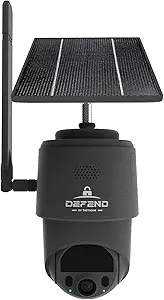 |
SANSCO 4G LTE Solar PTZ Camera

| Video Capture Resolution | 1296p (3MP) |
|---|---|
| Night Vision Range | 49 feet |
| Power Source | Solar Powered, Battery Powered |
| Connectivity Protocol | 4G LTE Cellular |
| Built-In Media | 64GB TF card (supports up to 128GB) |
The SANSCO 4G LTE Solar PTZ Camera is a self-contained outdoor surveillance unit designed for locations without Wi‑Fi or wired power. It pairs an integrated solar panel and 7800mAh battery with a built-in cellular SIM that provides lifetime free data, so the camera can stream and upload footage over 4G networks without monthly subscription fees. The camera pans and tilts for near 360° coverage and records at 1296p/2K (3MP) with color night vision up to about 49 feet, while AI motion detection, human detection settings, and push alerts help reduce false alarms. Two-way audio lets you communicate through the app, and the unit is IP66-rated for outdoor use. Practical limitations include reliance on cellular coverage from supported US carriers and the fixed built-in SIM, and occasional setup quirks that require outdoor pairing with a strong signal. For off‑grid monitoring or remote sites, its solar power and free data make continuous operation straightforward, but users in weak-signal areas should verify network reach before purchase.
Best for: Buyers who need a high‑performance outdoor camera for remote or off‑grid sites and prioritize continuous recording, wide PTZ coverage, and no recurring data fees.
Less Ideal for: People who have reliable local Wi‑Fi and prefer using their own SIM plan or want multi-carrier flexibility should consider Wi‑Fi or replaceable‑SIM options instead.
- Solar panel plus 7800mAh battery enables continuous off-grid operation
- Built-in 4G SIM with lifetime free data removes monthly subscription needs
- Pan/tilt range approaches 360° for broad coverage and auto-tracking capability
- Color night vision and 1296p/2K (3MP) resolution for clearer identification at night
- Includes two-way audio and AI motion detection with adjustable sensitivity
- Works only where supported cellular networks have reliable coverage
- Built-in SIM is not replaceable and limited to US carriers
Verdict: If you need a performance-focused outdoor camera that runs off-grid with free lifetime cellular data and near 360° PTZ coverage, this SANSCO solar 4G unit delivers continuous, subscription-free monitoring.
ELYSOO S40 Solar 4G Camera

| Connectivity Technology | 4G LTE Cellular |
|---|---|
| Video Capture Resolution | 2k |
| Power Source | Solar Powered |
| Night Vision | Night Color |
The ELYSOO S40 is a solar-powered 4G LTE bullet camera designed for truly off-grid outdoor monitoring where Wi‑Fi or mains power are unavailable. It pairs a rechargeable battery with a high-efficiency solar panel so the camera can run continuously at remote sites, and the built-in SIM works on AT&T, T‑Mobile, and Verizon networks with a prepaid trial followed by an optional subscription. Video is captured in 2K with color night vision and a 360° pan-and-tilt function for broad coverage, and the camera uses PIR motion detection to send real-time mobile alerts via the Ubox app. Practical features include two-way audio, IP65 weather resistance, local microSD recording and optional cloud storage, which makes it suitable for monitoring barns, job sites, cabins, and RVs. Limitations to consider are the need for a dedicated cellular data plan and per-camera cloud subscription after the trial, and the camera is supported only for use within the United States.
Best for: Buyers who need dependable remote monitoring without Wi‑Fi or mains power and want a low-maintenance setup for farms, cabins, RVs, or construction sites.
Less Ideal for: Users who want a no-subscription, local-only camera solution or who need a product supported outside the United States.
- Solar-powered with rechargeable battery enables off-grid continuous operation
- 4G LTE built-in SIM lets the camera work without Wi‑Fi or local network
- 2K video and color night vision deliver clearer day and night footage
- IP65 weatherproofing and two-way audio suit outdoor farm and jobsite use
- Requires a separate cellular data plan and cloud/storage subscription per camera after trial
Verdict: Choose the ELYSOO S40 if you need a solar 4G camera that provides reliable, maintenance-free outdoor surveillance where Wi‑Fi and mains power are not available.
MeshSear Q52 Solar 4G Camera

| Power Source | Solar Powered |
|---|---|
| Video Capture Resolution | 1080p |
| Night Vision Range | 33 feet |
| Connectivity Technology | Wireless |
| Wireless Technology | Cellular |
This MeshSear Q52 is a self-contained outdoor bullet camera designed for locations without Wi‑Fi or wired power, pairing a built-in 5200mAh battery and solar panel with an integrated 4G LTE SIM. It provides 1080p day/night video, AI human motion detection to reduce false alerts, 355° pan and 90° tilt for near full 360° coverage, and two-way audio so you can speak through the app. Setup is straightforward: charge initially, power on, and the camera connects to AT&T, T‑Mobile, or Verizon automatically using the preinstalled SIM and a data plan managed in the app. The camera streams H.264 video to cloud storage (subscription required) and includes an initial small data allowance; note it does not support local SD storage or Wi‑Fi. Practical benefits are true wireless placement for remote properties and reduced nuisance alerts thanks to AI detection, but buyers should factor in ongoing cellular or cloud fees and that the unit is listed as not water resistant, which limits exposure in very wet environments.
Best for: Buyers who need a low-infrastructure surveillance option for remote or temporary outdoor sites and prioritize easy placement over avoiding monthly service fees.
Less Ideal for: People who want a fully maintenance‑free camera with local storage or those planning installations in consistently wet or submerged locations.
- Operates without Wi‑Fi or wired power using built-in 4G LTE SIM and solar charging
- Full HD 1080p video with color night vision for day and night monitoring
- Pan-tilt mechanism (355° pan, 90° tilt) gives near 360° coverage from one unit
- AI human detection reduces false motion alerts
- Two-way audio for live communication through the app
- Requires a paid cellular data plan and separate cloud subscription for continuous use
- Listed as not water resistant, which may limit installation in very exposed wet locations
Verdict: A practical no‑Wi‑Fi outdoor camera for budget buyers who need true wireless placement and are willing to handle modest ongoing cellular and cloud costs.
GLEEMALL RBX-B60 Solar 4G Camera

| Connectivity Protocol | Cellular |
|---|---|
| Video Capture Resolution | 2k |
| Power Source | Solar & Battery Powered |
| Battery Power | 8000 milliamp_hours |
| Waterproof Rating | IP65 |
The GLEEMALL RBX-B60 is a fully wireless outdoor security camera designed for locations without Wi-Fi, using a built-in SIM and cellular connection to stream video and send alerts. It pairs a rechargeable 8000 mAh battery with a 6W solar panel for continuous, year-round power and an IP65 weatherproof rating that holds up to rain and dust. The camera records 2K color video, offers 355° pan and 100° tilt with 4x zoom, and captures color night footage out to about 65 feet, which helps identify details after dark. Smart PIR motion detection, real-time push notifications, two-way audio, configurable detection zones, and optional white light and siren alarms make it practical for remote jobsites, cabins, and other off-grid spots. Each unit requires its own data subscription after the trial and the SIM is non-replaceable, so ongoing cellular costs and single-device plans are important to factor in. Storage can be cloud-based (trial then subscription) or local via TF card up to 128GB. For reliability in off-grid monitoring the camera is well suited, but buyers should plan for recurring connectivity charges.
Best for: Buyers who need dependable remote surveillance at jobsites, rural properties, or vacation homes without reliable Wi‑Fi and who prioritize continuous operation and weatherproof performance.
Less Ideal for: Users who prefer zero recurring costs or want to manage cameras via a home Wi‑Fi network should consider Wi‑based alternatives instead.
- Built-in 4G LTE with preinstalled SIM for locations without Wi‑Fi
- Solar panel plus 8000 mAh battery for continuous year-round power
- 2K color night vision with wide pan/tilt range and 4x zoom for broad coverage
- PIR motion detection with real-time alerts, two-way audio, and alarm/light options
- Supports local TF card storage up to 128GB plus cloud storage trial
- Each camera requires its own paid cellular data subscription after the trial
- SIM is non-replaceable which limits carrier control and long-term flexibility
Verdict: Choose this solar 4G camera when you need reliable, maintenance-light surveillance in off-grid or Wi‑Fi‑free outdoor locations.
SEHMUA S40 Solar 4G Camera

| Connectivity Technology | 4G LTE Cellular |
|---|---|
| Video Capture Resolution | 2k |
| Power Source | Solar Powered |
| Waterproof Rating | IP65 |
| Viewing Angle | 360 degrees |
The SEHMUA S40 is a fully wireless outdoor surveillance camera designed for locations without Wi-Fi or wired power, using a built-in 4G LTE SIM and a solar panel to stay online. It records in 2K (1440p effective) and offers a 360 degree viewing capability through horizontal and vertical rotation plus 4x digital zoom, while color night vision and a spotlight (manually enabled in the app) help identify activity after dark. The camera relies on PIR motion detection to push alerts to your phone and supports two-way talk for remote communication. Setup is app-driven and the unit includes a trial cellular plan and 30-day cloud trial, but ongoing cellular service requires a subscription after the trial ends. Practical strengths are true cordless placement for remote sites like farms, barns, and RVs and multi-user access through the Ubox app; limitations include dependence on local 4G coverage and recurring data costs, and the camera does not support Wi‑Fi connectivity or guaranteed always-on operation in low-sunlight locations.
Best for: Buyers who need a self-contained, cordless security camera for remote outdoor locations without reliable Wi‑Fi or wired power and who prioritize easy placement and multi-user mobile access.
Less Ideal for: Users who want to avoid monthly data plans or who need cameras that tie into an existing Wi‑Fi security ecosystem or local NVR systems.
- True cordless operation via built-in SIM and solar power enables placement where Wi‑Fi and wired power are unavailable
- 2K resolution with color night vision and 4x digital zoom for clearer identification at distance
- PIR motion sensor with app alerts and two-way audio for immediate notifications and remote interaction
- IP65 weatherproofing and multi-user viewing through the Ubox app for shared monitoring
- Requires active 4G coverage at the installation site and ongoing cellular subscription after the trial
- Spotlight must be enabled manually in the app for color night recordings
- Not compatible with Wi‑Fi networks, so it cannot be integrated into Wi‑Fi-based camera ecosystems
Verdict: Choose the SEHMUA S40 when you need a truly wireless solar 4G camera to secure remote outdoor sites without Wi‑Fi access.
TACTACAM Defend 360

| Connectivity Technology | Wireless (LTE cellular) |
|---|---|
| Battery Power | 10000 milliamp_hours |
| Indoor Outdoor Usage | Outdoor |
| Other Special Features | 360° pan/tilt/zoom; solar + battery power; 4K photo; 1080p video; weatherproof |
The TACTACAM Defend 360 is a self-contained outdoor security camera designed to work without Wi‑Fi by using LTE cellular connectivity and a rechargeable battery topped by an integrated solar option. It lets you remotely pan, tilt and zoom from the phone app so a single unit can cover large or irregular properties instead of multiple fixed cameras, and it captures 4K stills plus 1080p video with instant motion alerts sent to your device. Setup is intended to be straightforward because there is no home network to configure, and the solar charging helps keep the battery maintained at remote locations like gates, cabins, or job sites. The camera is built for outdoor use and routed for continuous monitoring, but relying on cellular means you will need an active data plan and coverage in your area and image quality or latency can vary with signal strength. The Defend 360 is best when you need a durable, off-grid camera that you can control remotely in places without reliable Wi‑Fi.
Best for: Buyers who want a low‑maintenance outdoor security solution for remote sites or properties without reliable Wi‑Fi and who prefer the simplicity of a self-contained, solar‑topped camera.
Less Ideal for: Users who have strong, reliable home Wi‑Fi and prefer to avoid monthly cellular data costs or who need the absolute lowest‑latency local video over a wired connection.
- Works over LTE cellular so no Wi‑Fi network is required
- 360° pan/tilt/zoom lets one unit cover wide areas remotely
- Solar plus internal rechargeable battery supports off‑grid installations
- Captures 4K photos and 1080p video with instant motion alerts
- Weather‑resistant design for long‑term outdoor use
- Requires an active cellular data plan and adequate signal for reliable live view and alerts
- Image quality and latency depend on cellular coverage rather than the camera itself
Verdict: Choose the Defend 360 when you need a rugged, off‑grid security camera that runs on cellular and solar so you can monitor remote outdoor locations without Wi‑Fi.
Choosing the Right Outdoor Wireless Security Camera Systems Without Wi-Fi: Key Factors to Consider
Storage Type and Capacity
How footage is stored affects reliability, privacy, and how long you can keep recordings. Local microSD cards are simple and keep data on-site, but they can be limited in capacity and vulnerable to theft. DVR or NVR-based systems centralize recordings on a local hub, enabling larger retention windows and easier review, but they add a piece of hardware to protect and power.
Cellular-enabled systems that push encrypted clips to a remote server avoid on-site storage but require a data plan and may introduce monthly costs. When selecting a system, estimate your expected event frequency and desired retention period to choose an appropriate storage capacity and format.
Power and Installation Constraints
Power options determine flexibility and ongoing maintenance. Battery-powered cameras are easiest to place and avoid running cables, but batteries need periodic charging or swapping and performance can drop in extreme temperatures. Solar-assisted cameras reduce maintenance if installed in sun-exposed locations, but solar panels add mounting complexity and require sufficient daily sun.
Hardwired cameras provide continuous power and are preferable for long-term, always-on monitoring, but they require conduit, drilling, or professional installation. Consider the tradeoff between installation effort and the convenience of uninterrupted power when choosing a system.
Connectivity and Offline Access
Systems without Wi-Fi rely on alternatives like cellular networking, proprietary RF hubs, or direct local recording. Cellular systems can offer remote alerts and viewing without home internet, but they depend on cellular coverage and a data plan. RF hub-based systems allow multiple cameras to pair to a base station that manages recording locally, which is useful where Wi-Fi is weak but you can protect the hub physically.
Assess how you will access footage during an outage or when away from the property. Look for clear options for retrieving files, such as removable storage or secure local network access, and confirm how firmware updates and system maintenance are handled offline.
Image Quality and Low-Light Performance
Video resolution and night performance affect whether footage is useful for identification. Higher resolution captures more detail but consumes more storage and can reduce battery life. Good low-light sensors, infrared illumination, and adaptive exposure help maintain usable images at dusk and night.
Consider the typical lighting conditions where cameras will be placed and choose systems that balance resolution with storage and power constraints. Cameras with configurable recording triggers can limit high-resolution captures to events, extending storage and battery life.
Durability and Weather Resistance
Outdoor systems must withstand rain, wind, dust, and temperature swings. Look for IP-rated enclosures and materials rated for the climates where the cameras will operate. Robust mounting hardware and tamper-resistant designs reduce the chance of cameras being dislodged or stolen.
Also think about serviceability. Systems that allow easy removal of storage media or battery packs facilitate maintenance without disturbing permanent mounts.
Privacy, Security, and Legal Considerations
How footage is stored and transmitted has privacy and legal implications. Local storage reduces exposure to third parties but requires physical security. Cellular or cloud systems should use encryption in transit and at rest to protect footage. Verify whether the system provides user controls for data retention and account access.
Additionally, familiarize yourself with local laws about audio recording, surveillance of public spaces, and posting notices if required. Choosing a system with clear privacy settings simplifies compliance and reduces risk of unintended data exposure.
How Offline Recording Works
Offline recording systems capture video without relying on a home Wi-Fi network by using onboard media, a paired base station, or cellular connectivity. Onboard microSD saves footage directly on each camera, while base stations consolidate feeds to a larger local drive for longer retention. Cellular options transmit clips or live streams over mobile networks, eliminating the need for nearby internet but adding recurring data considerations.
Each approach has tradeoffs in accessibility and resilience. Local storage ensures footage remains in your control but requires physical retrieval or local network access to review files. Base-station systems often offer easier centralized management, and cellular systems provide remote alerts when you do not have on-site network access.
- Onboard microSD: simple, low-cost, limited capacity
- Local hub/DVR: centralized storage, higher capacity
- Cellular: remote access without Wi‑Fi, requires data plan
Placement Tips for Reliable Coverage
Position cameras to cover likely entry points and approaches while minimizing exposure to direct sunlight or reflective surfaces that can wash out images. Mount cameras high enough to avoid casual tampering but angled for identification-level framing of faces and license plates when that is a concern.
Account for connectivity and power when choosing placement. Battery or solar models need unobstructed sun exposure if you rely on solar, and base-station-linked cameras must remain within the wireless range of the hub. Test camera fields of view and motion detection zones during different times of day to reduce false triggers.
- Aim for overlapping coverage of critical areas
- Avoid pointing directly at streetlights or bright windows
- Allow 6 to 12 feet height for face-level identification
Maintaining and Servicing Off-Grid Systems
Routine maintenance for off-grid systems focuses on power and storage. Check battery health seasonally and keep replacement packs or charging routines established. For solar setups, clean panels periodically and confirm panels remain shaded-free as foliage changes across seasons.
Inspect mounts, seals, and cable run points annually to prevent water ingress. If the system uses removable storage, schedule a secure backup process to archive critical footage off-site. For cellular systems, monitor data usage and plan for firmware updates that may require temporary network access.
- Schedule battery checks at least twice yearly
- Archive important clips to external drives
- Keep firmware updated for security when possible
Legal and Neighbor Considerations
Outdoor cameras often record areas beyond your property line. Be mindful of privacy laws that restrict audio capture or the recording of private spaces. Use fixed mounts and clear angling to avoid deliberate intrusion into neighbors windows or fenced private areas.
Communicate with neighbors when placing visible cameras to reduce concerns. In some jurisdictions, posting a small notice about surveillance may be recommended or required. Choosing systems with simple controls for disabling audio or limiting recording windows can help address privacy sensitivities.
- Avoid deliberate capture of private indoor spaces
- Disable audio recording if unsure about local rules
- Use visible mounting to discourage tampering
Comparing Local Hubs and Cellular Gateways
Local hubs collect and store video from multiple cameras on a central drive, simplifying management and offering longer retention without monthly fees. They require a secure location for the hub and a reliable power source, and hub range should be confirmed before purchase to ensure full outdoor coverage.
Cellular gateways let cameras operate independently of site internet but require a mobile data plan. They are advantageous for remote properties or temporary sites where home networks are unavailable. Evaluate the expected monthly data use and how alarms, continuous recording, or clip uploads will affect costs and coverage.
- Hubs suit permanent installations with reliable power
- Cellular suits remote or temporary sites
- Confirm radio range and data needs before committing
How We Chose the Best Outdoor Wireless Security Camera Systems Without Wi-Fi
We prioritized systems that function reliably without any dependence on a home Wi-Fi network and that offer practical alternatives for live viewing and footage retention. Key evaluation criteria included storage architecture, such as local microSD, onboard DVR/NVR, or encrypted cloud via cellular; power options, including battery, solar, or wired; connectivity resilience, for example cellular backup or direct hub pairing; video quality and low-light performance for useful identification; and weather resistance and mounting flexibility for outdoor durability. We excluded camera kits that require a persistent Wi-Fi connection for core functions, systems with undocumented security practices, and devices that lack clear local storage or offline access. We also discounted setups that relied solely on ad-hoc peer-to-peer phone links without robust recording options. The resulting shortlist emphasizes systems that let owners capture, store, and access footage when Wi-Fi is unavailable, while balancing installation simplicity and ongoing power needs.
Our full evaluation process is outlined in our review methodology.
FAQ
Can I get motion alerts from cameras that do not use Wi-Fi?
Yes, if the system uses cellular connectivity or a paired base station that relays alerts, you can receive motion notifications. Systems that store footage solely on local media without any outbound link cannot send remote push alerts unless the owner periodically checks the device or retrieves stored clips manually.
How long will footage be retained on local storage?
Retention depends on storage capacity, recording settings, and event frequency. High-resolution continuous recording uses space quickly, while event-triggered clips conserve storage. Choose larger local drives or centralized NVR solutions for multi-week retention or set up regular archiving of important clips.
Are battery-powered outdoor cameras reliable in cold weather?
Battery performance typically declines in cold temperatures, reducing runtime between charges. Some cameras include cold-rated batteries or power-saving modes to mitigate this. If you expect prolonged low temperatures, consider hardwired or solar-assisted options designed for that environment.
Can I integrate offline systems with my existing security setup?
Integration is possible when systems support common outputs like analog or IP streams to a local recorder or when the hub offers standard network access. However, compatibility varies, so verify supported interfaces and protocols before planning integration to avoid surprises.
What happens to footage if a camera is stolen?
If footage is stored only on the stolen camera's onboard media, it may be lost. Systems that centralize recordings on a secured hub or that upload encrypted clips over cellular can preserve footage even if an individual camera is taken. For critical coverage, combine physical security measures with centralized storage.
Final Verdict
Choosing an outdoor wireless security camera system without Wi‑Fi means balancing where footage is stored, how cameras are powered, and how you will access recordings when away from the site. Prioritize storage flexibility and power arrangements that match your installation and maintenance tolerance. For fixed installations with many cameras, a local hub and wired power deliver the most consistent retention. For remote or temporary sites, cellular-enabled cameras or solar-assisted units provide independence from home networks. Consider tradeoffs in maintenance, data access, and privacy controls to select a solution that meets your reliability and legal preferences.